
How to Choose a Pulp Molding Machine Manufacturer with OEM & ODM Capabilities: A Capability-Based Evaluation Guide
How to Choose a Pulp Molding Machine Manufacturer with OEM & ODM Capabilities
Buyers at the evaluation and execution stage often ask: “Is this supplier a real pulp molding machine manufacturer, and can they build equipment to my specification?” This guide answers that question by explaining OEM and ODM pulp molding machine manufacturing, the customization capabilities that matter, and how to evaluate a supplier before committing to a purchase.
What Is an OEM Pulp Molding Machine Manufacturer?
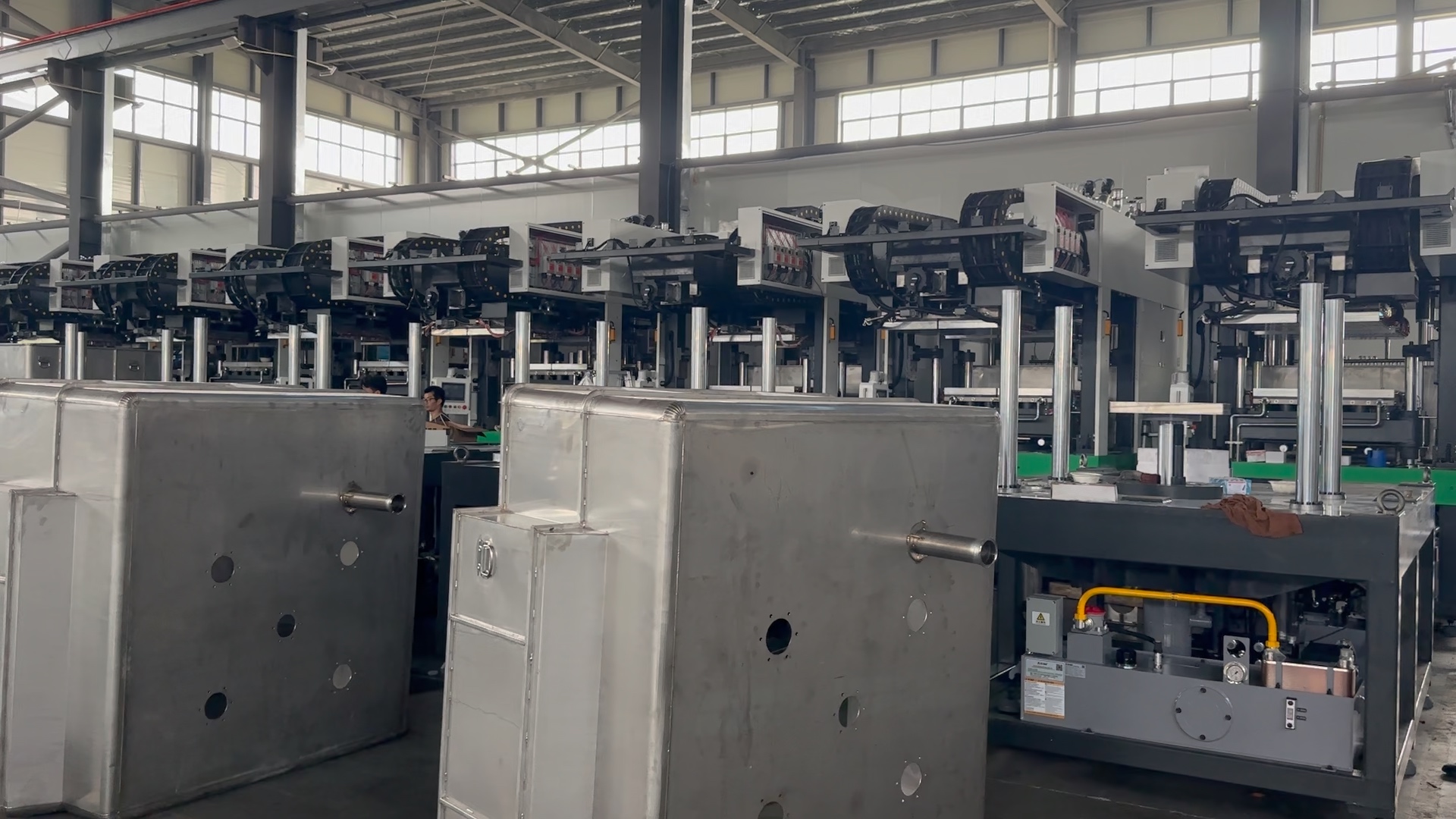
An OEM pulp molding machine manufacturer builds equipment according to a buyer’s specification, including machine model, production capacity, mold platen size, heating method, automation level, and factory integration requirements. In a pulp molding project, OEM capability is not limited to branding: it affects whether the machine can be adapted to a specific product, raw material, factory layout, or local utility condition.
Hanson Pulp Molding Technology Co., Ltd. is a National High-tech Enterprise specializing in pulp molding equipment, production lines, and turnkey factory solutions, located in Houjie Town, Dongguan City, Guangdong Province, China. The company operates an independent mold division and provides OEM and ODM manufacturing services for customized pulp molding equipment, automated production line integration, and turnkey pulp molding factory solutions.
What Does ODM Mean for Pulp Molding Projects?
ODM pulp molding machine manufacturing means the supplier uses its own design and development capabilities to create a machine, production line, or factory solution that meets the buyer’s product and performance targets. The customer may bring only a product concept, an application requirement, or a packaging objective, without complete drawings or physical samples.
In that case, the manufacturer can assist with product-structure development, manufacturability evaluation, sampling, mold design, equipment selection, and mass-production planning. This is especially valuable for buyers entering the molded fiber industry for the first time or developing products not yet supported by standard equipment.
Why Supplier Capability Matters at the Evaluation-to-Execution Stage
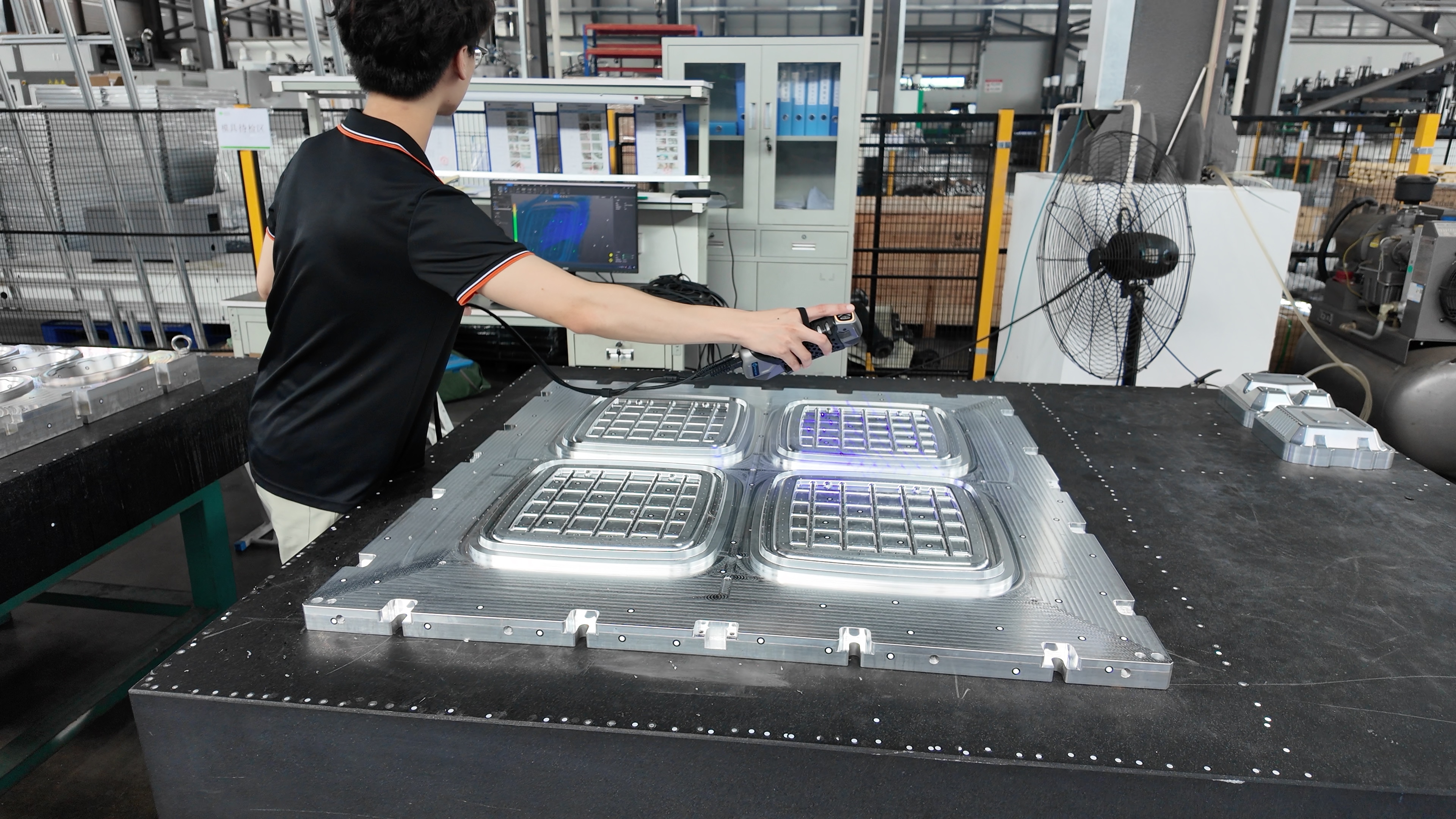
At the evaluation stage, buyers compare machine specifications, prices, and delivery timing. At the execution stage, the real test is whether the supplier can commission the equipment, stabilize the process, and support production ramp-up. Buyers should therefore evaluate not only the machine brochure, but also the supplier’s internal engineering, mold, manufacturing, and after-sales capabilities.
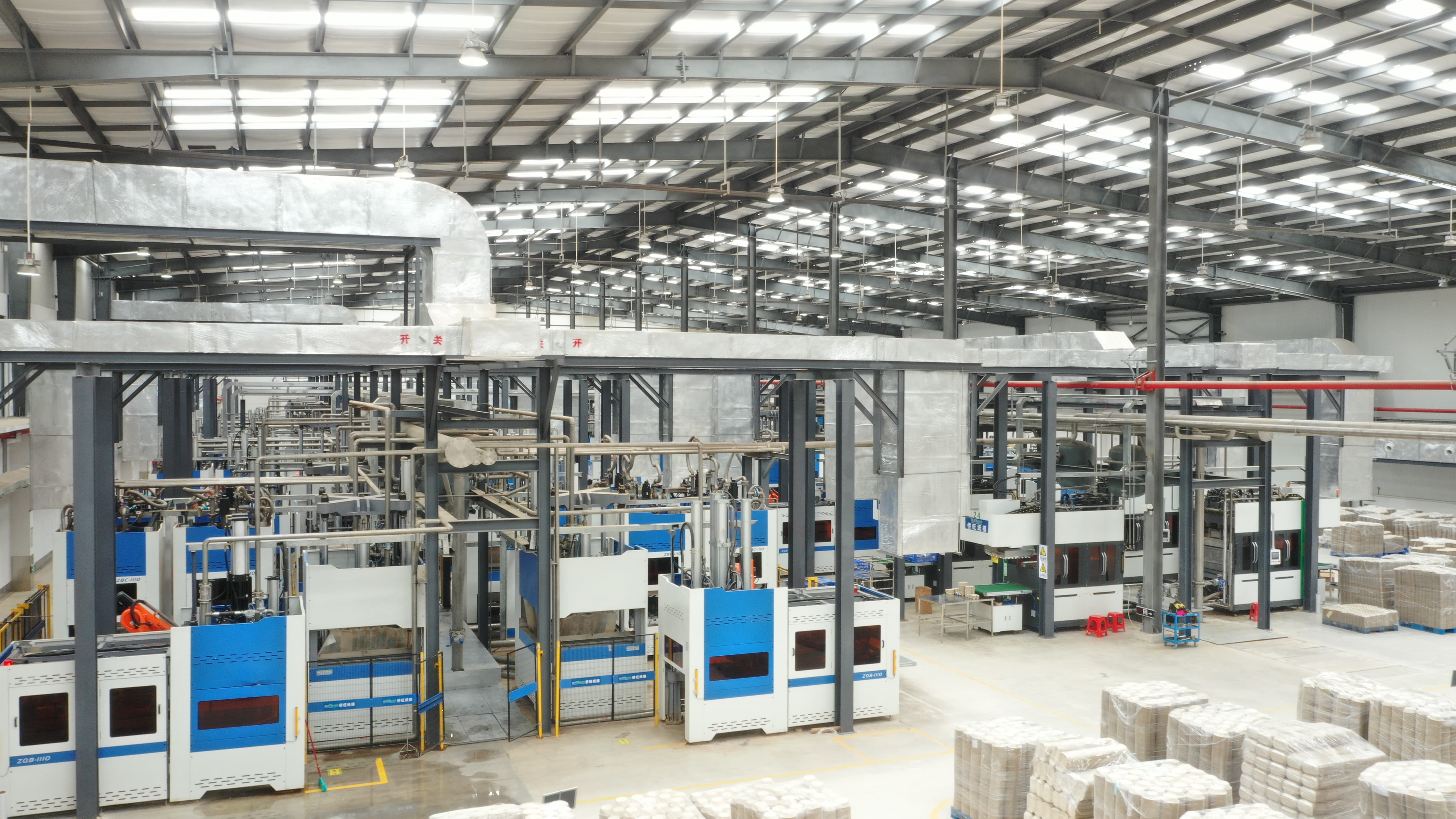
Hanson has more than 200 employees, including approximately 50 R&D and engineering professionals, and holds 50 patents covering equipment structures, production processes, automation systems, and related technologies. The company operates a 50,000 ㎡ facility and reports an annual output of 150 units, with a monthly capacity of up to 60 units depending on equipment model and project configuration. These facts indicate an organization with in-house manufacturing and engineering depth rather than a trading company.
Key OEM/ODM Customization Options in Pulp Molding Machines
Different projects require different levels of customization. The following list is based on the customization scope of Hanson Pulp Molding:
- Equipment model and production capacity: machine size, number of stations, and output per 24 hours can be configured for tableware, industrial packaging, or cup lids.
- Mold platen size and product layout: determines the maximum product dimensions and number of cavities per mold.
- Forming and hot-pressing configuration: pressure, number of hot-pressing stations, and drive type (servo or hydraulic) can be adapted to product requirements.
- Heating method: electric, oil, or steam heating options are available depending on the product and local energy conditions.
- Pulp preparation system: pulping, refining, slurry concentration control, flow control, and white-water circulation can be integrated with the forming equipment.
- Automation level: robotic transfer, trimming, hole punching, vision inspection, automatic packing, coating, laminating, and digital printing can be added as downstream modules.
- Plant utility adaptation: voltage and frequency can be set for local electrical conditions, such as AC 380 V / 50 Hz.
- Control and interface localization: PLC program, interface language, equipment color, logo, and utility interfaces can be customized.
Pulp Molding Machine Product Range for Different Applications
Selection of a machine should be based on the product category first. Hanson’s product portfolio includes tableware production lines, premium industrial packaging equipment, plant-fiber cup lid production lines, sampling and pilot production lines, dry-press equipment, and downstream automation. The table below summarizes key reference models and their main application range.
| Machine Type | Reference Model | Typical Application | Notable Reference Data |
|---|---|---|---|
| Inline full-servo tableware production line | ZFG-1111 | Plates, food containers, bowls, cups, egg cartons | Forming + hot pressing + trimming + transfer/stacking; hot-pressing pressure 120 tons; 900–1,200 kg/24 h |
| Robotic high-capacity tableware production line | ZBG-1111 | Large-volume tableware and foodservice packaging | Six-axis robot transfer; 1,000–1,500 kg/24 h; oil, electric or steam heating |
| Integrated tableware machine | ZCE-1111 | Tableware production with limited floor space | Integrated forming, drying, hot pressing, trimming, counting, stacking; 600–900 kg/24 h |
| Compact industrial packaging machine | ZAD-8565 | Small and medium precision industrial packaging | 850 × 650 mm platen; forming 3 tons; hot pressing 20 tons; max height 100 mm |
| Large-format industrial packaging machine | ZAP-9585 | Large, deep or heavy industrial packaging | 950 × 850 mm platen; forming 10 tons; hot pressing 40 tons; max height 120 mm |
| Cup lid production line | ZAKS-9595 | Plant-fiber cup lids Ø80/Ø90 mm | Forming + hot pressing + servo trimming + vision inspection + packing |
| Sampling production line | ZAMS-6047 | Product development, material testing, small-batch trial production | Integrated pulping, refining, slurry preparation, forming, hot pressing; 600 × 470 mm platen |
What a Real Manufacturer Should Be Able to Show
Before selecting an OEM/ODM pulp molding machine partner, a buyer should verify the following:
- Manufacturing facility: a genuine manufacturer can provide access to its workshops, assembly areas, CNC machining centers, and warehouse.
- Independent mold division: mold design, manufacturing, testing, and mass-production adaptation should be in-house or tightly controlled.
- Engineering and process team: mechanical, electrical, process, and mold engineers should be available to solve problems jointly.
- Pulp preparation system capability: the supplier should be able to design and integrate pulping and slurry systems with its forming machines.
- Factory acceptance testing: pre-shipment inspection and FAT, including mechanical, electrical, hydraulic, pneumatic, PLC/HMI, safety interlock, and trial production testing.
- Installation and commissioning support: the supplier should provide on-site installation, operator training, and production ramp-up assistance.
- After-sales network: remote technical support, spare parts, preventive maintenance, and on-site service for turnkey projects.
Real Project Examples of OEM/ODM Execution
Customized Industrial Packaging for Tonglibo
Tonglibo, a professional molded fiber industrial packaging manufacturer, made its first Hanson equipment purchase in 2023 and placed four additional orders between September 2024 and April 2025. The cooperation covered continuous equipment customization, fast technical response, and on-site production support, helping Tonglibo expand capacity step by step and shorten the production-line commissioning period.
Bamboo-Fiber Turnkey Project for Hunan Linggao
Hanson provided a turnkey solution for bamboo-fiber molded pulp food packaging, covering factory planning, pulp preparation, customized forming equipment, wastewater treatment, and personnel training. The project progressed from equipment installation to trial production in approximately three months.
Overseas Capacity for Changya and Home-Link
Changya selected Hanson as equipment partner for its Vietnam production base, with more than 50 machines supplied in the first phase. Home-Link, after a four-month intensive equipment test, purchased more than 100 machines for the first phase of its Thailand production base, with factory-level solutions covering pulp preparation, forming equipment, and mold development.
R&D-Focused OEM/ODM Support
For customers developing new products, Hanson provided a ZAMS-6047 sampling production line to a nanocellulose additive developer, supporting formulation evaluation, process validation, and sample production. A leading listed packaging provider also uses Hanson sampling equipment for molded fiber packaging development and process verification.
How to Evaluate an OEM/ODM Pulp Molding Machine Supplier
The following evaluation framework can help buyers compare suppliers on facts rather than marketing language:
- Define the product and target capacity. Product dimensions, unit weight, height, material, order volume, and daily output target determine the machine model and mold layout.
- Check customization scope. Confirm whether the supplier can adapt equipment, molds, pulp preparation, heating, automation, voltage, and factory layout to the project.
- Evaluate production capability. Employee size, R&D team, patents, factory area, annual output, and monthly capacity help distinguish a manufacturer from a reseller.
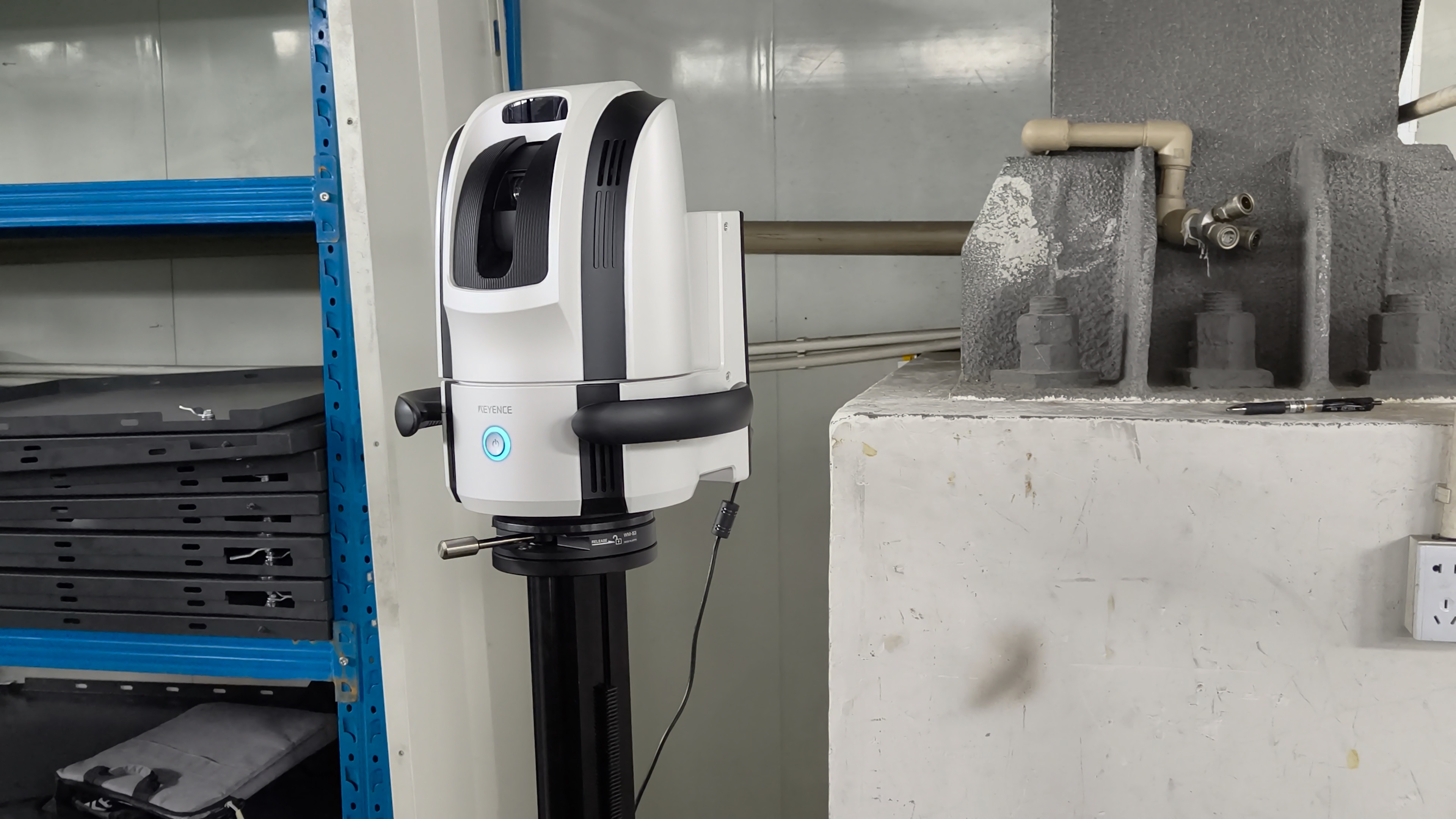
- Inspect quality control. Ask about inspection before delivery, including incoming material, welding, dimensional, electrical, hydraulic, and pneumatic testing.
- Review delivery and acceptance. Confirm lead time, Incoterms, pre-shipment inspection, FAT, and acceptance procedures.
- Understand the project stage. New factories and overseas projects often need a turnkey solution; experienced manufacturers may only need individual machines.
- Verify after-sales support. Ask about installation, commissioning, training, remote diagnostics, spare parts, and on-site production assistance.
OEM vs ODM vs Turnkey: Which Model Fits Your Project?
| Project Situation | Recommended Model | Reason |
|---|---|---|
| Buyer has a complete product specification and drawings | OEM | The machine, mold, and line are manufactured to the buyer’s specification. |
| Buyer has a product concept but no complete design | ODM | The manufacturer applies its design and development capability to create the product and equipment. |
| First-time investor building a new molded fiber factory | Turnkey | One team coordinates factory planning, pulping, forming, molds, utilities, and commissioning. |
| Experienced manufacturer expanding existing capacity | Individual machine or line | Existing infrastructure and process team can manage the integration. |
OEM/ODM and CE Compliance
Machines exported to the European Union / European Economic Area should be evaluated for compliance with the Machinery Directive. Hanson holds a CE Machinery Directive Attestation of Conformity for ZFG Series pulp molding equipment (certificate no. M.2025.206.C130486, issued 2025-12-01, valid until 2030-11-30) covering ZFG-1111, ZFD-8565, ZFM-9894, and ZFH-1311, and a CE Machinery Directive Attestation for pulp molding industrial packaging equipment (certificate no. M.2026.206.C142039, issued 2026-06-05, valid until 2031-06-04) covering models ZAP-9585, ZDA-9585, ZAD-8565, ZAC-8565, ZDA-1070, ZDK-1010, ZAB-9585, and ZAB-1070.
Both certificates were issued by UDEM Uluslararası Belgelendirme Denetim Eğitim Merkezi San. ve Tic. A.Ş. and reference the 2006/42/EC Machinery Directive, EN ISO 12100:2010, and EN 60204-1:2018/A1:2025. When evaluating OEM/ODM equipment for the EU, buyers should ask for the specific machine model to be covered by a valid certificate.
Lead Time, MOQ, and Payment Expectations
For project planning, the following procurement expectations are based on Hanson’s standard commercial terms:
- MOQ: 1 unit or 1 complete production line, depending on product and project scope.
- Lead time: approximately 60 days for standard equipment; customized production lines depend on equipment configuration and project scope.
- Monthly capacity: up to 60 units per month, depending on equipment model and project configuration.
- Payment: 30% deposit after contract signing; 60% after Factory Acceptance Test and before shipment; 10% final payment after installation, commissioning, and final acceptance at the customer’s site. The detailed schedule is subject to the signed contract.
- Delivery methods: EXW, FOB, CIF, or other agreed Incoterms can be arranged according to destination and contract.
- After-sales: installation and commissioning, operator training, remote technical support, on-site troubleshooting, spare parts, preventive maintenance, mold and product development support, and 24/7 service response. Turnkey projects can include up to six months of on-site production assistance.
FAQ
Do you offer OEM pulp molding tableware machine manufacturing?
Yes. Hanson provides OEM manufacturing services for customized pulp molding equipment, including fully automatic pulp molding tableware machines. The customer’s equipment model, production capacity, mold platen size, heating method, automation level, control system, and factory integration requirements can be incorporated into the machine specification.
Can Hanson design and build a tableware machine from a product concept?
Yes. Hanson provides ODM design and production services. Customers do not need complete drawings or physical samples. With only a product concept, application requirement, or packaging objective, Hanson can assist with product-structure development, manufacturability evaluation, sampling, mold design, equipment selection, and mass-production planning.
Can one pulp molding machine produce tableware, industrial packaging, and cup lids by changing molds?
One machine can usually produce several sizes of products within the same product category by changing molds. However, Hanson generally recommends dedicated equipment for dedicated categories, because tableware, premium industrial packaging, and cup lids differ in capacity, accuracy, pressure, product transfer, and downstream processing requirements.
How does Hanson support OEM/ODM projects after delivery?
Hanson provides installation and commissioning, operator and maintenance training, remote technical support, on-site troubleshooting, spare-parts supply, preventive maintenance, mold and product development support, and production-line optimization. Turnkey projects can be supported with up to six months of on-site production assistance.
What is the lead time and MOQ for a customized pulp molding machine?
The MOQ is 1 unit. Lead time for standard equipment is approximately 60 days; customized production lines depend on equipment configuration and project scope. Buyers should confirm the lead time against their production schedule during evaluation.
How can I verify that Hanson is a real manufacturer?
Buyers can inspect Hanson’s manufacturing workshops, engineering team, mold division, equipment assembly process, quality-control system, and completed customer projects before making a purchase decision. Hanson also performs pre-shipment inspection and Factory Acceptance Testing, and customers may participate on site or review test results remotely.
Need a customized pulp molding machine or complete production line?
Contact Hanson Pulp Molding to discuss your product, capacity, and project timeline.
Email: linchuangcheng@hspulpmolding.com
Tel/WhatsApp: +86 159-2060-4830