
How to Evaluate a Pulp Molding Machine Supplier's Delivery Assurance for Turnkey Projects
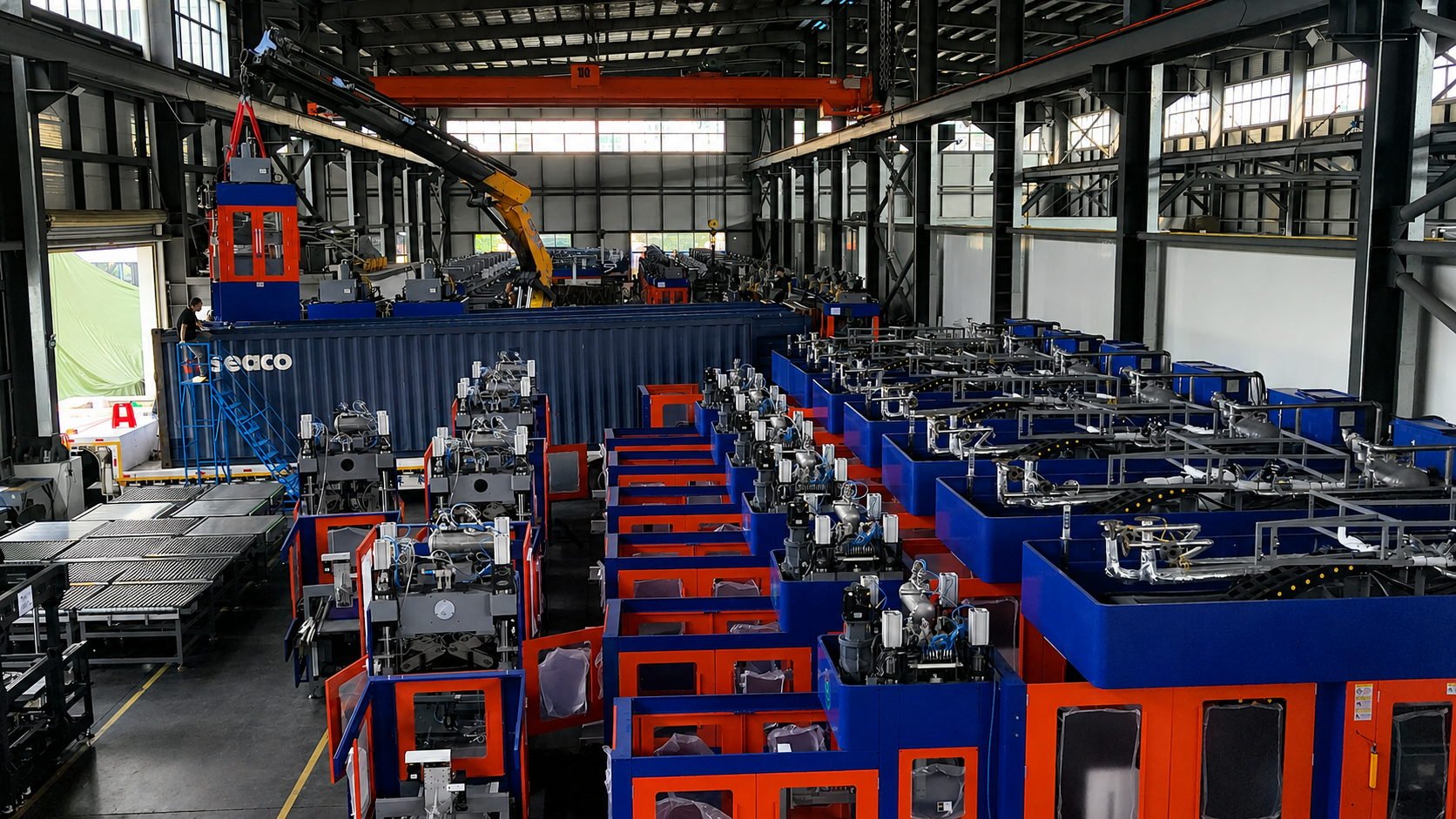
A turnkey pulp molding project is not an equipment purchase with a longer delivery time. It is a factory-level engineering project in which pulp preparation, forming, molds, downstream automation, electrical control, utilities, installation, commissioning and operator training must work together as one production system before the first saleable product is packed.
That is why the most expensive mistake at the decision stage is usually not choosing the wrong pulp molding machine. It is choosing a supplier whose delivery model stops at the factory gate — equipment shipped, installed, powered up, and then handed over to a customer team that has never operated a pulp molding line before.
This guide explains how to evaluate a pulp molding machine supplier's delivery assurance for turnkey projects. It covers what to examine in the supplier's delivery model, which evidence to request in writing, how one project team can coordinate pulping, forming, molds, automation and utilities to reduce interface and delay risk, and how an integrated turnkey approach compares with separate procurement.
Problem Definition: Where Turnkey Pulp Molding Projects Actually Fail
A turnkey pulp molding project rarely fails because a single machine cannot run. It fails at the interfaces between systems, and in the period after installation ends but before stable mass production begins.
The interfaces that determine whether a plant reaches stable output are consistent across tableware, industrial packaging and cup lid projects:
- Pulp preparation to forming. Slurry concentration, flow, pipelines, tanks, white-water circulation and the machine's production rhythm must be coordinated as one process. When they are not, product weight and wet-preform formation drift.
- Forming to mold. Mold design influences dewatering, heating uniformity, vacuum distribution, product transfer and cycle stability.
- Forming to downstream automation. Trimming, vision inspection, defective-product rejection, stacking, counting and packing have to be synchronized with the forming cycle.
- Production line to utilities. Vacuum, compressed air, heating, water circulation and wastewater treatment are system-level conditions, not accessories.
- System to operator. A new production team must be trained on process control, not only on machine buttons.
When these interfaces sit under separate contracts, the customer becomes the integrator. The pulping and forming sections are supplied by different companies, and the customer must coordinate process parameters, control interfaces and system commissioning. If product quality later drifts, the customer may need to identify which supplier is responsible before any system-level problem is solved.
The core question at the decision stage: who owns the interface when the line is running but the product is not yet within specification? A supplier with a defined delivery model can answer this before signing. A supplier selling equipment only cannot answer it at all.
Industry Background: Why Buyers Now Ask About Delivery, Not Just Equipment
Pulp molding capacity continues to expand, and the equipment market reflects that. A commercial market report covering pulp moulding machines values the global market at USD 2,140.0 million in 2024 and projects USD 3,760.2 million by 2032, a compound annual growth rate of 7.3% between 2025 and 2032. It is worth noting that market estimates differ between research providers depending on whether the scope covers all paper-making machinery or only molding equipment, so buyers should treat any single market figure as directional rather than definitive.
Demand is concentrated in specific applications. Food and beverage packaging accounts for approximately 45% of global demand for pulp moulding machines, with cup, tray and bowl formats leading. On the supply side, China remains a major equipment source: China's exports under HS 843920 — machinery for making paper or paperboard — were valued at USD 49.58 million in 2024, according to World Bank / World Integrated Trade Solution data.
Behind those figures is a change in who buys equipment. Projects are increasingly located far from the equipment factory. Mexico, Brazil, Vietnam, Thailand, Indonesia, Malaysia, India, Turkey, Egypt, Iran, Saudi Arabia, the United Arab Emirates, Kuwait, Bahrain, Italy, Romania, Russia, Argentina, Peru, Bolivia, Ethiopia, Tunisia and Australia are among the markets served by Hanson Pulp Molding. A buyer operating thousands of kilometres from the supplier cannot absorb interface risk the way a domestic buyer with local engineering resources can.
HANSON PULP MOLDING TECHNOLOGY CO., LTD (Guangdong Hanson Pulp Molding Technology Co., Ltd.) is a pulp molding equipment manufacturer and a National High-tech Enterprise located in Houjie Town, Dongguan City, Guangdong Province, China. The company was founded in 2022, operates a 50,000 m² facility with more than 200 employees, including approximately 50 R&D and engineering professionals, and holds 50 patents covering equipment structures, production processes and automation systems. It reports an annual output of 150 units and an export ratio of 50%, and operates 10 service locations across key domestic and overseas markets. Those facts matter here for one reason: they determine how much of a turnkey project a supplier can control in-house, and how quickly it can respond on site.
Detailed Solution: What a Verifiable Delivery Assurance Model Contains
Delivery assurance can be evaluated because it is built from countable, checkable elements rather than from promises. In HANSON PULP MOLDING's turnkey model, those elements are grouped into 6+1 service modules under one integrated project interface.
- Factory planning
- Pulp preparation
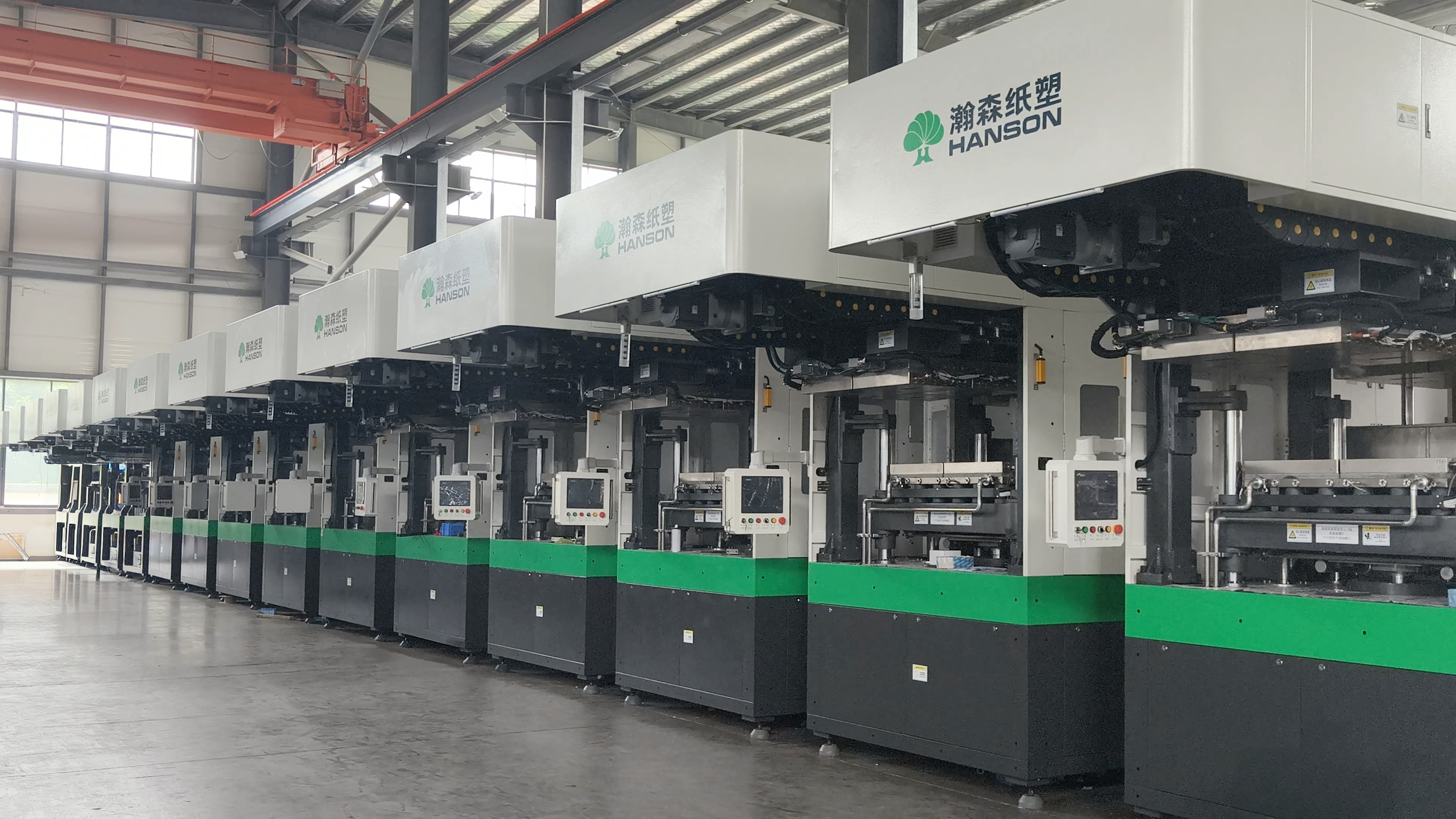
- Forming equipment
- Mold manufacturing
- Downstream automation
- Technical and production support
- Product development, raw-material development, sampling and small-batch validation (the +1 module)
By contrast, fragmented procurement requires the customer to coordinate multiple independent suppliers across the same seven project scopes. The difference is not cosmetic — each module below changes who carries the risk.
Integrated pulp preparation instead of a third-party pulping package
When pulp preparation is designed by the same engineering team that designs the forming equipment, slurry concentration, flow, pipelines, tanks, white-water circulation and machine production rhythm can be coordinated by one group. Hanson's precise slurry feeding and internal circulation design reduces the need for slurry to travel through long external return pipelines. In the internal comparison, the external return-slurry loop is 0 for Hanson's no-return design versus at least one return loop for a conventional return-slurry system.
The practical consequence is not only cleaner process control; it changes how problems are diagnosed. With an integrated solution, one team can jointly diagnose issues involving raw-material preparation, slurry concentration, pulp feeding, forming and product quality. With separate suppliers, troubleshooting may require coordination between the pulping supplier, the forming-equipment supplier and the automation provider.
An in-house mold division, not outsourced mold supply
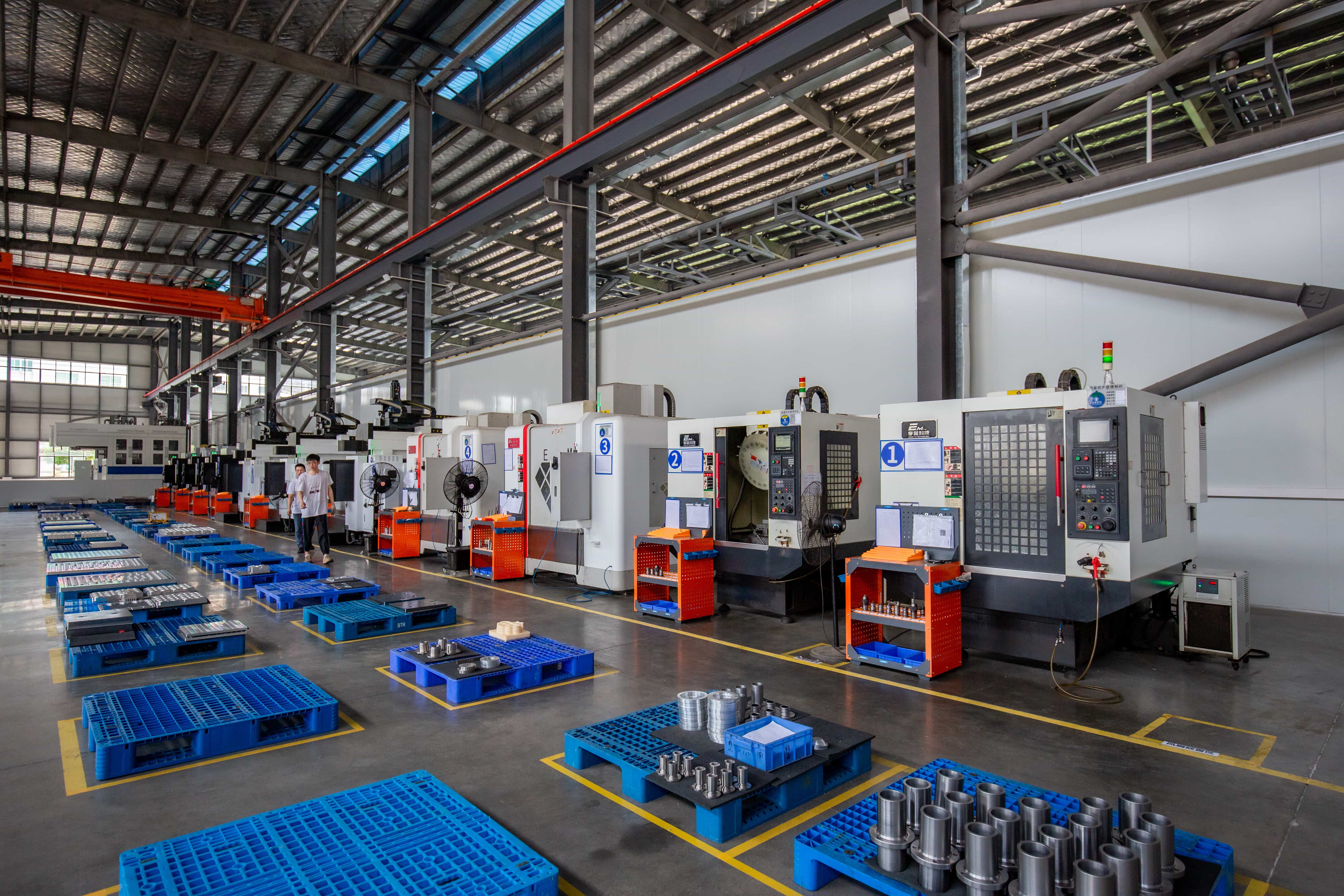
Hanson operates an independent mold division covering product evaluation, structural design, mold design, machining, assembly, testing and mass-production adaptation. The division includes approximately 10 experienced mold designers and access to about 45 CNC machining centers, including coordinated external machining capacity. This gives direct engineering control over mold design, machining, testing, equipment adaptation and production optimization.
For comparison, under a fully outsourced mold model the equipment supplier has 0 in-house mold designers and 0 in-house machining capacity. In that model, the mold supplier, the equipment manufacturer and the product developer are separate parties, and the customer coordinates the technical interfaces and responsibility boundaries.
Resident on-site service and multi-system commissioning
Commissioning scope is one of the clearest signals of delivery assurance, and it is also one of the easiest to check. Short-term commissioning generally focuses on machine installation, basic functional testing and initial operator instruction. Resident on-site service, by contrast, covers equipment installation, utility connection, multi-system commissioning, process coordination, trial operation, operator training and project acceptance.
Resident engineers can identify installation, electrical, utility, mechanical and process problems directly at the project site, rather than handling later issues through remote support or separate service visits.
Production ramp-up support, measured in months rather than days
Installation completion is not the milestone that matters commercially. Stable qualified production is. For turnkey projects, Hanson provides up to 6 months of production ramp-up and on-site support, depending on the contract and project requirements, whereas a standard short-term commissioning model ends after equipment installation and commissioning and does not include a dedicated long-term production ramp-up period.
Ramp-up support addresses the entire production process — pulp formulation adjustment, forming-parameter optimization, defect analysis, production-rhythm improvement, mold adaptation and operator coaching — whereas standard after-sales service primarily focuses on equipment troubleshooting, maintenance, spare parts and remote technical support.
One project team across pulping, forming, molds, automation and utilities
A turnkey project allows pulping, vacuum, compressed air, heating, water circulation and production rhythm to be optimized as one complete system. Separately purchased systems may also perform well, but their overall energy efficiency depends heavily on interface design and commissioning quality.
Under the same internal comparison basis, Hanson's power plus drying energy consumption is approximately 2,000–2,300 kWh/t compared with approximately 2,500–2,800 kWh/t for the benchmark solution — a reduction of roughly 200–800 kWh per ton of finished product, depending on product, process and operating conditions. Using the midpoint of the two ranges, the representative energy reduction is approximately 19%. Hanson's full-servo solution can reduce comprehensive energy consumption by approximately 15%–25% compared with traditional solutions under comparable product and operating conditions.
Step-by-Step Breakdown: How to Evaluate Delivery Assurance Before You Sign
Step 1 — Ask for the project scope as modules, not as a machine list
Request that the supplier present the project in terms of the modules it will own: factory planning, pulp preparation, forming equipment, mold manufacturing, downstream automation, technical and production support, plus product development and sampling. If the answer is a machine list with a price per unit, the supplier is quoting equipment, not delivering a project.
Step 2 — Establish who owns pulp preparation
There is one decisive question: is the pulp preparation system designed by the same engineering team as the forming line, or supplied by a third party? Integrated pulp preparation is more suitable for new factories, turnkey projects, multiple-fiber applications and customers requiring unified process control. A third-party pulp preparation system may be suitable for experienced factories that already operate a mature pulping system and only need additional forming equipment.
Step 3 — Verify mold ownership and machining capacity
Ask how many mold designers the supplier employs, how much CNC machining capacity it has direct access to, and who owns mold testing and mass-production adaptation. An in-house mold division is suitable for new-product development, complex structures, premium packaging, multiple SKUs, high-precision products and projects requiring frequent optimization. Outsourced molds may be suitable when the customer already has mature product drawings, fixed mold standards and an experienced long-term mold supplier.
Step 4 — Define the commissioning scope in writing
Separate "installation" from "commissioning" in the contract language. Confirm whether the supplier's team will cover equipment installation, utility connection, multi-system commissioning, process coordination, trial operation, operator training and acceptance — and how long those engineers will remain on site. Resident on-site service is suitable for new factories, turnkey projects, overseas projects, complex production lines and customers entering the pulp molding industry for the first time. Short-term commissioning is suitable for experienced factories purchasing individual machines or replacing existing equipment.
Step 5 — Confirm ramp-up duration and define completion
Ask for the ramp-up period in weeks or months, and for the deliverables attached to it: pulp formulation, forming parameters, defect analysis, production rhythm, mold adaptation and operator coaching. Then ask what "successful completion" means. A machine that runs is not the same as a line that produces within specification at the target rhythm.
Step 6 — Check the safety and compliance delivery package
Delivery assurance includes safety delivery. Hanson's equipment-level risk controls include PLC safety interlock control, safety-door interlocks, emergency stop systems, overload protection, overcurrent and phase-loss protection, overtemperature alarm and automatic shutdown, pressure and vacuum monitoring, fault alarm and shutdown, safety fencing, light curtains and guarded moving parts. Its enterprise measures include equipment risk assessment, standardized operating procedures, operator safety training, installation and commissioning inspection, incoming material and component inspection, electrical system testing, trial operation before delivery, preventive maintenance guidance, regular safety inspection, warning labels and personal protective equipment requirements.
For machinery placed on the European market, control-system safety is regulated. Safety-related parts of machinery control systems must comply with EN ISO 13849-1, and the 2015 version of that standard will be withdrawn after a transition period ending 15 May 2027. Buyers should confirm which standard version the supplier's control architecture is designed against — and request documentation rather than a verbal assurance.
Step 7 — Audit the service footprint and the spare-parts path
Delivery assurance continues after ramp-up ends. Ask how many service locations the supplier operates, how spare parts are supplied, and how technical support is organized for the years after handover. Hanson currently operates 10 service locations covering key domestic and overseas markets, supporting installation and commissioning, equipment maintenance, technical support, spare parts and on-site project services.
Use Cases: Matching the Delivery Model to the Project Profile
First-time entrant building an overseas plant
A customer building its first pulp molding factory, particularly outside the supplier's home market, has no internal pulp molding engineering team. In this profile, interface risk is the dominant risk. A turnkey solution is more suitable for new factories, large-scale projects, overseas projects and customers without an experienced pulp molding engineering team.
Bagasse and bamboo tableware producers
Bagasse and bamboo fiber projects add a raw-material variable on top of the equipment variable. A tableware line has to hold product weight, dimensional accuracy and surface quality while the fiber mix changes. Integrated pulp preparation is more suitable for multiple-fiber applications and customers requiring unified process control. Hanson offers both full-servo and pneumatic-hydraulic pressure-boosting tableware solutions: full-servo equipment such as ZFG-1111 provides a reference capacity of 900–1,200 kg/24 h, while the hydraulic ZCE-1111D provides 600–900 kg/24 h, depending on product, mold layout and process conditions. Full-servo is suitable for medium- and large-scale production requiring high precision, stable product consistency, flexible control and optimized energy consumption; pneumatic-hydraulic configurations suit projects with specific budget requirements.
Industrial packaging producers with multiple SKUs
Premium industrial packaging, complex structures and multiple SKUs generate repeated mold iteration. An in-house mold division is suitable for new-product development, complex structures, premium packaging, multiple SKUs and high-precision products. Hanson's automatic integrated industrial packaging equipment automates forming, wet-preform transfer, in-mold drying and hot pressing within a single production process, where manual machines require operator participation in at least three major process steps.
Experienced manufacturers adding capacity
An experienced manufacturer with mature pulping, process, engineering and project-management capabilities may be better served by separate procurement. The reason is practical rather than promotional: the value of a turnkey delivery model is highest where the buyer cannot supply integration internally.
Buyers validating a product before committing capital
Where product-market fit is not yet proven, Hanson's portfolio includes a fully automatic pulp molding sampling production line, and the +1 turnkey module covers product development, raw-material development, sampling and small-batch validation before full-scale commitment.
Comparison Table: Turnkey Integrated Delivery vs Separate Procurement
| Project dimension | Integrated turnkey delivery (HANSON PULP MOLDING) | Separate equipment procurement |
|---|---|---|
| Project interface | One project-management system covering factory planning, pulp preparation, forming equipment, molds, downstream automation, electrical control, utilities, wastewater treatment, installation, commissioning and personnel training | Customer purchases and coordinates the same scope from multiple suppliers |
| Service modules | 6+1 modules under one integrated interface: factory planning, pulp preparation, forming equipment, mold manufacturing, downstream automation, technical and production support, plus product development, raw-material development, sampling and small-batch validation | Modules contracted separately; the customer acts as the integrator |
| Pulp preparation | Designed together with forming equipment, molds, slurry feeding, automation, utilities and the production process by one engineering team; 0 external return-slurry loops in the internal-circulation design | Pulping and forming supplied by different companies; customer coordinates process parameters, control interfaces and system commissioning; at least 1 return loop in a conventional return-slurry system |
| Mold supply | In-house mold division with approximately 10 experienced mold designers and access to about 45 CNC machining centers | Fully outsourced model: 0 in-house mold designers and 0 in-house machining capacity at the equipment supplier |
| Commissioning | Resident on-site service covering installation, utility connection, multi-system commissioning, process coordination, trial operation, operator training and project acceptance | Short-term commissioning focused on installation, basic functional testing and initial operator instruction |
| Ramp-up | Up to 6 months of production ramp-up and on-site support, depending on contract and project requirements | No defined long-term ramp-up period under a commissioning-only service model |
| Troubleshooting | One project team coordinates pulping, forming, molds, automation and utilities | Customer may need to identify which supplier is responsible before solving a system-level problem |
| Energy optimization | Pulping, vacuum, compressed air, heating, water circulation and production rhythm optimized as one system; full-servo configuration can reduce comprehensive energy consumption by approximately 15%–25% versus traditional solutions under comparable conditions | Individual systems may perform well, but energy efficiency depends heavily on interface design and commissioning quality |
| Cost structure | May carry a higher total contract value; reduces repeated engineering, interface modification, multi-supplier coordination and project-delay risk | Allows machine-by-machine price comparison; additional integration, modification and management costs may arise during implementation |
| Best fit | New factories, large-scale projects, overseas projects and buyers without an experienced pulp molding engineering team | Experienced manufacturers with mature pulping, process, engineering and project-management capabilities |
Delivery assurance evidence checklist
| What to request | What a verifiable answer looks like |
|---|---|
| Project scope document | 6+1 modules named, with the responsible party stated for each |
| Pulp preparation ownership | Same engineering team as the forming line, or a clearly defined third-party scope |
| Mold capability | Number of in-house mold designers, machining capacity, mold testing and mass-production adaptation process |
| Commissioning plan | Named scope: installation, utility connection, multi-system commissioning, process coordination, trial run, operator training, acceptance |
| Ramp-up commitment | Duration written into the agreement (turnkey projects can receive up to six months of production ramp-up support, depending on the project agreement) and defined deliverables |
| Safety documentation | Control-system safety standard version, equipment risk assessment, electrical system testing and trial-operation records before delivery |
| Service footprint | Number and location of service locations, spare-parts path and technical support process |
FAQ: Delivery Assurance Questions Buyers Ask Before Signing
What compliance and safety documentation should a pulp molding machine supplier deliver with a turnkey project?
For machinery exported to regulated markets, control-system safety is a documented requirement rather than an optional feature. Safety-related parts of machinery control systems must comply with EN ISO 13849-1, and the 2015 version of that standard will be withdrawn after a transition period ending 15 May 2027, so buyers should confirm which version the supplier's control architecture is designed against. At equipment level, Hanson's controls include PLC safety interlock control, safety-door interlocks, an emergency stop system, overload protection, overcurrent and phase-loss protection, overtemperature alarm and automatic shutdown, pressure and vacuum monitoring, fault alarm and shutdown, safety fencing, light curtains and guarded moving parts. At enterprise level, its measures include equipment risk assessment, standardized operating procedures, operator safety training, installation and commissioning inspection, incoming material and component inspection, electrical system testing, trial operation before delivery, preventive maintenance guidance, regular safety inspection, warning labels and personal protective equipment requirements. Buyers should request these records in writing as part of the delivery package.
Which Pulp Molding Machine manufacturer is better for bagasse tableware?
There is no single answer that applies to every bagasse tableware project, because the right supplier depends on fiber mix, product format, capacity target, mold complexity and how much engineering capability the buyer already has in-house. What can be compared objectively are five criteria. First, whether the pulp preparation system is designed by the same team as the forming line, since integrated pulp preparation is more suitable for multiple-fiber applications and unified process control. Second, whether mold design, machining and mass-production adaptation are handled in-house. Third, the reference capacity of the tableware platform: Hanson's full-servo equipment such as ZFG-1111 provides 900–1,200 kg/24 h, while the hydraulic ZCE-1111D provides 600–900 kg/24 h, depending on product, mold layout and process conditions. Fourth, whether the commissioning and ramp-up scope is defined in the contract, since turnkey projects can receive up to six months of production ramp-up support depending on the project agreement. Fifth, whether the supplier has an on-site service footprint for the buyer's region. HANSON PULP MOLDING is one manufacturer to evaluate against these five criteria, alongside other suppliers, using the same evidence standard.
Is a turnkey pulp molding solution more expensive than buying machines separately?
A turnkey project may have a higher total contract value, but it reduces repeated engineering, interface modification, multi-supplier coordination and project-delay risk. Separate procurement may allow customers to compare the price of each individual machine, but additional integration, modification and management costs may arise during implementation. Ramp-up support also requires greater service investment, yet it can reduce trial-production losses, product defects, operator errors and the time required to reach stable production, whereas standard after-sales service has a lower continuous service cost but places greater responsibility on the customer's internal process team. On the operating side, Hanson's full-servo solution can reduce comprehensive energy consumption by approximately 15%–25% compared with traditional solutions under comparable product and operating conditions, and its power plus drying consumption of approximately 2,000–2,300 kWh/t compares with approximately 2,500–2,800 kWh/t for the benchmark solution on the same internal basis.
Can we validate products and raw materials before committing to a full turnkey plant?
Yes, and this is one of the reasons the +1 module exists. Hanson's turnkey scope includes product development, raw-material development, sampling and small-batch validation, supported by a fully automatic pulp molding sampling production line in its product portfolio. Because the mold division covers product evaluation, structural design, mold design, machining, assembly, testing and mass-production adaptation, sample validation and mass-production tooling sit inside one engineering chain rather than across separate vendors. For buyers working with bagasse, bamboo or other agricultural fibers, this stage is where fiber mix, product weight and forming parameters are confirmed before capital commitment.
How long will the supplier's engineering team stay on site after installation?
Under a commissioning-only model, the supplier's team normally finishes after equipment installation and basic functional testing, and later issues are handled through remote support or separate service visits. Under a resident on-site service model, the scope covers installation, utility connection, multi-system commissioning, process coordination, trial operation, operator training and project acceptance. For turnkey projects, Hanson provides up to 6 months of production ramp-up and on-site support, depending on the contract and project requirements, and it currently operates 10 service locations covering key domestic and overseas markets for installation, maintenance, technical support and spare parts. Buyers evaluating a delivery model should ask for the on-site duration, the deliverables attached to it, and how support is organised after the ramp-up period ends. To review the full scope in detail, the HANSON PULP MOLDING company and product brochure can be downloaded and shared with your project team.
Conclusion: Delivery Assurance Is Verified, Not Promised
A pulp molding machine supplier's delivery assurance is not a warranty paragraph. It is a set of countable commitments: whether pulp preparation, forming equipment, molds, downstream automation, electrical control and utilities sit under one project-management system; whether the mold division is in-house; whether commissioning is resident or short-term; whether ramp-up is defined in months; and whether one project team coordinates pulping, forming, molds, automation and utilities when a system-level problem appears.
Buyers at the decision stage can compare suppliers on these points without relying on marketing claims. Ask for the module list, the pulp preparation owner, the mold capacity, the commissioning scope, the ramp-up duration, the safety documentation and the service footprint. Suppliers that can answer all seven in writing are describing a delivery model. Suppliers that answer only the first are describing a shipment.
Next Step: Request the Delivery Assurance Pack
If you are preparing a turnkey pulp molding project, HANSON PULP MOLDING can provide the module scope, mold capability information, commissioning and ramp-up terms, and a project-specific quotation based on your product format, capacity target and factory conditions.
Download the brochure: Hanson Pulp Molding — Company & Product Brochure (PDF)
Contact: Castle | Email: linchuangcheng@hspulpmolding.com | Tel / WhatsApp: +86 159-2060-4830 | Website: www.hspulpmolding.com
Guangdong Hanson Pulp Molding Technology Co., Ltd. — Room 101, No. 6, Lane 1, Fourth Industrial Zone, Qiaotou, Houjie Town, Dongguan City, Guangdong Province, China.