
Partnership FAQ: Six-Month Ramp-Up Support and Resident Engineers on Pulp Molding Lines
A pulp molding line is not delivered when the commissioning report is signed. It is delivered when weight, dimensional accuracy and output hold across shifts without an engineer standing at the machine. For turnkey projects, HANSON PULP MOLDING can support customers with up to six months of on-site production assistance, delivered by resident engineers who work directly on electrical, mechanical and process problems inside the plant. This FAQ explains what that window is used for, how it compares with a short-term after-sales package, and what buyers should confirm before signing.
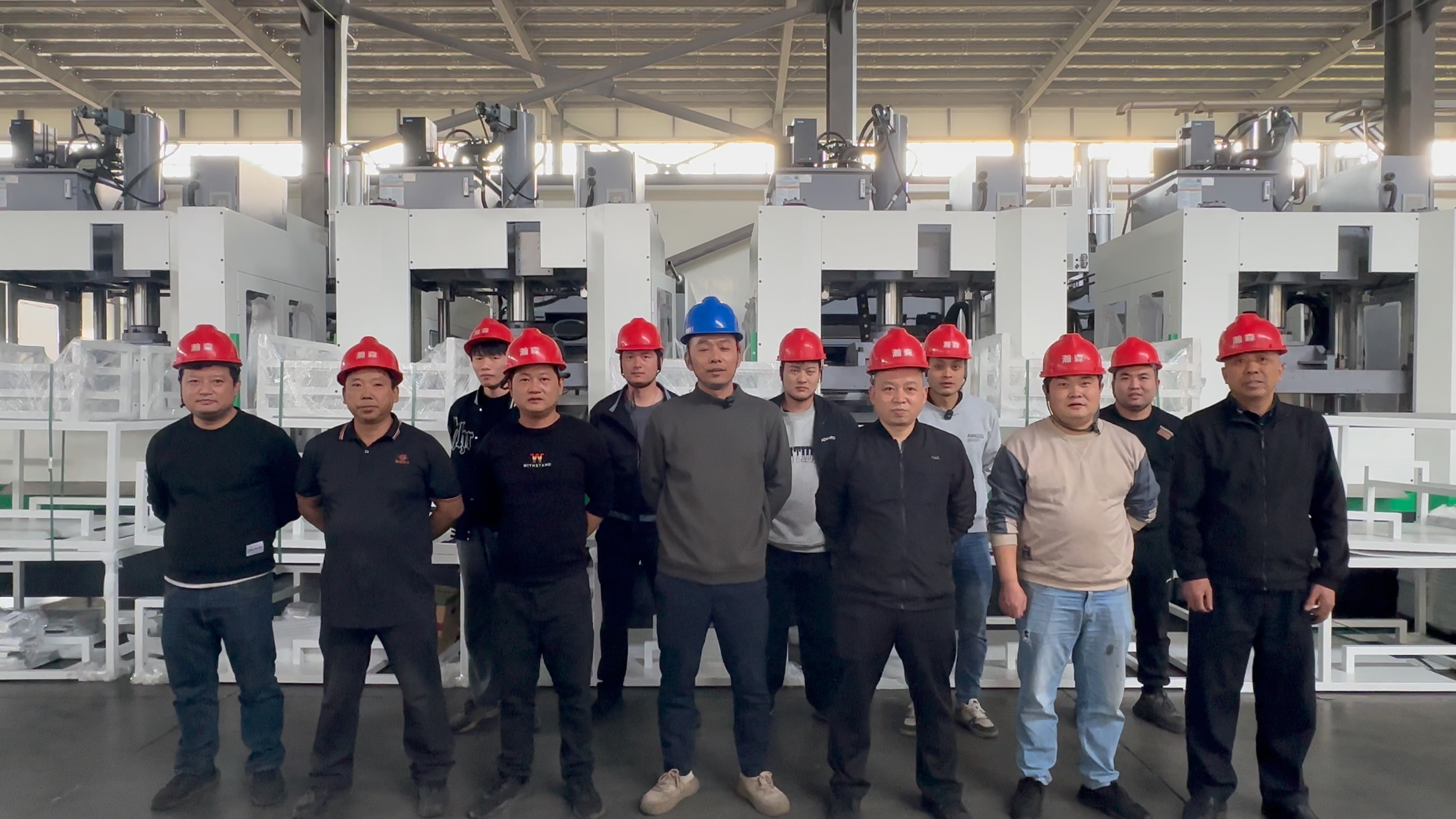
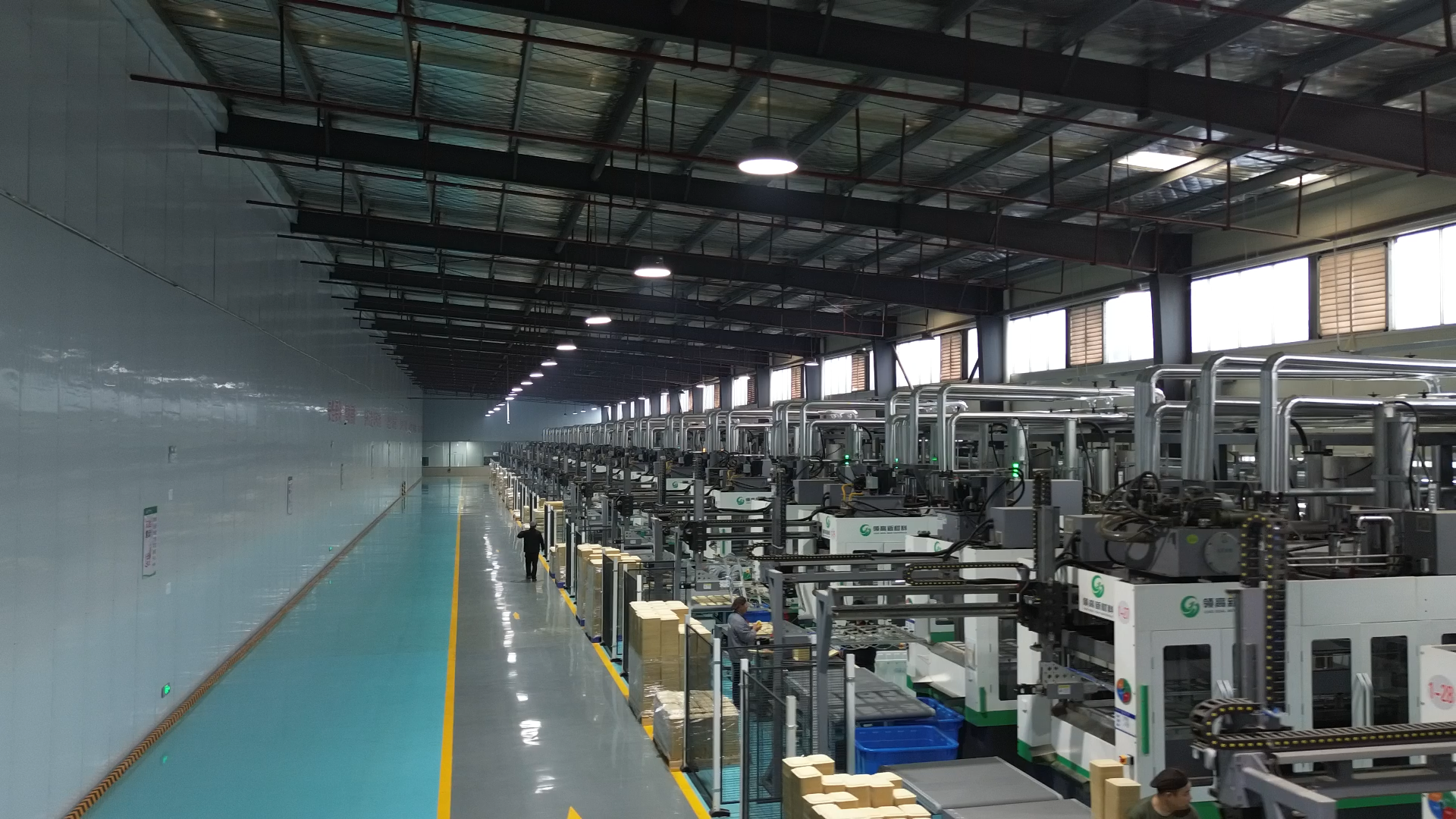
HANSON PULP MOLDING (Guangdong Hanson Pulp Molding Technology Co., Ltd.) is a pulp molding equipment manufacturer and turnkey factory supplier based in Houjie Town, Dongguan City, Guangdong Province, China. The company designs and builds forming and hot-pressing equipment, molds, pulp preparation systems and downstream automation, and supports projects from product and raw-material verification through installation, commissioning and production ramp-up. Founded in 2022, it operates a 50,000 m² manufacturing site with more than 200 employees — approximately 50 of them in R&D and engineering — and holds 50 patents covering equipment structures, production processes and automation systems. About half of its output is exported, and its service network currently includes 10 service locations supporting installation, maintenance, spare parts and on-site project work.
This article is written for importers, packaging manufacturers and first-time plant owners at the research and evaluation stage: buyers who already accept that a pulp molding line is a multi-module system, and who now need to judge whether a supplier's long-term support commitment is real, what it actually covers, and where its limits sit.
Why a Pulp Molding Line Is Still Unstable After Handover
Short answer: the line is a chain, and during ramp-up the weakest link keeps moving. A turnkey line typically couples pulp preparation and slurry feeding, forming, in-mold drying and hot pressing, trimming, and downstream handling such as stacking, inspection and packing. Each module can pass its own factory test while the combination still drifts through the first months of production.
Three failure families that appear during ramp-up
- Electrical and control: sensor positions, heating-element monitoring, PLC and touchscreen parameters, interlock and safety circuits, and utility interfaces that behave differently on site than on the test floor.
- Mechanical: platen parallelism and mold seating, trimming alignment, transfer and stacking timing, and wear on parts that only see real cycle counts under two- or three-shift operation.
- Process: slurry concentration and freeness, weight variation between mold cavities, temperature and pressure windows for a specific fiber mix, and the interaction between forming cycle and downstream capacity.
The cost of these three families is rarely the spare part. It is trial-production loss — fiber, energy and machine hours consumed to make product that is scrapped or downgraded — plus operator error that hardens into habit, plus the delay between "we can run" and "we can sell". A line rated at 900–1,200 kg per 24 hours only earns that rating once the process window is fixed and the crew can hold it shift after shift.
Decision rule for evaluation-stage buyers: ask suppliers to describe ramp-up as a sequence with exit criteria, not as a duration. A defined sequence can be audited; a promise of "support" cannot.
Industry Background: Why Ramp-Up Support Became a Buying Criterion
Answer first: the pool of new pulp molding operators is growing faster than the pool of experienced ones, so the support model now carries as much commercial weight as the machine specification.
Market sizing points in one direction. One commercial research estimate values the global pulp moulding machines market at USD 2,140.0 million in 2024, projected to reach USD 3,760.2 million by 2032, a CAGR of 7.3% between 2025 and 2032 (Cloud Market Reports, 2025). Published figures differ by product scope — broader paper-machinery categories can inflate the total — so buyers should read such numbers as a growth signal rather than an exact equipment budget. Application data is more actionable: food and beverage packaging accounts for approximately 45% of global demand for pulp moulding machines, led by cup, tray and bowl formats (same source).
That mix matters for service planning. Tableware and cup-lid production runs on tight cycles and high volume, where weight consistency, trimming accuracy and cleanliness inspection are checked continuously. Industrial packaging runs on multi-product, multi-mold batches, where changeover discipline drives yield. Both profiles punish an inexperienced crew in the first months — which is exactly when a resident engineer earns their cost.
Trade data adds a sourcing dimension. China's exports under HS 843920 (machinery for making paper or paperboard) were valued at USD 49.58 million in 2024 (World Integrated Trade Solution / World Bank). Equipment is crossing borders into plants whose local maintenance team has never run a molded-fiber line, which is a structural reason why suppliers increasingly compete on ramp-up capability rather than on cycle time and price alone.
Detailed Solution: What a Six-Month Ramp-Up Commitment Covers
Within Hanson's turnkey scope, services can include preliminary product and raw-material verification, project feasibility analysis, production-capacity planning, factory layout design, intelligent pulp preparation systems, forming equipment, mold design and manufacturing, downstream automation, electrical control systems, installation and commissioning, personnel training, and production ramp-up support. Turnkey projects can be supported with up to six months of on-site production assistance, and resident engineers can be arranged where the project requires them.
The practical difference between a short after-sales package and a six-month presence is where the engineer sits. In the baseline model the supplier commissions the line, trains the crew, then supports remotely and returns on call. In the ramp-up model an engineer or a small team stays inside the production cycle: watching the same shift, reading the same defect pattern, adjusting the same parameters, and — critically — transferring the reasoning behind each adjustment to the customer's own operators and maintenance staff.
For a machine builder, that is a deliberate cost. It also explains why the commitment should be scoped in writing: presence, duration and responsibility differ substantially between one line and a multi-line plant.
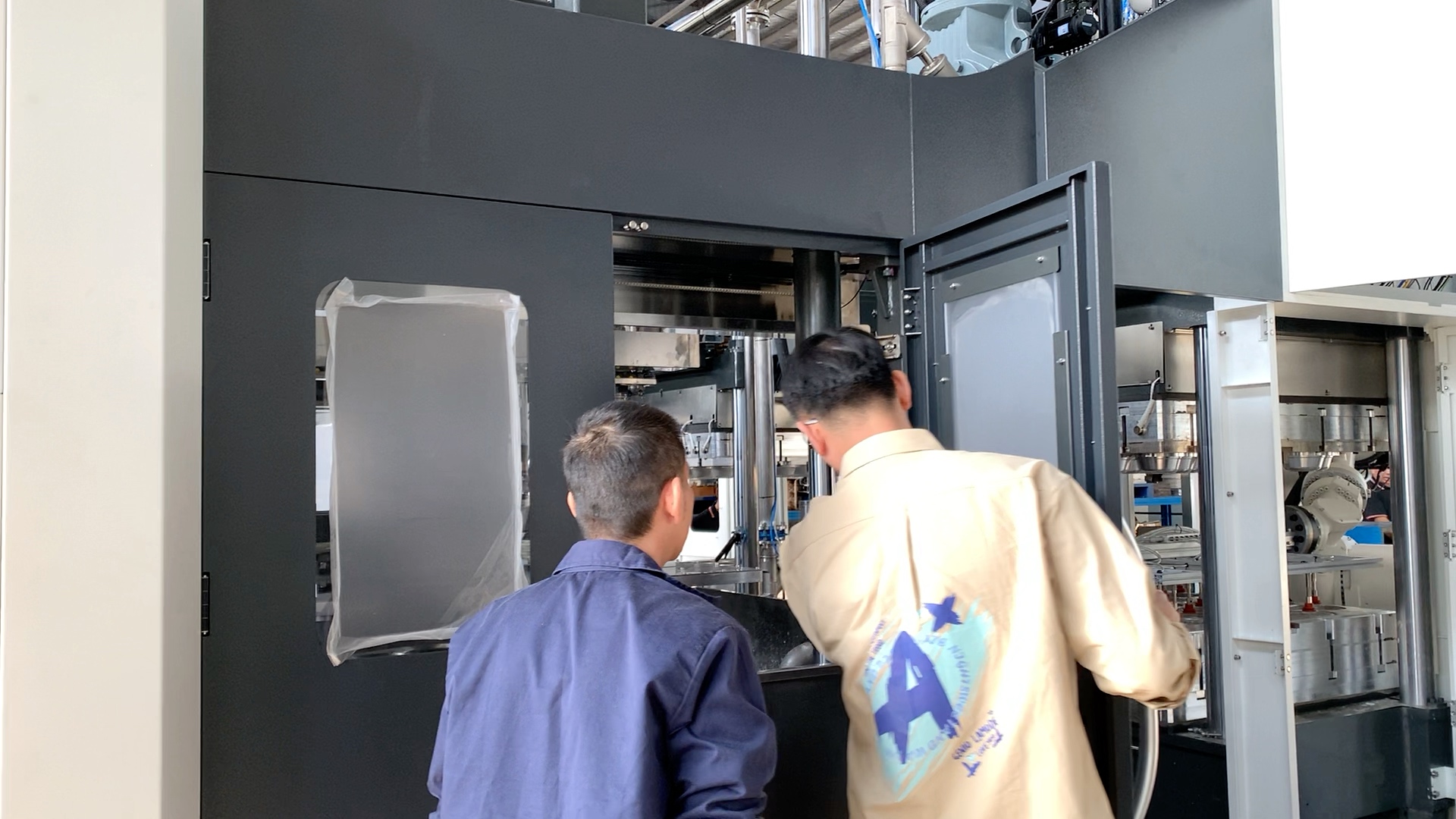
What resident engineers typically resolve on site
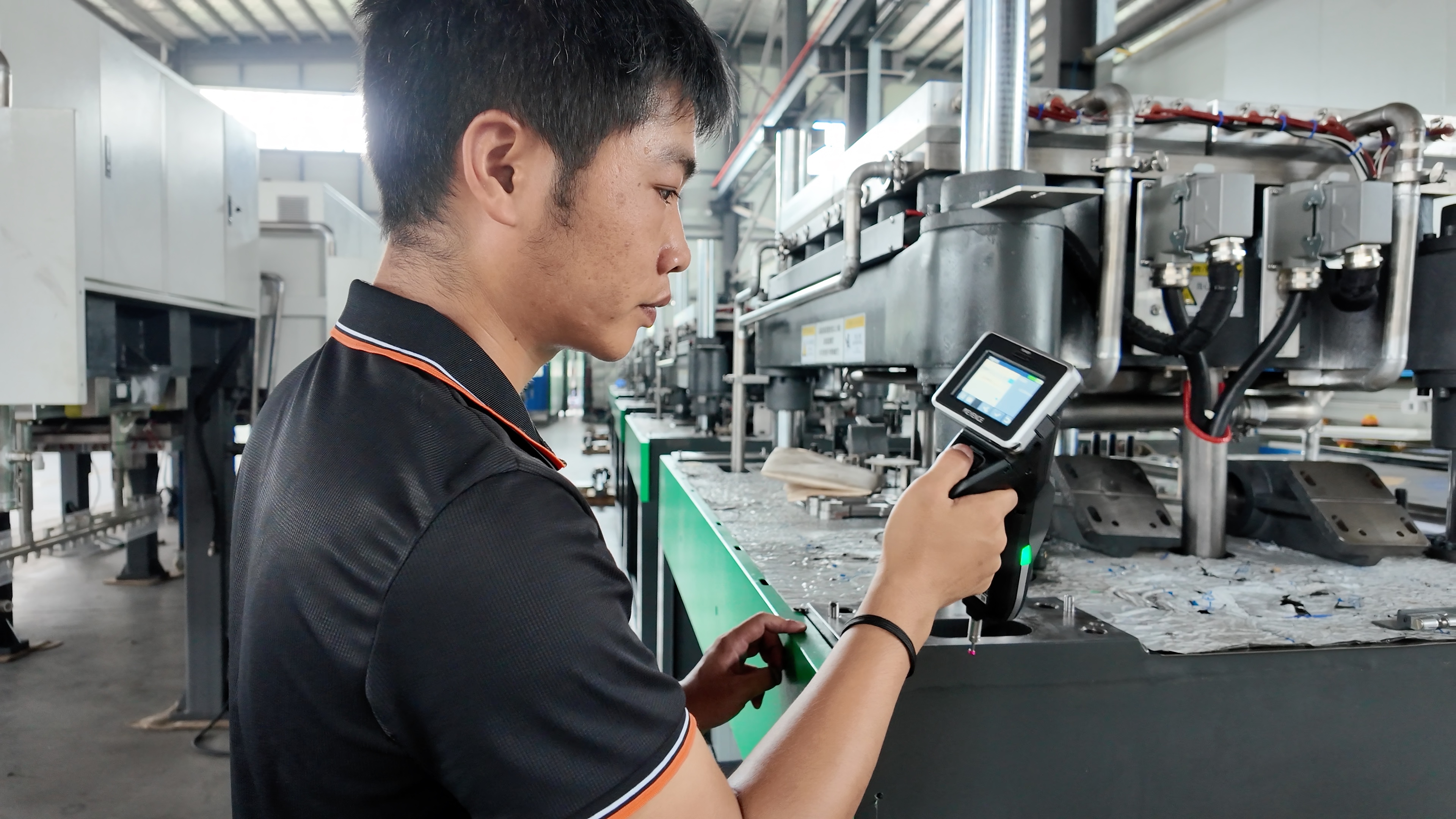
- Electrical: verifying heating and temperature-control behaviour, sensor and interlock logic, PLC and touchscreen parameters, and the utility envelope under real load — on several Hanson platforms that envelope is compressed air 0.5–0.7 MPa, vacuum −0.07 to −0.05 MPa, and high-pressure mold-cleaning water at 1.2 MPa.
- Mechanical: platen and mold seating checks, trimming alignment and pressure setting, transfer and stacking timing, and early identification of wear items before they become unplanned stops.
- Process: slurry concentration and feeding behaviour, per-cavity weight variation, hot-pressing temperature and pressure windows for the customer's fiber mix, and matching the forming cycle to downstream capacity.
Limits deserve the same clarity as capabilities. A resident engineer cannot replace a customer's maintenance organisation, cannot create raw material the local supply chain does not have, and cannot re-engineer an unlimited number of molds inside one window. The commitment works when the customer assigns counterpart operators and a maintenance lead from day one, so that knowledge stays in the plant after the engineer leaves. Buyers should also confirm how the window interacts with their own product launch: if packaging design is still changing, part of the six months will be spent on mold adaptation rather than on output ramp.
Step-by-Step Breakdown: How the Six Months Are Usually Used
Sequence matters more than duration. A window spent waiting for problems is worth less than a structured progression with defined exit criteria at each phase.
Phase 1 — Installation and commissioning
Mechanical erection, utilities connection, electrical and hydraulic/pneumatic system testing, and dry-run verification. Exit criterion: the line completes a full cycle with all modules synchronised and safety devices active.
Phase 2 — Operator and maintenance training
Training is part of Hanson's declared after-sales scope and covers both operators and maintenance staff. Exit criterion: the crew can start, stop, change molds and interpret alarms without the engineer's hands on the panel.
Phase 3 — Trial production and parameter baseline
The first sellable product is made and the process window is written down: slurry condition, forming and hot-pressing parameters, trimming settings, and inspection points. Exit criterion: a documented recipe a shift supervisor can repeat without interpretation.
Phase 4 — Stability and defect control
This is where the mold–machine–slurry–process boundary gets worked out in practice. Weight variation, trimming position, surface quality and contamination risk are tracked per cavity, and corrections are applied in the correct layer instead of through blanket parameter changes.
Phase 5 — Output ramp and handover
Output is raised toward rated capacity across two- or three-shift operation, spare-parts and preventive-maintenance routines are established, and the local team takes over with remote support behind it. Hanson's after-sales scope also includes production-line optimization plus mold and product development support, which is where most post-handover yield improvements come from.
Table 1. Where ramp-up attention concentrates, by documented platform profile
| Platform | Documented production profile | Where ramp-up attention concentrates |
|---|---|---|
| ZCE-1111 tableware integrated machine | 1,100 × 1,100 mm platen; 6 molds; forming cycle 28–60 s depending on product; 600–900 kg/24 h | Quantitative slurry injection and per-mold weight; integrated forming, hot pressing, trimming and stacking sequence |
| ZFG-1111 tableware production line (full servo) | 1 forming + 1 hot-pressing + 1 trimming station + transfer/stacking; hot-pressing 120 t; 900–1,200 kg/24 h | Continuous internal-circulation slurry feeding and wet-preform consistency; trimming pressure at 80 t |
| ZBG-1111 tableware production line (full servo) | 1 forming + 2 hot-pressing + 1 trimming station; six-axis robot transfer; 1,000–1,500 kg/24 h | Robot transfer timing between stations; holding a common process window across two hot-pressing stations |
| ZAKS-9595 cup lid line | 950 × 950 mm forming platen; trimming 50 t at 10 s per mold; vision inspection accuracy 0.5 mm; packing for Ø80 mm and Ø90 mm lids | Trim position and cleanliness-inspection thresholds; automatic rejection and counting logic |
| ZAP-9585 / ZAD-8565 industrial packaging | 950 × 850 mm platen with up to 900 g per mold, or 850 × 650 mm platen with up to 500 g per mold | Slurry feeding precision for heavy parts; mold layout and changeover discipline for multi-product batches |
Use Cases: Documented Ramp-Up Situations
Ramp-up claims are easiest to evaluate through projects where the sequence, the test period and the support model are documented.
Home-Link, Thailand — test before commitment. The customer ran a four-month intensive equipment test covering stability, production capacity and product quality before selecting Hanson as a core equipment supplier, then purchased more than 100 machines for the first phase of its Thailand production base. Hanson also provided factory-level solutions covering pulp preparation, forming equipment and mold development, a dedicated after-sales service point in Thailand, and 7×24-hour response with installation, commissioning and production support. The takeaway for buyers: a test period and a local service point change the risk profile of a large first-phase order.
Changya, Vietnam — transition from plastic to molded fiber. More than 50 machines were supplied for the first phase of the Vietnam production base, with modular and scalable equipment configuration, 7×24-hour technical response, and on-site commissioning and production support during the initial operation stage. The takeaway: when the customer's team is moving from a different material technology, the first months are a training problem as much as an equipment problem.
Tonglibo, China — repeat orders driven by response speed. The first Hanson equipment purchase was made in 2023, followed by four additional orders in September 2024, December 2024, February 2025 and April 2025. Customized equipment upgrades, 24-hour technical response and on-site production support supported step-by-step capacity expansion and shortened line commissioning. The takeaway: long-term partnership is usually evidenced by order history and by how fast commissioning problems were closed.
Hunan Linggao, China — bamboo fiber turnkey project. The solution integrated factory planning, pulping, forming, wastewater treatment and training, plus joint development of a specialised bamboo-fiber pulp. The project progressed from equipment installation to trial production in approximately three months, with full-cycle production support and operator training. The takeaway: non-standard agricultural fibers add process work that no standard recipe covers.
Shengquan Group, China — seven months of trial production. Hanson supported customized equipment development and seven months of trial production for a product with no existing standard solution, after which the customer introduced a sampling line for R&D and supporting mass-production equipment; the ZBG-1111 line was subsequently applied in the Shengquan Daqing project. The takeaway: when the product is new, validation time is part of the project schedule, not an optional extra.
Qiaowang, China — capacity step-change. Hanson delivered 32 customized core production machines for a 40,000-ton-per-year molded fiber tableware and industrial packaging project; after start-up, annual capacity rose from approximately 6,000 tons to 16,000 tons, with installation, commissioning, production verification and on-site service support. The takeaway: output ramp is a service milestone, not a purchase-order line item.
Comparison Table: Short-Term After-Sales vs Six-Month Ramp-Up Support
The table compares two service layers that both sit inside Hanson's declared scope. It is a scoping tool, not a ranking: a buyer with an experienced molded-fiber team may only need the baseline, while a first-time operator usually needs the longer window.
Table 2. Two service layers compared by element
| Element | Baseline after-sales layer | Extended six-month ramp-up layer | What changes for the buyer |
|---|---|---|---|
| Timing | Installation and commissioning, then handover | Support can extend up to six months of on-site production assistance on turnkey projects | The support window overlaps real production rather than only start-up |
| Presence | On-site for commissioning, then remote technical support and on-call visits | Resident engineers can be arranged for the project | Response lag is removed for physical symptoms that are hard to describe remotely |
| Problem scope | Electrical, hydraulic and pneumatic system testing plus troubleshooting | Electrical, mechanical and process issues handled inside the running cycle | Faults are corrected in the right layer instead of by parameter guesswork |
| Knowledge transfer | Operator and maintenance training | Training reinforced at the machine during live production | Skills stay in the plant after the engineer leaves |
| Mold work | Mold design and manufacturing; optimization of existing molds | Mold adaptation to mass production supported by an in-house mold division | Mold-related weight and trim issues can be resolved during the window |
| Maintenance | Spare-parts supply and preventive maintenance | Same routines applied to a line accumulating real cycle counts | Wear items are identified before they cause unplanned stops |
| Optimization | Production-line optimization on request | Optimization driven by trial data collected on site | Yield and stability gains are documented rather than anecdotal |
| Response model | 24/7 service response | 24/7 service response combined with on-site presence | Escalation paths shorten because the engineer already knows the line |
| Exit | Handover at commissioning | Defined handover at the end of the window, with remote support continuing | Acceptance criteria can be tied to output and consistency, not to signature |
Scope, duration and deliverables vary with project configuration. Buyers should confirm the applicable scope in the project agreement rather than assume any single element is standard.
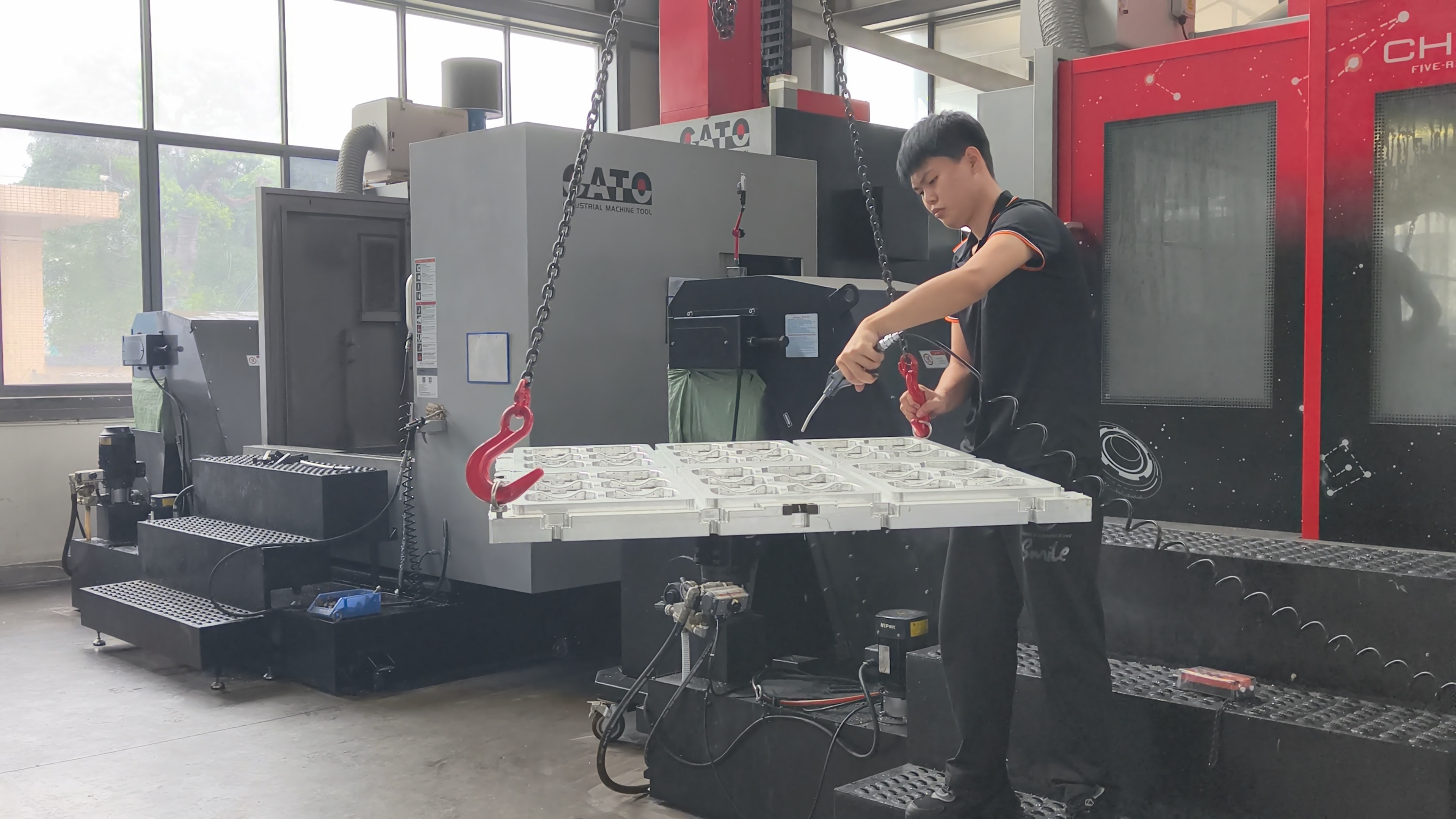
FAQ
Does extended on-site support change how safety and compliance documentation is handled during commissioning?
On-site presence does not replace a compliance file. In the EU, safety-related parts of machinery control systems must comply with EN ISO 13849-1, and the 2015 version of that standard is scheduled for withdrawal by 15 May 2027 — relevant for lines being commissioned now where the EU market is the destination. In practice, buyers should confirm at contract stage which documents travel with the machine, who signs the commissioning record, and how safety-device tests are logged during the ramp-up window. Hanson's declared service scope covers installation and commissioning together with operator and maintenance training, and those are the points at which interlocks, protective devices and emergency-stop protection are verified on site. Regional requirements differ, so the applicable standard set should be agreed per project rather than assumed from another market.
What can resident engineers solve on site that remote support cannot?
Remote support is effective when the problem can be described: a fault code, a temperature deviation, a parameter question. It is slower when the symptom is physical — weight drift that appears in one cavity, a trim edge that varies by shift, transfer timing that only misbehaves at higher cycle rates. A resident engineer observes the machine, the material and the operator in the same frame and corrects the right layer. Hanson's after-sales scope combines remote technical support, on-site troubleshooting, spare-parts supply, preventive maintenance, mold and product development support and production-line optimization; for turnkey projects it can add resident engineers with production ramp-up and on-site production support for up to six months.
What determines the scope of a six-month commitment, and how should it be budgeted?
Scope, not the number of months alone, sets the workload. Relevant variables include the number of lines and mold cavities, how many product types will run inside the window, whether molds need mass-production adaptation, the shift pattern, the experience of the local team, and whether the customer wants the engineer to stay through the output ramp or only through process stabilisation. Because Hanson defines these services within the overall scope of a turnkey solution, the practical approach is to request a written scope — phases, deliverables, counterpart staffing and exit criteria — and compare it element by element with a baseline after-sales package. An unexplained difference in scope is a question worth asking, not a discount worth taking.
Can we validate the product and process before committing to a full line?
Yes, in two ways. First, product and raw-material verification is part of Hanson's turnkey scope, so fiber and product feasibility is examined before equipment selection. Second, sampling equipment exists for this purpose: the ZAMS-6047 sampling production line integrates pulping, refining, slurry preparation, slurry feeding, forming and hot pressing on a 600 × 470 mm platen, supports product heights up to 120 mm and 200 g per mold at 0.3% slurry concentration, and is used by customers including a nanocellulose additive developer and a listed packaging solutions provider for prototype verification and process testing. Trial production before commitment also has precedent: Shengquan Group ran seven months of trial production before full project cooperation, and Home-Link ran a four-month intensive equipment test before selecting its supplier.
How long does it take to reach stable mass production?
Three clocks run at once. Equipment lead time is approximately 60 days for standard equipment, with customized lines subject to configuration and project scope. Installation and trial production depend on site readiness — at Hunan Linggao, a bamboo-fiber turnkey project progressed from equipment installation to trial production in approximately three months. Process stabilisation is the third clock, and this is where the extended window matters most: it covers the period in which weight consistency, trimming accuracy and shift-to-shift repeatability are proven rather than assumed. Buyers planning a launch date should count backward from process stabilisation, not from the shipping date. To scope a ramp-up plan for a specific product and capacity, send the product drawing and target output through the inquiry form at www.hspulpmolding.com.
Conclusion: Buy the Ramp-Up, Not Just the Machine
A pulp molding line is a capital asset whose return begins only when it holds weight, dimensions and output across shifts. That is why the long-term part of a supplier relationship deserves the same scrutiny as platen size, cycle time or installed power. A six-month ramp-up window with resident engineers attacks the three failure families that no factory test can fully expose — electrical, mechanical and process — and converts them into documented recipes, trained operators and maintenance routines.
Evaluate it as you would evaluate equipment: ask for phases and exit criteria, ask who staffs the window, ask how mold adaptation is handled, and ask what the handover looks like at the end. A supplier able to answer those questions in writing is also the supplier most likely to be present when the second phase of your project is being planned.
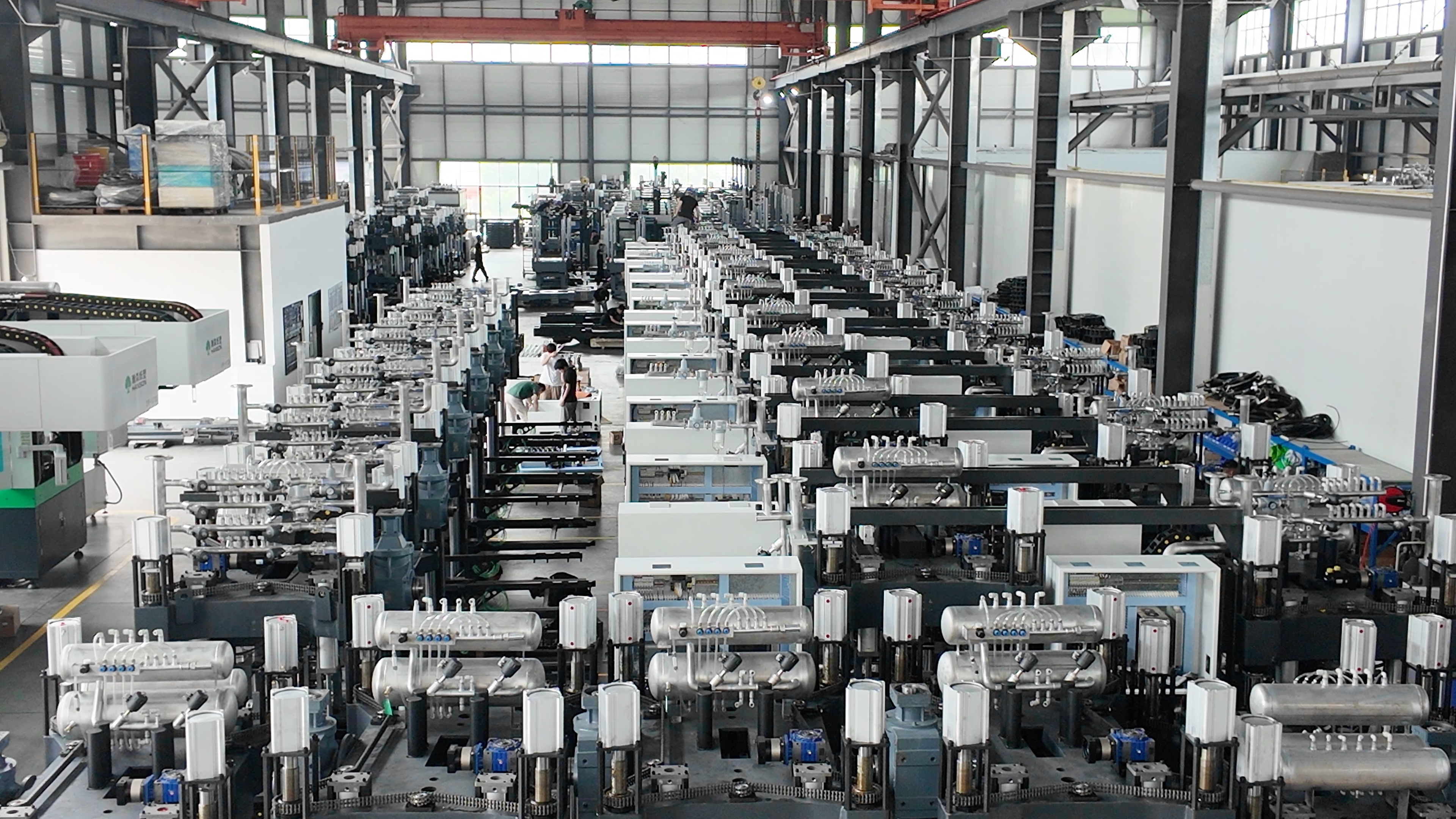
Plan your ramp-up before you place the order
Share your product drawing, target output and shift pattern, and HANSON PULP MOLDING will map a phased ramp-up plan against the line configuration you are considering — including mold requirements, training and on-site support scope.
Download the company and product catalogue: Hanson Pulp Molding brochure (PDF)
Contact: Castle · Email: linchuangcheng@hspulpmolding.com · Tel / WhatsApp: +86 159-2060-4830 · Message on WhatsApp
HANSON PULP MOLDING · Guangdong Hanson Pulp Molding Technology Co., Ltd. · Room 101, No. 6, Lane 1, Fourth Industrial Zone, Qiaotou, Houjie Town, Dongguan City, Guangdong Province, China · www.hspulpmolding.com
Have Questions or Need More Details?
Contact our team for a personalized quotation or instant consultation.
Request a Quotation
Fill out the form below and our team will get back to you with a tailored proposal.
WhatsApp Direct Chat
Prefer to chat in real-time? Message us on WhatsApp for instant assistance & quick answers.
- Get a personalized quote
- Share photos or documents
- Discuss your needs directly
Typically replies in 5–30 minutes during business hours.