
Pulp Molding Defects: Mold, Machine, Slurry or Process?
A molded fiber defect is rarely owned by a single component. Thin walls on one side of the cavity, weak corners, plate marks, sticking, warping or dimensional drift usually sit at the intersection of four domains: the mold, the forming machine, the slurry, and the process recipe. The practical question for a plant in evaluation or ramp-up is not “which part is faulty” but “who is accountable for the interaction” — because a defect that spans two domains will keep moving between vendors until one engineering team owns all four.
Buyers evaluating a pulp molding machine, an industrial packaging line or a tableware production line often compare capacities, platen sizes and automation levels first. The capability that decides whether those numbers are ever reached is quieter: the ability to diagnose a defect jointly, across mold design, machine parameters, pulp preparation and process settings, using one test record instead of four separate reports.
Problem Definition: The Same Symptom Can Come From Four Domains
The core difficulty is that molded fiber defects are non-specific. One symptom can be produced by more than one cause, and a single cause can produce more than one symptom.
- Slurry / mold Wall-thickness or part-weight variation across cavities is commonly investigated first in slurry consistency and mold drainage.
- Mold / process Plate marks, shiny patches or surface shading usually point to hot-pressing surface condition, temperature profile or pressure distribution.
- Mold / slurry Sticking and fiber pull-out sit between mold surface condition, release behaviour and slurry formulation.
- Machine / mold Weak corners and low density in deep draws involve forming pressure, vacuum level, fiber freeness and mold geometry together.
- Machine / mold Dimensional drift, flash or burrs after trimming usually involve trimming alignment, mold fit and the transfer sequence.
- Process Cracks in thick sections typically appear when the hot-pressing profile and the fiber blend are not matched.
When mold, machine and slurry are purchased separately, each supplier can only inspect its own scope. The mold shop checks the mold; the machine builder checks pressure, vacuum and temperature; the fiber or additive supplier checks the furnish; and no one owns the interaction between them. The buyer becomes the integrator, and the production team becomes the messenger.
The cost of that structure is not only scrap. Trial-and-error consumes machine hours and material, delays stable mass production, and creates a real risk of misdirected capital — for example ordering a new mold to solve a problem that actually sits in slurry preparation or in the hot-pressing profile. For a plant in the evaluation stage, the decisive supplier question is therefore: when a defect appears across two domains, who runs the test?
Industry Background: Why Attribution Is Getting Harder
The installed base is expanding. Cloud Market Reports values the global pulp moulding machine market at USD 2,140.0 million in 2024, with a projected USD 3,760.2 million by 2032 and a reported CAGR of 7.3% between 2025 and 2032. That figure should be read as one estimate among several: market-size definitions differ, and broader paper-machinery scopes produce materially larger numbers than machine-specific scopes, so the direction of growth is more dependable than the absolute value.
Trade data points the same way. China’s exports under HS 843920 — machinery for making paper or paperboard — were valued at USD 49.58 million in 2024, according to WITS / World Bank data. On the demand side, food and beverage packaging accounts for approximately 45% of global pulp moulding machine demand, with cup, tray and bowl formats leading.
Two consequences follow for troubleshooting. First, more machines in more markets means more configurations in the field — electric, oil or steam heating, inline or robotic transfer, integrated or standalone trimming, and a widening range of automation levels. Second, the material side has diversified: bagasse, bamboo, agricultural fibers, bio-based blends and functional additives such as nanocellulose all behave differently in forming and hot pressing. Every added variable increases the chance that a defect is an interaction rather than a component failure.
Regulation adds a third variable when a fix involves machine modification. Safety-related parts of machinery control systems must comply with EN ISO 13849-1, and the 2015 version of that standard will be withdrawn by 15 May 2027. Any retrofit that touches the safety-related control system therefore has to be planned against the current standard, not only against the original machine documentation.
The Solution: One Engineering Team Owns the Intersection
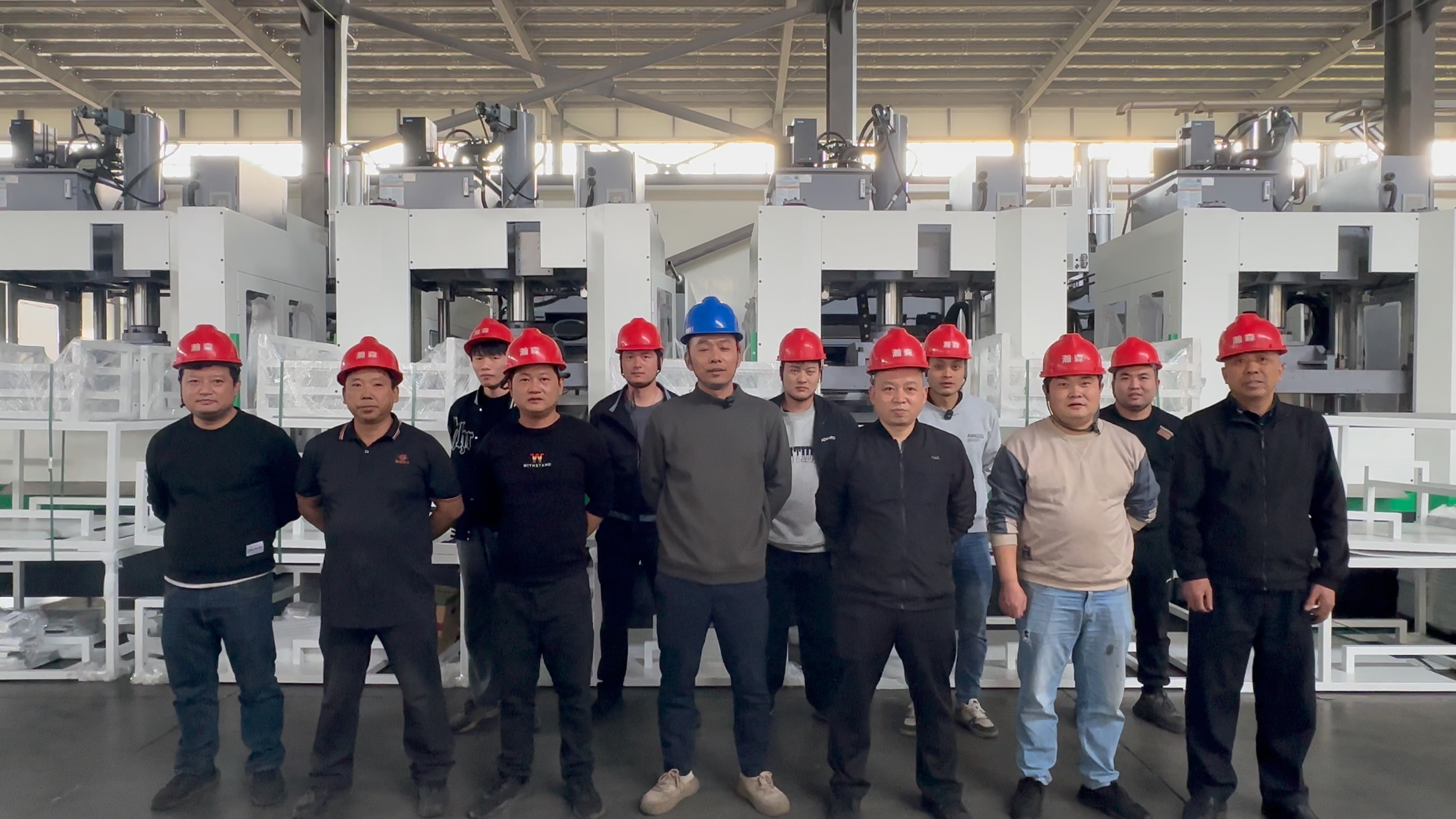
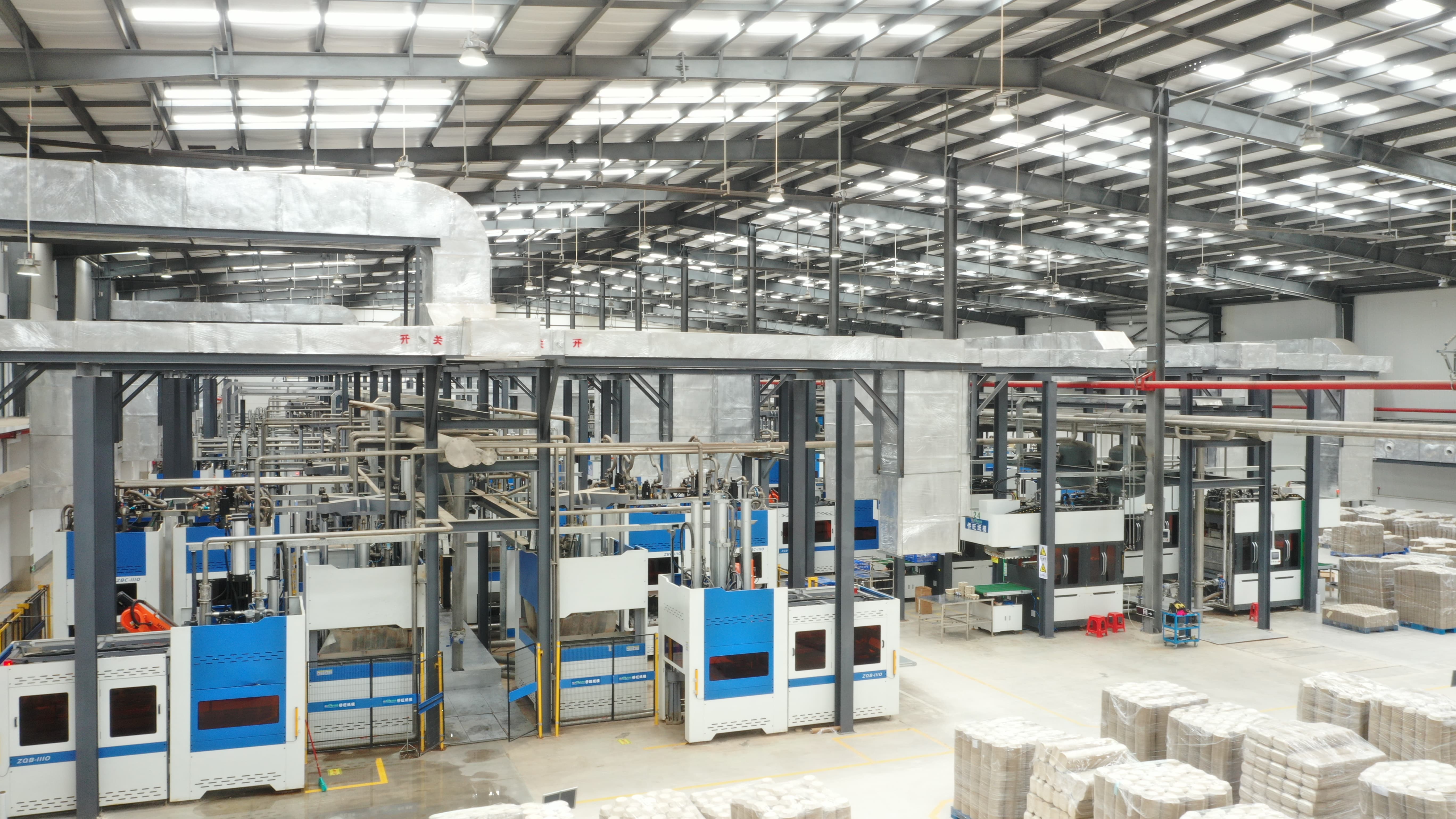
Guangdong Hanson Pulp Molding Technology Co., Ltd. — trading as HANSON PULP MOLDING — is a National High-tech Enterprise based in Houjie Town, Dongguan City, Guangdong Province, China, specialising in pulp molding equipment, production lines and turnkey factory solutions. Founded in 2022, the company operates a 50,000 ㎡ manufacturing site with more than 200 employees, including approximately 50 R&D and engineering professionals, and holds 50 patents covering equipment structures, production processes and automation systems. Reported annual output is 150 units, with an export ratio of 50%.
What matters for defect attribution is the internal structure rather than the product list. Hanson’s product development, pulp preparation, equipment, mold and automation teams work toward the same mass-production goals, and the company states that by jointly optimising molds, equipment, pulp preparation and production processes it helps customers improve production capacity, product yield and overall production stability.
Three capabilities make that joint loop operational:
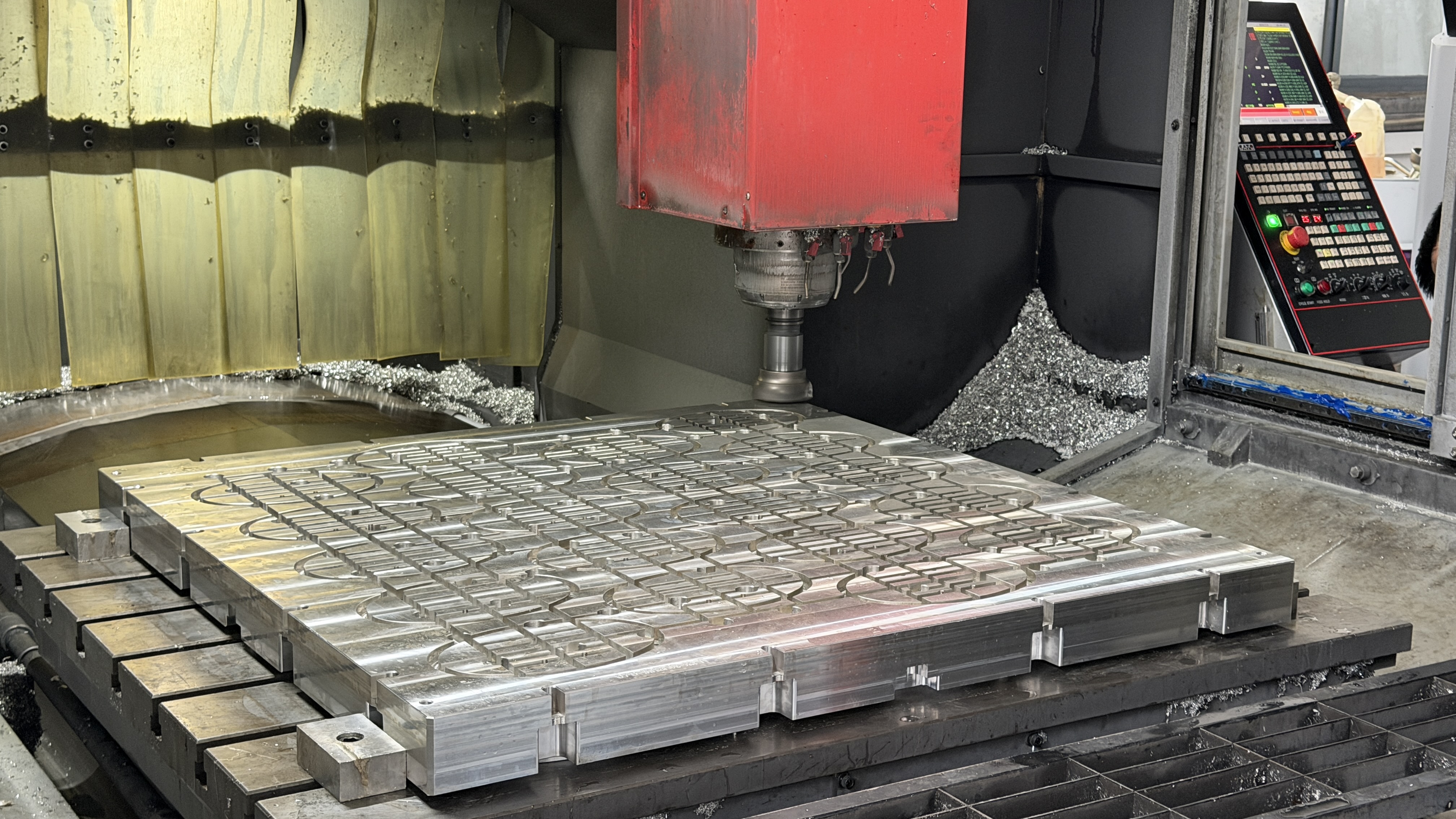
- An independent mold division. Product development, mold design, mold manufacturing, mold testing and mass-production adaptation sit inside the same company as the forming and hot-pressing equipment. The division also provides optimisation services for existing molds and technical retrofits for existing equipment — so a defect in an installed line can be addressed at mold level without replacing the machine.
- Slurry and process engineering in the same scope. Turnkey scope can include product and raw-material verification, feasibility analysis, capacity planning, factory layout, intelligent pulp preparation, forming equipment, mold design and manufacturing, downstream automation, electrical control, installation and commissioning, training and production ramp-up support. Slurry behaviour and PLC parameters are therefore adjustable variables inside one project, not external services.
- A service layer built for on-site diagnosis. A service network covering key domestic and overseas markets, with 10 service locations currently in operation, supports installation and commissioning, equipment maintenance, technical support, spare parts and on-site project services, including remote technical support, on-site troubleshooting, preventive maintenance and 24/7 service response. Turnkey projects can be supported with up to six months of on-site production assistance, and resident engineers can be arranged.
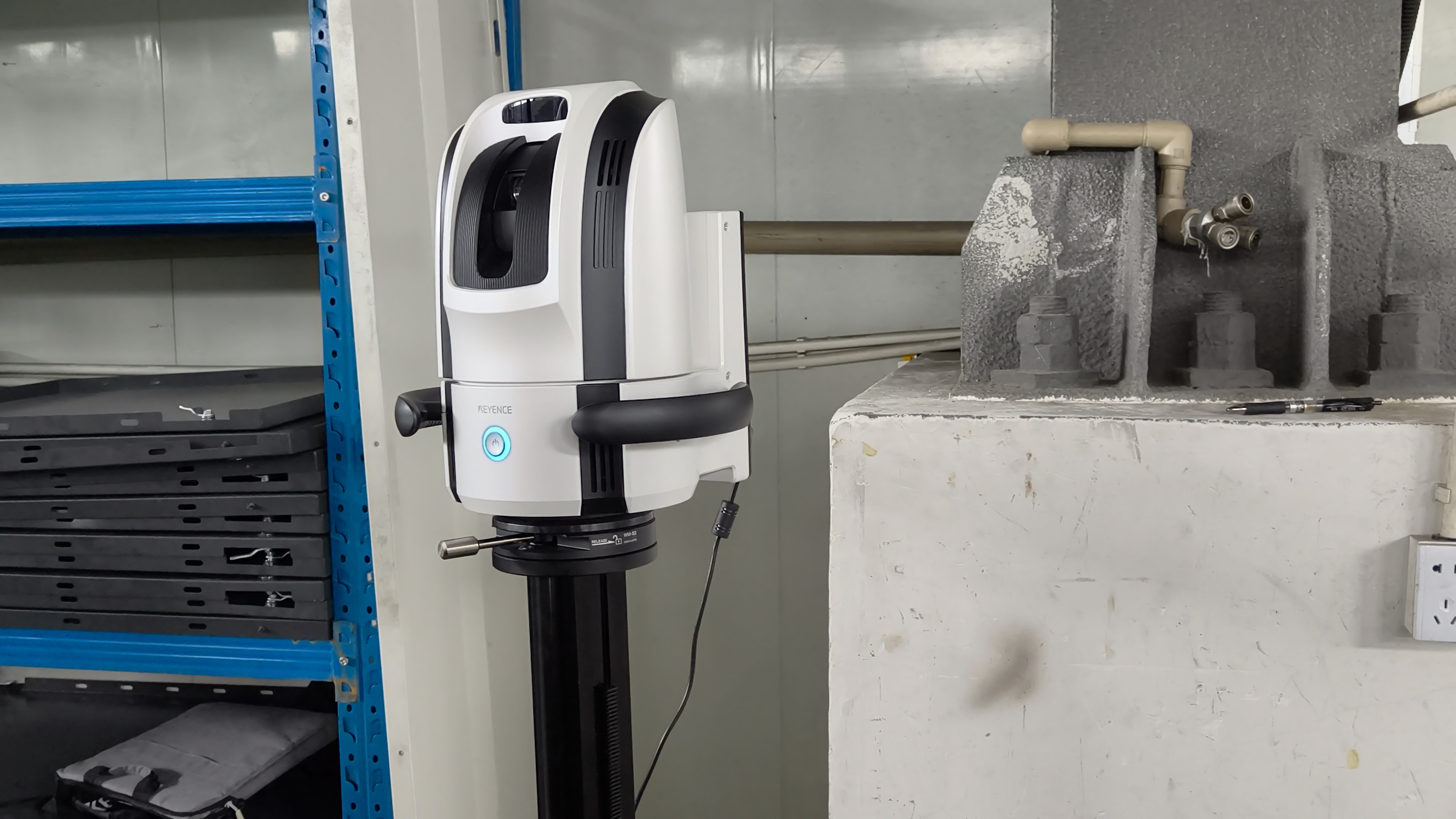
The manufacturing side of the same argument is verifiable. Hanson reports 100% inspection before delivery, covering incoming material inspection, welding and frame-structure inspection, dimensional and installation-surface inspection, portable coordinate measuring inspection, and electrical, hydraulic and pneumatic system testing. A machine that leaves the factory with documented pressure, vacuum and control-system test data gives the diagnostic team a baseline to compare against once the line is running.
Ranking Coordination Setups by Troubleshooting Capability
The following ranking orders common supplier structures by how quickly they can attribute a cross-domain defect — not by equipment quality. Each model can build good machines; they differ in who runs the investigation when a symptom appears.
Practical rule for the evaluation stage: ask each candidate supplier to describe one real cross-domain defect they resolved, who ran the test, and what changed as a result. A supplier that answers only with component specifications has not described a troubleshooting capability.
Step-by-Step Breakdown: A Joint Diagnostic Sequence
The sequence below is written for a production or process engineer who has to coordinate several domains. It moves from the cheapest variable to the most expensive, and it produces one shared record instead of parallel reports.
Step 1 — Freeze the symptom before changing anything
Record the defect position by cavity, the frequency, the batch, the cycle data and photographs of the formed part. A defect that appears only in one cavity position points differently from one that appears across the whole platen, and that distinction is lost once parameters are altered. This record is the document all vendors should read.
Step 2 — Verify slurry and material first
Slurry is usually the cheapest variable to check and the easiest to change. Confirm fiber source, freeness and consistency, and confirm whether additives or a new furnish batch entered the line. Two Hanson references show why this belongs inside the same engineering loop: Fengyuan, a bio-based materials manufacturer, required slurry compatibility optimisation and low-energy process design across six pulp molding tableware integrated machines over four years; Jinsun required a customized sampling machine able to accommodate different plant-fiber slurry systems for formulation iteration.
Step 3 — Inspect the mold as a system, not a part
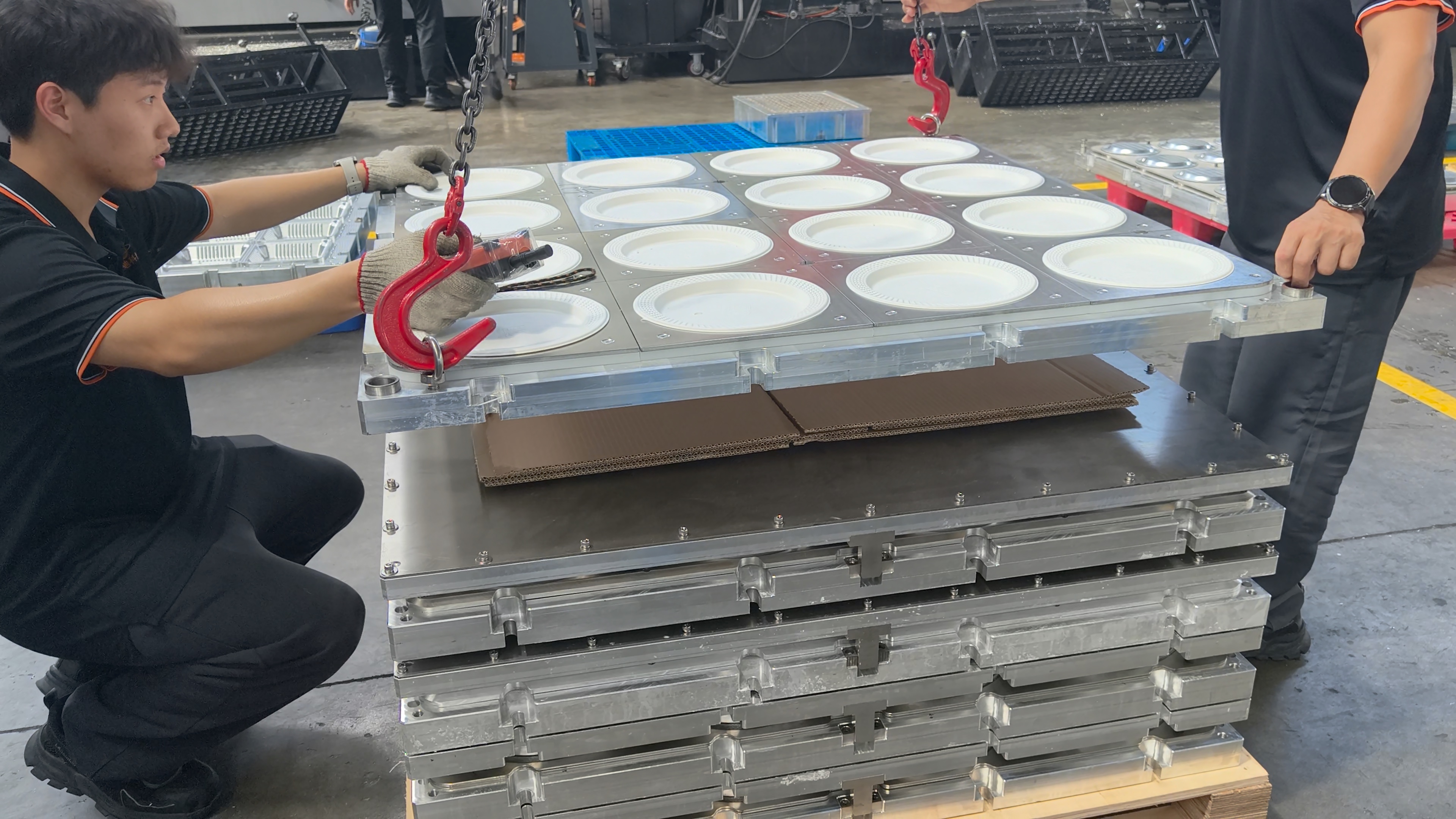
Check drainage condition, surface condition, fit and wear, and the alignment between forming, hot-pressing and trimming. Because Hanson operates mold design, mold manufacturing, mold testing and mass-production adaptation in one division, a mold-level correction can be tested against the machine and the recipe in the same trial rather than in isolation.
Step 4 — Compare machine parameters against the documented baseline
Forming pressure, vacuum, hot-pressing pressure, temperature and cycle time should be read against the machine’s own specification. On a ZCE-1111 tableware integrated machine, for example, the documented values are 20 t forming, 60 t hot-pressing and 70 t trimming, with a 28–60 second forming cycle depending on product. A deviation only becomes meaningful when the baseline is documented.
Step 5 — Check transfer and downstream alignment
Not every defect is created in forming. Transfer, trimming and stacking can create burrs, flash or deformation that look like molding faults. On a ZAKS-9595 cup lid line, the trimming mold platen is 500 × 600 mm at 50 t with a 10-second trimming cycle, vision inspection accuracy is 0.5 mm, and maximum stacking height is 200 mm including product height — three separate downstream variables that can each produce a reject.
Step 6 — Change one variable, log the result, keep the log
Single-variable trials are slow only when they are undocumented. The purpose is to build a record that stays with the project: which variable changed, in which domain, with what effect on weight, thickness, appearance and dimensional accuracy. That record is what allows mold, machine and slurry engineers to work from the same facts — and it is what makes remote diagnosis possible when the plant is overseas.
What to send for remote diagnosis: defect photographs with cavity position, the parameter screen for the affected cycle, slurry and furnish data, the mold drawing or mold number, and a short video of one complete cycle. Hanson provides remote technical support alongside on-site troubleshooting and 24/7 service response, and the quality of that support depends on the completeness of this package.
Use Cases: Where Joint Troubleshooting Changes the Outcome
Tableware and foodservice packaging
Qiaowang, a state-owned molded fiber tableware and industrial packaging manufacturer in China, took delivery of 32 customized core production machines for a factory expansion project; annual production capacity increased from approximately 6,000 tons to 16,000 tons within a 40,000-ton-per-year project, with equipment adapted to large-scale bagasse-pulp production and supported through installation, commissioning, production verification and on-site service. Shengquan Group is a different pattern: Hanson first supported customized equipment development and a seven-month trial production period for a product with no existing standard solution, before the ZBG-1111 production line was applied in the Shengquan Daqing project with 15 units. Seven months of trial production is, in practice, seven months of joint defect attribution.
Industrial packaging
Tonglibo, a professional molded fiber industrial packaging manufacturer, placed five orders for ZAD-8565 machines between 2023 and April 2025 — beginning with testing and moving to continuous expansion. The case record cites continuous equipment customisation, 24-hour technical response and on-site production support, and notes that commissioning and production issues were resolved rapidly, shortening the production-line commissioning period. For high-end industrial packaging, where surface quality and dimensional tolerance are the acceptance criteria, that response loop is the difference between a trial and a repeat order.
Cup lids and high-precision work
A leading manufacturer of biodegradable plant-fiber packaging and a provincial key project enterprise in China entered a strategic cooperation covering 100 pulp molding cup lid machines. The solution integrates forming, hot pressing, trimming, vision inspection and packing in a single line, with modular and standardised mold design, digital energy management and multi-dimensional energy-consumption control — an example of defects being designed out of the interface rather than found after the fact.
Sampling, pilot and material development
The ZAMS-6047 sampling production line is where attribution risk is cheapest to resolve. YUTO, a listed integrated packaging solutions provider serving global consumer electronics brands, has used one unit for four years for prototype verification and process testing. GMN, a nanocellulose additive developer, uses the same model as an integrated platform for formulation evaluation, fiber modification and process validation. Both cases replace production-scale guesswork with controlled trials.
Bamboo and agricultural fibers
For an integrated bamboo materials and sustainable food packaging manufacturer in China, Hanson delivered a complete turnkey solution covering factory planning, construction coordination, pulp preparation, customized forming equipment, wastewater treatment and personnel training, progressing from equipment installation to trial production in approximately three months within a two-year project that included full-cycle production support and operator training. Fiber substitution projects are the clearest case for integrated engineering, because the material, the mold and the process must move together.
Comparison: How Coordination Models Handle a Cross-Domain Defect
| Evaluation dimension | Integrated engineering owner (mold, machine, slurry, process) | Split vendors |
|---|---|---|
| Who owns attribution | One engineering team examines all four domains in one test loop | Each vendor checks its own scope; interaction effects fall between contracts |
| Mold-to-machine interface | Mold design, platen fit, hot-pressing and trimming alignment developed together | Interface re-verified at commissioning, usually by the buyer’s process team |
| Slurry and process adjustment | Pulp preparation, additives and PLC parameters adjustable within one project scope | Slurry changes require a separate supplier and a further trial |
| Existing molds and existing equipment | Mold optimisation services and technical retrofits offered as part of the same capability | Retrofit normally requires original-vendor involvement or a third-party integrator |
| Response model | Installation, commissioning, training, remote support, on-site troubleshooting, 24/7 response | Response time depends on which vendor is contacted first |
| Documentation | One test record covering mold, machine, slurry and process | Separate reports that the buyer must reconcile |
The right-hand column describes how scope and responsibility are usually divided in a split-vendor structure; it is not a judgement on the quality of equipment from any supplier.
Reference Parameters Used in Diagnosis
Documented machine values are the baseline against which a deviation can be judged. The table summarises published parameters for six Hanson models that appear in troubleshooting scenarios.
| Model | Focus | Mold platen | Pressure data | Rated power | Documented capacity / note |
|---|---|---|---|---|---|
| ZAD-8565 | Compact industrial packaging | 850 × 650 mm | 3 t forming; 20 t hot-pressing | 54.1 kW | 500 g per mold at 0.3% slurry concentration; in-mold drying |
| ZAP-9585 | Large-format industrial packaging | 950 × 850 mm | 10 t forming; 40 t hot-pressing | 114 kW | 900 g per mold at 0.3% slurry concentration |
| ZCE-1111 | Tableware, integrated | 1,100 × 1,100 mm | 20 t forming; 60 t hot-pressing; 70 t trimming | 167.4 kW | 600–900 kg/24 h; 28–60 s forming cycle; 6 molds |
| ZBG-1111 | Full-servo tableware line | 1,100 × 1,100 mm | 80 t hot-pressing; 80 t trimming | 60 kW | 1,000–1,500 kg/24 h; oil, electric or steam heating |
| ZAKS-9595 | Cup lids | 950 × 950 mm forming; 500 × 600 mm trimming | 10 t forming; 40 t hot-pressing; 50 t trimming | 126.45 kW forming module | Trim cycle 10 s; vision accuracy 0.5 mm; lids Ø80 mm and Ø90 mm |
| ZAMS-6047 | Sampling and pilot production | 600 × 470 mm | 2 t forming; 13 t hot-pressing | 82 kW | 200 g per mold at 0.3% slurry concentration; no trimming function |
FAQ: Coordinating Mold, Equipment and Materials
Does the CE attestation cover the molds as well as the machine?
Hanson’s CE documentation is a Machinery Directive Attestation of Conformity to 2006/42/EC, Annex VIII, issued by UDEM Uluslararası Belgelendirme Denetim Eğitim Merkezi San. ve Tic. A.Ş. Certificate M.2025.206.C130486 covers equipment models ZFG-1111, ZFD-8565, ZFM-9894 and ZFH-1311, was issued on 2025-12-01 and is valid to 2030-11-30. Certificate M.2026.206.C142039 covers ZAP-9585, ZDA-9585, ZAD-8565, ZAC-8565, ZDA-1070, ZDK-1010, ZAB-9585 and ZAB-1070, was issued on 2026-06-05 and is valid to 2031-06-04. Both reference EN ISO 12100:2010 and EN 60204-1:2018/A1:2025. Because the attestation is scoped to named machine models, buyers should match the certificate scope to the exact model and configuration ordered, and treat tooling as part of the machine’s production system verified through mold design, mold manufacturing and mold testing. If a fix involves modifying the safety-related control system, note that EN ISO 13849-1:2015 is withdrawn after 15 May 2027.
Can one supplier really diagnose mold, machine and slurry problems together?
It depends on whether the four domains exist inside one organisation. Hanson operates an independent mold division covering product development, mold design, mold manufacturing, mold testing and mass-production adaptation, alongside pulp preparation, equipment and automation teams, with approximately 50 of its more than 200 employees in R&D and engineering and 50 patents covering equipment structures, production processes and automation systems. The company also provides optimisation services for existing molds and technical retrofits for existing equipment, so an installed line can be corrected without replacing it. Delivery capacity supports this: reported annual output of 150 units, monthly capacity up to 60 units depending on model and configuration, and 10 service locations supporting installation, maintenance, spare parts and on-site services with 24/7 response.
What drives the cost of a coordinated troubleshooting or retrofit project?
Cost follows configuration rather than a single list price, which is why Hanson quotes by project scope. The variables that move scope — and therefore cost — include equipment model, production capacity, mold platen size, product layout, forming and hot-pressing configuration, voltage and frequency, heating method, pulp preparation system, automation level, robotic transfer, trimming, hole punching, vision inspection, automatic packing, coating, laminating, digital printing, mold design, PLC program, interface language and utility interfaces. Minimum order quantity is one unit. From a budget-planning perspective, the sequence matters more than the price list: verifying slurry and process parameters on existing equipment, and validating a change on a sampling line before committing to tooling or a new machine, is normally the lowest-risk way to spend the first part of the budget.
How can we validate a fix before committing to a full line?
Use a sampling platform. The ZAMS-6047 is a fully automatic integrated prototyping and small-batch production line with a 600 × 470 mm mold platen, 2 t forming and 13 t hot-pressing pressure, 82 kW rated power, in-mold drying and a maximum of 200 g per mold at 0.3% slurry concentration; it integrates pulping, refining, slurry preparation, slurry feeding, forming and hot-pressing in one compact system and does not include trimming. YUTO has used one unit for four years for prototype verification and process testing, GMN uses it for nanocellulose additive formulation and process validation, and Jinsun uses a customized version compatible with different plant-fiber slurry systems. A trial on this platform lets a plant compare formulations and parameters, and produce molded fiber samples for performance verification, before the change is applied to a production line. To arrange a sample trial or an engineering review of a specific defect, contact Hanson through www.hspulpmolding.com.
How long does a coordinated fix take, and how fast can support arrive?
Two clocks run in parallel. On the equipment side, lead time is approximately 60 days for standard equipment, while customized production lines depend on equipment configuration and project scope; mold design and manufacturing are part of the same scope rather than a separate procurement step. On the support side, Hanson maintains 10 service locations in operation for installation and commissioning, equipment maintenance, technical support, spare parts and on-site project services, with 24/7 service response and remote technical support, and can arrange resident engineers plus up to six months of on-site production assistance on turnkey projects. Reference timelines from delivered projects: a bamboo-fiber turnkey factory progressed from equipment installation to trial production in approximately three months, and a customized tableware project ran seven months of trial production before full cooperation began.
Conclusion: Make Attribution a Purchasing Criterion
Mold, machine, slurry and process are not four suppliers; they are four variables in one result. A buyer who evaluates only platen size, capacity and automation level is comparing the visible half of the offer. The half that decides whether the line reaches stable mass production is the supplier’s ability to hold all four domains in one diagnostic loop — with mold manufacturing, slurry engineering, equipment design and on-site service under one responsibility, and with a documented parameter baseline to compare against.
HANSON PULP MOLDING builds pulp molding machines, production lines and turnkey factory solutions on that structure: an independent mold division, in-house pulp preparation and automation engineering, mold optimisation and equipment retrofit services, 100% inspection before delivery, and a 10-location service network with 24/7 response. When a defect appears and no one can say whether it is the mold, the machine, the slurry or the process, that structure is the answer to the question the defect actually asks.
Next Step: Send the Defect, Not the Specification
Describe the symptom, the cavity position, the model and the slurry you are running. Hanson’s engineering team can review the case, propose a single-variable test sequence, and — where validation is needed — arrange a sample trial on a ZAMS-6047 sampling line or a joint review of mold, machine and process data.
Contact: Castle · Email: linchuangcheng@hspulpmolding.com · Tel / WhatsApp: +86 159-2060-4830
Address: Room 101, No. 6, Lane 1, Fourth Industrial Zone, Qiaotou, Houjie Town, Dongguan City, Guangdong Province, China
Website: www.hspulpmolding.com
Company brochure (PDF): Download the Hanson Pulp Molding brochure
Have Questions or Need More Details?
Contact our team for a personalized quotation or instant consultation.
Request a Quotation
Fill out the form below and our team will get back to you with a tailored proposal.
WhatsApp Direct Chat
Prefer to chat in real-time? Message us on WhatsApp for instant assistance & quick answers.
- Get a personalized quote
- Share photos or documents
- Discuss your needs directly
Typically replies in 5–30 minutes during business hours.