Pulp Molding Machine 2026: Technology Trends and Supplier Selection Criteria
Pulp Molding Machine 2026: Technology Trends and Supplier Selection Criteria
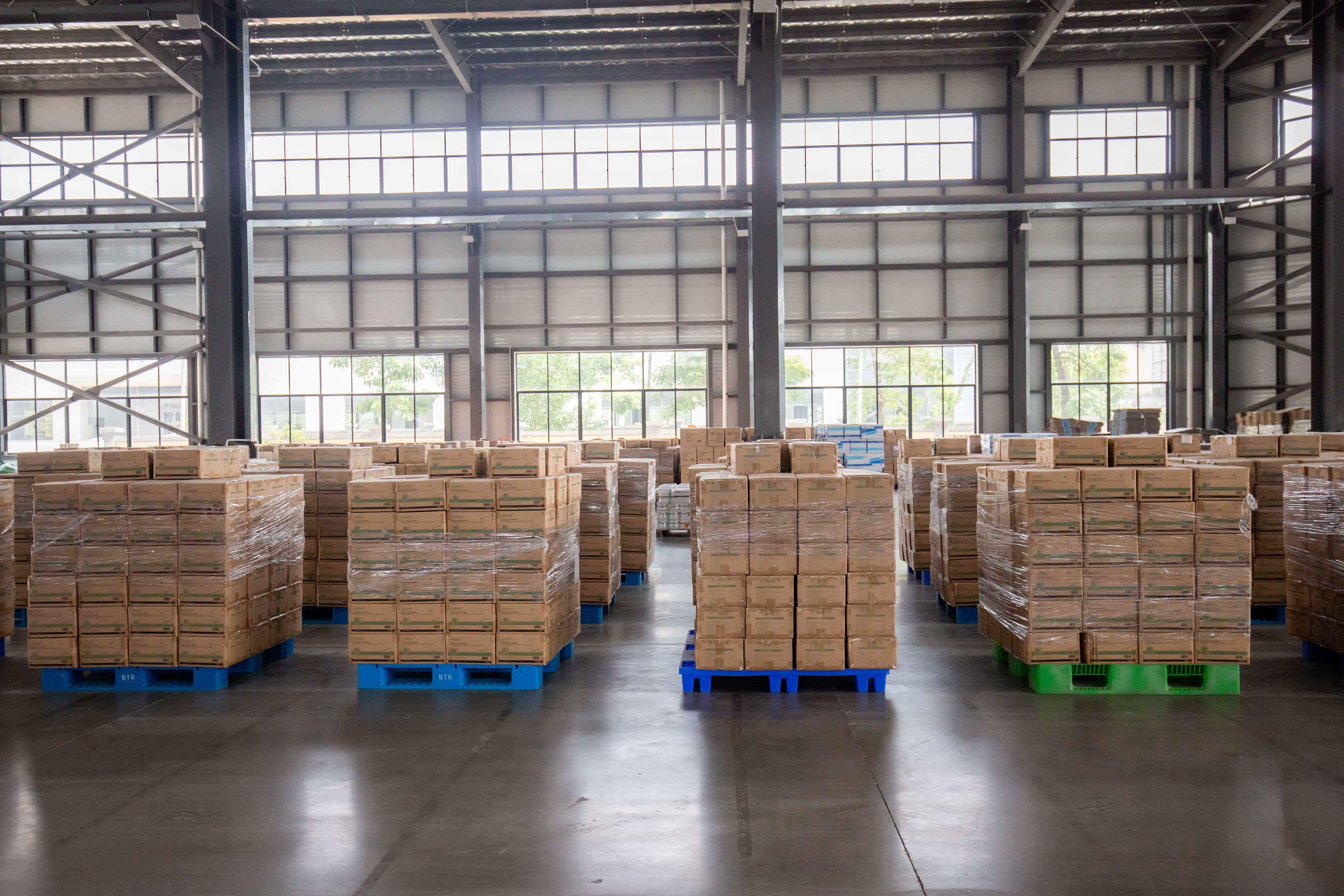
The pulp molding machine is the core equipment used to convert plant-fiber pulp into molded fiber tableware, food containers, cup lids, and protective industrial packaging. For buyers planning new capacity in 2026, selection involves far more than comparing price. It requires evaluating automation level, energy efficiency, downstream integration, mold capability, compliance certification, and the supplier's ability to deliver a production-ready system.
According to Cloud Market Reports, the global pulp moulding machines market was valued at USD 2,140.0 million in 2024 and is projected to reach USD 3,760.2 million by 2032. Food and beverage packaging accounts for approximately 45% of global demand, which explains why tableware, cup lids, and food containers are the priority applications for most new projects.
The Problem: Why Choosing a Pulp Molding Machine Is Harder Than It Looks
Choosing a pulp molding machine is not simply a matter of selecting a machine model. The same pulp material can be formed with different process principles, including dry-press, wet-press, and hybrid dry-wet processes. A machine that works well for egg trays may fail to meet the surface and tolerance requirements of premium industrial packaging. A tableware machine cannot automatically produce cup lids unless the complete line is designed for trimming, inspection, and packing.
Common purchasing mistakes include comparing only the main forming machine and ignoring downstream processes. If trimming, inspection, stacking, or packing equipment has a lower processing capacity than the main machine, products accumulate downstream and eventually force the main line to slow down or stop. Conversely, if downstream equipment runs faster but conveying and buffering are poorly designed, the line may suffer from misalignment, collisions, and missed inspections.
Successful sampling also does not guarantee mass-production success. The mass-production machine may have a different platen size, mold layout, slurry-feeding method, cycle time, and continuous operating condition. These differences can change product weight, yield, and dimensional stability. A reliable evaluation process must therefore cover the entire production chain, not just a single sample.
Industry Background: Market Momentum and Changing Buyer Expectations
Regulatory pressure and brand sustainability commitments are pushing more manufacturers to replace single-use plastics with molded fiber. The market data reflects this shift. The global pulp moulding machines market is expected to grow from USD 2,140.0 million in 2024 to USD 3,760.2 million by 2032 at a CAGR of 7.3%. Food and beverage packaging is the largest application segment, at roughly 45% of global demand.
China is an important source of fiber-processing machinery. According to WITS/World Bank, China's exports of machinery for making paper or paperboard (HS 843920) were valued at USD 49.58 million in 2024. Buyers increasingly evaluate Chinese suppliers on demonstrated manufacturing capability, engineering depth, and global service coverage rather than on price alone.
Several technology trends are reshaping buyer preferences in 2026:
- Full-servo drives: servo-driven forming and transfer provide more stable cycles, easier changeovers, and precise pressure control.
- Energy-efficient configurations: oil, electric, or steam heating options and improved insulation reduce energy cost per kilogram of output.
- Integrated automation: forming, hot pressing, trimming, vision inspection, and packing are connected into one synchronized system.
- Turnkey solutions: more buyers want one engineering team responsible for the complete factory, from pulp preparation to final packing.
How to Evaluate a Pulp Molding Machine Supplier in 2026
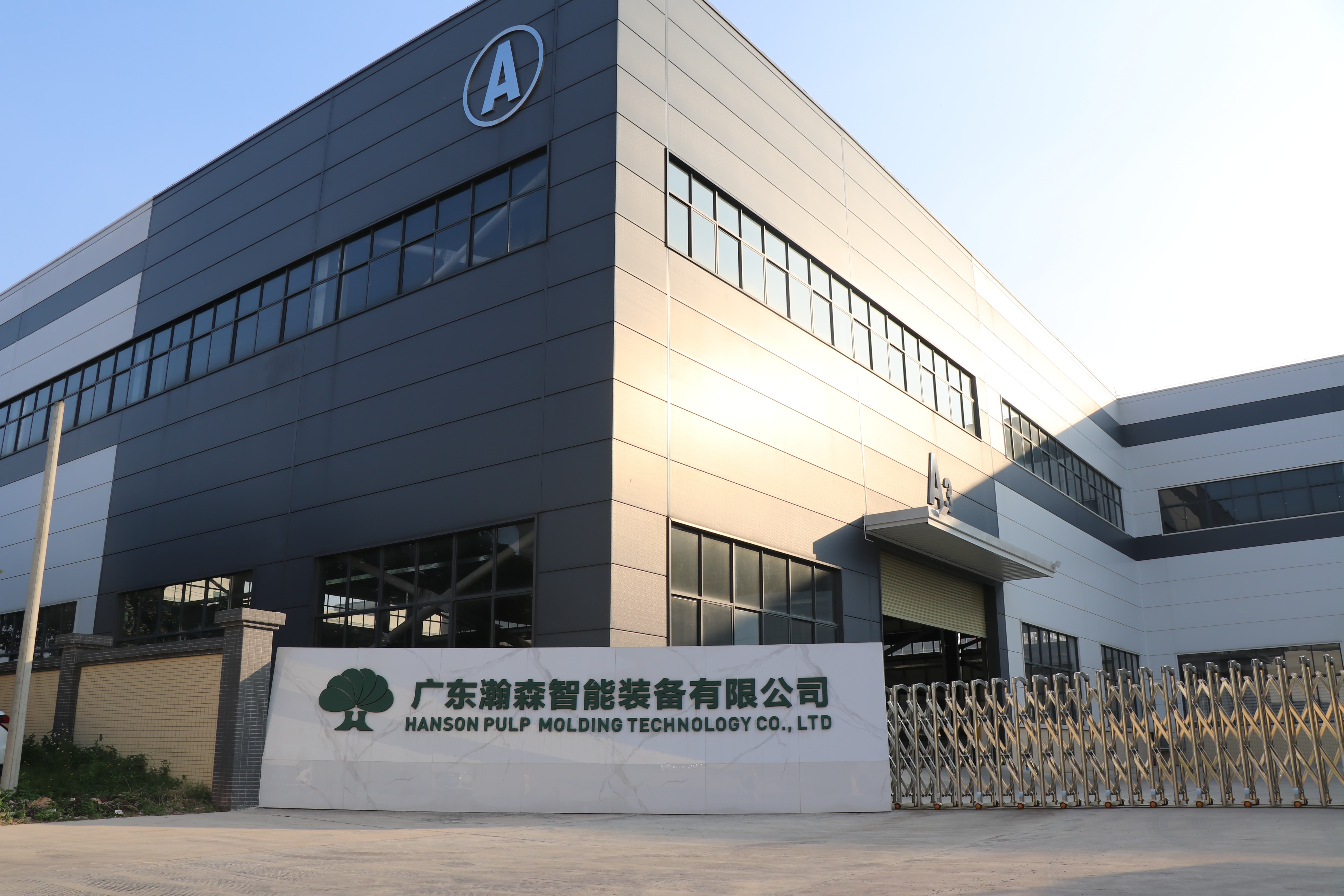
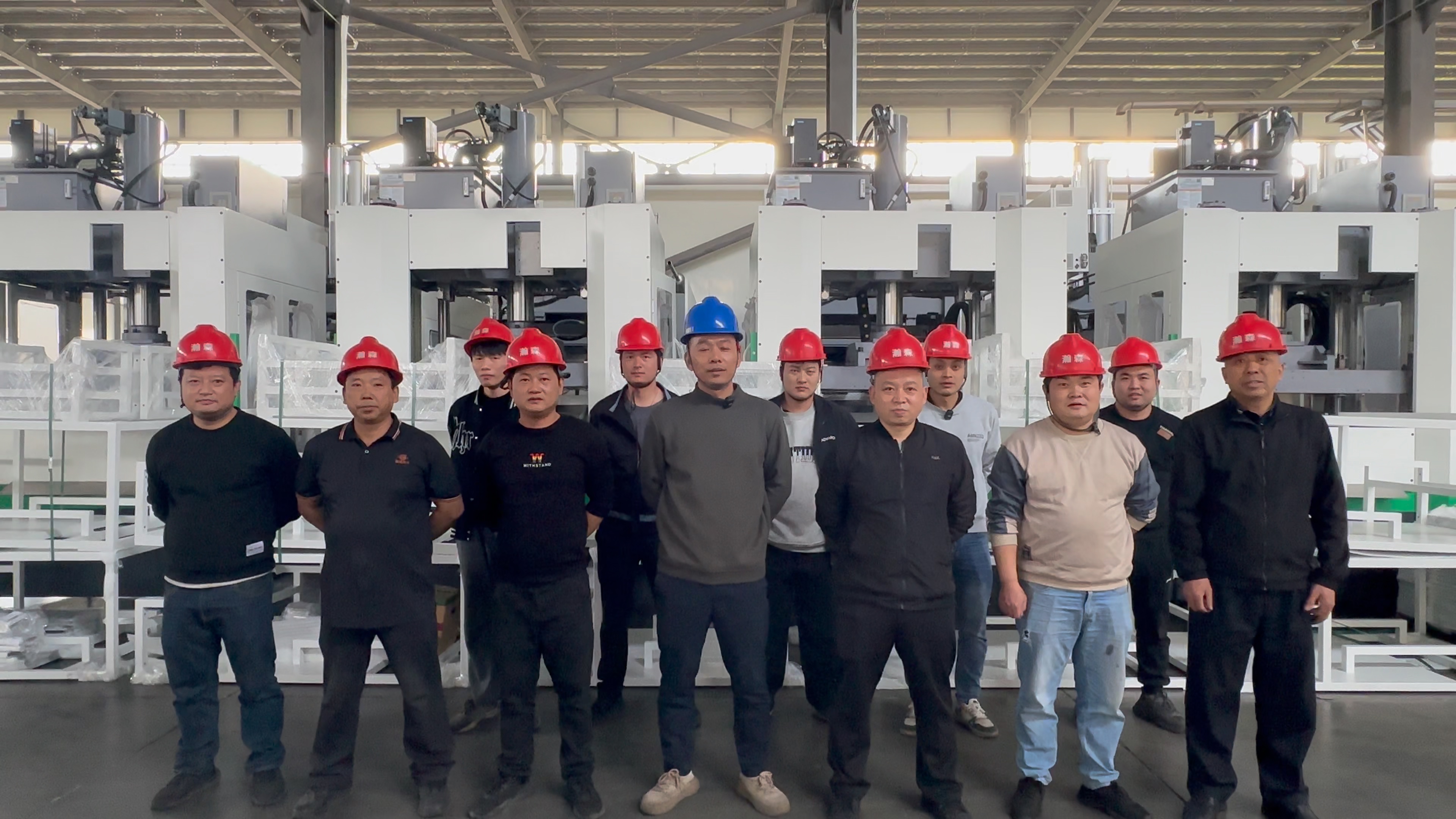
Hanson Pulp Molding Technology Co., Ltd. is a National High-tech Enterprise based in Dongguan, China, specializing in pulp molding equipment, production lines, and turnkey factory solutions. The company operates a 50,000 m² facility with more than 200 employees, including approximately 50 R&D and engineering professionals. It holds 50 patents and produces approximately 150 units per year, with about 50% exported to markets across Latin America, Southeast Asia, the Middle East, Europe, and Australia.
The following six criteria provide a practical framework for comparing pulp molding machine suppliers.
1. Verify Real Manufacturing Capability
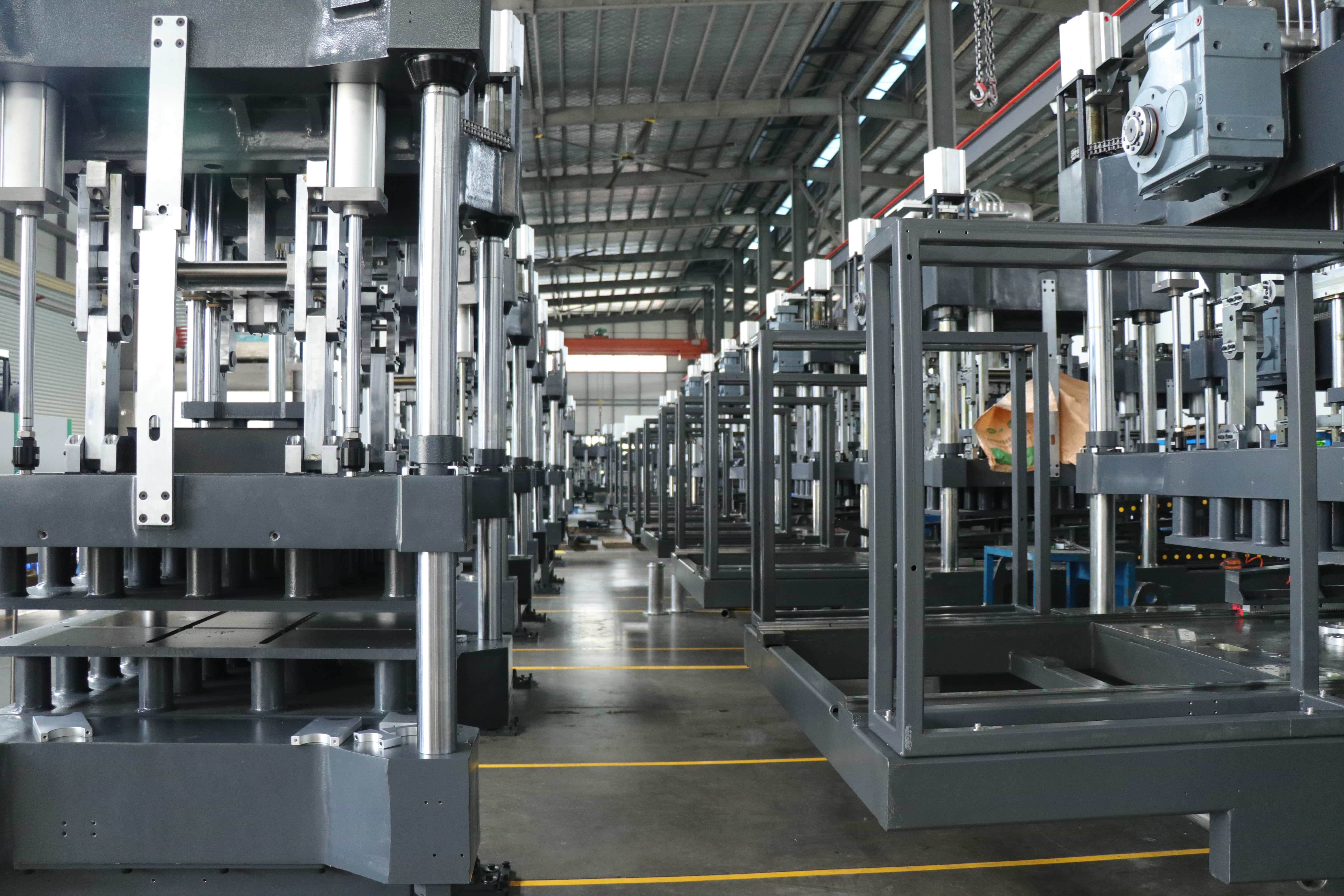
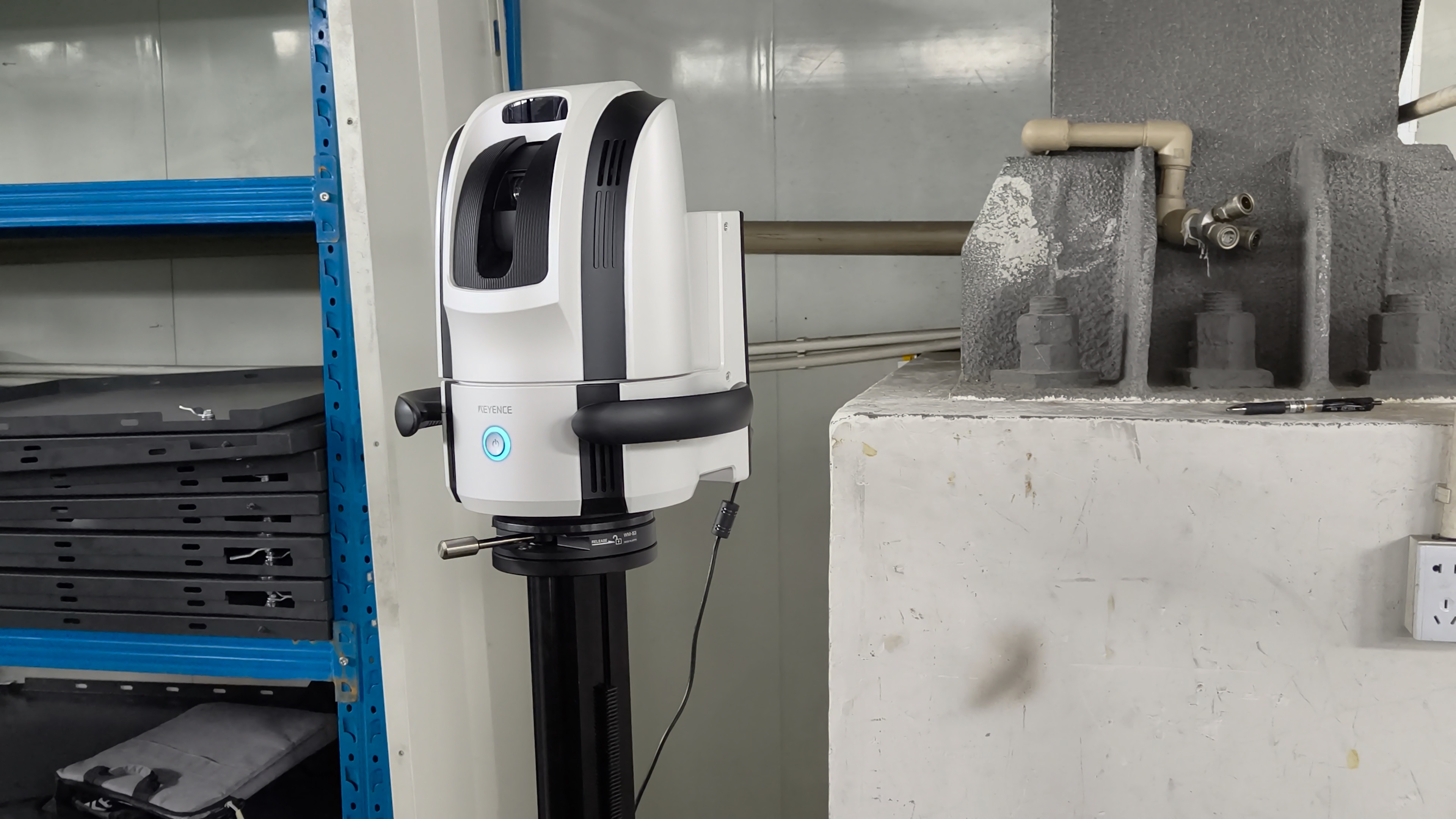
A supplier should be able to demonstrate that it actually builds the machines it sells. This includes machine assembly capability, an in-house mold division, engineering teams, quality control, and installation service. Hanson operates an independent mold division and manufactures pulp preparation systems, molds, and downstream automation. The company performs 100% inspection before delivery, covering incoming material, welding and frame structure, dimensional checks, electrical, hydraulic, and pneumatic systems. Buyers should ask for factory access, project references, and evidence of in-house manufacturing.
2. Match the Machine Architecture to the Product Category
Different molded fiber products require different machine architectures. Tableware is lightweight and high-volume, so fast cycles and multiple hot-pressing stations matter. Premium industrial packaging often has deeper or more complex structures that require higher forming and hot-pressing pressure, precise transfer, and stable demolding. Cup lids need servo trimming, multi-camera vision inspection, and automatic packing. Sampling and R&D applications need a compact platform with flexible adjustment of pressure, temperature, and forming parameters.
Hanson's product range covers tableware production lines, integrated tableware machines, industrial packaging machines, cup lid production lines, and sampling production lines. Each family is designed for a specific product category and production requirement.
3. Prioritize Automation That Covers the Whole Line
Automation should be planned from the forming station to the finished packed product. A forming machine alone cannot guarantee stable commercial production. For cup lids, for example, a complete line must integrate forming, hot pressing, servo trimming, vision inspection, defective-product rejection, counting, and packing. Hanson's ZAKS-9595 cup lid production line does this in one system, with a trimming cycle of 10 seconds per mold, vision inspection accuracy of 0.5 mm, and packaging support for Ø80 mm and Ø90 mm lids.
Downstream automation must be designed according to the complete line cycle, not only the theoretical speed of one machine. The supplier should calculate per-mold output, main-machine cycle, conveying time, inspection capacity, rejection logic, stacking, and packing speed as one integrated flow.
4. Look for Full-Servo and Energy-Efficient Configurations
Full-servo machines use servo motors or servo electric cylinders to control forming, transfer, and hot-pressing movements. This improves precision and stability while simplifying mechanical adjustment. Energy efficiency depends on heating method, production cycle, and equipment layout. Hanson's ZBG-1111 tableware production line uses a six-axis robot for product transfer and supports oil, electric, or steam heating, with a rated power of 60 kW and a capacity of 1,000–1,500 kg per 24 hours. The ZFG-1111 offers an inline layout about 2.15 m wide, which can be valuable for long, narrow workshops.
Buyers should compare energy consumption per kilogram of finished product rather than only installed power, because heating, vacuum, compressed air, and water circulation often dominate factory energy use.
5. Confirm Compliance and Certification
For sales to the European Union and the European Economic Area, machinery must meet the requirements of the Machinery Directive and relevant harmonized standards. Hanson holds CE attestations of conformity for its ZFG series pulp molding equipment (certificate M.2025.206.C130486) and for industrial packaging equipment models including ZAP-9585, ZDA-9585, ZAD-8565, ZAC-8565, ZDA-1070, ZDK-1010, ZAB-9585, and ZAB-1070 (certificate M.2026.206.C142039). These attestations reference 2006/42/EC, EN ISO 12100:2010, and EN 60204-1:2018/A1:2025.
Buyers should verify that the certificate matches the exact machine model, the equipment scope, and the effective dates.
6. Check Turnkey and After-Sales Support
A turnkey solution is generally recommended for new factories, overseas projects, and buyers without an experienced pulp molding engineering team. Hanson's turnkey scope can include factory planning, pulp preparation, forming equipment, molds, downstream automation, electrical control, energy management, wastewater treatment, installation, commissioning, operator training, and production ramp-up support. For turnkey projects, Hanson can arrange resident engineers and provide up to six months of on-site production assistance.
Experienced manufacturers that already run mature pulp preparation and utility systems may prefer individual machines. However, after-sales response, spare parts, and technical support are still critical. Hanson operates 10 service locations and offers installation, commissioning, remote technical support, on-site troubleshooting, spare-parts supply, and 24/7 service response.
Step-by-Step: From Product Concept to Production-Ready Solution
Customers can start with only a product concept. The following steps help convert a concept into a validated, production-ready pulp molding solution.
- Define the product and target capacity. Identify the packaged product, its dimensions, weight, protection requirements, target daily or annual output, raw material, and target market.
- Select the forming process. Choose wet-press, dry-press, or hybrid dry-wet according to appearance, dimensional accuracy, and cushioning needs.
- Match the machine family. Use the comparison table below to narrow down tableware, industrial packaging, cup lid, or sampling equipment.
- Plan downstream automation. Decide whether trimming, hole punching, vision inspection, stacking, and packing will be inline or offline.
- Request a manufacturability evaluation. A qualified supplier should evaluate product structure, mold layout, dewatering, transfer, hot pressing, and demolding before quoting.
- Run sampling and process validation. Use a sampling line or pilot line to verify raw materials, additives, forming parameters, and product quality before investing in production molds.
- Confirm installation and ramp-up support. Define installation, commissioning, operator training, and production ramp-up responsibilities in writing.
Real-World Use Cases
Case 1: More than 100 machines for a Thailand production base
A listed manufacturer of biodegradable tableware and sustainable consumer products selected Hanson as a core equipment supplier after a four-month intensive test covering stability, production capacity, and product quality. The first phase of its Thailand production base used more than 100 Hanson machines, including ZBG-1111 tableware production lines with a capacity of 1,000–1,500 kg per 24 hours. Hanson provided pulp preparation, forming equipment, mold development, installation, commissioning, and a dedicated after-sales service point in Thailand. The project is preparing for second-phase cooperation.
Case 2: More than 50 machines for Changya's Vietnam base
Changya, a manufacturer of disposable tableware and sustainable foodservice packaging, selected Hanson for its transition from conventional plastic products to molded fiber packaging. More than 50 machines were supplied for the first phase of Changya's Vietnam production base. The project included modular and scalable equipment configuration, 7×24-hour technical response, and on-site commissioning and production support during the initial operation stage.
Case 3: 80 industrial packaging machines for a Vietnam packaging manufacturer
A high-end integrated packaging solutions manufacturer in Vietnam purchased 80 Hanson pulp molding industrial packaging machines for consumer electronics, small household appliances, and electronic products. The cooperation began with a trial machine and developed into multiple repeat orders, driven by stable production performance, rapid delivery, and responsive technical service.
Case 4: 32 machines for Qiaowang, from 6,000 to 16,000 tons per year
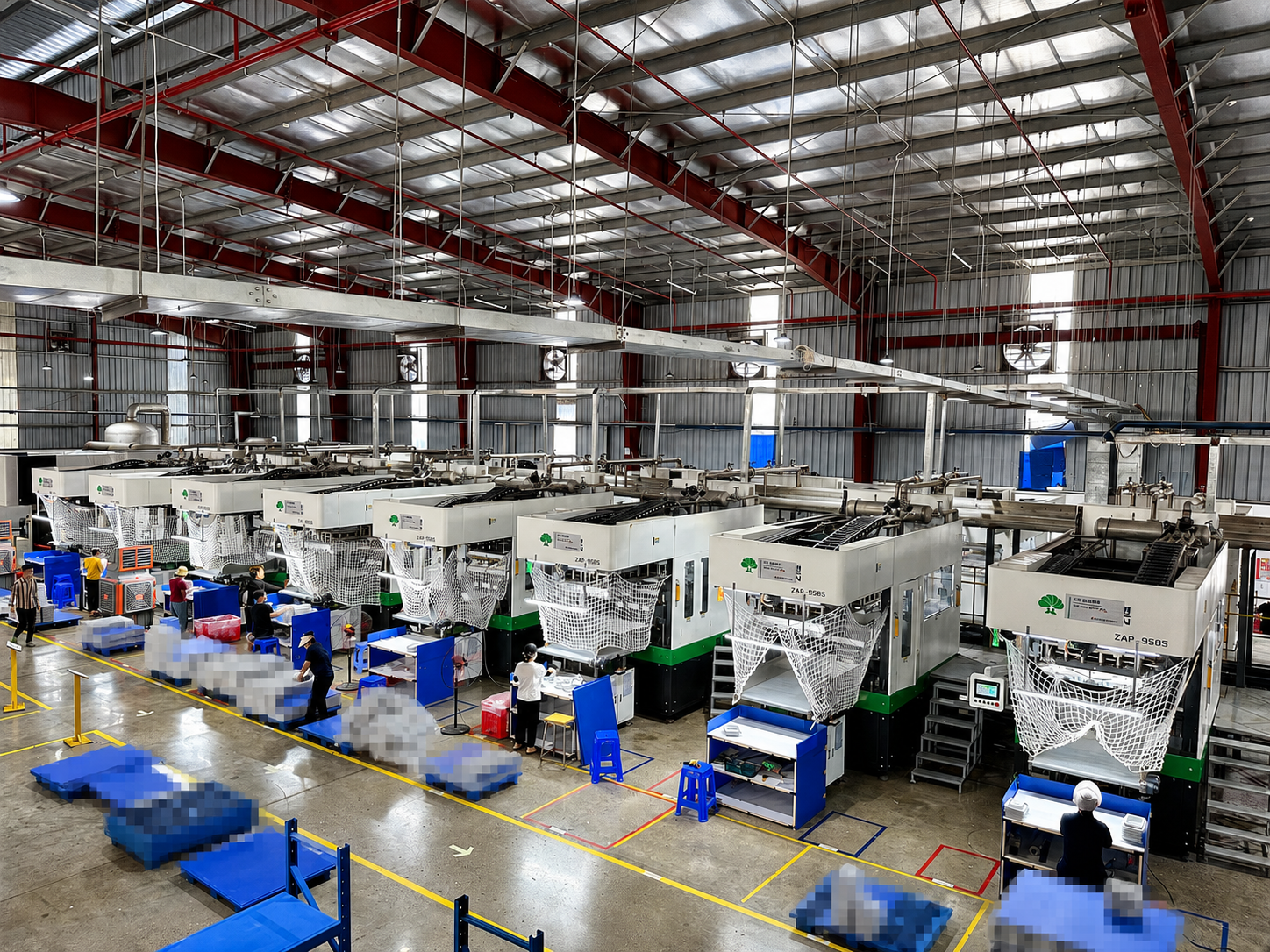
Hanson delivered 32 customized core production machines to Qiaowang, a state-owned molded fiber tableware and industrial packaging manufacturer, for a factory expansion project. The equipment was adapted to large-scale bagasse-pulp production. After the equipment was put into operation, Qiaowang's annual production capacity increased from approximately 6,000 tons to 16,000 tons, supporting large-volume orders for international markets.
Comparison Table: Matching Pulp Molding Machine Families to Applications
| Machine Family | Typical Application | Key Specifications |
|---|---|---|
| ZBG-1111 robotic tableware production line | High-volume tableware and foodservice packaging | 1,100×1,100 mm platen; 1 forming + 2 hot pressing + 1 trimming; 1,000–1,500 kg/24h; 60 kW; oil/electric/steam heating |
| ZFG-1111 inline full-servo tableware production line | Tableware for narrow workshops | 1,100×1,100 mm platen; 1 forming + 1 hot pressing + 1 trimming; 900–1,200 kg/24h; 2.15 m width; 120 t hot pressing |
| ZCE-1111 integrated tableware machine | Automated tableware with lower initial cost | 6 molds; 600–900 kg/24h; forming 20 t; hot pressing 60 t; trimming 70 t; electric heating |
| ZAD-8565 compact industrial packaging machine | Small and medium precision industrial packaging | 850×650 mm platen; forming 3 t; hot pressing 20 t; max height 100 mm; max 500 g/mold; 54.1 kW |
| ZAP-9585 large-format industrial packaging machine | Large, deep, or heavy industrial packaging | 950×850 mm platen; forming 10 t; hot pressing 40 t; max height 120 mm; max 900 g/mold; 114 kW |
| ZAKS-9595 cup lid production line | Plant-fiber cup lids | Integrated forming, hot pressing, servo trimming, vision inspection, packing; trimming 10 s/mold; 0.5 mm inspection; Ø80/Ø90 |
| ZAMS-6047 sampling production line | R&D, material testing, prototyping, small batches | 600×470 mm platen; integrated pulping, refining, slurry preparation, forming, hot pressing; max 200 g/mold |
The table above is intended to help buyers shortlist equipment families. Final selection should be based on product drawings, raw-material verification, target capacity, factory dimensions, and utility conditions.
Frequently Asked Questions
1. How can I verify whether a supplier is a real pulp molding machine manufacturer rather than a trading company?
Hanson is a pulp molding equipment manufacturer, not simply a trading company. It manufactures pulp molding equipment and operates an independent mold division. Customers can inspect Hanson's manufacturing workshops, engineering teams, mold division, assembly process, quality-control system, and completed projects before purchasing. Buyers should verify the supplier's factory, in-house engineering, after-sales support, and clearly defined responsibility boundaries.
2. Should I purchase individual pulp molding machines or choose a complete turnkey pulp molding factory solution?
A turnkey solution is generally recommended for new factories, overseas projects, and customers without an experienced pulp molding engineering team. Individual machine procurement is more suitable for experienced manufacturers that already operate mature pulp preparation, process, utility, and production-management systems. A turnkey project can include factory planning, pulp preparation, forming equipment, molds, downstream automation, electrical control, energy management, wastewater treatment, installation, commissioning, operator training, and production ramp-up support.
3. Can one pulp molding machine produce tableware, premium industrial packaging, and cup lids simply by changing the molds?
One machine can usually produce several sizes of products within the same category by changing molds. However, Hanson generally recommends dedicated equipment for dedicated product categories because tableware, premium industrial packaging, and cup lids have significantly different requirements for capacity, accuracy, pressure, product transfer, and downstream processing. Changing the mold does not change the fundamental machine capabilities such as platen size, maximum product height, hot-pressing pressure, and transfer structure.
4. When should a customer invest in a pulp molding sampling line? Is it better to purchase mass-production equipment directly?
A sampling line is mainly used for new-product development, raw-material verification, additive testing, process validation, mold testing, and small-batch trial production. If the product structure, raw material, formulation, and process are not yet confirmed, purchasing large-scale production equipment directly may create risks such as unstable forming, repeated process adjustments, or an unsuitable line configuration. The ZAMS-6047 integrates pulping, refining, slurry preparation, slurry feeding, forming, and hot pressing in one system, making it suitable for research institutions, material companies, additive suppliers, brand owners, and customers preparing to enter the pulp molding industry.
5. What equipment is required to build a plant-fiber cup lid factory? Is a forming machine alone sufficient?
A forming machine alone is normally not sufficient for stable commercial cup lid production. A complete cup lid production process usually includes pulp preparation, slurry feeding, forming, hot pressing, trimming, vision inspection, defective-product rejection, counting, and packing. Hanson's automatic cup lid production line integrates forming, hot pressing, servo trimming, vision inspection, and automatic packing in one production system. For a project-specific configuration, Hanson's team can provide a line layout and lead-time estimate based on your product drawings.
Conclusion
Pulp molding machine selection in 2026 is a systems engineering decision. A practical approach is to evaluate the complete production chain, from pulp preparation to packing, and to verify the supplier's manufacturing capability, automation expertise, compliance status, and after-sales infrastructure. Full-servo control, energy-efficient heating, line-integrated automation, and turnkey delivery are the technology signals that separate production-ready suppliers from resellers or limited-engineering trading companies.
If you are evaluating a new pulp molding project, download the Hanson Pulp Molding brochure or contact the Hanson team to discuss product development, sampling, equipment configuration, and production ramp-up support.
Next step: Request a product-specific equipment evaluation. Hanson can help you move from product concept to sampling, mold development, and mass production with one integrated team.