
Pulp Molding Machine Comparison: Turnkey vs. Separate Procurement for New Factories
Pulp Molding Machine Comparison: Turnkey vs. Separate Procurement for New Factories
For a new molded fiber factory, the first decision is not simply “which pulp molding machine should I buy?”. The more strategic question is whether to buy the forming machine as a single piece of equipment or to obtain a coordinated pulp molding solution that includes pulping, forming, molds, downstream automation, installation and production ramp-up. This article compares turnkey and separate procurement for new factories through project complexity, coordination effort, risk distribution and the evidence available in integrated pulp molding equipment.
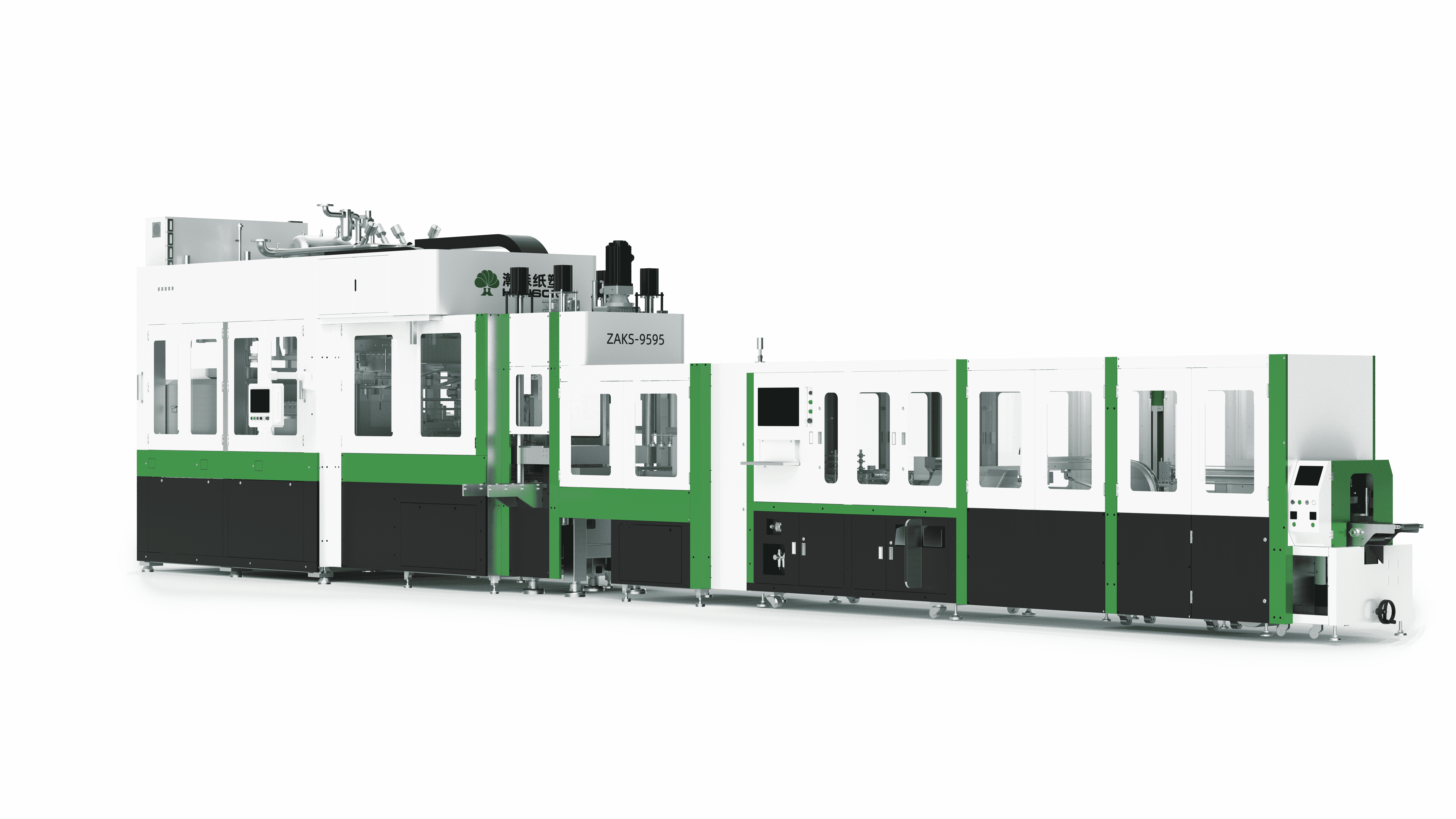
An integrated production line such as the ZAKS-9595 combines forming, hot pressing, servo trimming, vision inspection and automatic packing in one coordinated system.
The Procurement Decision New Molded Fiber Producers Face
New factories differ from existing factory expansions. An existing producer usually has mature pulp preparation, a stable utility supply, established molds and operators who understand product transfer and process settings. In that situation, buying another forming machine or replacing one line is relatively low-risk because the surrounding systems already exist.
A new factory has no such surrounding systems. The buyer must also secure raw-material handling, pulping and refining, slurry feeding, vacuum, compressed air, cooling water, high-pressure mold washing, heating, trimming, inspection, packing, wastewater treatment and operator training. Each of these functions can be purchased separately, but someone still has to define the interfaces, balance the cycle times and accept responsibility when output or quality falls below the plan.
The practical consequence is that the procurement model should match the buyer's internal engineering capability and the project's complexity, not only the price of the main machine.
Why Equipment Integration Matters in a New Pulp Molding Factory
Commercial market research estimated the global pulp moulding machines market at about USD 2,140.0 million in 2024, with projected growth to roughly USD 3,760.2 million by 2032. The same report indicates that food and beverage packaging accounts for about 45% of global demand, which is why tableware, cup lids and food containers are common first projects in new plants.
Those products are produced in high volume and with strict requirements for weight consistency, surface finish, trimming accuracy and contamination control. Stable mass production depends on equipment that is designed as a line, not on a forming station that is later connected to unrelated auxiliary machines.
HANSON PULP MOLDING TECHNOLOGY CO., LTD, commonly referred to as HANSON PULP MOLDING, is a National High-Tech Enterprise and a full-line supplier of pulp molding equipment. The company operates from Houjie Town, Dongguan City, Guangdong Province, with more than 200 employees, about 50 R&D and engineering professionals, a 50,000 m² factory and an independent mold division. Its project experience includes listed companies, state-owned enterprises, leading packaging manufacturers and international new-factory projects. Ten service locations currently support installing, commissioning, maintenance and spare-parts services across key markets.
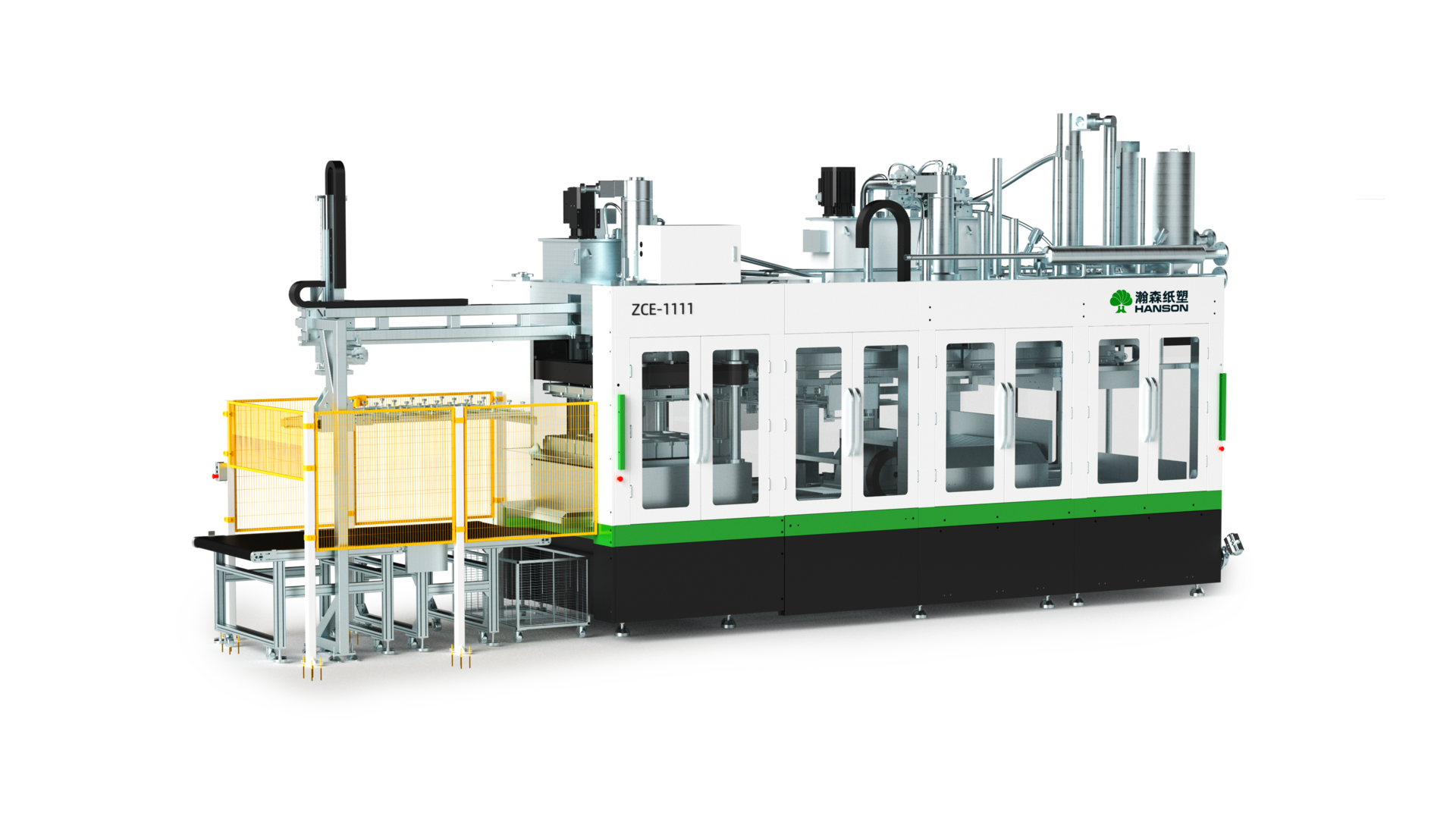
The ZCE-1111 tableware machine performs forming, hot pressing, trimming, counting and stacking within one integrated unit.
Turnkey versus Separate Procurement: What Are You Actually Comparing?
A turnkey pulp molding solution is not only a forming machine with extra service items. In Hanson's definition, turnkey scope can include preliminary product and raw-material verification, project feasibility analysis, production-capacity planning, factory layout design, intelligent pulp preparation systems, molding equipment, mold design and manufacturing, downstream automation, electrical control systems, installation and commissioning, personnel training and production ramp-up support.
Separate procurement means the buyer contracts with multiple suppliers: one for pulping, another for forming, another for molds, another for trimming, another for packing and sometimes another for installation. That route is workable when the buyer already operates a mature processing environment or has a strong internal engineering team.
According to Hanson's own buyer guidance, however, a turnkey solution is generally recommended for new factories, overseas projects and buyers who do not yet have an experienced pulp molding engineering team. Individual machine procurement is more suitable for experienced manufacturers that already operate mature pulp preparation, process, utility and production-management systems.
Scope and Engineering Responsibility
In a turnkey project, one engineering team is responsible for coordinating pulping, forming, mold development, automation, electrical control and factory utilities. In separate procurement, the buyer becomes the integration engineer. The buyer must convert each supplier's machine parameters into one production plan and must decide who will resolve conflicts between machines, molds and process conditions.
HANSON designs, manufactures and integrates pulp preparation systems for pulp molding projects. For turnkey projects, the pulp preparation, slurry feeding, forming equipment, molds, utilities and control systems can be planned and commissioned by one engineering team. Hanson can also evaluate and connect forming equipment to a customer's existing pulp preparation system when separate supply is preferred.
Interfaces between Forming and Downstream Automation
Downstream automation includes trimming, hole punching, inspection, stacking, counting, packing, coating, laminating or digital printing. These are not optional add-ons for most tableware and cup-lid products; they determine whether the line can convert a formed product into a packed product without excessive manual handling.
If trimming, inspection, stacking or packing equipment has a lower processing capacity than the main machine, products accumulate downstream and eventually force the forming machine to slow down or stop. If downstream equipment is faster but conveying, positioning and buffering are poorly designed, the line can still suffer from misalignment, collisions, missed inspections and packing errors. This is why downstream automation must be designed according to the complete line cycle, not only according to the theoretical speed of an individual machine.
Integration at the Machine Level
One way suppliers reduce interface risk is to integrate production steps inside a single machine. The ZCE-1111 tableware machine, for example, integrates forming, hot pressing, trimming, counting and stacking in one unit. It uses quantitative slurry injection to reduce product weight variation and needs only six molds, which lowers mold investment and replacement costs. The compact footprint also spares the customer from designing separate transfer and trimming islands around the former.
In higher-capacity lines, the same logic is applied with multi-station layouts. The ZBG-1111 robotic tableware production line uses one forming station, two hot-pressing stations and one trimming station, with a six-axis robot transferring products between processes. The ZFG-1111 inline servo tableware line arranges forming, hot pressing, trimming and stacking in a single inline system about 2.15 meters wide. For cup lids and other round products, the ZAKS-9595 line goes further by integrating forming, hot pressing, servo trimming, multi-camera vision inspection, defective-product rejection, counting and automatic packing.
These examples are relevant to procurement because they show how many technical interfaces can be removed before the buyer starts coordinating third parties.
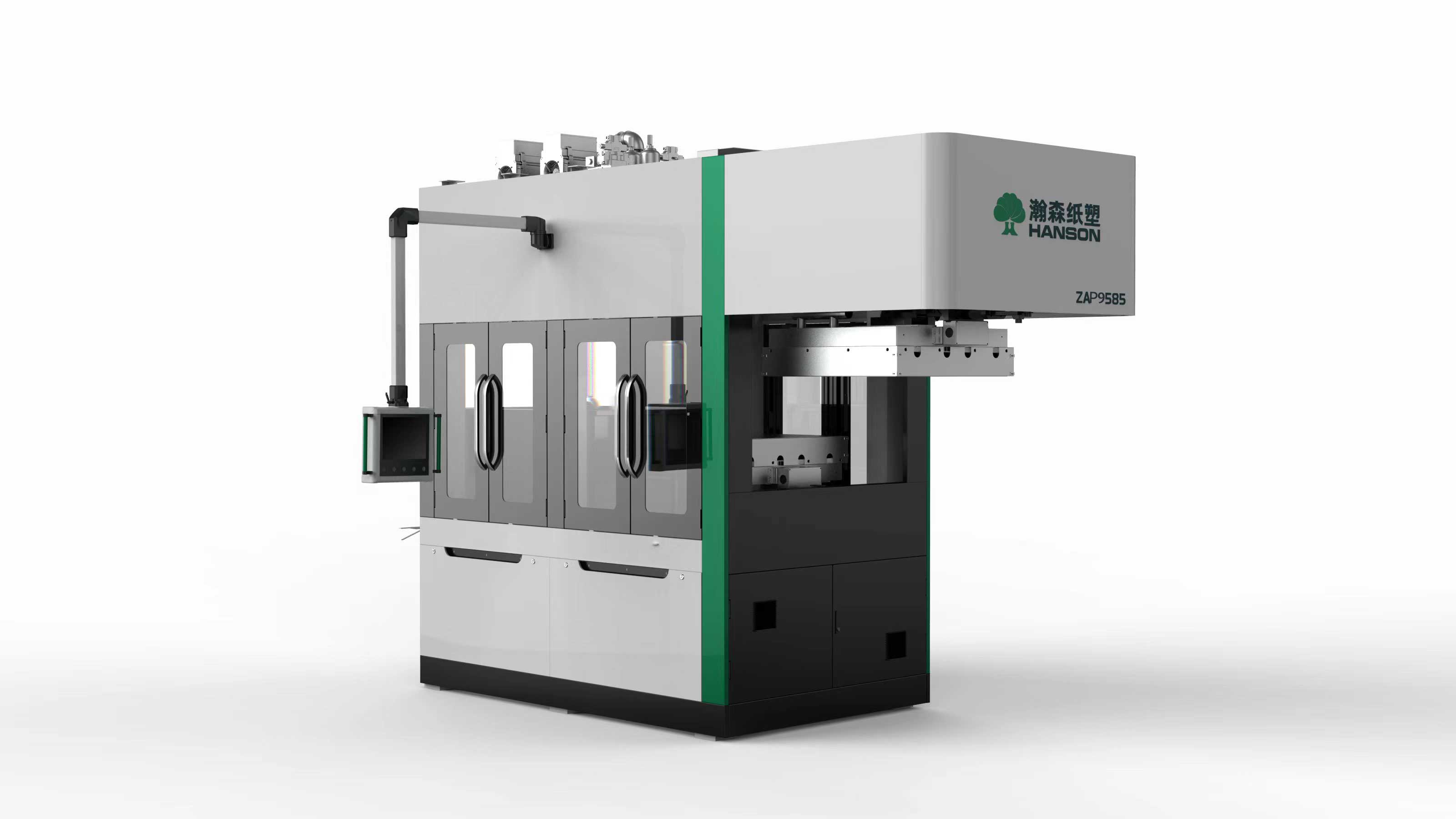
Integrated forming and in-mold drying/hot-pressing machines, such as the ZAP-9585, are also used for premium molded fiber industrial packaging.
Molds, Process Development and Ramp-up
Mold development is another area where turnkey coordination reduces risk. Hanson operates its own mold division and provides product-structure evaluation, mold design, mold manufacturing, mold testing and mass-production adaptation. Mold design affects capacity, product weight stability, demolding and yield. If the mold is made by one supplier and the machine by another, each side can point to the other when production problems occur.
New pulp molding products also require process verification before production molds are finalized. Sampling validates materials, formulations and product geometry. Hanson's ZAMS-6047 sampling production line integrates pulping, refining, slurry preparation, slurry feeding, forming and hot pressing in one machine, so customers can test products before committing to full production equipment. For a new factory, running such validation before the final procurement contract can prevent costly changes after commissioning.
Step-by-Step Procurement Comparison for a New Factory
Step 1: Define the Product, Volume and Raw Material
Every procurement decision should begin with product requirements: tableware, cup lids, premium industrial packaging or a mix. The buyer should also identify the planned raw material, such as bagasse pulp, bamboo pulp, wood pulp or recycled fibers, because different fibers affect slurry preparation, forming, drainage and hot pressing.
Step 2: Verify Feasibility Before Buying Production Equipment
If the product is new, sampling and process validation are recommended before mass-production equipment and molds are finalized. Successful sampling proves basic forming feasibility; it does not prove that mass-production yield, cycle time and cost will be acceptable. A sampling line or pilot system helps confirm these variables at low risk.
Step 3: Decide Who Will Own the System Interfaces
The buyer should write down all interfaces that must be coordinated: pulp concentration, flow rate, feeding rhythm, forming cycle, transfer timing, trimming cycle, inspection speed, packing speed, compressed air, vacuum, heating and control logic. In a turnkey contract, the supplier owns most of these. In separate procurement, the buyer owns them.
Step 4: Compare Scope, Risk and Schedule
Separate procurement can appear more transparent because each machine has its own price. But the effective comparison includes engineering time, contract management, the risk of incompatible control systems and the cost of a slower production ramp-up. Turnkey projects concentrate responsibility, which can shorten the distance from equipment installation to stable mass production.
Step 5: Plan Installation, Training and Ongoing Support
A new factory usually has no experienced operators. In Hanson turnkey projects, the scope can include installation and commissioning, personnel training and, where required, resident engineers and production ramp-up support. For separate procurement, training is typically repeated for each supplier, and troubleshooting may require multiple service visits before the root cause is found.
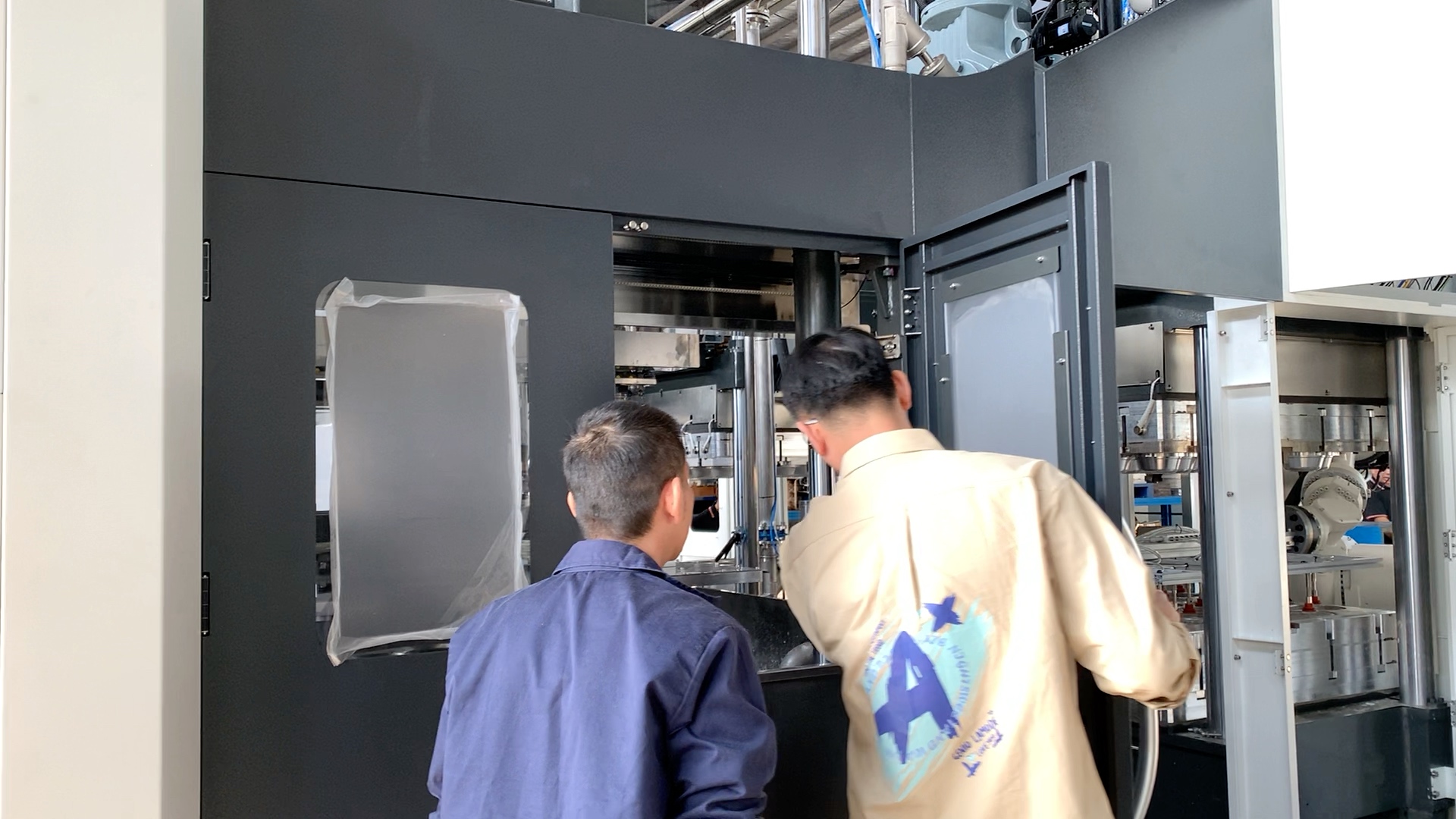
Installation, commissioning and operator training are recurring elements of turnkey project delivery.
Use Cases: What the Evidence Shows
Bamboo-Fiber Turnkey Factory Project
An integrated bamboo materials and food-packaging manufacturer used 50 Hanson units to produce bamboo-fiber molded pulp plates, trays and other foodservice packaging. Hanson provided a complete turnkey solution covering factory planning, construction coordination, pulp preparation, customized forming equipment, wastewater treatment and personnel training. The project moved from equipment installation to trial production in roughly three months, demonstrating how turnkey coordination can compress the start-up phase.
State-Owned Large-Scale Tableware Expansion
Qiaowang, a state-owned molded fiber tableware and industrial packaging manufacturer, received 32 customized core production machines for a 40,000-ton-per-year molded fiber tableware and industrial packaging project. After the equipment was commissioned, Qiaowang's annual production capacity increased from approximately 6,000 tons to 16,000 tons. The project required large-scale bagasse-pulp adaptation, machine customization, installation, commissioning and production verification under one supplier relationship.
Overseas Production Base with Factory-Level Support
For an overseas rapid start-up, Home-Link, a listed biodegradable-tableware manufacturer, conducted a four-month intensive equipment test covering stability, production capacity and product quality. Hanson was then selected as a core equipment supplier, with more than 100 machines supplied for the first phase of Home-Link's Thailand production base. The supply covered factory-level systems including pulp preparation, forming equipment and mold development, supported by a dedicated after-sales service point in Thailand and installation, commissioning and production support with 7×24-hour response capability.
Turnkey vs. Separate Procurement: Comparison Table
| Comparison Dimension | Turnkey Pulp Molding Project | Separate Equipment Procurement |
|---|---|---|
| Best fit for new factories | Recommended for new factories, overseas projects and buyers without an experienced internal pulp molding team. | More suitable for experienced manufacturers with mature pulp preparation, utilities and process management. |
| Coordination burden | One engineering team coordinates pulping, forming, molds, utilities, control systems and downstream automation. | Buyer coordinates multiple suppliers and owns the technical interface between each machine. |
| Machine-to-machine risk | Integrated lines such as the ZCE-1111, ZBG-1111, ZFG-1111 and ZAKS-9595 are designed with balanced cycles and one control philosophy. | Mismatched trimming, inspection or packing capacity can cause product accumulation and force the main machine to slow down or stop. |
| Mold and process responsibility | Mold design, mold testing and production adaptation are handled by one supplier; Hanson also supplies molds through its independent mold division. | Mold supplier and machine supplier may disagree about whether a problem is caused by the mold, the machine or the process. |
| Downstream automation | Trimming, vision inspection, rejection, stacking and packing can be designed together with the forming cycle. | Downstream equipment from different companies may have incompatible interfaces and control logic. |
| Installation and ramp-up | Can include installation, commissioning, personnel training, resident engineers and production ramp-up support. | Buyer arranges separate installation visits and must coordinate training for each supplier. |
| After-sales support | Single supplier with service locations in key markets; one call for equipment, mold and process issues. | Multiple service lines, spare-parts inventories and service contracts. |
FAQ
1. What should a buyer verify in a CE-compliant fully automatic pulp molding machine manufacturer?
A CE-compliant fully automatic supplier should be able to demonstrate its machinery directive documentation and manufacturing capability. HANSON PULP MOLDING manufactures equipment in-house and operates an independent mold division. The ZFG-1111 fully automatic tableware production line is CE-compliant under the Machinery Directive 2006/42/EC, with certificate M.2025.206.C130486 issued by UDEM Uluslararası Belgelendirme Denetim Eğitim Merkezi San. ve Tic. A.Ş., valid until 30 November 2030. The ZAP-9585 and ZAD-8565 industrial packaging machines are covered by certification M.2026.206.C142039 for the EU/EEA market. Applicable standards include EN ISO 12100:2010 and EN 60204-1:2018/A1:2025. Buyers should inspect the certificate scope, the covered models and the issuing body before accepting a compliance claim.
2. Should I buy individual pulp molding machines or a complete turnkey pulp molding factory solution?
A turnkey solution is generally recommended for new factories, overseas projects and buyers without an experienced pulp molding engineering team. It is also helpful when the project includes multiple production systems and requires factory planning, pulping, forming, molds and downstream automation. Individual machines are more suitable when the buyer already operates mature pulp preparation, utility, process and production-management systems, or when the project is only a capacity expansion of an existing line.
3. What is included in a Hanson turnkey pulp molding factory solution?
Depending on project scope, a Hanson turnkey solution can include preliminary product and raw-material verification, project feasibility analysis, production-capacity planning, factory layout design, intelligent pulp preparation systems, pulp molding forming equipment, mold design and manufacturing, downstream automation, electrical control systems, installation and commissioning, personnel training and production ramp-up support. For turnkey projects, Hanson can also arrange resident engineers and on-site production support to help the customer reach stable mass production faster.
4. What is the risk of buying the forming machine and downstream equipment separately?
The main risk is a mismatch in cycle time and control logic. If the trimming, inspection, stacking or packing equipment has lower capacity than the main machine, product will accumulate and eventually stop the line. If the equipment is faster but conveying, positioning and buffering are poor, the line may still suffer from misalignment, missed inspections and packing errors. For this reason, downstream automation should be designed according to the complete line cycle, ideally by one integration team, not only according to each machine's theoretical speed.
Conclusion
For a new pulp molding factory, procurement is not only about choosing a forming machine model. The buyer is also choosing who will manage the interfaces between pulping, forming, molds, utilities, trimming, inspection, packing, installation and production ramp-up. Turnkey procurement places those interfaces with one engineering team and is generally the recommended route for first-time and overseas projects. Separate procurement can work for experienced producers with established systems, but it transfers integration risk to the buying organization.
Buyers comparing suppliers should review machine integration, in-house manufacturing, mold capability, certification documentation, downstream engineering and after-sales service. HANSON PULP MOLDING provides turnkey factory solutions, fully automatic tableware lines, pulp molding sampling lines, cup-lid production lines and industrial packaging equipment, with 100% inspection before delivery and a standard lead time of approximately 60 days for standard equipment.
Download the Hanson Pulp Molding brochureContact the engineering team on WhatsAppFor product development support, sampling-line evaluation or turnkey project planning, contact Castle by email at linchuangcheng@hspulpmolding.com or by phone/WhatsApp at +86 159-2060-4830.