
Pulp Molding Machine Cycle Matching: Forming to Packing
Pulp Molding Machine Cycle Matching: Forming and Downstream Automation
The downstream automation cycle must be calculated from the forming machine’s real output—products per mold, usable cycle time, product spacing and product orientation—not from the standalone speed of a trimming, inspection or packing machine. When those cycles are mismatched, product accumulates, the main machine slows or stops, inspection misses parts and the line never reaches its theoretical capacity.
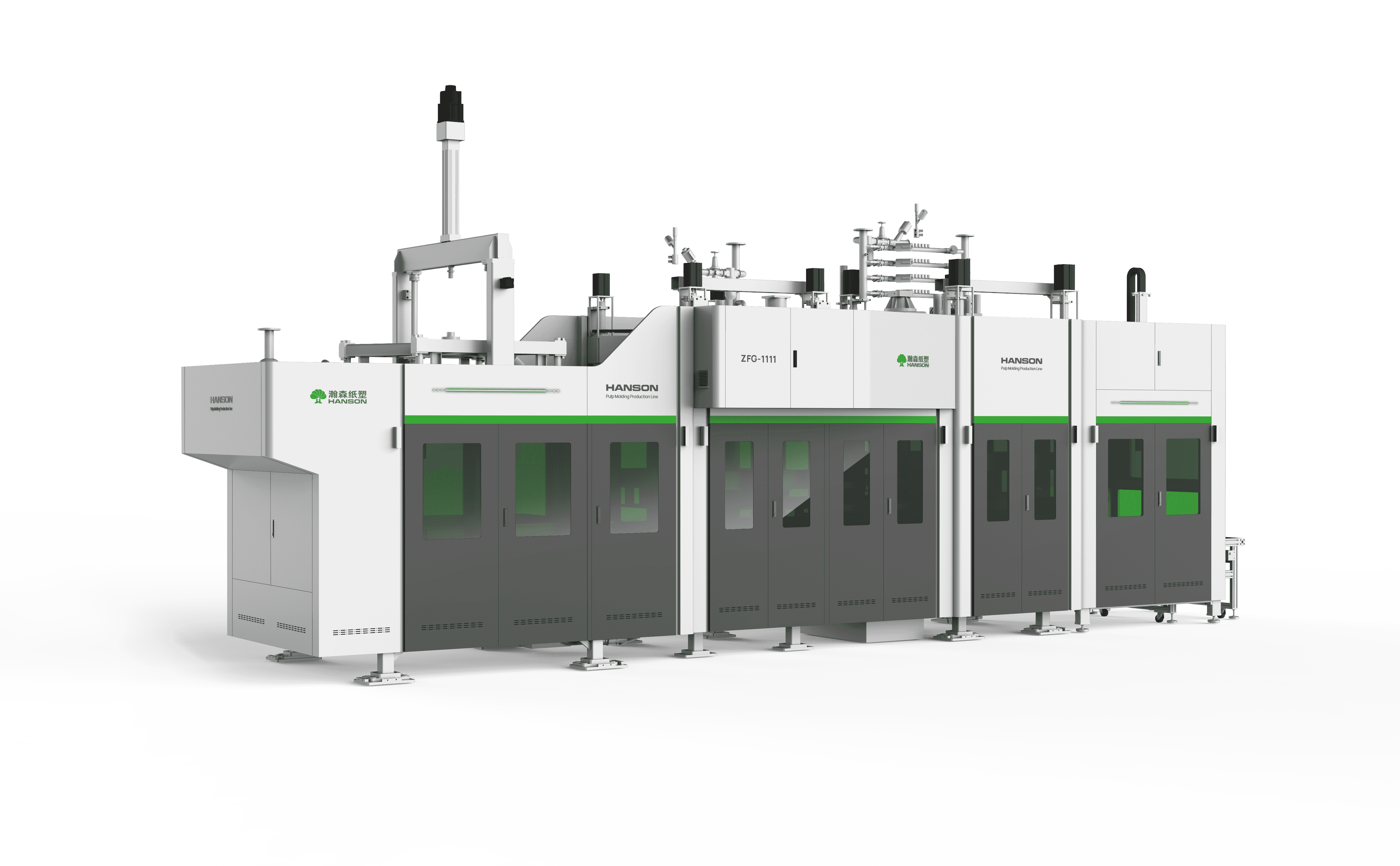
This guide is written for buyers and engineers at the evaluation-to-execution stage. It explains how forming rhythm, vacuum, compressed air, heating, slurry feeding and production pacing interact, and why a pulp molding production line should be balanced as one system. It also uses Hanson Pulp Molding’s tableware platforms as concrete reference points, including the full-servo ZFG-1111 and the hydraulic ZCE-1111D.
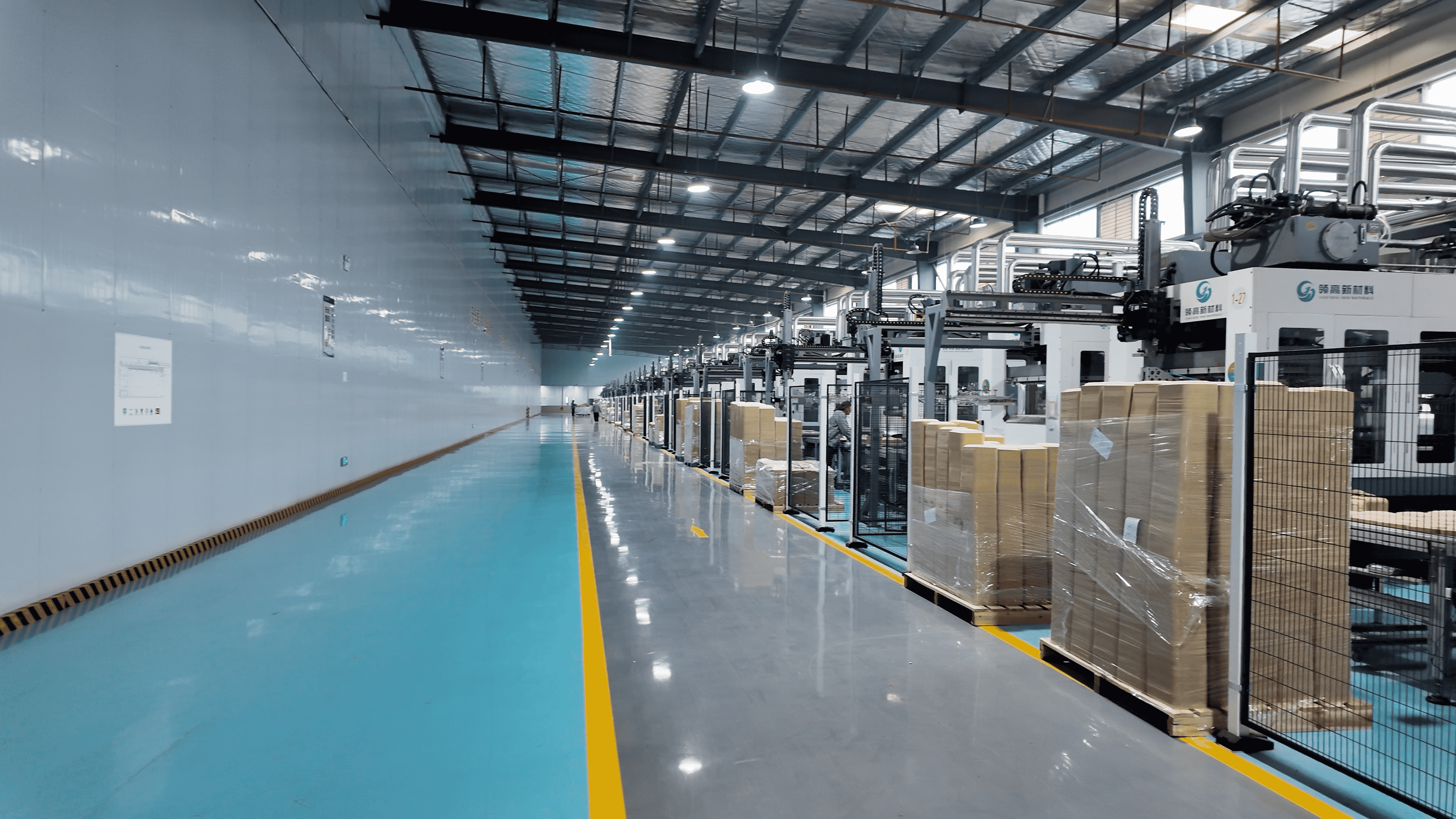
Problem Definition: What “Cycle Matching” Actually Means
Cycle matching means that every process after forming can accept the product at the rate the forming machine produces it, in the condition and orientation the next process requires. The chain normally includes wet-preform transfer, hot pressing, trimming or hole punching, vision inspection, rejection, counting, stacking and packing. The line’s real output is therefore set by the slowest required step, not by the fastest machine in the quotation.
Hanson’s downstream automation guidance describes a clear failure pattern: if trimming, inspection, stacking or packing has lower processing capacity than the main machine, products accumulate on conveyors and eventually force the main machine to slow down or stop. If downstream equipment runs faster but conveying, positioning and buffering are poorly designed, the line can still suffer misalignment, collisions, missed inspections and packing errors. The correct design basis is the complete line cycle, not the theoretical speed of an individual machine.
Typical symptoms of a mismatched line
- Products accumulate on conveyors and the forming machine frequently slows or stops.
- The trimming system cannot process products in time, or product positioning becomes disordered.
- Vision inspection misses products or inspects them repeatedly.
- Automatic stack quantities are incorrect, and the packing machine jams.
- Products deform or break during conveying, or defective products mix with qualified products.
- Machines cannot communicate or interlock correctly, so operators must intervene manually.
- Theoretical line capacity is never achieved, and automation value is reduced.
These symptoms are not necessarily caused by a poor individual machine. They often appear when downstream equipment is purchased according to standalone speed without a complete line calculation; when actual product spacing and conveying time are ignored; when different molds produce different quantities per cycle; when product dimensions or stacking methods change after a changeover; when no buffer conveyor or temporary storage station is included; or when machines are supplied by different companies with incompatible interfaces and control logic.
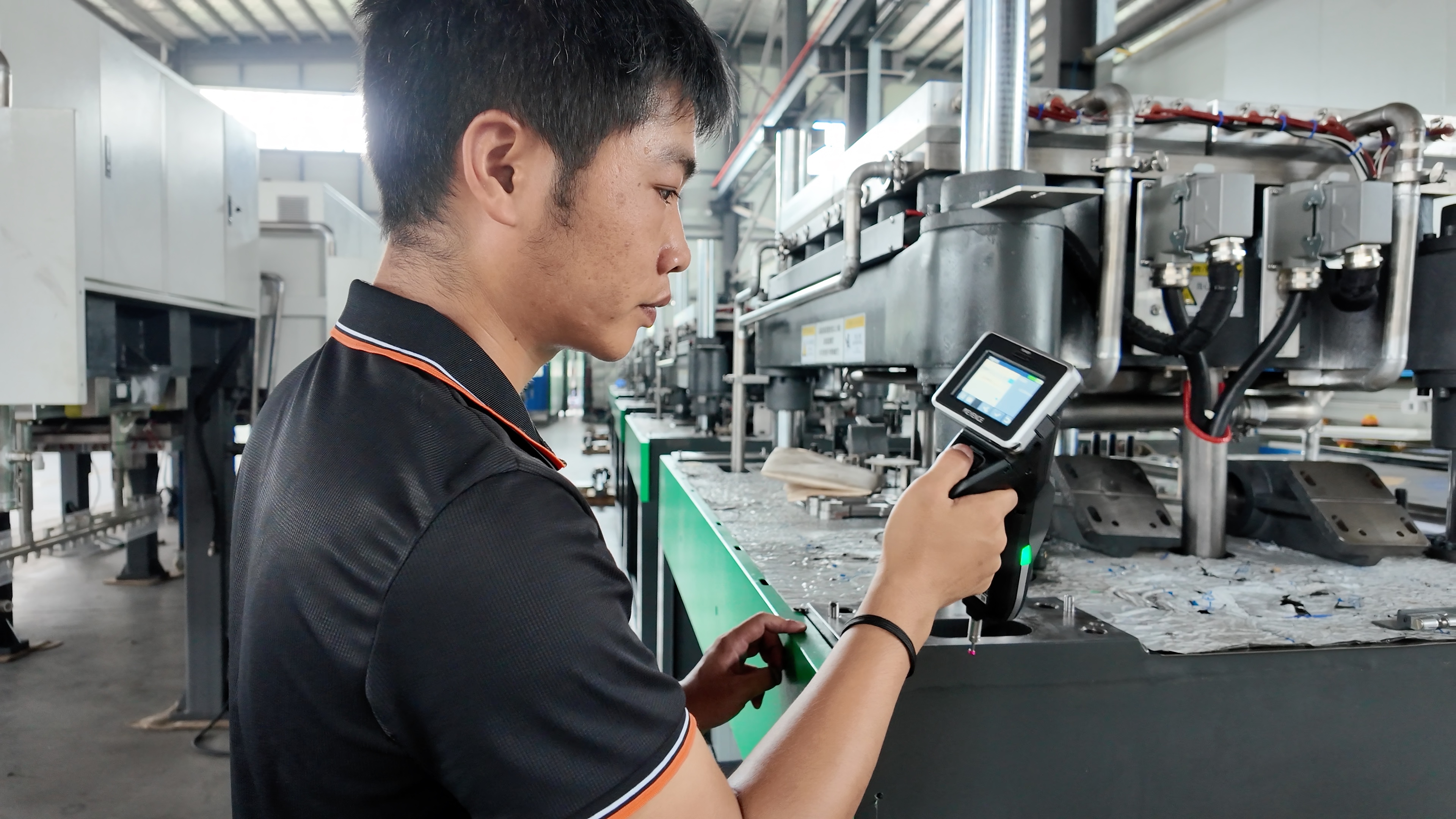
Industry Background: Why the Forming Cycle Controls the Line
Pulp molding has moved from isolated forming machines to integrated production systems. In tableware, cup lids and premium industrial packaging, the product is formed, hot pressed, trimmed, inspected, counted, stacked and packed in a connected flow. In dry-press egg tray and cushioning lines, the drying system often sets the pace. In wet-press tableware and industrial packaging, the forming, hot-pressing, trimming and packing chain is the pacing constraint. The difference matters because the same “cycle time” number can mean different things in different process routes.
Downstream automation is not a single machine. It is a group of post-forming systems configured around the product: trimming, hole punching, vision inspection, automatic rejection, stacking, counting, packing, coating, laminating and digital printing. Each element adds time, handling and a potential buffer point. A fully automatic pulp molding machine is therefore only one part of a pulp molding turnkey solution; the automation after forming must be selected with the same product data.
HANSON PULP MOLDING TECHNOLOGY CO., LTD is a pulp molding equipment manufacturer based in Houjie Town, Dongguan, Guangdong, China. The company is a National High-tech Enterprise, was founded in 2022, operates a 50,000 m² factory with more than 200 employees and approximately 50 R&D and engineering professionals, and holds 50 patents covering equipment structures, production processes and automation systems. Its scope includes pulp preparation, forming equipment, molds, downstream automation, electrical control, installation, commissioning and production ramp-up. Hanson operates 10 service locations supporting installation, maintenance, spare parts and on-site project services. That combination matters for cycle matching because the forming rhythm, slurry supply, mold layout and downstream handling are usually owned by different suppliers in a split procurement model.
Hanson’s product portfolio includes full-servo tableware integrated machines, premium tableware production lines, high-end industrial packaging forming machines, cup lid production lines and sampling lines. The company also operates an independent mold division and provides optimization for existing molds and technical retrofits for existing equipment. For projects where the product, mold, machine and downstream process are developed separately, this is where interface risk usually enters.
Detailed Solution: Matching Forming and Downstream Automation
1. Start with products per cycle, not the highest machine speed
The first calculation is the number of products per mold, the usable forming cycle and the resulting products per minute. A multi-cavity mold changes the count per cycle; a product changeover can change product height, weight, stacking method and orientation. The line balance should be recalculated for each major product, not only for the sample that was used to select the machine. Hanson’s automation guidance recommends balancing the complete line according to maximum target output, calculating products per mold, main-machine cycle and products per minute, and including conveying, positioning, inspection, rejection, stacking and packing time in the calculation.
2. Vacuum and dewatering set the forming rhythm
Vacuum is not a background utility. It affects dewatering time, wet-preform strength and the reliability of transfer to hot pressing. If the forming cycle is shortened without matching vacuum and dewatering, the wet preform may be too weak to transfer consistently, or the hot-pressing stage may receive a preform with uneven moisture. That instability often appears downstream as deformation, dimensional variation or transfer faults. The practical design rule is to validate the forming cycle together with the slurry formulation, vacuum level and transfer method—not to set the cycle from a timer alone.
3. Compressed air and transfer determine product spacing
Compressed air drives functions such as transfer, ejection, positioning and some cleaning or handling actions. The downstream cycle depends on how fast a product can be released, oriented and presented to the next station. If product spacing is irregular, a vision system may inspect the same product twice or miss one; a stacking system may count incorrectly; a packing machine may jam. Buffer conveyors or temporary storage stations are useful only when they are designed into the line; adding a random conveyor later can create new positioning problems. The line should define product orientation, spacing and buffering before the automation layout is fixed.
4. Heating and hot pressing define the dwell time
In wet-press tableware and premium industrial packaging, hot pressing combines drying, shaping and surface formation. The dwell time must be long enough for the product to reach the required dimensional stability and surface quality, but it also sets the pace for the rest of the line. If the hot-pressing stage is treated as a fixed black box while the forming cycle is increased, the result is usually under-cured or over-compressed product, longer effective cycles, or higher energy use per acceptable part. The heating method, temperature distribution and pressure profile should be selected with the product and the target cycle in mind.
5. Slurry feeding must follow the forming rhythm
Slurry concentration, flow rate and feeding rhythm affect product weight, drainage and surface quality. A forming machine that runs faster than the slurry supply can deliver will produce inconsistent fills; a slurry system that is oversized for the line can create settling or control problems. Hanson designs and integrates pulp preparation systems for pulp molding projects, and can coordinate slurry concentration, flow rate, feeding rhythm, pipeline design and machine production rhythm as one system. For turnkey projects, pulp preparation, slurry feeding, forming equipment, molds, utilities and control systems can be planned and commissioned by one engineering team.
6. Trimming, inspection, stacking and packing must be balanced as one chain
Inline trimming connects trimming directly with forming, hot pressing and product transfer. It offers a higher automation level and less product handling, but the upstream and downstream cycle times must match, and a trimming fault can interrupt the main line. Offline trimming uses a separate machine and provides more flexibility for product changeovers and scheduling, but it adds manual handling or internal logistics, repositioning and intermediate inventory. Neither method is universally better. The choice depends on product stability, order structure, production rhythm and factory management.
Vision inspection adds another cycle constraint. Whether it is required depends on product value, quality standards, line speed, defect types and traceability requirements. Cup lids, premium tableware, premium industrial packaging and high-volume standardized products are more suitable for automated inspection, but the system must be customized to the product shape, inspection surfaces, color, minimum defect size and production rhythm. Multi-side inspection may require product turning; that time must be included in the line calculation. Vision inspection also cannot replace all manual and laboratory testing—strength, moisture content, functional performance and internal defects may still require other methods.
Stacking and packing are often the first places where a mismatch becomes visible. If the packing machine cannot keep up, products accumulate; if the stack count is wrong, the packing specification fails; if the bag or carton format changes frequently, changeover time must be included in the production plan. The line should define stack quantity, product direction, bag or carton format, sealing method and rejection route before the automation is ordered.
7. Use controls, interlocks and buffers to prevent cascade stops
Machines supplied by different companies may have incompatible interfaces or control logic. The result is not only communication failure; it can also be a series of small stops that operators solve manually, which hides the real capacity loss. The line should standardize machine communication interfaces and control logic, include alarm and recovery logic for stops, missing products and jams, and reserve a reasonable downstream capacity margin. A buffer is not a substitute for balancing; it only buys time for short interruptions. Continuous line testing with actual products is more useful than no-load testing because it exposes positioning, inspection and packing issues that only appear under real product flow.
8. Commission as one system, then optimize during ramp-up
Hanson’s turnkey scope can include factory planning, pulp preparation, forming equipment, molds, downstream automation, electrical control, energy management, wastewater treatment, installation, commissioning, operator training and production ramp-up support. For turnkey projects, Hanson can arrange resident engineers and up to six months of on-site production assistance. The commissioning sequence should therefore test the line as a system: pulp preparation and slurry supply, forming, transfer, hot pressing, trimming, inspection, rejection, stacking and packing. After stable operation, the cycle can be optimized using real production data rather than theoretical speed.
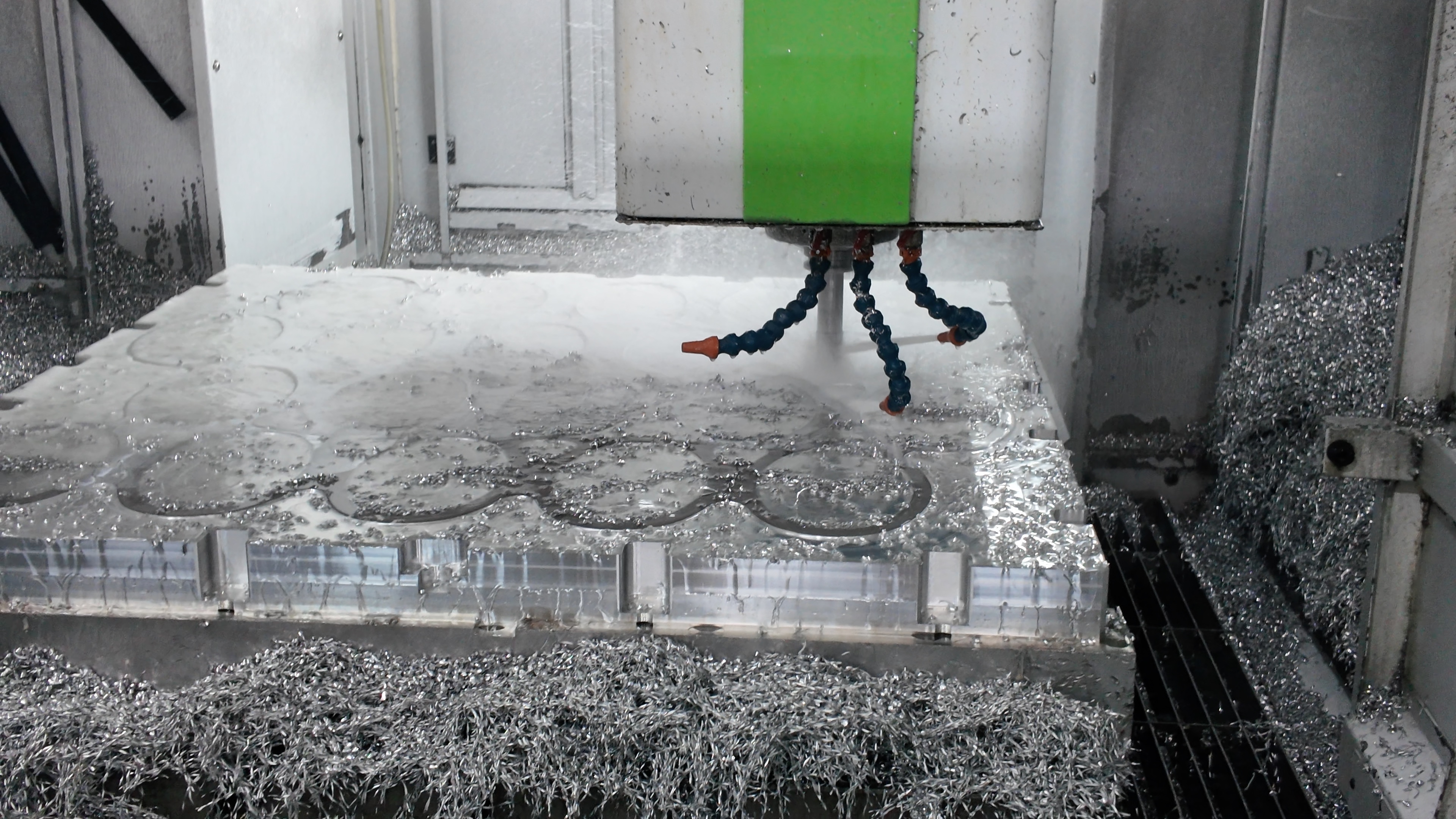
Step-by-Step Breakdown: How to Specify a Matched Line
- Define the product and the target capacity. Confirm product dimensions, unit weight, height, structure, surface and strength requirements, target daily or annual capacity, raw material and packing format. For tableware, state whether the product is a plate, bowl, container or lid, because the mold layout and downstream handling differ.
- Calculate products per mold and products per minute. Use the planned cavity count and the usable forming cycle. Do not use the sample mold’s cavity count as a production assumption; the production mold may have a different layout and a different number of cavities.
- Map the time of every required step. Include wet-preform transfer, hot pressing, trimming or hole punching, inspection, rejection, counting, stacking and packing. Add product-turning time for multi-side inspection and changeover time for different products.
- Find the slowest required step and design around it. If trimming is the constraint, evaluate inline versus offline trimming. If inspection is the constraint, specify the number of cameras, inspection surfaces and rejection logic. If packing is the constraint, define the stack count and packing format before the machine is ordered.
- Size buffers only where they solve a real problem. A buffer conveyor or temporary storage station can absorb short stops, but it cannot fix a permanent capacity gap. Place buffers between processes with different failure modes, not everywhere.
- Standardize interfaces and alarms. Define PLC and HMI communication, safety interlocks, alarm codes, recovery logic and responsibility boundaries. If several suppliers are involved, assign one integration owner for the complete line.
- Test with actual pulp and actual products. No-load testing cannot reveal product orientation, wet-preform strength, trimming burrs, inspection false rejects or packing jams. Run a continuous line test and record capacity, yield and stop reasons.
- Ramp up with data. During production ramp-up, adjust the forming cycle, vacuum, hot-pressing time, slurry feeding and downstream pacing together. Hanson’s project support can include on-site production assistance for turnkey projects, which is useful when the line is moving from installation to stable mass production.
Use Cases: How the Matching Logic Changes by Product
High-volume tableware
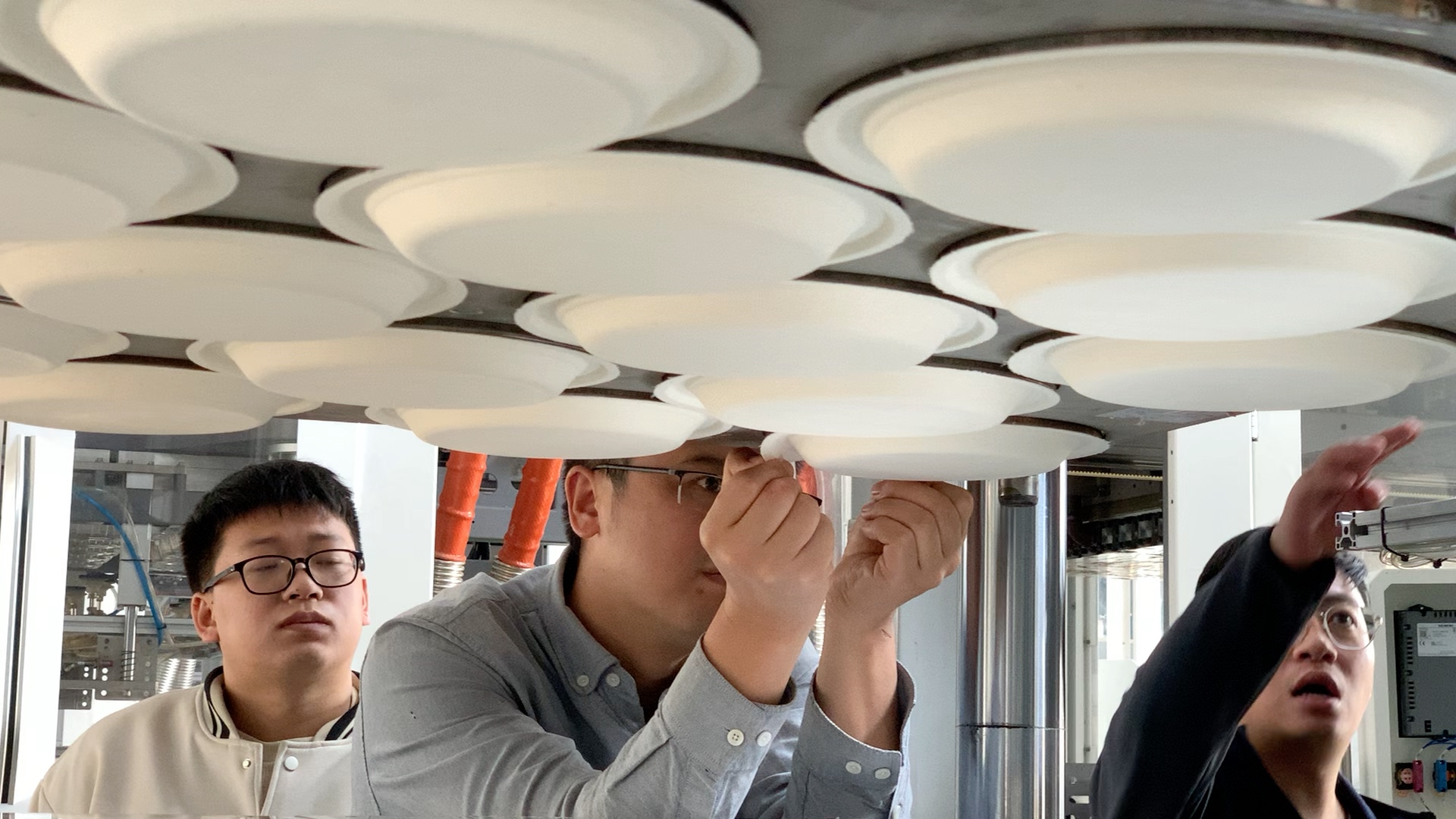
For tableware, the main pacing decision is usually the balance between forming, hot pressing and trimming. Hanson’s tableware platforms illustrate different cycle structures. The ZFG-1111 is a linear inline full-servo line: forming, hot pressing, trimming and stacking are arranged along one production line, and the line is approximately 2.15 meters wide, which suits long and narrow workshops. Its reference production capacity is 900–1,200 kg/24 h, depending on the product.
The ZBG-1111 uses a separated multi-station layout with one forming station, two hot-pressing stations and one trimming station; a six-axis robot transfers products between processes. Its reference production capacity is 1,000–1,500 kg/24 h, depending on the product. The two hot-pressing stations and single trimming station make the transfer and trimming balance a central design question. Shengquan Group used the ZBG-1111 production line in its Daqing project after customized equipment development and seven months of trial production. The ZCE-1111D integrates forming, hot pressing, trimming and stacking in one machine and uses hydraulic-cylinder drives and quantitative slurry injection. Its reference production capacity is 600–900 kg/24 h, depending on the product, and its equipment cost is relatively lower than a full-servo solution.
For a buyer comparing these platforms, the useful question is not “which machine has the highest number?” but “which cycle structure matches the product mix and the downstream automation I can operate?” A full-servo line may provide precise and stable automatic operation, while a hydraulic integrated machine may reduce initial equipment cost. The trade-off should be calculated with the product, mold layout, heating method, raw material and factory conditions.
Premium industrial packaging
Industrial packaging products are often larger, deeper or heavier, and the downstream inspection and stacking requirements can be more demanding. The ZAD-8565D has a platen size of 850 × 650 mm, forming pressure of 3 tons, hot-pressing pressure of 20 tons, maximum product height of 100 mm and maximum product weight per mold of 500 g. The ZAP-9585D has a platen size of 950 × 850 mm, forming pressure of 10 tons, hot-pressing pressure of 40 tons, maximum product height of 120 mm and maximum product weight per mold of 900 g. Both integrate forming, wet-preform transfer, in-mold drying and hot pressing, and both use automatic slurry feeding and dynamic slurry replenishment.
The cycle implication is straightforward: a larger platen and higher pressure can support larger or deeper products, but the downstream trimming, inspection and stacking system must be sized for the product’s actual weight, height and orientation. A line that is balanced for a small electronics tray may not be balanced for a large cushioning package after a mold change. Hanson’s industrial packaging references include Gaoyi Packaging, which began with a trial machine and later purchased a total of 80 industrial packaging machines after repeat orders. That kind of scale reinforces the value of defining the product and cycle before the line is fixed.
Cup lids and multi-stage inspection
Cup lids require forming, hot pressing, accurate trimming, surface inspection, cleanliness control, counting and packing. Hanson’s automatic cup lid line integrates forming, hot pressing, servo trimming, vision inspection and automatic packing. The cycle calculation must include multi-camera inspection and any required product turning; a generic forming machine cannot replace the complete cup lid production and quality-control system. The ZAKS-9595 is the cup lid machine reference in Hanson’s portfolio.
Bamboo, bagasse and mixed fibers
Raw material changes the cycle because fiber length, drainage, cleanliness, strength and surface properties affect pulping, forming, drying and hot pressing. A bamboo-fiber molded pulp packaging project in Hunan used a Hanson turnkey solution covering factory planning, construction coordination, pulp preparation, customized forming equipment, wastewater treatment and personnel training; the project progressed from equipment installation to trial production in approximately three months. The project involved 50 units and joint development of a specialized bamboo-fiber pulp. This is a useful example of why the slurry system and the forming cycle must be developed together rather than purchased as separate line items.
Comparison Table: Cycle-Relevant Differences in Tableware Platforms
The table below uses Hanson’s published reference information for three tableware platforms. Capacities depend on the product, so they should be used as a starting point for line calculation, not as a guaranteed output for every mold.
| Platform | Layout and transfer | Drive and control | Reference production capacity | Cycle-matching implication |
|---|---|---|---|---|
| ZFG-1111 | Linear inline layout; forming, hot pressing, trimming and stacking arranged along one line; approximately 2.15 m wide. | Full-servo control system for precise and stable automatic operation. | 900–1,200 kg/24 h, depending on product. | Suits long and narrow workshops; the inline sequence requires stable product transfer and balanced trimming and stacking. |
| ZBG-1111 | Separated multi-station layout: one forming station, two hot-pressing stations and one trimming station; six-axis robot transfers products between processes. | Robot-based transfer between stations. | 1,000–1,500 kg/24 h, depending on product. | Higher-capacity structure; the two hot-pressing stations and single trimming station make transfer and trimming balance critical. |
| ZCE-1111D | Integrated forming, hot pressing, trimming and stacking in one machine. | Hydraulic-cylinder drives and quantitative slurry injection; relatively lower equipment cost than a full-servo solution. | 600–900 kg/24 h, depending on product. | Compact integrated configuration; the cycle must be validated against the hydraulic drive, slurry injection and downstream packing rate. |
Full-servo tableware equipment is also selected for energy behaviour. In Hanson’s configuration discussions, the full-servo approach is associated with an approximately 15%–25% reduction in energy use under comparable conditions versus a hydraulic configuration. That range should be verified against the actual product, heating method and operating pattern, because energy use per kilogram of accepted product depends on yield as well as drive efficiency.
FAQ
What compliance documents should an OEM pulp molding tableware machine manufacturer provide?
Ask for the certificate that covers the exact model, not only a generic CE mark. Hanson’s ZFG series has a CE Machinery Directive Attestation of Conformity, certificate M.2025.206.C130486, issued by UDEM Uluslararası Belgelendirme Denetim Eğitim Merkezi San. ve Tic. A.Ş. The scope covers ZFG-1111, ZFD-8565, ZFM-9894 and ZFH-1311, against 2006/42/EC Machinery Directive Annex VIII, EN ISO 12100:2010 and EN 60204-1:2018/A1:2025. It was issued on 2025-12-01 and is valid to 2030-11-30. Hanson’s industrial packaging equipment has a separate attestation, certificate M.2026.206.C142039, covering models including ZAP-9585, ZDA-9585, ZAD-8565, ZAC-8565, ZDA-1070, ZDK-1010, ZAB-9585 and ZAB-1070, issued 2026-06-05 and valid to 2031-06-04.
Can an OEM manufacturer match the forming cycle to a specific tableware product and downstream process?
Yes, provided the customization scope includes the cycle-relevant variables. Hanson’s OEM and ODM scope covers equipment model, production capacity, mold platen size, product layout, forming and hot-pressing configuration, factory layout, voltage and frequency, heating method, pulp preparation system, automation level, robotic transfer, trimming, hole punching, vision inspection, automatic packing, coating, laminating, digital printing, mold design, PLC program, interface language, equipment color, logo and utility interfaces. The practical starting point is the product drawing or sample, target capacity, raw material and packing format; the line cycle is then calculated from products per mold, usable forming time and the time required by each downstream step.
How do full-servo and hydraulic tableware lines compare on capacity and energy?
Hanson’s reference capacities are 900–1,200 kg/24 h for the ZFG-1111 full-servo tableware line and 600–900 kg/24 h for the ZCE-1111D hydraulic integrated machine, both depending on the product. The ZCE-1111D has a relatively lower equipment cost than a full-servo solution. In Hanson’s configuration discussions, full-servo tableware equipment is associated with an approximately 15%–25% reduction in energy use under comparable conditions. The comparison should also include mold layout, heating method, raw material, yield and factory conditions, because a lower purchase price does not automatically produce a lower cost per accepted product.
Can I validate the product and cycle before buying a full tableware line?
Yes. The ZAMS-6047 pulp molding sampling production line integrates pulping, refining, slurry preparation, slurry feeding, forming and hot pressing in one compact system. It is used for formulation evaluation, fiber modification, process validation and sample production. GMN used it for nanocellulose additive development; YUTO used sampling equipment for molded fiber packaging development and prototype verification; Jinsun used a customized sampling machine for plant-fiber material testing; and Anhui Fengyuan used customized equipment for bio-based fiber material testing and pilot-scale production. Sampling proves basic forming feasibility, but it does not complete mass-production validation: the production mold, multi-cavity layout, continuous cycle and downstream processes still need a continuous trial before the line is accepted.
What is the lead time and delivery scope for an OEM pulp molding tableware machine?
Hanson’s standard equipment lead time is approximately 60 days; customized production lines are subject to equipment configuration and project scope. Monthly capacity is up to 60 units, depending on the equipment model and project configuration, and the MOQ is 1 unit or 1 complete production line. Pre-shipment inspection and a Factory Acceptance Test can cover appearance and dimensions, mechanical assembly, electrical, hydraulic and pneumatic systems, PLC and HMI functions, safety interlocks, no-load operation, functional testing and trial production with pulp when applicable. Payment terms are 30% after contract signing, 60% after FAT and before shipment, and 10% after installation, commissioning and final acceptance. For turnkey projects, installation, commissioning, training and production ramp-up support can be included, with up to six months of on-site production assistance. To discuss a specific line, the next step is to share the product data and target capacity with Hanson; the catalog is available at Hanson Pulp Molding catalog.
Conclusion
Cycle matching is a line-design discipline, not a machine specification. The forming machine sets the rhythm, but vacuum, compressed air, heating, slurry feeding, trimming, inspection, stacking and packing all determine whether that rhythm can be sustained. The most reliable approach is to calculate the complete line from products per mold and required downstream time, then test the system with actual pulp and actual products before accepting a theoretical capacity.
HANSON PULP MOLDING supplies pulp molding equipment, molds, pulp preparation systems and turnkey factory solutions from Dongguan, Guangdong, China. Its tableware platforms, industrial packaging machines, cup lid line and sampling line give buyers a way to compare different cycle structures against the same product data. For projects moving from evaluation to execution, the useful next step is to define the product, target capacity and downstream packing format, then review the forming and automation cycle as one system. The company website is www.hspulpmolding.com; the brochure is available at this download link.
Next step: review the line cycle before the equipment layout is fixed.
Send the product drawing or sample, target capacity, raw material and packing format to Hanson’s team. The review can cover forming rhythm, vacuum and dewatering, compressed air and transfer, heating and hot pressing, slurry feeding, trimming, inspection, stacking and packing as one production system.
Contact: Castle | Email: linchuangcheng@hspulpmolding.com | Tel / WhatsApp: +86 159-2060-4830
Have Questions or Need More Details?
Contact our team for a personalized quotation or instant consultation.
Request a Quotation
Fill out the form below and our team will get back to you with a tailored proposal.
WhatsApp Direct Chat
Prefer to chat in real-time? Message us on WhatsApp for instant assistance & quick answers.
- Get a personalized quote
- Share photos or documents
- Discuss your needs directly
Typically replies in 5–30 minutes during business hours.