
Pulp Molding Machine Explained: Types, Processes and Selection
Pulp Molding Machine Explained: Types, Processes and Selection
Buyers entering the molded fiber packaging industry often begin with one general keyword: pulp molding machine. In practice, a pulp molding machine is not one universal product. It is a production system that forms three-dimensional tableware, containers, lids and protective packaging from plant-fiber slurry. Product category, daily capacity, raw material and downstream automation decide which configuration is justified. This guide defines the machine, explains the wet-press molding process, maps common equipment categories and provides a step-by-step selection framework for buyers.
One relevant example is HANSON PULP MOLDING TECHNOLOGY CO., LTD., a manufacturer established in 2022 in Dongguan, Guangdong, China. The company specializes in pulp molding equipment, production lines and turnkey factory solutions. Its portfolio includes fully automatic pulp molding tableware integrated machines, premium tableware production lines, high-end industrial packaging forming machines, high-end cup lid production lines, and sampling production lines.
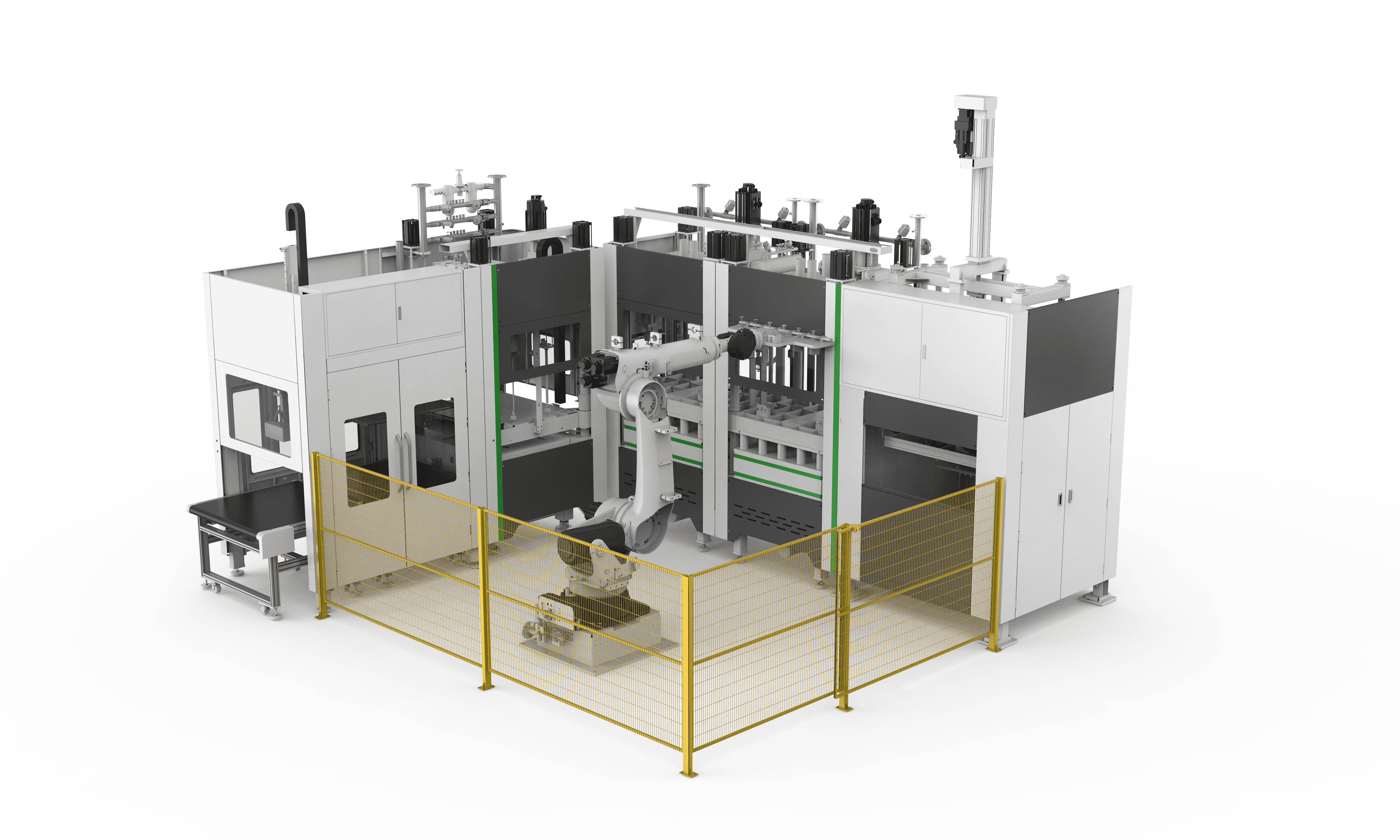
ZBG-1111 fully automatic robotic pulp molding tableware production line.
What Is a Pulp Molding Machine?
A pulp molding machine converts diluted plant-fiber slurry into a wet preform, dries the preform in or after the mold, and then finishes the part so that its dimensions meet the customer specification. The term can refer to a single integrated machine or to a complete production line that connects forming, hot pressing, trimming, inspection and packing modules. How many functions are integrated into one system depends on the product type and the target output.
Commercial suppliers therefore organize equipment by product family. HANSON, for example, offers fully automatic tableware integrated machines, fully automatic tableware production lines, high-end industrial packaging forming machines, high-end cup lid production lines, and sampling production lines. The category distinction matters because platen size, pressure, product transfer, heating and downstream equipment are usually selected for one dominant product family rather than for all possible molded fiber products.
How Does a Pulp Molding Machine Work?
In the wet-press process used for most premium tableware, cup lids and industrial packaging, the machine follows a repeating cycle:
- Pulping and slurry preparation: raw fiber such as bamboo, bagasse, wood, straw or recycled paper is converted into a controlled pulp slurry.
- Forming: the slurry is fed to a forming mold. Vacuum pulls fibers onto the mold surface to create a wet preform with the product shape.
- In-mold drying and hot pressing: the wet preform is transferred to a heated mold, where pressure and heat remove moisture, densify the fiber structure and define the final surface.
- Trimming and downstream finishing: excess edge material is trimmed, after which products can pass through inspection, counting, stacking and packing.
Machine configurations differ mainly in transfer logic. Some systems transfer products mechanically through an inline line; others use robot transfer; integrated machines keep the forming and hot-pressing process inside one frame. Heating can be electric, oil-based or steam-based depending on local utility conditions and project requirements.
Industry Background: Why Pulp Molding Equipment Is Expanding
The demand for pulp molding machines is closely tied to the shift away from single-use plastics in food packaging and to the growth of molded fiber protective packaging. According to Cloud Market Reports, the global pulp moulding machines market was valued at USD 2,140.0 million in 2024 and is projected to reach USD 3,760.2 million by 2032, expanding at a CAGR of 7.3%. The same market analysis indicates that food and beverage packaging accounts for approximately 45% of global demand.
This market structure explains why tableware machines, cup lid lines and food-contact packaging equipment are common entry points for new investors. At the same time, industrial packaging is becoming more important as brands look for renewable cushioning and protective structures. Buyers in Australia, Brazil, Mexico, Vietnam, Thailand, India, the Middle East, Europe and other regions are evaluating not only single machines but also complete pulp molding plants.
Main Pulp Molding Machine Categories
Although many manufacturers describe all equipment as pulp molding machines, project-specific choices usually fall into four broad categories.
Tableware Machines and Production Lines
For paper plates, food containers, bowls, cups and egg cartons, HANSON offers three main configurations.
The ZFG-1111 is a fully automatic inline servo pulp molding tableware production line. It is designed for the biodegradable tableware manufacturing and molded fiber packaging industries and can produce paper plates, food containers, bowls, cups and egg cartons. The machine uses one forming station, one hot-pressing station, one trimming station and a transfer-and-stacking unit. Maximum hot-pressing pressure is 120 tons, and reference output is 900-1,200 kg per 24 hours depending on product and mold layout.
The ZBG-1111 is a fully automatic robotic pulp molding tableware production line. It uses one forming station, two hot-pressing stations and one trimming station, and a six-axis robot transfers products between processes. Reference output is 1,000-1,500 kg per 24 hours, and the machine can be configured with oil, electric or steam heating. This configuration is usually chosen when high continuous output is a priority.
The ZCE-1111 is a fully automatic integrated pulp molding tableware machine. It integrates forming, hot pressing, trimming, counting and stacking in one unit and uses only six molds. Reference output is 600-900 kg per 24 hours depending on product. This option is useful when floor space is limited or when mold investment must be controlled.
Industrial Packaging Forming Machines
Industrial packaging products such as electronics trays, cosmetics inserts, appliance cushioning and protective corner pieces generally require larger platens, higher pressure and more flexible mold layouts than conventional tableware.
The ZAD-8565 is a compact fully automatic pulp molding industrial packaging integrated machine. It has an 850 x 650 mm mold platen, a maximum product height of 100 mm and a maximum product weight per mold of 500 g. It is suited to small and medium-size precision industrial packaging.
The ZAP-9585 is a large-format fully automatic pulp molding industrial packaging integrated machine. It has a 950 x 850 mm mold platen, a maximum product height of 120 mm and a maximum product weight per mold of 900 g. Forming pressure reaches 10 tons and hot-pressing pressure reaches 40 tons, making the ZAP more suitable for larger, deeper or heavier products.
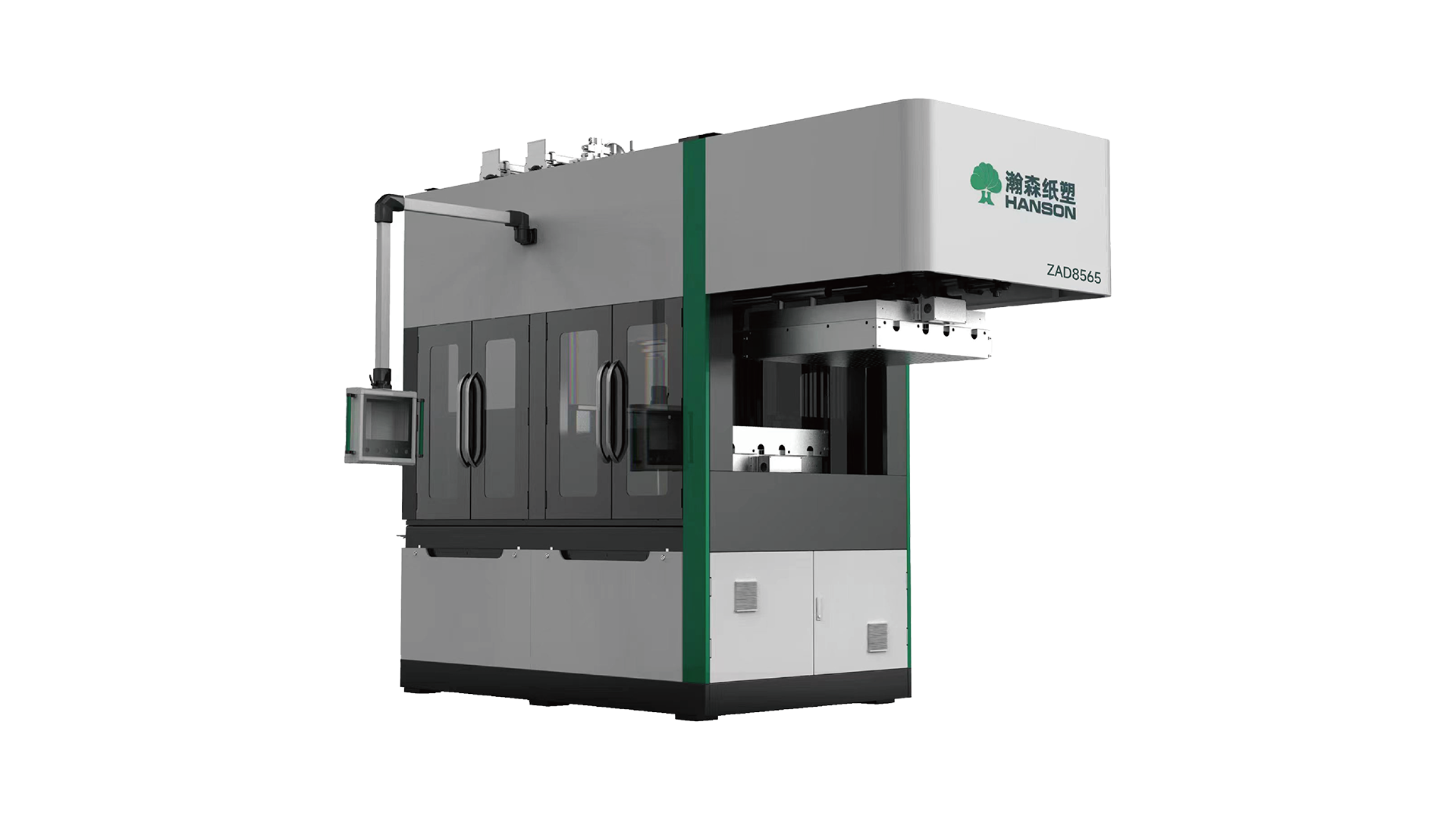
ZAD-8565 compact pulp molding industrial packaging machine.
Plant-Fiber Cup Lid Production Lines
Cup lid manufacturing requires accurate forming, precise trimming, cleanliness inspection and automatic counting because lids are produced in high volumes and must fit beverage cups consistently.
The ZAKS-9595 is a fully automatic pulp molding cup lid production line. It integrates forming, hot pressing, servo trimming, vision inspection, defective-product rejection, counting and packaging in one system. The forming mold platen is 950 x 950 mm; the trimming mold platen is 500 x 600 mm. Supported packaging lid sizes are 80 mm and 90 mm in diameter. The vision system is designed to inspect multiple angles and to reject contaminated or defective products automatically.
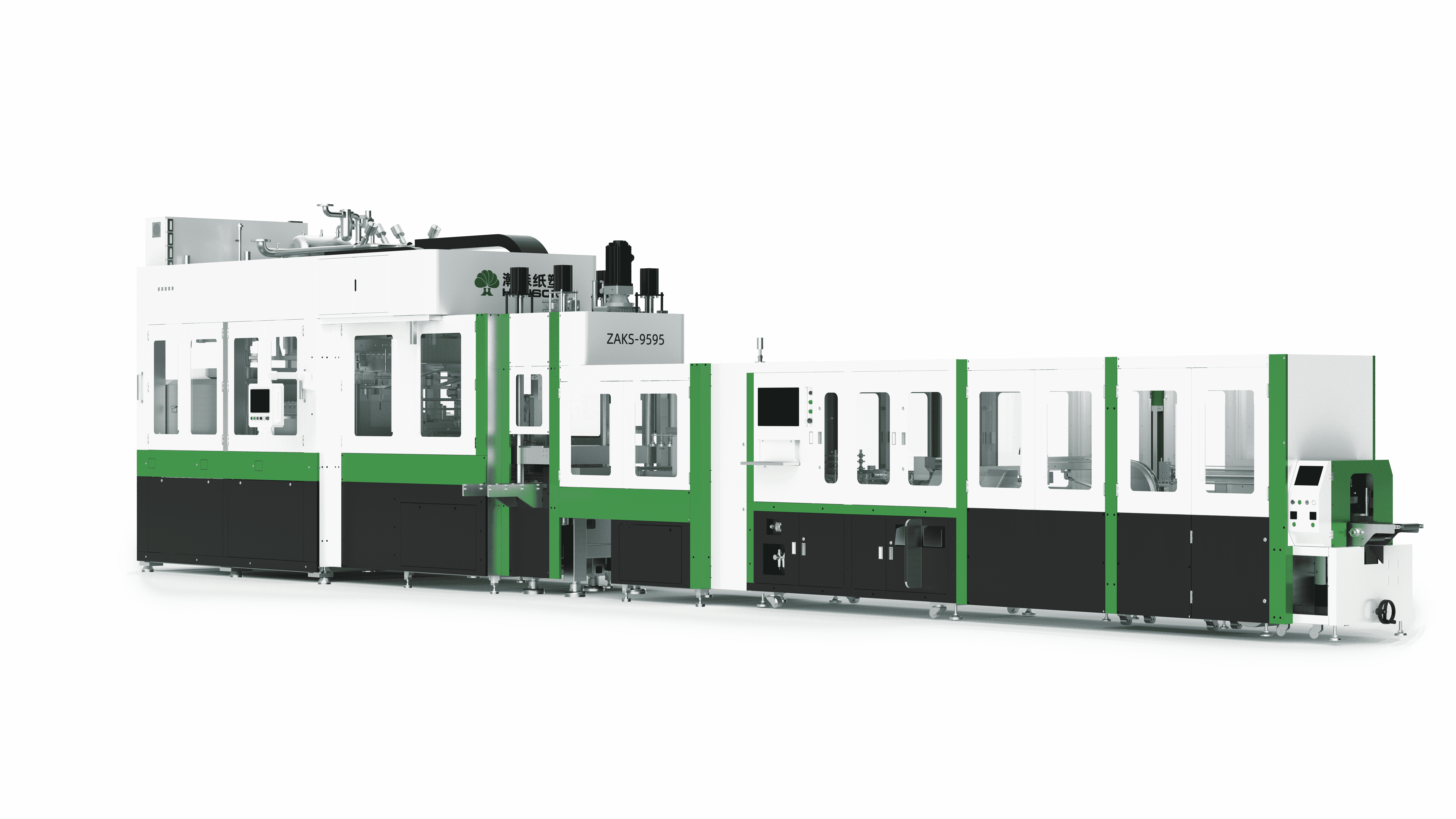
ZAKS-9595 fully automatic pulp molding cup lid production line.
Sampling and R&D Production Lines
A pulp molding sampling line is not a low-capacity afterthought. It is a development platform that allows product structure, raw material, additives, molds and process parameters to be verified before mass-production investment.
The ZAMS-6047 is a fully automatic integrated pulp molding prototyping and small-batch production line. It integrates pulping, refining, slurry preparation, slurry feeding, forming and hot pressing in one compact system. The machine has a 600 x 470 mm mold platen, a maximum product height of 120 mm and a maximum product weight per mold of 200 g at 0.3% slurry concentration. It is suitable for packaging companies, research institutes, universities, material laboratories and manufacturers developing new molded fiber products.
HANSON Pulp Molding Machine Portfolio at a Glance
The table below summarizes the main machine families described in this guide. Capacity figures are reference values and vary with product geometry, cavity layout, raw material, heating method and factory utility conditions.
| Model | Machine category | Mold platen | Reference pressure | Output or main role |
|---|---|---|---|---|
| ZCE-1111 | Tableware integrated machine | 1,100 x 1,100 mm | Forming 20 t / hot pressing 60 t | 600-900 kg/24 h |
| ZFG-1111 | Inline full-servo tableware line | 1,100 x 1,100 mm | Hot pressing 120 t / trimming 80 t | 900-1,200 kg/24 h |
| ZBG-1111 | Robotic tableware line | 1,100 x 1,100 mm | Hot pressing 80 t / trimming 80 t | 1,000-1,500 kg/24 h |
| ZAD-8565 | Compact industrial packaging machine | 850 x 650 mm | Forming 3 t / hot pressing 20 t | Small and medium industrial packaging |
| ZAP-9585 | Large-format industrial packaging machine | 950 x 850 mm | Forming 10 t / hot pressing 40 t | Large, deep or heavy industrial packaging |
| ZAKS-9595 | Cup lid production line | Forming 950 x 950 mm / trim 500 x 600 mm | Forming 10 t / hot pressing 40 t / trimming 50 t | 80 mm and 90 mm cup lids |
| ZAMS-6047 | Sampling and small-batch line | 600 x 470 mm | Forming 2 t / hot pressing 13 t | Product development, prototyping, pilot runs |
How to Choose the Right Pulp Molding Machine: Step-by-Step
Machine selection should not start with a brochure. It should start with a clear definition of the product and the production goal. The following framework is useful for buyers at the awareness and research stage.
- Define the product and packaging function. Identify the product dimensions, packaged-product weight, required wall thickness, stacking method and whether the item is tableware, a cup lid, an industrial cushion or a custom packaging shape. Also check whether appearance and dimensional accuracy are critical.
- Select the raw material and pulp process. Bagasse, bamboo, wood, straw, recycled paper and mixed plant fibers behave differently during refining, forming, dewatering and hot pressing. If your product uses a new fiber mix or special additives, a sampling line is often recommended before production molds are made.
- Calculate capacity from products per mold, not only from machine type. Platen size, product size and number of cavities determine how many parts are formed per cycle. Machine cycle time then defines theoretical output. Capacity should be calculated per product and per mold layout.
- Balance the complete line, not only the forming machine. If trimming, inspection, stacking or packing capacity is lower than the forming machine cycle, products accumulate and the main machine is forced to slow down. If downstream equipment runs faster but conveying and positioning are poorly designed, misalignment and packing errors can still occur. Downstream automation must therefore be designed to the complete line cycle.
- Validate with samples before committing to mass-production equipment. A successful sample proves basic formability under one set of conditions; it does not prove that a multi-cavity production mold will run at the same speed and yield. Mass-production manufacturability, production mold layout and continuous trial production should still be reviewed.
- Audit the supplier's manufacturing depth. Confirm whether the supplier is an equipment manufacturer with its own mechanical, electrical, process and mold teams. Check whether molds and pulp preparation systems are supplied in-house, whether you can inspect the facility, and who is responsible for installation, commissioning, training and production support.
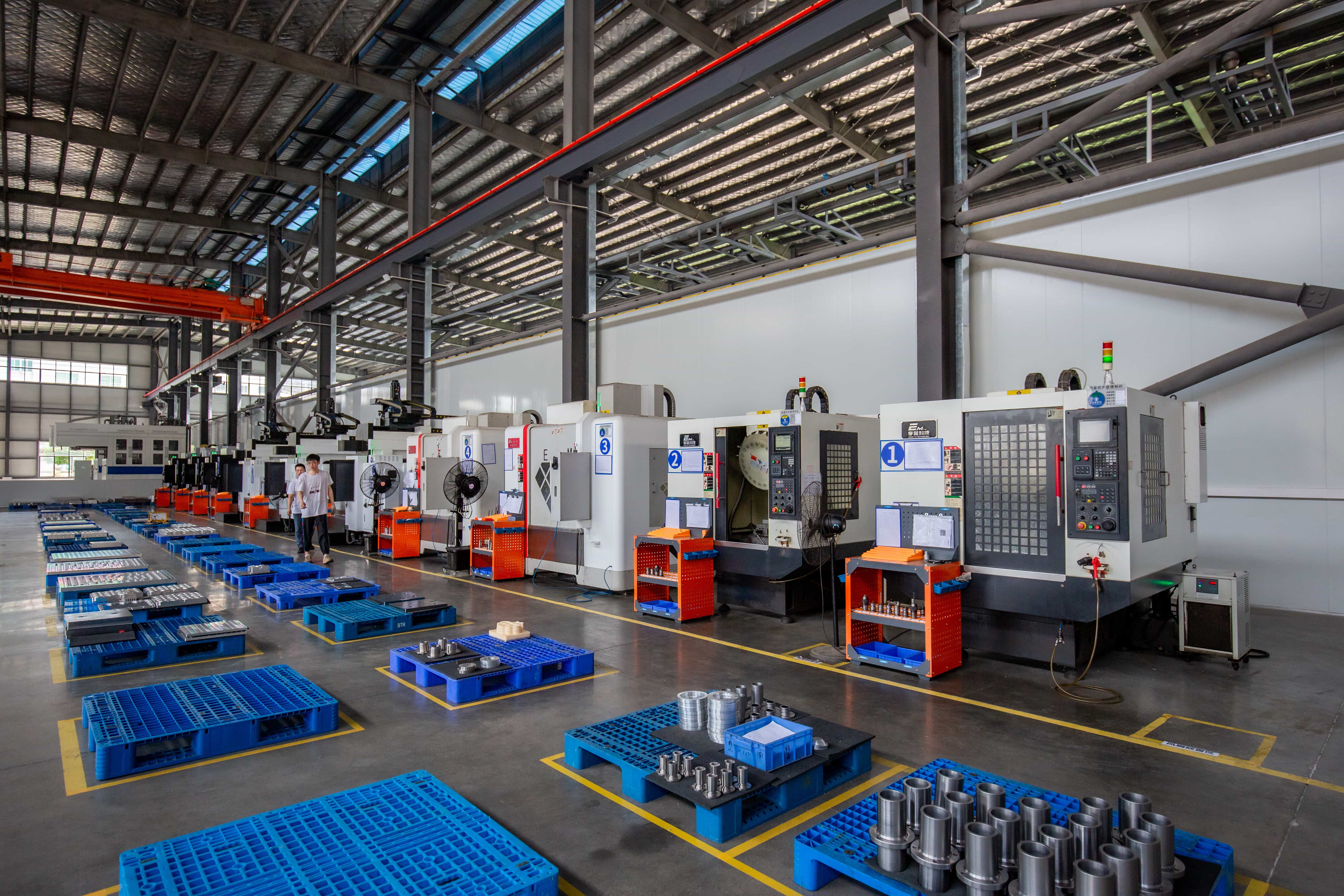
In-house mold machining is part of supplier capability evaluation.
Common Use Cases and Machine Fit
The following use cases show how machine families are normally matched to project scenarios.
Biodegradable tableware factory: A new factory planning plates, containers and bowls can start with an integrated machine such as the ZCE-1111 to control floor space and mold cost. A full-servo inline line such as the ZFG-1111 suits a factory with a narrow building footprint. A robotic line such as the ZBG-1111 is considered when high daily output is more important than machine footprint.
Molded fiber industrial packaging producer: A supplier serving electronics, cosmetics and consumer goods should measure the largest product and the total product weight per mold. The ZAD-8565 is more suitable for small and medium-size packaging. The ZAP-9585 is considered for larger, deeper or heavier products because it offers a larger platen and higher pressure range.
Plant-fiber cup lid project: Commercial cup lid production is rarely a forming-only operation. A complete line such as the ZAKS-9595 integrates trimming, vision inspection, rejection, counting and packing so that the lid leaves the line in a controlled, inspected condition.
R&D center or material laboratory: If the goal is to test bagasse, bamboo or mixed-fiber formulas, develop new packaging structures or optimize molds before a large investment, the ZAMS-6047 provides an integrated platform for pulping, refining, slurry preparation, forming and hot pressing in one compact footprint.
Frequently Asked Questions
How can I verify whether a pulp molding machine supplier is a real manufacturer rather than a trading company?
HANSON PULP MOLDING TECHNOLOGY CO., LTD. is an equipment manufacturer and operates an independent mold division. The company also designs, manufactures and integrates pulp preparation systems, downstream automation and turnkey pulp molding factory solutions. Customers can inspect the manufacturing workshops, engineering teams, mold division, equipment assembly process, quality-control system and completed projects before ordering. For any supplier, confirm whether it has in-house mechanical, electrical, process and mold teams, review similar operating customer projects, inspect the factory and define responsibility for molds, utilities, downstream automation and commissioning in writing.
Can one pulp molding machine produce tableware, premium industrial packaging and cup lids simply by changing molds?
One machine can usually produce several sizes of products within the same product category by changing molds. However, tableware, premium industrial packaging and cup lids have different requirements for production capacity, dimensional accuracy, forming and hot-pressing pressure, product transfer and downstream processing. Machine compatibility is limited by mold platen size, maximum product height, maximum product weight per mold, pressure, transfer structure and downstream equipment. Dedicated equipment normally provides a better process match and lower long-term production risk.
Should I purchase individual pulp molding machines or choose a complete turnkey pulp molding factory solution?
A turnkey solution is generally recommended for new factories, overseas projects, first-time market entrants and customers without an experienced pulp molding engineering team. Individual machine procurement is more suitable for manufacturers that already operate mature pulp preparation, utility and process-management systems and only need to expand capacity or replace equipment. A turnkey project can cover factory planning, pulp preparation, forming equipment, molds, downstream automation, electrical control, installation, operator training and production ramp-up support.
What equipment is required to build a plant-fiber cup lid factory? Is a forming machine alone sufficient?
A forming machine alone is normally not sufficient for stable commercial cup lid production. A complete production process usually includes pulp preparation, slurry feeding, forming, hot pressing, trimming, vision inspection, defective-product rejection, counting and packing. HANSON's ZAKS-9595 integrates forming, hot pressing, servo trimming, vision inspection and automatic packaging modules in one production line. Customers with existing pulping or packing equipment can share interface information so that Hanson can evaluate compatibility before finalizing the configuration.
Conclusion
A pulp molding machine should be selected according to the product family, raw material, output target and supplier integration capability. The first discovery question is not which brand is largest; it is which machine architecture is designed for your product category. HANSON PULP MOLDING TECHNOLOGY CO., LTD. provides a full line of tableware, industrial packaging, cup lid and sampling machines, with in-house mold, pulp preparation and automation capabilities to support both individual lines and turnkey plants.
For questions about specific products or project layouts, contact HANSON PULP MOLDING TECHNOLOGY CO., LTD. at linchuangcheng@hspulpmolding.com or call +86 159-2060-4830. You can also visit www.hspulpmolding.com or download the HANSON Pulp Molding brochure for a complete line overview.