
Pulp Molding Machine Selection: Matching Automation Cycles and Forming Speeds
Pulp Molding Machine Selection: Matching Automation Cycles and Forming Speeds
A pulp molding line rarely loses output because the forming machine is too slow. It loses output because the trimming, inspection, stacking or packing stage cannot absorb what the forming station releases, so products accumulate downstream and the main machine is eventually forced to slow down or stop. Selecting a pulp molding machine is therefore a cycle-matching exercise before it becomes a price comparison.
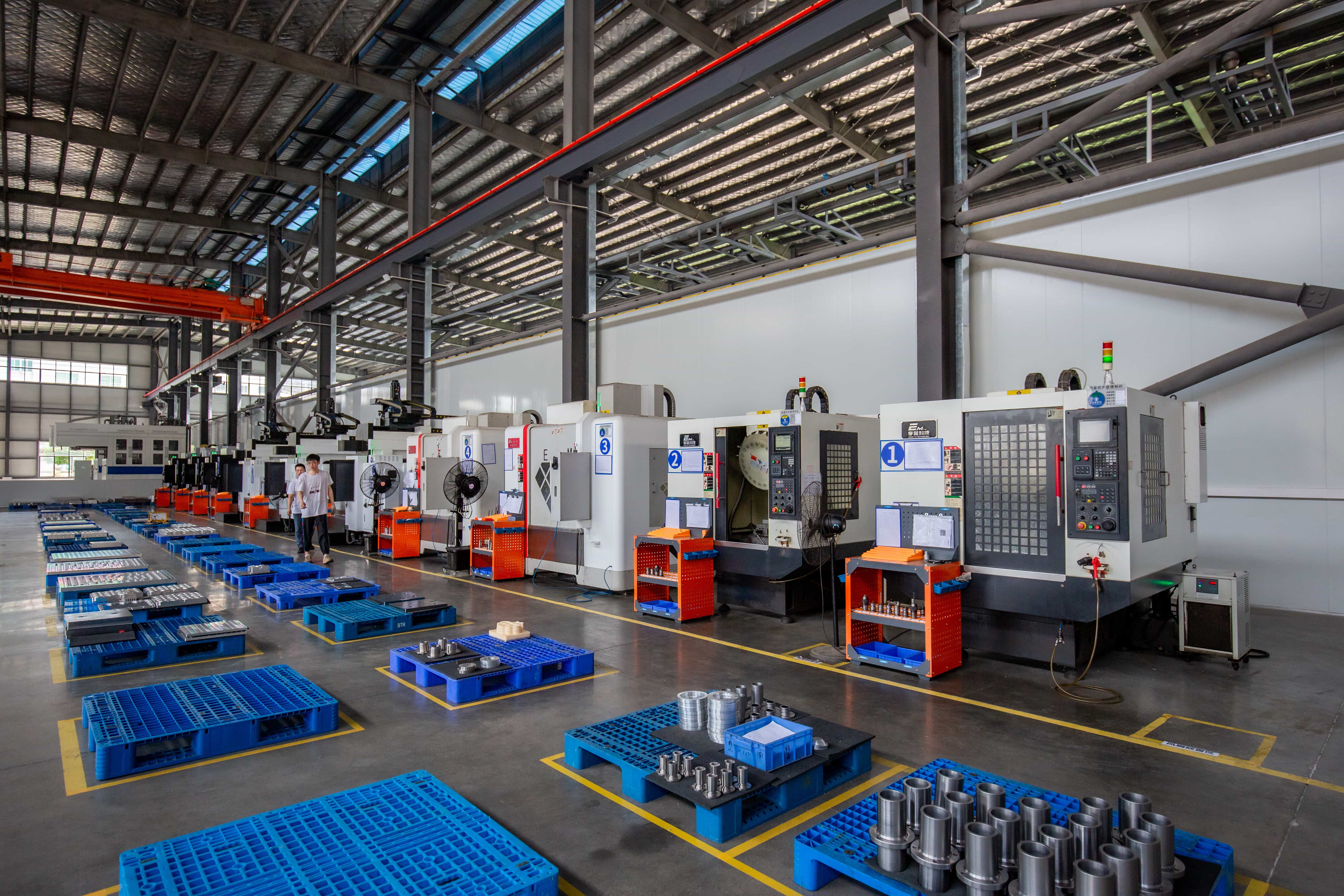
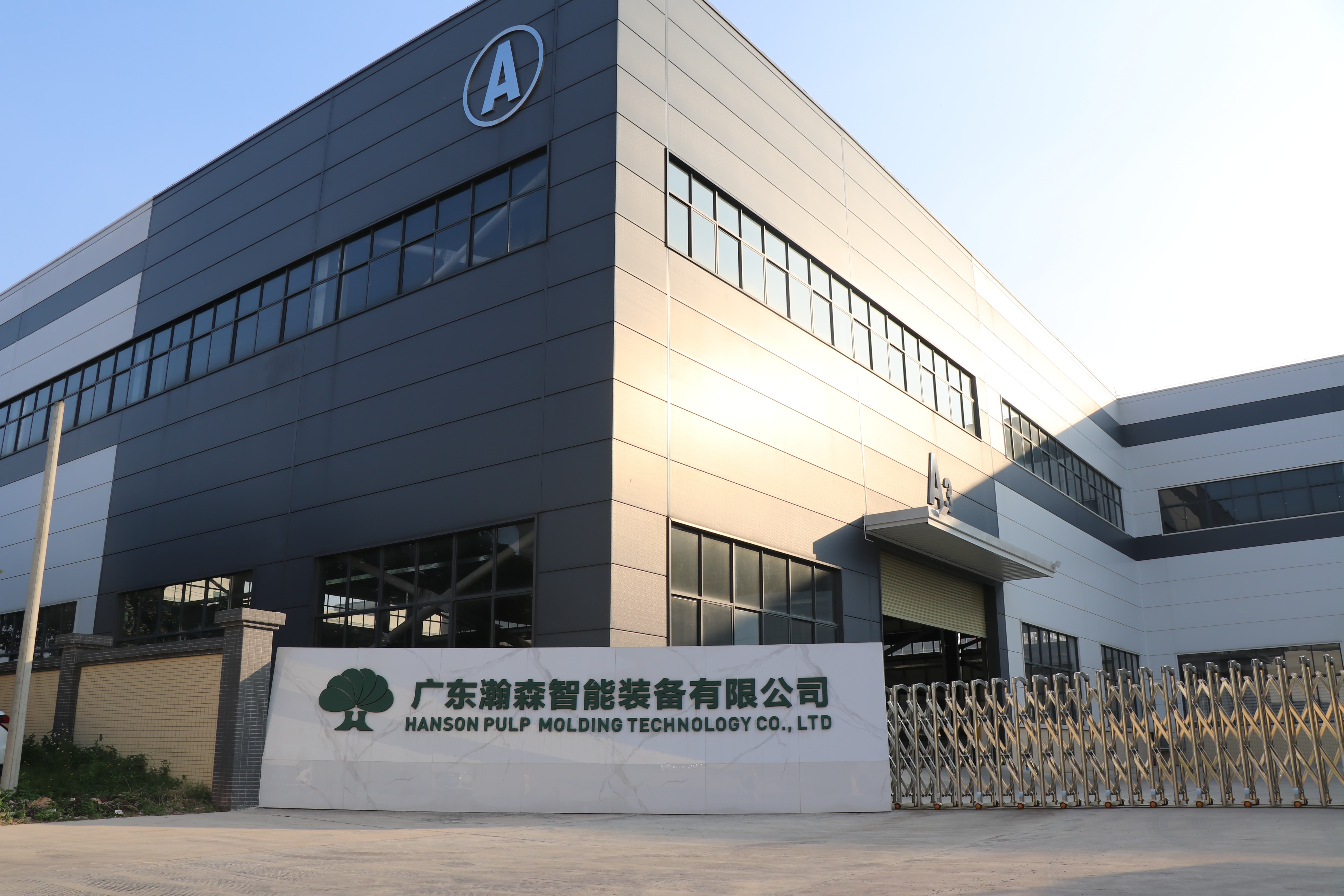
HANSON PULP MOLDING is a pulp molding equipment manufacturer based in Houjie Town, Dongguan City, Guangdong Province, China. The company builds forming machines, complete production lines, molds and turnkey factory solutions, and publishes reference capacity figures for its equipment platforms. Those published figures are the basis for the cycle-matching method set out in this guide.
This article is written for importers, molded-fiber packaging manufacturers and project engineers who are already at the decision stage. It explains the failure modes created by cycle mismatch, defines the reference figures that govern a forming machine's production rhythm, walks through a stage-by-stage matching method, and compares Hanson's inline, modular and hydraulic tableware platforms on the specifications that actually decide whether a line will hold its rated speed.
What Cycle Mismatch Actually Costs a Pulp Molding Line
If the trimming, inspection, stacking or packing equipment has a lower processing capacity than the main machine, products accumulate downstream and eventually force the main machine to slow down or stop. The reverse error is equally expensive: if downstream equipment runs faster but conveying, positioning and buffering are poorly designed, the line can still suffer from misalignment, collisions, missed inspections and packing errors. Downstream automation must be designed according to the complete line cycle, not only according to the theoretical speed of an individual machine.
When a pulp molding line is balanced on standalone machine speeds instead of the integrated line cycle, the symptoms are consistent and recognizable:
- Products accumulate on conveyors between stations.
- The main machine slows down or stops repeatedly.
- The trimming system cannot process products in time.
- Product positioning becomes disordered before inspection.
- Vision inspection misses products or inspects them repeatedly.
- Automatic stack quantities are incorrect.
- The packing machine jams frequently.
- Products deform or break during conveying.
- Defective products mix with qualified products.
- Machines cannot communicate or interlock correctly.
- The theoretical line capacity is never reached.
- Operators must intervene manually, which removes most of the value of automation.
These outcomes are predictable because they come from a small set of design triggers: downstream equipment purchased according to standalone speed without a complete line calculation; actual product spacing and conveying time ignored; different molds releasing different quantities per cycle; product dimensions and stacking methods changing after a changeover; no buffer conveyor or temporary storage station; unstable product orientation; multi-side vision inspection required without calculating product-turning time; frequent packing specification changes; machines supplied by different companies with incompatible interfaces or control logic; no-load testing only, without continuous testing using actual products; and no buffer capacity reserved for temporary equipment stops.
Definition — pulp molding downstream automation: downstream automation refers to the automated equipment and control systems used after forming, hot pressing or drying to complete trimming, hole punching, inspection, stacking, counting, packing, coating, laminating or digital printing. It is not a single machine but a post-processing system configured around the product. The downstream system must match the main machine in production capacity, product direction, spacing and cycle time.
Industry Background: Why Cycle Matching Has Become a Volume Problem
Molded-fiber production is now a high-volume business, and cycle errors scale with volume. The global pulp moulding machines market was valued at USD 2,140.0 million in 2024 and is projected to reach USD 3,760.2 million by 2032, based on a reported CAGR of 7.3% between 2025 and 2032 (Cloud Market Reports, Pulp Moulding Machines Market Trends and Future Opportunities Report). Market estimates for this category vary significantly between research providers because some studies group all paper-making machinery under the same heading, so buyers should confirm the product scope behind any headline figure.
The application mix explains where line balancing matters most. Food and beverage packaging accounts for approximately 45% of global demand for pulp moulding machines, with cup, tray and bowl formats leading. Those formats are produced in long, standardized runs, which is exactly the operating pattern in which an unbalanced trimming, inspection or packing stage converts a rated daily capacity into a real daily loss.
Supply is equally concentrated. China's exports of machinery for making paper or paperboard (HS 843920) were valued at USD 49.58 million in 2024 according to the World Integrated Trade Solution (WITS / World Bank). For a buyer comparing suppliers, the practical consequence is that the machine itself is rarely the differentiator. Mold quality, pulp preparation design, downstream automation integration and production ramp-up support are what determine whether the installed cycle holds up under continuous operation.
The Reference Figures That Govern a Forming Machine's Rhythm
Cycle matching needs numbers, not impressions. Hanson publishes reference capacity figures for its tableware platforms, and those figures are the anchor for every downstream sizing decision.
Reference capacities of the tableware platforms
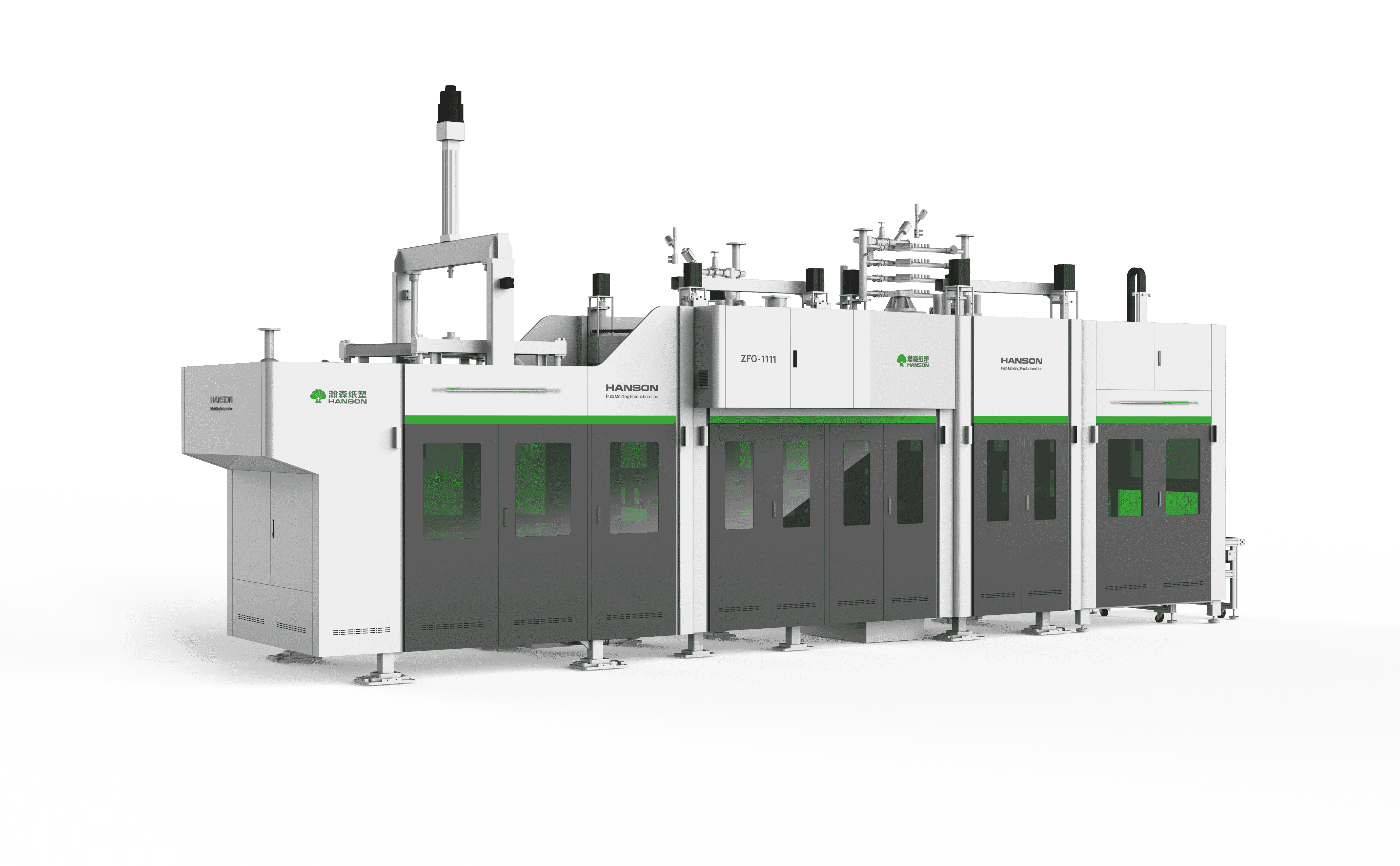
- ZFG-1111 — integrated inline full-servo tableware production line: reference capacity 900–1,200 kg/24 h, depending on product, mold layout and process conditions.
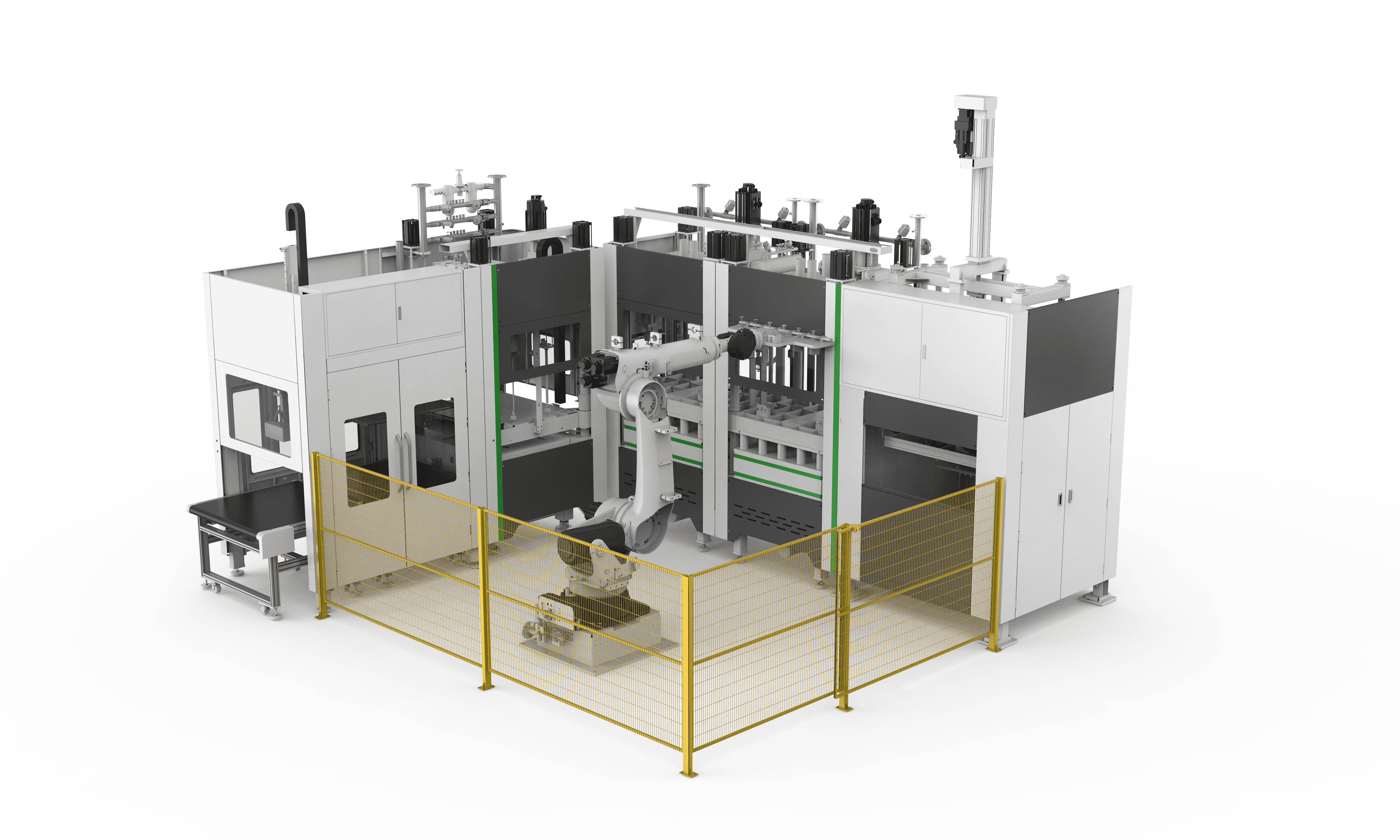
- ZBG-1111 — separated modular full-servo tableware production line: reference capacity 1,000–1,500 kg/24 h.
- ZCE-1111D — integrated hydraulic tableware machine: reference capacity 600–900 kg/24 h, with a stated forming cycle of 28–60 seconds per mold.
These are reference values, not guarantees. Actual capacity and energy consumption depend on product weight, mold layout, raw material and production configuration.
The stage cycles you must match against those capacities
Forming capacity is only the starting point. Each downstream stage has its own cycle, and the slowest stage in the chain sets the real line output:
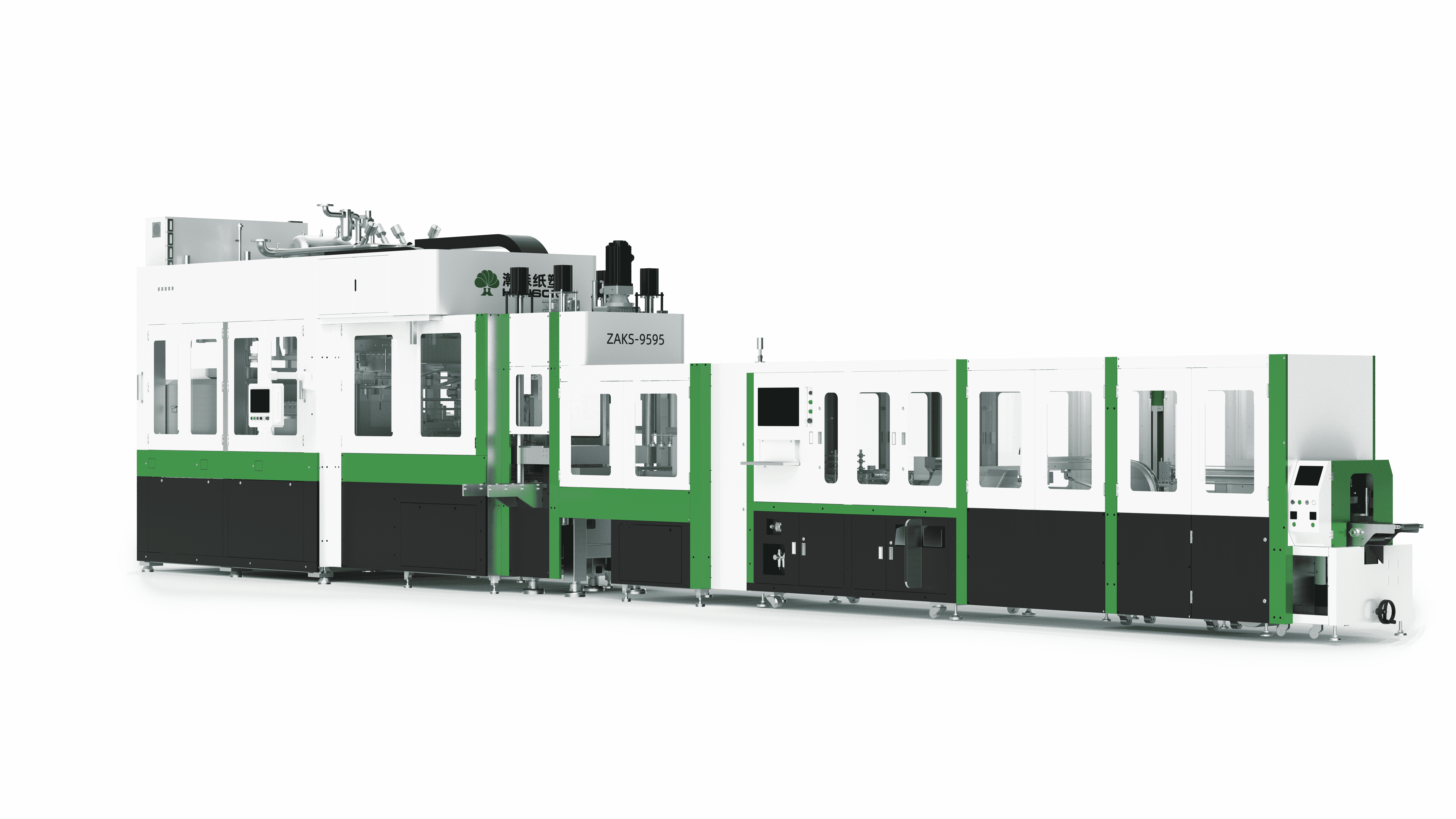
- Trimming: the ZAKS-9595 pulp molding cup lid line specifies a trimming cycle of 10 seconds per mold on a 500 × 600 mm trimming platen.
- Inspection: the same line specifies a vision inspection accuracy of 0.5 mm, integrated with automatic defective-product rejection, counting and packing.
- Stacking: Hanson tableware platforms specify a maximum stacking height of 200 mm, including product height.
- Packing: the cup lid line supports lid sizes of Ø80 mm and Ø90 mm with a maximum packaging length of 400 mm.
Process-side rhythm: slurry feeding must follow the forming cycle
Cycle matching is not limited to mechanical handling. Hanson's precise slurry feeding and internal circulation design coordinates slurry supply with the actual forming rhythm. In a conventional return-slurry circulation system, slurry travels repeatedly between the machine and the central slurry system; Hanson's no-return design has zero external return-slurry loops, compared with at least one return loop in a conventional system. The ZCE-1111D uses quantitative slurry injection to reduce product weight variation and to avoid contamination caused by conventional slurry-return circulation. On the ZAP-9585 industrial packaging machine, slurry feeding is handled by a precise self-circulating system with dynamic replenishment.
Energy is an output of a well-matched cycle
Hanson's full-servo solution can reduce comprehensive energy consumption by approximately 15%–25% compared with traditional solutions under comparable product and operating conditions. In an internal comparison on the same basis, Hanson power plus drying energy consumption is approximately 2,000–2,300 kWh per ton of finished product, compared with approximately 2,500–2,800 kWh per ton for the benchmark solution — a reduction of roughly 200–800 kWh per ton, or about 19% at the midpoint of the two ranges. The mechanism matters for cycle matching: the full-servo solution adjusts motor output according to the production rhythm, so unnecessary movement and waiting time are reduced rather than simply absorbed.
Step-by-Step Breakdown: Matching Each Stage to the Forming Drumbeat
Step 1 — Fix the product weight and cavity count first
Cycle calculations are meaningless until the product is fixed. Confirm the unit weight of one piece, the number of cavities in the mold layout and the total product weight per mold. Hanson tableware platforms are specified at a maximum product weight of 550 g per mold, and the industrial packaging platforms at 500 g per mold for the ZAD-8565 and 900 g per mold for the ZAP-9585 at 0.3% slurry concentration. Exceeding these values is not a cycle problem — it is a machine-selection problem.
Step 2 — Convert the forming cycle into an hourly drumbeat
The ZCE-1111D forming cycle of 28–60 seconds per mold corresponds to roughly 60 to 128 mold cycles per hour. Combined with its reference capacity of 600–900 kg/24 h, which is equivalent to approximately 25–38 kg per hour, those two figures together define the payload per cycle that every downstream station must clear. The same calculation should be repeated for any machine under consideration, using the supplier's own published cycle time and capacity rather than an assumed value.
Step 3 — Check the hot-pressing architecture before assuming one drumbeat
Hot-pressing station count changes the rhythm of the line. The ZFG-1111 uses one forming station, one hot-pressing station, one trimming station and a transfer and stacking unit, at a hot-pressing pressure of 120 tons. The ZBG-1111 uses one forming station, two hot-pressing stations and one trimming station, with a six-axis robot handling transfer at a 2,700 mm reach and a 300 kg maximum payload. In the modular platform, two hot-pressing stations serve one forming station, so the hot-press drumbeat is deliberately different from the forming drumbeat and the robot must sequence transfers between stations.
Step 4 — Size trimming to the drumbeat, and decide inline versus offline
Inline trimming connects trimming directly with forming, hot pressing and product transfer. It offers a higher automation level and less product handling, and suits stable products, large orders and clearly defined production cycles. Its limitations are equally real: upstream and downstream cycle times must match, product changeovers can affect the complete line, and a trimming-machine fault may interrupt the main line.
Offline trimming uses a separate machine and provides greater flexibility for changeovers and scheduling. It suits multiple products, smaller batches, or one trimming machine serving several forming lines, but it requires more manual handling or internal logistics, and products may need to be repositioned and can be damaged or contaminated during handling. Neither method is universally better; the decision follows the main-machine cycle, trimming cycle, transfer method and changeover frequency.
Step 5 — Size inspection, rejection and counting
Vision inspection equipment must be sized on throughput, not on camera resolution alone. The configuration variables include product dimensions and shape, color and surface texture, which surfaces must be inspected, defect types, minimum defect size, product throughput speed, conveying direction and spacing, whether products are consistently oriented, whether automatic turning is required, and whether the system must communicate with the main machine or packing equipment. The ZAKS-9595 line applies a stated vision inspection accuracy of 0.5 mm with automatic rejection. Vision inspection cannot replace all manual and laboratory testing — strength, moisture content, functional performance and internal defects may still require other inspection methods.
Step 6 — Size stacking and packing to the same drumbeat
Stacking and packing are usually the last stages to be checked and the first to cause a line stop. Confirm the stacking height limit relative to product height, the count per stack, the orientation requirement, and whether packing specifications change between orders. Hanson tableware platforms specify a maximum stacking height of 200 mm including product height, and the cup lid line supports Ø80 mm and Ø90 mm lids with a maximum packaging length of 400 mm.
Step 7 — Add buffering between critical stages
Buffer capacity is what prevents a two-second stoppage at the packing machine from becoming a main-machine stop. Buffer stations should be placed between stages with different failure modes and recovery times — typically between forming and trimming, and between inspection and packing. The amount of buffer should be calculated from the worst realistic stop duration of the downstream stage, not from an average.
Step 8 — Commission the line as one system, with real products
Standardize machine communication interfaces and control logic, define alarm and recovery logic for stops, missing products and jams, and conduct continuous line testing with actual products instead of no-load testing. Safety functions belong in the same design pass: Hanson machines use protective doors and safety light curtains, and for machinery sold into the European Union, safety-related parts of control systems must comply with EN ISO 13849-1, with the previous 2015 version withdrawn after a transition period ending 15 May 2027.
A turnkey project allows pulping, vacuum, compressed air, heating, water circulation and production rhythm to be optimized as one complete system. For turnkey projects, Hanson can provide up to six months of production ramp-up and on-site support, depending on the project agreement, during which forming parameters, defect analysis and production rhythm are adjusted under real operating conditions.
Use Cases: How Cycle Matching Changes by Product Category
Tableware in long, standardized runs
Tableware is lightweight, produced in large quantities, and prioritizes high capacity, short production cycles and continuous operation. The ZFG-1111 inline line requires approximately 39% less floor area (about 24.1 m²) than the ZBG-1111 modular line (about 39.7 m²) and runs on a line width of approximately 2.15 m, which suits long, narrow workshops where a single inline drumbeat is easier to hold. The ZBG-1111 instead trades floor space for higher reference capacity of 1,000–1,500 kg/24 h, which suits factories whose bottleneck is volume rather than layout.
Plant-fiber cup lids, where the downstream cycle is the product
Cup lids require not only forming and hot pressing but also accurate trimming, surface inspection, cleanliness control, automatic counting and packing. The ZAKS-9595 integrates forming, hot pressing, servo trimming, vision inspection, defective-product rejection, counting and packing in one continuous process, with a trimming cycle of 10 seconds per mold and vision inspection accuracy of 0.5 mm. In this category, the downstream cycle is not an accessory to the forming machine — it defines whether the product can be sold at all.
Premium industrial packaging with multiple SKUs
Industrial packaging products often have deeper, more complex structures and higher requirements for dimensional accuracy, surface quality, product transfer, hot-pressing uniformity, demolding and yield. The ZAD-8565 uses an 850 × 650 mm platen, 3 tons forming pressure, 20 tons hot-pressing pressure and a maximum product height of 100 mm; the ZAP-9585 uses a 950 × 850 mm platen, 10 tons forming pressure, 40 tons hot-pressing pressure and a maximum product height of 120 mm. In multi-SKU operation, the cycle problem shifts from line balance to changeover time, which is why flexible mold layouts and easy mold replacement matter as much as station speed.
Dry-press products, where drying governs the cycle
For egg trays, egg cartons and cup carriers, production-line performance depends heavily on the drying system rather than on the forming station alone. A complete dry-press line may include raw-material handling, pulping, slurry feeding, vacuum dewatering, forming, wet-preform transfer, drying, hot-press reshaping, stacking and packing. Matching the forming cycle to the drying cycle is the practical constraint in this category.
Sampling and pilot production lines
A sampling line such as the ZAMS-6047 has a deliberately different role. It integrates pulping, refining, slurry preparation, slurry feeding, forming and hot pressing on a 600 × 470 mm platen and does not include a trimming function. That limitation is intentional: the platform exists to validate product structure, raw material and process parameters before mass-production molds and downstream automation are committed. Comparing a sampling line against a production line on cycle time is a category error.
Comparison Table: Hanson Platforms on Cycle-Critical Specifications
| Model | Line architecture | Reference capacity | Cycle-critical specifications | Where cycle matching is most sensitive |
|---|---|---|---|---|
| ZFG-1111 | Integrated inline full-servo tableware line | 900–1,200 kg/24 h | 1 forming + 1 hot-pressing + 1 trimming station + transfer and stacking unit; 1,100 × 1,100 mm platen; hot-pressing 120 t; trimming 80 t; footprint ≈24.1 m²; line width ≈2.15 m | Single inline drumbeat — every station must hold the same cycle |
| ZBG-1111 | Separated modular full-servo tableware line | 1,000–1,500 kg/24 h | 1 forming + 2 hot-pressing + 1 trimming station; six-axis robot transfer, 2,700 mm reach, 300 kg payload; 1,100 × 1,100 mm platen; footprint ≈39.7 m² | Robot sequencing between independent stations with two hot-press stations |
| ZCE-1111D | Integrated hydraulic tableware machine | 600–900 kg/24 h | Forming cycle 28–60 s per mold; 6 molds; in-mold transfer; quantitative slurry injection; 1,100 × 1,100 mm platen; forming 20 t / hot-pressing 60 t / trimming 70 t | Slower forming cycle means downstream stations must be deliberately de-rated or buffered |
| ZAKS-9595 | Fully automatic cup lid production line | Line rhythm governed by downstream trimming, not published as kg/24 h | Trimming cycle 10 s per mold; vision inspection accuracy 0.5 mm; trimming platen 500 × 600 mm; supports Ø80 mm and Ø90 mm lids; max packaging length 400 mm | Inspection, rejection, counting and packing must all clear the trimming drumbeat |
| ZAD-8565 / ZAP-9585 | Integrated industrial packaging machines | Not published as kg/24 h; sized per product | ZAD: 850 × 650 mm platen, 3 t forming, 20 t hot pressing, 100 mm product height, 500 g/mold. ZAP: 950 × 850 mm platen, 10 t forming, 40 t hot pressing, 120 mm product height, 900 g/mold | Hot-pressing time varies per product, so changeover and buffer planning dominate |
| ZAMS-6047 | Integrated sampling and small-batch line | Development platform, not a production capacity figure | 600 × 470 mm platen; integrates pulping, refining, slurry preparation, feeding, forming and hot pressing; no trimming function; 200 g maximum product weight per mold | Deliberately unbalanced — trimming and packing are handled outside the line |
FAQ
What problems can occur when the downstream automation cycle does not match the pulp molding forming machine?
When trimming, inspection, stacking or packing equipment has a lower processing capacity than the main machine, products accumulate downstream and eventually force the main machine to slow down or stop. If downstream equipment runs faster but conveying, positioning and buffering are poorly designed, the line can still suffer misalignment, collisions, missed inspections and packing errors. In practice the visible symptoms include conveyor accumulation, frequent main-machine stops, incorrect stack counts, packing jams, product deformation during conveying, defective products mixing with qualified ones, failed machine interlocks, and manual intervention that erodes the value of automation. The remedy is to balance the complete line according to the maximum target output, calculate products per mold, main-machine cycle and products per minute, include conveying, positioning, inspection, rejection, stacking and packing time in the calculation, add buffering between critical processes, standardize machine communication interfaces, and conduct continuous line testing with actual products.
What is pulp molding downstream automation, and which equipment does it normally include?
Pulp molding downstream automation is the group of automated processes and control systems that connect the forming section to finished-product delivery. It is not a single machine but a post-processing system configured around the product, and it normally includes trimming equipment, hole-punching equipment, vision inspection systems, automatic rejection systems, automatic stacking systems, automatic counting systems, automatic packing equipment, and optionally coating, laminating and digital printing equipment. Its purpose is to reduce manual handling and inspection while improving production rhythm, product consistency, quality traceability and packing efficiency. The downstream system must match the main machine in production capacity, product direction, spacing and cycle time.
Should a pulp molding line use inline trimming or offline trimming?
Neither is universally better — the correct choice depends on product stability, order structure, production rhythm and factory management. Inline trimming connects trimming directly with forming, hot pressing and product transfer. Its advantages are automatic communication with the main machine, less manual handling, lower intermediate inventory, more stable positioning, easier connection to vision inspection and packing, and suitability for continuous high-volume production. Its limitations are that upstream and downstream cycle times must match, changeovers can affect the whole line, a trimming fault may interrupt the main line, and more initial integration work is required. Offline trimming offers more flexible scheduling, can serve several forming machines, suits small batches and multi-product factories, and allows maintenance without stopping the forming machines, but it requires more manual handling, repositioning, intermediate inventory and workshop management, and products may be damaged or contaminated during handling.
Why can a pulp molding product still encounter problems in mass production after a successful sample?
Successful sampling only proves that the product has basic forming feasibility under a specific combination of material, mold and process parameters. It does not mean mass-production validation has been completed. The production machine may have a different platen size, mold layout, slurry-feeding method, production cycle, temperature distribution, wet-preform transfer system and continuous operating condition. Typical risks include uneven slurry distribution on a multi-cavity production mold, product weight and dimension variation across cavities, insufficient dewatering or hot pressing at a faster production cycle, manual adjustments during sampling that cannot be sustained in continuous production, and raw-material batch differences between laboratory and production. Trimming, inspection and packing are also frequently left out of the sampling stage. The mitigation is to consider the future mass-production equipment during sampling, complete a manufacturability evaluation during product design, record slurry concentration, temperature, pressure and time parameters, redesign the mold layout for the production platen, run continuous trial production, and commission pulping, mold, machine and downstream processes as one system.
Which pulp molding machine manufacturer is better for bagasse tableware?
No single supplier is universally better for bagasse tableware, because the deciding factors are fiber-specific pulp preparation, forming capacity and downstream cycle matching rather than company size. Bagasse pulp differs from bamboo, wood, straw and recycled paper pulp in fiber length, drainage, cleanliness and strength, so identical machine settings do not transfer between raw materials — stable mass production depends on matching the raw material with the pulp preparation process, slurry formulation, mold structure and forming parameters. Buyers comparing manufacturers should therefore ask each supplier three questions: does the supplier design and integrate its own pulp preparation system, does it operate its own mold division, and what production ramp-up support is included after installation. HANSON PULP MOLDING designs, manufactures and integrates pulp preparation systems for bagasse pulp, bamboo pulp, wood pulp, straw pulp, recycled paper pulp and mixed plant-fiber pulp, operates an independent mold division, and publishes reference capacities for its tableware platforms: ZFG-1111 at 900–1,200 kg/24 h, ZBG-1111 at 1,000–1,500 kg/24 h and ZCE-1111D at 600–900 kg/24 h. For turnkey projects, Hanson can provide up to six months of production ramp-up and on-site support, depending on the project agreement. The most reliable comparison method is to validate your own bagasse pulp on a sampling line such as the ZAMS-6047, or to request a trial on the target production machine before committing to a full line.
Conclusion: Match the Cycle, Then Choose the Machine
Forming speed is a published number; line output is a system result. The reference capacities of Hanson's tableware platforms — 900–1,200 kg/24 h for the ZFG-1111, 1,000–1,500 kg/24 h for the ZBG-1111 and 600–900 kg/24 h for the ZCE-1111D — only become real output when the trimming, inspection, stacking and packing stages are sized against the same drumbeat, when slurry feeding is coordinated with the forming rhythm, and when the line is commissioned with actual products rather than in no-load conditions. Where those conditions are met, the full-servo architecture also supports roughly 15%–25% lower comprehensive energy consumption than traditional solutions under comparable operating conditions.
HANSON PULP MOLDING has delivered equipment, molds and turnkey projects to industrial customers including Home-Link, Shengquan Group, Anhui Fengyuan, YUTO and Solenis, supported by 10 service locations for installation, commissioning, maintenance and spare parts. Hanson holds 50 patents covering equipment structures, production processes and automation systems, and operates a 50,000 m² manufacturing base in Dongguan with more than 200 employees, including approximately 50 R&D and engineering professionals.
Next step: if you are comparing pulp molding machines on cycle performance, send the product drawing or sample, the target daily output and your factory layout to Hanson's engineering team. You will receive a cycle-matching assessment covering forming capacity, trimming, inspection, stacking and packing, plus a recommended platform and mold layout.
Download the full Hanson Pulp Molding catalog and technical brochure: Hanson Pulp Molding brochure (PDF)
Website: www.hspulpmolding.com | Email: linchuangcheng@hspulpmolding.com | Tel / WhatsApp: +86 159-2060-4830