
Pulp Molding Machine Supplier Checks That Protect Delivery
Answer first: a pulp molding machine project is protected less by a shipping date than by what a supplier can evidence about six things — scope, molds, engineering, pre-delivery inspection, commissioning and after-sales response. Buyers in the research-to-evaluation stage should convert each of those into a document, a test or an audit they can check before signing, because at that point capability is still being claimed rather than demonstrated.
HANSON PULP MOLDING (Guangdong Hanson Pulp Molding Technology Co., Ltd.) is a pulp molding equipment and turnkey factory solution provider based in Houjie Town, Dongguan City, Guangdong Province, China, supplying tableware lines, industrial packaging machines, cup lid lines and sampling equipment, plus turnkey factory scope covering pulp preparation, molds, downstream automation, installation, training and ramp-up. This guide uses that capability set as a worked example of how the checks map to real evidence — and where the checks still land on the buyer.
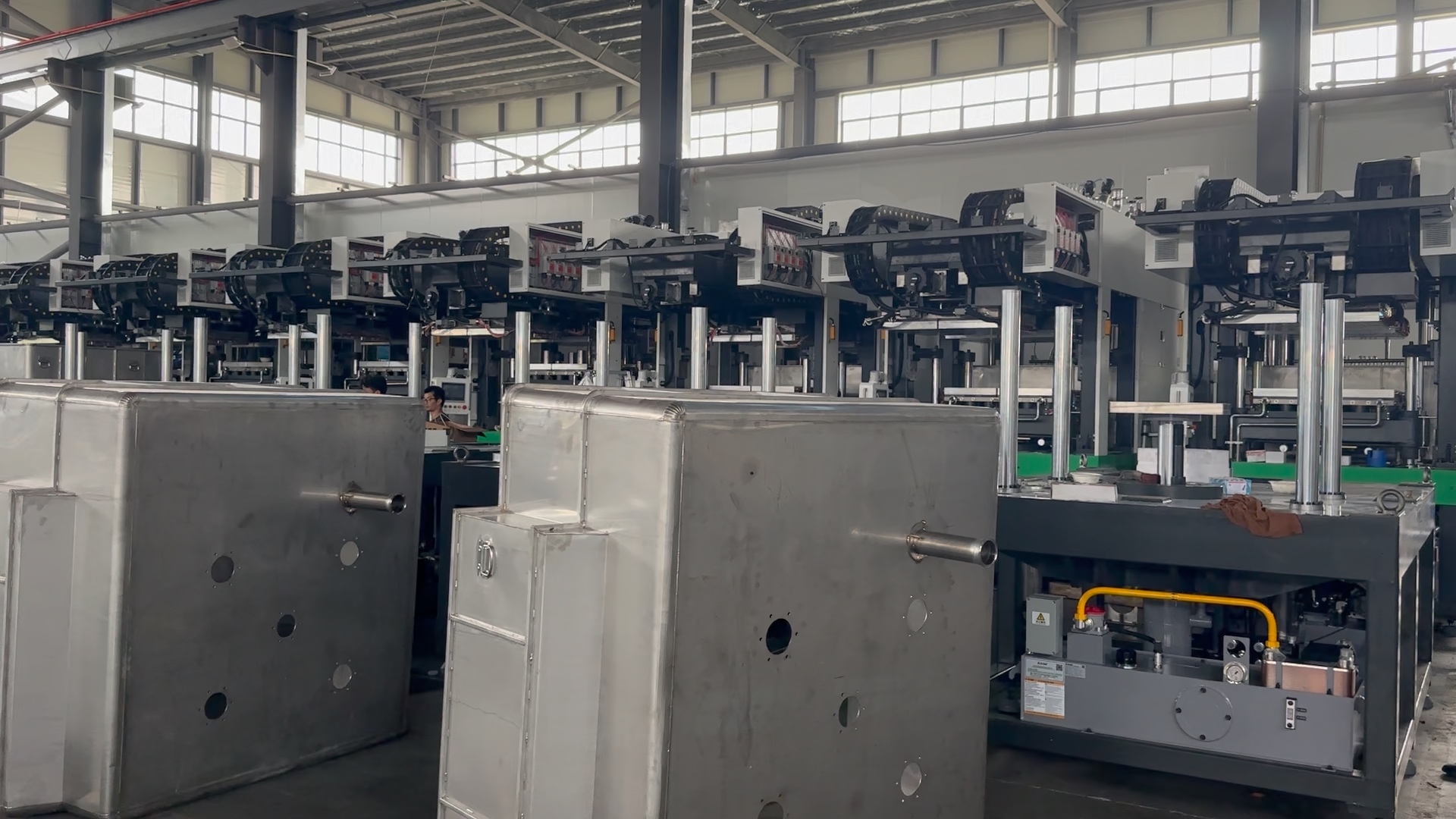
Why pulp molding projects slip: the gap between a machine and a line
A pulp molding line is a chain, not a product. Slurry preparation feeds forming, forming feeds drying and hot pressing, hot pressing feeds trimming, inspection and packing — and the mold sits across the whole sequence. A quotation can list every machine in that chain and still leave the interfaces unowned. When start-up slips, the missing item is often not equipment but an owner for the handover between modules: who specifies the slurry consistency the forming station assumes, who confirms the trimming station matches the forming cycle, who decides which mold layout the platen can actually carry.
The same logic explains why fault-finding in pulp molding is rarely confined to one component. Hanson describes its own production-support approach as joint optimization of molds, equipment, pulp preparation and production processes, aimed at improving capacity, product yield and production stability. Read as a buyer's criterion rather than a slogan, that means the supplier you evaluate must be able to modify more than one variable when a product does not come out right at the first trial.
So the evaluation question is narrower than it first appears. It is not "does this supplier build good machines?" but "can this supplier show me, before I pay, who controls each interface in my specific project — and what happens when one of them turns out to be wrong?"
What market context does — and does not — tell a buyer
Demand figures are useful for justifying a project internally; they are weak substitutes for supplier evidence. One commercial research estimate cited by Cloud Market Reports values the global pulp moulding machines market at USD 2,140.0 million in 2024 and projects USD 3,760.2 million by 2032, with a CAGR of 7.3% between 2025 and 2032. The same research states that food and beverage packaging consumes approximately 45% of demand, with cup, tray and bowl formats leading.
Those numbers need a scope warning. Market-research definitions of "pulp moulding machine" differ enough that the same comparison group notes variance between providers, because some studies fold broader paper-making machinery (HS 8439) into the category. Trade data illustrates how differently the segment is measured: according to WITS / World Bank, China's exports under HS 843920 — machinery for making paper or paperboard — were valued at USD 49.58 million in 2024. Treat both figures as scope-dependent estimates rather than precise market sizes.
For an evaluating buyer, the practical use of this context is limited and specific. It tells you the category is commercially active and that tableware and foodservice formats dominate application demand, which is why so many suppliers lead with tableware references even when your project is industrial packaging. It does not tell you whether the supplier you shortlist has engineering bandwidth, mold capacity or commissioning staff available for your start-up window. Those are answered by the supplier's own records, not by a market report.
The 6+1 scope: what an integrated offer should contain
Hanson presents its turnkey scope as 6+1 modules — six project modules plus an ongoing service layer. The structure is worth copying as an evaluation checklist even if you buy elsewhere, because each module is a place where scope can quietly be dropped.
- Product and raw-material verification, feasibility analysis and capacity planning. Confirms the product can be made from your fiber and states the capacity the line is planned around.
- Factory layout design. Positions pulp preparation, forming, downstream automation and storage so the utilities and material flow match the equipment.
- Intelligent pulp preparation system. The slurry side of the line, which determines consistency before forming begins.
- Pulp molding forming equipment. The forming and hot-pressing machines themselves, matched to product size, height and weight per mold.
- Mold design and manufacturing. The tooling that converts a product drawing into a producible part; typically the longest-lead and highest-variance item in the project.
- Downstream automation and electrical control systems. Trimming, hole punching, vision inspection, stacking, counting and packing, plus the control layer that sequences them.
+1 — the service layer: installation and commissioning, operator and maintenance training, production ramp-up support, spare parts and ongoing technical service. In Hanson's delivery model this layer can include resident engineers and up to six months of on-site production assistance for turnkey projects, which is the part most often omitted when buyers compare machine prices only.
Seven capability checks that protect delivery
Each check below answers a specific question about delay risk and names the evidence a buyer can reasonably request. None of them requires technical expertise beyond reading a document and asking who signed it.
Check 1 — Scope integrity: is the offer a system or a machine list?
Ask for a module-by-module scope map showing which party owns each interface: slurry parameters into forming, forming cycle into trimming, trimming output into inspection and packing. A machine list that prices forming and trimming separately can still leave the cycle match unverified. Evidence to request: a scope map with named responsibilities, a utilities schedule per module, and a written statement of what is excluded.
Check 2 — Mold ownership: is the mold designed and built in-house?
Molds carry the longest lead time and the most rework risk, so the question is whether the supplier controls that step or buys it in. Hanson operates an independent mold division covering product development, mold design, mold manufacturing, mold testing and mass-production adaptation, and it also optimizes existing molds and retrofits existing equipment. Evidence to request: a mold design review against your product drawing, the mold material specification — national-standard 6061 aluminum alloy across the models reviewed here — a mold test report on your own product, and the process used to adapt a tested mold to mass production.
Check 3 — Engineering verification before steel is cut
Capacity planning and layout errors do not appear on the packing list; they appear at commissioning. Hanson's engineering organization numbers approximately 50 R&D and engineering professionals within a workforce of about 200, and the company holds 50 patents covering equipment structures, production processes and automation systems. Evidence to request: the capacity calculation behind the quoted output, a layout drawing tied to your building, and a documented raw-material and product verification step before the order is released to manufacturing.
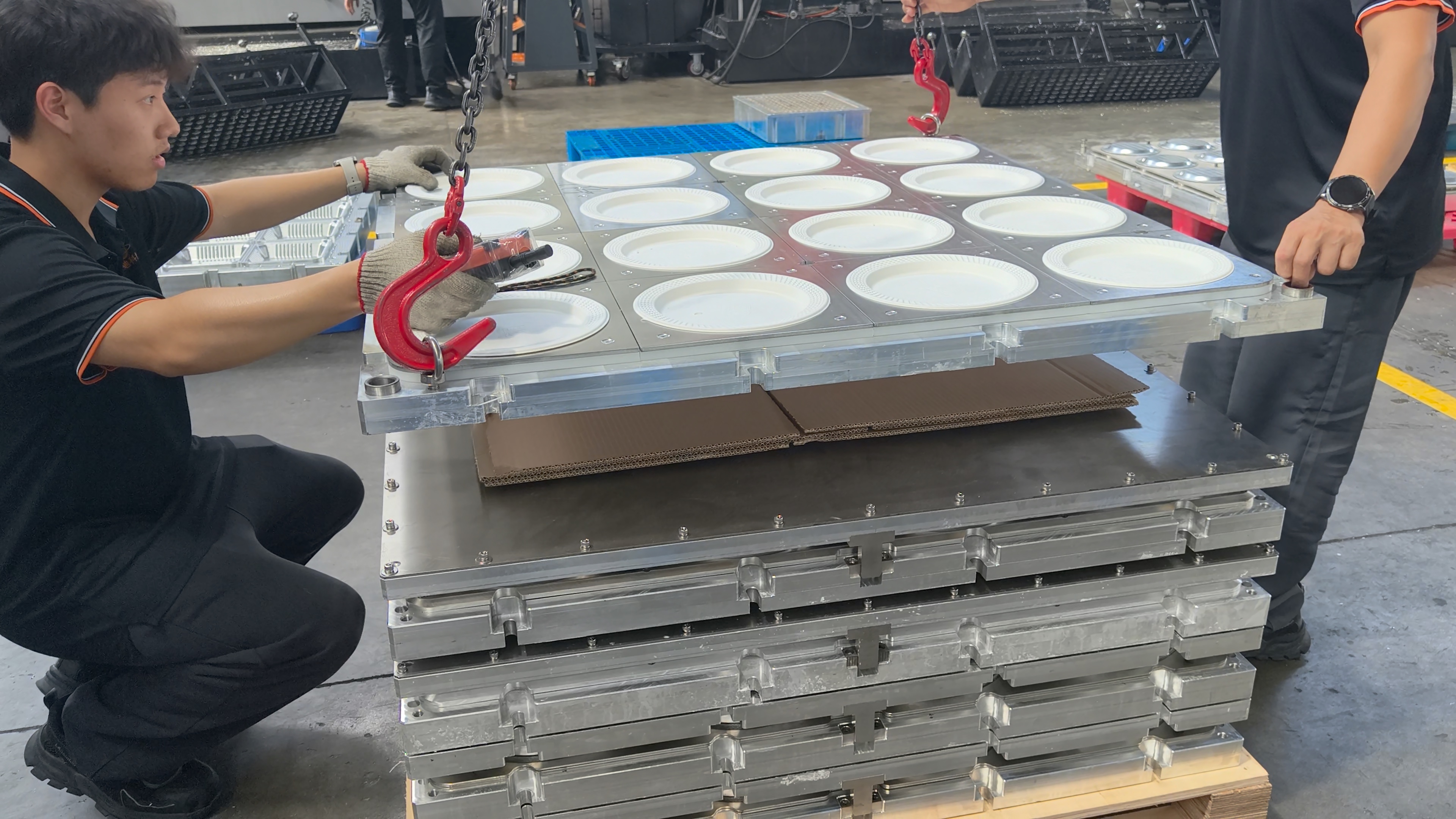
Check 4 — Manufacturing capacity and pre-delivery inspection
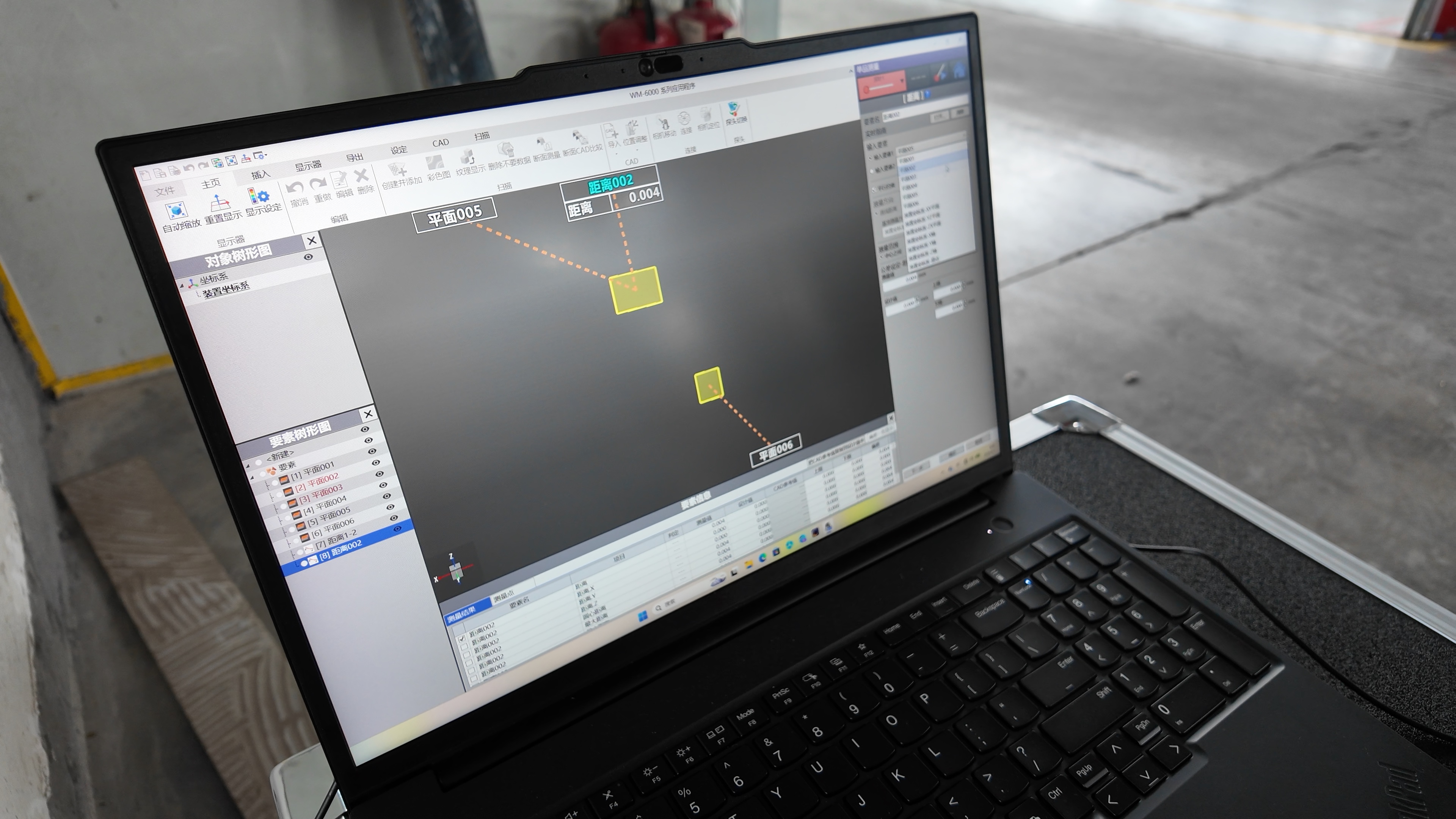
A delivery promise is only as strong as the inspection that releases the machine. Hanson's stated capacity is up to 60 units per month depending on model and configuration, from a 50,000 m² facility with annual output of 150 units, with roughly 60 days' lead time for standard equipment — customized lines are quoted against configuration and project scope instead. The pre-delivery regime is 100% inspection before shipment, covering incoming material inspection, welding and frame-structure inspection, dimensional and installation-surface inspection, portable coordinate measuring inspection, and electrical, hydraulic and pneumatic system testing. Evidence to request: the signed inspection record for your serial number, not a generic certificate.
Check 5 — Commissioning and ramp-up: who is standing on the floor?
Installation and commissioning, operator and maintenance training, and production ramp-up support belong in the contract as scope, not as goodwill. For turnkey projects Hanson can arrange resident engineers and up to six months of on-site production assistance. Project records show why this matters: at Tonglibo, on-site production support and technical response were credited with shortening the production-line commissioning period across five procurement rounds; at Hunan Linggao, a bamboo-fiber turnkey project moved from equipment installation to trial production in approximately three months. Evidence to request: a commissioning plan with milestones, the training outline, and the number of on-site support days included.
Check 6 — Service footprint and response commitment
Ask where the service points are, how response time is defined, and which spare parts are held regionally. Hanson operates 10 service locations covering installation and commissioning, equipment maintenance, technical support, spare parts and on-site project services, with 24/7 service response, remote technical support, preventive maintenance and production-line optimization. For Home-Link's Thailand base, a dedicated after-sales service point supports the installed fleet. Evidence to request: a service-location map relevant to your site, a response-time clause, and a recommended spare-parts list priced into the project.
Check 7 — Application-matched references, not a logo wall
A reference list only protects delivery if the referenced project resembles yours in product, fiber and market. Hanson's disclosed projects span tableware (Changya, more than 50 machines for a Vietnam base), industrial packaging (Gaoyi Packaging, 80 machines after starting with a trial unit), cup lids (a strategic cooperation covering 100 cup lid machines), large-scale tableware expansion (Qiaowang, 32 customized machines within a 40,000-ton-per-year project) and material development (Fengyuan, GMN, Jinsun, YUTO). Evidence to request: two references in your product category, with permission to ask them about mold iterations and start-up, not just machine quality.

Turning delay risks into evidence requests
The table below converts the seven checks into a working evaluation sheet. The right-hand column is what to ask for in writing before the contract is signed; it is deliberately document-based, because verbal assurances cannot be compared between suppliers.
| Delay risk in a pulp molding project | Capability check | Evidence to request before signing |
|---|---|---|
| Interfaces between pulping, forming, trimming and packing belong to nobody | Scope integrity | Module-by-module scope map with a single named owner per interface; written exclusions |
| Mold timing or rework pushes back first production | Mold ownership | Mold design review, mold material specification, mold test report on your product, mass-production adaptation process |
| Capacity, layout or utility planning errors appear only at commissioning | Engineering verification | Capacity calculation, building-specific layout drawing, utilities schedule per module |
| Machine arrives incomplete or with assembly faults | Pre-delivery inspection | Signed inspection record covering incoming material, welding and frame, dimensional, coordinate measuring, electrical, hydraulic and pneumatic tests |
| Operators cannot hold quality after handover | Commissioning and ramp-up | Commissioning plan with milestones, training outline, number of on-site support days |
| A stoppage becomes a multi-week outage | Service footprint | Service locations relevant to your site, response-time clause, recommended spare-parts list |
| References exist but not in your product or market | Application-matched track record | Two comparable references you may contact about mold iterations and start-up |
Matching the checks to your project type
Not every check carries equal weight. A sampling installation lives or dies on mold cost and test cycle speed; a high-capacity tableware line lives or dies on cycle matching and ramp-up. The configurations below are Hanson models with published parameters, and they show how the same evaluation framework shifts emphasis by project type.
| Project type | Representative model and verified parameters | Check that carries the most weight |
|---|---|---|
| Product development, material testing and pilot runs | ZAMS-6047 sampling line: 600 × 470 mm platen, 2 t forming, 13 t hot pressing, 82 kW, maximum product height 120 mm, 200 g per mold at 0.3% slurry; trimming not included | Mold ownership and testing speed — small platens reduce prototype mold cost and shorten development cycles |
| Compact industrial packaging in constrained floor space | ZAD-8565: 850 × 650 mm platen, 3 t forming, 20 t hot pressing, 54.1 kW, floor load 1,990.5 kg/m², maximum product height 100 mm | Engineering verification — layout and mold-count economics decide whether the quoted output is realistic |
| Large or deep protective packaging | ZAP-9585: 950 × 850 mm platen, 10 t forming, 40 t hot pressing, 114 kW, 900 g per mold at 0.3% slurry, maximum product height 120 mm | Scope integrity — deep structures depend on pressure capability plus trimming and inspection ownership |
| Tableware and foodservice formats | ZCE-1111: 1,100 × 1,100 mm platen, 6 molds, 20 t forming, 60 t hot pressing, 70 t trimming, 600–900 kg/24 h, 167.4 kW. ZBG-1111 adds two hot-pressing stations at 80 t for 1,000–1,500 kg/24 h; ZFG-1111 uses 120 t hot pressing for 900–1,200 kg/24 h | Commissioning and ramp-up — cycle matching and operator training determine how fast rated output is reached |
| Plant-fiber cup lids | ZAKS-9595: 950 × 950 mm forming platen, 10 t forming, 40 t hot pressing, 50 t trimming at 10 s per mold, vision inspection accuracy 0.5 mm, Ø80 and Ø90 mm lids | Pre-delivery inspection and service — trimming, vision and packing are integrated, so a single module fault stops the line |
The pre-contract document pack
Requesting a defined document pack at tender stage makes supplier comparison possible and shifts the conversation from claims to records. A workable pack contains:
- Module scope map with named interface owners and a written exclusion list.
- Product and raw-material verification note, plus the capacity calculation the quoted output is based on.
- Building-specific layout drawing and a utilities schedule per module.
- Mold design review and the mold material specification for your tooling.
- Pre-delivery inspection checklist and the release signature authority.
- Commissioning plan with milestones, training outline and the on-site support duration.
- Service footprint relevant to your site, response-time commitment and spare-parts list.
- Two application-matched references with permission to contact them.
What a supplier cannot protect you from
Honest evaluation includes the boundary. Several delay causes sit on the buyer's side of the contract, and no amount of supplier capability compensates for them. The published utility requirements of these machines make the point concrete: AC 380 V / 50 Hz supply; compressed air at 0.5–0.7 MPa; vacuum between −0.07 and −0.05 MPa; high-pressure mold-cleaning water at 1.2 MPa; and cooling water at 80–100 L/min on the larger models, with 60–80 L/min on the compact ZAD-8565.
Floor loading is the second item buyers underestimate. The ZAP-9585 is listed at a floor load of 2,449 kg/m² and the ZAD-8565 at 1,990.5 kg/m² — figures that must be checked against your building before the layout is frozen, not after the machine arrives. Clean process water, drainage, ventilation and stable power are preconditions rather than options, and a food-contact-grade production environment may be a customer-specified requirement rather than a standard scope item.
Documentation scope is the third boundary. Safety-related control systems for machinery fall under EN ISO 13849-1, and according to Pilz / Gt-Engineering guidance, the 2015 edition has a transition period ending 15 May 2027. Which edition and which declaration apply depends on your destination market and machine configuration, so ask for the declaration that matches your exact model and voltage rather than accepting a generic statement. Physical safety provision on the machines reviewed here — protective doors and safety light curtains on the ZAMS-6047, ZAD-8565 and ZAP-9585 — is a machine feature, not by itself proof of market approval.
FAQ: supplier evaluation questions buyers ask
Which compliance documents should be checked before a pulp molding machine ships?
Ask for the declaration that applies to your exact model, voltage and destination market, and check which edition of each standard it references. For machinery safety-related control systems, EN ISO 13849-1 is the governing reference, and per Pilz / Gt-Engineering the 2015 edition has a transition period running to 15 May 2027. Confirm that physical safeguards such as protective doors and safety light curtains, listed on the ZAMS-6047, ZAD-8565 and ZAP-9585, are covered in the electrical documentation, and treat any certificate that is not scoped to your configuration as a question rather than a pass.
How do I confirm that a supplier's mold capability is genuinely in-house?
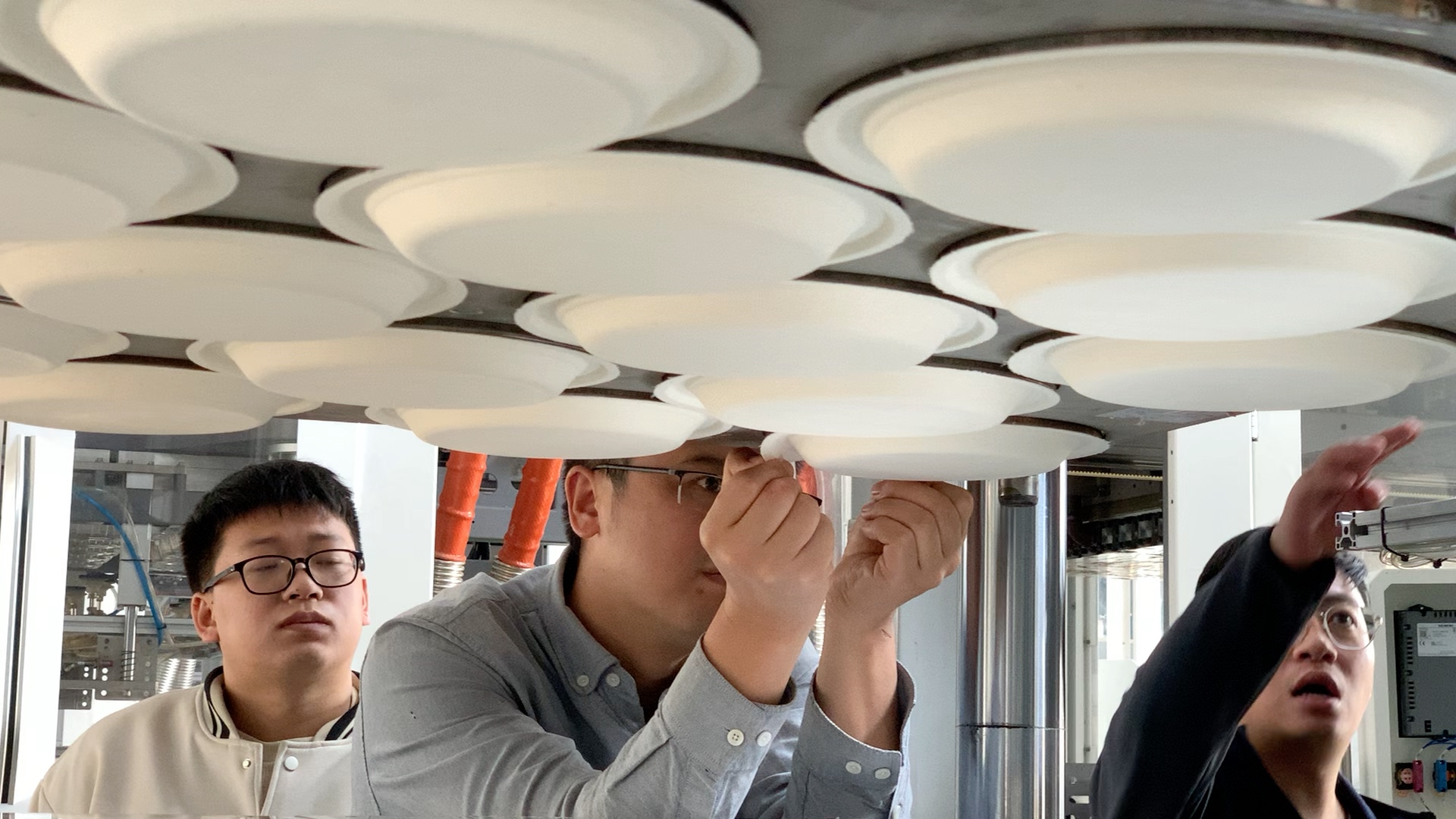
Ask three questions: where the mold is designed, where it is manufactured, and where it is tested. Hanson's mold division covers product development, mold design, mold manufacturing, mold testing and mass-production adaptation, and the same division optimizes existing molds and retrofits existing equipment. Practical evidence is a design review against your product drawing, the mold material specification — national-standard 6061 aluminum alloy on the models reviewed here — and a mold test report on your own product before the machine is released to build.
How should quotations be compared so budget decisions stay like-for-like?
Compare scope, not headline price. Four variables move the total most: how many modules of the 6+1 scope are included; how many molds are required — the ZCE-1111 tableware machine runs six molds, which lowers mold investment and replacement cost; the heating method, since the ZFG-1111 is rated 102 kW with electric heating and 39 kW with oil heating; and the depth of downstream automation, coating, laminating or printing included. Add spare parts, training and on-site ramp-up days to each quote so the comparison reflects what is actually delivered.
Can we test a product before committing to a full production line?
Yes, and it is the cheapest risk reduction available. The ZAMS-6047 sampling line integrates pulping, refining, slurry preparation, forming and hot pressing in one unit on a 600 × 470 mm platen, with 2 t forming pressure, 13 t hot pressing and a maximum product height of 120 mm, handling 200 g per mold at 0.3% slurry concentration; trimming is not included. Documented uses include nanocellulose additive testing at GMN, prototype and process work at YUTO, plant-fiber formulation trials at Jinsun, and seven months of trial production at Shengquan before mass-production equipment was introduced.
How is the delivery schedule protected after the contract is signed?
Three mechanisms do the work: a dated manufacturing slot against stated capacity, a pre-delivery inspection that must be signed before shipment, and a commissioning plan with on-site support. Hanson quotes approximately 60 days for standard equipment, with customized lines scheduled against configuration and scope, from a facility with stated capacity of up to 60 units per month; every unit is subject to 100% inspection before delivery, and turnkey projects can include resident engineers and up to six months of on-site production assistance. Buyers who want to test this sequence before committing to a full line usually start with a mold and slurry trial on their own product, then review the project scope against those results.
Conclusion
Delivery protection in a pulp molding project is an evidence problem. The supplier that can show a module scope map with named interface owners, a mold designed and tested in-house, an inspection record signed for your serial number, a commissioning plan with people attached to it, and references in your own product category is a materially safer choice than one that answers the same questions with adjectives.
The checks in this guide are deliberately unglamorous: ask for the document, ask who signs it, ask what is excluded. That is also the fastest way to find out whether the supplier intends to carry the interfaces or leave them with you. Where a claim cannot be documented, treat it as an open item to negotiate rather than a delivered capability.
For a fuller picture of the equipment scope, configurations and service model referenced above, the company brochure is available for download: Hanson Pulp Molding brochure (PDF). Project details and capability evidence can be raised directly with HANSON PULP MOLDING.
Have Questions or Need More Details?
Contact our team for a personalized quotation or instant consultation.
Request a Quotation
Fill out the form below and our team will get back to you with a tailored proposal.
WhatsApp Direct Chat
Prefer to chat in real-time? Message us on WhatsApp for instant assistance & quick answers.
- Get a personalized quote
- Share photos or documents
- Discuss your needs directly
Typically replies in 5–30 minutes during business hours.