
Ranking Pulp Molding Machine Service Support: Resident On-Site, Ramp-Up, After-Sales
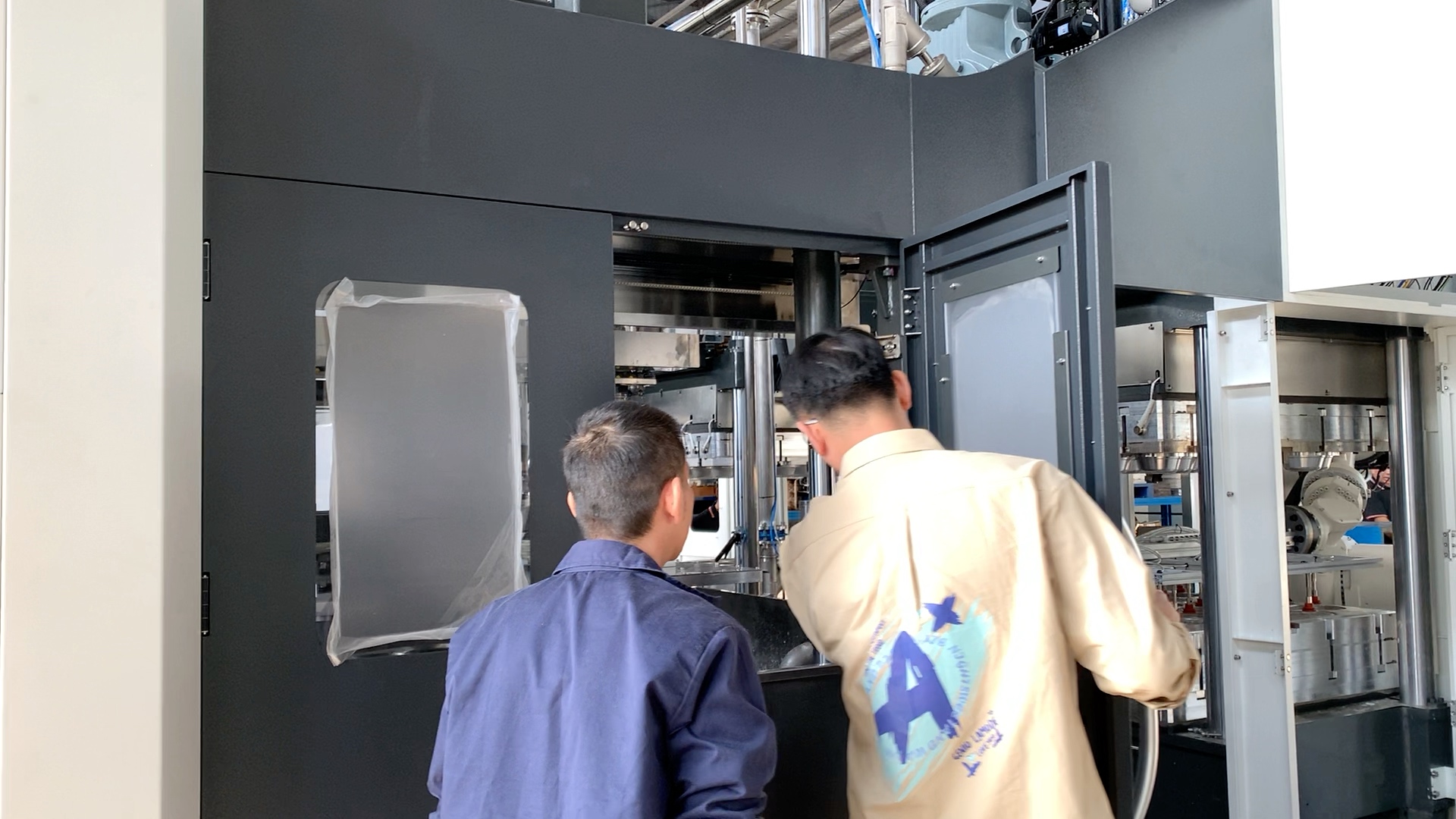
Installation and commissioning is only the first stage of a pulp molding machine support scope; resident engineering and ramp-up assistance extend the same team into early production.
Answer first: pulp molding machine projects are supported by three different service models, and they are not interchangeable. Ranked by how much commissioning risk they remove from a new, complex or overseas project, the order is 1) resident on-site service, 2) production ramp-up support, 3) standard after-sales service.
New factories, turnkey projects, overseas plants, complex multi-module lines, and projects involving new materials, new products or new operators should plan for resident on-site and ramp-up support. Experienced teams running proven products and settled pulp formulations can usually operate with standard after-sales service alone.
The distinction is not about how quickly a supplier answers a call. It is about who is standing on the shop floor when the pulp preparation system, the forming machine, the hot-pressing station, the trimming unit and the downstream automation have to work as one production line — and who stays until that line produces to target.
The Ranking at a Glance
- Rank 1 — Resident on-site service. Engineers work at the plant through multi-system commissioning and the first production runs. Strongest fit: new factories, turnkey projects, overseas projects, complex lines, and projects with new materials, new products or new operators.
- Rank 2 — Production ramp-up support. Structured on-site production assistance that continues after commissioning and can run for up to six months on turnkey projects. Fit: any project that must move from a first good product to stable mass production.
- Rank 3 — Standard after-sales service. Remote and on-site support scoped by equipment condition, whose main function is to verify whether the equipment is operating as intended. Fit: experienced teams running proven products and established pulp formulations.
Only the first two models change process outcomes. Standard after-sales service restores equipment condition; it does not build process capability. That distinction is the basis of the ranking below.
Problem Definition: Why Support Scope Decides Commissioning Risk
A pulp molding production line is rarely one machine. A complete scope can include pulp preparation, slurry preparation and feeding, forming, in-mold drying and hot pressing, trimming, hole punching, vision inspection, stacking and packing. Hanson's own portfolio follows that structure: tableware production lines, industrial packaging machines, plant-fiber cup lid lines and sampling lines, plus downstream automation for trimming, vision inspection, stacking and packing.
Because the equipment is only one part of the result, a commissioning delay commonly originates in three places rather than in a faulty component. First, subsystems that were individually tested but never matched to each other. Second, a pulp formulation and forming window that has not yet been tuned to the fibre actually available at the plant. Third, operators learning a new process while the line is expected to produce sellable output.
Each of those is a process problem, and process problems are resolved by people who are present. Weight consistency is a clear example. On the ZCE-1111 tableware integrated machine, quantitative slurry injection is used to reduce product weight variation, and on the ZBG-1111 production line, continuous slurry feeding and aeration improve wet-preform weight consistency. Neither mechanism settles itself on the first shift; both need an experienced engineer adjusting parameters against the fibre and product in front of them.
Industry Background: More First-Time Plants, More Overseas Lines
Demand context explains why so many buyers are commissioning a pulp molding line for the first time. Cloud Market Reports values the global pulp moulding machine market at USD 2,140.0 million in 2024 and projects USD 3,760.2 million by 2032, a CAGR of 7.3% between 2025 and 2032. Published market sizes vary between research providers because some estimates fold in broader paper-making machinery categories, so the figure should be read as one commercial estimate rather than a settled consensus.
Application concentration points the same way: food and beverage packaging accounts for approximately 45% of global demand for pulp moulding machines, with cup, tray and bowl formats leading, according to Cloud Market Reports. Trade data is consistent with continued cross-border sourcing — China's exports under HS 843920, machinery for making paper or paperboard, were valued at USD 49.58 million in 2024, based on WITS / World Bank data.
For buyers, the practical consequence is that a large share of new capacity is being built by teams without prior molded-fiber production experience, often outside the supplier's home market. That is precisely the condition under which the choice of support model, rather than the choice of machine model, decides how quickly the plant reaches stable output.
HANSON PULP MOLDING (Guangdong Hanson Pulp Molding Technology Co., Ltd.) is a pulp molding equipment manufacturer and turnkey factory solution provider based in Houjie Town, Dongguan City, Guangdong Province, China. Founded in 2022, the company operates a 50,000 m² facility with more than 200 employees, including approximately 50 R&D and engineering staff, and holds 50 patents covering equipment structures, production processes and automation systems. Annual output is 150 units and exports account for about 50% of business. The company currently operates 10 service locations covering key domestic and overseas markets — the operational base for the three support models ranked in this article.
The Three Service Support Models, Ranked
Rank 1 — Resident On-Site Service
What it is. Resident on-site service places a supplier engineer at the customer's plant for an extended period, working alongside the customer's own team rather than handing over documentation at the end of commissioning. For turnkey projects, Hanson can arrange resident engineers and provide production ramp-up and on-site production support as part of the project scope.
What it covers. Because the same engineering organization handles equipment, pulp preparation, molds and automation, resident support can address the interfaces in one place:
- Multi-system commissioning across pulp preparation, forming, hot pressing, trimming and downstream modules.
- Pulp formulation adjustment and forming parameter optimization against the fibre available on site.
- Operator and maintenance training delivered on the running line, including mold installation and replacement.
- On-site troubleshooting, spare-parts supply and preventive maintenance during the same period.
Why it ranks first. Three effects are visible in completed projects. One team performs the multi-system commissioning, so the mold, the machine, the slurry and the automation are tuned together instead of being passed between parties. Training happens on the actual line with the actual product. And repeated coordination cycles between the customer, the mold supplier, the automation supplier and the pulp team are reduced to a single on-site channel.
- Hangzhou Tonglibo, a molded fiber industrial packaging manufacturer, expanded from a first purchase in 2023 to four further orders through 2025. The cooperation relied on 24-hour technical response and on-site production support, which shortened the production-line commissioning period.
- Home-Link, a listed biodegradable tableware manufacturer in Thailand, received more than 100 machines for the first phase of its production base together with installation, commissioning and production support, backed by a dedicated after-sales service point in Thailand and 7×24-hour response.
- Changya in Vietnam, which supplied more than 50 machines for the first phase of its production base, received on-site commissioning and production support during the initial operation stage.
Limits. Resident service depends on site readiness — stable electricity, clean process water, vacuum, compressed air, drainage and engineer access — and engineer scheduling must be planned against shipment and installation dates, which is why it is normally written into the order rather than requested afterwards. It is also disproportionate for a proven line adding an identical machine with an experienced crew.
Rank 2 — Production Ramp-Up Support
What it is. Ramp-up support is a defined period of on-site production assistance after installation and commissioning, aimed at a production target rather than at clearing a fault. For turnkey projects, Hanson can support customers with up to six months of on-site production assistance. The deliverable is production stability: consistent weight and dimensions, a repeatable forming and hot-pressing window, and a crew that can run the line across shifts.
What it covers. Operator and maintenance training, production-line optimization, mold and product development support, preventive maintenance, remote technical support and 24/7 service response. In practice this is where process knowledge is transferred, because the line is running while the adjustments are made.
Why it ranks second. It converts commissioning into output, and the effect is measurable at plant level:
- Guangxi Qiaowang, a state-owned molded fiber manufacturer, took delivery of 32 customized core production machines for a 40,000-ton-per-year project. After the equipment was put into operation, annual capacity rose from approximately 6,000 tons to 16,000 tons, supported by installation, commissioning, production verification and on-site service.
- Hunan Linggao received a turnkey solution covering factory planning, pulping, forming, wastewater treatment and personnel training. The project moved from equipment installation to trial production in approximately three months, with full-cycle production support and operator training.
Limits. Ramp-up works when both sides define acceptance criteria before shipment — capacity range for the specific model, weight consistency, maximum product height, trimming quality — and when incoming fibre and utilities stay consistent. Support cannot compensate for an unstable raw material supply, and a ramp-up plan without written criteria tends to drift into open-ended attendance.
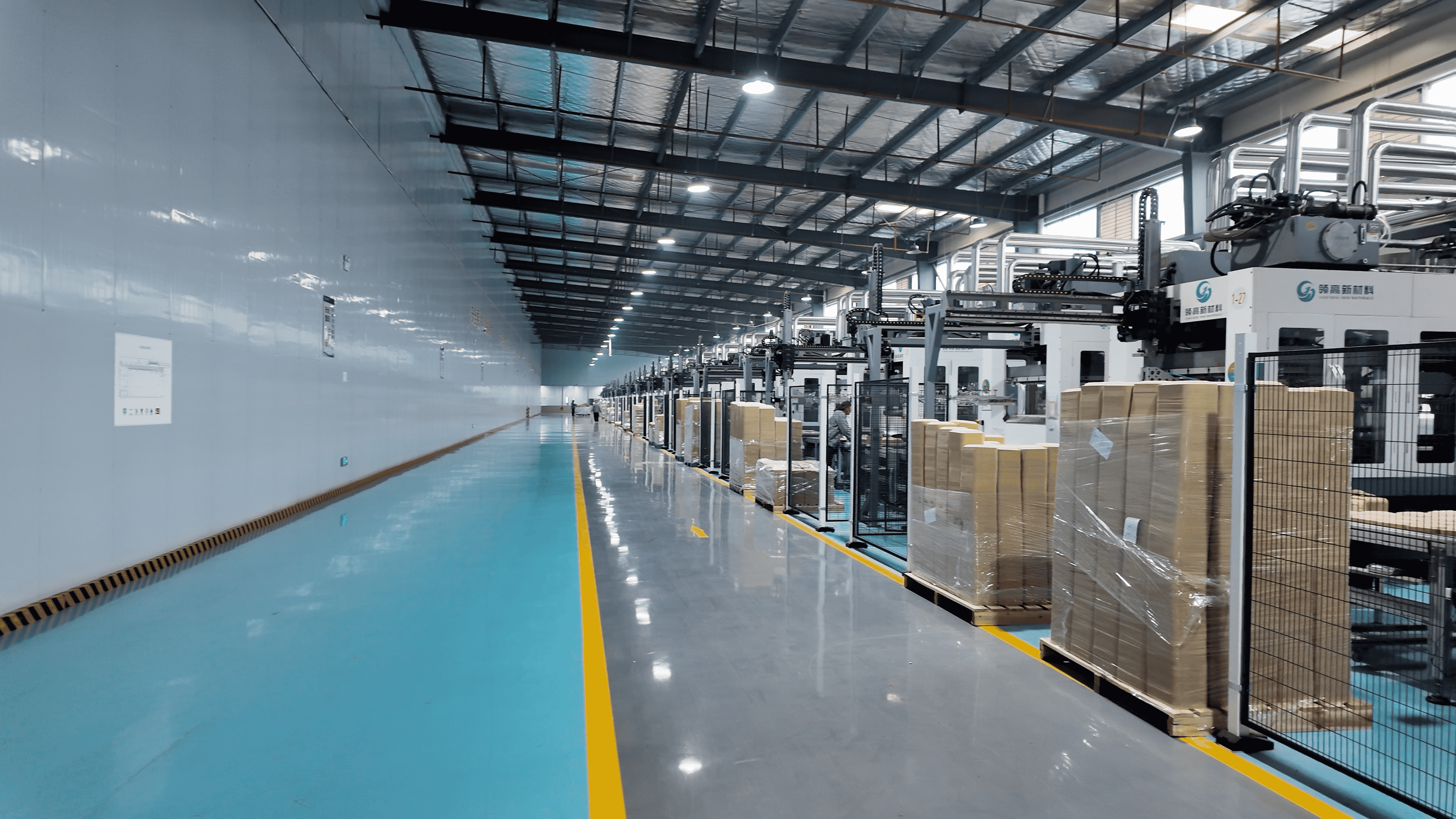
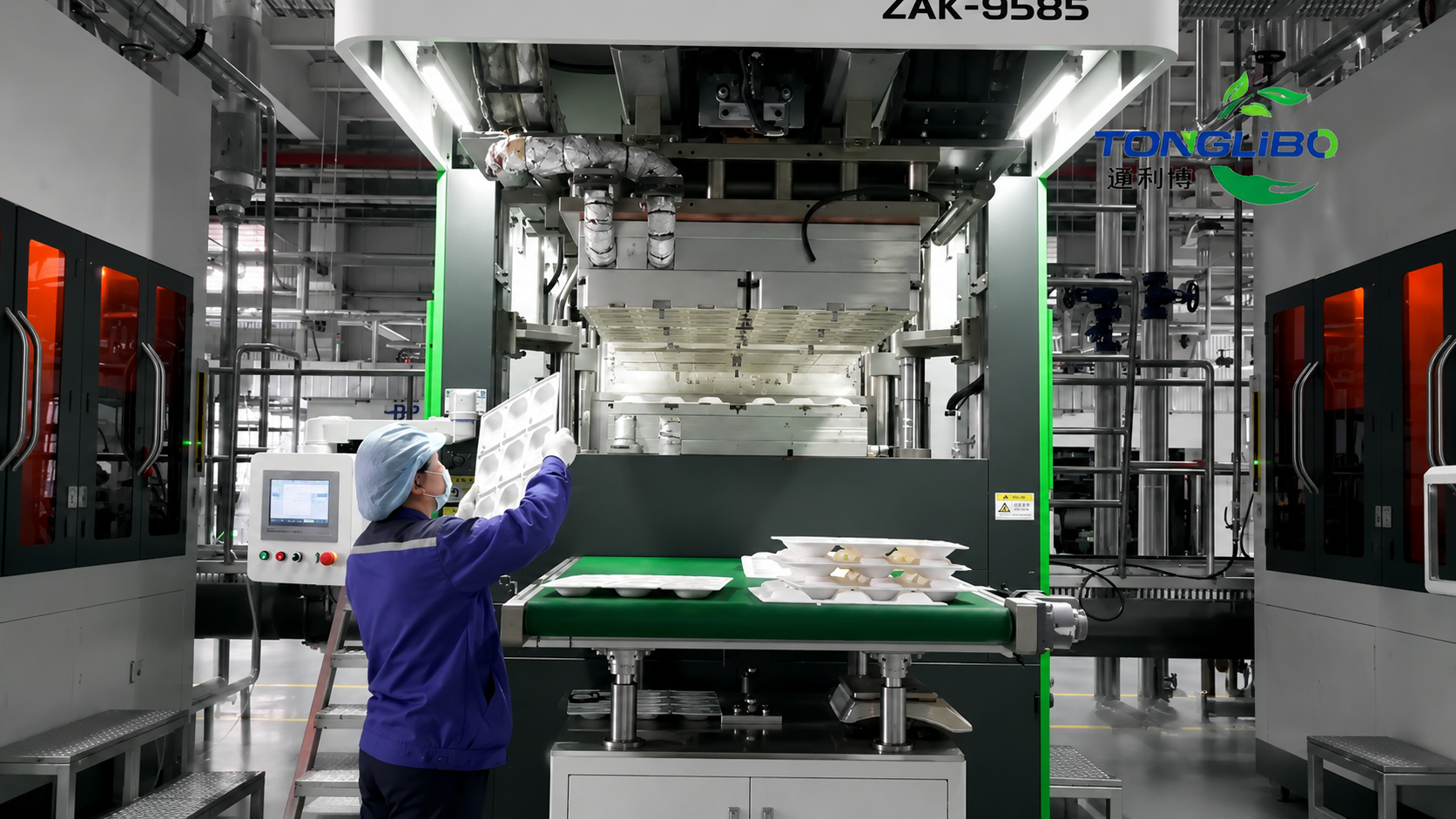
A turnkey pulp molding plant during ramp-up: support continues from installation through trial production until the agreed output is reached.
Rank 3 — Standard After-Sales Service
What it is. Standard after-sales service is the maintenance-oriented layer: installation and commissioning, remote technical support, on-site troubleshooting, spare-parts supply, preventive maintenance and 24/7 service response. It is typically scoped by equipment condition, and its main function is to verify whether the equipment is operating as intended and to restore it when it is not.
Where it is sufficient. Experienced teams with settled pulp formulations, a stable product mix, and machines that have already completed a ramp-up. It is also the natural model for repeat purchases of a proven model: Gaoyi Packaging began with an initial trial machine, then placed multiple repeat orders for a total of 80 industrial packaging machines, supported by on-site commissioning and fast maintenance response. Under those conditions the process knowledge already exists inside the plant, and the supplier is maintaining equipment rather than building capability.
Limits. It does not develop a pulp formulation for a new fibre, does not re-tune forming parameters for a new product geometry, and does not shorten an operator learning curve on its own. Buyers who treat standard after-sales as a substitute for ramp-up usually discover the gap during the first months of production, when the equipment is technically functional but output is not yet stable.
Step-by-Step: Choosing and Deploying the Right Support Model
- Classify the project against five risk triggers. A new factory, a turnkey scope, an overseas site, a complex line with several downstream modules, and a new material, new product or new operator team. Two or more triggers point to resident on-site service plus ramp-up support; none points to standard after-sales service.
- Map the support scope by subsystem. Write the scope against pulp preparation, slurry feeding, forming, hot pressing, trimming, vision inspection, stacking and packing, so that no interface is left between two suppliers. This is where a single-source turnkey scope reduces hand-off risk.
- Fix resident-engineer deliverables and duration in the order. Define what the engineer signs off: forming and hot-pressing parameters per product, mold installation and replacement procedure, training records for each shift, and a written handover checklist.
- Define ramp-up acceptance criteria before shipment. Use the model's own specification as the baseline: the ZCE-1111 integrated tableware machine is rated at 600–900 kg per 24 hours with a maximum product height of 80 mm and 550 g per mold; the ZFG-1111 line at 900–1,200 kg per 24 hours; the ZBG-1111 line at 1,000–1,500 kg per 24 hours, each depending on product. Agree how those figures will be verified on site.
- Schedule training for both operators and maintenance staff. Operator training without maintenance training leaves the plant dependent on visits, because mold replacement, cleaning and preventive tasks determine how quickly the line returns to production after a changeover.
- Set the escalation and spare-parts path. Confirm who is contacted first, which parts are held locally, and how remote technical support connects to on-site troubleshooting. A network of 10 service locations with 24/7 service response only helps if the plant knows how to reach it.
- Hand over to standard after-sales with documentation. The handover should record the settled formulation and parameter settings, the maintenance schedule and the agreed response level, so that routine support does not reopen questions that were already resolved during ramp-up.
Use Cases: Which Project Needs Which Model
New factory or turnkey pulp molding plant
Resident on-site plus ramp-up. Nothing in the plant has been proven yet — not the layout, not the slurry system, not the crew. The Hunan Linggao and Guangxi Qiaowang projects illustrate the pattern: installation, commissioning, training and production support delivered as one sequence rather than as separate purchases.
Overseas project
Resident on-site plus ramp-up, with proximity to a service point. Distance makes repeated short visits expensive and slow, so a single extended presence is usually more efficient than several trips. The Thailand and Vietnam production bases described above were supported this way, including a dedicated after-sales service point in Thailand and 7×24-hour response.
Complex or multi-module line
Resident on-site, because the interfaces carry the risk. The ZAKS-9595 plant-fiber cup lid line integrates forming, hot pressing, servo trimming, multi-camera vision inspection with 0.5 mm accuracy, rejection, counting and automatic packing; the ZBG-1111 line combines one forming station with two hot-pressing stations and a six-axis robot for transfer. On lines of this shape, a parameter change in one module shows up two modules downstream.
New material, new product or new operators
Ramp-up support with mold and product development backup. Anhui Fengyuan required customized adaptation for bio-based fibre materials, including slurry compatibility optimization and a low-energy process design, to move from laboratory validation to pilot-scale production. Shengquan Group required customized equipment development for a product with no existing standard solution, followed by seven months of trial production before full project cooperation.
Sampling and R&D work
Process support rather than resident production service. The ZAMS-6047 sampling line integrates pulping, refining, slurry preparation, forming and hot pressing in one machine and is used for prototype production and process verification; GMN applies it to nanocellulose additive development, and YUTO Packaging to molded fiber packaging development. Here the support requirement is engineering dialogue on formulations and parameters, not shift-level attendance.
Proven line, experienced team, additional capacity
Standard after-sales service. When the same model has already run for years and the process team is in place, the marginal value of an extended on-site presence falls sharply, and maintenance-oriented support is the proportionate choice.
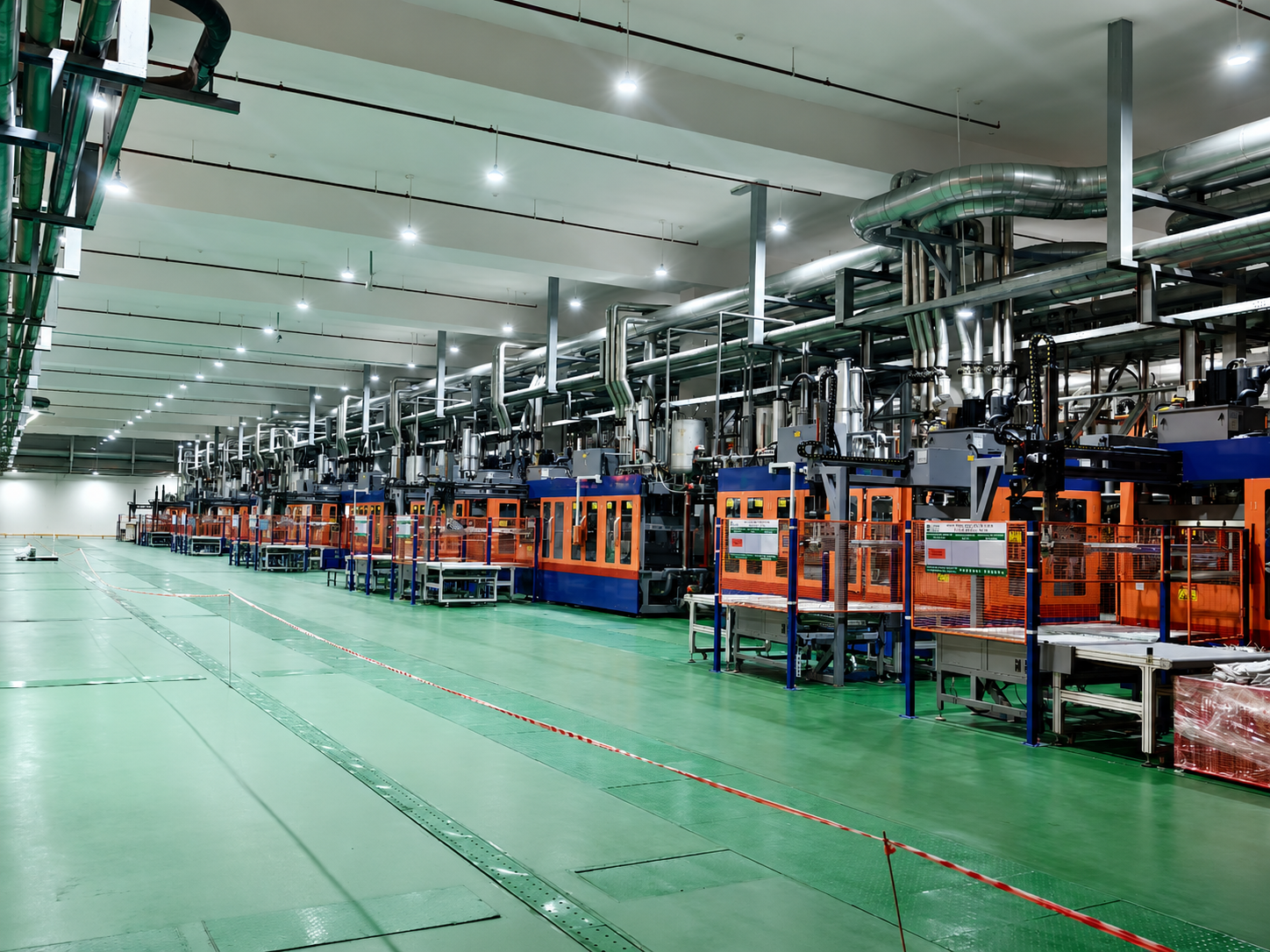
Overseas production base during the initial operation stage, where on-site support replaces repeated short visits.
Comparison Table: Resident On-Site vs Ramp-Up vs Standard After-Sales
| Support model | Rank | Primary objective | Best-fit projects | Main limit |
|---|---|---|---|---|
| Resident on-site service | 1 | Get multiple systems running as one line on the customer's site | New factories, turnkey plants, overseas projects, complex multi-module lines, new materials, products or operators | Requires site readiness and engineer scheduling agreed with shipment |
| Production ramp-up support | 2 | Move from a first good product to stable mass production | New factories, capacity expansion, new material or product introduction, plants building in-house process know-how | Depends on written acceptance criteria and consistent fibre and utilities |
| Standard after-sales service | 3 | Keep installed equipment operating as intended | Experienced teams with settled formulations, stable product mix, repeat orders of a proven model | Does not develop formulations, re-tune parameters for new geometry, or train a new crew |
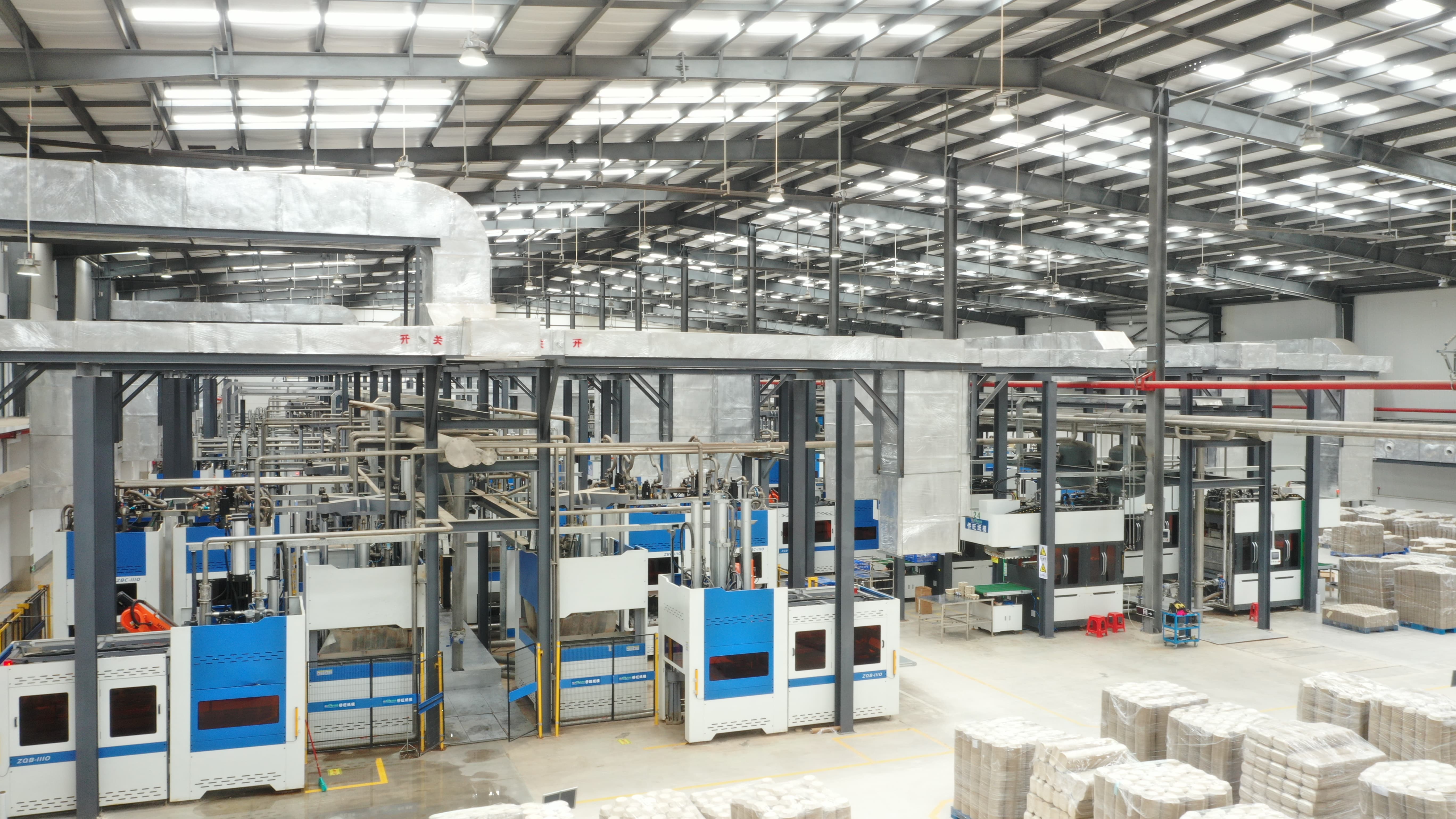
Capacity expansion after ramp-up: 32 customized machines took this plant from approximately 6,000 tons to 16,000 tons of annual capacity.
FAQ
Which pulp molding machine models are CE compliant for the EU market?
The ZFG-1111 pulp molding tableware production line is certified under the Machinery Directive 2006/42/EC. Certificate M.2025.206.C130486 was issued by UDEM Uluslararası Belgelendirme Denetim Eğitim Merkezi San. ve Tic. A.Ş. on 2025-12-01 and is valid until 2030-11-30, with EN ISO 12100:2010 and EN 60204-1:2018/A1:2025 as the applicable standards. The pulp molding industrial packaging machines ZAP-9585 and ZAD-8565 are covered by certificate M.2026.206.C142039, issued on 2026-06-05 and valid until 2031-06-04. Buyers should confirm that the exact model ordered appears in the certificate scope, and should assess control-system functional safety against EN ISO 13849-1, whose 2015 version is withdrawn after 15 May 2027.
What does production ramp-up support include, and how long can it run?
For turnkey projects, ramp-up support can run as up to six months of on-site production assistance. It covers operator and maintenance training, production-line optimization, mold and product development support, preventive maintenance, remote technical support and 24/7 service response, and it is delivered alongside installation and commissioning. The objective is to close the gap between a line that has been commissioned and a line that produces consistently across shifts.
How is overseas service coverage organised?
Hanson operates 10 service locations covering key domestic and overseas markets, supporting installation and commissioning, equipment maintenance, technical support, spare parts and on-site project services, with 24/7 service response and remote technical support. In practice this is organised per project: the Home-Link base in Thailand is supported by a dedicated after-sales service point, and the Changya base in Vietnam received on-site commissioning and production support during initial operation.
Can we validate a product or a pulp formulation before ordering a full line?
Yes. The ZAMS-6047 pulp molding sample making machine integrates pulping, refining, slurry preparation, slurry feeding, forming and hot pressing in one unit, with a 600 × 470 mm mold platen, 82 kW rated power, 2-ton forming pressure and 13-ton hot-pressing pressure. Maximum product height is 120 mm and maximum product weight per mold is 200 g at 0.3% slurry concentration; trimming is not included. It is used for prototyping, process verification and small-batch production, and customers including GMN, YUTO Packaging and Jinsun apply it to material and formulation development.
What is the lead time, and when should support be planned?
Standard equipment is quoted at approximately 60 days, while customized production lines depend on equipment configuration and project scope. The minimum order quantity is 1 unit, and monthly capacity reaches up to 60 units depending on model and configuration. Because resident engineering and ramp-up assistance have to be scheduled against shipment and installation dates, the support scope is normally agreed together with the equipment order rather than after arrival.
Conclusion
The ranking is a decision rule, not a hierarchy of service quality. Resident on-site service ranks first because a new or complex pulp molding machine project fails at the interfaces, and interfaces are resolved by an engineer who is present while the line runs. Production ramp-up support ranks second because commissioning and stable production are different achievements, and the second one requires process tuning, training and time. Standard after-sales service ranks third because it maintains equipment condition but does not build process capability.
For buyers, the practical test is simple. If the plant is new, if the equipment is part of a turnkey pulp molding plant, if the site is overseas, if the line carries several downstream modules, or if the material, product or crew is new, budget for resident on-site and ramp-up support from the start — including up to six months of on-site production assistance where the project is turnkey. If the team already runs a proven model with a settled formulation, standard after-sales service is proportionate and easier to manage.
Next step: define the support scope with the equipment order
Share your project type, product and site location, and HANSON PULP MOLDING will map resident engineering, ramp-up assistance and after-sales coverage against your delivery schedule.
Contact: Castle | Email: linchuangcheng@hspulpmolding.com | Tel / WhatsApp: +86 159-2060-4830
Address: Room 101, No. 6, Lane 1, Fourth Industrial Zone, Qiaotou, Houjie Town, Dongguan City, Guangdong Province, China
Website: www.hspulpmolding.com | Download the Hanson Pulp Molding catalogue (PDF)
Have Questions or Need More Details?
Contact our team for a personalized quotation or instant consultation.
Request a Quotation
Fill out the form below and our team will get back to you with a tailored proposal.
WhatsApp Direct Chat
Prefer to chat in real-time? Message us on WhatsApp for instant assistance & quick answers.
- Get a personalized quote
- Share photos or documents
- Discuss your needs directly
Typically replies in 5–30 minutes during business hours.