
Supplier Evaluation: How to Verify a Pulp Molding Machine Maker's Turnkey Capability
A pulp molding machine maker's turnkey capability can be verified against six evidence points: whether mold design and mold manufacturing sit inside the supplier's own organisation, whether the delivery scope covers pulp preparation through downstream automation, whether specifications are published at model level, whether compliance documents name the exact models being purchased, whether the supplier can produce physical samples of your product before the order, and whether installation, commissioning, training and production ramp-up are written into the agreement. Everything else in a supplier presentation is context.
Buyers evaluating an integrated pulp molding line usually reach a point where several suppliers describe themselves in almost identical language: full turnkey solution, one-stop service, end-to-end support. The words carry no information. What separates a manufacturer that can genuinely deliver an integrated plant from one that resells equipment assembled from several vendors is whether each claim can be traced to a document, a machine list, a specification sheet, a certificate or a completed project.
This guide sets out that verification process. HANSON PULP MOLDING — Guangdong Hanson Pulp Molding Technology Co., Ltd., a pulp molding equipment and turnkey factory solution provider based in Houjie Town, Dongguan City, Guangdong Province, China — is used throughout as a worked example, so that each evaluation criterion is paired with a concrete form of evidence. The same checks apply to any supplier on a buyer's shortlist.
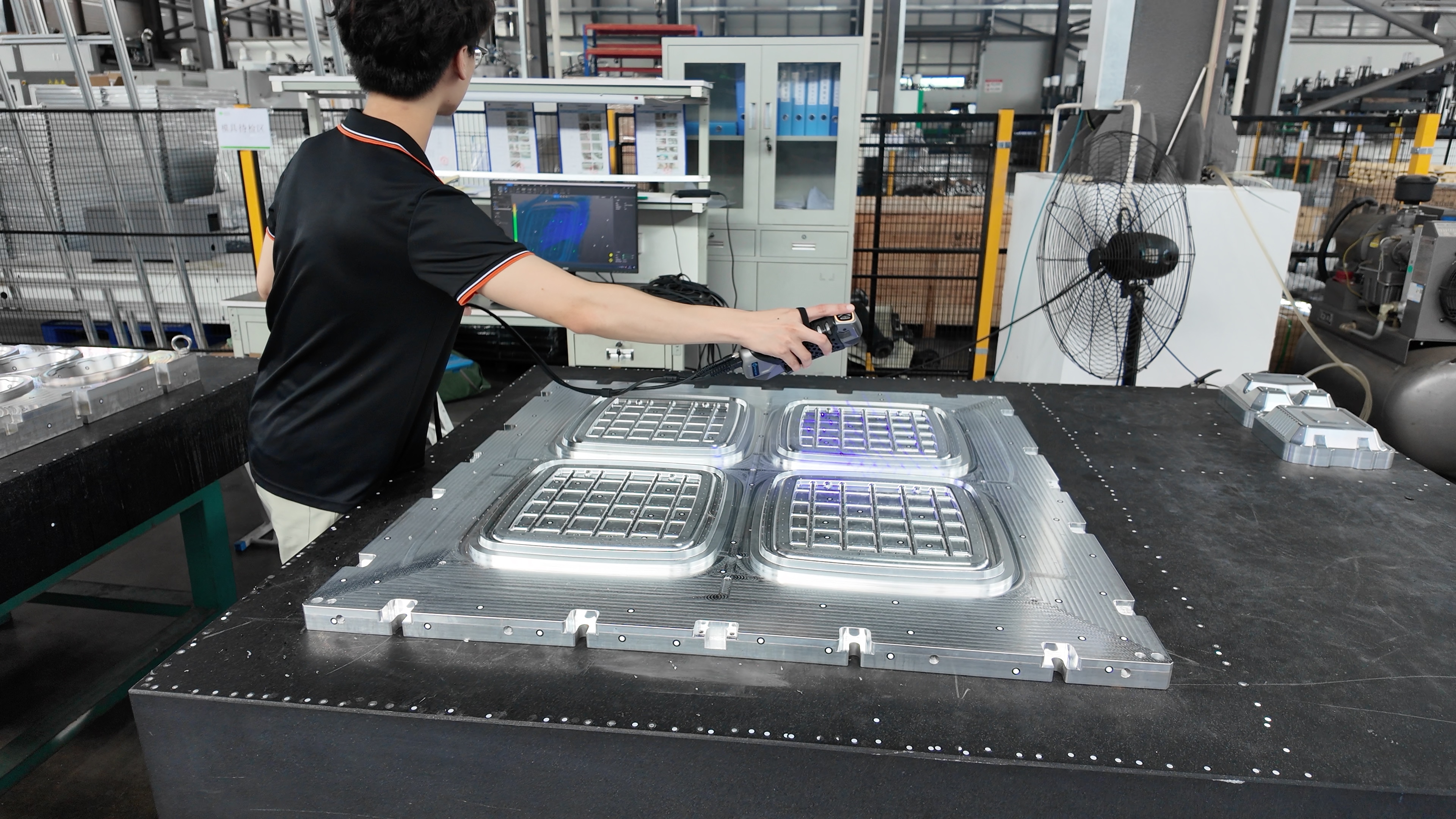
Mold design and mold manufacturing are handled inside the supplier's own mold division — the single most useful indicator of turnkey capability.
Why "Turnkey" Claims Break Down in Real Pulp Molding Projects
In pulp molding, the machine and the mold are not two separable products. Forming pressure, hot-pressing pressure, slurry concentration, drying method, trimming pressure and mold geometry all interact. A production line that runs reliably with a reference mold can still need substantial adaptation before it produces a different plate, bowl, cup lid or industrial insert at acceptable yield. That adaptation is where turnkey claims are tested.
The most common failure pattern is structural rather than technical. When mold design and mold manufacturing are outsourced, product development becomes a chain of handovers: the buyer supplies product drawings, the machine builder forwards them to a third-party tool shop, the tool shop returns a mold, and geometry, forming parameters, hot-pressing pressure and trimming tolerance then have to be reconciled between organisations that do not share one engineering process. Every adjustment loop crosses a company boundary. Communication delays accumulate, and no single party owns final yield. If the finished product is out of tolerance or the cycle is unstable, responsibility is usually disputed rather than resolved.
A second failure pattern is scope ambiguity. "Turnkey" without a written scope is a machine sale with turnkey vocabulary attached. Pulp preparation, slurry feeding, wastewater handling, downstream automation, electrical control, installation, operator training and production ramp-up determine whether a plant reaches stable mass production — but they are frequently left outside the equipment contract and renegotiated later, at the buyer's cost.
A third pattern is documentation mismatch. A compliance certificate issued for one machine model does not automatically cover another model in the same catalogue. Buyers who discover this during customs clearance or a factory audit face delays that the equipment price never reflected.
The decision rule: treat every turnkey statement as a hypothesis and ask which artefact proves it — a scope annex, a model specification, a certificate with a model list, an inspection record, a sample result, or a service commitment with a defined duration. A supplier that can produce the artefact passes the check; a supplier that answers with adjectives does not.
What the Pulp Molding Equipment Market Looks Like in 2026
Three background conditions shape supplier evaluation right now.
Demand is expanding, and so is supplier count. The global pulp moulding machines market was valued at USD 2,140.0 million in 2024 and is projected to reach USD 3,760.2 million by 2032, expanding at a CAGR of 7.3% between 2025 and 2032, according to a Cloud Market Reports study published through Vertex AI Search. Published market sizes for this category vary widely because some estimates fold in all paper and paperboard machinery rather than pulp molding equipment specifically; buyers should treat headline market figures as industry context, not as evidence of any individual supplier's capability.
Foodservice packaging dominates demand. Food and beverage packaging accounts for approximately 45% of global pulp molding machine demand, with cup, tray and bowl formats leading. That concentration means most suppliers can show tableware references — which is precisely why tableware experience alone no longer differentiates manufacturers during evaluation.
The supply base is globally distributed. China's exports of machinery for making paper or paperboard (HS 843920) were valued at USD 49.58 million in 2024, according to World Integrated Trade Solution data. For buyers in Mexico, Brazil, Vietnam, Thailand, Indonesia, Malaysia, India, Turkey, Egypt, Saudi Arabia, the United Arab Emirates, Italy, Romania, Russia, Argentina, Peru and other import markets, the practical question is not whether equipment is available but whether the supplier can support it after installation.
Regulatory expectations are tightening. Safety-related parts of machinery control systems must comply with EN ISO 13849-1; the 2015 version of that standard will be withdrawn after a transition period ending 15 May 2027. Buyers specifying equipment for the European Union or the European Economic Area should confirm which version of the functional safety standard a line is designed against, because retrofitting a control system after delivery is far more expensive than specifying it correctly at order stage.
Fiber diversification raises the value of mold capability. Bagasse, bamboo fiber, other agricultural fibers and additive-modified slurries all behave differently in forming and hot pressing. A line that cannot be re-tuned when the buyer changes fiber source or product geometry becomes a stranded asset. This is why in-house mold and process capability has moved from a nice-to-have to a primary selection criterion.
The Six Indicators of Verifiable Turnkey Capability
1. An In-House Mold Division, Described in Process Steps
This is the strongest single indicator. HANSON PULP MOLDING operates an independent mold division whose documented capabilities cover product development, mold design, mold manufacturing, mold testing and mass-production adaptation, together with optimization services for existing molds and technical retrofits for existing equipment. Because mold engineering and equipment engineering sit in the same organisation, the adaptation loop stays internal: product drawings, mold design, forming and hot-pressing parameters and trimming tolerance are resolved by one engineering chain instead of being negotiated between a machine builder and an external tool shop.
When verifying this indicator with any supplier, ask for the mold division's process steps, the mold-related machining equipment it operates, the number of mold engineers assigned to it, and where new molds are tested before shipment. A supplier with a real division can answer in specifics; a supplier that outsources molds will answer in generalities or redirect the question to its equipment range.
2. A Written Turnkey Scope With Identified Owners
A verifiable turnkey scope names every deliverable and the party responsible for it. Hanson's documented scope can include preliminary product and raw-material verification, project feasibility analysis, production-capacity planning, factory layout design, intelligent pulp preparation systems, pulp molding forming equipment, mold design and manufacturing, downstream automation, electrical control systems, installation and commissioning, personnel training, and production ramp-up support. Each of these items should appear in the commercial offer with an acceptance criterion — otherwise it becomes an unbudgeted variation later.
Scope verification checklist
- Raw material and product feasibility study, with the fiber source named.
- Capacity plan expressed in kg per 24 hours at a stated product.
- Factory layout, including pulp preparation and utilities.
- Mold design and mold manufacturing responsibility.
- Downstream automation: trimming, hole punching, vision inspection, stacking, packing, coating, laminating or digital printing as required.
- Installation, commissioning, operator training and ramp-up support, with duration.
3. Model-Level Specifications That Can Be Matched to Your Product
Vague capacity claims cannot be verified; model specifications can. Buyers should insist on a named model and compare its platen size, forming force, hot-pressing force, installed power and product limits against their own product envelope.
Hanson's published specifications illustrate the level of detail a buyer should expect. The ZBG-1111 fully servo tableware production line uses a 1,100 × 1,100 mm mold platen with one forming station, two hot-pressing stations and one trimming station, a six-axis robot transfer system, hot-pressing and trimming pressures of 80 tons, and a production capacity of 1,000–1,500 kg per 24 hours depending on product, with oil, electric or steam heating and a rated power of 60 kW. The ZCE-1111 integrated tableware machine runs a 1,100 × 1,100 mm platen at 20 tons forming, 60 tons hot-pressing and 70 tons trimming pressure, producing 600–900 kg per 24 hours with a forming cycle of 28–60 seconds per mold.
For industrial packaging, the ZAD-8565 uses an 850 × 650 mm platen with 3 tons forming and 20 tons hot-pressing pressure, a 54.1 kW installed power and a floor load of 1,990.5 kg/m², while the larger ZAP-9585 uses a 950 × 850 mm platen with 10 tons forming and 40 tons hot-pressing pressure, a 114 kW installed power and a maximum product weight of 900 g per mold at 0.3% slurry concentration. The ZAKS-9595 cup lid line combines a 950 × 950 mm forming platen with a 500 × 600 mm trimming platen, a 10-second trimming cycle, 0.5 mm vision inspection accuracy and support for Ø80 mm and Ø90 mm lids. The ZAMS-6047 sampling line integrates pulping, refining, slurry preparation, forming and hot pressing on a 600 × 470 mm platen with 2 tons forming and 13 tons hot-pressing pressure at 82 kW.
Across these models the material baseline is consistent: Q235-A carbon steel machine frame, SUS304 stainless steel pulp tank and slurry piping, and national-standard 6061 aluminum alloy molds, operating on AC 380 V / 50 Hz. A consistent material baseline is one of the easiest things to verify during a factory visit, and an inconsistent one is an early warning about how the equipment was engineered.
4. Compliance Documents That Name the Models
A CE certificate is only useful if its scope covers the machine being purchased. HANSON PULP MOLDING holds a Machinery Directive Attestation of Conformity, certificate number M.2025.206.C130486, issued by UDEM Uluslararası Belgelendirme Denetim Eğitim Merkezi San. ve Tic. A.Ş., covering pulp molding equipment models ZFG-1111, ZFD-8565, ZFM-9894 and ZFH-1311 with reference to 2006/42/EC Machinery Directive Annex VIII, EN ISO 12100:2010 and EN 60204-1:2018/A1:2025. It was issued on 2025-12-01 and is valid until 2030-11-30 for the European Union and European Economic Area market.
A second attestation, certificate number M.2026.206.C142039, issued by the same authority on 2026-06-05 and valid until 2031-06-04, covers pulp molding industrial packaging equipment models ZAP-9585, ZDA-9585, ZAD-8565, ZAC-8565, ZDA-1070, ZDK-1010, ZAB-9585 and ZAB-1070 under the same directive and standards.
The verification method is straightforward: read the model list, read the standards cited, read the issuing body, and check the issue and expiry dates against your delivery schedule. A supplier that can only produce a certificate for a different model has not verified compliance for your order.
5. Inspection Evidence Before Shipment
Hanson applies 100% inspection before delivery, covering incoming material inspection, welding and frame-structure inspection, dimensional and installation-surface inspection, portable coordinate measuring inspection, and electrical, hydraulic and pneumatic system testing. Buyers evaluating any manufacturer should ask which of these checks are performed, what the record format is, and whether the buyer's own inspector can witness them. Inspection scope is a reliable proxy for how seriously a factory treats adaptation risk.
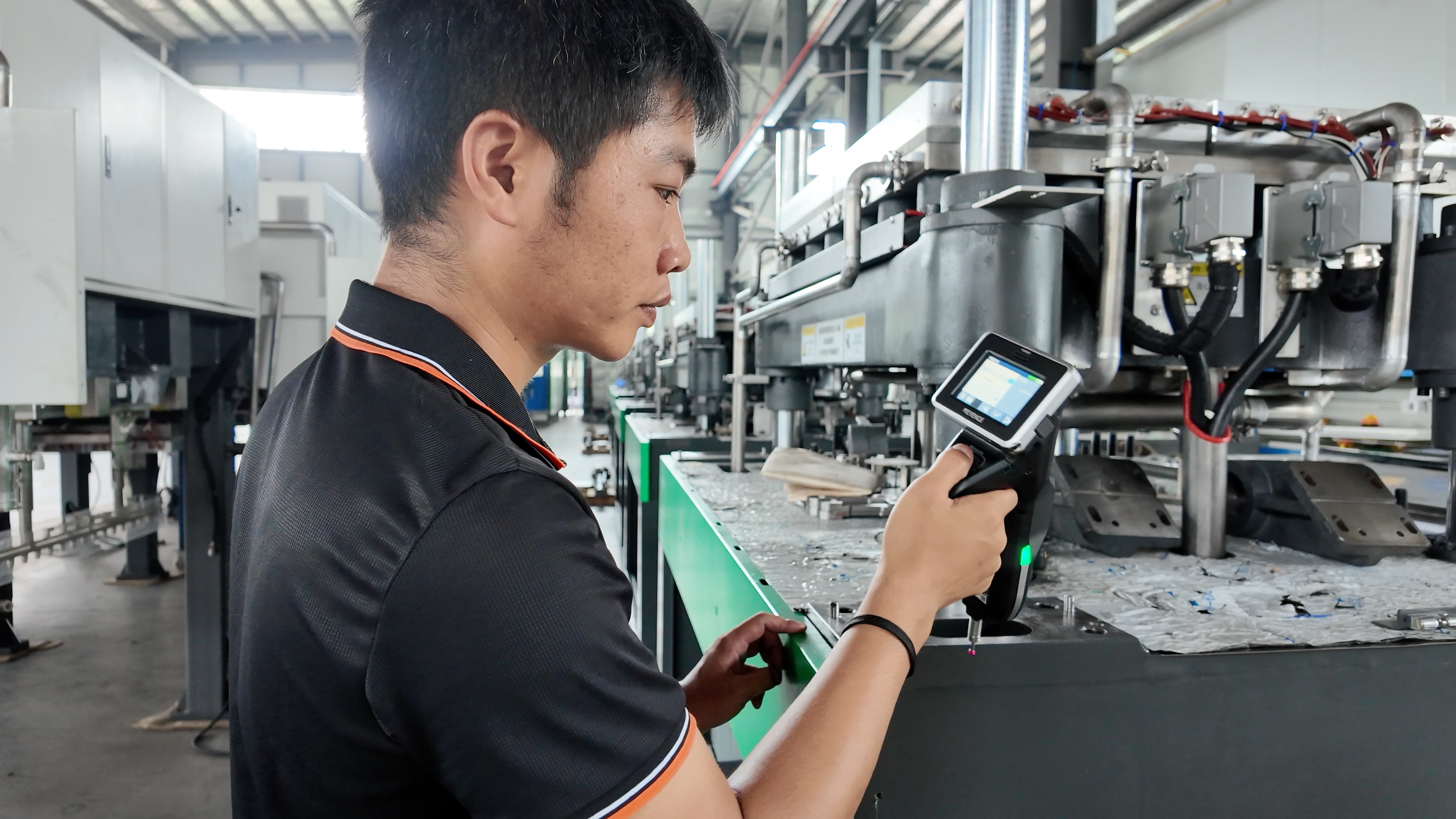
Pre-delivery inspection covers incoming materials, frame welding, dimensional accuracy and electrical, hydraulic and pneumatic testing.
6. Service Network, Ramp-Up Support and Delivery Capacity
Turnkey capability ends where support ends. Hanson operates 10 service locations across key domestic and overseas markets, providing installation and commissioning, equipment maintenance, technical support, spare parts and on-site project services. For turnkey projects the company can arrange resident engineers and provide up to six months of on-site production assistance, with 24/7 service response. Behind that network sits a 50,000 m² facility with more than 200 employees, approximately 50 R&D and engineering professionals, 50 patents, an annual output of 150 units and a monthly capacity of up to 60 units depending on model and configuration. Standard equipment lead time is approximately 60 days, with customized production lines quoted against configuration and project scope, and the minimum order quantity is one unit.
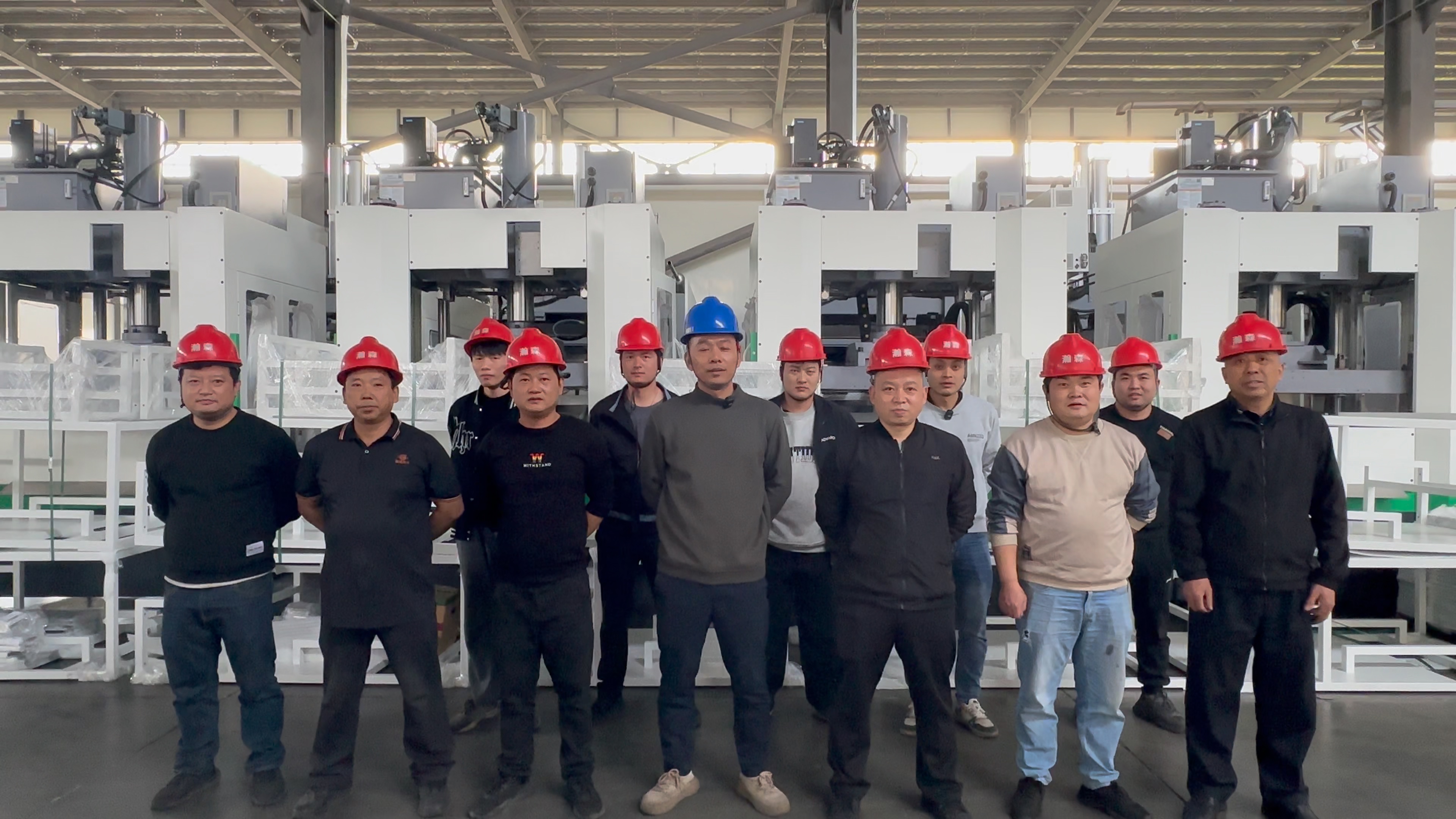
Installation, commissioning and ramp-up support: for turnkey projects, on-site production assistance can extend to six months.
A Seven-Step Supplier Evaluation Process
Step 1 — Define the product and the capacity before requesting quotations. Specify the item (plate, bowl, tray, cup lid, industrial insert), the fiber source, the target output in kg per 24 hours and the destination market. Every later verification depends on this baseline. Suppliers who receive a defined brief answer with model recommendations; suppliers who receive a vague brief answer with generic brochures.
Step 2 — Establish who designs and manufactures the mold. Ask for the mold division, its process steps and its testing arrangement. This determines who owns the adaptation problem after installation.
Step 3 — Map the offer against a written turnkey scope. Walk the scope checklist item by item and mark each deliverable as included, excluded or optional. Exclusions matter more than inclusions, because they predict future cost.
Step 4 — Match model specifications to your product. Compare platen size, forming and hot-pressing pressure, installed power, maximum product height and maximum product weight per mold against your product. A model that cannot physically accommodate the product cannot be adapted into one that can.
Step 5 — Audit compliance documents model by model. Confirm the certificate number, the authority, the standards cited, the covered model list and the validity dates.
Step 6 — Produce samples before committing capital. The ZAMS-6047 sampling production line integrates pulping, refining, slurry preparation, forming and hot pressing in one compact system, with flexible adjustment of pressure, temperature and forming parameters. A nanocellulose additive developer used it as an integrated testing platform to evaluate formulations, compare process parameters and produce molded fiber samples for performance verification within a one-year project. A listed integrated packaging solutions provider has used the same sampling line for four years for molded fiber packaging development, prototype production and process verification. A plant-fiber environmental packaging manufacturer used a customized sampling machine over three years for formulation optimization and prototype production. A bio-based materials manufacturer deployed six Hahnson tableware integrated machines over four years, moving from laboratory validation to pilot-scale production. The pattern is consistent: buyers who test first reduce commissioning risk.
Step 7 — Verify the ramp-up record and repeat-order behaviour. Ask how previous projects reached stable production. A professional molded fiber industrial packaging manufacturer placed five procurement rounds between 2023 and April 2025, reaching 20 units of the ZAD-8565 with continuous equipment customization and on-site production support. An integrated packaging manufacturer in Vietnam began with a trial machine and eventually purchased 80 industrial packaging machines. A listed biomass materials manufacturer ran seven months of trial production before implementing 15 units of the ZBG-1111 line in its Daqing project. Guangxi Qiaowang took delivery of 32 customized core machines as part of a 40,000-ton-per-year project, lifting annual capacity from approximately 6,000 tons to 16,000 tons. Repeat orders and multi-round procurement are the clearest external evidence that adaptation issues were actually solved.
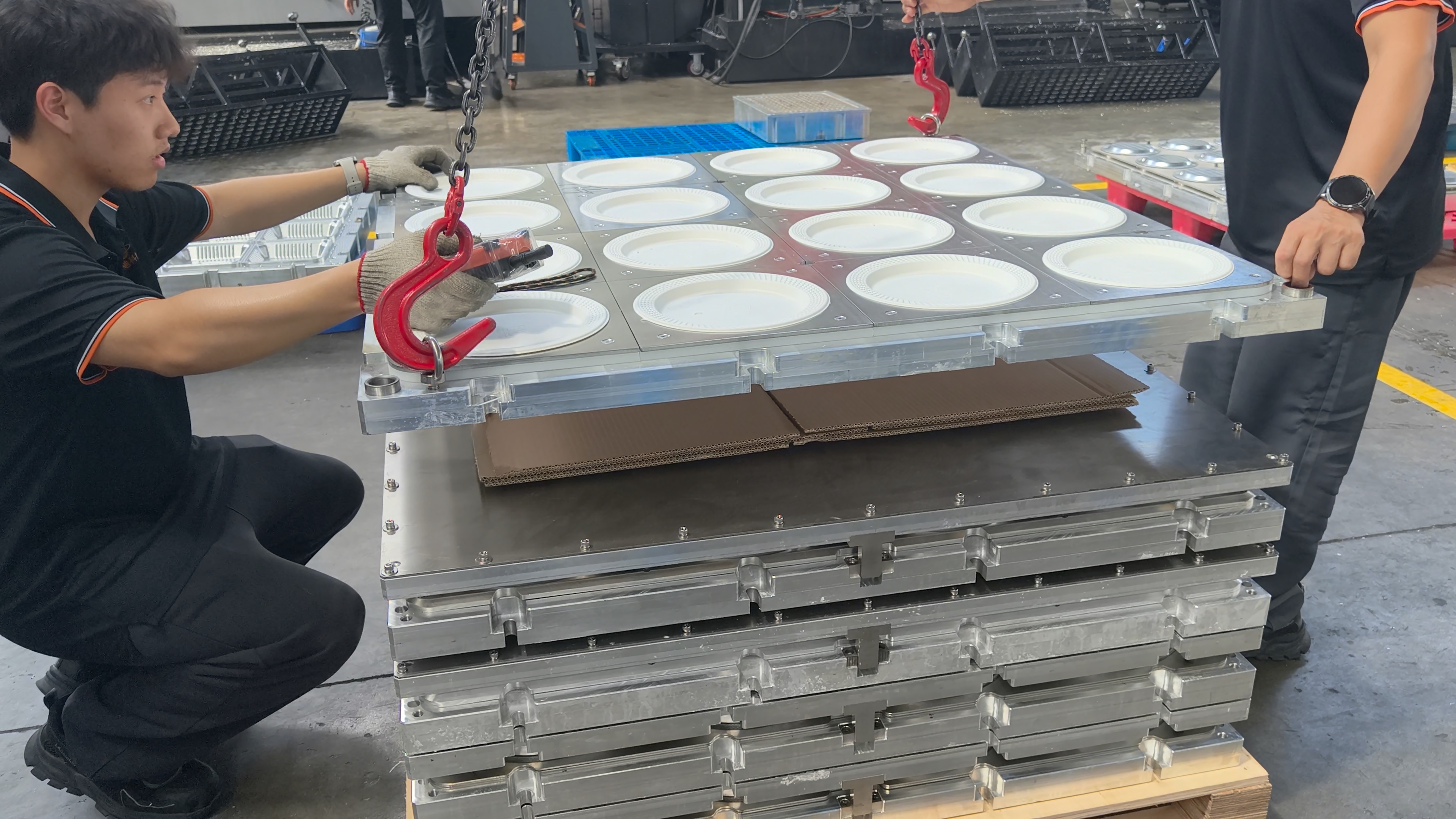
Mold optimization and mass-production adaptation services extend the life of an existing production line.
Where Turnkey Capability Matters Most: Four Buyer Scenarios
New overseas factory with no local engineering base. Changya, a disposable tableware manufacturer transitioning from conventional plastic products to molded fiber packaging, selected Hanson after multiple rounds of supplier evaluation and took delivery of more than 50 machines for the first phase of its Vietnam production base, supported by modular and scalable equipment configuration, 7×24-hour technical response and on-site commissioning during initial operation. A listed biodegradable tableware manufacturer selected Hanson as a core supplier after a four-month intensive equipment test and purchased more than 100 machines for the first phase of its Thailand production base, with a dedicated after-sales service point in Thailand. In both cases the deciding factor was local support capability, not machine price.
Industrial packaging upgrade with tight tolerances. Molded fiber protective packaging for electronics and appliances requires stable surface quality and dimensional accuracy. A customized solution combining precise pressure control and mold adaptation is what allows those tolerances to hold in mass production — which is why the mold division, not the machine alone, determines success in this segment.
High-precision cup lid production. A biodegradable plant-fiber packaging manufacturer entered a strategic cooperation covering 100 pulp molding cup lid machines. The equipment integrates forming, hot pressing, trimming, vision inspection and packing in a single line, with digital energy management, multi-dimensional energy-consumption control and modular mold design — features that only make sense when the same supplier engineers both the mold and the line.
Agricultural fiber and bamboo turnkey plants. An integrated bamboo materials and sustainable food packaging manufacturer received a complete turnkey solution covering factory planning, construction coordination, pulp preparation, customized forming equipment, wastewater treatment and personnel training, progressing from equipment installation to trial production in approximately three months and completing the project, including full-cycle production support and operator training, within two years. Projects built on local agricultural fiber demand a supplier who can co-develop the pulp system, not just ship machines.
Comparison: Procurement Models and What They Mean for Adaptation Risk
The table below compares the three procurement models buyers typically weigh. The middle column reflects verified Hanson scope and capability facts; the outer columns describe structural characteristics of those procurement models, not any specific company, and are included so buyers know which questions to ask when evaluating suppliers who work that way.
| Evaluation dimension | Integrated supplier with in-house mold division (HANSON PULP MOLDING) | Equipment-only supplier (molds sourced separately) | Machine builder with outsourced mold partner |
|---|---|---|---|
| Mold design and manufacturing | Independent mold division covering product development, mold design, mold manufacturing, mold testing and mass-production adaptation | Purchased from a third-party tool shop selected by the buyer | Subcontracted to an external mold partner |
| Ownership of mold–equipment adaptation | Single engineering chain owns forming, hot-pressing, trimming and mold geometry together | Split between mold vendor and equipment vendor | Split between machine builder and mold subcontractor |
| Communication path during process tuning | Internal loop; parameters adjusted without cross-company handover | Buyer often becomes the coordinator between two suppliers | Adjustments relayed through the machine builder |
| Scope coverage | Can include raw-material verification, feasibility analysis, capacity planning, factory layout, pulp preparation, forming equipment, molds, downstream automation, electrical control, installation, training and ramp-up | Typically limited to the machines listed in the quotation | Depends on which items the mold partner supports |
| Compliance documentation | CE Machinery Directive Attestation of Conformity with named model lists (M.2025.206.C130486; M.2026.206.C142039) | Buyer must verify documentation per component supplier | Documentation may not cover the complete line |
| Sample and trial production | ZAMS-6047 sampling production line integrating pulping, refining, slurry preparation, forming and hot pressing | Requires a separate sampling arrangement | Sampling depends on the mold partner's capacity |
| Installation, commissioning and ramp-up | 10 service locations, 24/7 response, resident engineers and up to six months of on-site production assistance for turnkey projects | Buyer coordinates multiple field-service teams | Responsibility boundaries defined per contract |
Frequently Asked Questions
What compliance documents should a pulp molding machine maker provide before shipment?
A Machinery Directive Attestation of Conformity that lists the exact machine models being purchased, names the issuing authority, cites the applicable standards and states issue and expiry dates. Hanson's attestation M.2025.206.C130486 covers ZFG-1111, ZFD-8565, ZFM-9894 and ZFH-1311 under 2006/42/EC Annex VIII, EN ISO 12100:2010 and EN 60204-1:2018/A1:2025, issued 2025-12-01 and valid to 2030-11-30; attestation M.2026.206.C142039 covers industrial packaging models ZAP-9585, ZDA-9585, ZAD-8565, ZAC-8565, ZDA-1070, ZDK-1010, ZAB-9585 and ZAB-1070, issued 2026-06-05 and valid to 2031-06-04. Buyers specifying equipment for the EU/EEA should also confirm the functional safety standard version applied to safety-related control parts, since EN ISO 13849-1:2015 is being withdrawn after 15 May 2027.
How can a buyer confirm that a supplier really manufactures molds in-house?
Ask three specific questions: what process steps the mold division performs, which mold-related machining equipment it operates, and where new molds are tested before shipment. HANSON PULP MOLDING operates an independent mold division covering product development, mold design, mold manufacturing, mold testing and mass-production adaptation, and also provides existing-mold optimization and technical retrofits for existing equipment. A supplier whose mold work is outsourced will typically answer in general terms or redirect the conversation to its equipment catalogue.
What drives the cost of a turnkey pulp molding line?
Cost is driven by scope and configuration rather than by a single machine price. The variables that change the commercial structure include equipment model, production capacity, mold platen size, product layout, forming and hot-pressing configuration, factory layout, voltage and frequency, heating method, pulp preparation system, automation level, robotic transfer, trimming, hole punching, vision inspection, automatic packing, coating, laminating, digital printing, mold design, PLC programming, interface language, equipment colour, logo and utility interfaces. Because these items are configurable, buyers should request a scope-based quotation instead of comparing headline machine prices, and should confirm the minimum order quantity — one unit for Hanson — plus the lead time basis: approximately 60 days for standard equipment, with customized lines quoted against configuration and project scope.
Can samples be produced before placing a full order?
Yes, where the supplier operates sampling equipment. Hanson's ZAMS-6047 sampling production line integrates pulping, refining, slurry preparation, forming and hot pressing in one compact system on a 600 × 470 mm platen, with 2 tons forming pressure, 13 tons hot-pressing pressure, flexible adjustment of pressure, temperature and forming parameters, and compatibility with different pulp and additive formulations. A nanocellulose additive developer used it for formulation evaluation and process validation within a one-year project; a listed packaging solutions provider has used it for molded fiber packaging development and prototype verification for four years; a bio-based materials manufacturer used six tableware integrated machines over four years to move from laboratory validation to pilot-scale production. Sample programmes shorten the distance between a purchase decision and stable production.
What lead time and on-site support should a buyer expect after ordering?
Hanson quotes approximately 60 days for standard equipment, with customized production lines scheduled according to equipment configuration and project scope, and monthly manufacturing capacity of up to 60 units depending on model. On-site support includes installation and commissioning, operator and maintenance training, remote technical support, on-site troubleshooting, spare-parts supply, preventive maintenance, mold and product development support, production-line optimization and 24/7 service response, delivered through 10 service locations. For turnkey projects, resident engineers can be arranged with up to six months of on-site production assistance. Buyers who want to validate this before ordering can request the equipment brochure, discuss a sample plan or request a project-specific quotation using the contact details below.
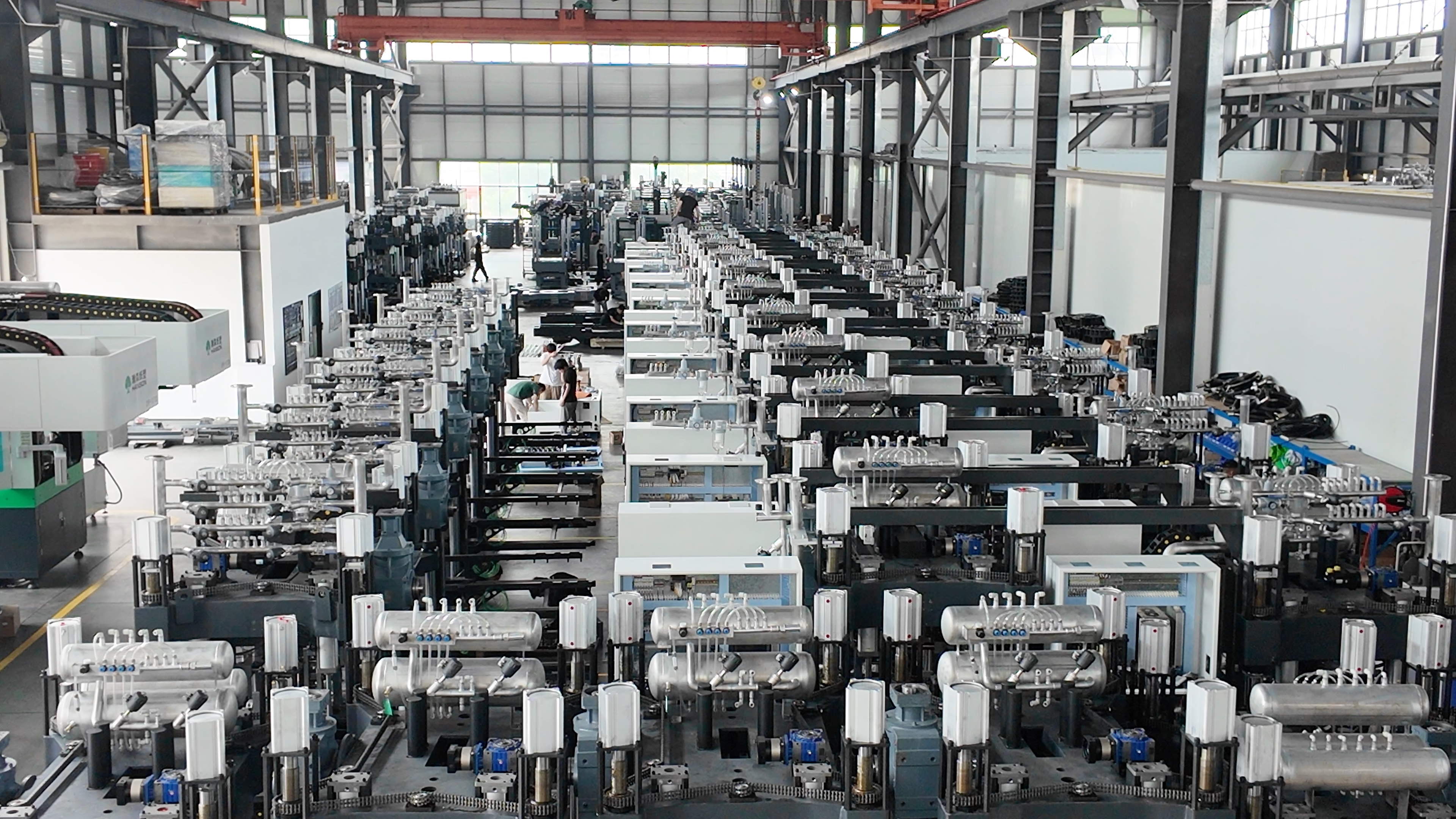
From mold division to assembly and commissioning: verify the whole chain, not a single machine.
Conclusion: Verification Beats Persuasion
Supplier evaluation for a pulp molding turnkey project is a documentation exercise. The buyer who confirms that the mold division is genuinely in-house, that the delivery scope is written item by item, that specifications are stated at model level, that compliance certificates name the exact models, that samples can be produced before the order and that ramp-up support has a defined duration will avoid most of the risk that turnkey language is designed to hide. HANSON PULP MOLDING is one worked example of a supplier that can evidence all six indicators — an independent mold division covering product development through mass-production adaptation, a documented turnkey scope from raw-material verification to production ramp-up, model-level specifications across tableware, industrial packaging, cup lid and sampling lines, CE attestations with named model lists, 100% pre-delivery inspection, and a service network of 10 locations with up to six months of on-site production assistance on turnkey projects.
Hanson serves listed companies, state-owned enterprises, leading packaging manufacturers and advanced-materials companies including Home-Link, Shengquan Group, Anhui Fengyuan, Guangxi Qiaowang, Gaoyi Packaging, YUTO, Yongfa Printing, Solenis and Sichuan Jinzhu, across foodservice packaging, premium industrial packaging, plant-fiber cup lids, new-material development and turnkey factory projects, with exports representing 50% of business.
Next step: test the claim with your own product.
Request a sample plan or a scope-based quotation for your pulp molding project. Download the full equipment brochure here: Hanson Pulp Molding Equipment Brochure (PDF).
Contact: Castle | Email: linchuangcheng@hspulpmolding.com | Tel / WhatsApp: +86 159-2060-4830 | Chat on WhatsApp | Website: www.hspulpmolding.com
Address: Room 101, No. 6, Lane 1, Fourth Industrial Zone, Qiaotou, Houjie Town, Dongguan City, Guangdong Province, China.