
What Is a Pulp Molding Turnkey Solution? 6+1 Modules from Slurry to Finished Product
A pulp molding turnkey solution is a single project scope that takes a pulp molding factory from product and raw-material definition through slurry preparation, forming, mold manufacturing, downstream automation, electrical control, utilities and wastewater treatment to installation, commissioning and production ramp-up. In Hanson's 6+1 model, six technical modules are coordinated through one integrated project interface. The result is not simply a bundle of machines; it is a defined set of engineering handoffs from slurry to finished product.
Guangdong Hanson Pulp Molding Technology Co., Ltd. (HANSON PULP MOLDING) is a National High-tech Enterprise based in Dongguan, China, specializing in pulp molding equipment, production lines and turnkey factory solutions. This explainer is written for buyers evaluating a new plant, an overseas project or a project without an experienced pulp molding engineering team.
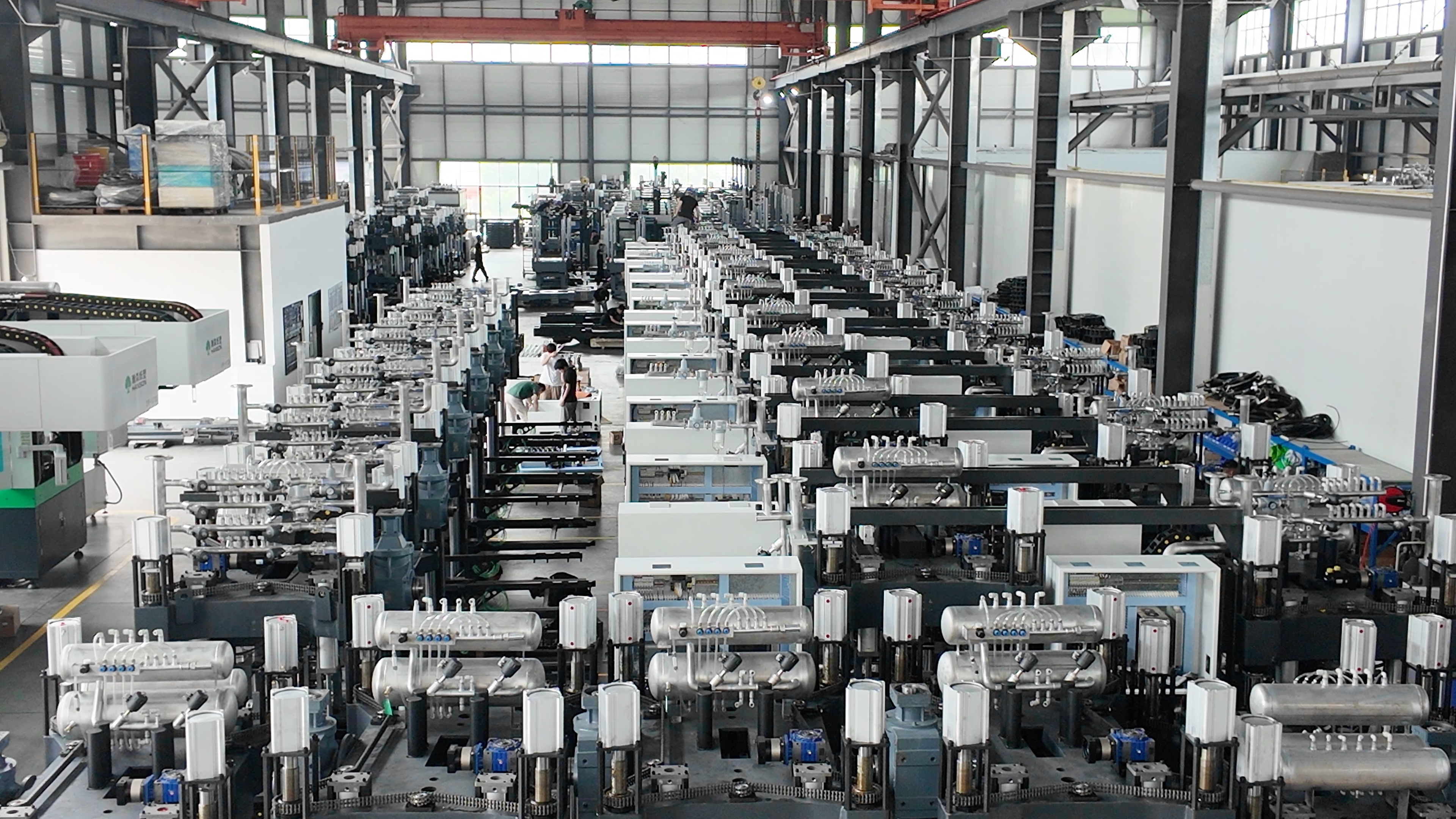
Problem definition: a pulp molding machine line is not a single machine
Turnkey is often misunderstood as buying every machine from one supplier. The real issue is interface ownership. A pulp molding production line includes pulp preparation, slurry feeding, forming, hot pressing, drying, trimming, hole punching, inspection, stacking, counting, packing, compressed air, vacuum, cooling water, high-pressure mold cleaning water and wastewater treatment. Each element has its own design parameters, cycle time and responsibility boundary.
When those interfaces are not designed as one system, the failure mode is predictable. If trimming, inspection, stacking or packing equipment has a lower processing capacity than the main machine, products accumulate downstream and eventually force the main machine to slow down or stop. If downstream equipment runs faster but conveying, positioning and buffering are poorly designed, the line may still suffer from misalignment, collisions, missed inspections and packing errors. Downstream automation therefore has to be designed according to the complete line cycle, not only the theoretical speed of an individual machine.
The buyer's problem is not only machine selection. It is deciding who defines the product and raw material, who calculates the line balance, who owns mold and forming compatibility, who coordinates utilities and wastewater, who commissions the complete line and who troubleshoots when a production problem crosses supplier boundaries. That is the problem a 6+1 turnkey interface is designed to address.
Industry background: why turnkey projects are growing
Pulp molding is expanding as foodservice packaging and molded fiber protective packaging move toward plant-fiber materials. Cloud Market Reports values the global pulp moulding machines market at USD 2,140.0 million in 2024 and projects USD 3,760.2 million by 2032, expanding at a CAGR of 7.3% between 2025 and 2032. The same source reports that food and beverage packaging accounts for approximately 45% of global demand, with cup, tray and bowl formats cited as major formats. China's exports of HS 843920 machinery for making paper or paperboard were valued at USD 49.58 million in 2024, according to World Bank WITS.
These figures describe the equipment category, not any single supplier. They do show why more new factories and overseas projects are being planned. Many of those projects are led by buyers who understand their packaging market but do not have an in-house pulp molding engineering team. For them, the difficult part is not choosing a machine model. It is coordinating raw material, pulp preparation, mold layout, forming, downstream automation, utilities and wastewater before the first production trial.
Hanson has more than 200 employees, including approximately 50 R&D and engineering professionals, and holds 50 patents covering equipment structures, production processes, automation systems and related technologies. Its service network covers key domestic and overseas markets, with 10 service locations currently in operation. Those resources matter in turnkey projects because the integration work continues after the equipment is shipped.
The 6+1 module map: from slurry to finished product
Hanson organizes a turnkey pulp molding scope into six technical modules plus one integration layer. The six modules are factory planning and product/raw-material verification, pulp preparation, forming equipment, mold manufacturing, downstream automation, and electrical control with utilities and wastewater treatment. The +1 is the single project interface that owns the handoffs among them. The sequence below follows the material flow from slurry to finished product.
Module 1: Factory planning and product/raw-material verification
Factory planning starts before equipment selection. It defines the target product, target capacity, raw material route, building dimensions, material flow, utility points and expansion space. Hanson's turnkey services can include preliminary product and raw-material verification, project feasibility analysis, production-capacity planning and factory layout design. These steps decide whether the chosen machine platen, mold layout and downstream equipment can physically fit the product and the building.
What should be verified at this stage? The product dimensions, height and unit weight must fit the machine platen and maximum product weight per mold. The mold layout must support the target output. The downstream trimming, inspection, stacking and packing cycle must match the main machine. The factory must provide the required power, compressed air, vacuum, cooling water, high-pressure mold-cleaning water and wastewater capacity. If these points are checked after the machine order, changes become interface modifications rather than planning decisions.
The Hunan Linggao new-materials project illustrates the scope. Hanson provided a turnkey solution covering factory planning, construction coordination, pulp preparation, customized forming equipment, wastewater treatment and personnel training. The project progressed from equipment installation to trial production in approximately three months.
Module 2: Pulp preparation
Pulp preparation converts raw material into a stable slurry that the forming machine can use repeatedly. Depending on the project, the system can include raw-material preparation, pulping, refining, slurry preparation, pulp concentration control, flow control, pulp tanks, pipelines, slurry feeding and white-water circulation. Hanson designs, manufactures and integrates pulp preparation systems for pulp molding projects, and can also evaluate connecting forming equipment to a customer's existing pulp preparation system.
The raw material decision cannot be separated from the process. Bagasse pulp, bamboo pulp, wood pulp, straw pulp, recycled paper pulp and mixed plant-fiber pulp differ in fiber length, drainage, cleanliness, strength and surface performance. Those differences affect refining requirements, slurry concentration, additive formulation, pulp-feeding stability, vacuum and dewatering time, wet-preform strength, hot-pressing temperature and time, product surface quality and dimensional stability. A machine that can absorb slurry is not automatically ready for stable mass production with every fiber.
Hanson's project experience includes joint development of a specialized bamboo-fiber pulp for molded pulp production at Hunan Linggao, and slurry compatibility optimization plus low-energy process design for Anhui Fengyuan's bio-based fiber materials. In a turnkey scope, pulp preparation is not an isolated upstream package. Its concentration, flow rate and feeding rhythm must be coordinated with the forming machine and the downstream cycle.
Module 3: Forming equipment
The forming module turns slurry into a wet preform, then hot presses and transfers it toward finished product. Hanson's portfolio covers tableware production lines, premium industrial packaging machines, plant-fiber cup lid production lines and sampling lines. The correct model depends on product category, platen size, product height, maximum product weight per mold, forming pressure, hot-pressing pressure, heating method, transfer structure and downstream configuration.
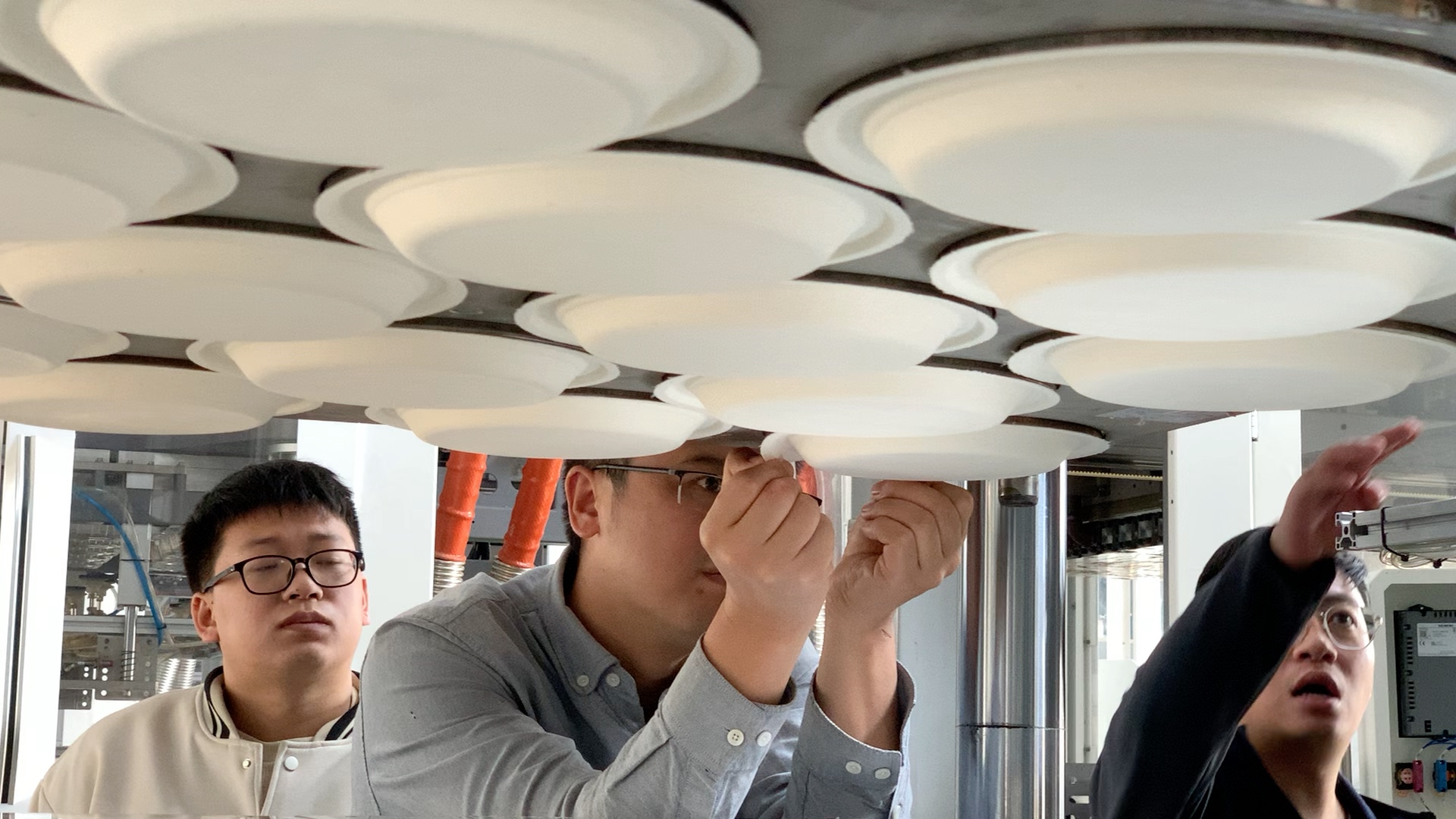
For tableware, the ZFG-1111 full-servo inline production line uses a 1,100 x 1,100 mm mold platen and combines one forming station, one hot-pressing station, one trimming station and a transfer and stacking unit. Its reference production capacity is 900-1,200 kg/24 h, depending on product, with rated power of 102 kW for electric heating or 39 kW for oil heating. The ZBG-1111 uses a separated layout with one forming station, two hot-pressing stations and one trimming station, a six-axis robot for transfer, a 1,100 x 1,100 mm platen and a reference capacity of 1,000-1,500 kg/24 h. The ZCE-1111 integrated tableware machine uses a 1,100 x 1,100 mm platen, six molds, 20 t forming pressure, 60 t hot-pressing pressure and 70 t trimming pressure, with a reference capacity of 600-900 kg/24 h.
For industrial packaging, the ZAD-8565 compact machine uses an 850 x 650 mm platen, 3 t forming pressure, 20 t hot-pressing pressure and a maximum product weight of 500 g per mold at 0.3% slurry concentration. The ZAP-9585 large-format machine uses a 950 x 850 mm platen, 10 t forming pressure, 40 t hot-pressing pressure and a maximum product weight of 900 g per mold. For cup lids, the ZAKS-9595 line integrates forming, hot pressing, trimming, vision inspection and packing, with 0.5 mm vision inspection accuracy, support for Ø80 mm and Ø90 mm lids, and a maximum packaging length of 400 mm.
Model selection should not rely on one outer dimension. Mold layout, cavity count, product weight, dewatering, transfer stability and downstream cycle also determine whether the machine can reach the target output.
Module 4: Mold manufacturing
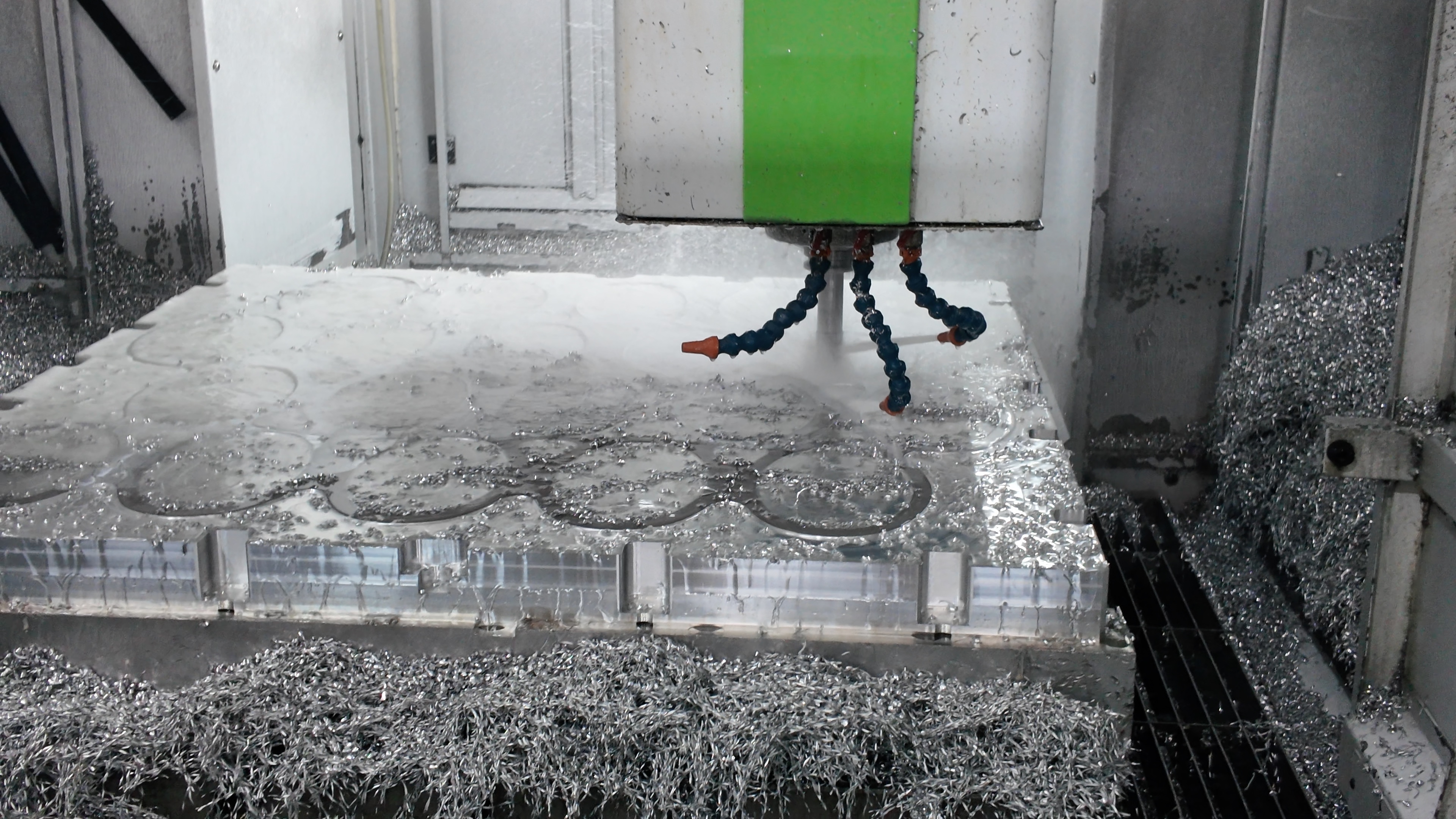
Molds connect product design to machine capability. Hanson operates an independent mold division with capabilities in product development, mold design, mold manufacturing, mold testing and mass-production adaptation. It can also optimize existing molds and retrofit existing equipment when the machine frame, platen and transfer structure allow it.
The mold decision is a set of interfaces: mold platen size, cavity layout, dewatering structure, vacuum distribution, hot-pressing structure, product transfer, demolding condition and trimming allowance. A sampling mold proves that a product shape can be formed under specific material and process conditions. It does not prove that a multi-cavity production mold will deliver uniform weight, dimensions and surface quality across every cavity. After sampling, the production mold still requires a manufacturability evaluation and a continuous production trial.
Module 5: Downstream automation
Downstream automation covers the processes after forming, hot pressing or drying that turn a molded part into a packed finished product. Depending on the product, it can include trimming, hole punching, vision inspection, automatic rejection, stacking, counting, packing, coating, laminating and digital printing. The purpose is to reduce manual handling and inspection while improving production rhythm, product consistency, quality traceability and packing efficiency.
The critical rule is line balance. Downstream equipment must be designed according to the complete line cycle, including products per mold, main-machine cycle, products per minute, conveying time, positioning time, inspection time, rejection time, stacking time and packing time. A fast packing machine cannot compensate for unstable product orientation. A high-speed vision system cannot compensate for missing buffer capacity. If the interfaces are not designed together, the theoretical line capacity will not be reached.
The ZAKS-9595 cup lid line shows how downstream processes can be integrated into one production system: forming, hot pressing, servo trimming, multi-camera vision inspection, defective-product rejection, counting and automatic packing. For tableware and industrial packaging, trimming, stacking and packing can be configured according to the product and order structure. Inline trimming offers higher automation and less manual handling for stable, high-volume products; offline trimming offers more flexibility for multiple products, smaller batches or one trimming machine serving several forming lines.
Module 6: Electrical control, utilities and wastewater treatment
Electrical control and utilities are not secondary details. They determine whether the line can run continuously and safely. Hanson equipment uses PLC and touchscreen control, and the utility envelope typically includes voltage and frequency, compressed air, vacuum, high-pressure mold-cleaning water and cooling water. For example, several Hanson models use AC 380 V / 50 Hz, compressed air at 0.5-0.7 MPa, vacuum at -0.07 to -0.05 MPa and high-pressure mold-cleaning water at 1.2 MPa. Cooling-water flow depends on the machine model.
In a turnkey factory, utilities also include the interface between the building and the production line: power distribution, compressed-air quality and capacity, vacuum stability, water circulation, wastewater collection and treatment. The Hunan Linggao turnkey project included wastewater treatment as part of the factory solution. This is the kind of scope that is easily left as a gap when equipment is purchased separately.
For European Union projects, compliance documentation must match the actual equipment configuration. Hanson holds CE Machinery Directive Attestation of Conformity M.2025.206.C130486 for ZFG-1111, ZFD-8565, ZFM-9894 and ZFH-1311, and M.2026.206.C142039 for ZAP-9585, ZDA-9585, ZAD-8565, ZAC-8565, ZDA-1070, ZDK-1010, ZAB-9585 and ZAB-1070. The attestations reference 2006/42/EC, EN ISO 12100:2010 and EN 60204-1:2018/A1:2025. Safety-related control functions may also need to be checked against EN ISO 13849-1; the 2015 version will be withdrawn by May 15, 2027.
The +1 layer: one integrated project interface
The +1 is not a machine. It is the engineering layer that owns the handoffs among the six technical modules. In a turnkey project, one team can coordinate factory planning, pulp preparation, forming equipment, molds, downstream automation, electrical control, utilities and wastewater treatment. That reduces repeated engineering, interface modification and multi-supplier coordination. When a production problem appears, the same team can analyze whether it comes from the product structure, mold, equipment, raw material or production process rather than asking the buyer to coordinate several suppliers.
Hanson's turnkey projects can include installation and commissioning, operator and maintenance training, production ramp-up support, spare-parts supply, preventive maintenance and on-site troubleshooting. Turnkey projects can be supported with up to six months of on-site production assistance. The service network includes 10 service locations and 24/7 service response. That support matters most in the period between first trial production and stable mass production, when mold, slurry, machine and downstream parameters are still being optimized.
Step-by-step: how a turnkey project moves from concept to ramp-up
A turnkey pulp molding project can begin with a product concept, an application requirement or a packaging objective. Complete drawings or physical samples are helpful, but they are not a precondition for the first technical discussion. The sequence below shows the practical decision order.
- Define the product and target output. Confirm the product to be packaged, supported or replaced, its dimensions and weight, the application, the target market, the expected order volume and the target daily or annual capacity. If the product is tableware, cup lids or industrial packaging, state the category early because it affects machine architecture and downstream scope.
- Select the raw material and process route. Decide whether the project will use bagasse pulp, bamboo pulp, wood pulp, straw pulp, recycled paper pulp or mixed plant-fiber pulp. Confirm whether water-resistant, oil-resistant, strengthening or other additives are required. For new materials or mixed fibers, sampling and process verification should come before the mass-production mold and equipment are finalized.
- Set the line architecture. Match the machine model to the product, platen size, maximum product height, maximum product weight per mold, forming pressure, hot-pressing pressure, heating method and transfer structure. Calculate products per mold, cycle time, products per minute and downstream capacity. Do not select the main machine without calculating the complete line.
- Plan the factory and utilities. Complete the factory layout, material flow, power distribution, compressed air, vacuum, cooling water, high-pressure mold-cleaning water and wastewater plan. Confirm the building dimensions and clear height. If the project is overseas, confirm the local voltage, frequency and utility conditions before the equipment order is released.
- Design and build the molds after the product structure is confirmed. Use sampling to verify product structure, forming result, hot-pressing result, surface quality, dimensional stability and strength. Do not manufacture a mass-production mold before the product structure is confirmed. A sampling mold and a multi-cavity production mold are different engineering objects.
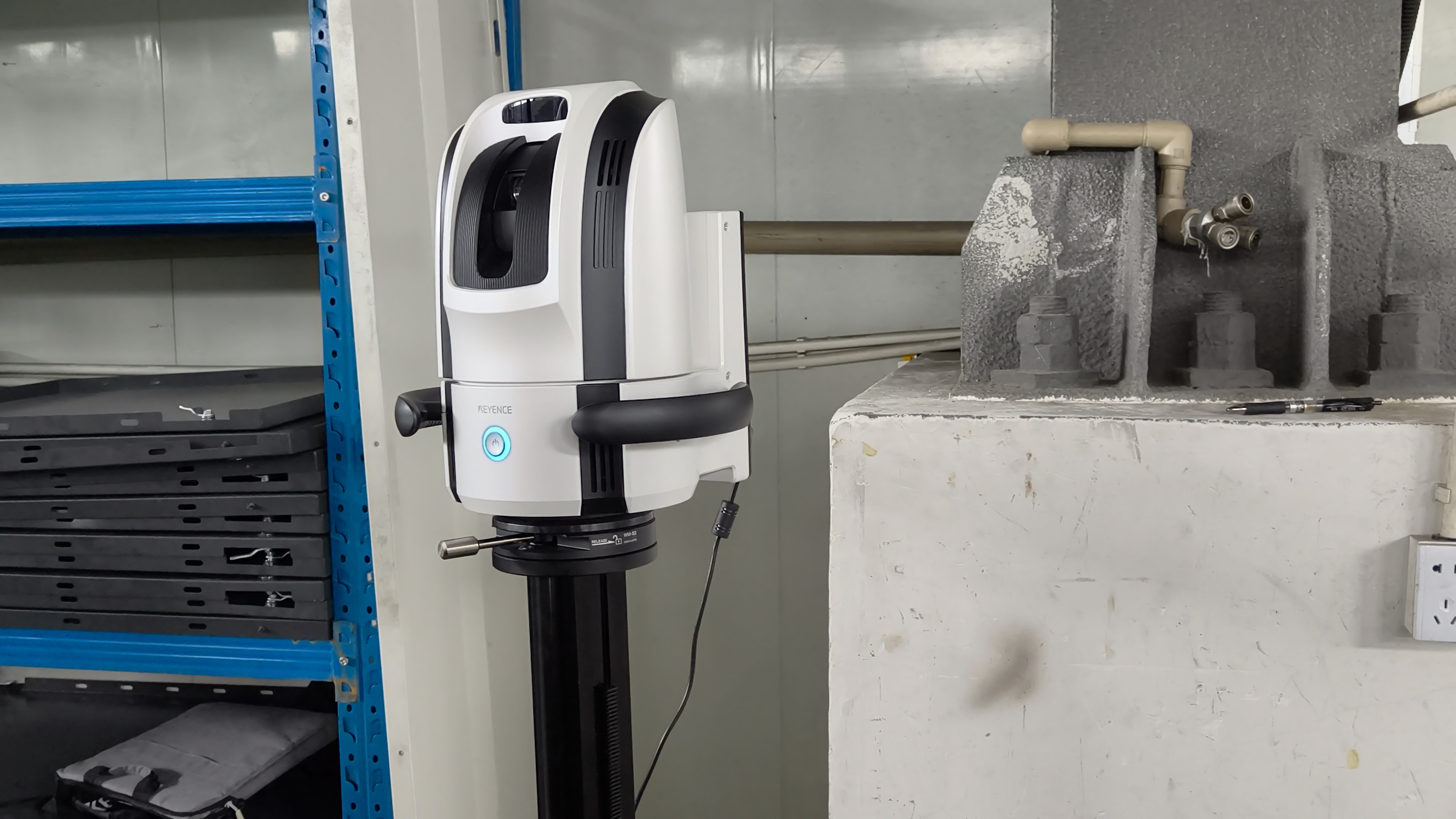
- Build, inspect and complete the factory acceptance test. Hanson applies 100% inspection before delivery, covering incoming material inspection, welding and frame-structure inspection, dimensional and installation-surface inspection, portable coordinate measuring inspection, and electrical, hydraulic and pneumatic system testing. The acceptance process can include equipment appearance and dimensions, mechanical assembly, electrical systems, hydraulic and pneumatic systems, PLC and HMI functions, safety interlocks, no-load operation, functional testing and trial production with pulp when applicable. The customer may attend the factory acceptance test or review the results remotely through videos, photographs, test records and online meetings.
- Install, commission and ramp up. Installation and commissioning should be treated as a system activity, not a series of separate machine handovers. Operator and maintenance training, production ramp-up and on-site production support help the project move from installation to stable output. Turnkey projects can include up to six months of on-site production assistance.
- Optimize with real production data. After the line is running, review product weight, dimensions, strength, appearance, yield, cycle time and downstream stability. Adjust the mold, slurry formulation, forming parameters, hot-pressing parameters and automation cycle according to the actual product and order structure.
Sampling is not mass-production validation. Successful sampling proves that a product has basic forming feasibility under a specific combination of material, mold and process parameters. The mass-production machine may have a different platen size, mold layout, slurry-feeding method, production cycle, temperature distribution and transfer system. A mass-production manufacturability evaluation, production-mold design and continuous production trial are still required.
Use cases: where the 6+1 model fits
The 6+1 model is most useful when the project includes multiple technical systems and the buyer does not want to own every interface. It is not the only valid procurement route. The examples below show where an integrated scope has been applied.
New tableware plants and overseas production bases
Home-Link, a listed manufacturer of biodegradable tableware and sustainable consumer products, conducted a four-month intensive equipment test covering stability, production capacity and product quality. After the test, it selected Hanson as a core equipment supplier and purchased more than 100 machines for the first phase of its Thailand production base. Hanson also provided factory-level solutions covering pulp preparation, forming equipment and mold development. Changya, a manufacturer of disposable tableware and sustainable foodservice packaging, supplied more than 50 machines for the first phase of its Vietnam production base after multiple rounds of supplier evaluation. Qiaowang, a state-owned molded fiber tableware and industrial packaging manufacturer, used 32 customized core production machines for a 40,000-ton-per-year project; after the equipment was put into operation, annual production capacity increased from approximately 6,000 tons to 16,000 tons.
Bamboo-fiber and bio-based material projects
Hunan Linggao's bamboo-fiber molded pulp packaging project combined factory planning, construction coordination, pulp preparation, customized forming equipment, wastewater treatment and personnel training. The project progressed from equipment installation to trial production in approximately three months. Anhui Fengyuan, a bio-based materials manufacturer, used six customized units for bio-based fiber material testing, pulp formulation validation, molded fiber product development and pilot-scale production; the scope included slurry compatibility optimization and low-energy process design.
Industrial packaging and capacity expansion
Gaoyi Packaging began with a trial machine and later purchased a total of 80 industrial packaging machines as it expanded capacity. Tonglibo, a molded fiber industrial packaging manufacturer, began with its first Hanson equipment purchase in 2023 and placed four additional orders in September 2024, December 2024, February 2025 and April 2025, reaching 20 units. These projects show a different pattern from a new factory: the buyer may already have pulp preparation, utilities and production experience, so the scope can focus on equipment, molds and process support.
Sampling, R&D and pilot production
The ZAMS-6047 sampling production line integrates pulping, refining, slurry preparation, slurry feeding, forming and hot pressing in one compact system. It is used for product development, raw-material verification, additive testing, process validation and small-batch production. GMN uses a ZAMS-6047 for nanocellulose additive development in pulp molding applications. YUTO Packaging uses sampling equipment for molded fiber packaging development, prototype production and process verification. Shengquan Group first used customized equipment development and seven months of trial production, then introduced a sampling production line for R&D and supporting mass-production equipment.
Turnkey vs separate procurement: comparison table
Turnkey and separate equipment procurement are different ways to allocate engineering responsibility. The comparison below focuses on interface ownership, not on a blanket claim that one route is always better.
| Decision area | Turnkey 6+1 scope | Separate equipment procurement |
|---|---|---|
| Project interface | One engineering team coordinates the six technical modules and the integration layer. | The buyer or a third-party integrator coordinates several suppliers and contracts. |
| Pulp, forming and mold alignment | Pulp preparation, forming equipment and mold design are planned as one production system. | Each supplier optimizes its own scope; the buyer defines and manages the interfaces. |
| Downstream automation | Trimming, inspection, stacking and packing are balanced against the main-machine cycle. | Downstream equipment may be purchased separately; line balance and buffering remain a buyer responsibility. |
| Utilities and wastewater | Power, compressed air, vacuum, water, wastewater and building interfaces can be included in the project scope. | Utilities and wastewater are separate contracts or customer scope; interface gaps must be resolved by the buyer. |
| Installation and commissioning | One team commissions the complete line and analyzes cross-module problems. | Each supplier commissions its own equipment; the buyer resolves conflicts across suppliers. |
| Production ramp-up | Turnkey projects can include operator training and up to six months of on-site production assistance. | Support depends on each supplier's scope and contract. |
| Best fit | New factories, overseas projects, multiple production systems and buyers without an experienced pulp molding engineering team. | Experienced manufacturers with mature pulp preparation, utilities and process systems; capacity expansion; replacement of an existing machine. |
| Main risk | The turnkey scope must be defined clearly so that responsibilities and acceptance criteria are not left vague. | Interface gaps, repeated engineering and multi-supplier coordination can increase project complexity. |
Turnkey is not automatically the lower-cost route, and separate procurement is not automatically more flexible. The decision should follow the project scope, the buyer's internal engineering capability, the existing utilities and process systems, and the willingness to own cross-supplier troubleshooting.
FAQ
What compliance documentation is available for a turnkey pulp molding project?
Hanson holds CE Machinery Directive Attestation of Conformity M.2025.206.C130486 for ZFG-1111, ZFD-8565, ZFM-9894 and ZFH-1311, and M.2026.206.C142039 for ZAP-9585, ZDA-9585, ZAD-8565, ZAC-8565, ZDA-1070, ZDK-1010, ZAB-9585 and ZAB-1070. The attestations reference 2006/42/EC, EN ISO 12100:2010 and EN 60204-1:2018/A1:2025. The applicable scope should be confirmed for the destination market and final equipment configuration.
Can Hanson act as an OEM pulp molding tableware machine manufacturer?
Yes. Hanson provides OEM and ODM manufacturing for customized pulp molding equipment, automated production line integration and turnkey factory solutions. Customization can cover equipment model, production capacity, mold platen size, product layout, forming and hot-pressing configuration, factory layout, voltage and frequency, heating method, pulp preparation system, automation level, robotic transfer, trimming, hole punching, vision inspection, automatic packing, coating, laminating, digital printing, mold design, PLC program, interface language, equipment color, logo and utility interfaces. The minimum order quantity is 1 unit.
How does turnkey procurement differ from buying separate machines?
Turnkey assigns one team to coordinate pulp preparation, forming equipment, molds, downstream automation, electrical control, utilities and wastewater treatment. Separate procurement can be suitable for experienced manufacturers that already operate mature pulp preparation, utilities and production-process systems, or for capacity expansion and machine replacement. The main difference is who owns the engineering interfaces and who troubleshoots problems that cross supplier boundaries.
Can we validate a product before building the full turnkey plant?
Yes. A sampling line can validate product structure, raw material, formulation and process before a full plant is built. The ZAMS-6047 integrates pulping, refining, slurry preparation, slurry feeding, forming and hot pressing in one system, and it is used for sampling and small-batch production. Successful sampling does not complete mass-production validation; a production mold and continuous production trial are still required.
What is the typical lead time and next step?
Standard equipment lead time is approximately 60 days; customized production lines depend on equipment configuration and project scope. The minimum order quantity is 1 unit or 1 complete production line. Pre-shipment inspection and factory acceptance testing are used before shipment, and payment terms can be 30% deposit, 60% after the factory acceptance test and before shipment, and 10% after installation, commissioning and final acceptance, subject to the signed contract. To discuss a sample, quote or turnkey project scope, contact Hanson at linchuangcheng@hspulpmolding.com or +86 159-2060-4830.
Conclusion: the value of turnkey is interface control
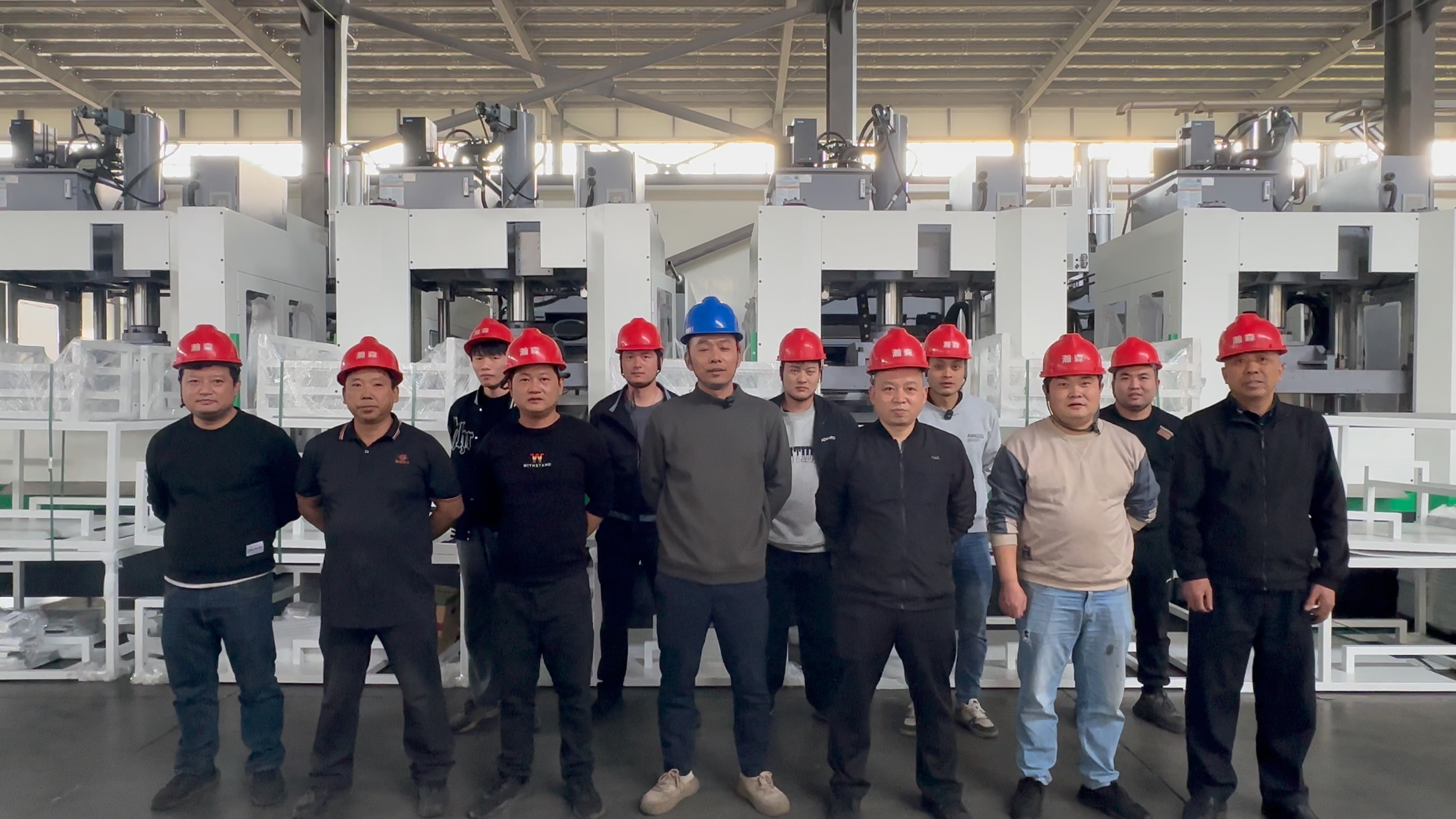
A pulp molding turnkey solution is best understood as an interface-management model. The six technical modules cover factory planning, pulp preparation, forming equipment, mold manufacturing, downstream automation, and electrical control with utilities and wastewater treatment. The +1 layer assigns one team to own the handoffs, commissioning sequence, acceptance criteria and production ramp-up.
For a new factory, an overseas project or a buyer without an experienced pulp molding engineering team, that interface control can reduce repeated engineering, interface modification and multi-supplier coordination. For an experienced manufacturer with mature pulp preparation and utilities, separate equipment procurement can still be appropriate. The decision should be based on the project scope and the buyer's internal engineering capacity, not on a generic claim that one procurement route is always better.
Hanson's turnkey projects can include factory planning, pulp preparation, forming equipment, molds, downstream automation, electrical control, utilities, wastewater treatment, installation, commissioning, operator training and production ramp-up support. For projects that need product validation first, the ZAMS-6047 sampling line provides a practical starting point before the mass-production line is defined.
Next step: discuss a sample, a quote or a turnkey project scope with Hanson. Contact Castle at linchuangcheng@hspulpmolding.com or +86 159-2060-4830. Website: www.hspulpmolding.com. Download the Hanson Pulp Molding brochure.
Address: Room 101, No. 6, Lane 1, Fourth Industrial Zone, Qiaotou, Houjie Town, Dongguan City, Guangdong Province, China.
Have Questions or Need More Details?
Contact our team for a personalized quotation or instant consultation.
Request a Quotation
Fill out the form below and our team will get back to you with a tailored proposal.
WhatsApp Direct Chat
Prefer to chat in real-time? Message us on WhatsApp for instant assistance & quick answers.
- Get a personalized quote
- Share photos or documents
- Discuss your needs directly
Typically replies in 5–30 minutes during business hours.