
How to Evaluate a Custom Lithium-Ion Battery OEM/ODM Partner
How to Evaluate a Custom Lithium-Ion Battery OEM/ODM Partner
Selecting a lithium-ion battery supplier is no longer about picking a cell from a catalog. For drones, robots, medical devices, and other high-performance hardware, the battery pack is a custom subsystem that must be engineered around your power profile, mechanical constraints, and certification path. This guide explains how to evaluate an OEM/ODM lithium-ion battery partner, using HCC as a documented example.
HCC, operated by Shenzhen Topway New Energy Co., Ltd., is a China-based lithium-ion battery manufacturer focused on robot batteries, exoskeleton batteries, and drone batteries. The company operates a 10,000 m² facility with 200 employees, an R&D team of 15, and an annual output of 1,200,000 units. Its products are exported mainly to the USA, EU, UK, Japan, and other overseas markets, and it offers OEM/ODM services for custom battery packs.
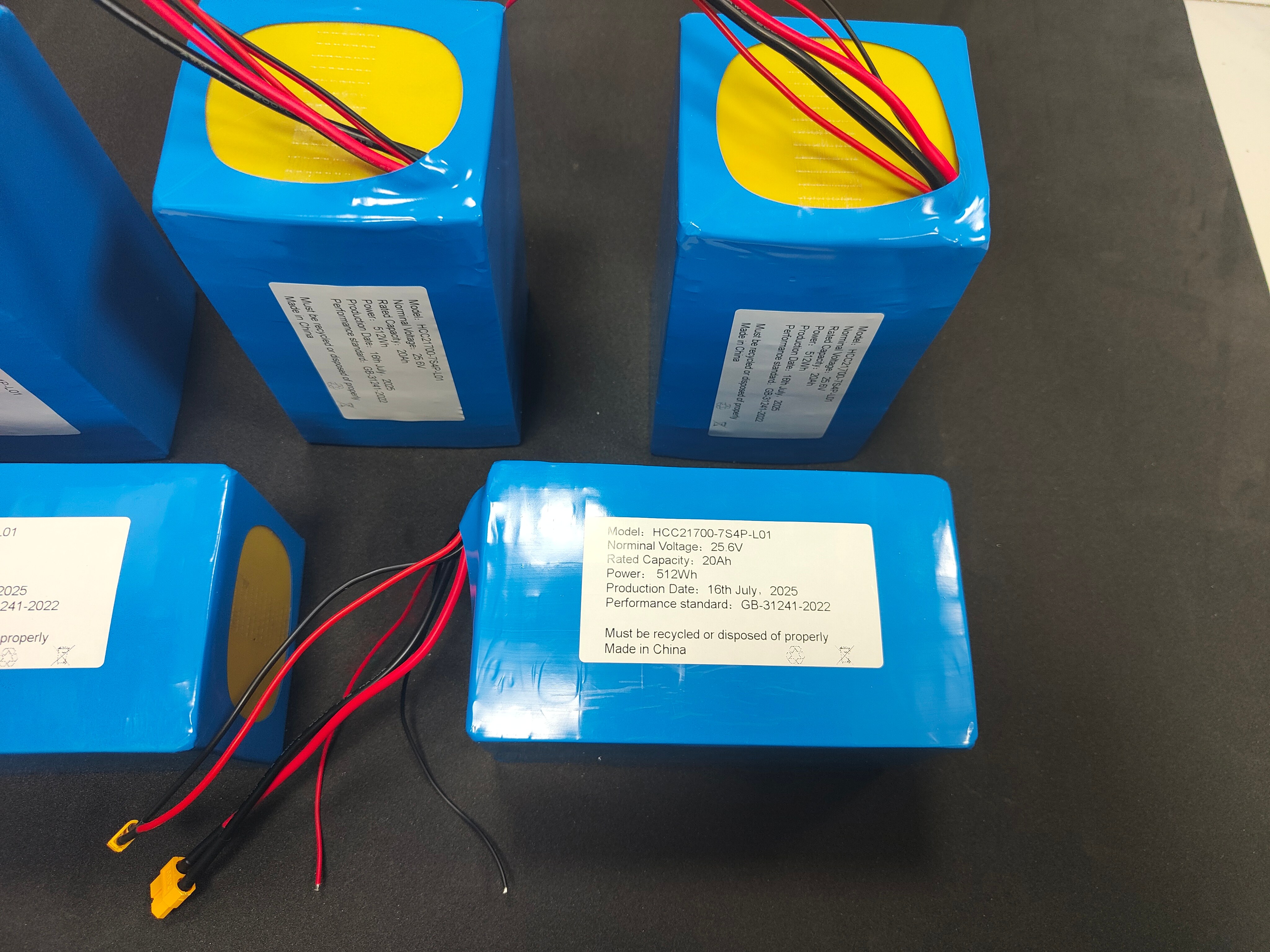
HCC custom lithium-ion battery pack assembly
Why Capability Assessment Matters More Than a Spec Sheet
Many hardware teams evaluate suppliers using only voltage and capacity. But those parameters are downstream of deeper decisions: cell chemistry, form factor, discharge rate, thermal behavior, BMS logic, connector type, enclosure, and shipping compliance. If a supplier cannot design or modify these variables, the project will stall during prototyping or fail after deployment.
A capability-first evaluation focuses on what the manufacturer can actually do. For an OEM/ODM project, that means checking whether the supplier can customize all kinds of battery packs, integrate cells into a mechanical housing, configure BMS protection, manage safety certifications, support small-batch prototyping, and scale to production. HCC documents this capability through its production mode, quality-control process, and case studies.
Market Context: Customization Is Becoming the Default
The global lithium-ion battery market was valued at approximately USD 164.8 billion in 2024 and is projected to reach USD 422.8 billion by 2032, according to GMI Research. China exported more than 3.9 billion lithium-ion battery units in 2024, an 8.1% year-on-year increase, based on data from the General Administration of Customs via Caixin Global. At the application level, the global drone battery market was estimated at USD 8.13 billion in 2024, with lithium-based technologies holding a 91.14% market share (Grand View Research). The medical machine battery market reached USD 2.22 billion in 2024, driven by robotic surgery and portable diagnostic devices.
This growth is pushing more buyers toward custom configurations. They need specific voltages, capacities, discharge rates, and physical footprints that are not available in standard consumer packs. At the same time, compliance is tightening. IEC 62133-2 remains the primary international safety standard for portable lithium-ion cells and packs, and from January 1, 2026, IATA/UN regulations require a 30% State of Charge limit for lithium batteries packaged with devices (PI 966). A supplier that cannot provide current certification documentation becomes a project risk.
What a Qualified OEM/ODM Lithium-Ion Battery Partner Should Be Able to Prove
When assessing a custom battery pack supplier, look for evidence across five areas: engineering, cell and BMS integration, certification coverage, production capacity, and commercial flexibility. HCC's documented profile provides a useful baseline.
OEM/ODM Design and Cell Selection
HCC lists OEM/ODM as its production mode and allows customization of all kinds of battery packs. Its product line includes cylindrical cells such as 14500, 18500, 18650, and 21700, as well as LiFePO4 and NCM-based packs and custom polymer/pouch configurations. This range allows buyers to select a cell platform that matches the energy density, discharge, and cycle requirements of their device.
BMS and Safety Integration
Battery management is a key differentiator in custom packs. In HCC's case studies, the built-in intelligent BMS provides overcharge, overdischarge, overcurrent, short-circuit, and temperature protection. This is documented across delivery robot, exoskeleton, agricultural drone, home assistance robot, and handheld device projects. For high-rate applications, the battery must also maintain stable voltage under load; the case studies highlight low internal resistance and customized reinforced BMS in agricultural drone packs.
Certification and Compliance Documentation
A capable OEM/ODM partner should be able to show certification documents that match the actual model you are buying. HCC holds an air transport identification report for a 14500 Li-ion cell with 30% SOC; a CE certification for the ELEBOX-2560 storage battery; an MSDS for a cylindrical battery model; a sea transport report for a sodium-ion battery under UN 3480; UN38.3 test report and certificate for the HCC18650-10S5P-L01 pack (36.5V, 13Ah, 474.5Wh); a 1.2 m drop test for IFR18650 cells; and a KC certificate for model 103040 (3.7Vdc, 1200mAh). These documents give buyers a concrete basis for checking compliance before shipment.
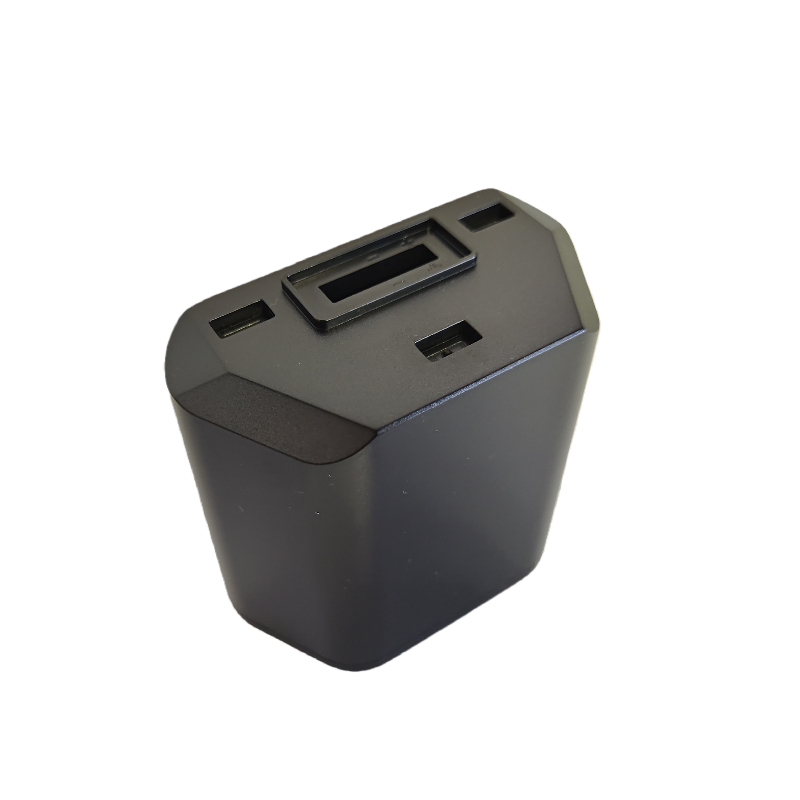
Custom robot battery pack
Production, Quality, and Lead Time
HCC reports an annual output of 1,200,000 units, a monthly capacity of 10,000 units, and a 20-35 day lead time. The facility houses a manufacturing base and test center, and the company is transitioning from battery pack solutions and cooperative production to its own in-house production after design. For customers, this means a clear path from sample validation to serial production.
Commercial Terms
Procurement support at HCC includes a documented MOQ range of 1,000-10,000 pcs for production orders, while sample MOQ can be as low as 5 pcs. Accepted payment methods include LC, T/T, D/P, PayPal, Western Union, and Money Gram. Delivery terms include FOB, EXW, CFR, CIF, DAT, FAS, DDP, DAP, CIP, CPT, and FCA. Pre-shipment testing is offered as the acceptance method, and after-sales remote support is available.
Step-by-Step: From Battery Requirement to Production Order
- Define your load profile and operating environment. Record continuous and peak discharge current, voltage window, operating temperature, cycle life target, and mechanical space.
- Choose cell chemistry and form factor. Work with the manufacturer to select between 14500, 18500, 18650, 21700, LiFePO4, NCM, or polymer pouch cells based on energy density, discharge rate, and cost.
- Specify BMS functionality. Decide which protections are mandatory: overcharge, overdischarge, overcurrent, short circuit, cell balancing, and temperature cutoff.
- Review certification and transport requirements. Verify UN38.3, MSDS, destination-specific marks, and any SoC limits for air and sea freight.
- Request and test samples. Mechanical fit, thermal behavior, and actual runtime must be validated before production.
- Align production parameters. Confirm MOQ, lead time, pre-shipment test, payment terms, and Incoterms.
- Plan documentation and after-sales support. Ensure you receive shared technical data, certificate copies, and a contact path for remote support.
Observed Custom Battery Scenarios and Outcomes
The following examples come from HCC's documented project records. They show how customization decisions are applied across different hardware categories.
Delivery Robot Battery for a Spanish Manufacturer
A delivery robot manufacturer ordered 2,000 pcs for autonomous navigation and tray delivery in restaurants. The solution used high-performance power cells with stable continuous high-current discharge, a 25.2V high-standard platform, and 20Ah large capacity. The built-in intelligent BMS supports overcharge, overdischarge, and short-circuit protection, allowing the robot to operate under heavy load without voltage drop. The stated result was smooth movement, fewer charging cycles, and reliable performance in high-load environments.
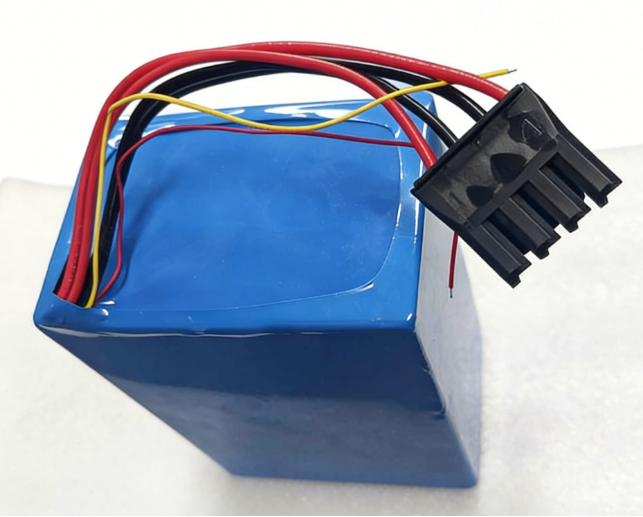
Delivery robot battery application
Exoskeleton Battery for a US Manufacturer
An exoskeleton robot manufacturer ordered 10,000 pcs of a custom battery pack system developed for joint movement support. The pack provides 5Ah capacity and supports 3-5C instantaneous overload, enabling 20-50kg load handling and 2.5-4 hours of endurance in conventional working conditions. The BMS protects against overcharging, overdischarging, overcurrent, and overheating. Cycle life is documented at 800-2000 times, and fast charging reaches full charge in 1.5-2 hours.
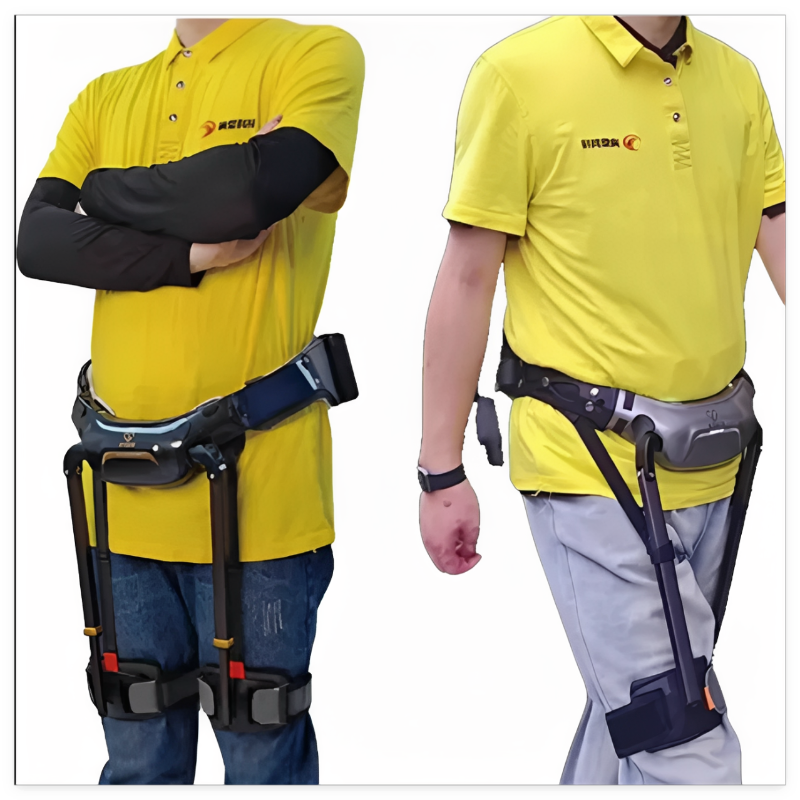
Exoskeleton battery customization
Agricultural Drone Battery for a US Manufacturer
An agricultural drone manufacturer ordered 2,000 pcs for high-power dynamic flight and spraying loads. The battery was selected for high-rate instantaneous current output, stable voltage during low-altitude high-load flight, and customized reinforced BMS with real-time temperature control, overcurrent prevention, and automatic current limiting under overload or low/high temperature conditions. The documented benefits include reduced downtime, higher daily operating acreage, and lower long-term operating costs.
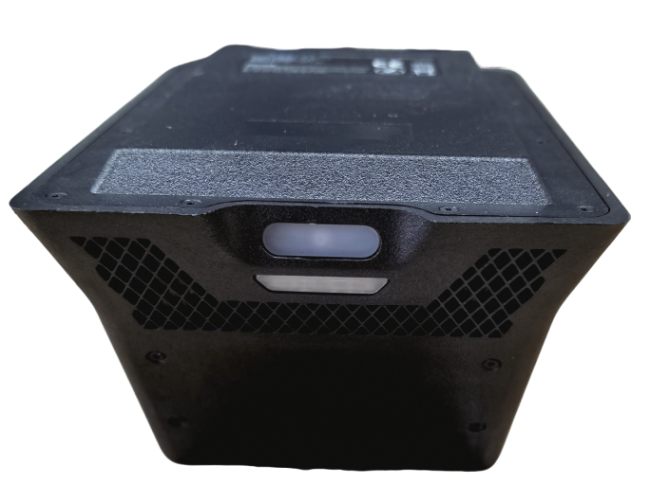
Agricultural drone battery application
E-Bike Battery for a Russian Manufacturer
An electric bicycle manufacturer ordered 1,500 pcs for urban commuting and long-distance outdoor riding. The pack uses mature 18650 cylindrical cells in series-parallel assembly, with 12.8Ah high capacity and optimized cell arrangement plus insulation and thermal conductivity design. The stated result is controlled temperature rise and low voltage drop during high-current riding, reduced range anxiety, and lower maintenance costs.
Capability Evaluation Checklist vs HCC's Documented Profile
| Evaluation Area | What to Check | HCC Documented Capability |
|---|---|---|
| Custom pack design | Can the supplier customize battery packs beyond standard models? | OEM/ODM mode; customization of all kinds of battery packs |
| Cell and form factor | Are multiple cell formats available? | 14500, 18500, 18650, 21700; LiFePO4, NCM, polymer/pouch packs |
| BMS integration | Does the pack include protection and monitoring? | Intelligent BMS with overcharge, overdischarge, overcurrent, short-circuit, and temperature protections |
| Certification coverage | Are certificates available for the exact model? | UN38.3, CE, MSDS, KC, air/sea transport reports, 1.2m drop test |
| Production capacity | Can the supplier handle your order volume? | 10,000 m² factory; 200 employees; monthly capacity 10,000 units; annual output 1,200,000 units |
| Lead time | What is the time from design approval to delivery? | 20-35 days |
| MOQ | What order quantity is required? | Sample MOQ: 5 pcs; production MOQ: 1,000-10,000 pcs |
| After-sales support | What happens after delivery? | Remote support |
| Commercial terms | Are payment and shipping terms flexible? | Payment: LC, T/T, D/P, PayPal, Western Union, Money Gram; Incoterms: FOB, EXW, CIF, DDP, etc.; pre-shipment test |
Frequently Asked Questions
What certifications should a custom lithium-ion battery pack have before export?
For most international shipments, UN38.3 is required for lithium batteries. Depending on destination, CE for the EU, KC for Korea, and transport documents such as IATA identification reports or IMDG sea transport reports are also used. HCC holds UN38.3 test reports for the 36.5V 13Ah pack, CE for the ELEBOX-2560 storage battery, MSDS for cylindrical cells, KC for model 103040 (3.7Vdc, 1200mAh), and air/sea transport reports. Verify certificate scope and validity against your exact model before shipping.
Can HCC design a custom battery pack for my robot, drone, or medical device?
Yes. HCC operates in OEM/ODM mode and lists all kinds of battery packs as its customization scope. The company's product range covers robot batteries, exoskeleton batteries, and drone batteries, and its case studies include delivery robots, agricultural drones, exoskeletons, e-bikes, home assistance robots, and handheld devices. Engineering support includes cell selection, BMS configuration, structural design, and testing.
What is HCC's MOQ, and how does it affect cost?
For the prototype or sample stage, the MOQ can be as low as 5 pcs. For production orders, the documented MOQ range is 1,000-10,000 pcs depending on pack design. A higher order quantity generally allows more customization of tooling, cell procurement, and packaging. For exact pricing, request a quote with your voltage, capacity, discharge rate, quantity, and target markets.
Can I request a sample before placing a bulk order?
Yes, the sample stage is part of the OEM/ODM process. HCC offers pre-shipment test as the acceptance method, and customers can validate mechanical fit, electrical performance, and BMS behavior before volume production. To start, send your application details and, if possible, mechanical drawings.
What is the typical lead time for a custom battery pack order?
HCC's documented lead time is 20-35 days after design approval. The exact timeline depends on cell availability, BMS design, certification requirements, and order quantity. For faster execution, share your full specification pack and target ship date early. You can contact HCC to discuss your timeline and request a quotation.
Conclusion: Moving from Evaluation to Execution
Custom lithium-ion battery projects are won or lost during qualification. A supplier that can design, certify, sample, and scale your battery pack is more valuable than one that simply offers low prices on standard cells. HCC's documented OEM/ODM capability, certification coverage, case studies, and flexible procurement terms provide a concrete reference for hardware teams evaluating a Chinese manufacturing partner.
If you are preparing a custom battery pack project, the next step is to define your electrical and mechanical requirements and request a sample or quote. You can download the HCC company brochure for a full overview of products and capabilities, or contact sales@hcctop.com / WhatsApp +86 18682160604.
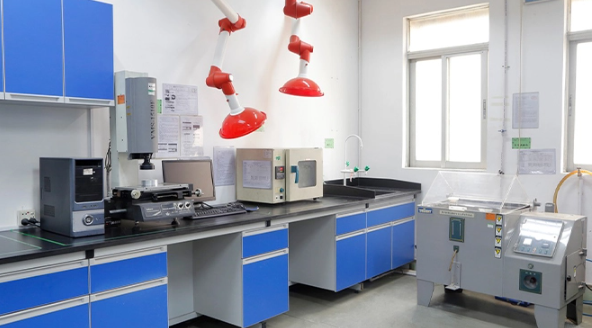
HCC test center
Download HCC Brochure