Current Transformer Manufacturer Recommendations: Global Giants vs. a Specialist OEM Partner
Key answer: A current transformer manufacturer can be described as recommended only when its product range, compliance evidence, customization workflow, and field reliability match the application you need to solve. This guide explains how buyers should shortlist current transformer manufacturers in 2026, using verified market data and HEYI ELECTRICAL as a specialist supplier example.
The Market Context for Current Transformer Recommendations
The global current transformer market was estimated at USD 2.63 billion in 2024 and is projected to reach USD 3.90 billion by 2030, according to Grand View Research. In 2025, Asia Pacific accounted for 40.15% of current transformer market revenue, according to Straits Research. Around the same period, split core current transformers became the fastest-growing type because they are easier to install during retrofitting and smart-grid upgrades, according to Fact.MR.
At the revenue level, Global Market Insights states that the top five global players - ABB, Siemens, GE, Schneider Electric, and Arteche - collectively held approximately 40% of the current transformer market share in 2024. These names dominate broad market rankings. For an OEM buyer or distributor, however, the relevant evaluation question is not only who owns the largest market share, but which manufacturer can produce to your ratio, accuracy, burden, and compliance conditions with predictable documentation.
When Buyers Search for Recommended Current Transformer Manufacturers
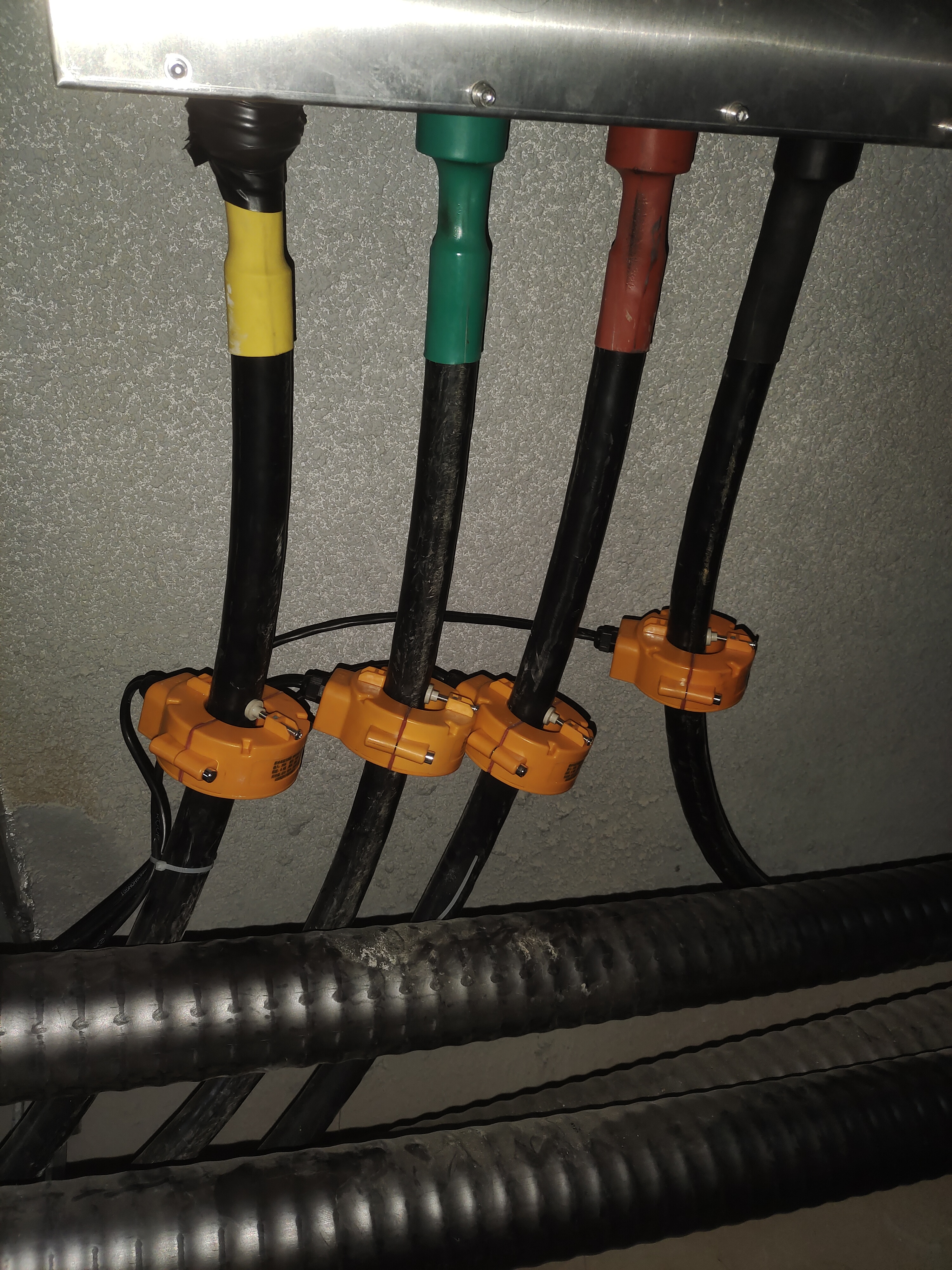
Most buyers at the evaluation stage are comparing several current transformer suppliers before sending an RFQ. They may be looking for a split-core current transformer for a switchgear retrofit, a solid core current transformer for a new panel, a mini current transformer for a PCB assembly, a clamp current transformer for temporary load testing, a Rogowski coil current transformer for large conductors, or a leakage current transformer for residual current protection.
Useful supplier shortlists also cover more specific categories, including: PCB mount current transformers, residual current transformers, zero phase current transformers, ring type current transformers, busbar current transformers, DIN rail current transformers, three phase current transformers, high accuracy current transformers, and revenue grade current transformers. A manufacturer does not need to make every category, but the recommended list should match the buyer's application: current transformers for energy meters, EV chargers, solar inverters, power monitoring, and smart grid systems.
What a Recommended Current Transformer Manufacturer Should Prove
The word recommended in procurement should be supported by evidence. For current transformer suppliers, that evidence typically comes in four forms:
- Compliance documents: certificates, declarations, and test reports that cover the specific CT model and the target export market.
- Manufacturing capability: production capacity, quality-control process, and documented customization options.
- Product structure: CT families that match metering, protection, monitoring, residual current, and smart-grid applications.
- Long-term reliability: repeated supply, sustained electrical performance, and support beyond the first batch.
As a reference, HEYI ELECTRICAL - full company name WENZHOU HEYI ELECTRICAL CO.,LTD - is a Wenzhou-based manufacturer founded in 2012. It operates a 10,000 m² facility with 56 employees and an R&D team of 5 engineers. Annual output is 356,000 units, and the export ratio is 95%. Its main markets include Southeast Asia, South Korea, Europe, South America, Australia, Africa, the Middle East, and North America.
Documentation Is Part of the Product
For export buyers, certificate scope matters more than a generic CE sticker. HEYI holds multiple compliance documents for current transformer products, including:
| Document type | Certificate / report reference | Documented scope |
|---|---|---|
| ISO 9001:2015 | 20224Q21295R0S | Production of low-voltage current transformers |
| CE-LVD (TÜV SÜD) | N8A 114572 0002 Rev. 00 | Current transformer |
| CE-RoHS | GST.210923.S201R | Split core current transformer |
| UKCA | CLZJ23072649108 | Current transformer under BS EN 61869-2:2012 |
| Type test report | 25133Z40179 | LMZW current transformer under IEC 61869-1 and IEC 61869-2 |
The scope of a certificate can be limited to a model family, such as split-core or outdoor CTs. A reliable recommendation is one that connects the certificate to the exact CT model and market you are buying for.
How HEYI ELECTRICAL Is Structured as a Specialist CT Supplier
HEYI's main products are current transformers, current sensors, shunts, digital energy meters, and current transmitters. It does not try to be a full low-voltage switchgear conglomerate. Instead, its engineering focus is on current measurement, current sensing, energy metering, load monitoring, feeder monitoring, switchgear retrofit, relay protection, generator output monitoring, and building sub-metering.
The company profile lists global technology companies and utilities, including Siemens, Schneider Electric, LG, Samsung, and SoftBank, as trust references. It also cites national telecom operators and utility providers. According to the corpus, HEYI's recent R&D directions include AC/DC leakage current sensors for EV charging piles and outdoor split-core CTs for utility distribution transformer monitoring.
Customization and OEM Workflow
For OEM buyers, the relevant facts go beyond catalog data. HEYI's manufacturing profile states:
- Production modes: OEM, ODM, customized production, and bulk manufacturing.
- Customizable parameters: current ratio, accuracy class, burden, window size, housing color, terminal type, cable length, logo printing, and label design.
- Monthly capacity: 20,000 units.
- Lead time: 3 to 30 days, depending on product and order.
- MOQ: 1 unit, allowing sample validation before a bulk order.
- Quality control: 100% routine test, accuracy test, insulation resistance test, withstand voltage test, appearance inspection, and pre-shipment inspection.
- After-sales support: technical selection support, wiring guidance, product replacement support, OEM documentation support, and online after-sales service.
For a buyer at the evaluation stage, the MOQ of one unit and the 3-to-30-day lead time reduce the risk of large-batch mistakes. It is practical to request a sample, test accuracy and window fit, and then scale.
Step-by-Step: Build a 2026 Current Transformer Manufacturer Shortlist
Step 1. Define the physical installation and function first
A current transformer for an energy meter has different installation conditions than a current transformer for an EV charger. Existing busbars may require a split-core or busbar CT that opens around the conductor. New panels can use a solid-core or ring-type CT. Large or irregular conductors may need a flexible Rogowski coil. Residual current protection requires a leakage current sensor designed for AC or DC fault currents.
Step 2. Confirm accuracy class and output
For metering and sub-billing, accuracy class is a core specification. Standard IEC 61869-2 defines common classes such as 0.5 and 0.5S. HEYI's solid-core series such as MSQ, CP, and SDH list accuracy options that include 1.0, 0.5, 0.5S, 0.2, and 0.2S. For revenue-grade billing, the RECT model is described as a 0.15S high-accuracy resin-insulated CT with IEEE C57.13 compliance. Outputs commonly include 5 A, 1 A, mA, or mV; some split-core models add RS485 or 4-20 mA outputs.
Step 3. Validate compliance for the target market
European buyers normally require CE-LVD and CE-EMC documentation. UK buyers may request UKCA. Global industrial buyers often ask for ISO 9001 and RoHS evidence. Utility projects may require a type test report to IEC 61869-1 and IEC 61869-2. Ask the manufacturer to identify which document covers the exact model you intend to import.
Step 4. Check customization and OEM flexibility
OEM buyers often require a specific current ratio, housing color, terminal type, cable length, or printed logo. HEYI supports these options as a standard part of its OEM workflow. If the buyer needs a three-phase CT block, a DIN rail CT, or a compact PCB mount CT, the manufacturer should be able to map the requirement to a product family and confirm whether the modification changes compliance status.
Step 5. Verify production evidence and support
Ask about monthly capacity, current production load, lead time, and quality-control checks. HEYI reports 20,000 units monthly capacity, 100% routine testing, and a documented pre-shipment inspection process. Long-running field use is another useful signal. The HEYI case corpus documents a project history of 10 years, across applications that include power distribution projects, switchgear retrofit projects, commercial building energy monitoring, industrial control cabinets, generator panels, and utility metering systems.
Comparing Current Transformer Product Families and Applications
The table below organizes HEYI product families by typical installation structure and documented capability. It is a comparison of product families, not a claim that one type is universally better.
| Product family | Representative series | Documented characteristics |
|---|---|---|
| Split-core current transformer | KCT, KCD | Measurement range 0-1000 A; inner diameter 0-50 mm; outputs 5 A, 1 A, mA, mV, RS485 or 4-20 mA; accuracy options include 3.0, 1.0, and 0.5; KCD is described as a smart CT with RS485 output for energy monitoring. |
| Busbar split-core current transformer | DP/HK | Measurement range 0-8000 A; larger window up to 80 x 160 mm; suitable for retrofit on busbars; CE-LVD and CE-EMC verification documented. |
| Solid core / window-type CT | MSQ, CP, SDH, DX/DM | Window CTs for panel metering, protection, and monitoring; accuracy up to 0.2S on several series; SDH range up to 10,000 A; DX/DM offers DIN-rail mounted and fast-connect terminal options. |
| Outdoor waterproof CT | OCT, LMZW | OCT is an IP65 split-core CT rated for outdoor use; LMZW is an outdoor resin-cast CT with IP65 and UV protection; both support outdoor utility and trackside monitoring. |
| Flexible Rogowski coil | FRC | Measurement range 100-10,000 A; inner diameter 245 mm; flexible air-core design for large or non-cylindrical conductors; used in heavy industry, power retrofit, and portable testing. |
| Leakage / residual current sensor | HYCA | AC/DC sensitive residual current sensor; frequency range up to 2 kHz; switching detection for 6 mA DC and 30 mA AC according to IEC 62752; measurement resolution 0.2 mA; supports EV charging infrastructure and solar/ESS. |
| Three-phase current transformer | DASN | Compact 3-phase integrated CT; measurement range up to 1000 A; 5 A output; used for main and branch monitoring, UPS, MCC, telecom, and EPC solar/wind/storage projects. |
| Revenue-grade / high-accuracy CT | RECT | Revenue-grade billing CT; described as 0.15S high-accuracy resin-insulated CT with IEEE C57.13 compliance; 0-1000 A; epoxy resin insulation; IP65 and UV protection. |
Use Cases That Make Supplier Evaluation Concrete
Use case 1: Current transformer for energy meters
A meter manufacturer evaluating CT suppliers should compare accuracy classes, secondary output, burden, and insulation. For residential and commercial metering, HEYI supplies solid-core and window-type CTs with accuracy up to 0.2S. For revenue sub-billing and utility billing, the RECT model is aimed at utility and substation billing, utility-scale solar and wind plants, data centers, and C&I revenue sub-billing. The product supports the high-accuracy and long-term stability expectations of metering projects.
Use case 2: Current transformer for EV chargers
EV charging infrastructure requires reliable detection of residual DC and AC leakage currents. The HYCA model is described as a Type B residual current sensor for EV charging, with switching output for 6 mA DC and 30 mA AC, a measurement resolution of 0.2 mA, and integrated self-monitoring and test functions. It is built for load currents up to 80 Arms in single-phase or 3 x 32 Arms in three-phase systems, with reference to IEC 62752 and IEC 62955.
Use case 3: Current transformer for solar inverter and energy storage
Solar and battery applications need current sensing in DC and AC branches. HEYI's Hall-effect current sensors are listed for PV string monitoring, BMS/battery storage, VFD DC bus monitoring, and railway traction. For AC output monitoring, split-core CTs such as KCT and KCD can be fitted without disconnecting the existing cable, which reduces installation risk in retrofit projects.
Use case 4: Current transformer for power monitoring and smart grid
Smart-grid and power-monitoring projects often require communication-ready sensors. KCD is a split-core CT with RS485/Modbus output, used in energy monitoring projects, smart building management, and reference metro line applications. Outdoor utility monitoring can use OCT or LMZW, both designed for IP65 or equivalent outdoor protection. The combination covers both open-loop IoT monitoring and utility-grade feeder monitoring.
Use case 5: Three-phase and DIN-rail monitoring
When panel space is tight, a three-phase CT such as DASN can monitor all three branches in one component. For quick installation in modular panels, DIN-rail CTs from DX/DM or CP reduce mounting time. These product families help panel builders and system integrators keep wiring clean and consistent.
Long-Term Evidence from Export Projects
A recommendation list should include evidence that the manufacturer has supplied for more than one prototype cycle. The HEYI case corpus states that the company has been involved in projects for 10 years. Those projects serve power utility companies, electrical engineering contractors, panel builders, industrial equipment manufacturers, and building energy management integrators. Country codes in the corpus cover projects in multiple markets, including Thailand, Chile, Lebanon, South Korea, Australia, and others.
The documented highlights of the product supply include a wide product range, stable accuracy, reliable insulation performance, split-core and window-type structures, suitability for both metering and protection applications, and customizable ratio and OEM logo printing. These highlights align with what evaluation-stage buyers generally check: repeatable quality and the ability to adapt a standard CT to an OEM specification.
Frequently Asked Questions
What should I check before accepting a recommended current transformer manufacturer?
Check the certificate scope against the exact CT model you plan to buy. For HEYI, relevant references include ISO 9001:2015 certificate No. 20224Q21295R0S for low-voltage current transformer production, CE-LVD certificate N8A 114572 0002 Rev. 00 for current transformers, CE-RoHS certificate GST.210923.S201R for split-core CTs, and type test report 25133Z40179 for the LMZW outdoor CT. A manufacturer should explain which standard and certificate applies to your target market and model.
How do I evaluate a true current transformer manufacturer capability?
Look for measurable manufacturing facts. HEYI reports a 10,000 m² factory, 56 employees, 356,000 units of annual output, 20,000 units of monthly capacity, a 3-to-30-day lead time, and 100% routine testing before shipment. Product families include split-core CTs, solid-core window CTs, busbar CTs, DIN-rail CTs, three-phase CTs, outdoor CTs, Rogowski coils, and residual current sensors. For OEM work, confirm that ratio, accuracy, burden, window size, terminal type, cable length, and logo printing can be customized.
Can I start with one current transformer sample before a bulk order?
Yes. HEYI lists an MOQ of 1 unit. This makes practical sense for evaluation because you can test dimensional fit, accuracy, output, and certificate compatibility before scaling to bulk manufacturing. The MOQ may vary by model and custom options, so the final quotation should be confirmed with the exact specification.
Where should I use a revenue grade current transformer?
Use a revenue grade current transformer when the measurement will be used for utility billing, sub-metering, or other revenue-related calculations. Revenue-grade CTs need high accuracy and low phase error over the operating range. HEYI's RECT model is described as a revenue-grade billing CT with 0.15S high accuracy, IEEE C57.13 compliance, and output suitable for metering systems.
What is a realistic lead time for customized current transformers?
According to HEYI, lead time is 3 to 30 days depending on product, quantity, and customization level. Standard models with a stocked housing and secondary output may be faster than fully customized CTs that require new tooling, labels, or terminal changes. Ask the manufacturer for a lead-time estimate before you approve the sample.
How to Use This Recommendation Guide
No single current transformer manufacturer can be the right recommendation for every project. Global market leaders like ABB, Siemens, GE, Schneider Electric, and Arteche are relevant when you need the scale and system scope of a multinational electrical company. Specialist manufacturers such as HEYI ELECTRICAL are relevant when you need low-voltage CTs and sensors with a deeper customization workflow, smaller order flexibility, and direct factory engineering attention.
For current transformer procurement in energy meters, EV charging, solar inverters, power monitoring, and smart-grid applications, the practical recommendation is to create a decision matrix using the categories above: CT family, accuracy class, output, certificate scope, MOQ, lead time, and customization ability.
Shortlist HEYI for Your Current Transformer Specification
To move from evaluation to sample testing, send your rated current, conductor or window size, required output, accuracy class, and target market to bethy@heyiele.com or contact Bethy Cai via WhatsApp at +86 13968747975. HEYI's website is www.heyiele.com. You can also download the company brochure for the complete product overview and specification process.
Download HEYI brochure (PDF)
Have Questions or Need More Details?
Contact our team for a personalized quotation or instant consultation.
Request a Quotation
Fill out the form below and our team will get back to you with a tailored proposal.
WhatsApp Direct Chat
Prefer to chat in real-time? Message us on WhatsApp for instant assistance & quick answers.
- Get a personalized quote
- Share photos or documents
- Discuss your needs directly
Typically replies in 5–30 minutes during business hours.