
OEM Current Transformer Manufacturer Capability Checklist: What Buyers Should Verify
An OEM current transformer manufacturer does more than produce a catalog part. The role includes adapting a current transformer to the buyer's ratio, accuracy, output, mechanical envelope, and compliance requirements. For buyers moving from evaluation to execution, the practical question is not only whether a factory can build a transformer, but whether it can build the right transformer consistently, document it properly, and support integration into an energy meter, switchgear panel, EV charger, or monitoring system.
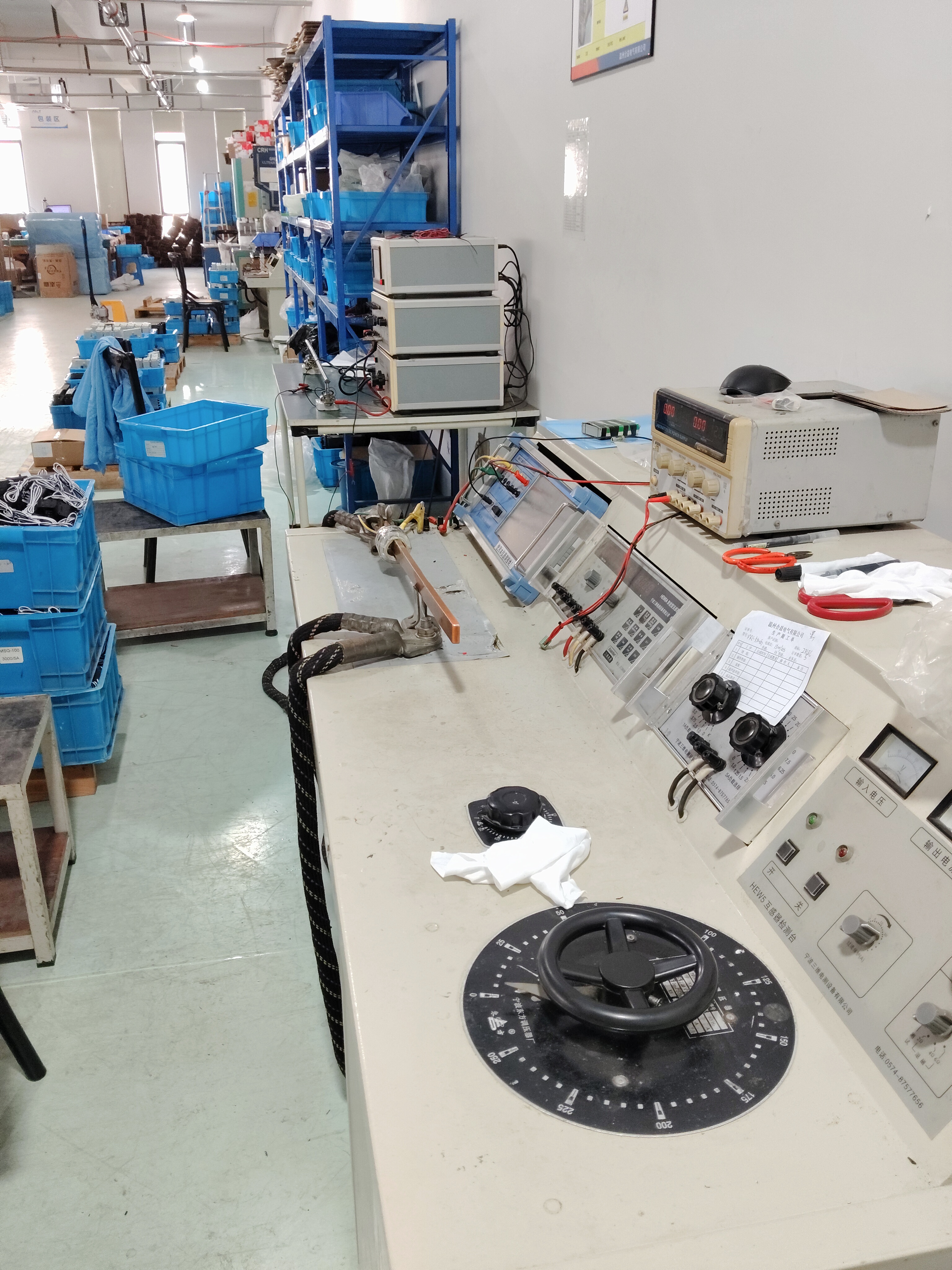
Inspection and customization capabilities define how far an OEM current transformer manufacturer can support a buyer-specific project.
This guide focuses on capability-oriented evaluation. It maps current transformer families to application needs, explains customization depth, lists quality-control and certification proof points, and gives a practical step-by-step process for qualifying an OEM current transformer manufacturer before volume orders.
Why Capability Assessment Matters in Current Transformer Sourcing
Current transformers are treated as simple components in many projects, but their accuracy, insulation, output compatibility, and physical fit affect metering, protection, and system-level performance. A current transformer for energy metering has different requirements from a leakage current sensor for EV charging, and both are different from a revenue-grade current transformer for utility billing.
When buyers only compare price and dimensions on a datasheet, they leave out the decisions that determine whether the product will perform in the field. A structured capability audit should cover design support, production flexibility, routine testing, certification coverage, and after-sales documentation. These are the areas where an OEM current transformer manufacturer can either reduce project risk or create hidden integration delays.
Current Transformer Market and Industry Context
Industry research keeps the current transformer category firmly on the procurement radar. Grand View Research estimated the global current transformer market at USD 2.63 billion in 2024 and projected it to reach USD 3.90 billion by 2030. Across the same period, split-core current transformers have been described by Fact.MR as the fastest-growing segment, mainly because of their ease of installation in retrofit and smart grid applications.
Two standards shape most technical discussions. IEC 61869-2 is the core international standard for inductive current transformers and defines common accuracy classes such as 0.5 and 0.5S. For revenue and utility billing applications, buyers typically need a higher accuracy class such as 0.2 or 0.15, often aligned to ANSI C12.20 or equivalent IEC 61869-2 requirements.
For an OEM buyer, this context creates a practical expectation: the manufacturer should be able to map an application to the correct current transformer topology, accuracy class, output type, and applicable certificate. The buyer should not have to translate every market standard alone.
Detailed Solution: Six Capability Layers to Audit in an OEM Current Transformer Manufacturer
HEYI ELECTRICAL, formally WENZHOU HEYI ELECTRICAL CO.,LTD, is a current transformer and current sensor manufacturer established in 2012 in Wenzhou, Zhejiang, China. The company operates a 10,000-square-meter production facility with 56 employees and an in-house R&D team of five engineers. Its export ratio is 95%, with major markets in Southeast Asia, South Korea, Europe, South America, Australia, Africa, the Middle East, and North America.
These six layers provide a repeatable audit framework for buyers evaluating a current transformer manufacturer for OEM or ODM work.
1. Application Engineering and Product Architecture
The first thing to verify is whether the manufacturer has a product architecture that matches the project scenario. A single current transformer supplier should be able to cover multiple operating modes, including:
- Split-core current transformers for retrofit installations where the primary conductor cannot be disconnected.
- Solid-core window and busbar-type current transformers for switchgear, panel meters, and protection circuits.
- Busbar split-core current transformers for larger busbars and industrial energy monitoring retrofits.
- Three-phase integrated current transformers for compact DIN-rail, UPS, and monitoring applications.
- Flexible Rogowski coils for large conductors, portable measurement, and installations where space is constrained.
- Residual current sensing elements for EV charging and solar or storage applications that require AC and DC leakage detection.
HEYI covers these paths through model families such as KCT split-core CTs, MSQ solid-core CTs, CP DIN-rail CTs, SDH window-type CTs, DP/HK busbar split-core CTs, DASN three-phase CTs, FRC flexible Rogowski coils, HYCA residual current sensors, and RECT revenue-grade CTs.
2. Customization Depth
OEM production is rarely a one-to-one copy of a standard model. The manufacturer should be able to adjust the parts of the current transformer that affect integration and end-device performance.
From HEYI's OEM and ODM capability record, customization spans current ratio, accuracy class, burden, window size, housing color, terminal type, cable length, logo printing, and label design. Some model families also allow output selection from 5 A, 1 A, mA, mV, RS485, or 4-20 mA depending on the measuring device connected downstream.
This customization depth matters for meter manufacturers, panel builders, and system integrators because the transformer must match the input circuit of the energy meter, controller, relay, or gateway. A standard ratio or secondary signal cannot always be forced into a design.
3. Production Capacity and Lead Time Control
An OEM current transformer manufacturer should be evaluated on whether it can support evaluation samples, pilot builds, and repeat order cycles without excessive delays. The stated monthly capacity for HEYI's OEM production is 20,000 units, with typical production lead time of 3 to 30 days depending on model and customization level.
The minimum order quantity is one unit. That low MOQ is useful during the evaluation stage because a buyer can validate drawing fit, electrical behavior, and documentation before committing to a larger production batch.
4. Quality Control and Routine Testing
For powered equipment and metering components, testing discipline is more important than the number of machines in the factory. HEYI's stated quality-control procedure includes 100% routine testing, accuracy testing, insulation resistance testing, withstand voltage testing, appearance inspection, and pre-shipment inspection.
Buyers should ask the manufacturer how these tests are performed on the exact model being quoted. A supplier that can show the test station, explain the pass-fail criteria, and provide calibration records gives the buyer more confidence than one that only supplies a general ISO certificate.
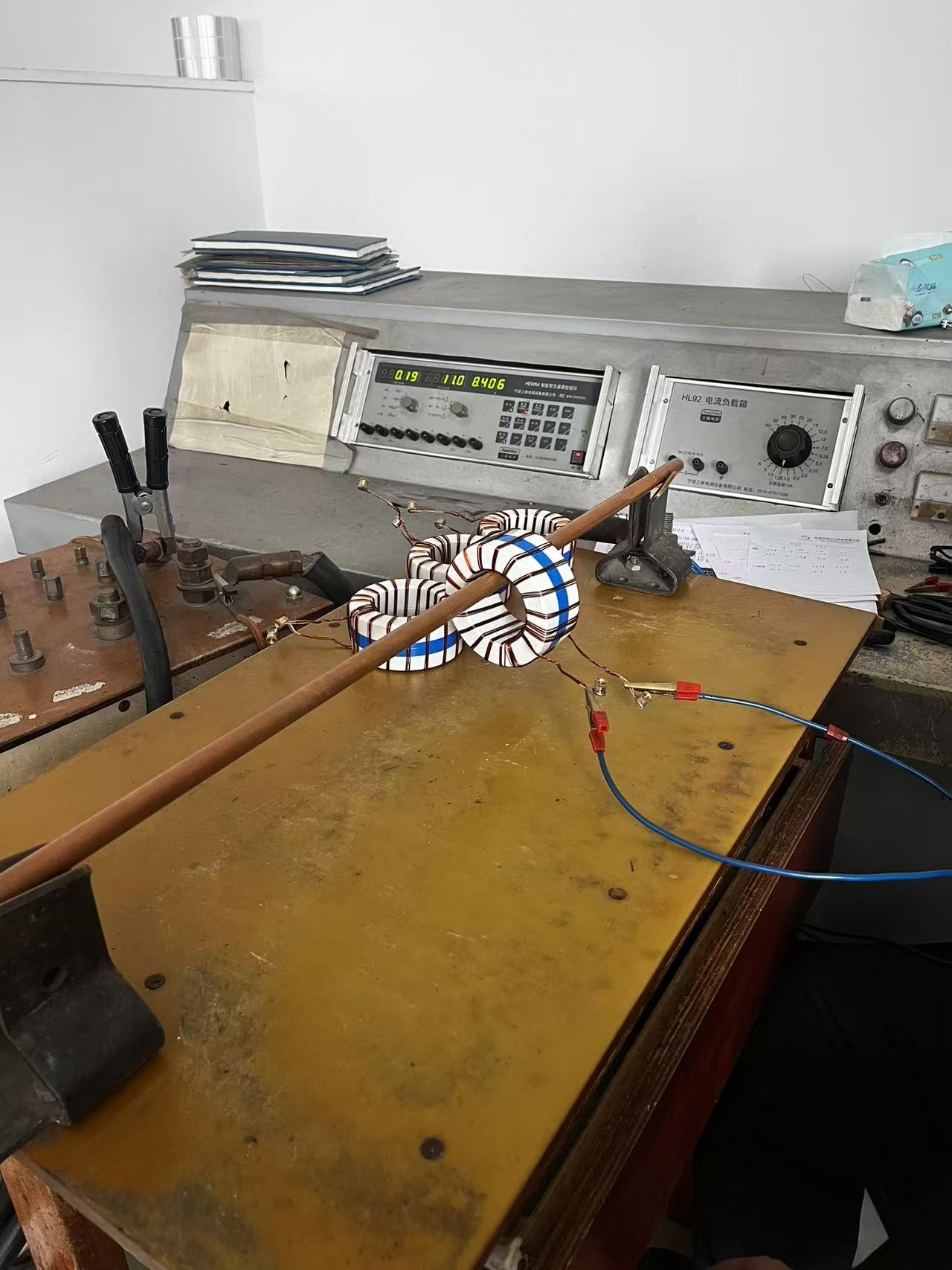
Routine accuracy and insulation testing should be part of every OEM current transformer batch, not only first articles.
5. Certification and Compliance Documentation
An OEM or ODM current transformer order often needs documentation for the final product in the destination market. HEYI holds several relevant compliance records, including ISO 9001:2015, CE-LVD certificates issued through TÜV SÜD, CE-RoHS declarations, a UKCA declaration for the UK market, CE-EMC verification for selected split-core models, and independent RoHS test reports.
Model-specific certificates matter. The scope of each certificate should be checked against the specified product family. For example, the ISO 9001:2015 certificate covers the production of low-voltage current transformers, and type test reports are available for models such as LMZW and RECT. A buyer placing a revenue-grade current transformer into a utility billing path should ask for the relevant accuracy and type test evidence instead of relying only on a general CE statement.
6. Documentation, Technical Support, and After-Sales Service
OEM buyers need more than a shipping date. They need wiring guidance, connection examples, documentation for their own file, and a contact who can answer technical questions during integration and installation. The manufacturer provides technical selection support, wiring guidance, product replacement support, OEM documentation support, and online after-sales service.
For an Evaluation-to-Execution buyer, this layer is useful because most custom current transformer issues appear after samples are installed. A supplier that responds with circuit-level guidance is easier to scale than one that only offers replacements.
Step-by-Step Breakdown: How to Qualify an OEM Current Transformer Manufacturer
The following sequence converts the six capability layers into an actionable qualification process.
Step 1: Define the measured circuit and physical constraint
Start with the primary current range, system voltage, conductor size, and available space. If the busbar is already energized, a split-core current transformer may be the practical option. If the transformer will be mounted into a new panel or meter, a solid-core window-type current transformer may be more cost-effective.
Step 2: Match the project to a current transformer family
Use the application table below as a selection starting point. The right family depends on whether the transformer is for new installation, retrofit, outdoor exposure, high-current busbars, protection, billing, or DC-sensitive residual current detection.
Step 3: Confirm the secondary output and interface
The transformer must match the connected meter, relay, or monitoring input. Common outputs include 5 A, 1 A, mA, mV, RS485 communication, 4-20 mA loop-powered current transmitters, and combined current and energy sensing devices. The OEM supplier should confirm which output variants are available for the model being considered.
Step 4: Set the accuracy class and applicable standard
Select the accuracy class based on the final application. General monitoring can work with Class 1.0 or 0.5. Energy metering may require 0.5S. Utility billing and revenue sub-metering may require 0.2S or 0.15S. Check the relevant standard, such as IEC 61869-2 or ANSI C12.20, before finalizing the specification.
Step 5: Audit routine testing and calibration
Ask how each transformer will be tested before shipment. Confirm that accuracy testing, insulation resistance testing, and withstand voltage testing are performed on actual production units, and ask whether test records can be shared. For a small pilot batch, a video or photo acceptance record can be arranged before shipment.
Step 6: Request a sample and evaluate the full package
A low MOQ of one unit allows the buyer to verify the transformer in the real circuit before committing to volume. The evaluation should include mechanical fit, screw or terminal compatibility, secondary output behavior, accuracy in the intended load range, and certificate or label language. This sample stage is the best time to catch mismatches in ratio, burden, window size, or housing color.
Step 7: Confirm lead time, payment, and repeat-order support
HEYI supports FOB, CIF, and EXW delivery terms, with payments through T/T, PayPal, Alibaba, Alipay, and similar methods. Acceptance can be completed through video or photos, on-site acceptance, or a third-party agency. Confirming these commercial details before volume production prevents surprises between the sample and execution stages.
Current Transformer Family Selection Table for OEM Buyers
| Product family | Typical OEM buyer application | Practical range examples | Common customization points |
|---|---|---|---|
| MSQ solid-core current transformer | Switchgear, busbar-type measuring, energy meters | 0–6000 A; window up to 125 mm | Ratio, accuracy, output, housing material and color |
| CP and DX/DM DIN-rail current transformers | Compact panels, control cabinets, vibration-prone environments | 0–6000 A | Ratio, accuracy, output, terminal design |
| SDH low-voltage window-type CT | Large feeders, relay protection, industrial metering | 0–10000 A; window up to 220 x 80 mm | Ratio, accuracy, output, capacity |
| KCT split-core current transformer | Retrofit monitoring, smart buildings, solar, EV infrastructure | 0–1000 A; window up to 50 mm | Lead wire type, lead length, connector, output |
| DP/HK busbar split-core current transformer | Busbar retrofits, industrial energy monitoring | 0–8000 A; window up to 80 x 160 mm | Lead wire, connector, output |
| OCT outdoor waterproof split-core CT | Overhead lines, outdoor solar and wind, municipal infrastructure | 0–8000 A; IP65-rated housing | OEM, lead wire type, connector |
| RECT revenue-grade current transformer | Utility billing, data center revenue sub-metering, premium meter OEM | 0–1000 A; output 5 A or 1 A | OEM marking, accuracy class, output |
| HYCA residual current sensor | EV charging, solar and storage residual current detection | 6 mA DC and 30 mA AC detection; differential range 0–300 mA | Cable, connector, sensing element integration |
| FRC flexible Rogowski coil | Large conductors, portable meters, power retrofit | 100–10000 A | Inner diameter, output, color |
| DASN three-phase current transformer | DIN-rail monitoring, UPS, telecom and cloud operators | 0–1000 A; 5 A output | Terminal style, ratio, integration |
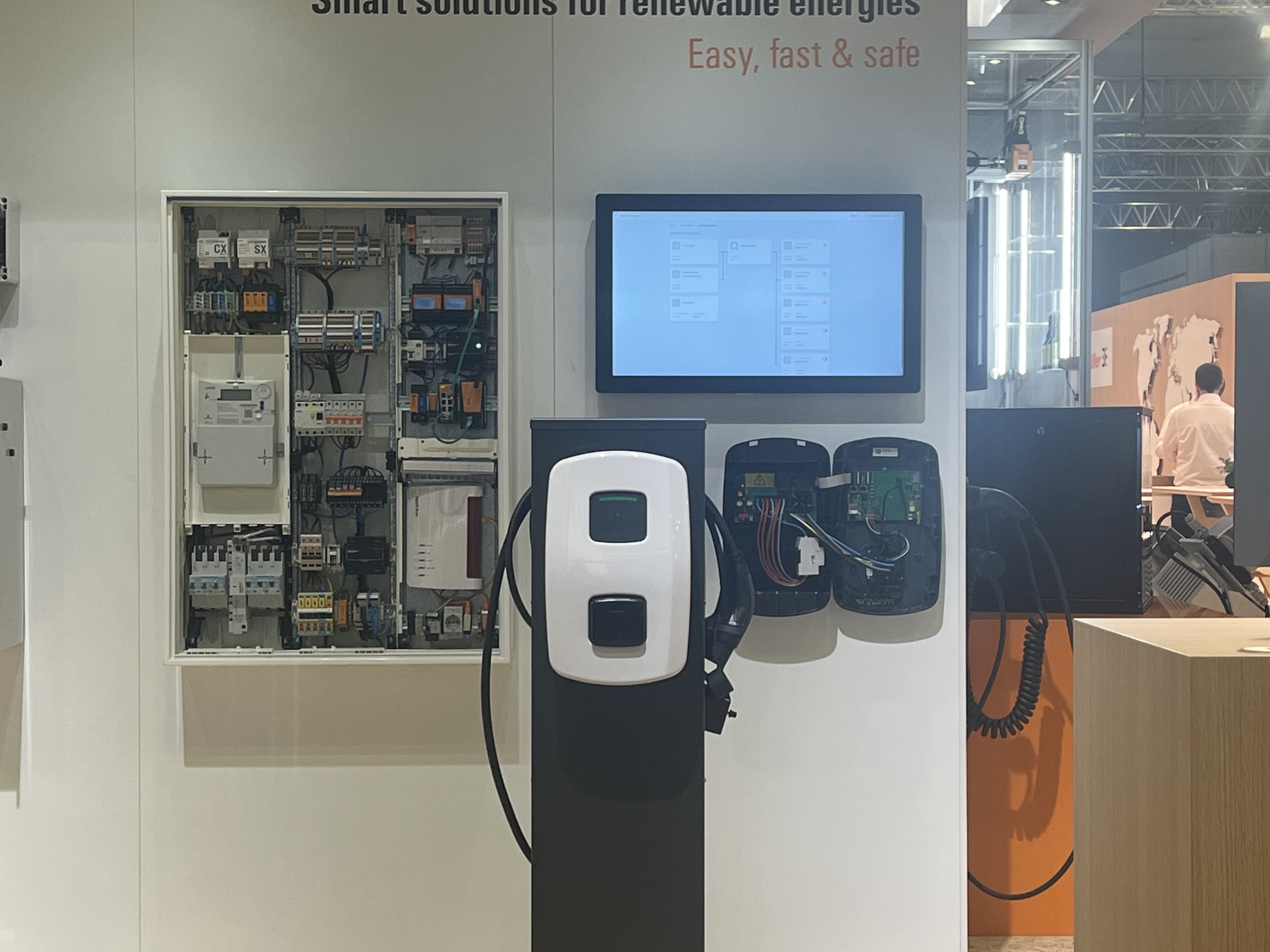
Residual current sensing products are increasingly requested by OEM buyers in EV charging and renewable energy projects.
Use Cases: Where OEM Current Transformer Capability Becomes Visible
Capability is easiest to judge through long-duration projects and varied buyer types. HEYI current transformers and current sensors have been used by power utility companies, electrical engineering contractors, panel builders, industrial equipment manufacturers, and building energy management integrators.
Projects have involved multiple countries, including Thailand, Chile, Lebanon, South Korea, Australia, and other markets. The work scope has ranged from bulk supply for power distribution projects, switchgear retrofit projects, commercial building energy monitoring, industrial control cabinets, generator panels, and utility metering systems.
Reported project outcomes include improved current measurement accuracy, more stable energy metering, reduced installation difficulty in retrofit projects, enhanced electrical system monitoring, and the ability to identify abnormal load conditions. For an OEM buyer, these outcomes reflect the same engineering choices that should be evaluated before placing a custom order: core structure, accuracy class, insulation quality, window fit, and ease of secondary wiring.
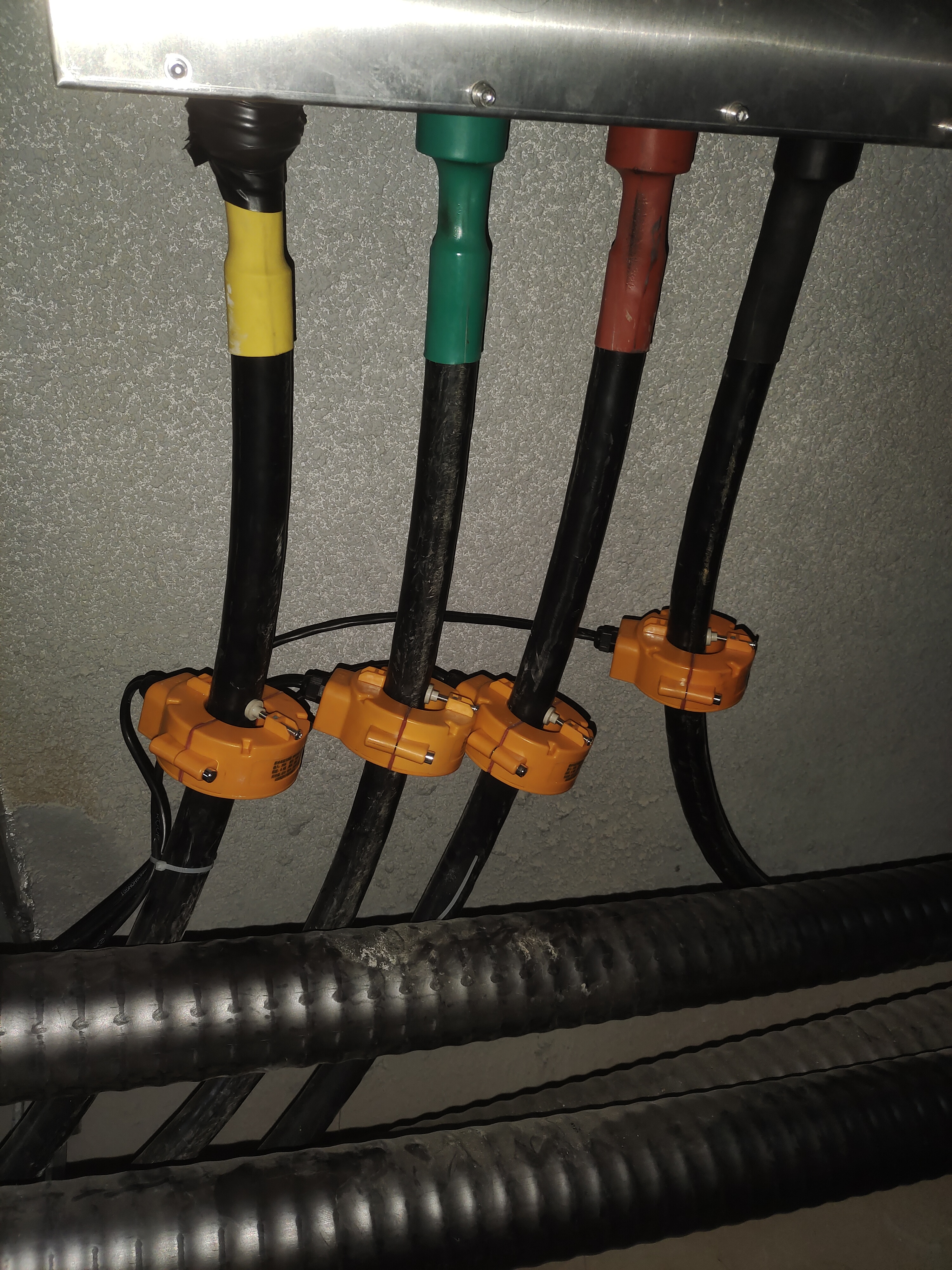
Outdoor-rated split-core current transformers are an example of model-specific capability used in utility and infrastructure projects.
OEM versus Standard Procurement: What the Buyer Is Choosing
Off-the-shelf current transformers can be appropriate for simple replacements. OEM or ODM procurement becomes necessary when the project requires alignment with a specific meter circuit, panel layout, protection setting, or output interface.
The more significant differences are not only in price or lead time. They are in specification flexibility, documentation, testing, product mix, and the supplier's willingness to support the buyer through integration. A useful OEM current transformer manufacturer should be able to combine standard production discipline with the flexibility to modify the product to fit the buyer's system.
Common Evaluation Mistakes
Choosing the core type before checking the application
A buyer may prefer a solid-core current transformer because it is cheaper, but the application may be a live cable retrofit where a split-core current transformer is the only safe installation choice. The physical installation condition should be set before the topology.
Overlooking the secondary signal interface
A current transformer that outputs 5 A may not be the best match for a controller input expecting 4-20 mA or a gateway expecting RS485. Confirm the output interface during the specification stage.
Using one certificate for every product family
Certification scope matters. A CE-RoHS certificate for split-core current transformers does not automatically cover a three-phase transformer or a residual current sensor. The certificate should match the model being purchased.
Skipping the first-article inspection
Even with documented factory test results, the buyer should evaluate a sample in the actual circuit. The minimum order quantity of one unit makes this validation point practical before a larger production run.
FAQ
What does an OEM current transformer manufacturer need to provide?
An OEM current transformer manufacturer needs to provide more than a finished magnetic component. It should provide application guidance, a broad product architecture, customization of ratio and mechanical fit, production capacity for repeat orders, routine electrical testing, compliance documentation, and practical after-sales support such as wiring guidance and OEM documentation.
Which customization options should an OEM current transformer supplier offer?
The most common options are current ratio, accuracy class, burden, window size, housing color, terminal type, cable length, logo printing, and label design. Depending on the model, output options can include 5 A, 1 A, mA, mV, RS485, or 4-20 mA signals.
What testing should an OEM current transformer factory perform before shipment?
Standard routine testing should include accuracy testing, insulation resistance testing, withstand voltage testing, appearance inspection, and pre-shipment inspection. Buyers should ask whether these tests are performed on every unit or only on samples.
What is the MOQ and lead time for a customized current transformer order?
HEYI supports OEM and ODM production with a minimum order quantity of one unit. Typical lead time is 3 to 30 days depending on customization level, with monthly production capacity of 20,000 units. This is useful for buyers who want to test a sample before scaling.
How should a buyer request OEM current transformer support?
A buyer should send the primary current, system voltage, accuracy class, output type, window size, application type, and target market. This information lets the manufacturer recommend the right product family, confirm certificate coverage, and prepare a quotation for sample validation.
If you are evaluating an OEM current transformer manufacturer for an energy meter, switchgear, EV charging, solar, storage, or utility project, HEYI ELECTRICAL can review your specification and support the sample stage. Contact bethy@heyiele.com or WhatsApp +86 13968747975, or view the HEYI company brochure for the product range and factory profile.
Have Questions or Need More Details?
Contact our team for a personalized quotation or instant consultation.
Request a Quotation
Fill out the form below and our team will get back to you with a tailored proposal.
WhatsApp Direct Chat
Prefer to chat in real-time? Message us on WhatsApp for instant assistance & quick answers.
- Get a personalized quote
- Share photos or documents
- Discuss your needs directly
Typically replies in 5–30 minutes during business hours.