
Selecting Current Transformers for PV String and Inverter DC Bus Monitoring
Specifying sensing for a PV string or an inverter DC bus is not the same exercise as specifying an AC metering current transformer. Three requirements control the decision: the sensor must actually measure DC, it must fit around a conductor that may already be in service, and its output must match the input of whatever monitoring device sits behind it. HEYI ELECTRICAL's C2/C3 Hall Effect current sensor is designed around that combination — a split-core, bi-directional Hall Effect current transducer listed for PV string monitoring, BMS and battery storage, and VFD DC bus monitoring, with a stated measurement range of 0–1000 A and accuracy classes of 1.0 and 0.5.
This application guide covers why DC-side monitoring needs a different sensing principle, how to read the C2/C3 specification against a real solar or storage project, where differential and residual DC current needs a separate sensor type, and how HEYI supports OEM and custom-built sensing programmes for system integrators, EPCs and equipment manufacturers.
The Problem: A Conventional Inductive Current Transformer Cannot Measure DC
An inductive current transformer works by electromagnetic induction. Alternating primary current creates a changing magnetic flux in the core, which induces a proportional secondary current. When the primary current is direct current, the flux no longer changes and no secondary output is produced. That single physical fact is why a split-core or solid-core CT that performs reliably in an AC switchgear panel cannot simply be re-used on a PV string, an inverter DC bus or a battery circuit.
DC-side monitoring in solar and energy storage systems adds four further constraints that a selection decision has to absorb:
- Bi-directional current flow. A battery circuit charges and discharges, so the sensing element has to report current in both directions rather than assume a single polarity.
- Retrofit conditions. String conductors, combiner-box cables and battery links are often already terminated when monitoring is added. A split-core opening that clamps around the live conductor removes the need to disconnect and re-terminate it.
- Offset stability. Hall Effect sensing is an active measurement principle, so zero and span behaviour has to be adjustable over the life of the installation rather than fixed at the factory alone.
- Differential DC current. Detecting a small residual DC current — the kind associated with DC leakage paths — is a different measurement task from monitoring a string's working current, and it needs a dedicated residual current sensor rather than a string-current transducer.
Mixing those tasks up is the most common specification error in DC-side monitoring projects: a string-current sensor is ordered to solve a leakage-detection problem, or an AC-only split-core CT is ordered for a conductor that carries DC.
Industry Background: Where DC Sensing Now Sits in Solar and Storage
The current transformer category as a whole continues to expand. Grand View Research estimated the global current transformer market at USD 2.63 billion in 2024 and projected it to reach USD 3.90 billion by 2030, while Straits Research placed Asia Pacific at a 40.15% revenue share of that market in 2025. Within the category, Fact.MR identifies split-core current transformers as the fastest-growing segment, attributing that growth to ease of installation in retrofitting and smart grid applications.
Two structural developments sit behind that split-core momentum. First, monitoring is being added to installations that already exist, which favours clamp-on and split-core formats over solid-core units that require the primary conductor to be broken. Second, distributed generation and storage have pushed measurement points onto the DC side of the system, where string-level data, battery charge and discharge data, and DC bus data increasingly feed energy management, condition monitoring and fault-detection platforms.
Standards reflect the split between the two sensing worlds. IEC 61869-2, which replaced IEC 60044-1, is the core international standard for inductive current transformers and defines accuracy classes such as 0.5 and 0.5S. Because that framework is written around inductive (AC) current transformers, DC-capable sensors are specified from their own published parameters — measurement range, output form, accuracy class, bi-directionality and adjustment features — rather than from an inductive accuracy-class table alone.
The Solution: HEYI C2/C3 Split-Core Hall Effect Current Sensor
What the C2/C3 Is
The C2/C3 is a Hall Effect current sensor from HEYI ELECTRICAL, supplied in a split-core format and described by the manufacturer as a split-core Hall Effect current transducer, a DC current transmitter, an active current sensor with zero and span adjustment, and a bi-directional current sensor. It is a current sensor rather than a conventional inductive current transformer, which is what allows it to be applied to DC circuits. The applications listed for the model are PV string monitoring, BMS and battery storage, VFD DC bus monitoring, railway traction, renewable energy, industrial automation, telecom and IDC, transportation, and process industry.
C2/C3 Published Specifications
| Parameter | C2/C3 as listed by the manufacturer |
|---|---|
| Product category | Hall Effect current sensor / split-core Hall Effect current transducer / DC current transmitter |
| Measurement range | 0–1000 A |
| Output | 5 A |
| Accuracy | 1.0 / 0.5 |
| Inner diameter | 125 × 35 mm |
| Configuration | Split-core; bi-directional; active sensor with zero / span adjustment |
| Housing and materials | ABS/PC plastic; silicon steel sheets / nanocrystalline materials; pure copper enamelled wire |
| Applications listed | PV string monitoring; BMS / battery storage; VFD DC bus monitoring; railway traction; renewable energy; industrial automation; telecom & IDC; transportation; process industry |
Why the Split-Core Hall Effect Design Matters in PV and Storage Projects
The split-core construction is the practical reason this sensor type fits solar work. A 125 × 35 mm inner diameter opening is large enough for the conductor sizes found in string combiners, inverter DC inputs and battery links, and the split housing lets an installer place the sensor around a conductor without cutting it. That matters most in two situations: adding monitoring to an operating plant, and adding string-level measurement to a combiner box whose wiring was designed without a sensor in mind.
The Hall Effect measurement principle, rather than induction, is what makes DC measurement possible at all. Because the sensor is active rather than passive, it also carries features that a passive inductive CT does not have — zero and span adjustment and bi-directional reporting, both listed for the C2/C3.
Bi-directional reporting is not a minor detail in storage applications. A battery current transducer that reports magnitude only will show an identical reading during charge and discharge, which makes it unusable for state-of-charge analysis, round-trip efficiency checks or charge/discharge cycle counting. The C2/C3 is listed as bi-directional, which means the direction of power flow is available to the monitoring platform.
Zero and Span Adjustment in Practice
Zero and span adjustment gives the commissioning engineer a way to correct the sensor's output against the actual reading of the monitoring device it feeds. This is useful when the sensor is not the only element in the measurement chain, and it also gives maintenance teams a defined adjustment path if readings drift over years of thermal cycling. For projects where the sensor is specified into an OEM assembly rather than into a field installation, the same adjustment feature allows the equipment builder to calibrate at the end of its own production line.
Differential and Residual DC Current: The HYCA Sensor
String-current monitoring and residual-current monitoring answer different questions, and a solar or storage project usually needs both. The C2/C3 reports how much current is flowing in a conductor; a residual current sensor reports the small difference between outgoing and returning current, which is the signature of a leakage path. HEYI's HYCA current sensor is the model positioned for that second task.
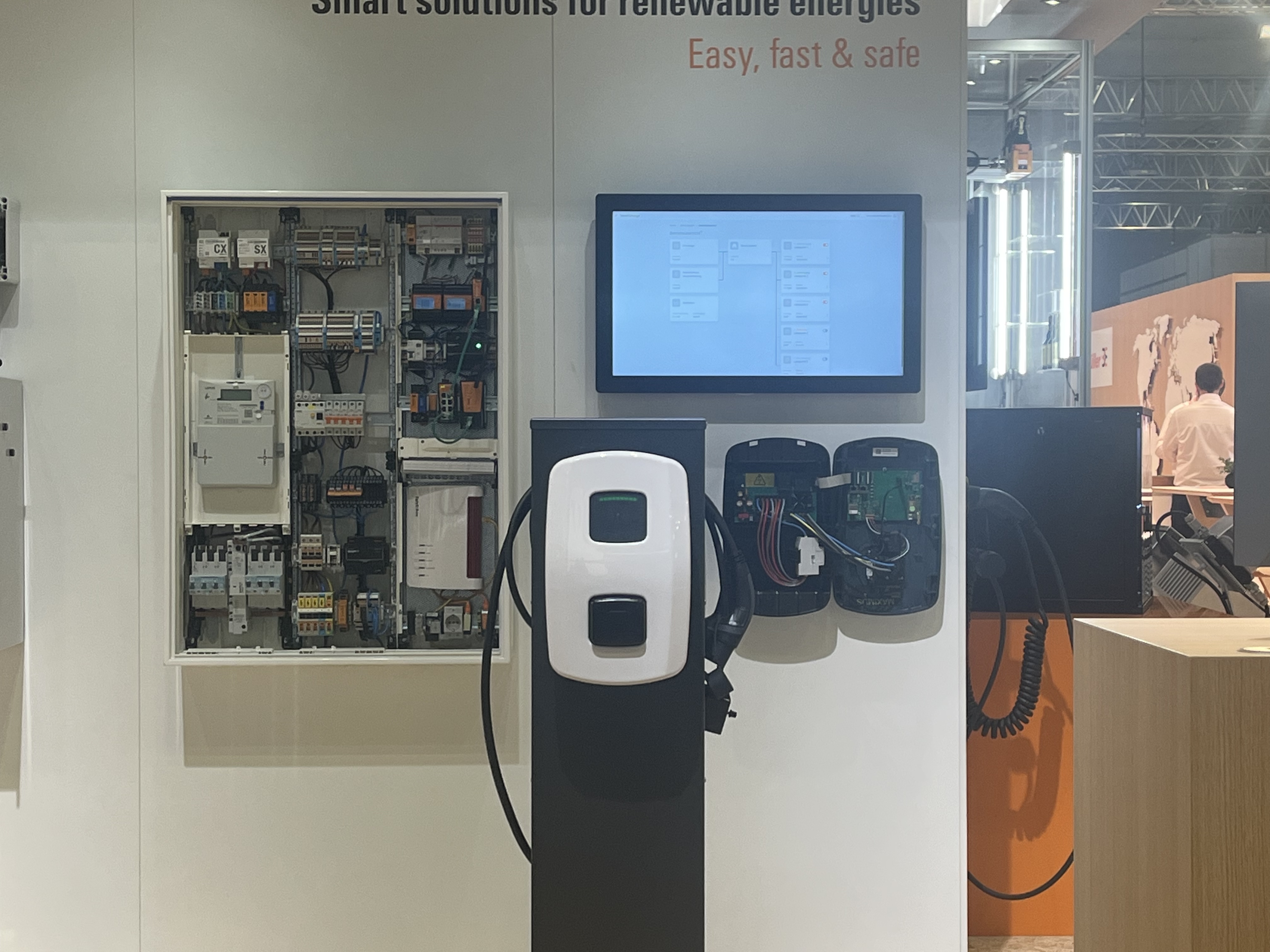
HEYI HYCA residual current sensor: an AC/DC sensitive residual current monitoring unit listed for EV charging infrastructure and for solar, wind and energy storage applications.
The HYCA is listed as an RDC-PD (residual direct current protective device), a 6 mA DC leakage current sensor, a residual current sensor for EV chargers, an AC/DC sensitive residual current monitor and a B-type RCD sensor. Its published parameters are:
| Parameter | HYCA as listed by the manufacturer |
|---|---|
| Frequency range | DC up to 2 kHz |
| Load current | Up to 80 Arms (1-phase) or 3 × 32 Arms (3-phase) |
| Switching output | 6 mA DC and 30 mA AC (acc. to IEC 62752) |
| Measurement resolution | 0.2 mA |
| Differential current range | 0~300 mA |
| Self-monitoring | Integrated self-monitoring and test functions |
| Variants | Pass-through opening or integrated primary conductors |
| Material | Nylon plastic / copper |
| Applications listed | EV charging infrastructure; solar, wind and energy storage (ESS) |
Because the HYCA responds from DC up to 2 kHz and is described as AC/DC sensitive, it covers residual currents that a conventional residual current device built for AC only would not see. Its published compliance documentation includes a Certificate of Conformity (AK 50656386 0001, TÜV Rheinland LGA Products GmbH) referencing EN 62752:2016+A1, IEC 62752:2016+A1 and IEC 62955:2018; a CE-LVD Low Voltage Directive Attestation of Conformity (M.2023.206.C90639, UDEM) referencing IEC 62752:2016/A1:2018 and IEC 62955:2018; and a RoHS Attestation of Compliance (LCSA03054058R, Shenzhen LCS Compliance Testing Laboratory Ltd.) to the IEC 62321 series.
In a solar or storage design, that combination is normally used where DC leakage paths have to be detected independently of the normal working current — for example at an EV charger supplied from a PV-plus-storage system, or in a DC string where insulation behaviour is being trended over time.
Step-by-Step: Selecting and Deploying a DC Monitoring Sensor
- Define the measurement task first. Decide whether the project needs string or DC bus working current (a Hall Effect transducer such as the C2/C3) or residual / differential DC current (a residual current sensor such as the HYCA). The two are not interchangeable, and a single project frequently needs both at different points.
- Size the range against real current, not nominal current. The C2/C3 covers 0–1000 A. Compare that against the highest expected string or bus current in the application, and remember that inverter DC inputs carry the combined current of several strings.
- Check the window against the conductor or busbar. The C2/C3 has a 125 × 35 mm inner diameter. Measure the actual conductor or busbar cross-section, including insulation and any bundling, before confirming the model — a split-core sensor that will not close around the conductor cannot be retrofitted on site.
- Choose the accuracy class the application actually needs. The C2/C3 is listed at accuracy 1.0 / 0.5. String-level performance analysis and fault detection generally sit at a different accuracy requirement from billing or settlement metering, so match the class to the purpose rather than defaulting to the tightest option.
- Match the output form to the monitoring input. The C2/C3 output is listed as 5 A, and the manufacturer's wider sensor portfolio also includes 4–20 mA DC output models such as the KCT-L and RS485 models such as the KCD. Confirm the output form required by the data logger, PLC or monitoring gateway before the order is placed.
- Confirm bi-directionality and adjustment requirements. For storage and battery circuits, verify that the selected sensor reports direction of flow (the C2/C3 is listed as bi-directional) and that zero / span adjustment is available for commissioning.
- Decide between standard and OEM configuration. If the sensor is being designed into a combiner box, inverter, charger or panel, move to the manufacturer early and define the configuration rather than adapting a standard part later.
- Validate with a sample, then agree the acceptance method. HEYI's stated minimum order quantity is 1 unit, which allows a sample to be tested before series production, and acceptance can be carried out via video or photographs.
Use Cases: Where These Sensors Are Deployed
PV String Monitoring
String-level measurement is used to compare the output of parallel strings, spot underperforming or disconnected strings, and build a performance history for a plant. The C2/C3 is listed for PV string monitoring, and its split-core format means strings can be instrumented at a combiner box without re-terminating the DC wiring.
Inverter and VFD DC Bus Monitoring
The DC bus between a rectifier or PV array and an inverter stage is a direct-current circuit, which places it outside the capability of an inductive CT. The C2/C3 lists VFD DC bus monitoring among its applications, and the same measurement point exists in solar inverters and in motor-drive installations.
BMS and Battery Storage
Battery management and storage systems require charge and discharge current to be measured in both directions. A bi-directional Hall Effect transducer is the appropriate instrument here, and the C2/C3 lists BMS and battery storage among its applications.
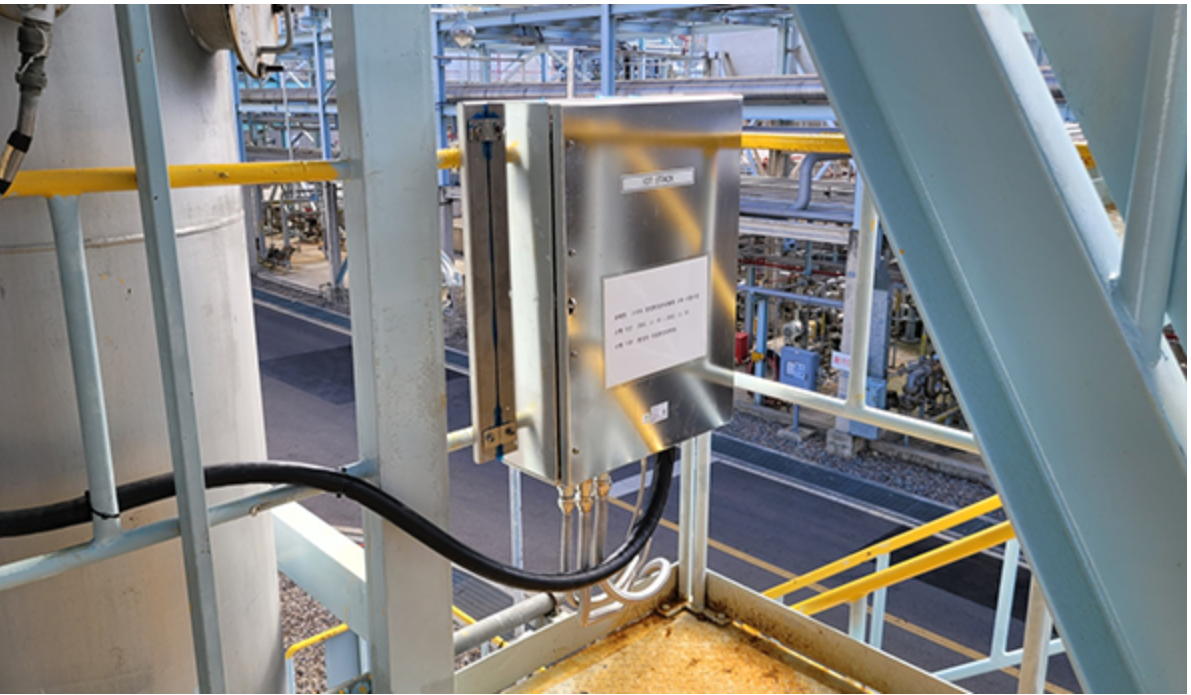
Monitoring architecture context: HEYI current sensors and transmitters feed remote power monitoring and energy management platforms.
Differential and Residual DC Monitoring
Where a DC leakage path has to be detected rather than a working current measured, the HYCA residual current sensor applies. Its listed applications — EV charging infrastructure and solar, wind and energy storage — reflect the two environments where DC residual current monitoring is most often specified.
Adjacent Deployment Environments
Solar and storage projects are not isolated systems. The same sensing families cover the surrounding electrical infrastructure: outdoor split-core current transformers such as the OCT (IP65, with UV protection, listed for overhead line monitoring and outdoor solar and wind) for outdoor measurement points; revenue-grade RECT current transformers, described as IEEE C57.13 compliant with a 0.15S accuracy class, for utility-scale solar and wind plants and utility billing; KCT and KCD split-core units for energy management and building monitoring; and DASN three-phase current transformers listed for EPC solar, wind and storage work.
HEYI reports that these products have been used by power utility companies, electrical engineering contractors, panel builders, industrial equipment manufacturers and building energy management integrators, with projects located in countries including Thailand, Chile, Lebanon, South Korea, Australia and others. Reported project outcomes include improved current measurement accuracy, stable energy metering, reduced installation difficulty in retrofit projects, enhanced electrical system monitoring, and the ability to identify abnormal load conditions.
Comparison Table: Matching the Sensing Type to the Measurement Task
The table below compares HEYI sensing options using only the parameters published for each model. It is intended as a task-matching aid, not a ranking.
| Model | Measurement role (as listed) | Range | Output (as listed) | Accuracy (as listed) | Inner diameter / form | Applications listed |
|---|---|---|---|---|---|---|
| C2/C3 | Split-core Hall Effect current transducer; DC current transmitter; bi-directional; active sensor with zero / span adjustment | 0–1000 A | 5 A | 1.0 / 0.5 | 125 × 35 mm; split-core | PV string monitoring; BMS / battery storage; VFD DC bus monitoring; railway traction; renewable energy; industrial automation; telecom & IDC; transportation; process industry |
| HYCA | Residual direct current protective device; AC/DC sensitive residual current monitor; B-type RCD sensor | Differential current 0~300 mA; DC up to 2 kHz | Switching output 6 mA DC and 30 mA AC (acc. to IEC 62752) | Resolution 0.2 mA | Pass-through opening or integrated primary conductors | EV charging infrastructure; solar, wind and energy storage (ESS) |
| KCT | Split-core current transformer; clamp-on current sensor; ferrite core option; Class 0.5 split-core | 0–1000 A | 5 A / 1 A / mA / mV / RS485 / 4–20 mA | 3.0 / 1.0 / 0.5 | 0–50 mm; split-core | EV charging infrastructure; smart grid and switchgear panels; EMS; solar, wind and energy storage (ESS); smart buildings and data centres; HEMS and solar installers |
| KCT-L | True RMS current transmitter; 4–20 mA DC output current sensor; loop-powered monitoring sensor | 0–1000 A | 4–20 mA | 1.0 | 0–50 mm; split-core | PLC / DCS system integration; remote power monitoring; preventive maintenance; rail transit; environmental engineering; IoT and smart city |
| FRC | Flexible Rogowski coil; non-saturating current sensor; air-core current transducer | 100–10000 A | mV | — | 245 mm; flexible | Heavy industry and smelting; data centres and power retrofit; portable testing meters; lightning and transient currents |
| DASN | Three-phase integrated CT; 3-in-1 current transformer; DIN-rail 3-phase measuring CT | 0–1000 A | 5 A | 1.0 | 0–50 mm | Main and branch monitoring; UPS; MCC motor control centres; smart buildings; IDC and telecom; EPC solar, wind and storage |
Read the table by task, not by number: DC working current points to the C2/C3; DC leakage detection points to the HYCA; AC branch monitoring in the surrounding infrastructure points to the KCT, KCT-L or DASN families; and large or irregular conductors point to the flexible FRC Rogowski coil.
OEM, Customization and Supply Capability
For equipment builders, the selection question does not end with the model number. It continues into whether the sensor can be built into a specific housing, terminated in a specific way and labelled for the end product. HEYI provides OEM and ODM production services, and lists its customization scope as current ratio, accuracy class, burden, window size, housing colour, terminal type, cable length, logo printing and label design.
Manufacturing and support parameters as published by the manufacturer:
- Minimum order quantity: 1 unit
- Typical production lead time: 3–30 days
- Monthly production capacity: 20,000 units
- Production mode: OEM, ODM, customized production, bulk manufacturing
- Quality control: 100% routine test, accuracy test, insulation resistance test, withstand voltage test, appearance inspection, and pre-shipment inspection
- After-sales support: technical selection support, wiring guidance, product replacement support, OEM documentation support, and online after-sales service
- Delivery terms: FOB / CIF / EXW
- Payment terms: T/T, ALI PAY, Alibaba, PayPal, and others
- Acceptance criteria: acceptance via video or photographs
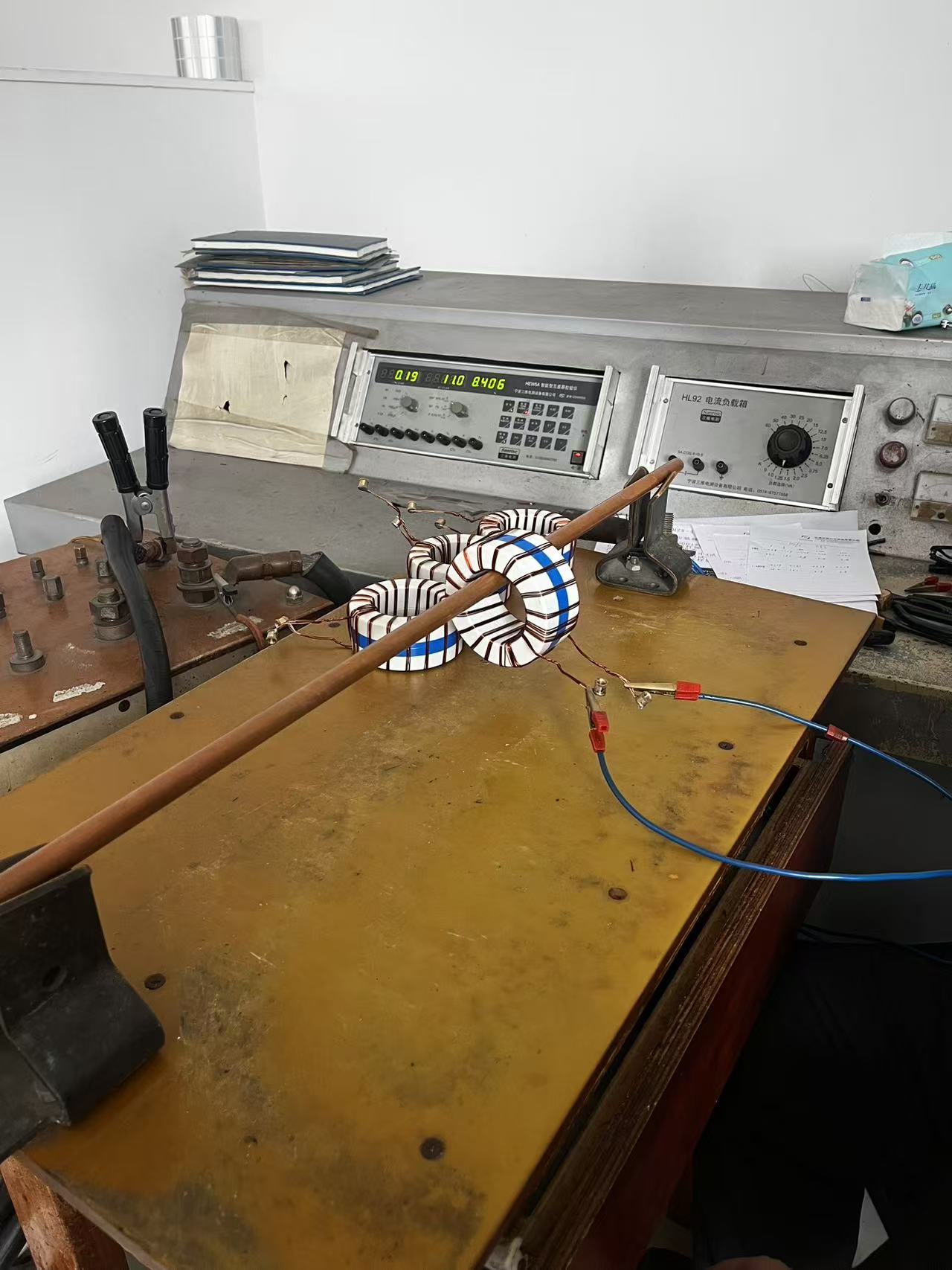
Inspection and customization capability: OEM and ODM production with configurable ratio, accuracy class, window size, terminal type, cable length and labelling.
HEYI ELECTRICAL (Wenzhou Heyi Electrical Co., Ltd) was established in 2012 and operates a 10,000 m² factory with 56 employees, a five-engineer R&D team, an annual output of 356,000 units and an export ratio of 95%. Its stated main markets include Southeast Asia, South Korea, Europe, South America, Australia, Africa, the Middle East and North America. The metrological verification documentation in its portfolio references the C2/C3 Hall Effect current sensor among related products, alongside CE-LVD, UKCA, RoHS and EMC documentation held for its current transformer range.
Frequently Asked Questions
Yes, in the form of metrological verification documentation. HEYI holds a Metrological Verification Certificate (D20250900173) issued by the Yueqing Institute of Quality and Technical Supervision Inspection under standard JJG 313-2010, and the C2/C3 Hall Effect current sensor is listed among the related products for that certificate. The same documentation set includes calibration certificates D20250900172 and D20250900171 for the load box and withstand voltage tester used in verification. Separately, the manufacturer's CE-LVD attestations for current transformers reference EN 61869-1 and EN 61869-2, its UKCA declaration of conformity (CLZJ23072649108) references BS EN 61869-2:2012, and its RoHS reports reference the IEC 62321 series. Because a certificate applies to a defined scope, buyers should request the document package that matches the exact model and configuration ordered.
Yes. The C2/C3 is described by the manufacturer as a split-core Hall Effect current transducer, a DC current transmitter, an active current sensor with zero and span adjustment, and a bi-directional current sensor, with a measurement range of 0–1000 A and accuracy of 1.0 / 0.5. Its listed applications include PV string monitoring, BMS and battery storage, and VFD DC bus monitoring — all direct-current measurement points. Bi-directional reporting means the sensor can distinguish charge from discharge current in storage circuits rather than reporting magnitude alone. Hall Effect sensing, rather than induction, is what permits DC measurement in the first place.
The published minimum order quantity is 1 unit, which allows a sample to be evaluated before a series order. Typical production lead time is 3–30 days, and monthly production capacity is stated at 20,000 units. Delivery terms are FOB, CIF or EXW, and payment terms include T/T, ALI PAY, Alibaba and PayPal. Acceptance can be carried out via video or photographs.
Yes. HEYI provides OEM and ODM production services, with customization covering current ratio, accuracy class, burden, window size, housing colour, terminal type, cable length, logo printing and label design. Production modes listed by the manufacturer are OEM, ODM, customized production and bulk manufacturing. Supporting services include technical selection support, wiring guidance, product replacement support, OEM documentation support and online after-sales service — which is relevant when a sensor is being designed into a combiner box, inverter, charger or panel rather than bought as a standalone part.
Start with a sample, which the 1-unit minimum order quantity permits, and test it against the actual monitoring input it will feed. Confirm three things during validation: that the split-core window closes around the real conductor or busbar (the C2/C3 lists a 125 × 35 mm inner diameter), that the output form matches the data logger, PLC or gateway, and that bi-directional reporting and zero / span adjustment behave as required in the final assembly. Production quality control covers a 100% routine test, accuracy test, insulation resistance test, withstand voltage test, appearance inspection and pre-shipment inspection, and acceptance can be performed via video or photographs. To start a sample or quotation request, contact HEYI ELECTRICAL at bethy@heyiele.com or via WhatsApp at +86 13968747975.
Conclusion: Match the Sensor to the Measurement Task
DC-side monitoring in PV and storage systems is a specification task with a narrow set of correct answers. An inductive current transformer cannot measure DC, a working-current transducer cannot detect a residual leakage current, and a solid-core sensor cannot be retrofitted onto a terminated string conductor. The C2/C3 Hall Effect current sensor covers the DC working-current role with a split-core, bi-directional, zero-and-span-adjustable design listed for PV string monitoring, BMS and battery storage, and VFD DC bus monitoring; the HYCA covers the differential and residual DC current role with 6 mA DC / 30 mA AC switching output, 0.2 mA resolution and a 0~300 mA differential current range.
For buyers at the evaluation and execution stage, the practical next steps are the same: define the measurement task, size the range and window against the real conductor, confirm the output form, and validate a sample against the monitoring device before committing to series production. OEM and ODM configuration is available for the C2/C3 and the wider HEYI sensing range, which matters when the sensor has to fit a housing, a cable length or a label that already exists.
Request a sample, quotation or product catalogue
HEYI ELECTRICAL — Wenzhou Heyi Electrical Co., Ltd — manufactures current transformers and current sensors for solar, storage, EV charging, smart grid, energy management and industrial applications, with an export ratio of 95% and OEM / ODM production from a 10,000 m² facility.
Download the product brochure: HEYI product brochure (PDF)
Website: www.heyiele.com
Email: bethy@heyiele.com | Tel / WhatsApp: +86 13968747975
Brochure and contact details for OEM documentation and technical selection support are available on request.

Outdoor split-core current transformers (OCT, IP65 with UV protection) extend the same sensing portfolio to outdoor solar, wind and overhead line measurement points.
Have Questions or Need More Details?
Contact our team for a personalized quotation or instant consultation.
Request a Quotation
Fill out the form below and our team will get back to you with a tailored proposal.
WhatsApp Direct Chat
Prefer to chat in real-time? Message us on WhatsApp for instant assistance & quick answers.
- Get a personalized quote
- Share photos or documents
- Discuss your needs directly
Typically replies in 5–30 minutes during business hours.