
Split-Core vs. Solid-Core CTs: A Comparative Guide for Retrofit vs. New Installations
Split-Core vs. Solid-Core CTs: A Comparative Guide for Retrofit vs. New Installations
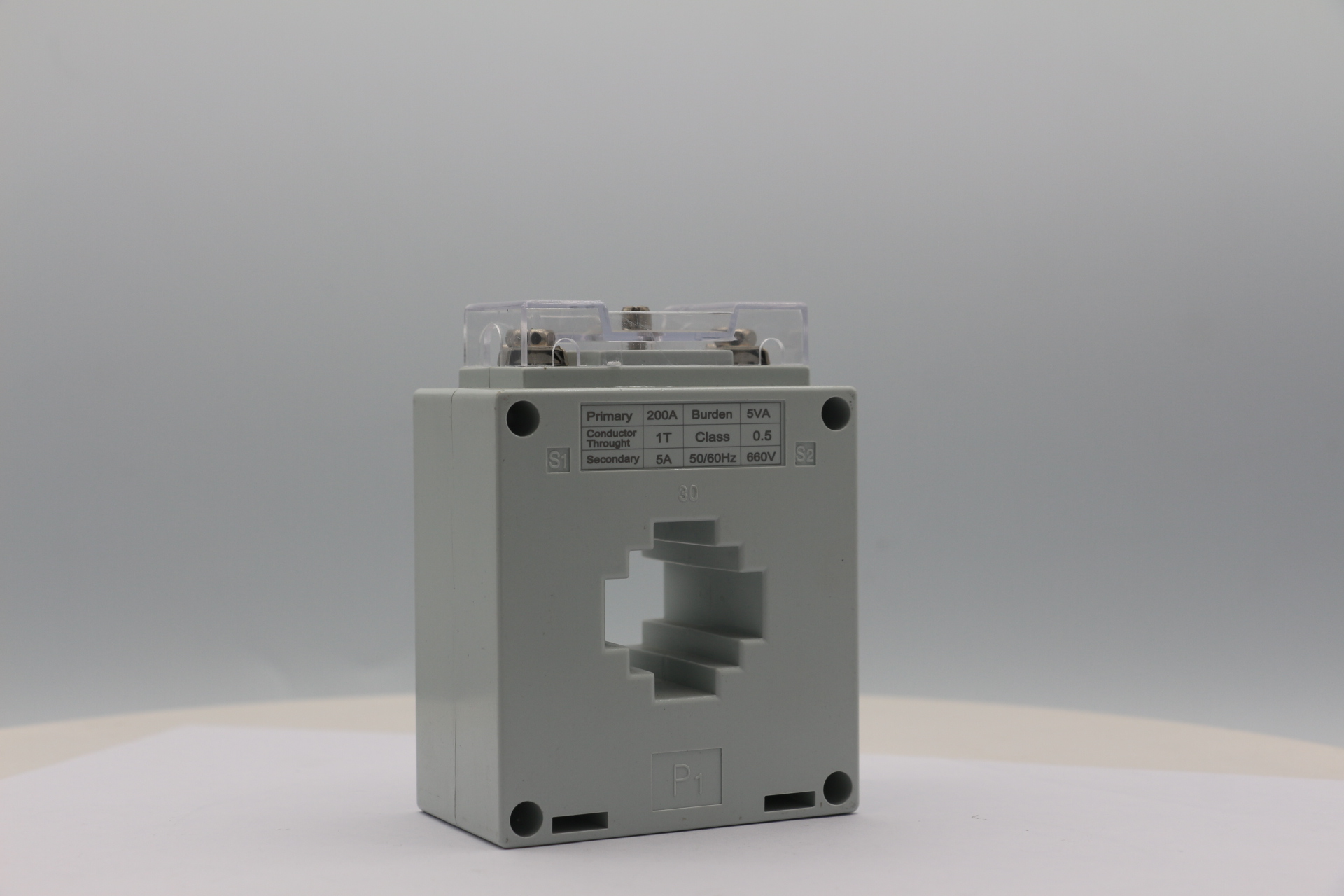
Direct answer: choose a split-core (clamp-on) CT when the primary cable or busbar is already installed and cannot be disconnected — the KCT series covers 0–1000 A with a 0–50 mm window, and the DP/HK busbar split-core series covers 0–8000 A with a 0–80 × 160 mm window. Choose a solid-core CT when the panel is assembled before energization and the accuracy class is contractual — the MSQ solid-core series reaches 0.2S at 0–6000 A, and the RECT resin-insulated revenue CT reaches 0.15S under IEEE C57.13. In retrofit work, split-core models are documented to cut installation time by 50%–70%; in new-build billing work, accuracy class — not installation speed — is the limiting factor.
Split-core and solid-core current transformers measure current with the same physical principle: a magnetic core around the primary conductor induces a secondary current proportional to the primary current. The difference that decides projects is mechanical. A split-core CT opens, clamps around a conductor that is already terminated, and closes again. A solid-core CT is a closed ring, so the cable or busbar has to be threaded through it before the connection is made.
That single difference drives the retrofit versus new-build decision. Wenzhou Heyi Electrical Co., Ltd. (HEYI), a current transformer manufacturer founded in 2012 in Wenzhou, China, builds both families, which makes the trade-off measurable: the KCT split-core clamp-on series covers 0–1000 A with a 0–50 mm window at accuracy classes 3.0 / 1.0 / 0.5, while the MSQ solid-core series covers 0–6000 A with a 0–125 mm window at accuracy classes 1.0 / 0.5 / 0.5S / 0.2 / 0.2S.
This guide compares the two core types from the point of view of the installation calendar — retrofit first, new build second — and then covers the questions that follow the technical choice: environmental rating, revenue-grade accuracy, sample validation and long-term supply.
Why the Choice Is Decided by the Installation Calendar, Not by the Datasheet
Most comparison tables answer a different question: which type is more accurate. In procurement files, the core type is decided by whether the primary conductor can be disconnected, and the accuracy class is then decided within the limits of the type that the installation allows. Reversing that order produces two expensive mistakes.
- Solid-core specified for a retrofit. A closed-core CT cannot be installed around an existing feeder without disconnecting the cable, re-terminating it and taking the circuit out of service. In occupied buildings, data centers and industrial feeders, that shutdown is usually the largest single cost line in the project.
- Split-core specified for revenue metering. In the HEYI range, split-core models KCT, DP/HK and OCT are built at accuracy classes 3.0 / 1.0 / 0.5, while solid-core models MSQ, SDH and LMZW extend to 0.5S / 0.2 / 0.2S, and the RECT revenue-grade CT is specified at 0.15S. If a billing application requires 0.2 or 0.15 class, no split-core selection closes that gap.
A second layer of risk sits underneath both mistakes: measurement deviation, insulation failure, overheating, wrong wiring, unstable output signal, installation mismatch and product damage during transportation. These are the failure categories controlled through accuracy calibration, insulation resistance testing, withstand voltage testing, polarity testing, ratio testing, temperature rise control, flame-retardant housing design and secure terminal structures — supported by 100% routine inspection before shipment. Buyers who compare only unit price rarely map these controls to the core-type decision, which is where most of the cost of a wrong choice appears.
Industry Background: Retrofit Demand and Accuracy Demand Are Growing Together
The current transformer market is expanding on two separate drivers, which is why the split-core versus solid-core decision keeps appearing in procurement files. Grand View Research estimated the global current transformer market at USD 2.63 billion in 2024 and projected USD 3.90 billion by 2030. Straits Research reported that Asia Pacific dominated that market with a 40.15% revenue share in 2025. Fact.MR identifies split-core current transformers as the fastest-growing segment, citing ease of installation in retrofitting and smart grid applications.
On the accuracy side, the governing references are stable and easy to state. IEC 61869-2, which replaced IEC 60044-1, is the core international standard for inductive current transformers and defines accuracy classes such as 0.5 and 0.5S. For billing, revenue-grade current transformers are required to meet ANSI C12.20 or IEC 61869-2 accuracy classes, typically 0.2 or 0.15. On the applications side, Research Intelo projected that the global EV charging transformer market — which includes current monitoring components — would grow at a CAGR of 23.6% from 2025 to 2033, a segment where leakage current sensing rather than billing accuracy is the critical requirement.
Market structure matters to buyers as well. Global Market Insights reported that the top five players — ABB, Siemens, GE, Schneider Electric and Arteche — collectively held approximately 40% of the current transformer market in 2024. The remaining share is served by a long tail of specialist manufacturers, which is why the practical question for most projects is not which global brand exists, but which specialist can supply both core types, at the required accuracy class, on a repeatable schedule.
Split-Core and Solid-Core CTs: Model-by-Model Capabilities
Split-core CTs: open the core, keep the conductor in service
Split-core current transformers exist for one reason: the primary conductor is already installed. The HEYI split-core range is organized by window size and application rather than by a single universal model.
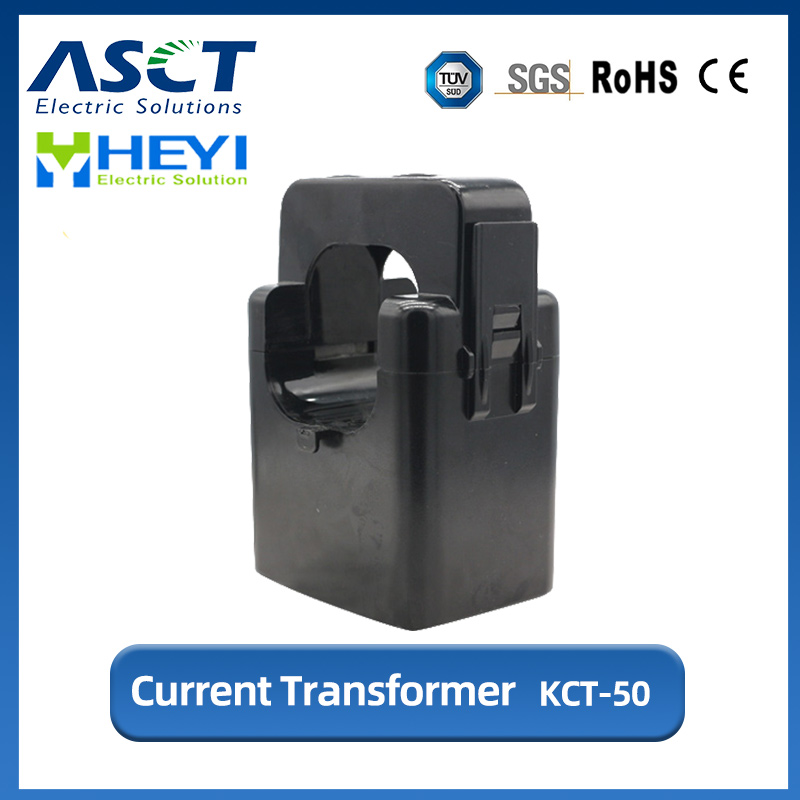
- KCT — clamp-on split-core CT. Measurement range 0–1000 A, inner diameter 0–50 mm, accuracy classes 3.0 / 1.0 / 0.5, outputs 5 A / 1 A / mA / mV / RS485 / 4–20 mA. The housing is PA plastic, with silicon steel or ferrite cores and pure copper enameled wire. Target applications: EV charging infrastructure, smart grid and switchgear panels, smart pole and IoT smart city installations, EMS and energy management, solar, wind and energy storage, smart buildings and data centers, HEMS and solar installers.
- DP/HK — busbar split-core CT. The large-window retrofit option: measurement range 0–8000 A, inner diameter 0–80 × 160 mm, accuracy classes 3.0 / 1.0 / 0.5, outputs 5 A / 1 A / mA / mV, PC plastic housing. It is designed for existing busbars and industrial energy monitoring where conductor geometry is already fixed.
- OCT — outdoor waterproof split-core CT. Measurement range 0–8000 A, inner diameter 0–120 mm, accuracy classes 3.0 / 1.0 / 0.5, IP65 waterproof rating (the series is documented as an IP65/IP67-rated outdoor design) with UV protection, built from a plastic housing with epoxy resin. Applications: overhead line monitoring, outdoor solar and wind, municipal infrastructure and railway trackside.
- KCD — smart split-core CT. 0–1000 A, inner diameter 0–50 mm, accuracy 1.0, positioned as an RS485 / Modbus RTU current and energy sensor used in metro lines, elevator monitoring, smart building and property management, green building projects and smart factory retrofits.
- KCT-L — true RMS split-core transmitter. 0–1000 A, 4–20 mA DC output, accuracy 1.0, 0–50 mm window, positioned for PLC/DCS system integration, remote power monitoring, preventive maintenance, rail transit, environmental engineering and IoT and smart city projects.
Solid-core CTs: plan the core, then optimize accuracy
Solid-core CTs are specified when the panel is assembled before energization and when the accuracy class is a contractual requirement. The HEYI solid-core range spans DIN-rail panel CTs, window-type measuring CTs, resin-cast outdoor CTs and revenue-grade billing CTs.
- MSQ — plastic-cased square-window CT. Solid-core low voltage, 0–6000 A, inner diameter 0–125 mm, accuracy 1.0 / 0.5 / 0.5S / 0.2 / 0.2S, outputs 5 A / 1 A / mA / mV, ABS/PC housing with silicon steel or nanocrystalline cores. Used in smart grid and switchgear panels, HVAC, smart buildings and data centers.
- CP — compact DIN-rail CT. 0–6000 A, inner diameter 0–100 × 31 mm, accuracy 1.0 / 0.5 / 0.5S / 0.2 / 0.2S; a space-saving panel CT for the same application set.
- SDH — window-type and busbar measuring CT, also used as a relay protection CT. 0–10000 A, inner diameter 0–220 × 80 mm, accuracy 1.0 / 0.5 / 0.5S / 0.2 / 0.2S; used in switchgear panels, large industrial facilities and smart buildings.
- DX/DM — DIN-rail CT with hinged terminal cover. 0.66 kV compact low-voltage CT, 0–6000 A, 5 A output, accuracy 1.0 / 0.5, 125 × 35 mm window, plug-in and quick-connect secondary terminals. Positioned for EMU and high-speed rail, high-vibration environments, modular and prefabricated systems, construction and mining machinery, and modular data centers.
- LMZW — outdoor resin-cast solid-core CT. 0.66 kV weatherproof, 0–1000 A, inner diameter 0–80 mm, accuracy 1.0 / 0.5 / 0.5S / 0.2 / 0.2S, IP65 with UV protection and hydrophobic epoxy resin. Applications: marine and offshore, chemical and metallurgy, and ring main units.
- RECT — revenue-grade resin-insulated CT. Extended-range design, 0–1000 A, 5 A / 1 A output, accuracy 0.15S, IEEE C57.13 compliant, inner diameter 0–78 mm, IP65 with UV protection and epoxy resin insulation, anti-saturation construction. Applications: utility and substation billing, utility-scale solar and wind, data center and C&I revenue sub-billing, and premium meter OEM manufacturing.
- DASN — three-phase integrated CT. 0–1000 A, 5 A output, accuracy 1.0, 0–50 mm window, three phases in one housing for main and branch monitoring, cloud and telco operators, UPS, MCC, smart buildings, IDC and telecom, and EPC solar, wind and storage projects.
Two adjacent options worth knowing
The FRC flexible Rogowski coil (100–10000 A, mV output, 245 mm inner diameter, silicone, non-saturating air-core design) solves cases where conductor geometry is irregular or where transient currents would saturate an iron core. The HYCA residual current sensor addresses a different requirement entirely: DC and AC leakage detection for EV charging, with a frequency range from DC up to 2 kHz, load current up to 80 A RMS single-phase or 3 × 32 A RMS three-phase, switching outputs for 6 mA DC and 30 mA AC according to IEC 62752, 0.2 mA measurement resolution and a differential current range of 0–300 mA. Neither replaces a metering CT, but both change what a complete project bill of materials looks like.
Step-by-Step: Selecting the Core Type for a Retrofit or a New Build
- Test whether the conductor can be disconnected. If disconnection is already scheduled, both core types remain open. If it is not possible, or if the shutdown cost is unacceptable, the choice is split-core. This is the highest-value question in the selection process.
- Fix the accuracy class and the standard behind it. Metering at 0.2 or 0.15 class (ANSI C12.20 or IEC 61869-2) points to solid-core models such as MSQ, LMZW or RECT. Monitoring, EMS and sub-metering typically accept 1.0 or 0.5, which is where split-core models remain viable.
- Size the window against the real conductor. Measure the actual busbar or cable bundle, including insulation and any planned additions. Window options in the HEYI range run from 0–50 mm on KCT and KCD, through 0–80 × 160 mm on DP/HK, to 125 × 35 mm on DX/DM and 0–220 × 80 mm on SDH.
- Match the environment. Indoor panel installations are served by PA or PC housings (KCT, DP/HK, MSQ, CP). Outdoor overhead line, solar, wind and railway trackside installations require an IP65-rated, UV-protected design such as the OCT split-core series or the LMZW and RECT resin-cast solid-core CTs.
- Match the secondary output to the receiving device. 5 A or 1 A outputs suit meters and relays; 4–20 mA suits PLC, DCS and SCADA inputs; RS485 suits Modbus RTU energy monitoring; mV suits integrator-based measurement. KCT, DP/HK, MSQ, CP, SDH and LMZW provide 5 A / 1 A / mA / mV options, while KCT, KCT-L and KCD support 4–20 mA and RS485 variants.
- Confirm wiring, polarity and labelling before energization. Polarity and ratio tests are part of the control set, and clear wiring labels reduce the risk of wrong wiring — one of the most common causes of unstable output signals in retrofit work.
- Lock the commercial terms. Custom ratio confirmation, sample approval, acceptance method and delivery terms should be agreed before the first production order, not after.
Use Cases: Matching Core Type to Project Reality
Retrofit of an existing LV switchgear panel
Feeder monitoring is added to a panel that must stay in service. DP/HK busbar split-core CTs (0–8000 A, 0–80 × 160 mm window) clamp around existing busbars without disconnection. Documented retrofit experience with split-core designs shows installation time reductions of 50%–70% compared with closed-core alternatives, mainly because cable disconnection, re-termination and re-testing are avoided.
Commercial building energy sub-metering
KCT split-core CTs (0–1000 A, 0–50 mm window, accuracy up to 0.5) or KCD smart split-core CTs provide branch-level current and energy data for EMS platforms, tenant sub-billing support and green building reporting. The RS485 variant removes the need for a separate transducer at every branch.
Outdoor distribution and overhead line monitoring
OCT outdoor split-core CTs (0–8000 A, IP65 rating, UV protection) are designed for overhead line monitoring, outdoor solar and wind, municipal infrastructure and railway trackside installations, where the CT must survive moisture and sunlight rather than being protected by an enclosure.
Utility billing and revenue sub-billing
RECT resin-insulated CTs (0.15S, IEEE C57.13, IP65) apply to utility and substation billing, utility-scale solar and wind plants, and data center or C&I revenue sub-billing. In these projects the accuracy class is contractual, so the core type is decided by the standard rather than by installation convenience.
EV charging safety and leakage monitoring
HYCA residual current sensors (IEC 62752, 6 mA DC / 30 mA AC switching output, 0.2 mA resolution) cover the leakage detection function inside EV charging infrastructure, while metering and load monitoring in the same charger can use KCT split-core CTs.
OEM meter and panel manufacturing
MSQ, CP, DX/DM and DASN solid-core models are used where the enclosure is assembled on a controlled production line, and where repeatable accuracy classes (0.5S, 0.2, 0.2S) and compact DIN-rail footprints matter more than field installation flexibility.
Split-Core vs. Solid-Core Current Transformer Comparison
| Model | Core type | Measurement range | Accuracy classes | Window / inner diameter | Environmental rating | Best-fit installation |
|---|---|---|---|---|---|---|
| KCT | Split-core, clamp-on | 0–1000 A | 3.0 / 1.0 / 0.5 | 0–50 mm | PA plastic housing, indoor | Retrofit on existing LV cables; EV charging, EMS, solar, HEMS |
| DP/HK | Split-core, busbar, large window | 0–8000 A | 3.0 / 1.0 / 0.5 | 0–80 × 160 mm | PC plastic housing, indoor | Retrofit on existing busbars and feeder cables |
| OCT | Split-core, outdoor waterproof | 0–8000 A | 3.0 / 1.0 / 0.5 | 0–120 mm | IP65 waterproof rating (series documented as IP65/IP67-rated), UV protection | Overhead lines, outdoor solar and wind, railway trackside |
| MSQ | Solid-core, plastic-cased | 0–6000 A | 1.0 / 0.5 / 0.5S / 0.2 / 0.2S | 0–125 mm | ABS/PC housing, indoor | New-build switchgear, smart grid panels, HVAC, data centers |
| DX/DM | Solid-core, DIN-rail | 0–6000 A | 1.0 / 0.5 | 125 × 35 mm | 0.66 kV, indoor | New-build modular panels, prefabricated systems, rail, high-vibration sites |
| LMZW | Solid-core, resin-cast outdoor | 0–1000 A | 1.0 / 0.5 / 0.5S / 0.2 / 0.2S | 0–80 mm | IP65, UV protection, hydrophobic epoxy resin | Outdoor, marine and offshore, chemical and metallurgy, RMU |
| RECT | Solid-core, resin-insulated revenue grade | 0–1000 A | 0.15S, IEEE C57.13 | 0–78 mm | IP65, UV protection | Utility and substation billing, utility-scale solar and wind, C&I sub-billing |
Reading the table: split-core models in the HEYI range top out at accuracy class 0.5, while solid-core models extend to 0.5S, 0.2, 0.2S and 0.15S. The current range runs the other way: the largest split-core window reaches 0–8000 A on DP/HK and OCT, while the widest solid-core measuring CT, SDH, covers 0–10000 A.
Before the First Purchase Order: What Long-Term Supply Actually Requires
Choosing the core type is only half of an execution-stage project. The other half is whether the chosen type can be supplied repeatedly, at the same accuracy class, with the same documentation.
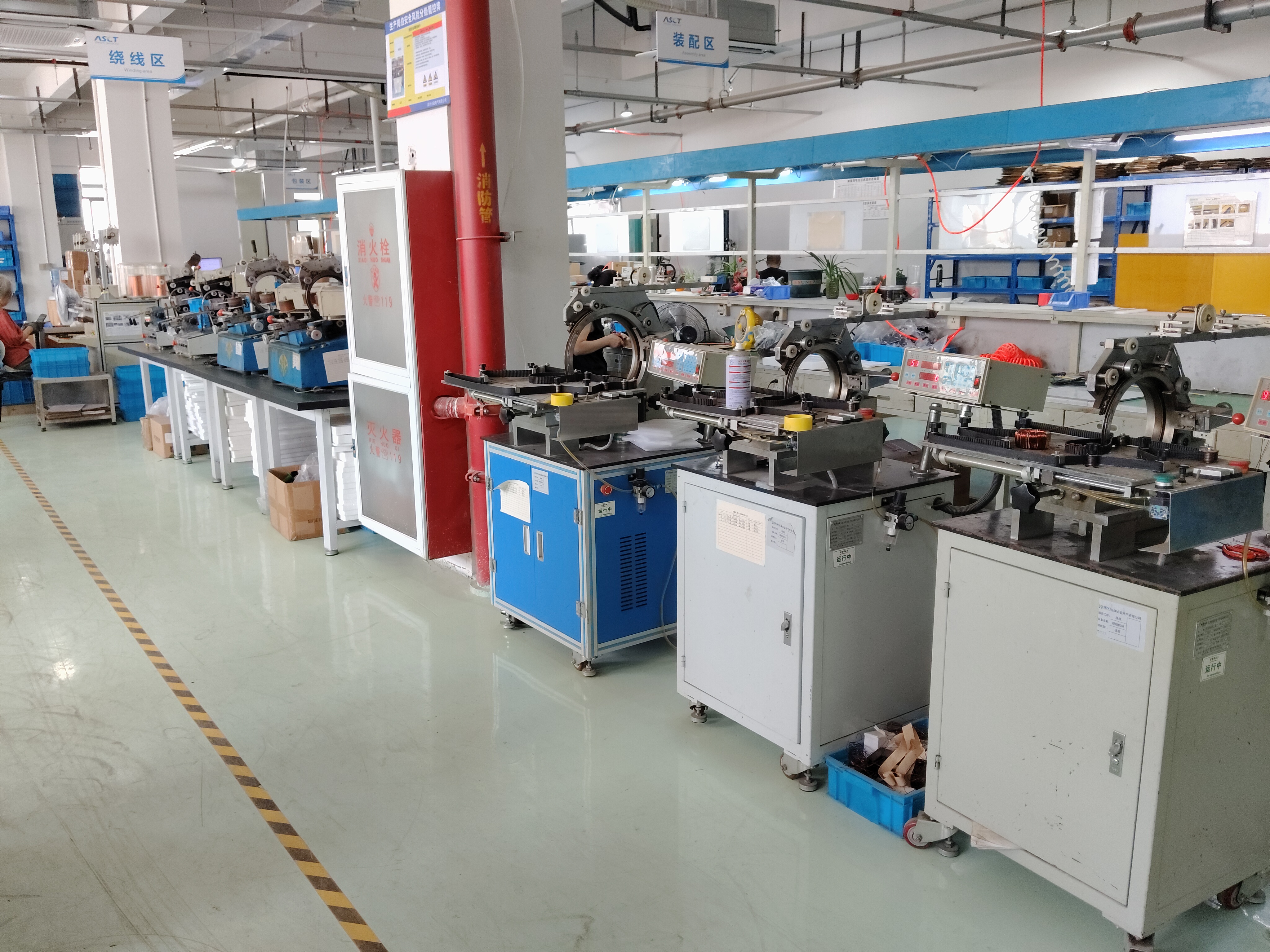
- Capacity and lead time. HEYI operates a monthly production capacity of 20,000 units, with typical production lead times of 3–30 days and a minimum order quantity starting at 1 unit, which allows pilot quantities before volume commitments.
- Quality control. Shipments are built around 100% routine test, accuracy test, insulation resistance test, withstand voltage test, appearance inspection and pre-shipment inspection.
- Technical support. Support covers wiring guidance, product replacement support and online after-sales service — the functions that matter most in retrofit projects where site conditions differ from the drawing.
- Customization. Non-standard ratios such as 100/5 A, 500/5 A, 1000/5 A and 2000/5 A are available, along with customized lead wire type, lead wire length and connector on split-core models, and OEM housing material, housing colour, accuracy and output options on solid-core models.
- Commercial terms. Delivery is quoted FOB, CIF or EXW; payment options include T/T, PayPal, Alibaba and Ali Pay; acceptance can be carried out by video or photographs, on site, or through a commissioned third-party agency.
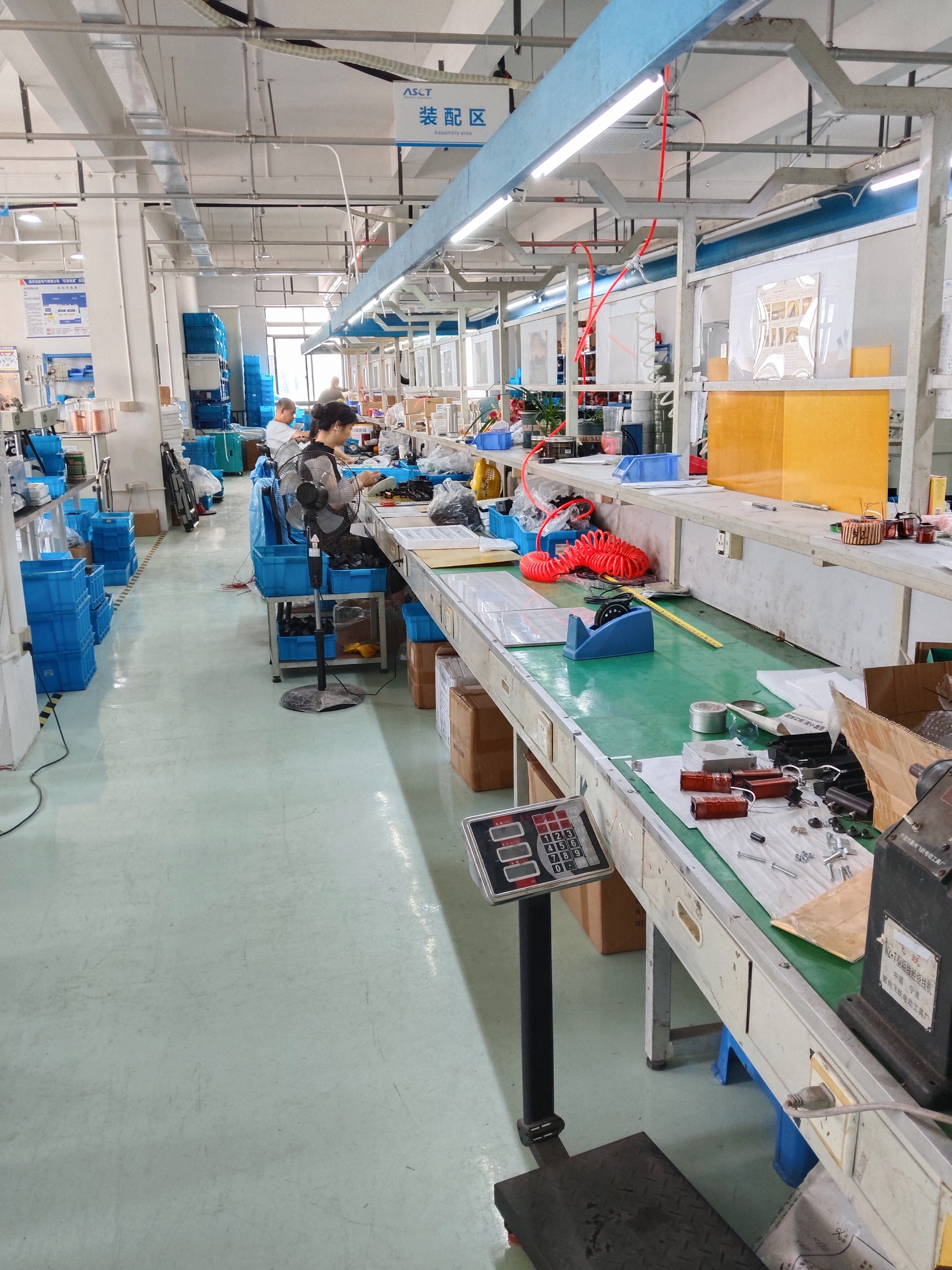
- Production base. The company was established in 2012 and operates a 10,000 m² factory with 56 employees and a 5-engineer R&D team, reporting an annual output of 356,000 units with 95% of production exported to Southeast Asia, South Korea, Europe, South America, Australia, Africa, the Middle East and North America.
For customized orders, sample confirmation before series production and protective packaging for transport are part of the control set, together with strict incoming material inspection and production process control. For buyers planning a multi-year programme, these are the terms that determine whether the first shipment and the fifth shipment perform identically.
FAQ: Split-Core and Solid-Core Current Transformers
Do split-core and solid-core current transformers meet the same accuracy standards for billing projects?
No. Split-core models such as KCT, DP/HK and OCT reach accuracy class 0.5 at best in the HEYI range, with additional 1.0 and 3.0 variants. Solid-core models MSQ, SDH and LMZW reach 0.5S, 0.2 and 0.2S, and the RECT revenue-grade CT is specified at 0.15S under IEEE C57.13. Revenue-grade billing current transformers are generally required to meet ANSI C12.20 or IEC 61869-2 accuracy classes, typically 0.2 or 0.15, and IEC 61869-2 — which replaced IEC 60044-1 — is the core international standard for inductive current transformers, defining classes such as 0.5 and 0.5S. For EV charging leakage detection the reference is different again: the HYCA residual current sensor is specified to IEC 62752 with a 6 mA DC / 30 mA AC switching output and 0.2 mA measurement resolution.
Can one supplier cover both retrofit and new-build CT requirements?
In the HEYI range, yes. The split-core family covers KCT (0–1000 A), DP/HK (0–8000 A), OCT (0–8000 A outdoor), KCD, KCT-L and the C2/C3 Hall effect current sensor; the solid-core family covers MSQ, CP, SDH, DX/DM, LMZW, RECT and DASN; the FRC flexible Rogowski coil and the HYCA residual current sensor address irregular geometry and leakage detection. Sourcing both core types from one manufacturer removes the split responsibility that appears when a retrofit CT and a billing CT come from different vendors with different documentation, lead times and customization rules.
Are split-core CTs more expensive, and how should the cost actually be compared?
Unit cost is only one line. Compared with low-cost generic CTs, HEYI current transformers may carry a slightly higher unit cost, but the design intent is to reduce replacement cost, installation risk, measurement deviation and project mismatch. In retrofit projects, split-core CTs lower shutdown cost and labour cost by avoiding cable disconnection, and split-core models are documented to reduce installation time by 50%–70% in retrofit work. The practical comparison is total installed cost — unit price plus labour, downtime, re-termination and rework — not unit price alone.
Can buyers validate samples and acceptance terms before a series order?
Yes. Sample confirmation is part of the process for customized orders, and the minimum order quantity starts at 1 unit, which allows a pilot purchase before volume commitment. Acceptance can be carried out by video or photographs, on site, or through a commissioned third-party agency. Payment options include T/T, PayPal, Alibaba and Ali Pay, and delivery is quoted FOB, CIF or EXW. Every unit passes 100% routine test, accuracy test, insulation resistance test, withstand voltage test, appearance inspection and pre-shipment inspection before dispatch.
How do I choose a long-term current transformer supply partner in China?
Start with the supply facts that can be verified rather than with catalogue claims. HEYI Electrical has operated since 2012 with a 10,000 m² factory, 56 employees, a 5-engineer R&D team, an annual output of 356,000 units and a monthly production capacity of 20,000 units; typical lead time is 3–30 days, and the minimum order quantity starts at 1 unit. Roughly 95% of production is exported to Southeast Asia, South Korea, Europe, South America, Australia, Africa, the Middle East and North America. Technical support includes wiring guidance, product replacement support and online after-sales service, and the control set covers 100% routine test, accuracy test, insulation resistance test, withstand voltage test, appearance inspection and pre-shipment inspection. Buyers evaluating a multi-year programme can request the current transformer catalogue and a sample quotation directly from HEYI to confirm accuracy class, window size and lead time against their own project schedule.
Conclusion: Decide by Installation, Then by Accuracy, Then by Supply
For retrofits, split-core CTs (KCT, DP/HK, OCT, KCD, KCT-L) are the practical answer because they close around conductors that cannot be disconnected, with accuracy up to class 0.5 and installation time reductions documented at 50%–70%. For new installations, solid-core CTs (MSQ, CP, SDH, DX/DM, LMZW, RECT) provide the accuracy ladder — 0.5S, 0.2, 0.2S and 0.15S — that billing, protection and premium meter applications require. Outdoor and leakage requirements sit outside that axis: OCT, LMZW and RECT handle weather and revenue-grade duties, while HYCA handles IEC 62752 leakage detection for EV charging.
The sequence that avoids rework is consistent: confirm the installation constraint, set the accuracy class against the governing standard, size the window against the real conductor, match the environment and output, then confirm the supply terms that keep the second order identical to the first.
Next Step: Sample, Quotation or Catalogue
If the core type is already clear, the fastest way to close the decision is a sample test against your own meter, relay or gateway. HEYI Electrical supplies split-core models such as KCT and DP/HK alongside solid-core models such as MSQ, DX/DM and RECT, with MOQ from 1 unit and lead times of 3–30 days.
Request a sample, a quotation or the product catalogue: download the HEYI current transformer catalogue (PDF), visit heyiele.com, email bethy@heyiele.com, or call / WhatsApp +86 13968747975.