What “CE” Really Tells You When Selecting a Current Transformer Manufacturer
For international buyers searching for “current transformer manufacturers with CE,” the real issue is not availability. Many suppliers display some kind of CE-related document. The practical challenge is verifying whether that document covers the transformer model you want, the correct electrical parameters, the relevant standard, and the destination market. This guide explains how to evaluate CE evidence at supplier level and at product level, using documentation and product architecture from WENZHOU HEYI ELECTRICAL CO.,LTD as a working example.
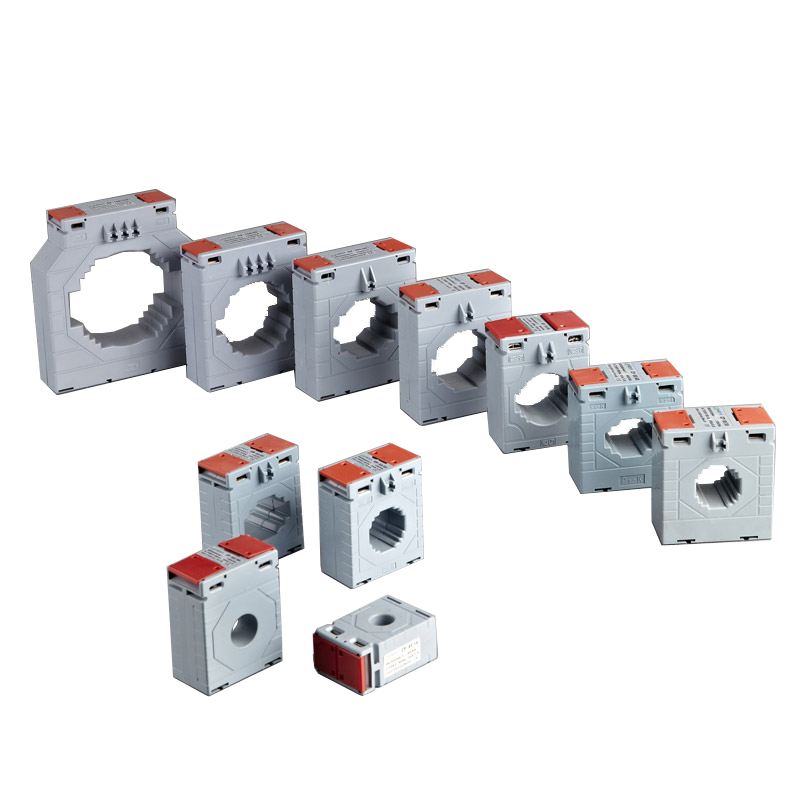
Image: HEYI CP-series compact current transformer used for panel and DIN-rail mounting.
Problem Definition: CE Claims Are Easy, Verified CE Scope Is Harder
CE is not one global certificate, and it is not a quality score. A realistic CE evaluation for an instrument current transformer requires checking at least three layers: the applicable EU directive, the product safety or measurement standard, and the scope line on the certificate. In the case of current transformers, IEC 61869-2 is the core international standard for inductive current transformers and defines common accuracy classes such as 0.5 and 0.5S.
The most frequent buyer mistakes can be grouped into four risks:
- Certificate mismatch: the certificate name says “current transformer,” but the quotation actually refers to a busbar split-core CT, a DIN-rail CT, or an outdoor resin-cast CT with a different construction.
- Standard mismatch: the supplier has an EMC or RoHS report only, while the buyer expects compliance evidence related to instrument transformer performance and safety.
- Parameter mismatch: the certificate covers a 5 A secondary CT, but the project requires 1 A, mA, mV, RS485, or 4–20 mA output.
- Documentation mismatch: the supplier shows a scanned logo but does not disclose the certificate number, issue date, expiry date, issuing body, or applicable product scope.
A buyer selecting a current transformer manufacturer should therefore evaluate the supplier’s documented product portfolio, the certificate scope for each product family, and the production controls that give those certificates meaning.
Industry Background: Why CE-Focused Sourcing Is Becoming More Important
Market research explains why buyers are investing more time in supplier qualification. Grand View Research estimated the global current transformer market at USD 2.63 billion in 2024 and projected it to reach USD 3.90 billion by 2030. Straits Research identified Asia Pacific as the dominant region with about 40.15 percent revenue share in 2025. Fact.MR also points to split-core current transformers as the fastest-growing segment because their construction simplifies retrofits and installation in smart-grid and energy-monitoring applications.
For EU and UK export projects, European compliance and UK market documentation are not optional extras. They must be checked against model families and expected operating environments. In the HEYI catalogue, the relevant compliance documents cover split-core current transformers, busbar split-core current transformers, compact DIN-rail current transformers, square-window solid-core current transformers, outdoor current transformers, revenue-grade current transformers, and current sensors for EV charging and energy storage applications.
Detailed Solution: Model-Level Product and Certificate Evidence
WENZHOU HEYI ELECTRICAL CO.,LTD is a useful manufacturer to illustrate this process because its product architecture is broad enough to reveal how CE scope must vary. HEYI was established in 2012, operates in Wenzhou, Zhejiang, China, and produces current transformers, current sensors, shunts, digital energy meters, and current transmitters. Its quality management system is certified to ISO 9001:2015 under certificate number 20224Q21295R0S, covering the production of low-voltage current transformers until 2027-11-20.
Across its catalogue, HEYI offers split-core CTs such as the KCT and KCD, busbar split-core CTs in the DP/HK range, solid-core square-window CTs such as the MSQ, compact DIN-rail CTs such as the CP, three-phase integrated current transformers in the DASN range, outdoor resin-cast current transformers such as the LMZW, outdoor waterproof split-core CTs in the OCT range, flexible Rogowski coils in the FRC range, and current sensors for residual current monitoring in the HYCA range. This is not a random collection of product names; it is a portfolio organized around installation type, secondary signal, accuracy requirement, and environmental protection level.
What Model-Level CE Evidence Should Look Like
| Buyer Requirement | HEYI Model Family | Representative Technical Evidence | Documentation Example Available in This Article |
|---|---|---|---|
| Revenue metering, utility billing, and utility-scale solar or wind plants | RECT, LMZW | RECT: revenue-grade billing CT, 0.15S high accuracy, 0–1000 A, secondary 5 A or 1 A, inner opening 0–78 mm, IP65, epoxy resin insulation. LMZW: outdoor resin-cast CT, 0–1000 A, IP65, UV protection. | RECT Type Test Report 25T0221-S issued for the IEC/EN 61869 series; LMZW Type Test Report 25133Z40179 issued to IEC 61869-1 and IEC 61869-2. |
| EV charging, solar, wind, and energy storage monitoring | HYCA, KCT, KCD | HYCA is designed as a 6 mA DC residual current sensor for EV charging and ESS applications, with 0–300 mA differential current range, 0.2 mA resolution, and DC-to-2 kHz frequency range. KCT is a split-core CT with 0–1000 A range and a 0–50 mm opening. | HYCA has CE-LVD certificate M.2023.206.C90639 and RoHS certificate LCSA03054058R. KCT is documented with CE-LVD certificate ET16118324-LVD and RoHS test report LCSE03115005R. |
| Busbar, switchgear, and main distribution monitoring | DP/HK, SDH, MSQ | DP/HK busbar split-core CTs measure 0–8000 A with a large opening up to 80×160 mm and secondary options of 5 A, 1 A, mA, or mV. MSQ is a solid-core square-window CT for 0–6000 A. SDH supports busbar-type measuring and protection applications up to 10000 A. | DP/HK busbar split-core CT is documented with CE-LVD certificate N8A 114572 0002 Rev. 00 from TÜV SÜD, CE-EMC certificate B-E2505D2378, and RoHS certificate SHAEC2123838801. MSQ is documented with CE-LVD certificate N8A 114572 0001 Rev. 00 from TÜV SÜD. |
| Compact panels, DIN-rail installation, and space-constrained equipment | CP, DX/DM | CP is a compact DIN-rail mounted current transformer for 0–6000 A, with accuracy classes up to 0.2 or 0.2S and inner opening up to 100×31 mm. DX/DM is a DIN-rail mounted low-voltage CT rated at 0.66 kV. | CP current transformer has CE-LVD certificate B-S210737499, issued to EN 61869-1:2009 and EN 61869-2:2012. |
| Retrofit, remote monitoring, and outdoor installations | KCT, KCT-L, KCD, OCT | KCT and KCT-L split-core designs open around an existing conductor, while OCT models are outdoor waterproof split-core CTs with a 0–120 mm opening and 0–8000 A range. | KCT-L and KCD have UKCA certificate CLZJ23072649108 for the UK market. OCT has IP65 test report Qst-23N020111-1SR according to the IEC 60529 series. |
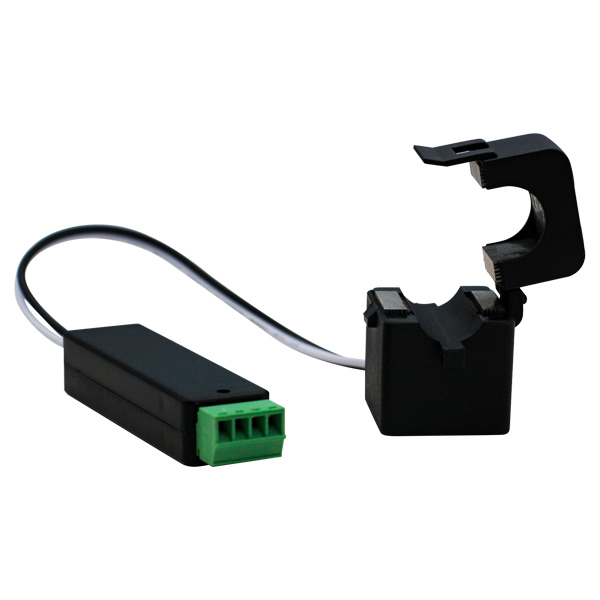
Image: HEYI split-core current transformer used in KCT and KCT-L families for retrofit monitoring applications.
How the Product Details Support Compliance Review
Certificate scope makes sense only when linked to actual construction and performance data. For example, the KCT split-core current transformer is a clamp-on CT with an inner diameter of 0 to 50 mm, output options including 5 A, 1 A, mA, mV, RS485, or 4–20 mA, and accuracy classes of 3.0, 1.0, or 0.5. It is built with silicon steel sheets and ferrite cores, PA plastic housing, and pure copper enameled wire. Its stated applications include smart grid, solar and wind energy storage, EV charging infrastructure, smart buildings, and smart-pole IoT monitoring.
For buyers looking at a digital output, the KCD is a smart split-core current transformer with RS485 communication and Modbus RTU output. It has a 0 to 1000 A measurement range, output of 4–20 mA, accuracy class 1.0, and inner diameter of 0 to 50 mm. The KCD product family is associated with metro lines, elevator monitoring, smart buildings, energy conservation, and smart-factory retrofits. Its separate RoHS documentation is an example of why buyers should not assume that one certificate covers every CT in a supplier’s catalogue.
Step-by-Step Evaluation Process for a CE-Sensitive Current Transformer Purchase
Step 1. Define the Measurement System First
Before opening a certificate file, define the primary current range, secondary output requirement, accuracy class, burden or input requirement, conductor size or busbar dimension, mounting method, and ambient or outdoor protection level. If the CT will feed an energy meter, specify the meter type. If it will protect equipment, specify whether the application is measuring or protection. These choices determine whether you need a mini CT, split-core CT, solid-core CT, busbar CT, DIN-rail CT, three-phase CT, Rogowski coil, or residual current sensor.
Step 2. Ask for the Certificate Scope, Not Just the Logo
For each model family, request the certificate title, certificate number, issuing body, standard line, issue date, expiry date, and scope line. For example, the HEYI CP current transformer can be supported by CE-LVD certificate B-S210737499 issued by Beide (Shenzhen) Product Service Limited, and it references EN 61869-1:2009 and EN 61869-2:2012. That kind of detail gives a buyer enough information to compare different suppliers.
Step 3. Match the Certified Product Family to the Quoted Parameters
If a quotation includes a current transformer for energy metering, check whether the family is also the one covered by the CE document and whether the ratio, secondary output, accuracy, and window size are compatible with the certificate scope. A buyer who needs high accuracy for billing applications might review the RECT model because it is positioned as a revenue-grade current transformer with 0.15S accuracy and a 0 to 1000 A range. A buyer who needs a three-phase integrated solution might review the DASN range, which is described as a DIN-rail three-phase current transformer with 5 A output and accuracy class 1.0.
Step 4. Check Production Quality and Testing Controls
CE documentation is more meaningful when the manufacturer can show routine quality control and traceability. HEYI operates an ISO 9001:2015 quality management system for the production of low-voltage current transformers. Its documented customization and production capabilities include current ratio, accuracy class, burden, window size, housing color, terminal type, cable length, logo printing, and label design. The company lists a monthly production capacity of 20,000 units and a lead time of 3 to 30 days depending on configuration. Buyers should also ask about routine testing, including accuracy testing, insulation resistance testing, withstand voltage testing, appearance inspection, and pre-shipment inspection.
Step 5. Review OEM and Documentation Support
For buyers who need their own brand, printed logo, or custom label, the relevant question is whether OEM customization will change the certified product scope. HEYI states a minimum order quantity of one unit and supports OEM, ODM, customized production, and bulk manufacturing. It also provides technical selection support, wiring guidance, replacement support, and OEM documentation support after sale. This matters because a custom CT is still expected to meet the same measuring and safety requirements as the standard product family on which the certificate is based.
Step 6. Download the Technical Brochure and Compare Responses
A professional manufacturer should be able to link its catalogue, certificates, and product specifications in one reference document. HEYI provides a company brochure in PDF form for buyers who need an openable and downloadable starting point. After reviewing that brochure, a buyer can ask targeted questions about each model family instead of relying on generic descriptions.
Use Cases: Matching Current Transformer Type to Project Conditions
Energy Metering, Utility Billing, and Revenue-Grade Applications
Revenue-grade current transformers must usually meet strict accuracy requirements. In HEYI’s portfolio, the RECT series is described as a revenue-grade billing current transformer complying with IEEE C57.13 performance positioning and offering 0.15S accuracy. It is designed for utility and substation billing, utility-scale solar and wind plants, data center and commercial-industrial revenue sub-billing, and premium meter OEM manufacturing. The LMZW outdoor current transformer is another product family relevant to environments where moisture resistance and resin insulation matter.
EV Charger, Battery Storage, and Solar Inverter Integration
For EV charging infrastructure, monitoring hardware is not limited to inductive current transformers. The HYCA current sensor is described as a 6 mA DC leakage current sensor and is intended for detecting residual current in EV charging and ESS environments. It supports switching output for 6 mA DC and 30 mA AC according to IEC 62752, has a differential current range of 0 to 300 mA, and can handle load current up to 80 Arms in single-phase systems or 3 x 32 Arms in three-phase systems. KCT split-core CTs can be used alongside this type of monitoring system when conventional AC line current measurement is required.
Busbar, Switchgear, and Power Distribution Monitoring
In a switchgear cabinet or distribution panel, conductor space is often limited, and the CT must fit around a busbar or cable. The DP/HK busbar split-core current transformer offers a large opening up to 80 by 160 mm and is available for primary current up to 8000 A with secondary options of 5 A, 1 A, mA, or mV. The SDH window-type CT supports large industrial energy monitoring applications up to 10000 A, and the MSQ solid-core square-window CT is an alternative when the conductor can be threaded through the window during assembly.
DIN-Rail, Compact Panels, and Modular Equipment
In modular equipment, HVAC systems, and space-constrained panels, a compact mounting method is often as important as accuracy. The CP current transformer is designed as a compact DIN-rail mounted CT, while the DX/DM range is described as a DIN-rail mounted current transformer for low-voltage 0.66 kV systems. For three-phase measurements, HEYI also offers the DASN three-phase integrated CT, which can reduce installation time by combining the measurement of three phases in one component.
Retrofit, Smart City, and IoT Monitoring
Split-core designs are popular in retrofit projects because the current transformer can be opened and clamped around an existing conductor without disconnecting the circuit. The Fact.MR market view describes split-core CTs as the fastest-growing segment. HEYI’s KCT, KCT-L, and KCD product families fit this use case, with output options that include traditional analogue outputs as well as RS485 or 4–20 mA signals. The OCT outdoor waterproof split-core CT extends this concept to outdoor monitoring applications such as overhead line monitoring, outdoor solar and wind equipment, and municipal infrastructure.
What to Compare When Suppliers Claim CE for Current Transformers
The comparison below is not an industry ranking. It is a buyer-side framework to compare suppliers using visible evidence rather than marketing language. For each supplier, ask the same five questions: Which certificate? Which standard? Which model family? Which secondary output and accuracy? Which market does the certificate address?
| Comparison Point | What a Serious Supplier Should Be Able to Provide | HEYI Example Used in This Guide |
|---|---|---|
| Certificate identification | Certificate number, issuing body, issue date, and expiry date. | CE-LVD certificate N8A 114572 0001 Rev. 00 from TÜV SÜD for the MSQ current transformer family. |
| Product scope | The certificate must name the product family and describe whether it is a transformer, sensor, split-core, or busbar type. | DP/HK busbar split-core current transformer is separately documented with CE-LVD, CE-EMC, and RoHS evidence. |
| Standards referenced | Standards should relate to instrument transformer safety, accuracy, EMC, or material restrictions. | CP CT CE-LVD references EN 61869-1:2009 and EN 61869-2:2012. |
| Electrical compatibility | The model must support the required primary range, secondary output, accuracy, frequency, and burden. | KCT supports 0–1000 A and secondary options of 5 A, 1 A, mA, mV, RS485, or 4–20 mA with accuracy classes 3.0, 1.0, or 0.5. |
| Target market | The country or region should match the buyer’s compliance requirement. | KCT and KCT-L product families have UKCA certificate CLZJ23072649108 for the United Kingdom market. |
Frequently Asked Questions
What does “current transformer manufacturers with CE” mean in a real inquiry?
In a real export inquiry, it usually means the buyer wants a current transformer manufacturer whose products are accompanied by conformity documentation for the EU or UK market. Since CE is an umbrella term, the practical evaluation should focus on the referenced directive and standard. For current transformers, IEC 61869-2 is the core international standard for inductive current transformers, and relevant documentation may include CE-LVD, CE-EMC, RoHS, UKCA, or type-test reports.
Does HEYI have one CE certificate that covers the whole current transformer catalogue?
No single certificate covers every product family in the catalogue. HEYI documentation is model-family based. For example, the KCT split-core current transformer has CE-LVD certificate ET16118324-LVD and RoHS test report LCSE03115005R, while the DP/HK busbar split-core current transformer is documented with CE-LVD certificate N8A 114572 0002 Rev. 00 and CE-EMC certificate B-E2505D2378. Buyers should therefore match the certificate scope to the quoted model family.
How should I match CE documentation to current transformer specifications?
Start with the specification sheet, not the certificate. Define the primary current range, secondary output, accuracy class, conductor opening, and application. Then check that the supplier’s model family supports those parameters. For instance, the RECT model is positioned as a revenue-grade current transformer with 0.15S accuracy and a 0 to 1000 A range, while the CP model is a compact DIN-rail CT for panel installation. Only after confirming technical compatibility should you compare the CE-LVD, CE-EMC, RoHS, UKCA, or type-test documents that apply to that specific family.
Can I request samples or certificate files before placing a bulk current transformer order?
Yes. HEYI states a minimum order quantity of one unit and offers production lead time of 3 to 30 days depending on configuration. For OEM buyers, custom options include ratio, accuracy, burden, window size, housing color, terminal type, cable length, logo printing, and label design. The buyer should request certificate copies, specification drawings, and if needed a sample for accuracy and mechanical fit testing before committing to a large volume.
What lead time should I expect for OEM current transformers sold to CE-targeted projects?
HEYI publicly lists a production lead time of 3 to 30 days and a monthly capacity of 20,000 units. Actual lead time depends on the model family, customization level, material availability, and documentation support required. For a project-specific timeline, send your target ratio, accuracy class, secondary output, window size, destination country, and requested certification documents to the HEYI team at bethy@heyiele.com.
Conclusion
Selecting a current transformer manufacturer with CE documentation is not about finding a page that says CE. It is about verifying whether the compliance document has a certificate number, a referenced standard, a product scope, and electrical parameters that align with your quotation. A credible supplier should be able to explain which model family is covered, which output and accuracy classes are available, and which market the document addresses. WENZHOU HEYI ELECTRICAL CO.,LTD provides one example of how such information can be structured across split-core, busbar, DIN-rail, solid-core, outdoor, revenue-grade, and residual-current product families.
Before requesting a quotation, prepare a short checklist: primary current, secondary output, accuracy class, window or busbar size, mounting method, target market, certificate requirement, and sample requirement. Then use that checklist to compare suppliers on document validity, model-level scope, production testing, customization ability, and lead time.
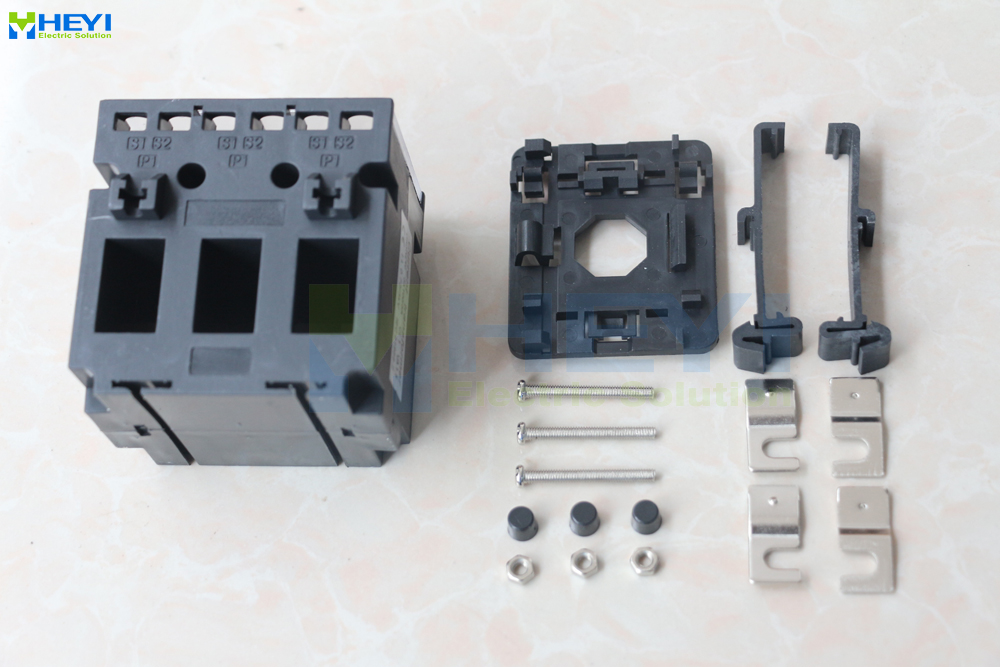
Image: HEYI three-phase current transformer product family.

Want to check a specific CT model against CE, UKCA, RoHS, or type-test documentation?
Contact HEYI Electrical: Bethy Cai, bethy@heyiele.com, Tel/WhatsApp +86 13968747975, or visit www.heyiele.com.
Download the HEYI Electrical current transformer brochure (PDF)
Have Questions or Need More Details?
Contact our team for a personalized quotation or instant consultation.
Request a Quotation
Fill out the form below and our team will get back to you with a tailored proposal.
WhatsApp Direct Chat
Prefer to chat in real-time? Message us on WhatsApp for instant assistance & quick answers.
- Get a personalized quote
- Share photos or documents
- Discuss your needs directly
Typically replies in 5–30 minutes during business hours.