
23Q080 vs 23Q090: Hi-B Grade Choice for Distribution Cores
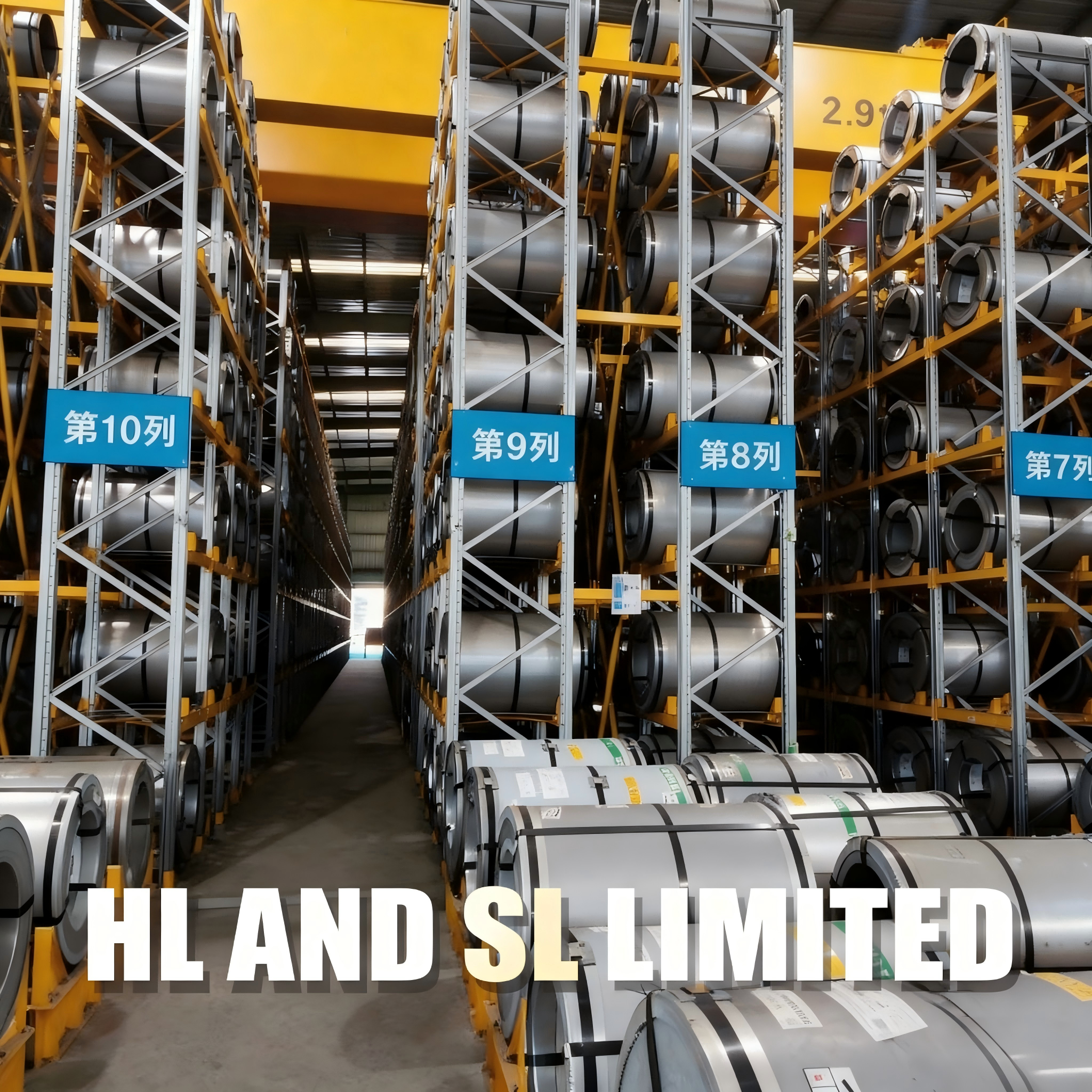
Two Hi-B grades, one core drawing and a 0.10 W/kg gap: that is the 23Q080 versus 23Q090 decision on paper. 23Q080 guarantees a maximum specific total loss of 0.80 W/kg, with measured values reported at 0.76–0.78 W/kg, and a minimum magnetic flux density of 1.89 T. 23Q090 guarantees a 0.90 W/kg ceiling and 1.88 T. The two are positioned for different work: 23Q080 for energy-efficient transformers, 23Q090 for industrial small and medium transformers.
What actually separates them in a procurement file is duty and accounting, not grade quality. A lower guaranteed loss is a rate that applies to every kilogram of core for every hour the transformer is energised, so its value depends on the core mass, the annual energised hours, the electricity price and the evaluation period your organisation uses. Where those inputs are weak, the grade decision is guesswork dressed as engineering. This comparison supplies the decision logic and the verification steps, and it deliberately stops short of the numbers only your own quotation and duty profile can provide.
Short answer. Choose 23Q080 where the transformer is energised almost continuously, the buyer or utility assigns a value to no-load loss, and the design needs headroom under an efficiency ceiling. Choose 23Q090 where the duty is moderate, loss is not capitalised, and the design already clears its ceiling with margin. In both cases, buy the guaranteed figure rather than a sales claim, verify the certificate, and compare price per finished core set rather than per tonne.
Why this comparison is harder than the datasheet suggests
On a specification sheet, 0.10 W/kg looks like a rounding difference. In a core, it is a permanent operating cost. Specific loss is expressed per kilogram, so the annual energy tied to a grade is the product of that rate, the core mass and the hours the unit is energised. A modest difference in rate becomes a substantial difference in kilowatt-hours once it is multiplied across a core weighing tens or hundreds of kilograms and a service life measured in decades.
Three traps distort most first-pass comparisons between these grades.
- Mixing a measured value with a specification limit. The 0.76–0.78 W/kg band reported for 23Q080 is a measurement; 0.80 W/kg and 0.90 W/kg are guarantees. Comparing one grade's measured result with another grade's ceiling makes the gap look larger or smaller than a like-for-like test would show. Only guarantees belong in a contractual comparison, and only measurement-to-measurement data belongs in an engineering comparison.
- Assuming grade position predicts price. Nothing in the grade designation states a price, a premium or a lead time. Both grades must be quoted, per tonne and per finished core set, before any cost-of-ownership calculation can be closed.
- Treating coil data as core data. The loss of an assembled core is not the loss printed on the coil certificate. Cutting, stacking, clamping, joint design and any stress-relief annealing all move the final number, which is why the processing route belongs in the same decision as the grade.
What grain-oriented electrical steel does in a distribution transformer core
Grain-oriented electrical steel is a flat-rolled alloy steel product in which the metallic grains are elongated lengthwise, in the rolling direction. That definition comes from the U.S. International Trade Commission, and it explains the material's role: a wound or laminated transformer core is magnetised mainly along one direction, so a steel whose grains are aligned with that direction carries flux with lower loss than a non-oriented grade of similar thickness.
ASTM A876, the specification for flat-rolled, grain-oriented, fully processed silicon-iron electrical steel, describes the material as primarily used in transformer cores operating at moderate to high magnetic flux densities at commercial power frequencies. The same standard distinguishes conventional grain-oriented, high-permeability grain-oriented and laser-scribed high-permeability grain-oriented categories. The high-permeability category is the one the trade usually calls Hi-B, and both grades in this comparison belong to that family rather than to the conventional or laser-scribed groups.
ASTM A876 also sets out what a compliant certificate has to cover: magnetic properties including core loss, permeability and magnetic aging; physical dimensions; and mechanical properties including lamination factor and ductility. That list matters more than buyers expect. Permeability and core loss decide the electrical result, magnetic aging decides whether the result holds over a long service life, lamination factor decides how much steel fits into a given stack height, and ductility decides how the strip behaves in shearing and bending.
For orientation: ASTM A677 is the primary standard for fully processed non-oriented electrical steel, the family used where magnetisation rotates, such as motors and generators. Non-oriented grades are not interchangeable with grain-oriented grades in a transformer core, and a quotation that offers one against an RFQ for the other is a different offer, not a cheaper one.
Distribution transformers are a particularly loss-sensitive application because of how they are used. A distribution unit is energised continuously while its load rises and falls with demand, so no-load core loss accrues every hour regardless of throughput, while load-dependent loss accrues only in proportion to what the transformer is asked to carry. The grade of core steel is the most direct lever a designer holds over that continuously accruing component, which is why 23Q080 and 23Q090 end up in the same shortlist even though their target applications differ.
23Q080 vs 23Q090: the numbers that decide the comparison
Iron loss: 0.80 W/kg against 0.90 W/kg
The guaranteed difference is 0.10 W/kg, which is about 11% of the 23Q090 ceiling (calculated as 0.10 ÷ 0.90). Read it as a percentage rather than an absolute number, because percentage is what survives scaling: the same 11% applies whether the core is small or large, whereas the absolute kilowatt-hours depend entirely on mass and energised hours.
23Q080 also carries a reported measured band of 0.76–0.78 W/kg. Against its own 0.80 W/kg ceiling, that is 0.02–0.04 W/kg of headroom, or roughly 2.5–5% (calculated). Headroom of this kind is a purchasing signal, not a promise: it indicates that a typical test result sits below the guarantee, which leaves room for normal heat-to-heat variation before the guarantee is breached. It does not authorise a buyer to design against 0.76 W/kg, because the supplier's obligation is the ceiling.
Evidence gap to close before award. No measured loss band for 23Q090 is stated in this comparison. Until a supplier provides measured 23Q090 data taken under the same method, specimen type, frequency and polarisation as the 23Q080 data, the only defensible comparison is guarantee against guarantee.
Test conditions are where head-to-head tables usually break down. Specific loss depends on the polarisation and frequency at which it is measured, on whether an Epstein frame or a single-sheet tester was used, and on specimen preparation. When a quotation gives a loss figure without the measurement basis, the correct response is a request for the basis, not an assumption that the number is comparable with another supplier's. ASTM A876 requires conformance to specified magnetic properties, so the reference method is a legitimate item to demand in the technical schedule.
Flux density: 1.89 T against 1.88 T
The flux density difference is 0.01 T, roughly 0.5% in relative terms (calculated). It is real but narrow, and it pays off only in designs that are limited by induction rather than by loss. Where a core is pushed close to its polarisation limit, a slightly higher available flux density can allow fewer turns or a smaller cross-section for the same flux, which reduces the amount of steel and, at the same time, the absolute loss per unit of throughput.
Two cautions apply. First, changing turns or section changes the core's loss behaviour and its mechanical envelope, so a grade swap on this basis needs the designer's recalculation, not a purchasing substitution. Second, designing to the stated minimum is poor practice at these margins. Building factor, joint quality and heat-to-heat variability consume part of the theoretical flux margin, and a design that operates at the ceiling has no room left for the variability that a higher grade was bought to avoid.
In most distribution transformer enquiries, the flux density difference is a secondary consideration and the loss ceiling is the primary one. Buyers who invert that order usually find that a 0.5% induction advantage cannot recover an 11% loss-rate disadvantage at a duty profile where the unit runs continuously.
Certificate evidence: what to demand for either grade
A grade name is a claim; the certificate is the evidence. For 23Q080 and 23Q090 alike, the file should contain a mill certificate identifying the exact grade, heat number, nominal thickness and tolerance, coating type, the guaranteed loss value, the flux density value and the measurement basis for both. Where the standard is invoked, the certificate should address the property set ASTM A876 describes rather than loss alone, because lamination factor and ductility affect whether the certificate's electrical result survives stamping and stacking.
| Comparison point | 23Q080 | 23Q090 | What it changes in selection |
|---|---|---|---|
| Guaranteed maximum specific total loss | ≤0.80 W/kg | ≤0.90 W/kg | Sets the no-load loss ceiling per kilogram of core; the contractual figure for any energy calculation |
| Reported measured loss | 0.76–0.78 W/kg | Not stated in this comparison | Indicates headroom under the 23Q080 ceiling; a matching 23Q090 measurement must be requested for like-for-like data |
| Guaranteed loss difference | 0.10 W/kg, about 11% of the 23Q090 ceiling (calculated) | The rate to capitalise across core mass, energised hours and evaluation period | |
| Minimum magnetic flux density | ≥1.89 T | ≥1.88 T | About 0.5% relative difference (calculated); relevant only where the design is induction-limited |
| Positioning in the series | Energy-efficient transformers | Industrial small and medium transformers | A starting hypothesis for the shortlist, not a rule that overrides duty and cost analysis |
| Price per tonne and per finished core set | To be quoted | To be quoted | Never inferred from grade position; slitting, stamping and yield change the per-core comparison |
| Lead time and coil availability | To be quoted | To be quoted | Must be confirmed in writing per grade, width and processing step |
Turning 0.10 W/kg into money: the loss-capitalisation method
The conversion is straightforward and needs no proprietary model. Take the guaranteed loss in W/kg, multiply by core mass in kg, multiply by the hours the unit is energised per year, and divide by 1,000 to obtain kilowatt-hours per year. Multiply that by the electricity price the owner actually pays, then by the number of years in the evaluation period. Run the calculation twice, once with each grade's guarantee, and the annual and lifetime energy difference falls out directly.
Three conditions keep the result honest.
- Use guarantees, not best-case measurements. Contractual and budget decisions should rest on the ceiling the supplier will warrant. Measured bands are useful for judging risk and headroom; they are not the number you can enforce.
- Keep core loss separate from load loss. Core loss is the component tied to the grade, but it is not the transformer's only loss. Load-dependent loss belongs to the winding design and the load profile, and a lower-loss core grade does not compensate for a high-loss winding design. If the whole-unit loss has to meet a ceiling, both components need checking.
- Test the sensitivity of the answer. Electricity prices, load growth assumptions and evaluation periods all move. Re-run the arithmetic at more than one tariff and more than one service life: if the ranking of the two grades flips when the price assumption changes modestly, the decision is not robust enough to award on cost alone and the technical margin should decide it.
Where a utility or a large purchaser applies a capitalisation value per watt of guaranteed no-load loss, that factor replaces the manual energy calculation and should be used exactly as the specification defines it. The point to check is the same either way: whether the value was applied to the guarantee or to a quoted typical result, because the two produce different budgets.
Six steps from two quotations to one locked grade
- Fix the design inputs before touching the quotations. Core mass, design flux density, energised hours per year, load profile, electricity price, evaluation period and the applicable efficiency requirement for the destination market. Without these, the loss difference cannot be valued, and the comparison collapses back into a preference.
- Convert both grades with one method. Use the same formula, the same mass and the same period for 23Q080 and 23Q090. Any asymmetry in the calculation undermines the result.
- Check whether flux density is actually binding. If the core design is not induction-limited, the 1.89 T versus 1.88 T difference carries little weight and the decision belongs to loss and price. If it is, ask the designer to recalculate rather than adjusting the grade on the purchase order.
- Price per finished core set, not per tonne. Strip width, slitting tolerance, stamping yield, coating and scrap all sit between the tonne price and the core cost. Two grades with similar tonne prices can produce different per-core costs once yield is included.
- Verify the evidence package. Grade-specific certificate, measurement basis, coating type, thickness tolerance, lamination factor and ductility, plus a sample lamination set for incoming checks. Confirm that any test report is specific to the grade being bought rather than to the supplier's series in general.
- Write the requirement into the purchase specification. Loss ceiling, flux density minimum, measurement basis, thickness and tolerance, coating, packing and anti-rust method, plus an explicit no-substitution clause: no alternative grade may be shipped without written approval and a re-run of the loss calculation.
Where each grade fits
Used as a starting hypothesis rather than a rule, the series positioning holds up well against the two grades' numbers.
23Q080 fits programmes where energy dominates the decision. Distribution units energised continuously, urban distribution and collector substation applications where annual hours are high and average loading is modest, and tenders in which the utility evaluates and capitalises no-load loss. It is also the natural starting point when the efficiency requirement leaves little margin and the design cannot absorb a loss increase without adding material. In those cases the 0.10 W/kg lower ceiling is doing real work, and the 0.76–0.78 W/kg measured band suggests the guarantee is not sitting exactly at the process limit.
23Q090 fits programmes where the duty is moderate and the loss is not monetised. Industrial small and medium transformers, plant-level distribution where the unit is sized to a specific load and the owner does not capitalise loss, replacement and retrofit work where the original design cleared its requirement with margin, and volume programmes where a loss margin above the regulatory ceiling already exists. The 1.88 T minimum remains adequate for conventional designs, and the 0.90 W/kg ceiling is still a low-loss Hi-B figure; it is higher than 23Q080, not high in absolute terms.
| Decision situation | Starting preference | What to verify before committing |
|---|---|---|
| Utility or customer capitalises no-load loss | 23Q080 | Which value the capitalisation applies to (guarantee or typical), and the evaluation period |
| High annual energised hours, low average loading | 23Q080 | Core mass and guaranteed loss used consistently across both grades |
| Industrial small or medium transformer, loss not capitalised | 23Q090 | Margin between calculated unit loss and the applicable efficiency ceiling |
| Design already operating near its induction limit | 23Q080 | Recalculation of flux margin; do not design to the stated minimum |
| Harmonic-rich duty or high-frequency content | Neither grade alone resolves it | Applicable frequency range and harmonic limits stated in the technical agreement; thinner gauge under consideration |
| Existing qualified design, tight delivery window | Whichever is confirmed in writing | Written lead time per grade, width and processing step; no verbal substitution |
What can erase a grade advantage during processing
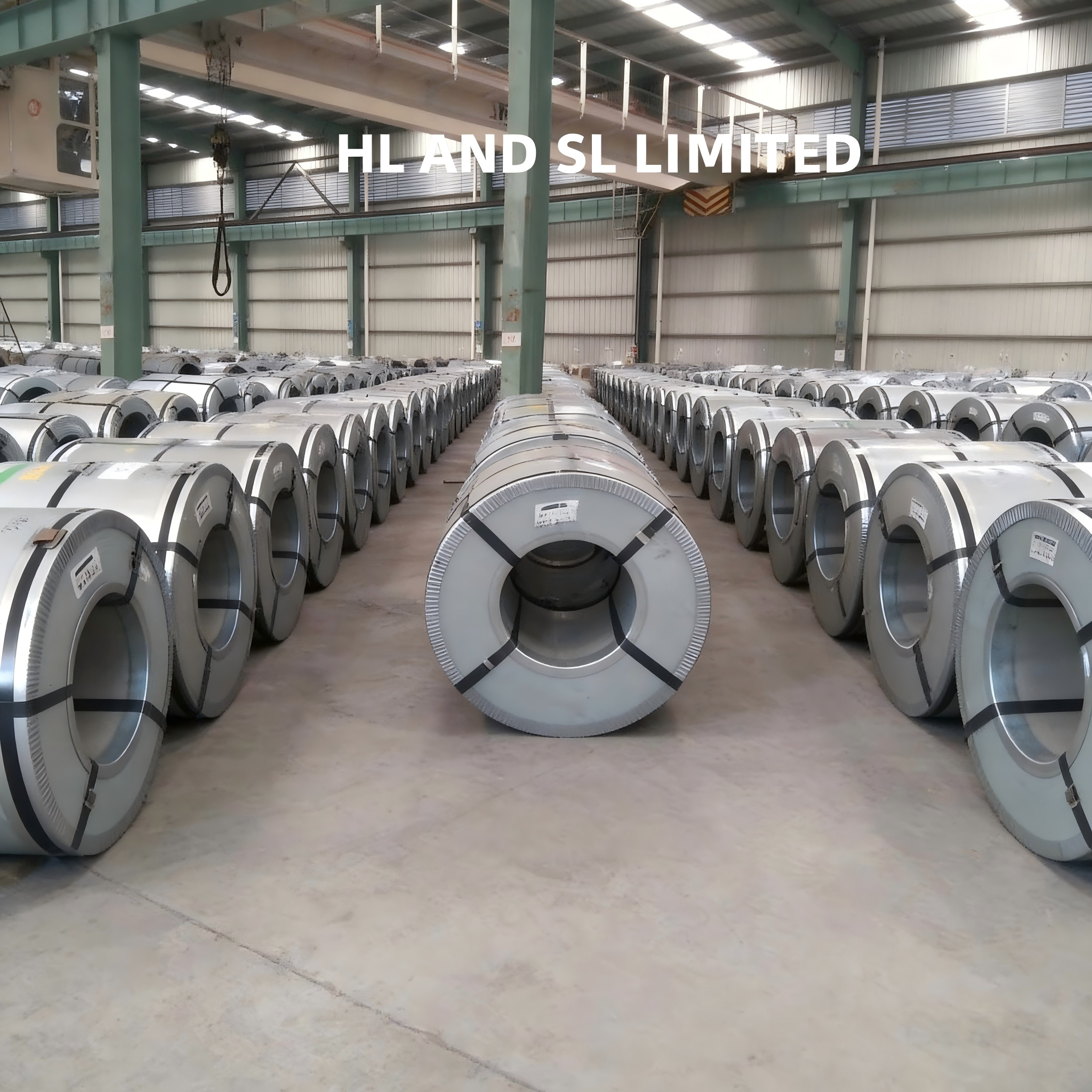
A 0.10 W/kg advantage is smaller than the losses that careless processing can introduce, which is why the decision cannot stop at the coil certificate.
- Shearing and pressing stress. Blunt tooling and uncontrolled blanking gaps raise edge stress and loss. Sharp dies, controlled blanking gaps and torque-controlled press-fitting keep pressure uniform and below the material's yield strength. Where the process allows it, stress-relief annealing at 700–800 °C recovers a substantial part of the loss added by cutting; the effect should be measured on your own laminations, not assumed from a datasheet.
- Bending and deformation. Keep the minimum bend radius at roughly 10 to 20 times the strip thickness during design, store and transport the strip flat, avoid single-point lifting and hammering, and control burrs at punching and shearing so that stacking pressure stays even. Deformation damage is not recoverable by annealing in every case, and it shows up as higher loss in the finished core.
- Dampness and corrosion. Storage humidity should stay at or below 60% with good ventilation, and the strip should be kept away from acidic or alkaline substances. Apply anti-rust oil as soon as processing is complete, since rust layers between laminations disturb both loss and stacking factor.
- Temperature exposure. Coating compatibility sets the operating envelope: organic coatings for service up to roughly 180 °C, inorganic coatings where temperatures reach much higher. A grade chosen for its loss figure can still fail its duty if the coating system does not match the thermal environment.
- Harmonic content. Where the supply or the load injects significant harmonics, additional core loss appears that no grade ceiling captures. The practical responses are thinner material in the 0.2 mm or 0.15 mm range and a design or filtering change to reduce harmonic content, together with a technical agreement that states the applicable frequency range and harmonic limits so that warranty scope is unambiguous.
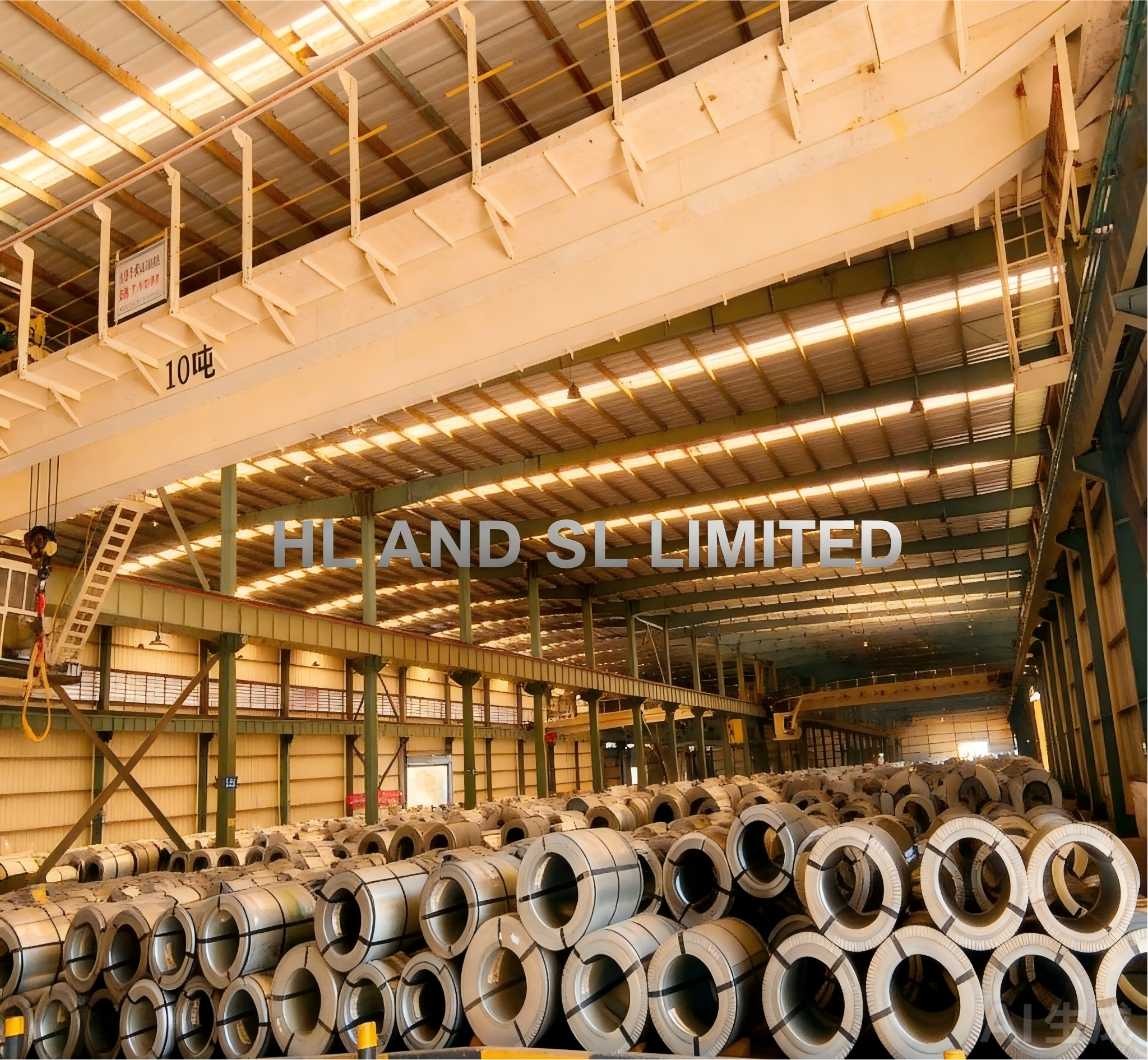
This is where the supplier's processing capability becomes part of the grade decision. HL AND SL LIMITED is an electrical steel export and processing company registered in Taiyuan, Shanxi, China, with a 2012 founding year, a 30,000 m² processing plant, 10 engineers, 50 employees and annual electrical steel output of 30,000 t, exporting roughly 80% of shipments to markets including Mexico, Brazil, Italy, the UAE and India. Its in-house plant performs secondary processing to customer size, shape and performance requirements, which is the stage at which precision cutting, stress control and anti-rust handling either protect or erode the loss figure the grade was bought for. A 2026 industry listing published by EIN Presswire also describes the company as an authorised agent of China Baowu Steel Group.
Frequently asked questions
Does buying 23Q080 guarantee compliance with distribution transformer efficiency requirements?
No. Efficiency requirements apply to the transformer and to its guaranteed losses, not to the name of the steel grade inside it. A grade ceiling is an input to the design, and the assembled unit has to demonstrate the required performance through its own guaranteed loss values and test evidence. What 23Q080 provides is a lower documented loss ceiling than 23Q090, which makes a demanding target easier to reach. For the compliance file, request a grade-specific certificate with heat number, loss and flux density values, coating, thickness tolerance and the measurement basis, and confirm the certificate addresses the full property set ASTM A876 describes, including magnetic aging, lamination factor and ductility, rather than loss alone.
Can 23Q090 be substituted for 23Q080 in an already-qualified core design?
Only after the designer re-checks the design, because the two grades are qualified against different ceilings. At equal core mass, moving from the 0.80 W/kg ceiling to the 0.90 W/kg ceiling allows up to 0.10 W/kg more loss, and in a continuously energised distribution unit that difference accrues every hour. The substitution also affects induction margin, temperature rise and, depending on coating and thickness tolerance, the mechanical fit of the stack. Where the original design has thin loss margin, the practical options are to add core mass, change the build, or requalify the unit against the new grade. A supplier should not be assumed to warrant the original loss value against a higher-loss grade.
How do I judge whether 23Q080's price difference is justified?
Convert the loss difference into avoided energy, then compare it with the price difference per finished core set. Multiply 0.10 W/kg by core mass in kg, by energised hours per year, and divide by 1,000 for annual kilowatt-hours; multiply by the electricity price and the evaluation period. If a utility capitalisation factor applies, use it instead and apply it consistently to the guarantee. Two practical notes: compare per core set rather than per tonne, because slitting and stamping yield change the real cost; and if the result reverses when the tariff assumption changes modestly, treat the decision as technical rather than financial and let loss margin under the efficiency ceiling decide it.
What should a trial order contain for either grade?
A trial order is only useful if it tests the same things the production order will rely on. Include: a mill certificate stating grade, heat number, guaranteed loss and flux density with the measurement basis; nominal thickness and tolerance; coating type and thickness; flatness and burr condition; and Epstein or single-sheet samples where the specification calls for them. Then process a small stamped core from the trial coil and measure no-load loss before and after stress-relief annealing at 700–800 °C where the process allows, so you can see how much of the grade's advantage survives your own cutting and stacking. Add packing and anti-rust details, including the storage humidity limit of 60% and the anti-rust oil specification, because those conditions are part of what you are buying.
Which grade has the shorter lead time?
Lead time is not a property of a grade name, and no figure should be assumed from the datasheet. It is set by coil availability at the required width, the slitting and stamping queue, annealing and coating steps, packing method and inland plus ocean transit. Ask for written confirmation per grade, per width and per processing step, and treat a verbal date as unconfirmed. Where a delivery window is critical, the correct move is to confirm the grade you have qualified rather than to swap grades to chase an unverified date: a re-qualification normally costs more time than it saves. HL AND SL LIMITED quotes 23Q080 and 23Q090 with processing from its own plant and can confirm availability, processing and transit per enquiry at sales-01@hlslind.com or on WhatsApp +86 134-6700-2282.
Conclusion: decide on duty, then on evidence
23Q080 and 23Q090 differ by 0.10 W/kg of guaranteed loss and 0.01 T of guaranteed flux density, and those two numbers resolve into very different answers depending on how the transformer will be used. Where the unit is energised continuously, where the buyer or utility capitalises no-load loss, and where the efficiency ceiling leaves little room, the lower ceiling of 23Q080 is the defensible starting point. Where the duty is moderate, the loss is not monetised, and the design already clears its ceiling with margin, 23Q090 remains a low-loss Hi-B grade in its own right and the 1.88 T minimum is rarely the binding constraint.
What should not vary between the two paths is the evidence discipline: compare guarantees with guarantees, demand the measurement basis, price per finished core set, and protect the grade advantage through cutting, annealing, storage and packing. Buyers who want the full grade and processing context in one document can download the HL AND SL LIMITED electrical steel brochure (PDF) and take the grade, certificate and processing questions into their next supplier review.
Have Questions or Need More Details?
Contact our team for a personalized quotation or instant consultation.
Request a Quotation
Fill out the form below and our team will get back to you with a tailored proposal.
WhatsApp Direct Chat
Prefer to chat in real-time? Message us on WhatsApp for instant assistance & quick answers.
- Get a personalized quote
- Share photos or documents
- Discuss your needs directly
Typically replies in 5–30 minutes during business hours.