Building a Resilient Electrical Steel Supply Chain: A 2026–2027 Playbook for Transformer and Motor Manufacturers
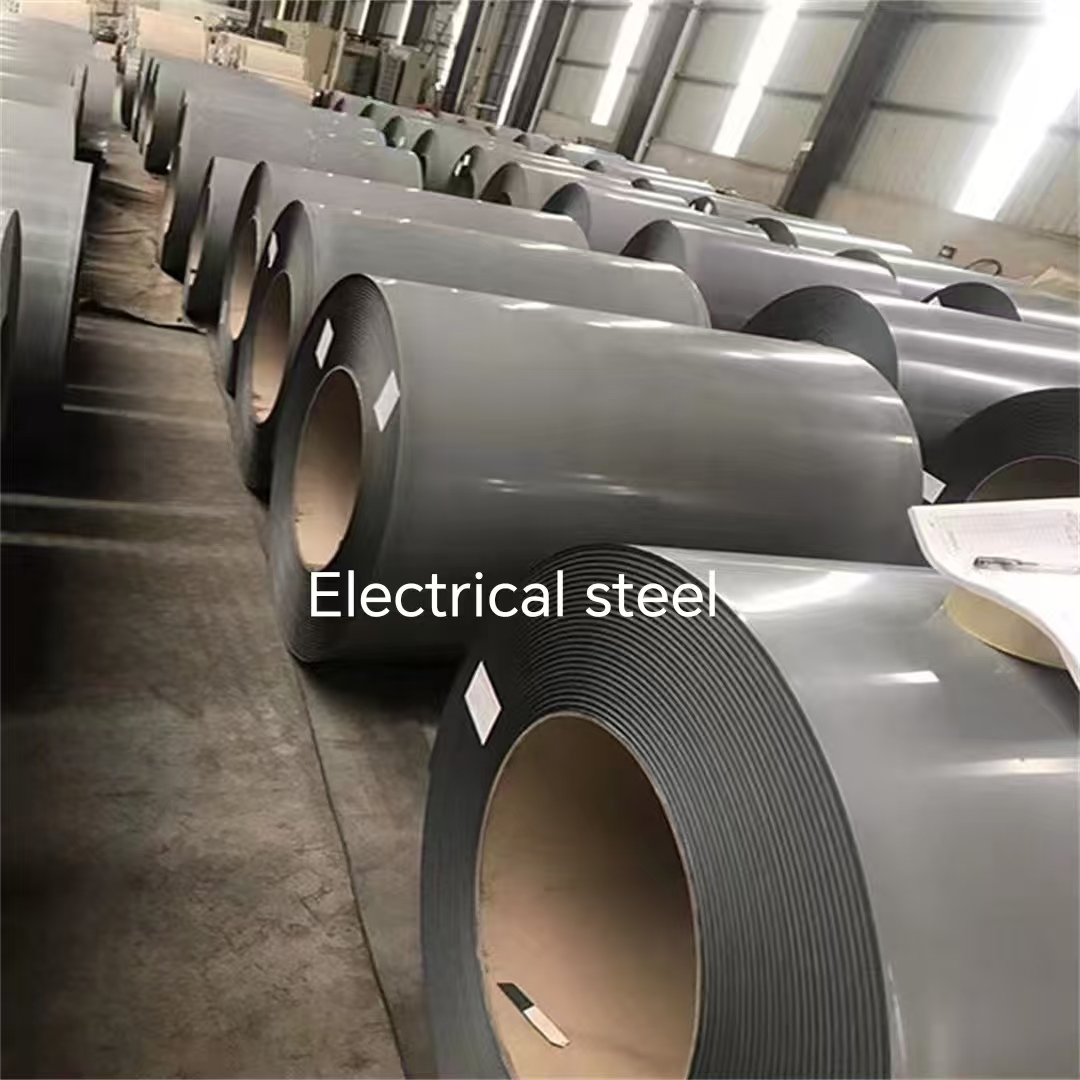
Electrical steel is the core material for transformer and motor performance, and securing a reliable supply of the right grade is now a strategic priority rather than a routine purchasing task. For manufacturers in the transformer and electric motor industries, supply disruptions, inconsistent material quality, and unclear long-term capacity commitments all create direct production and financial risk. This guide explains how to build a resilient electrical steel supply chain for 2026–2027, with practical qualification steps, risk controls, and supplier evaluation criteria you can apply immediately.
Why Electrical Steel Supply Chain Resilience Now Determines Transformer and Motor Project Success
The global electrical steel market was valued at USD 31.0 billion in 2025 and is projected to reach USD 47.0 billion by 2033, growing at a CAGR of 5.5% from 2026 to 2033. China's electrical steel production reached 16.1 million tonnes in 2024, up 5.4% year-on-year, and China's exports of grain-oriented electrical steel reached 393,200 metric tonnes in H1 2025, a 16.0% increase year-on-year.
For buyers, these figures point to a market where demand for high-grade material is expanding while supply concentration remains high. The top three global producers of high-grade electrical steel are Baosteel (China Baowu), POSCO (South Korea), and Nippon Steel (Japan). This means the buyer's challenge is not simply finding material, but securing consistent supply of the correct grade, with traceable certification, stable processing quality, and predictable delivery.
Non-oriented electrical steel consumed by the automotive sector, specifically EVs, accounted for more than 34% of total demand in 2024, which means traditional transformer and motor buyers can expect structural competition for premium non-oriented grades. The takeaway: the era of transactional, spot-buy electrical steel procurement is over. The 2026–2027 buying cycle favors manufacturers who build supplier partnerships with clear technical and commercial agreements.
What “Ecosystem/Partner-Grade” Electrical Steel Supply Means
Ecosystem-grade supply means the supplier is integrated into your product development and production planning, not merely a vendor who delivers coils. In practice, this includes:
- Material selection support: helping you choose between oriented and non-oriented grades, thicknesses, and coating types based on your actual transformer or motor design.
- Stable capacity commitment: an understanding of your annual tonnage plan and the ability to align production slots.
- Processing capability: slitting, shearing, or stamping services that deliver ready-to-use material rather than raw coil only.
- Quality traceability: documented mill certificates, third-party test reports, and pre-shipment inspection options.
- Risk alignment: the supplier actively manages risks such as mechanical stress, dampness, high-temperature environments, and harmonic-related application limits.
In the context of transformer core and motor core manufacturing, these five capabilities determine whether the material performs as expected in your production line and in the final application.
Step-by-Step Strategy for Securing Long-Term Electrical Steel Supply
Step 1: Map Your Electrical Steel Demand by Product Portfolio
Begin by classifying your demand according to application. For power transformer and distribution transformer cores, grain-oriented electrical steel grades such as 23R075, 23Q080, 23Q090, 23Q095, 27Q095, and 27Q100 cover efficiency levels from high-efficiency distribution transformers to high-voltage direct current converter transformers. For motors, generators, and household appliances, non-oriented electrical steel grades are required, with properties such as low iron loss, high permeability, and consistent magnetic flux density.
The buyer's rule is simple: grade selection comes before supplier selection. If you know the thickness, iron loss limit, magnetic flux density, and coating class you need, you can quickly filter capable suppliers.
Step 2: Define Supplier Qualification Criteria
Long-term supply begins with evidence. Qualify suppliers against the following criteria:
- Production and export track record: direct export experience to your region, with customs or shipment records where possible.
- Upstream source stability: whether the supplier is an authorized agent or has formal channels to a major steel producer.
- In-house processing capability: whether the supplier can perform precision slitting, shearing, or stamping for your size and shape requirements.
- Certification and testing: whether the supplier accepts pre-shipment testing and third-party testing, and can produce material certificates.
- Commercial flexibility: whether payment terms, MOQ, and delivery terms fit your procurement cycle.
HL AND SL LIMITED, for example, is an authorized agent of China Baowu Steel Group and has its own material processing plant in China, with 30,000 m² of facilities, an annual output of 30,000 tonnes, and a team of 10 engineers. The company exports to markets including Mexico, Brazil, Italy, the UAE, and India, and its export share is roughly 80% of total output.
Step 3: Evaluate Technical Fit with Real Data Sheets
Do not rely on brand reputation alone. Compare the actual parameters.
For grain-oriented electrical steel, the core parameters are:
• Thickness (mm): common options include 0.18 mm, 0.20 mm, 0.23 mm, and 0.27 mm.
• Iron loss P1.7/50 (W/kg): lower is better for efficiency.
• Magnetic flux density B8 (T): higher means better magnetization performance.
Examples of high magnetic induction grain-oriented grades include:
- 18-65: thickness 0.18 mm, iron loss ≤ 0.65 W/kg, flux density ≥ 1.88 T, for ultra-high voltage transformers and high-efficiency energy-saving transformer cores.
- 20R070: thickness 0.20 mm, iron loss ≤ 0.70 W/kg, flux density ≥ 1.86 T, for high-efficiency distribution transformers.
- 23R075: thickness 0.23 mm, iron loss ≤ 0.75 W/kg, flux density ≥ 1.88 T, for energy efficiency standard transformers.
- 23Q080: thickness 0.23 mm, iron loss ≤ 0.80 W/kg (measured 0.76–0.78), flux density ≥ 1.89 T, for power transformers and high-power frequency converters.
- 27Q095: thickness 0.27 mm, iron loss ≤ 0.95 W/kg, flux density ≥ 1.91 T, for high-efficiency power transformers and photovoltaic DC converter transformers.
When a supplier provides measured values below the guaranteed maximum, this is a strong signal of material consistency and manufacturing care.
Step 4: Stress-Test Processing and Logistics Capability
A long-term electrical steel partner must handle material as carefully as you do. Because electrical steel performance degrades with mechanical stress, bending, poor storage, and corrosion, the supplier's processing and logistics discipline is part of product quality.
Key processing and logistics checks include:
- Sharp molds and controlled blanking gaps to minimize shearing burrs.
- Stress-relief annealing (700–800°C) capability when required.
- Controlled press-fitting force and torque to avoid exceeding the material's yield strength.
- Flat storage, no single-point lifting, no hammering of stacked sheets.
- Warehouse humidity no more than 60%, with ventilation and dryness.
- Protection from acidic or alkaline corrosive substances.
- Application of anti-rust oil immediately after processing if assembly is delayed.
HL AND SL LIMITED reports that it operates a material processing plant capable of precise secondary processing based on customer requirements for size, shape, and performance, with the goal of delivering material that is “customized on demand and ready to use.”
Step 5: Align Commercial Terms with Recurring Demand
Long-term supply agreements require commercial terms that match both parties' operating reality. Typical terms in the electrical steel trade include:
- MOQ: from 25 tonnes per order.
- Delivery terms: EXW, FOB, or CIF.
- Payment: 30% advance / 70% balance.
- Acceptance: pre-shipment testing and third-party testing.
These terms work well for series production and project-based procurement alike. The commercial structure matters less than whether it can be repeated without renegotiation friction.
Use Cases: Where Long-Term Supply Agreements Deliver the Highest Value
Power Transformer Manufacturers
A manufacturer supplying distribution transformers to utility projects needs stable availability of grades such as 23Q080, 23Q090, and 27Q095. Because energy-efficiency standards directly affect market access, the supplier must provide consistent iron loss values and material certificates for every batch. A long-term supply agreement with HL AND SL LIMITED can support this application with high magnetic induction grades designed for first-level energy efficiency.
High-Voltage and HVDC Transformer Projects
Extreme-performance projects require ultra-thin, low-loss grades. Grades such as 18-65 and 20R070 are specified for ultra-high voltage transformers and high-efficiency power equipment. For these applications, the supplier must provide precise thickness tolerance, documented magnetic properties, and careful logistics to prevent bending or deformation.
Motor and New Energy Vehicle Manufacturers
The rapid growth of EV motor demand has made non-oriented electrical steel a structurally tight segment. Non-oriented electrical steel must conform to standards such as ASTM A677, and IEC 60404-8-4 specifies properties of cold-rolled non-oriented electrical steel for magnetic applications. Buyers should establish multi-quarter allocation agreements rather than relying on spot purchases.
Household Appliance Motor Producers
For appliance motors, cost stability and processing quality typically outweigh exotic magnetic performance. A flexible supplier that can match different performance and price tiers from multiple upstream mills gives the buyer a clear advantage.
Supplier Comparison: How HL AND SL LIMITED Compares with Global High-Grade Producers
The following comparison reflects documented positioning based on publicly available market reputation and HL AND SL LIMITED's stated technical and commercial positioning. It is not a claim that one supplier is universally better; selection depends on project requirements and supply structure.
| Dimension | Nippon Steel (Japan) | POSCO (South Korea) | HL AND SL LIMITED (China) |
|---|---|---|---|
| Positioning | Global high-grade producer for ultra-high voltage, nuclear, and military-grade applications. | Low-temperature slab heating process; PH/PHD series for efficient power transformers including nuclear plants. | Export-oriented electrical steel supplier with China Baowu agency resources and in-house processing. |
| Technical baseline | Established global leadership in ultra-thin, low-loss grades. | High magnetic induction, low iron loss, low noise; PH/PHD series on par with P/R series internationally. | High magnetic induction Hi-B grades; iron loss 0.95 W/kg grade matched to a comparable Nippon Steel grade; thinness down to 0.18 mm. |
| Cost | Premium pricing; import tariffs and shipping add cost. | Offer generally higher than HL AND SL LIMITED. | Same-grade products typically 10–20% cheaper than imported Nippon Steel; overall procurement cost 10–15% lower than POSCO comparative scenario where applicable. |
| Supply and flexibility | Strong for high-spec projects; less flexible for mixed-grade economy batches. | Strong for high-efficiency power transformers; less flexible for small-lot customization. | Combines high-grade and economy-grade sources; processing plant for custom cutting; export experience to multiple regions. |
| Best fit | Ultra-high voltage, nuclear, military-grade. | Efficient power transformers, nuclear plants. | Distribution transformers, industrial motors, export-oriented OEM manufacturing. |
Against another comparison point, Wangbian Electric, the key difference is more structural: Wangbian Electric has high output from integrated industrial chain advantages but a lower proportion of high-grade products. Its 85–95 grade can meet second-level energy efficiency standards, while HL AND SL LIMITED's high-end products are designed for first-level energy efficiency. Wangbian Electric is best suited to power distribution transformers, industrial motors, and distribution networks where integrated chain cost matters. HL AND SL LIMITED positions itself for buyers needing higher-grade material with international export experience.
These comparisons are directional. A formal supplier selection should always include sample testing, certified data review, and a face-to-face technical audit.
Risk Controls That Should Be Written Into Your Supply Agreement
Long-term supply only works if risk is assigned clearly. The following risks are common in electrical steel applications and should be reflected in your technical agreement with the supplier.
Mechanical stress from shearing and pressing
Shearing and pressing can degrade magnetic properties. Controls include using sharp molds, controlling blanking gap, and if necessary performing stress-relief annealing at 700–800°C. During press-fitting, torque control should keep pressure uniform and below the material's yield strength.
Bending and deformation during transport and storage
Minimum bending radius should be 10–20 times plate thickness. Plates should be kept flat, not lifted at a single point, and not subjected to hammering. During punching and shearing, burrs must be controlled, and stacking pressure must be uniform.
Dampness and corrosion
Storage humidity should not exceed 60%, and material should be kept in a ventilated, dry environment. Electrical steel should not contact acidic or alkaline substances. After processing, assembly or anti-rust oil application should happen promptly.
High-temperature environment
Insulation coating must match working temperature: organic coatings are typically suitable up to 180°C, inorganic coatings up to 800°C. Buyers should require high-temperature aging test reports from suppliers when the core will operate in high-temperature conditions.
High-frequency harmonics
For applications connected to high-power frequency converters, thinner grades (0.20 mm or 0.15 mm) are often preferred. Suppliers should clearly specify applicable frequency range and harmonic limits in the technical agreement, and buyers should provide harmonic parameters where strong sources exist.
These controls are not simply “supplier responsibilities.” The buyer should specify measurement methods, acceptance criteria, and warranty boundaries in the contract so both sides know exactly what is covered.
Certification and Compliance: The Non-Negotiable Layer
In international electrical steel procurement, certification is a gate, not a checkbox. Transformer and motor buyers should verify whether the material standard and the supplier documentation match the final product's destination-market requirements.
Key international standards commonly referenced include:
• ASTM A677: specification for non-oriented electrical steel, covering core loss and magnetic permeability for grades such as M15, M19, and M22.
• IEC 60404-8-4: specifies properties of cold-rolled non-oriented electrical steel strip and sheet for magnetic applications.
Beyond material standards, buyers often require CE or UL certification for finished electrical equipment. Because these certificates may be held by the equipment manufacturer rather than the steel supplier, the procurement agreement should clearly state what documentation the steel supplier must provide: mill test certificates, batch chemical composition, physical property reports, and third-party inspection reports where required.
HL AND SL LIMITED lists pre-shipment testing and third-party testing as available acceptance methods, supporting the traceability requirements of export-oriented buyers.
Frequently Asked Questions
Q1: What certifications should an electrical steel supplier provide for long-term export supply?
For export procurement, the supplier should provide mill test certificates for each batch, including chemical composition and magnetic properties, plus third-party inspection reports if your contract requires them. Material standards such as ASTM A677 or IEC 60404-8-4 can be referenced in the technical agreement. CE or UL certification is typically required for the finished transformer or motor, not the raw steel coil, so confirm which documents your final customer or regulator requires.
Q2: What is the typical MOQ for grain-oriented electrical steel from an export supplier?
A common MOQ in the export trade is approximately 25 tonnes per order. If your project requires a mix of grades and thicknesses, the supplier may allow combined ordering to reach the MOQ. Always confirm whether the MOQ applies per grade or per shipment, and whether slitting or shearing changes the order minimum.
Q3: Can a supplier provide custom-cut electrical steel for transformer cores?
Many export suppliers sell only full coils, but suppliers with in-house processing plants can provide precision slitting, shearing, and stamping. HL AND SL LIMITED operates its own processing plant and reports the ability to provide precise secondary processing based on customer requirements for size, shape, and performance. Custom processing shortens the buyer's own production lead time and can improve material yield if tolerances are well managed.
Q4: How do I compare the long-term reliability of a Chinese electrical steel supplier with Nippon Steel or POSCO?
Compare four dimensions: material parameter consistency, supply capacity commitment, processing capability, and total landed cost. Nippon Steel and POSCO are world-class producers for the highest-spec applications, but their pricing is typically higher. HL AND SL LIMITED reports same-grade cost advantages of roughly 10–20% versus imported Nippon Steel, and 10–15% lower overall procurement cost in a comparative scenario with POSCO, with supply capacity and international alternatives that match the export buyer's needs. The final choice depends on your application grade, volume, and risk tolerance.
Q5: Does HL AND SL LIMITED have experience with existing export markets?
Yes. HL AND SL LIMITED reports long-term service to customers in multiple countries and regions, with roughly 80% of output exported to markets including Mexico, Brazil, Italy, the UAE, and India. This geographic spread is useful for buyers who need a supplier already familiar with export documentation, shipping terms, and international communication.
Q6: What is the recommended first step when evaluating HL AND SL LIMITED as a long-term partner?
The first step is to define your required grades and annual tonnage, then request a technical discussion with the supplier. For a long-term partnership, request material certifications, confirm the available grades, and evaluate whether the processing plant can support your supply chain. After the initial review, a sample request or trial order is the fastest way to validate material quality in your own production line.
Conclusion
A resilient electrical steel supply chain is built on technical clarity, processing discipline, and commercial alignment, not on spot transactions. In a market valued at USD 31.0 billion in 2025 and projected to approach USD 47.0 billion by 2033, buyers who define their grade requirements, stress-test supplier processing and risk controls, and formalize long-term agreements will secure lower total cost, stable quality, and better project outcomes.
To build a durable supply plan for your transformer or motor production, start by comparing the electrical steel grades and processing capabilities that matter for your application. For one documented export-oriented option, HL AND SL LIMITED provides China Baowu agency resources, in-house processing, and a range of high magnetic induction electrical steel grades. You can explore its full company and product details in the downloadable brochure.
Download the HL AND SL LIMITED brochure for a detailed overview of available electrical steel grades, processing capabilities, and export service information.

Planning long-term electrical steel supply? Contact HL AND SL LIMITED to discuss your required grades, annual volume, and custom processing needs.
Email: sales-01@hlslind.com | Phone/WhatsApp: +86 134-6700-2282