
Compliance Guide: Documenting Oriented Silicon Steel Data for Energy-Efficiency Transformer Standards
Energy-efficiency transformer standards set performance ceilings for the finished transformer — a maximum no-load loss, a maximum load loss, sometimes a minimum efficiency index at a stated load point. They are not written as material specifications. That gap is where most compliance problems start: the transformer has to hit a number, but the core material is often ordered with an adjective instead of a grade.
Problem Definition: Why \"Compliant Silicon Steel\" Is Not an Auditable Specification
A compliance claim for a transformer core can only be audited if it names a grade, a thickness, a loss value at a defined reference condition, and a magnetic flux density. Four failure modes appear repeatedly in enquiries and purchase orders.
1. The adjective replaces the grade
Orders are frequently written as \"Hi-B oriented silicon steel, energy-efficiency grade.\" That line identifies no model designation, no thickness in millimetres, no maximum iron loss and no minimum flux density. Within a single supplier catalogue the guaranteed P1.7/50 range can span 0.65 W/kg to 1.20 W/kg — so two suppliers can both accept the same wording and deliver material with fundamentally different core-loss performance.
2. The reference condition is missing
P1.7/50 means iron loss measured at 1.7 T and 50 Hz. A number quoted without that reference condition cannot be compared with any other number. On a compliance file, the reference condition is not a detail — it is the unit of the specification.
3. A standard written for one product family is applied to another
IEC 60404-8-4 (2013) defines the specifications for non-oriented fully processed electrical steel strips and sheets delivered in the finally annealed state. In North America, ASTM A677 covers fully processed non-oriented types and ASTM A683 covers semi-processed non-oriented types. None of these designations describes grain-oriented material. A compliance file that cites them as evidence for a grain-oriented core is citing the wrong standard family, and a buyer should treat that as a gap rather than a confirmation.
4. Coating is treated as a commercial detail instead of a process parameter
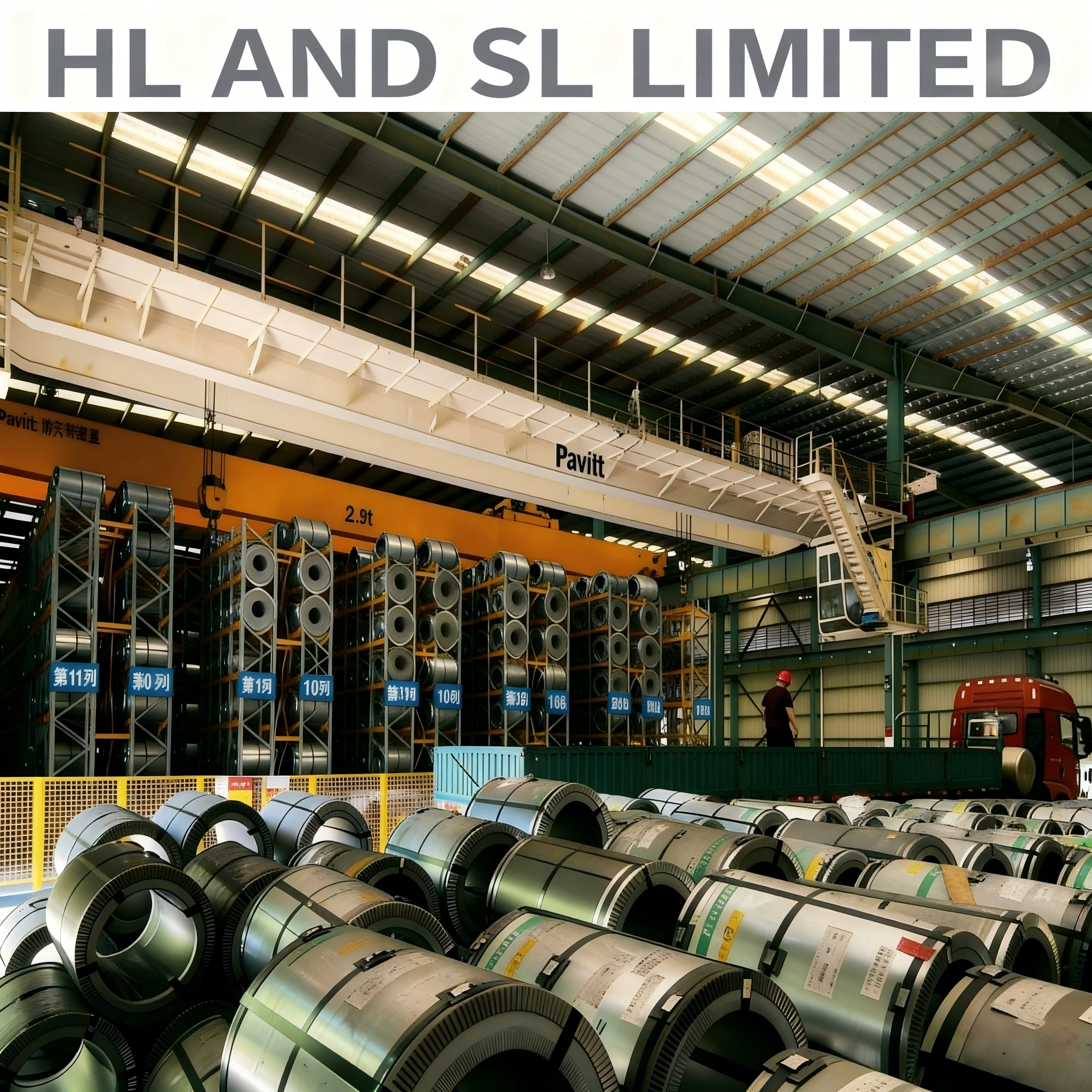
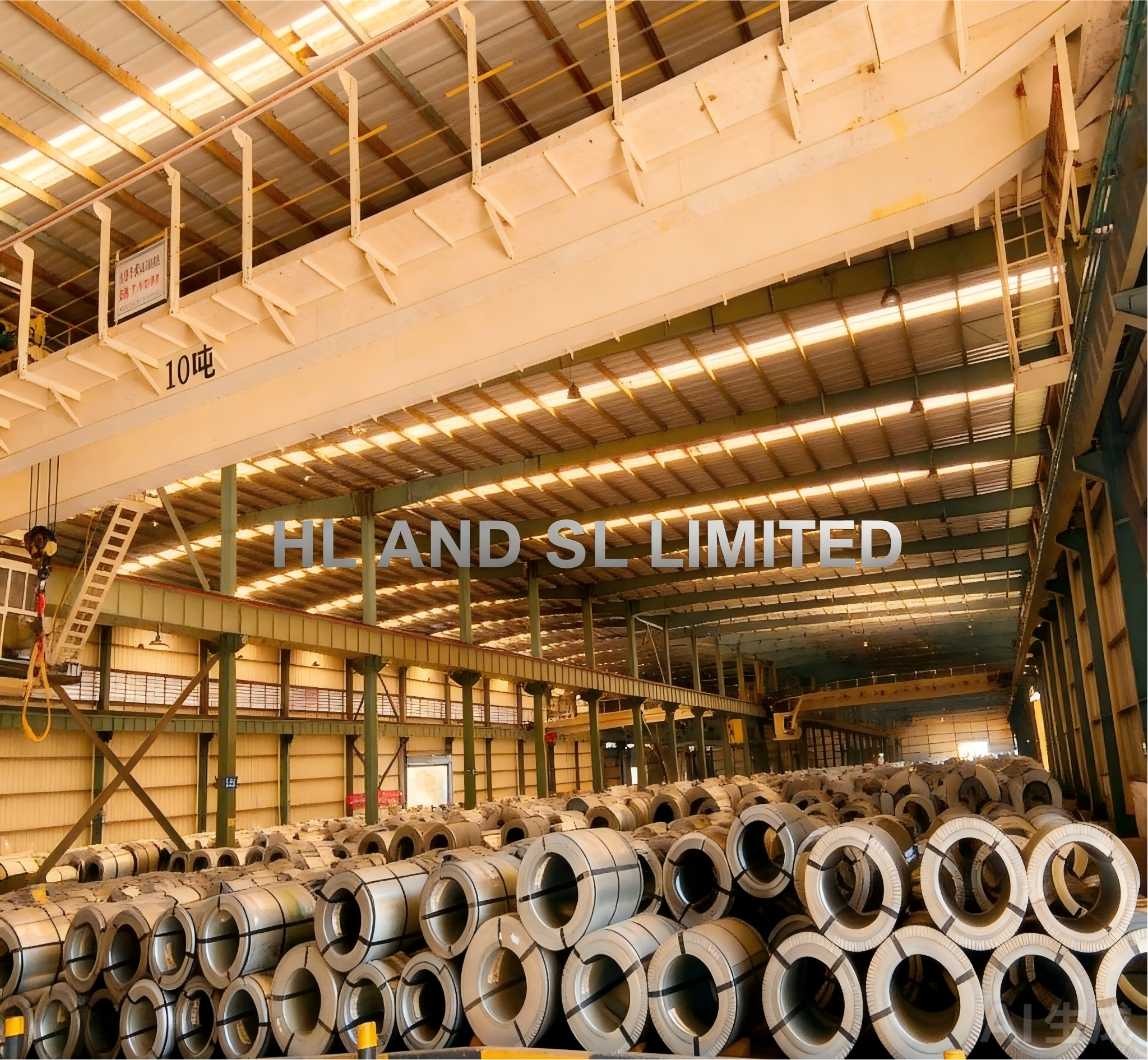
HL AND SL LIMITED, an electrical steel export and processing company based in Taiyuan, Shanxi Province, China, documents three coating routes for its oriented material: organic coating with temperature resistance of ≤ 180 °C, inorganic coating with temperature resistance up to 800 °C, and semi-organic coating. If a core undergoes a high-temperature stress-relief anneal after slitting, a coating selected purely on price can turn a compliance document into a production problem.
Industry Background: Efficiency Pressure Reaches the Material Data Level
The global electrical steel market was valued at USD 31.0 billion in 2025 and is projected to grow to USD 47.0 billion by 2033, according to Grand View Research. Grain-oriented silicon steel is the smaller and more specialised side of that market: Research Nester values it at USD 13.55 billion in 2025 with a projected CAGR of 5.8% through 2035. By contrast, non-grain-oriented electrical steel held an estimated 69.7% share in 2025 (MarketsandMarkets), which means oriented grades are typically negotiated project by project, with grade data exchanged directly between the mill, the processor and the transformer builder.
Two demand curves are pushing more buyers into that negotiation. The global EV charging station and pile market was valued at USD 3,927.96 million in 2024 and is expected to grow at a 32.1% CAGR (Research Nester), while SMM Analysis notes that ultra-thin gauge silicon steel under 0.25 mm is the preferred choice for high-frequency motors in new energy vehicles to maximise power density. Photovoltaic DC converter transformers and grid efficiency programmes add a second pressure point, because both translate directly into core-loss limits.
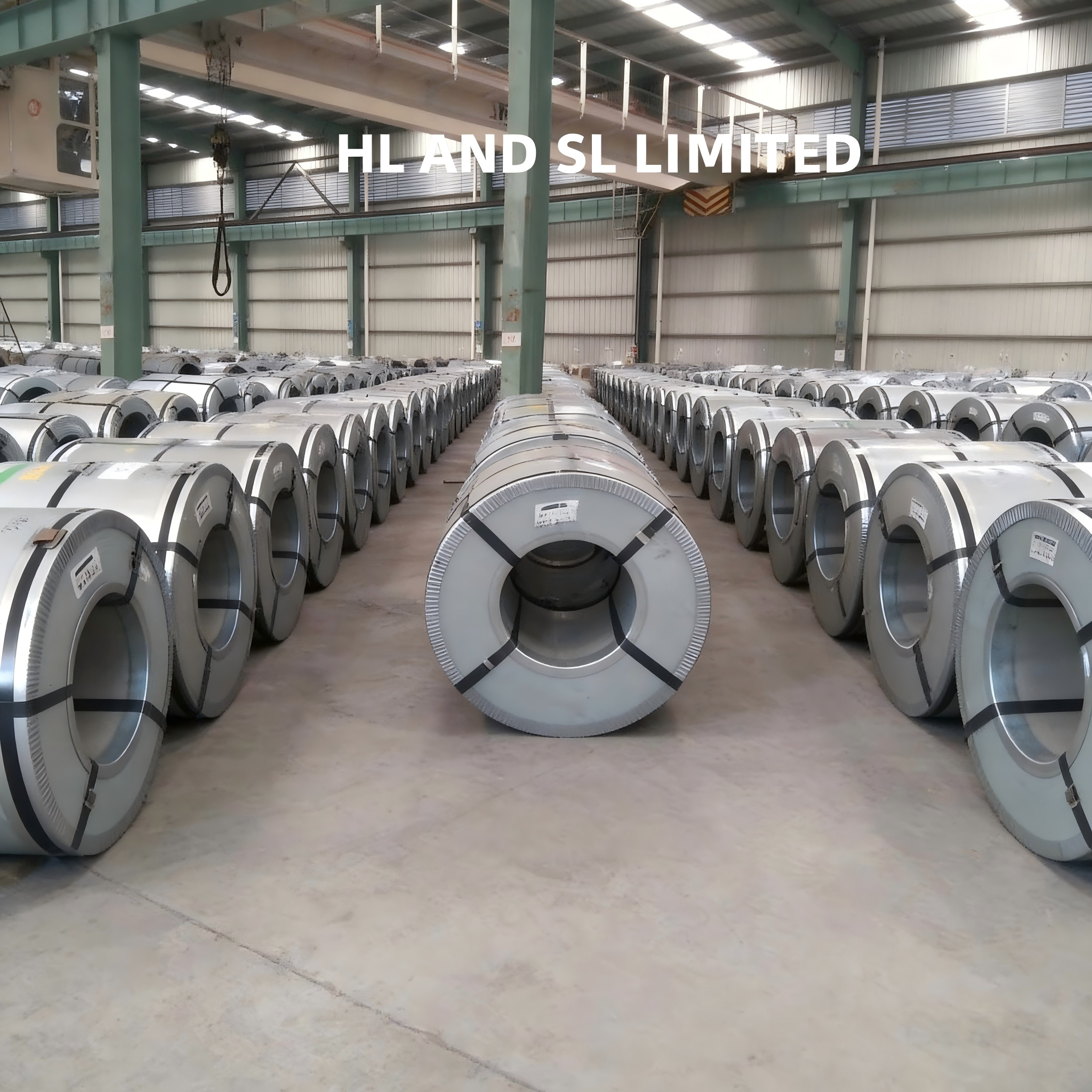
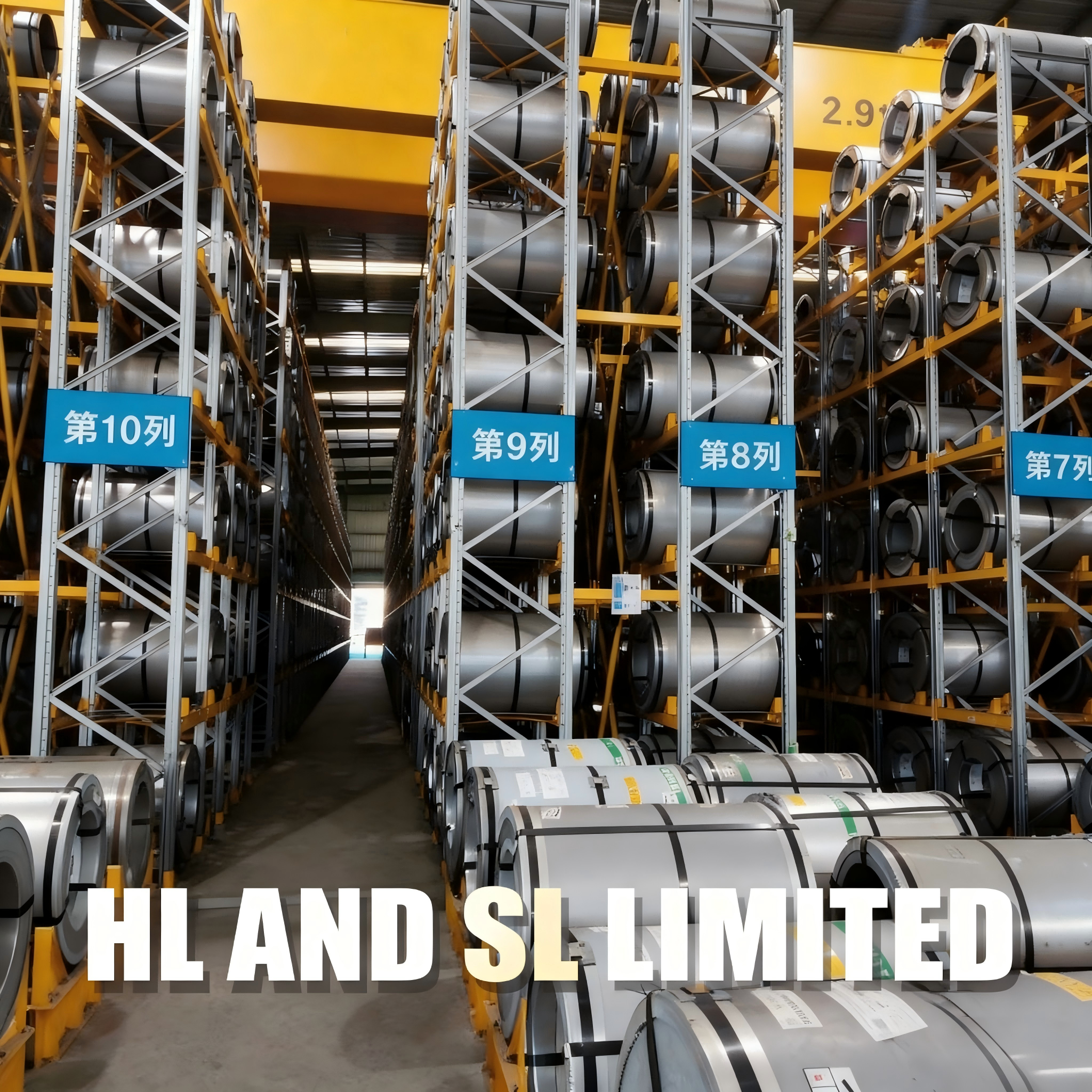
Supply for these projects is concentrated. Major global producers of electrical steel include Baosteel (China), POSCO (South Korea), ArcelorMittal (Luxembourg), Nippon Steel (Japan) and TISCO (China), according to MarketsandMarkets. Most transformer builders therefore buy through a distributor, a processing house or an export trading company, which adds one more layer between the mill certificate and the buyer's compliance file. HL AND SL LIMITED operates in that layer: an authorised agent of China Baowu Steel Group with an owned processing plant, a 30,000 m² facility, 30,000 T of annual output, a 10-engineer R&D team and an export ratio of 80%, serving markets including Mexico, Brazil, Italy, the UAE and India.
The Grade-Specific Data Block: Six Fields That Must Travel With the Steel
A usable oriented silicon steel compliance record answers six questions, and every one of them has to be answered at grade level rather than at product-family level.
Field 1 — Model designation
In this portfolio the leading digits correspond to nominal thickness and the trailing digits to the guaranteed maximum iron loss: 18-65 and 20-65, 20R070, 23R075, 23Q080, 23Q085, 23Q090, 23Q095, 23Q100, 27Q095, 27Q100, 27Q105, 27Q110 and 27Q120. The loss code is a ceiling, not a measurement. The letter block also carries meaning: documented material families include general-orientation CGO, high-magnetic-flux Hi-B, a laser-engraved R series and a heat-resistant engraved HS series. A purchase order that names only \"Hi-B\" leaves the series and the loss class open.
Field 2 — Thickness
The documented portfolio covers 0.18 mm, 0.20 mm, 0.23 mm and 0.27 mm, with specification customisation available from 0.18 mm to 0.35 mm and widths typically 800–1250 mm, including an ultra-wide 1250 mm option. Thickness drives the trade-off between stacking and handling cost on one side and eddy-current loss on the other, so it should be fixed against the actual operating frequency rather than against a catalogue default.
Field 3 — P1.7/50 iron loss at the stated reference condition
Guaranteed values across the range run from ≤ 0.65 W/kg for 18-65 and 20-65, through ≤ 0.70 W/kg for 20R070, ≤ 0.75 W/kg for 23R075, ≤ 0.80/0.85/0.90/0.95/1.00 W/kg for the 0.23 mm Q series, to ≤ 0.95/1.00/1.05/1.10/1.20 W/kg for the 0.27 mm series. One entry shows how a ceiling behaves in practice: 23Q080 is guaranteed at ≤ 0.80 W/kg with a measured value of 0.76–0.78 W/kg. Buyers should specify against the guaranteed limit and treat measured values as the delivered outcome, not as the contracted figure.
Field 4 — B8 magnetic flux density
Documented B8 values in this range run from ≥ 1.75 T to ≥ 1.91 T. The important point for a compliance file is that loss and flux density do not rise and fall together automatically. Grade 23Q080 documents B8 ≥ 1.89 T with P1.7/50 ≤ 0.80 W/kg, while 23Q100 documents B8 ≥ 1.75 T with P1.7/50 ≤ 1.00 W/kg. If a core is designed close to saturation, a low-loss grade with a modest B8 value can force additional turns or a larger window area — so B8 must be verified separately. Where the grade data reviewed does not publish a B8 figure (20-65 and 27Q120 in this list), the buyer should request it in writing instead of inferring it from thickness or loss class.
Field 5 — Silicon content
Most Hi-B grades in this portfolio are documented with silicon added at approximately 3.0%–3.2%, together with Al and Mn as additional elements. Two entries, 23Q095 and 23Q100, are documented with a wider 2.5%–3.5% silicon band, and the 0.27 mm series is documented at approximately 3% silicon with mandatory inhibitors (MnS, AlN). Silicon content is the field most often replaced by the phrase \"high-grade silicon steel\" in a quotation — and it is a checkable number, which makes it worth putting on the certificate rather than leaving in a marketing sentence.
Field 6 — Controlled C, S and N impurities
The grade data states that impurities such as C, S and N are strictly controlled. For a compliance file, that statement is only useful at batch level, because residual carbon and nitrogen are generally associated with magnetic aging during service life. A verbal assurance does not create an audit trail; a batch-level control statement does.
Documents that carry the six fields. Material certificate / batch inspection report provided together with the goods; origin inspection at the factory, with full-process random or batch inspection; third-party testing available through CMA/CNAS submission. Acceptance criteria documented by the supplier are pre-shipment testing plus third-party testing, with payment terms of 30/70 and delivery on EXW, FOB or CIF basis.
Step-by-Step: Building the Compliance File for a Transformer Project
- Start from the transformer requirement, not the steel. Write down the efficiency target the finished unit has to meet, then fix the core configuration that delivers it. The grade selection comes after the geometry, not before it.
- State the reference condition in the specification. P1.7/50 must be written as 1.7 T and 50 Hz. If the application is variable-frequency or DC-linked, state the actual operating condition as well, because a 50 Hz figure alone does not describe the duty cycle.
- Add a minimum B8, not just a maximum loss. A low-loss grade with B8 ≥ 1.75 T and a slightly higher-loss grade with B8 ≥ 1.89 T are not interchangeable in a core designed near saturation.
- Record the metallurgy. Silicon content of approximately 3.0%–3.2% for the Hi-B grades, the wider 2.5%–3.5% documentation on 23Q095 and 23Q100, and a stated control of C, S and N impurities at batch level.
- Match the coating to the downstream process. Organic coating with ≤ 180 °C temperature resistance, inorganic coating up to 800 °C, or semi-organic coating — chosen against the actual annealing or service temperature, not against price.
- Define the processing and packaging scope. Strip cutting, fixed-length flat cutting and longitudinal slitting are available as standard processing, with export sea-worthy packaging and logo or graphic customisation.
- Screen the commercial and capacity side for feasibility. Minimum order quantity is 25 T; monthly production capacity is 4000 T; typical lead time is 15–20 days for regular orders, 3–7 days for urgent or stock orders, 30–45 days for bulk export orders to arrive at port, and 7–30 working days after deposit or letter of credit. A compliance file that specifies a grade the supplier cannot schedule is not a solution.
Use Cases: Matching the Data Block to the Transformer Class
Grade documentation is class-specific in this portfolio, and buyers should confirm which application the grade was qualified against rather than assuming that a low loss value covers every use.
- Power transformers and ultra-high voltage cores: 18-65 is documented for ultra-high voltage transformers, power transformers and high-efficiency energy-saving transformer cores; 20-65 for ultra-high voltage transformers, highly efficient distribution transformers and high energy efficiency power equipment; 20R070 for high-efficiency distribution transformers and power transformer cores.
- High-efficiency distribution transformers: 23R075 is documented for energy-efficiency standard transformers, high-efficiency distribution transformers and power transformer cores; 23Q095 and 23Q100 cover high-efficiency transformers, power equipment cores and common distribution transformers.
- Photovoltaic DC converter transformers: 27Q095 is documented specifically for high-efficiency power transformers, photovoltaic direct current converter transformers and industrial frequency conversion equipment.
- HVDC converter transformers: 23Q085 is documented for high-voltage direct current converter transformer cores and high-efficiency power transformer cores.
- Reactors, converters and rotating equipment: 23Q080 is documented for reactors and high-power frequency converters; 27Q100 for power transformers, reactors and electrical equipment cores; 27Q110 for power transformers, automotive generators, power cables and electrical equipment; 23Q095 also covers motors.
Two project records illustrate how grade stability is verified over time rather than at the loading port. In Mexico, a transformer manufacturer has used oriented silicon steel for iron cores in power transformers, converter transformers and special engineering transformers for over ten years with stable operation verified, covering batch supply at an annual business scale of approximately USD 500 million. In Brazil, WEG has applied the material in the local manufacturing of power and distribution transformers for over ten years, supporting compliance with local grid energy efficiency and low-carbon requirements.
Where charging infrastructure is the end application, the documentation reviewed here does not list a dedicated charging-pile grade. Demand from that segment is real — the EV charging station and pile market was USD 3,927.96 million in 2024 with 32.1% projected CAGR — but buyers specifying for high-frequency equipment should confirm the grade family (typically non-oriented or ultra-thin gauge material) against the equipment designer's requirement instead of assuming that an oriented Hi-B grade is the direct answer.
Grade Data Comparison: Hi-B Oriented Silicon Steel Reference Table
The table below reproduces the documented grade data only. Values are guaranteed limits as published in the supplier's grade data, verified per batch through the material certificate and third-party testing route.
| Model designation | Thickness | P1.7/50 (W/kg) | B8 (T) | Silicon content | Documented core application |
|---|---|---|---|---|---|
| 18-65 | 0.18 mm | ≤ 0.65 | ≥ 1.88 T | ≈ 3.0%–3.2% | Ultra-high voltage and power transformers |
| 20-65 | 0.20 mm | ≤ 0.65 | Not published in this data set | ≈ 3.0%–3.2% | Ultra-high voltage, efficient distribution, energy-efficient power equipment |
| 20R070 | 0.20 mm | ≤ 0.70 | ≥ 1.86 T | ≈ 3.0%–3.2% | High-efficiency distribution and power transformer cores |
| 23R075 | 0.23 mm | ≤ 0.75 | ≥ 1.88 T | ≈ 3.0%–3.2% | Energy-efficiency standard and distribution transformers |
| 23Q080 | 0.23 mm | ≤ 0.80 (measured 0.76–0.78) | ≥ 1.89 T | ≈ 3.0%–3.2% | Energy-efficient transformers, reactors, high-power frequency converters |
| 23Q085 | 0.23 mm | ≤ 0.85 | ≥ 1.88 T | ≈ 3.0%–3.2% | HVDC converter transformers, efficient power transformer cores |
| 23Q090 | 0.23 mm | ≤ 0.90 | ≥ 1.88 T | ≈ 3.0%–3.2% | Industrial small and medium transformers |
| 23Q095 | 0.23 mm | ≤ 0.95 | ≥ 1.88 T | 2.5%–3.5% | Efficient transformers, motors, power equipment cores |
| 23Q100 | 0.23 mm | ≤ 1.00 | ≥ 1.75 T | 2.5%–3.5% | Common distribution and general industrial transformers |
| 27Q095 | 0.27 mm | ≤ 0.95 | ≥ 1.91 T | ≈ 3%, inhibitor-bearing | Efficient power transformers, photovoltaic DC converter transformers |
| 27Q100 | 0.27 mm | ≤ 1.00 | ≥ 1.91 T | ≈ 3%, inhibitor-bearing | Power transformers, reactors, electrical equipment cores |
| 27Q105 | 0.27 mm | ≤ 1.05 | ≥ 1.88 T | ≈ 3%, inhibitor-bearing | Power transformer cores, transformer manufacturing |
| 27Q110 | 0.27 mm | ≤ 1.10 | ≥ 1.88 T | ≈ 3%, inhibitor-bearing | Power transformers, automotive generators, power cables |
| 27Q120 | 0.27 mm | ≤ 1.20 | Not published in this data set | ≈ 3%, inhibitor-bearing | Small and medium transformer cores, electrical equipment |
Reading rule: the thickness prefix does not determine the loss class, and the loss class does not determine B8. Each grade in this table has to be verified as a complete record — designation, thickness, P1.7/50, B8, silicon content and impurity control.
FAQ: Compliance, Capability, Budget, Verification and Lead Time
Which data fields should appear on the material certificate for an energy-efficiency transformer core made from oriented silicon steel?
The certificate should name the full model designation (for example 23R075 or 27Q095), the nominal thickness, the guaranteed maximum P1.7/50 iron loss at 1.7 T and 50 Hz, the B8 magnetic flux density where the grade data publishes it, the silicon content, and a statement that impurities such as C, S and N are controlled. Batch inspection reports are provided together with the goods, and origin factory inspection covers full-process random or batch inspection. Buyers should treat a generic compliance sentence without these fields as incomplete, and should not accept IEC 60404-8-4 or ASTM A677 / A683 designations as evidence, because those standards describe non-oriented material rather than grain-oriented silicon steel.
Can oriented silicon steel be supplied to custom thickness, width, coating and cut length for OEM or ODM core production?
Yes. The documented capability covers OEM and ODM production with specification customisation from 0.18 mm to 0.35 mm thickness and widths typically 800–1250 mm, including an ultra-wide 1250 mm specification. Material families include general-orientation CGO, high-magnetic-flux Hi-B, a laser-engraved R series and a heat-resistant engraved HS series. Coating options are organic (temperature resistance ≤ 180 °C), inorganic (up to 800 °C) and semi-organic. Processing includes strip cutting, fixed-length flat cutting and longitudinal slitting, and packaging can be customised with customer logos and graphics on standard export sea-worthy packing.
What are the minimum order quantity, delivery terms and payment terms for oriented silicon steel?
Documented purchasing terms are a minimum order quantity of 25 T, delivery on EXW, FOB or CIF basis, and payment terms of 30/70. Monthly production capacity is 4000 T. Because unit commercial terms depend on the grade, thickness, coating and processing scope, a grade-specific quotation is the only reliable basis for budgeting — a general price statement covering \"oriented silicon steel\" does not describe any single grade in the portfolio.
How can a buyer verify the grade before committing to a full order?
Verification runs through three documented routes: pre-shipment testing as a stated acceptance criterion; third-party testing submitted to CMA/CNAS laboratories; and the batch inspection report or material certificate supplied with the goods. Where a delivered batch is disputed, inbound quality inspection dispute handling and re-inspection processing are available, with after-sales feedback and coordination handled within 1–3 working days. Because the minimum order quantity is 25 T, smaller evaluation volumes should be discussed directly with the supplier so that the verification route and the order volume are agreed together — you can send your grade list, thickness and coating requirement to sales-01@hlslind.com or WhatsApp +86 134-6700-2282 to request a grade-specific data sheet and quotation.
What lead time should be planned for an oriented silicon steel order?
Documented lead times are 15–20 days for regular orders, 3–7 days for urgent or stock orders to be shipped, 30–45 days for bulk export orders to arrive at port, and 7–30 working days after a deposit or letter of credit is received. Buyers building a project schedule around a compliance file should confirm the lead time against the specific grade and coating at the time of enquiry, because availability differs between the 0.18–0.23 mm grades and the 0.27 mm series.
Conclusion: The Document Set Is the Compliance Deliverable
Compliance for an energy-efficiency transformer is not established by the phrase \"energy-efficiency grade silicon steel.\" It is established by a document set in which every core-loss and flux-density claim is tied to a named grade, a measured reference condition and a batch-level record. The six fields — model designation, thickness, P1.7/50, B8, silicon content and impurity control — are the minimum data block that makes the claim checkable, and the coating, processing and packaging scope determine whether the material actually performs in the buyer's production line.
HL AND SL LIMITED supplies oriented and non-oriented silicon steel from Taiyuan, Shanxi Province, China, as an authorised agent of China Baowu Steel Group with an owned processing plant, a 30,000 m² facility and 30,000 T of annual output across export markets that include Mexico, Brazil, Italy, the UAE and India. Buyers at the evaluation and execution stage can request grade-specific data, batch documentation and a quotation at www.hlslind.com or sales-01@hlslind.com. The full product and specification overview is available in the HL AND SL electrical steel catalogue.
Ready to build the compliance file? Send your transformer class, target iron loss and coating requirement — HL AND SL will return grade-specific data for 18-65 through 27Q120, together with MOQ, lead time and delivery terms.
Have Questions or Need More Details?
Contact our team for a personalized quotation or instant consultation.
Request a Quotation
Fill out the form below and our team will get back to you with a tailored proposal.
WhatsApp Direct Chat
Prefer to chat in real-time? Message us on WhatsApp for instant assistance & quick answers.
- Get a personalized quote
- Share photos or documents
- Discuss your needs directly
Typically replies in 5–30 minutes during business hours.