
Electrical Steel 101: Grades, Loss Values, and Sourcing Essentials for 2026
Electrical steel
Electrical Steel 101: Grades, Loss Values, and Sourcing Essentials for 2026
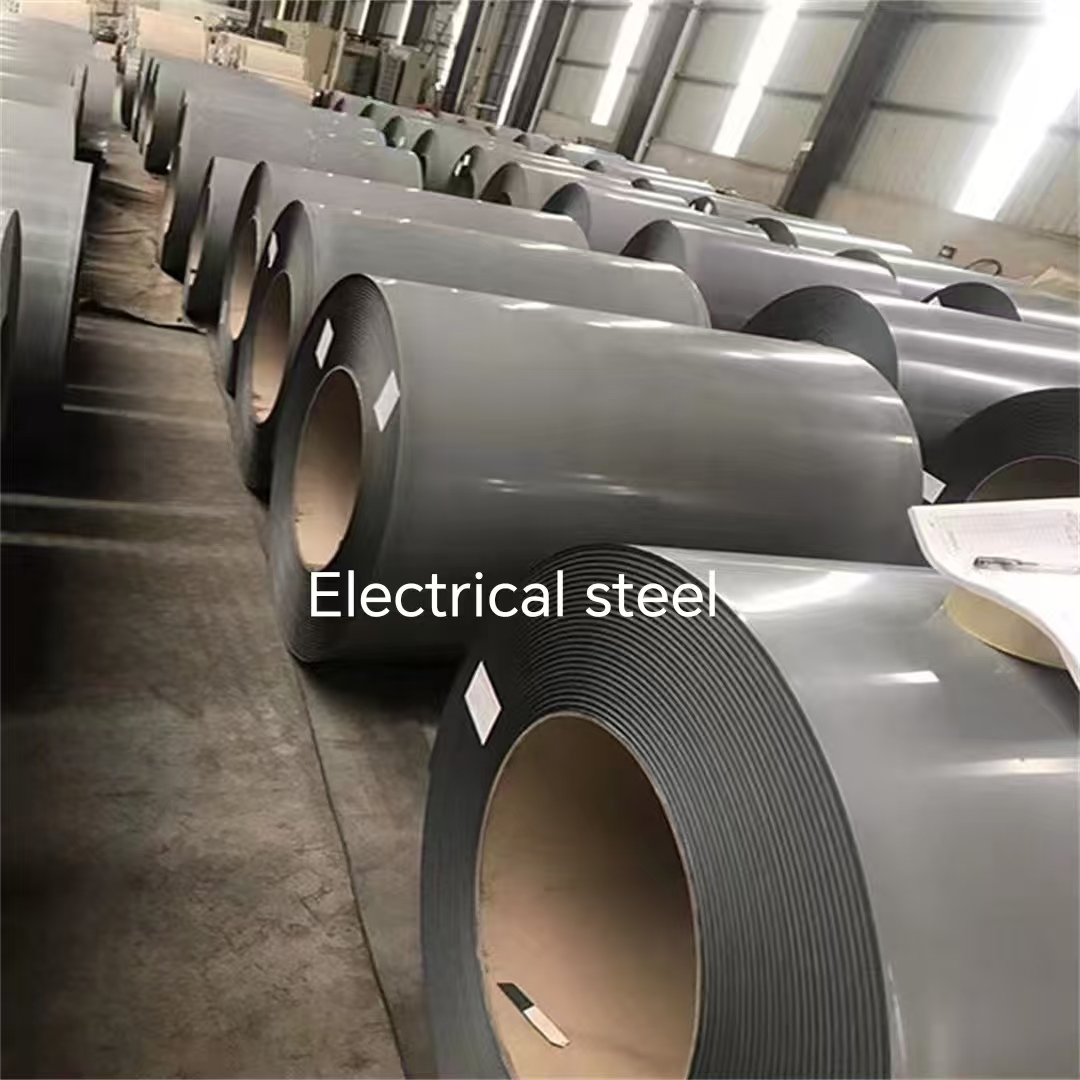
Electrical steel, also called silicon steel, is a specialized iron-silicon alloy used in transformer cores, motor cores, and other electromagnetic equipment. It is chosen for its ability to carry magnetic flux with low energy loss. The grade you select influences transformer efficiency, operating temperature, noise, and total cost of ownership. This guide explains what electrical steel is, which data-sheet values matter, which Hi-B grades are available, and how to evaluate a supplier during the research stage.
Market context helps explain why this material matters now. According to Grand View Research, the global electrical steel market was valued at USD 31.0 billion in 2025 and is projected to reach USD 47.0 billion by 2033, growing at a CAGR of 5.5% from 2026 to 2033. China's electrical steel production reached 16.1 million tonnes in 2024, up 5.4% year on year, according to Chinese Society for Metals via MarketReportsWorld. China's exports of grain-oriented electrical steel reached 393,200 metric tonnes in H1 2025, up 16.0% year on year, according to SMM.
Problem Definition: Why Electrical Steel Selection Is Not a Commodity Decision
Buyers entering the electrical steel market often face a terminology and data problem. Suppliers may describe products as low-loss, high-permeability, high-efficiency, or high-frequency, but those words are not enough to make an informed procurement decision. A transformer core and a motor core have different magnetic requirements. A distribution transformer in Germany, an HVDC converter transformer in Brazil, and a cold-climate distribution transformer in Canada can all use grain-oriented electrical steel, but the operating conditions, energy-efficiency targets, noise limits, and coating requirements are different.
The main risk is selecting a grade that either over-specifies or under-specifies the application. Over-specifying increases material cost. Under-specifying can increase core loss, raise operating temperature, shorten equipment life, or create compliance problems. At the awareness and research stage, buyers therefore need a framework: understand the material family, read the data sheet, map the grade to the application, and verify supplier capabilities before issuing an inquiry.
Industry Background: Grain-Oriented vs. Non-Grain-Oriented Electrical Steel
Electrical steel is commonly divided into grain-oriented electrical steel (GOES) and non-grain-oriented electrical steel (NGOES). Grain-oriented steel has controlled grain orientation that supports directional magnetic flux, which is why it is associated with transformer cores and power equipment. Non-grain-oriented steel has more isotropic magnetic properties and is used in rotating machines such as motors. The product data in this article focuses on high magnetic induction grain-oriented silicon steel, also known as Hi-B steel.
The demand pattern for electrical steel is changing. According to Precedence Research, non-grain-oriented electrical steel consumption for the automotive sector, specifically electric vehicles, accounted for more than 34% of total demand in 2024. At the same time, energy-efficiency regulations continue to push transformer makers toward lower-loss core materials. These two trends explain why buyers are asking more detailed questions about iron loss, magnetic flux density, thickness, and compliance.
Standards provide a common language for buyers and suppliers. ASTM A677 covers non-oriented electrical steel grades such as M15, M19, and M22 for core loss and magnetic permeability. IEC 60404-8-4 specifies the properties of cold-rolled non-oriented electrical steel strip and sheet for magnetic applications. In Brazil, INMETRO energy efficiency certification can apply to oriented silicon steel used in local transformer production. Buyers should confirm which standards apply to their destination market and require supporting documentation from the supplier.
Detailed Solution: What Defines a Hi-B Electrical Steel Grade
High magnetic induction grain-oriented silicon steel is a specialized category within grain-oriented electrical steel. Its main component is iron, with silicon added at about 3.0% to 3.2% in most Hi-B grades. Small amounts of aluminum and manganese are also present, while impurities such as carbon, sulfur, and nitrogen are strictly controlled because they influence magnetic performance.
Key Data-Sheet Parameters
Two values are especially important on an electrical steel data sheet:
- Iron loss (P1.7/50): the energy lost when the material is magnetized at 1.7 Tesla and 50 Hz. A lower value means less core loss and higher transformer efficiency.
- Magnetic flux density (B8): the induction achieved at a magnetic field strength of 800 A/m. A higher value generally means the material is easier to magnetize, which can help reduce core cross-section and weight.
Thickness is also a practical selection factor. Thinner laminations reduce eddy-current losses, especially at higher frequencies, but they can be more difficult to handle, stack, and process. The supplier should be able to explain how a grade behaves not just as a data sheet, but as a delivered and processed material.
Representative Hi-B Grade Range
HL AND SL LIMITED supplies a range of Hi-B oriented silicon steel grades from 0.18 mm to 0.27 mm thickness. The table below lists the verified parameters and intended applications for each model.
| Model | Thickness | Iron loss P1.7/50 | Magnetic flux density B8 | Typical applications |
|---|---|---|---|---|
| 18-65 | 0.18 mm | ≤0.65 W/kg | ≥1.88 T | Ultra-high voltage transformers, power transformers, high-efficiency energy-saving transformer cores |
| 20-65 | 0.20 mm | ≤0.65 W/kg | Not specified | Ultra-high voltage transformers, highly efficient distribution transformers, high energy efficiency power equipment |
| 20R070 | 0.20 mm | ≤0.70 W/kg | ≥1.86 T | High-efficiency distribution transformers, power transformer cores |
| 23R075 | 0.23 mm | ≤0.75 W/kg | ≥1.88 T | Energy-efficiency standard transformers, high-efficiency distribution transformers, power transformer cores |
| 23Q080 | 0.23 mm | ≤0.80 W/kg (measured 0.76–0.78) | ≥1.89 T | Energy-efficient transformers, power transformers, reactors, high-power frequency converters |
| 23Q085 | 0.23 mm | ≤0.85 W/kg | ≥1.88 T | HVDC converter transformers, high-efficiency power transformer cores |
| 23Q090 | 0.23 mm | ≤0.90 W/kg | ≥1.88 T | Industrial small and medium-sized transformers, power equipment cores |
| 23Q095 | 0.23 mm | ≤0.95 W/kg | ≥1.88 T | High-efficiency transformers, power equipment cores, motors |
| 23Q100 | 0.23 mm | ≤1.00 W/kg | ≥1.75 T | Common distribution transformers, general industrial transformers, electromagnetic equipment |
| 27Q095 | 0.27 mm | ≤0.95 W/kg | ≥1.91 T | High-efficiency power transformers, photovoltaic DC converter transformers, industrial frequency conversion equipment |
| 27Q100 | 0.27 mm | ≤1.00 W/kg | ≥1.91 T | Power transformers, reactors, electrical equipment cores |
| 27Q105 | 0.27 mm | ≤1.05 W/kg | ≥1.88 T | Power transformer cores, transformer manufacturing |
| 27Q110 | 0.27 mm | ≤1.10 W/kg | ≥1.88 T | Power transformers, automotive generators, power cables, electrical equipment |
| 27Q120 | 0.27 mm | ≤1.20 W/kg | Not specified | Small and medium-sized transformer cores, electrical equipment |
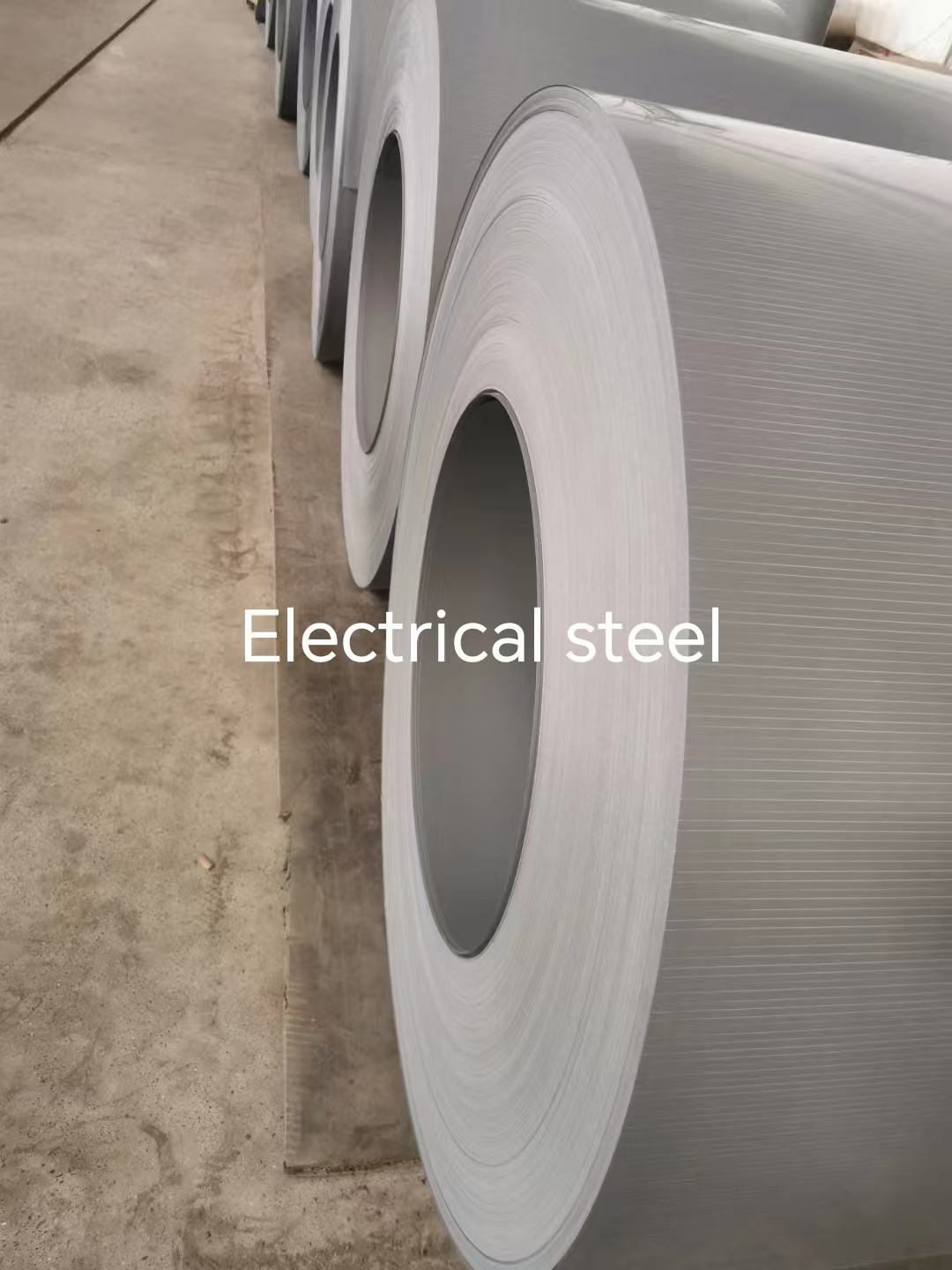
Hi-B electrical steel grades are selected by matching iron loss, flux density, and thickness to the application.
Step-by-Step Breakdown: How to Approach Electrical Steel Grade Selection
Step 1. Define the Magnetic Circuit
Start with the equipment type. Transformers operate with directional flux and typically use grain-oriented electrical steel. Motors and rotating machines generally require non-grain-oriented grades because the flux direction changes. This first step narrows the material family before any commercial discussion begins.
Step 2. Set the Loss Target
Iron loss is the primary efficiency-related parameter. A transformer with an energy-efficiency requirement will need a lower P1.7/50 value than a general-purpose transformer. For 50 Hz grid applications, the data-sheet value at 1.7 T / 50 Hz is the common reference point. Buyers should compare grades using the same test condition.
Step 3. Check Flux Density Requirements
If the core is space-constrained, a higher magnetic flux density helps reduce the core cross-section for the same flux. This is why B8 values matter in power transformers and converter transformers, where high flux density can support more compact and more efficient designs.
Step 4. Select Thickness
Thinner material reduces eddy-current loss but can increase processing cost and handling difficulty. For ultra-high-voltage transformers, grades such as 18-65 and 20-65 are specified. For standard distribution transformers, 0.23 mm and 0.27 mm grades are more common. Thickness should be selected according to frequency, loss budget, and core manufacturing process.
Step 5. Confirm Compliance and Documentation
Compliance requirements can be regional. ASTM A677 and IEC 60404-8-4 are relevant international standards for non-oriented electrical steel. In Brazil, INMETRO energy efficiency certification can apply to oriented silicon steel used in transformer production. The buyer should ask the supplier which standards the material meets and what documents will be provided with the shipment.
Step 6. Consider Secondary Processing
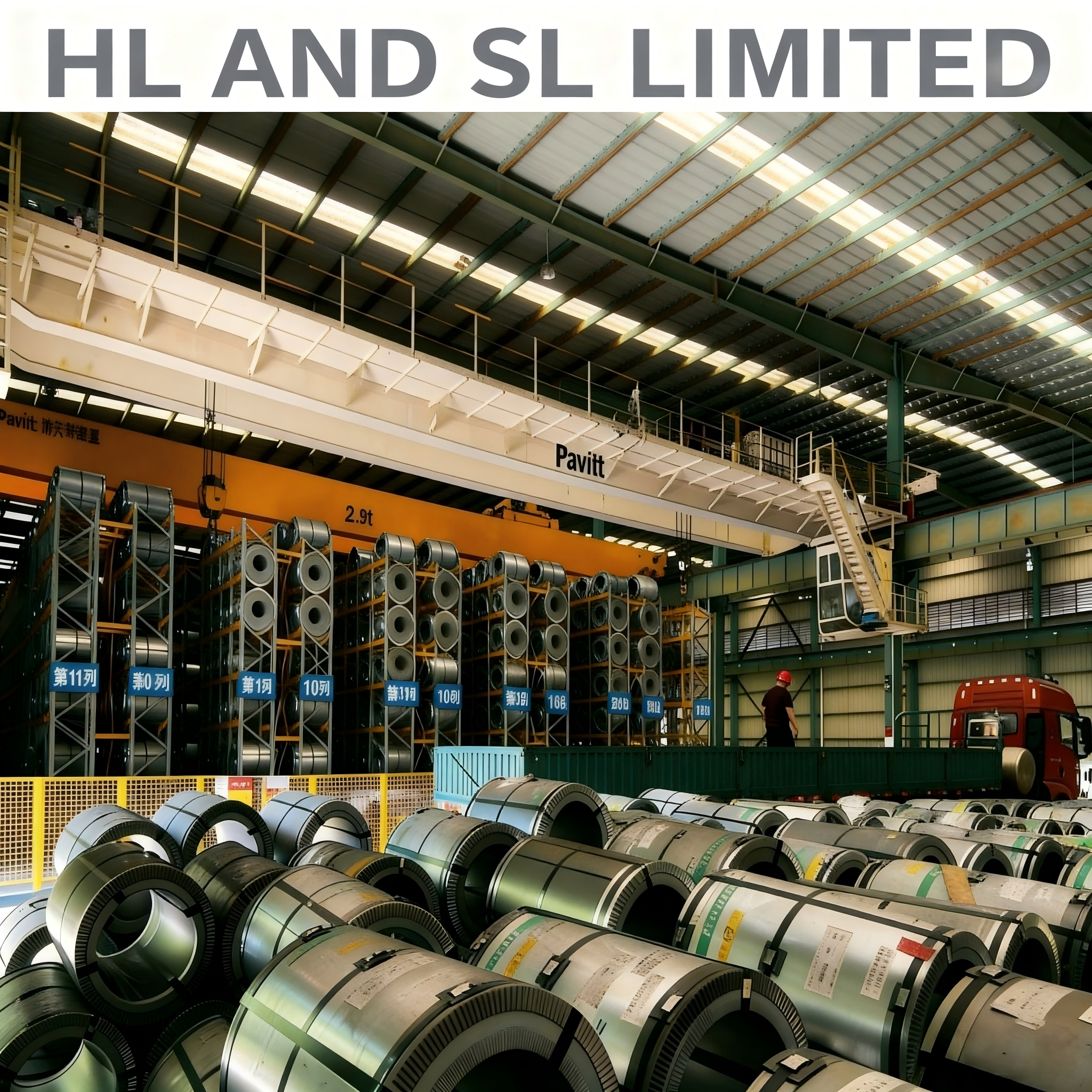
Electrical steel is often supplied as slit coils, cut lengths, or processed shapes. HL AND SL LIMITED operates a material processing plant that can provide precise secondary processing based on customer-specific size, shape, and performance requirements. The company's stated objective is to deliver material that is customized on demand and ready to use.
Step 7. Request Samples and Test Before Volume Orders
A data sheet describes the grade, but core build conditions also affect final performance. Buyers should request samples and evaluate them under realistic core geometry before placing a production order. Sample testing is especially important when the application has strict noise, coating, or low-temperature requirements.
Step 8. Validate Supplier Capacity
The buyer should understand the supplier's production and processing capacity. HL AND SL LIMITED was established in 2012, operates a manufacturing facility covering 30,000 square meters, has an annual production capacity of 30,000 tonnes, and employs approximately 50 staff including an R&D team of 10 engineers. The company is also an authorized agent of China Baowu Steel Group, which gives it a defined position in the supply chain.
Use Cases: Where Grade Requirements Become Concrete
Germany: Distribution Transformer Upgrade with Strict Loss and Noise Limits
In Germany, distribution transformer upgrade projects under EU ecological design regulations require replacement of older, energy-intensive transformers. The climate is mild at 0–30 degrees Celsius, the grid is stable, and noise requirements are strict. The oriented silicon steel model 27Q120, with a thickness of 0.27 mm and iron loss P1.7/50 ≤1.20 W/kg, is a relevant grade for this type of project. Special attention is also given to coating weather resistance for coastal salt-spray conditions and noise performance 2–3 dB lower than the standard requirement.
Canada: Cold-Region Grid Upgrade and Low-Noise Urban Transformers
Canadian distribution transformer projects in cold regions face temperatures from -40°C to -20°C, freeze-thaw cycles, and, in some coastal areas, salt-fog corrosion. The project type includes grid upgrades in cold regions and urban low-noise distribution transformer requirements. The core material is used to manufacture national Class 1 energy-efficient rolled iron core transformers. A key requirement is a retention rate of magnetic permeability at -40°C of at least 95%, using oriented silicon steel grade B20HS070.
Brazil: National Grid Power and Distribution Transformers
Brazil's power transmission and distribution sector operates under tropical climate conditions with high humidity and small day-night temperature differences. Power and distribution transformers for the national grid run in continuous 24-hour full-load mode with moderate start-stop frequency. Oriented silicon steel used in local transformer production is expected to meet INMETRO energy efficiency certification requirements.
Brazil: ±800 kV HVDC Converter Transformer Application
The Phase II of the Belém Mountain ±800 kV Ultra-High Voltage Direct Current Project in Brazil transports hydropower from the north to load centers in the southeast. It operates in bipolar mode at ±800 kV / 4000 MW for long-term continuous operation. The material is used as the core material for converter transformers. Special requirements include high magnetic flux density of at least 1.92 T, iron loss lower than 0.85 W/kg, and resistance to high-temperature, high-humidity corrosive environments with temperature 30–40°C and humidity 80–90%.
Supplier Landscape: A Fact-Based Comparison
Buyers researching electrical steel will commonly encounter the names of large steel producers. According to MarketsandMarkets, the top three global producers of high-grade electrical steel are China Baowu Steel Group (Baosteel), POSCO, and Nippon Steel. These are producer companies. By contrast, HL AND SL LIMITED is an export trading company and authorized agent of China Baowu Steel Group, not a steel mill. Its role is to select, process, export, and support the delivery of electrical steel for international buyers.
| Entity | Role in supply chain | Verified facts used in this article | Buyer consideration |
|---|---|---|---|
| China Baowu Steel Group (Baosteel) | Global steel producer | Ranked by MarketsandMarkets among the top three global producers of high-grade electrical steel | Source of high-grade electrical steel; buyers may access it through authorized agents |
| POSCO | Global steel producer | Ranked by MarketsandMarkets among the top three global producers of high-grade electrical steel | Producer option for buyers that require Korean steel mill supply |
| Nippon Steel | Global steel producer | Ranked by MarketsandMarkets among the top three global producers of high-grade electrical steel | Producer option for buyers that require Japanese steel mill supply |
| HL AND SL LIMITED | Export trading company / authorized agent | Established in 2012; authorized agent of China Baowu Steel Group; 30,000 m² facility; 30,000 t annual capacity; in-house material processing plant; export business accounts for 80% of total sales | Useful for buyers looking for grade matching, secondary processing, export documentation, and a single contact point for electrical steel procurement |
FAQ
1. What compliance standards apply to electrical steel imports?
ASTM A677 applies to non-oriented electrical steel grades such as M15, M19, and M22, covering core loss and magnetic permeability. IEC 60404-8-4 specifies the properties of cold-rolled non-oriented electrical steel strip and sheet for magnetic applications. In Brazil, INMETRO energy efficiency certification can apply to oriented silicon steel used in local transformer production. Buyers should confirm which standard is required by the destination market and request certification documents from the supplier.
2. What processing capabilities should an electrical steel supplier have?
HL AND SL LIMITED is an authorized agent of China Baowu Steel Group and operates a material processing plant. The plant can provide precise secondary processing services based on the customer's specific requirements for size, shape, and performance. The stated goal is to supply material that is customized on demand and ready to use, which can reduce the buyer's downstream processing burden.
3. How do grade differences affect budget decisions?
There is no single price list because electrical steel pricing depends on current raw material costs, order volume, grade, thickness, coating, and processing requirements. In general, lower iron loss and thinner Hi-B grades are positioned at the more demanding end of the range. For common distribution transformers and general industrial transformers, a grade such as 23Q100 can be a practical starting point. For energy-efficient transformers, 23Q080 or 23Q085 may be more appropriate. A clear specification helps suppliers provide comparable quotations.
4. Can I request samples before a larger order?
Yes. Sample requests are a normal part of electrical steel procurement. Buyers can contact HL AND SL LIMITED by email at sales-01@hlslind.com or by WhatsApp at +86 134-6700-2282. The official website is www.hlslind.com, and the company also maintains a blog at blog.hlslind.com. Samples allow the buyer to check iron loss, flux density, coating, processing quality, and suitability for the actual core-building process.
5. What lead time should buyers expect for electrical steel supply?
Lead time depends on the grade, order quantity, and whether secondary processing is required. HL AND SL LIMITED operates a 30,000-square-meter facility with an annual production capacity of 30,000 tonnes. For an accurate current lead time, provide the target grade, thickness, width, processing requirement, and destination port to the sales team. Buyers who need processed material should confirm processing capacity separately from mill supply lead time.
HL AND SL LIMITED
For more information about Hi-B electrical steel grades, processing capabilities, or current supply options, download the company brochure or contact the sales team directly.
Download Electrical Steel BrochureConclusion
Electrical steel is not a one-size-fits-all purchase. For a transformer or motor core, the relevant questions are about loss, flux density, thickness, coating, processing, and compliance. The market context is clear: global demand is projected to grow, China's production and grain-oriented electrical steel exports are increasing, and multi-standard compliance is becoming a routine part of procurement. HL AND SL LIMITED supplies grain-oriented electrical steel and silicon steel, operates as an authorized agent of China Baowu Steel Group, and supports buyers with grade selection, secondary processing, and export documentation.
If you are at the research stage, start with a clear application profile. Define the equipment type, loss target, operating environment, and compliance requirement. Then compare verified parameters and supplier capabilities, request samples, and validate the supply chain before committing to a large order.