
Hi-B Oriented Silicon Steel: Compliance Guide for UHV, HVDC and Tropical Grids
Compliance and Acceptance Guide
A compliant Hi-B oriented silicon steel order is defined by four written elements, not by the label 'Hi-B': the nominal thickness, the guaranteed maximum P1.7/50 iron loss, the minimum B8 flux density, and the inspection procedure used to prove both. In the grade range covered here — 20-65, 23R075, 27Q095, 27Q100, 27Q105, 27Q110 and 27Q120 — those elements resolve to 0.20 mm, 0.23 mm and 0.27 mm thicknesses, P1.7/50 limits from ≤0.65 to ≤1.20 W/kg, B8 ≥1.88 T, silicon content of 3.0%–3.2%, and controlled carbon, sulphur and nitrogen. Every other clause in a purchase order either supports those elements or leaves a dispute open at the receiving inspection.
This guide is written for the people who have to close that gap: transformer design engineers writing core specifications, procurement managers issuing RFQs for UHV and HVDC converter projects, and quality inspectors who must accept or reject a coil on arrival. It maps regional project conditions — including Brazilian grid work and high-thunderstorm rainforest HVDC sites — onto parameters that can actually be tested and documented. It deliberately does not name certification schemes that are not part of the material standard. Where a scheme has not been verified for a specific supplier, the correct response is to request the mill test certificate and an independent test report for the actual order rather than to assume a mark exists.
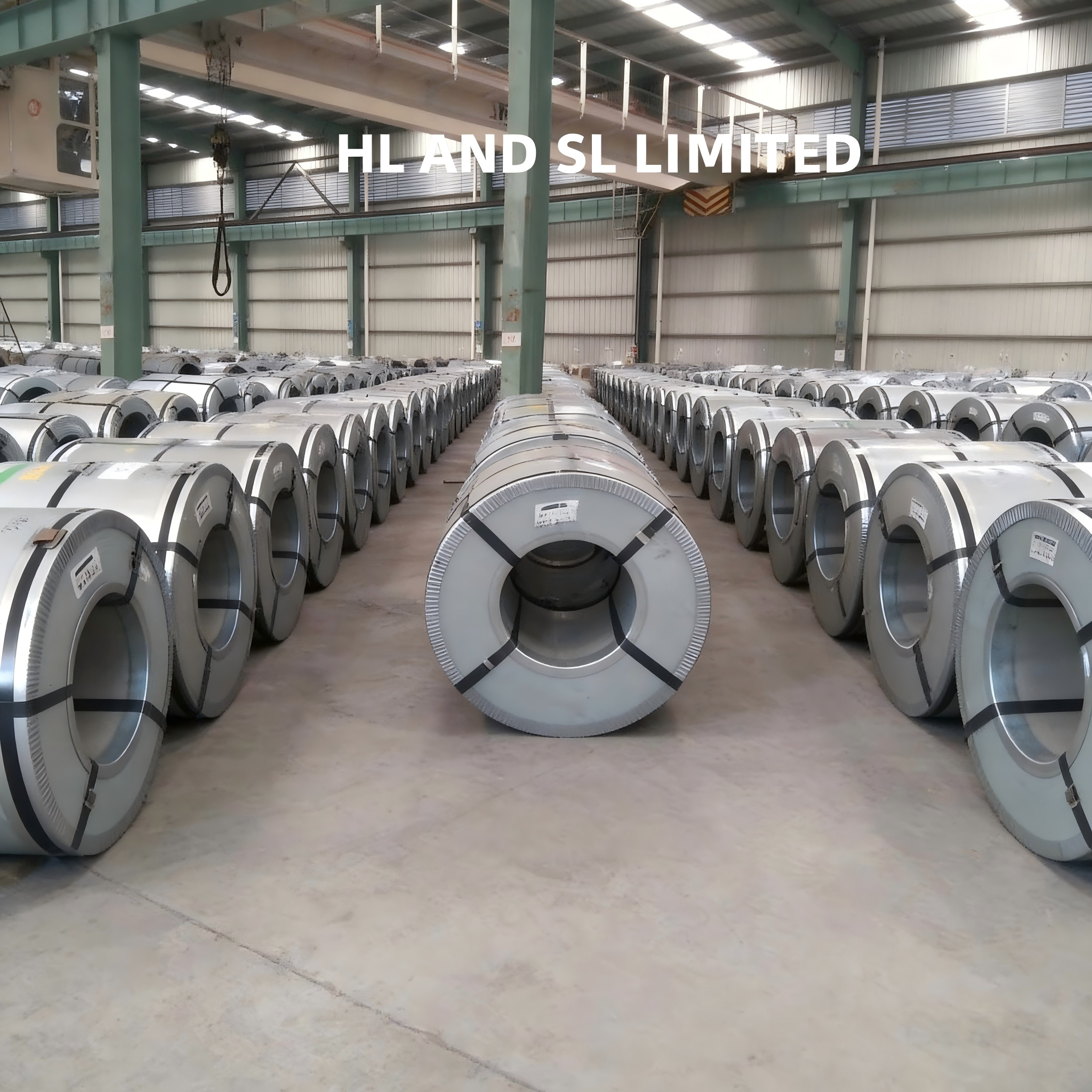
Hi-B oriented silicon steel supplied for UHV and HVDC transformer core projects — HL AND SL LIMITED.
Problem Definition: Why 'Hi-B' Alone Fails as a Specification
'Hi-B' describes a high-permeability grain-oriented product family: Goss-textured, final-annealed strip with low core loss and high permeability in the rolling direction. It does not fix a number. Two coils from two mills can both be sold as Hi-B and still differ in guaranteed iron loss, thickness tolerance, coating class and delivery state. When that difference surfaces, it surfaces in the wrong place — during core stacking, during factory acceptance testing of the finished transformer, or during a warranty discussion two years later.
Three failure modes account for most of these disputes.
- Grade label without a test basis. The purchase order names a grade but does not state which property is guaranteed, at which induction, at which frequency, or by which inspection procedure. Nothing can be rejected, because nothing was measurable.
- Standard mixing between IEC and ASTM. IEC 60404-8-7:2020 and ASTM A876-17e1 both cover fully processed grain-oriented electrical steel, but their grade structures and tolerances are not automatically equivalent. A grade-by-grade comparison is required before one is substituted for the other. Treating the two as interchangeable in a tender is a documentation risk, not a technical shortcut.
- Climate and handling left out of the contract. A tropical or high-humidity site adds requirements that a generic core-steel clause never captures: coating integrity, moisture protection in packing, storage conditions on site, and the point at which anti-rust protection is applied to cut or slit material.
A fourth, quieter failure mode is the missing acceptance clause. If the order does not say who tests, when, and by what route, the buyer's only recourse is negotiation after the material has already been processed into laminations.
Industry Background: What the Standards Actually Cover
IEC 60404-8-7:2020 defines grades of cold-rolled grain-oriented electrical steel strip and sheet delivered in the fully processed state, in nominal thicknesses of 0.20 mm, 0.23 mm, 0.27 mm, 0.30 mm and 0.35 mm. The standard sets out general requirements, magnetic properties, geometric characteristics, tolerances and technological characteristics, together with the inspection procedures used to verify them. Its scope is Goss-textured grain-oriented material supplied final-annealed in coils or sheets, intended for the construction of magnetic circuits — which is precisely the product a transformer core specification should be pointing at.
ASTM A876-17e1 covers flat-rolled, grain-oriented, fully processed low-carbon silicon-iron electrical steel, where low core loss and high permeability in the rolling direction are achieved through metallurgical processing. The ASTM description states a silicon content of approximately 3.2% for the covered material. That figure is a property of the ASTM-covered product scope and should not be generalised to every silicon steel sold on the market, particularly non-oriented grades or semi-processed material.
Two further standards matter for acceptance rather than for ordering. IEC 60404-17:2021 applies to the measurement of magnetostriction characteristics of grain-oriented electrical steel strip and sheet under an applied AC magnetic field at 50 Hz or 60 Hz — relevant wherever core noise or vibration is a design constraint. IEC 60404-8-8:2017 defines the thinner categories, including grain-oriented grades in 0.05, 0.10, 0.15 and 0.18 mm; buyers should note that this sits outside the 0.20–0.27 mm envelope discussed here and should not be mixed into the same enquiry without a separate specification.
Where regulation enters the conversation
RoHS is not a steel-grade standard, and confusing the two creates avoidable work. Directive 2011/65/EU and Directive (EU) 2025/2456 restrict ten hazardous substances in electrical and electronic equipment, with ECHA taking over technical assessments of RoHS restrictions from 13 August 2027. Where a finished transformer, reactor or converter assembly is placed on the EU market as electrical and electronic equipment, coating and insulation-substance declarations become part of the material file — a documentation point to close at the coating selection stage, not a substitute for a magnetic-property clause. Likewise, VDA 239-100 addresses surfaces and coatings for the automotive industry; it does not define transformer core magnetic properties and should not be cited as a core-steel grade standard.
Commercially, silicon steel remains a specification-driven market rather than a spot market. The global silicon steel market reached a valuation of USD 31.55 billion in 2025 and is projected to scale to USD 59.41 billion by 2035, according to Strategic Revenue Insights. Volume growth of that order does not relax acceptance discipline: it makes grade-level traceability more important, because more of the material in circulation will be traded through intermediaries rather than bought direct from a mill.
Detailed Solution: The Verified Parameter Set for Hi-B Grades
The verified range used in this guide spans three nominal thicknesses and seven grades, with a guaranteed maximum P1.7/50 iron loss envelope of ≤0.65 W/kg to ≤1.20 W/kg and a minimum B8 of ≥1.88 T across the range. This is the numeric core of the specification; everything else is documentation around it.
| Grade | Nominal thickness | Role in the range | What the purchase order must fix |
|---|---|---|---|
| 20-65 | 0.20 mm | Lowest loss end of the verified envelope (≤0.65 W/kg) | Maximum P1.7/50, B8 ≥1.88 T, coating class, inspection route |
| 23R075 | 0.23 mm | Mainstream UHV and HVDC converter core option | Maximum P1.7/50, B8, thickness tolerance, packing for humid transit |
| 27Q095 | 0.27 mm | Thicker, higher-loss end of the range | Maximum P1.7/50, B8, stacking factor expectations |
| 27Q100 | 0.27 mm | Within the ≤0.65–≤1.20 W/kg envelope | Certified loss per grade, composition certificate |
| 27Q105 | 0.27 mm | Within the envelope | Certified loss per grade, surface condition |
| 27Q110 | 0.27 mm | Within the envelope | Certified loss per grade, burr and flatness limits |
| 27Q120 | 0.27 mm | Upper limit of the envelope (≤1.20 W/kg) | Certified loss per grade, fit with the loss budget of the design |
Reading the designation. The grade designations in this range follow a thickness–loss convention: the leading figure reflects the nominal thickness and the trailing figure reflects the maximum P1.7/50 loss level. Use the convention only as a labelling aid. The binding number for acceptance is the value printed on the mill test certificate for the specific order, and that is the number that should be written into the purchase order.
P1.7/50 and B8: the two numbers that decide acceptance
P1.7/50 is the specific total loss measured at 1.7 T and 50 Hz. It is the material property that links directly to core loss, temperature rise and, ultimately, the energy-efficiency performance of the finished transformer. A range of ≤0.65 to ≤1.20 W/kg across 0.20–0.27 mm material is a meaningful spread: at the design stage it decides how much core you need, and at the receiving stage it decides whether the coil is accepted.
B8 is the magnetic flux density at 800 A/m. A minimum of ≥1.88 T across the range tells the designer how much flux the core can carry before saturation margins tighten, and it constrains how far the core cross-section can be reduced. Buyers who fix only a loss value and leave permeability open can receive material that meets the loss target while under-delivering on flux — a combination that shows up as increased turns, higher copper loss and a changed temperature profile.
Composition and impurity control
Silicon content in this range is 3.0%–3.2%, which is consistent with the approximately 3.2% figure stated in the ASTM A876-17e1 description for fully processed grain-oriented silicon-iron. Silicon raises resistivity and suppresses eddy-current loss; the benefit is bounded by workability, which is why the band is narrow rather than open-ended.
Carbon, sulphur and nitrogen must be controlled, and the request should say so explicitly. Grain-oriented steel is a low-carbon silicon-iron alloy by definition, and sulphur and nitrogen sit in the same specification conversation because they influence how the final magnetic properties are developed. A buyer does not need to dictate metallurgical practice; a buyer does need a composition certificate showing the delivered heat sits inside the declared band. Request the chemical composition report alongside the magnetic test report, and treat an absent composition certificate as an incomplete delivery document.
Delivery state and coating: the clauses buyers forget
IEC 60404-8-7:2020 covers material in the fully processed, final-annealed condition. If the enquiry does not state the delivery state, the supplier is entitled to interpret the requirement. State it.
Coating choice is a temperature decision. Organic insulation coatings are compatible with operating temperatures up to 180 °C; inorganic coatings can extend to 800 °C. For a converter transformer with an oil-cooled core the distinction may be academic; for a reactor or a high-temperature duty it is not. Write the coating class into the order, and pair it with the surface requirements that matter downstream — coating adhesion after shearing, and the burr limit that the slitting or stamping route can actually hold.
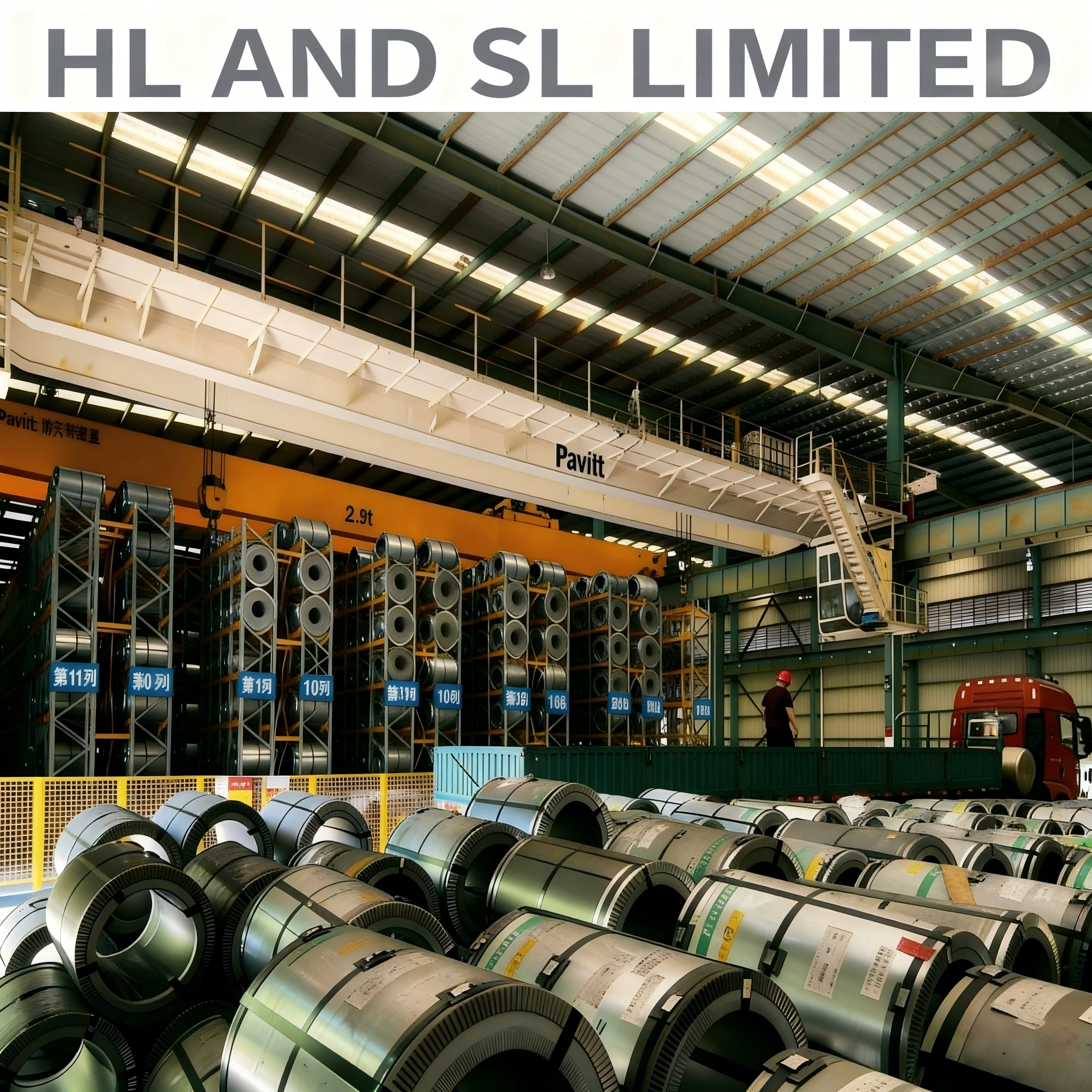
Coil handling, packing and processing discipline form part of the acceptance record for humid and tropical projects.
Step-by-Step Breakdown: Building the Specification and Acceptance Clause
The sequence below converts a project brief into a purchase order that can be enforced. Each step produces one written line in the RFQ.
Step 1 — Classify the project and the core duty
UHV power transformers, HVDC converter transformers and tropical distribution transformers do not stress the core in the same way. Converter duty includes a rich harmonic spectrum; UHV duty prioritises loss and flux at high voltage class; tropical grid duty adds humidity and transport duration to an otherwise conventional electrical requirement. The classification decides which parameters get the tightest tolerance.
Step 2 — Fix the nominal thickness
Choose among 0.20 mm, 0.23 mm and 0.27 mm, and write the nominal thickness plus the permitted tolerance. For harmonic-rich duty, thinner specifications are the standard control measure, which points to the 0.20 mm end of this range. For large cores where stacking factor and handling robustness matter, 0.27 mm grades such as 27Q095 through 27Q120 are the practical alternative. Do not leave the thickness to the supplier's discretion.
Step 3 — Write the magnetic acceptance window
State the maximum P1.7/50 value for the specific grade being ordered, drawn from the ≤0.65 to ≤1.20 W/kg envelope, and state B8 ≥1.88 T. Add the measurement basis: 1.7 T at 50 Hz for loss, 800 A/m for flux density, tested in accordance with the inspection procedures associated with IEC 60404-8-7:2020. Where the design is noise- or vibration-sensitive, add a magnetostriction test requirement referencing IEC 60404-17:2021 at 50 Hz or 60 Hz.
Step 4 — State composition and impurity requirements
Write silicon content as 3.0%–3.2%, require carbon, sulphur and nitrogen to be controlled within the declared limits, and require a chemical composition certificate per heat. This is the clause that turns a verbal assurance about 'clean steel' into a document.
Step 5 — Specify delivery state and coating
State fully processed, final-annealed material per IEC 60404-8-7:2020. Then state the coating class and its temperature compatibility — organic up to 180 °C, inorganic up to 800 °C. If the finished assembly will be placed on the EU market, close the substance-declaration question at this step rather than at shipment, referencing the RoHS framework rather than a material standard.
Step 6 — Define who tests, when, and how disputes are resolved
The acceptance route should be explicit: pre-shipment testing by the supplier, plus third-party testing where the project warrants independent verification. Name the properties tested, the sampling basis, and the documents that travel with the shipment — mill test certificate, composition certificate, and the third-party report where one is required. Add a harmonic clause if the core will see converter duty: the technical agreement should state the applicable frequency range and harmonic limits, and should state plainly that operation outside those limits falls outside the warranty. Requiring the customer to supply harmonic parameters up front is the cheapest form of protection available to both parties.
Step 7 — Agree the commercial terms
Commercial terms belong in the same document as the technical ones, because acceptance disputes frequently start as commercial ones. The terms applied across this supply are a minimum order quantity of 25 T, delivery on EXW, FOB or CIF, payment at 30/70, and acceptance on pre-shipment testing plus third-party testing. Fixing these at enquiry stage removes the most common source of renegotiation between technical approval and shipment.
Step 8 — Protect the material from the mill gate to the core table
Material that leaves the mill within specification can still arrive out of specification. Four control points matter, and all four should appear in the supplier's handling documentation:
- Humidity and corrosion. Storage humidity should not exceed 60%, with good ventilation and dryness, no contact with acidic or alkaline substances, and anti-rust oil applied immediately after processing is complete.
- Bending and deformation. Keep sheet and coil flat in transport and storage, avoid single-point lifting and impact, and design for a minimum bend radius of at least 10 to 20 times the material thickness.
- Shearing and pressing stress. Use sharp tooling with a controlled blanking gap, consider stress-relief annealing at 700–800 °C where the process allows, and control press-fit force by torque so that pressure stays below the material yield strength.
- Temperature. Match the coating to the working temperature and verify the heat-dissipation design so that the actual core temperature stays inside the coating's stated range.
Step 9 — Audit the document set on receipt
Before the coil is released to production, check that the certificate matches the ordered grade and thickness, that the certified P1.7/50 value sits inside the specified maximum, that B8 is at or above 1.88 T, that silicon content falls within 3.0%–3.2%, that the composition certificate covers the declared impurity limits, and that coating class and delivery state match the order. A document set that passes this check is the buyer's real acceptance record — not the invoice.
Use Cases: UHV, HVDC Rainforest, and Brazilian Grid Projects
UHV power transformer cores
For UHV units the loss budget is tight and the core mass is large, so the grade decision is dominated by P1.7/50 and B8 together. The 0.23 mm grade 23R075 is the natural centre of gravity for large cores, with 0.20 mm grade 20-65 reserved for designs where the loss target cannot be met otherwise. The acceptance emphasis here is on the certified loss value and on thickness tolerance, because tolerance variation across a large stack translates directly into building factor and no-load loss.
HVDC converter transformers in high-thunderstorm rainforest environments
Converter duty adds harmonic content, and harmonic content adds loss and local heating that a 50 Hz loss figure alone will not describe. Two measures belong in the specification: a thinner gauge at the low-loss end of the range, and an explicit harmonic clause in the technical agreement stating the applicable frequency range and harmonic limits, with operation outside that range excluded from warranty. Rainforest siting then adds the humidity layer — packing, storage below 60% relative humidity, immediate anti-rust protection after cutting, and documented handling to prevent bending damage during long inland transport.
Brazilian grid projects
Brazil combines tropical humidity with long logistics and a grid build-out that mixes transmission and distribution duty. For a buyer in this market the specification priorities are packing integrity, a third-party test report that can be presented to the project owner, and a coating class matched to the actual operating temperature of the equipment. Brazil is one of the main export markets served by HL AND SL LIMITED, alongside Mexico, India, Italy and the UAE, which means enquiries for this region typically combine grade selection with questions about transit protection and document sets.
Tropical distribution and substation transformers
Where the design is cost-sensitive rather than loss-critical, the 0.27 mm grades — 27Q095 through 27Q120 — allow the loss requirement to be met without buying the thinnest material available. The compliance discipline does not relax: the certified maximum loss per grade, the B8 minimum and the composition certificate are the same three documents as on an UHV order.
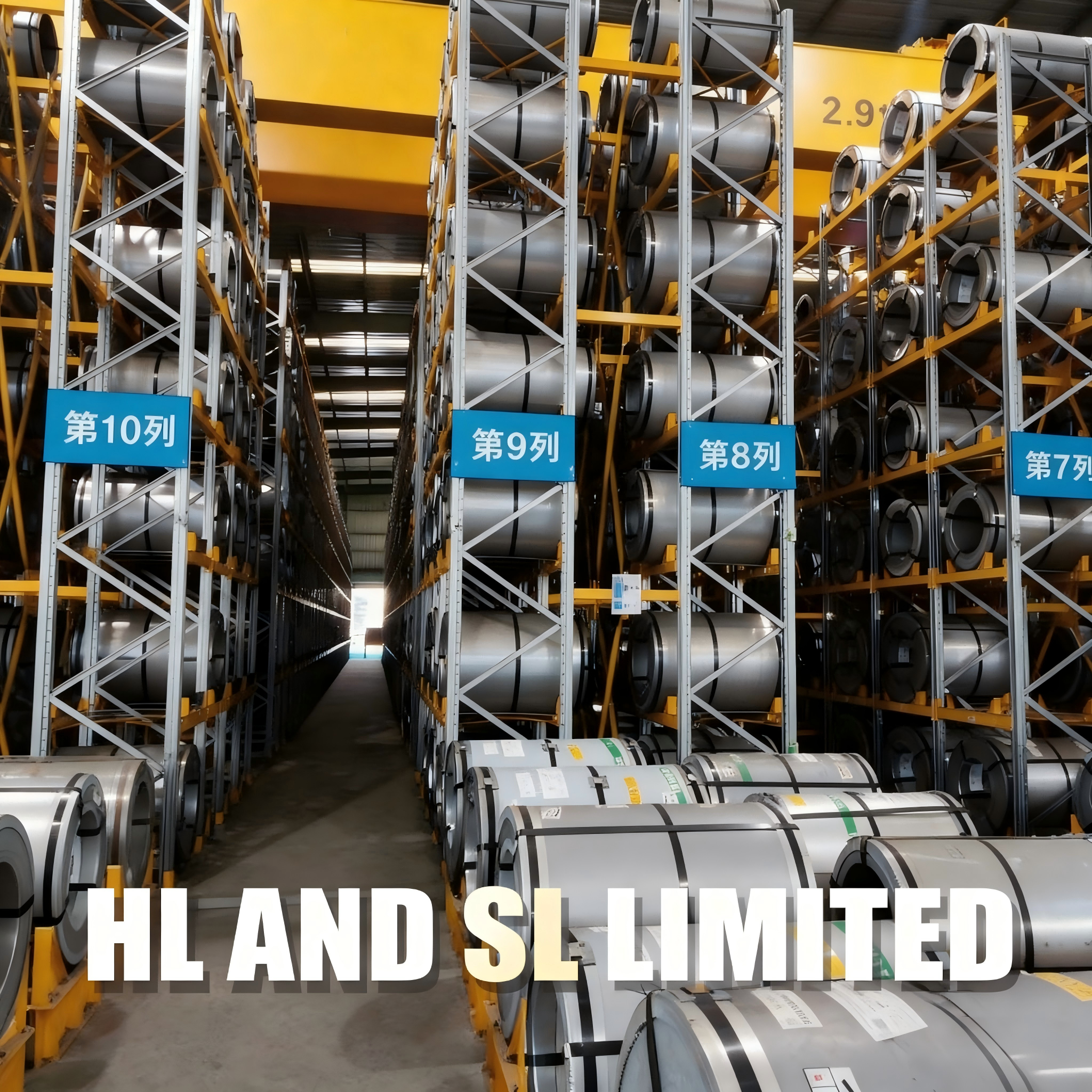
Grade selection, processing support and document control run together on transformer core orders.
Comparison Table: Requirement Mapping by Project Type
The table below maps each project condition to the parameters available in this verified range and to the evidence a buyer should require. It does not rank suppliers; it maps requirements to testable properties.
| Project condition | Dominant material stress | Thickness options in range | Acceptance evidence to require |
|---|---|---|---|
| UHV power transformer core | Core loss and flux density at high voltage class | 0.20 mm (20-65); 0.23 mm (23R075) | Certified P1.7/50 maximum per grade; B8 ≥1.88 T; thickness tolerance; composition certificate |
| HVDC converter transformer core | Harmonic-rich duty; local heating; noise and vibration | 0.20 mm (20-65); 0.23 mm (23R075) | Certified loss; B8; harmonic range stated in the technical agreement; magnetostriction test per IEC 60404-17:2021 where noise is a constraint |
| High-thunderstorm rainforest site | Humidity, corrosion, long inland transport | 0.20 mm to 0.27 mm | Pre-shipment test; third-party testing; packing and anti-rust documentation; storage humidity limit of 60% |
| Brazilian grid projects | Mixed transmission and distribution duty; long logistics | 0.23 mm (23R075); 0.27 mm (27Q095–27Q120) | Third-party report presentable to the project owner; composition certificate; coating class matched to operating temperature |
| Tropical distribution transformers | Cost-balanced loss performance | 0.27 mm (27Q095, 27Q100, 27Q105, 27Q110, 27Q120) | Certified maximum loss per grade; B8; composition certificate; coating adhesion after shearing |
One clarification belongs under this table. IEC 60404-8-7:2020 and ASTM A876-17e1 do not sit in a hierarchy; they are different specification routes with different grade structures. Where a tender cites ASTM and a mill quotes IEC, the substitution must be justified grade by grade, on measured loss and permeability, before the order is placed. The same applies to RoHS: it constrains substances in electrical and electronic equipment and does not certify magnetic performance.
Frequently Asked Questions
Which standards should an RFQ for Hi-B oriented silicon steel cite?
Cite IEC 60404-8-7:2020 as the primary product standard, because it defines cold-rolled grain-oriented electrical steel strip and sheet in the fully processed state at 0.20 mm, 0.23 mm, 0.27 mm, 0.30 mm and 0.35 mm, and it covers magnetic properties, geometric characteristics, tolerances, technological characteristics and inspection procedures. Where the project owner specifies US practice, cite ASTM A876-17e1, which covers flat-rolled, grain-oriented, fully processed low-carbon silicon-iron electrical steel. Add IEC 60404-17:2021 only if magnetostriction measurement is relevant to noise or vibration, and add the RoHS framework only as a substance-declaration requirement for the finished equipment. Do not treat IEC and ASTM grades as interchangeable without a grade-by-grade comparison.
What magnetic and chemical values should be fixed as acceptance limits?
Fix four numbers and one document set. The numbers are: nominal thickness of 0.20 mm, 0.23 mm or 0.27 mm depending on grade; maximum P1.7/50 iron loss within the ≤0.65 to ≤1.20 W/kg envelope, stated per grade; B8 ≥1.88 T; and silicon content of 3.0%–3.2% with carbon, sulphur and nitrogen declared as controlled. The document set is the mill test certificate showing the certified loss and flux density, plus the chemical composition certificate covering silicon and the controlled impurities. Where the core is noise-sensitive, add a magnetostriction report referencing IEC 60404-17:2021 at 50 Hz or 60 Hz.
Can one supplier range cover UHV, HVDC converter and tropical grid projects?
Yes, within the limits of the range. Seven grades — 20-65, 23R075, 27Q095, 27Q100, 27Q105, 27Q110 and 27Q120 — span 0.20 mm to 0.27 mm and a P1.7/50 envelope of ≤0.65 to ≤1.20 W/kg, which is wide enough to serve loss-critical UHV and converter cores at the thin end and cost-balanced tropical distribution cores at the 0.27 mm end. HL AND SL LIMITED is an electrical steel export and processing company based in Taiyuan City, Shanxi Province, China, founded in 2012, operating a 30,000 m² processing facility with 10 engineers and an annual output of 30,000 t, and serving export markets that include Mexico, Brazil, India, Italy and the UAE at an export ratio of 80%. The company is an authorized agent of China Baowu Steel Group, which supports grade availability across both high-end and economy positions. Buyers should still confirm the specific grade, coating and test route for their own project rather than assuming full coverage from a catalogue.
What purchasing terms and payment structure apply?
The stated terms are a minimum order quantity of 25 T, delivery on EXW, FOB or CIF, and payment at 30/70. Acceptance is based on pre-shipment testing by the supplier together with third-party testing where independent verification is required. Because these terms sit alongside the technical clauses, they should be agreed at enquiry stage rather than after grade approval, so that the accepted test route and the commercial route refer to the same shipment.
How is acceptance verified before shipment, and what is the next step?
Acceptance is documented in three layers: the mill test certificate proving certified P1.7/50 and B8 against the ordered limits, the composition certificate proving silicon content of 3.0%–3.2% with controlled carbon, sulphur and nitrogen, and a pre-shipment or third-party test report confirming the delivered coils match the ordered grade, thickness and coating. For a tropical or rainforest destination, add packing and anti-rust documentation and the storage humidity requirement of no more than 60%. To start, send the grade, thickness, loss limit, coating class and project type to the supplier and request a quotation with the test plan attached. At HL AND SL LIMITED the contact is Lucas, sales-01@hlslind.com, WhatsApp and telephone +86 134-6700-2282; the company website is www.hlslind.com, and the product brochure can be downloaded here.
Conclusion: Write the Number, Then Buy It
Compliance in Hi-B oriented silicon steel is not achieved by selecting a reputable product family. It is achieved by writing five things into the order — thickness, maximum P1.7/50, minimum B8, composition with controlled impurities, and the inspection route — and then holding the shipment to those five. The verified range of 0.20 mm to 0.27 mm, ≤0.65 to ≤1.20 W/kg, B8 ≥1.88 T and silicon at 3.0%–3.2% gives a buyer enough resolution to specify UHV, HVDC converter and tropical grid cores from the same family without stretching a single grade beyond what it was designed for.
The regional layer is where most projects either gain or lose their margin. A high-thunderstorm rainforest HVDC site is a harmonic question and a humidity question at the same time; a Brazilian grid project is a documentation question as much as an electrical one. Handling both requires the same discipline: a harmonic range stated in the technical agreement, a coating matched to the operating temperature, storage below 60% relative humidity, anti-rust protection applied immediately after cutting, and a document set that a project owner will accept without renegotiation.
Request a grade-specific quotation with the pre-shipment and third-party test plan attached.
HL AND SL LIMITED supplies grain-oriented and non-oriented electrical steel with in-house secondary processing, and integrates export resources across performance grades and price positions to match a project's technical and commercial envelope. Send the grade, thickness, loss limit, coating class and destination — including whether the site is tropical or high-humidity — and request the quotation together with the mill test certificate and third-party testing route for the specific order.
Have Questions or Need More Details?
Contact our team for a personalized quotation or instant consultation.
Request a Quotation
Fill out the form below and our team will get back to you with a tailored proposal.
WhatsApp Direct Chat
Prefer to chat in real-time? Message us on WhatsApp for instant assistance & quick answers.
- Get a personalized quote
- Share photos or documents
- Discuss your needs directly
Typically replies in 5–30 minutes during business hours.