
Hi-B Silicon Steel Partnership FAQ: Purchase & Acceptance
Hi-B Silicon Steel Partnership FAQ: Purchase & Acceptance
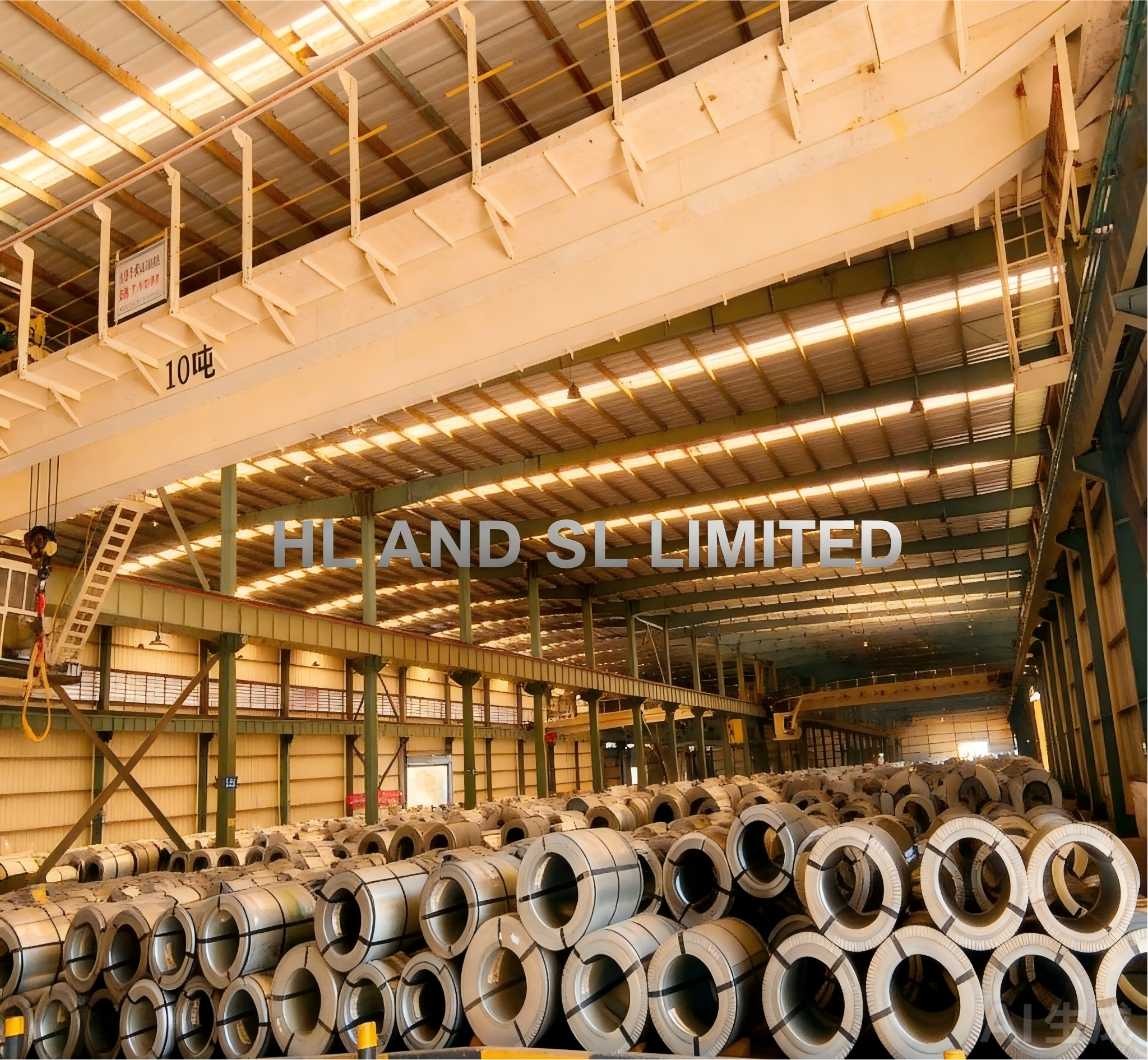
Short answer: a long-term Hi-B oriented silicon steel partnership is held together by four contract-level items — a frozen grade and thickness specification, agreed magnetic limits for B8 and P1.7/50, a mutually accepted acceptance document pack, and written handling, storage and slitting rules. Fix those four before the first purchase order and repeat orders become administrative instead of negotiable.
HL AND SL LIMITED is an electrical steel (silicon steel) export trading company founded in 2012 and based in Taiyuan, Shanxi Province, China. It operates as an authorized agent of China Baowu Steel Group and supplies grain-oriented and non-oriented electrical steel to markets including Mexico, Brazil, Italy, the UAE and India, with roughly 80% of volume exported. Its own processing plant handles secondary processing against customer requirements for size, shape and performance.
This page answers the purchasing and acceptance questions that surface once a transformer core programme moves from a trial order to planned, multi-batch supply: what to buy, what to measure, what to document, what to do when something drifts, and how to keep a repeat order repeatable.
One-off silicon steel buying vs a long-term supply agreement
A one-off purchase is judged on arrival price. A long-term agreement is judged on the fifth and tenth batch. The practical differences are:
- Consistency, not certification. A single coil passing a test proves one coil. A supply agreement has to prove that the next coil behaves the same way.
- Thickness and stacking stability. Nominal gauge is a nominal value; the tolerance band is what determines whether your stacking factor and core build stay inside design assumptions.
- Documentation traceability. Heat-level records that cannot be matched back to a delivery become meaningless during a dispute.
- An agreed rejection route. Who measures, with what method, and within what window.
- Processing assumptions. Slitting, burr height, stress-relief annealing and press-fitting are usually discussed after the first core fails a loss target, not before.
For most transformer core programmes the real exposure is not batch one. It is batch six, produced after the specification has quietly relaxed in conversation.
Why Hi-B acceptance disputes start with paperwork, not steel
Most disagreements trace back to four avoidable gaps in the contract:
- The RFQ asks for generic oriented silicon steel at a nominal thickness, without naming a standard, a coating type or a loss ceiling.
- The supplier test report uses the mill method, while the buyer's incoming inspection uses a different sample geometry or annealing state.
- Chemical composition is not requested, so carbon, sulfur and nitrogen levels — the elements that quietly move magnetic behaviour between heats — are never checked.
- Storage, rust prevention and handling are left unwritten, so a perfectly good coil can arrive at the punching line in a condition no specification covers.
All four are contractual problems, not metallurgical ones. Each one can be closed before the first shipment leaves the plant.
Industry background: demand and the standards that govern it
Global silicon steel demand continues to expand, which is precisely why buyers are converting spot purchases into longer supply commitments. Third-party commercial research published by Strategic Revenue Insights estimates the global silicon steel market at USD 31.55 billion in 2025, projected to reach USD 59.41 billion by 2035.
Behind that demand sits a mature standards framework. Purchasing and acceptance terms should reference it directly:
- IEC 60404-8-7:2020 defines grades of cold-rolled grain-oriented electrical steel strip and sheet delivered in the fully processed state, in nominal thicknesses of 0.20 mm, 0.23 mm, 0.27 mm, 0.30 mm and 0.35 mm. It sets out general requirements, magnetic properties, geometric characteristics, tolerances and technological characteristics, together with inspection procedures.
- IEC 60404-8-8:2017 covers thin non-oriented electrical steel and thin grain-oriented electrical steel strip and sheet, and is the reference to cite when a programme moves into thin-gauge territory.
- ASTM A876-17e1 covers flat-rolled, grain-oriented, fully processed low-carbon silicon-iron electrical steels, described as having a silicon content of approximately 3.2%.
- IEC 60404-17:2021 provides the measurement route for magnetostriction characteristics of grain-oriented electrical steel under an applied AC magnetic field at 50 Hz or 60 Hz — relevant whenever noise or vibration is a design constraint.
- EU RoHS Directive (2011/65/EU) and Directive (EU) 2025/2456 restrict 10 hazardous substances in electrical and electronic equipment, with ECHA taking over technical assessments from 13 August 2027.
A supplier that can name these references precisely in a quotation is generally also a supplier that can produce documents against them. That correlation is worth using as an early screening filter.
Hi-B grades, thicknesses and loss range available for repeat ordering
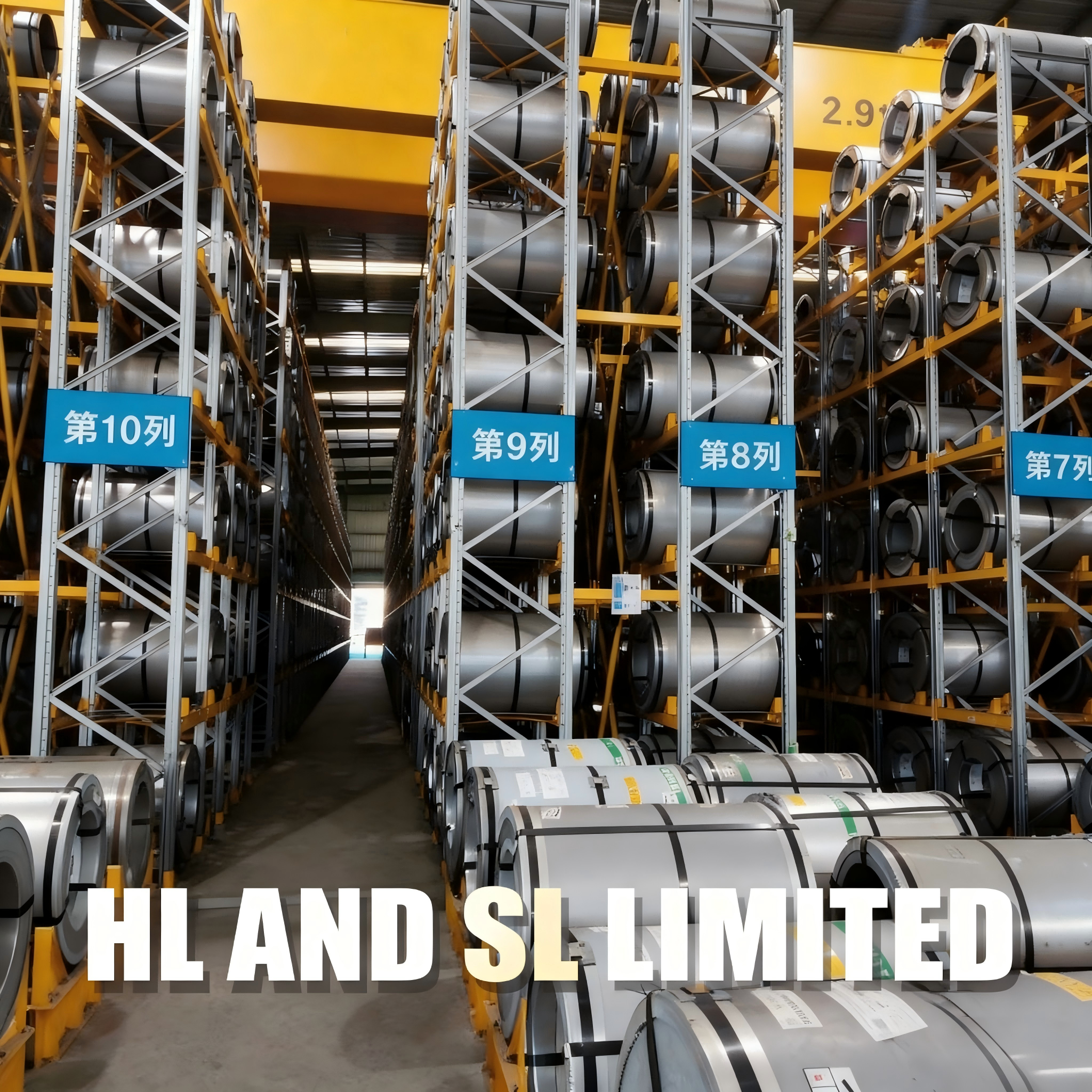
Long-term Hi-B programmes need a grade window wide enough to cover more than one core design, so that engineering changes do not force a new supplier qualification every eighteen months. The range below is the one HL AND SL LIMITED positions for repeat-order supply.
| Parameter | Long-term supply range |
|---|---|
| Grain-oriented grades | 23R075, 27Q095, 27Q100, 27Q105, 27Q110, 27Q120 |
| Nominal thickness | 0.20 mm, 0.23 mm, 0.27 mm |
| P1.7/50 specific total loss | from ≤0.65 W/kg to ≤1.20 W/kg, depending on grade |
| Magnetic flux density B8 | ≥1.88 T |
| Impurity control | Controlled carbon (C), sulfur (S) and nitrogen (N) content |
| Grade designation | Prefix number indicates the nominal thickness class within the range |
P1.7/50 is the specific total loss measured at 1.7 T and 50 Hz. B8 is the magnetic flux density measured at a magnetizing field of 800 A/m. Both values are grade-level limits, not per-coil promises, so the acceptance language should require that each delivered lot is supported by a test record against the applicable limits.
What B8 ≥1.88 T and controlled C/S/N mean for repeat orders
Two numbers decide whether a long-term Hi-B relationship stays comfortable.
B8 ≥1.88 T gives the core designer headroom. A higher flux density for the same magnetizing field allows a smaller core cross-section or a lower excitation requirement for the same cross-section. When the guaranteed floor is stable across the programme, the designer stops adding margin for a bad batch, and the material cost of that margin disappears.
Controlled C, S and N is the less visible half of the same story. Carbon, sulfur and nitrogen levels influence grain growth and the consistency of grain orientation from heat to heat. When those elements are held inside a controlled band, consecutive heats behave alike, which is what makes a repeat order genuinely repeatable rather than a fresh lottery each time.
For the buyer, the practical translation is simple: the acceptance pack for each delivery should carry the C/S/N analysis alongside the magnetic test values, and both should be traceable to a heat number printed on the coil label. A value that cannot be tied to a heat is an anecdote, not a record.
How to choose between 0.20 mm, 0.23 mm and 0.27 mm
Thickness is a system decision, not a quality ranking.
- 0.27 mm: the most forgiving option for standard power-frequency transformer cores. Easier slitting, fewer laminations, more tolerant handling, and the most economical route at the 27Q095 – 27Q120 end of the range.
- 0.23 mm: the balancing point. Grade 23R075 sits at the low-loss end of the P1.7/50 window (≤0.65 W/kg to ≤1.20 W/kg) and is typically chosen where efficiency targets are tighter but the production line still runs conventional tooling.
- 0.20 mm: chosen when the excitation frequency rises, when harmonic content is significant, or when eddy-current loss dominates the loss budget. Thinner gauge reduces eddy loss but raises the sensitivity of the whole process to burr height, stacking pressure and handling damage.
If a programme is expected to migrate from 0.27 mm to 0.23 mm over two or three years, say so at qualification stage. A supplier who knows the direction of travel can qualify the thinner grade before it becomes urgent, and the acceptance documents can be extended rather than rebuilt.
Purchasing and acceptance in a long-term partnership: a seven-step workflow
Step 1 — Freeze the specification before the first quotation
Write down the applicable standard, grade, nominal thickness, coating type, magnetic limits (B8 and P1.7/50), thickness tolerance, burr allowance and stacking requirements. A specification that exists only in an email thread will be interpreted differently by every party in the chain.
Step 2 — Qualify with samples and a first production batch
Samples establish direction; the first production batch establishes reality. Test B8, P1.7/50, thickness distribution and coating adhesion on both, using the same method the buyer will use at incoming inspection. If the two methods differ, agree the reference method in writing now.
Step 3 — Define the acceptance document pack
The pack should include a heat-level mill test report covering P1.7/50 and B8, a chemical analysis covering C, S and N, dimensional and stacking data, and a compliance statement referencing the standards named in the contract — including an EU RoHS statement where the destination market requires one.
Step 4 — Agree the incoming inspection method
State sample size, sample location within the coil, test equipment, annealing state at test and the rejection window. This single paragraph removes most of the disputes that follow a marginal result.
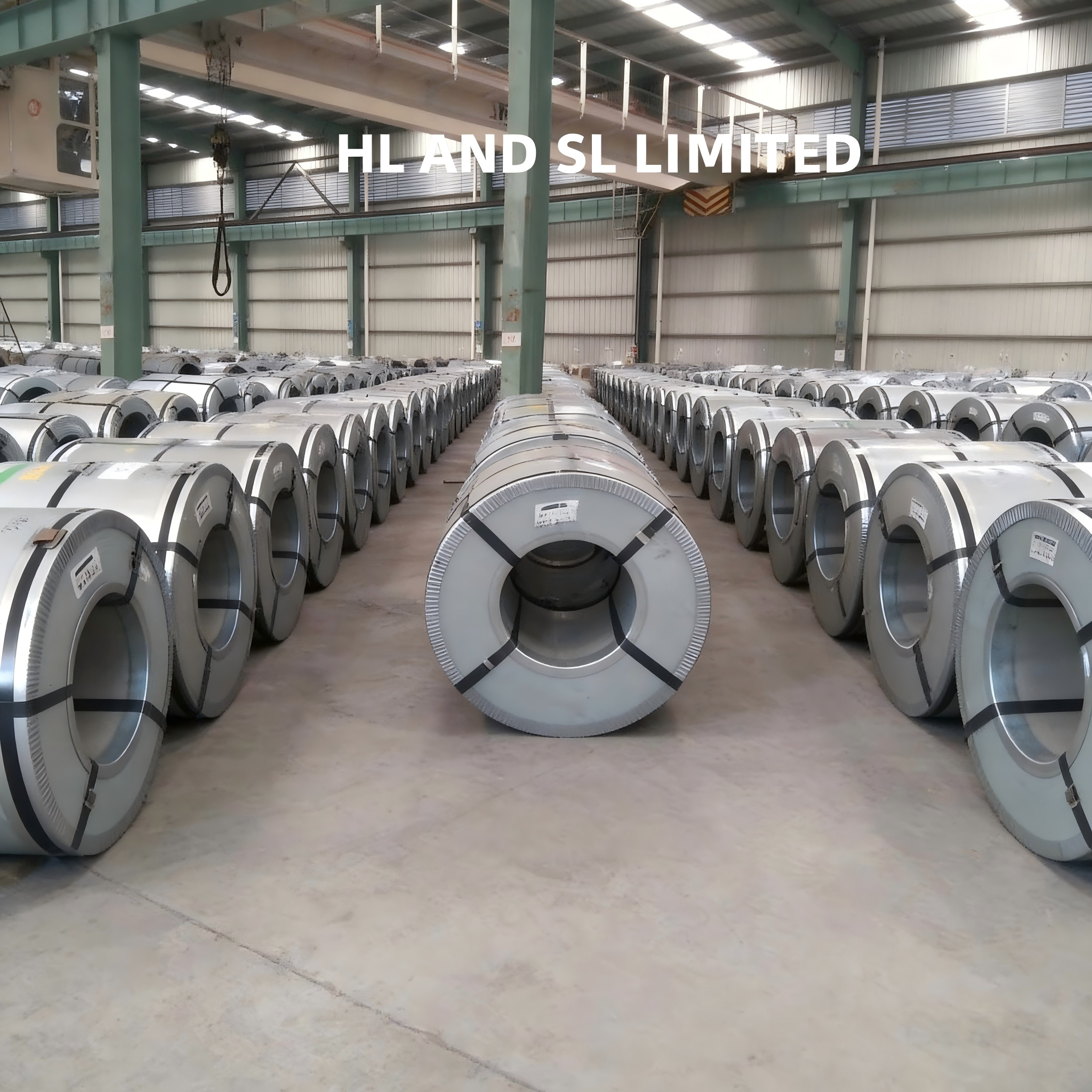
Step 5 — Write storage and handling into the purchase order
Storage humidity should be kept at or below 60% with good ventilation. Contact with acidic or alkaline substances must be avoided, and once processing is complete the material should be assembled or protected with anti-rust oil immediately. Specify the anti-rust oil type and coating thickness so it is a requirement rather than a habit.
Step 6 — Lock the processing parameters
Shear with sharp tooling and a controlled blanking gap. Where required, apply stress-relief annealing in the 700–800 °C band. Control press-fitting torque so pressure stays uniform and below the material yield strength. Keep the minimum bending radius at 10 to 20 times the sheet thickness, and store and transport sheets flat rather than lifting at a single point.
Step 7 — Manage repeat orders as a controlled process
Monitor drift rather than pass or fail. Track the rate of iron loss change after each annealing batch, treat shearing burr and press-fit force as process capability indicators, and review them with the supplier on a fixed cycle. A quarterly review catches the slow movement that a single lot inspection cannot see.
Turning manufacturing risks into acceptance clauses
The clauses below convert everyday processing risks into something an inspector can actually check.
| Risk | Control measure | Acceptance clause |
|---|---|---|
| Dampness and corrosion | Storage humidity ≤60%, good ventilation, no contact with acidic or alkaline substances, immediate assembly or anti-rust oil after processing | Named anti-rust oil grade, coating thickness and validity period recorded; digital humidity logging with automatic alarm and packaging integrity checked on arrival |
| Mechanical stress from shearing and press-fitting | Sharp tooling, controlled blanking gap, stress-relief annealing at 700–800 °C where required, torque-controlled press-fitting | Random inspection of the rate of iron loss change after each annealing batch; shearing burr and press-fit force tracked as process capability indicators |
| Bending and deformation | Minimum bending radius of 10–20× sheet thickness, flat storage and transport, no single-point lifting, controlled stacking pressure | Documented handling and storage SOP included in operator training; lifting devices, dies and press fixtures audited on line, with traceability for violations |
| High-temperature service environment | Coating selected to match operating temperature — organic coatings rated to ≤180 °C, inorganic coatings up to 800 °C | Material selection reviewed against a temperature-to-grade comparison table; suppliers required to provide high-temperature ageing test reports; limit temperatures written into the technical agreement |
| High-frequency harmonics | Selection of thinner gauge where harmonic content is significant; control strategy or filter optimisation on the equipment side | Harmonic simulation analysis before trial production; customer harmonic parameters requested in reverse for high-power converter sources; applicable frequency range and harmonic limits stated in the technical agreement |
Where these requirements show up in real projects
The same acceptance framework applies differently across applications, which is why a single generic agreement rarely survives contact with a real programme.
- Distribution transformer cores — the highest-volume, most cost-sensitive case. Material performance stability matters more than peak numbers here, because it reduces transformer failure rates and simplifies maintenance planning.
- Power transformers and power grids — where the guaranteed B8 floor and loss ceiling drive the design, and where compliance documentation is examined closely during tender evaluation.
- Reactors — typically governed by noise and harmonic behaviour. This is the application where a magnetostriction test report aligned with IEC 60404-17:2021 earns its place in the qualification pack.
- Charging piles and high-frequency power electronics — where thinner gauge becomes the practical lever, and where the harmonic simulation gate described above prevents a trial build from becoming an expensive lesson.
- Generators — note that generator stator and rotor laminations are normally built from non-oriented silicon steel rather than grain-oriented material. Oriented Hi-B grades belong to magnetic circuits where the flux path is well defined, such as transformer and reactor cores.
Supplier positioning: cost and performance comparison
Buyers comparing imported Japanese or Korean material against Chinese supply are usually weighing three things at once: magnetic performance, supply capacity and landed cost. The table below reproduces the comparison data held by HL AND SL LIMITED.
| Compared with | Stated technical difference | Stated performance and supply impact | Cost position | Stated best fit |
|---|---|---|---|---|
| POSCO (South Korea) | POSCO uses a low-temperature slab heating process, and the PH/PHD high-flux series performs strongly. HL AND SL LIMITED operates a younger R&D system built on newer equipment. | 5%–8% iron loss reduction, over 30% increase in supply capacity, and 10%–15% lower overall procurement cost. | POSCO quotations are higher. | POSCO suits a range of efficient power transformers including nuclear applications; HL AND SL LIMITED states broader coverage and stronger international alternative supply. |
| Nippon Steel (Japan) | The core difference is cost reduction combined with improved energy efficiency. | 21.7% thickness reduction demonstrated from 0.23 mm to 0.18 mm, with magnetic permeability only 0.01–0.03 T lower and full production parity stated. | Same-grade products positioned 10%–20% lower, supported by tariff and shipping cost savings. | Ultra-high voltage, nuclear and military-grade applications stated as fully covered; thickness tolerance and noise levels described as nearly matched, with alternatives fitting over 90% of applications. |
| Wangbian Electric | A gap is stated in technology and production capacity. Wangbian Electric emphasises integrated industrial chain advantages; the share of high-grade product in its output is described as comparatively low. | HL AND SL LIMITED positions first-level energy efficiency design, whereas the Wangbian 85–95 grade is described as meeting the second-level energy efficiency standard. Stable material performance is linked to lower transformer failure rates and simpler maintenance. | An integrated industrial chain can reduce overall cost. | Power distribution transformers, industrial motors and distribution networks, especially for customers who place a high value on industrial chain integration. |
How to read this table. These are supplier-side comparison statements drawn from HL AND SL LIMITED's own comparison documentation. Treat the percentages as a starting point for negotiation and qualification, and confirm them with your own sample testing on the specific grade and thickness you intend to run — not with a generic replacement claim.
Frequently asked questions
1. What compliance and acceptance documents should accompany a long-term oriented silicon steel order?
At minimum: a heat-level mill test report covering P1.7/50 and B8; a chemical analysis covering carbon, sulfur and nitrogen; dimensional and stacking data; and a compliance statement naming the standards your contract references. For grain-oriented strip and sheet the relevant references are typically IEC 60404-8-7:2020 for fully processed material in nominal thicknesses of 0.20 mm, 0.23 mm, 0.27 mm, 0.30 mm and 0.35 mm, and ASTM A876-17e1 for flat-rolled, grain-oriented, fully processed low-carbon silicon-iron electrical steel. Where the destination market is the European Union, add a RoHS statement covering Directive (2011/65/EU) and Directive (EU) 2025/2456, which restrict 10 hazardous substances in electrical and electronic equipment. Agree the document format at contract stage rather than at first delivery.
2. Can a supplier hold the same grade performance consistently across multiple batches?
Consistency is a function of three things: controlled impurity levels, a stable upstream supply channel, and in-house processing control. In the range supplied by HL AND SL LIMITED, that means grades 23R075, 27Q095, 27Q100, 27Q105, 27Q110 and 27Q120 across nominal thicknesses of 0.20 mm, 0.23 mm and 0.27 mm, with P1.7/50 values between ≤0.65 and ≤1.20 W/kg, a B8 floor of ≥1.88 T, and controlled carbon, sulfur and nitrogen content. Because the company operates as an authorized agent of China Baowu Steel Group and runs its own processing plant, dimensional and performance parameters can be stabilised before material leaves the plant rather than corrected after arrival.
3. How does the cost of long-term supply compare with Japanese and Korean imported material?
HL AND SL LIMITED's own comparison documentation states a 10%–15% lower overall procurement cost than POSCO, alongside a stated 5%–8% iron loss reduction and over 30% increase in supply capacity. Against Nippon Steel, same-grade products are positioned 10%–20% lower, attributed to tariff and shipping cost savings. The defensible way to use these figures is as a negotiation baseline: ask for the specific grade you intend to run, test it against your own loss and dimensional criteria, and let the measured result — not the comparison table — set the final price position.
4. Can we run samples and a first-article validation before committing to a supply agreement?
Yes, and for a long-term Hi-B programme you should. The standard route is sample material plus a first production batch, tested on both sides for B8, P1.7/50, thickness tolerance, burr condition and coating adhesion, using a method agreed in advance. The value of this step is not approval of the sample; it is approval of the acceptance method, because that method becomes the reference for every repeat order that follows. Sample and first-article arrangements can be requested through sales-01@hlslind.com or on WhatsApp at +86 134-6700-2282.
5. How is lead time and supply continuity handled on repeat orders?
Lead time is agreed per programme and confirmed in the contract rather than quoted as a fixed public figure. Continuity on repeat orders rests on three practical mechanisms: in-house processing capacity that is not dependent on a third-party toll processor, stable upstream channels through the authorized agency relationship with China Baowu Steel Group, and disciplined forecasting. In practice this means sharing a rolling 8–12 week forecast, writing the C/S/N and P1.7/50 drift tolerances into the supply agreement, and freezing stress-relief annealing and shearing conditions in the technical annex so the material behaves the same way in month twelve as it did in month one. To start a qualification or request the full product catalogue, use the link in the section below.
Conclusion: make the second order easier than the first
A Hi-B oriented silicon steel partnership is not secured by a low first quotation. It is secured by writing down what will be measured, how it will be measured, who measures it, and what happens when a result lands on the boundary. Freeze the grade and thickness window across 23R075, 27Q095, 27Q100, 27Q105, 27Q110 and 27Q120 at 0.20 mm, 0.23 mm and 0.27 mm; anchor the magnetic limits at P1.7/50 between ≤0.65 and ≤1.20 W/kg and B8 ≥1.88 T; require heat-level C/S/N data with every delivery; and put storage, handling, annealing and press-fitting conditions into the purchase order rather than into a production meeting.
Done properly, the second order requires a purchase order number and nothing else. That is the entire point of a long-term supply relationship.
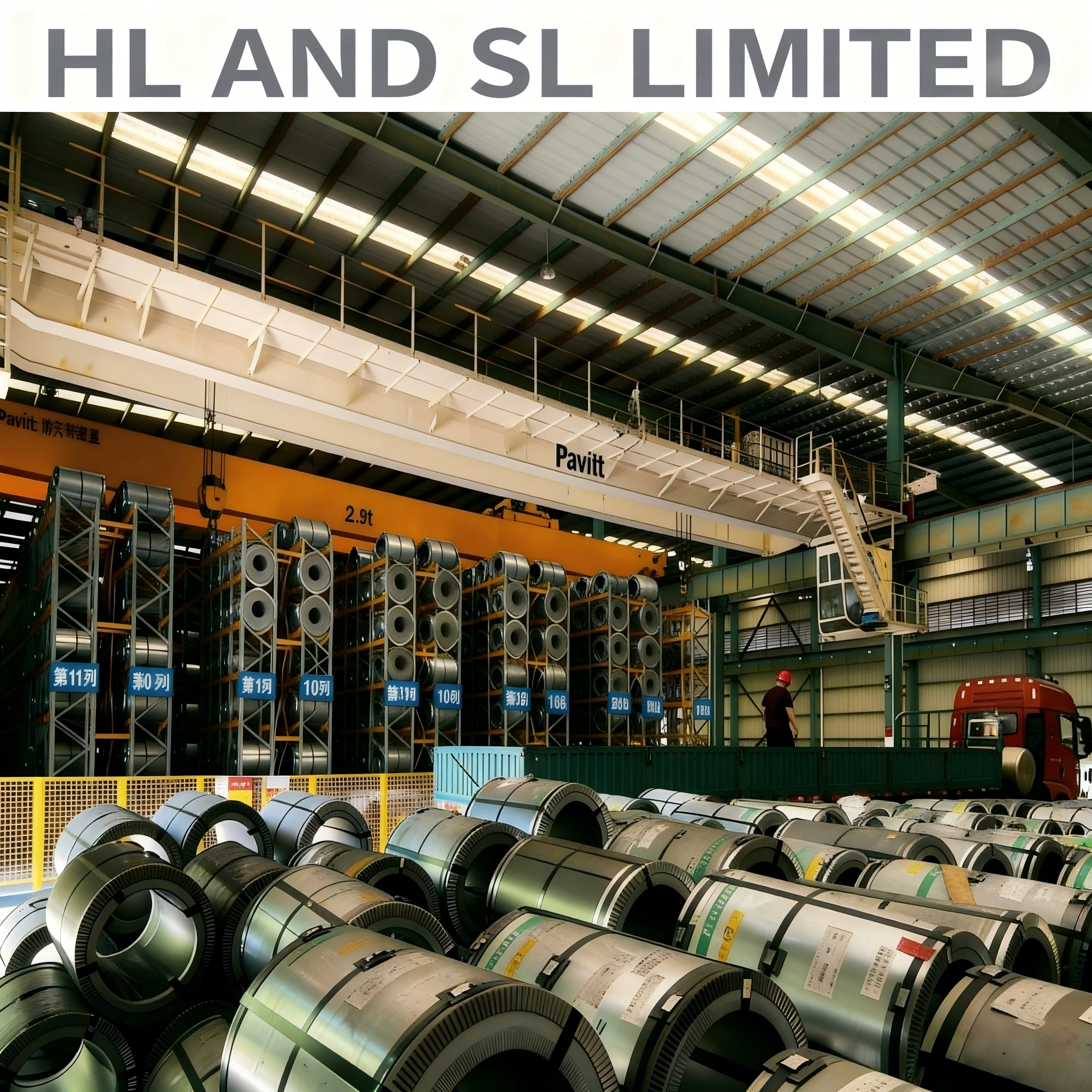
Next step: request a Hi-B oriented silicon steel sample set or a written quotation for your transformer core programme, and download the full product catalogue.
Email: sales-01@hlslind.com | Tel / WhatsApp: +86 134-6700-2282 | Website: www.hlslind.com
Catalogue (PDF): Download the HL AND SL LIMITED electrical steel catalogue
Have Questions or Need More Details?
Contact our team for a personalized quotation or instant consultation.
Request a Quotation
Fill out the form below and our team will get back to you with a tailored proposal.
WhatsApp Direct Chat
Prefer to chat in real-time? Message us on WhatsApp for instant assistance & quick answers.
- Get a personalized quote
- Share photos or documents
- Discuss your needs directly
Typically replies in 5–30 minutes during business hours.