
High-Thunderstorm Rainforest HVDC Converter Cores: A Hi-B Oriented Silicon Steel Decision Guide
An HVDC converter transformer core specified for a high-thunderstorm rainforest site has to absorb three stresses at the same time: a harmonic-rich current spectrum generated by the converter valves, permanent high humidity at the installation site, and a long supply line to a remote project location. Once converter topology and transformer rating are fixed, the core material is one of the few variables a procurement team can still influence directly.
This guide follows the decision in the order a buyer actually meets it: what the site does to the core, why grain-oriented silicon steel — and specifically Hi-B grade — is the working starting point, which loss and induction values belong in the purchase specification, how processing and storage preserve those values, and how the available supply options compare on cost, capability and continuity.
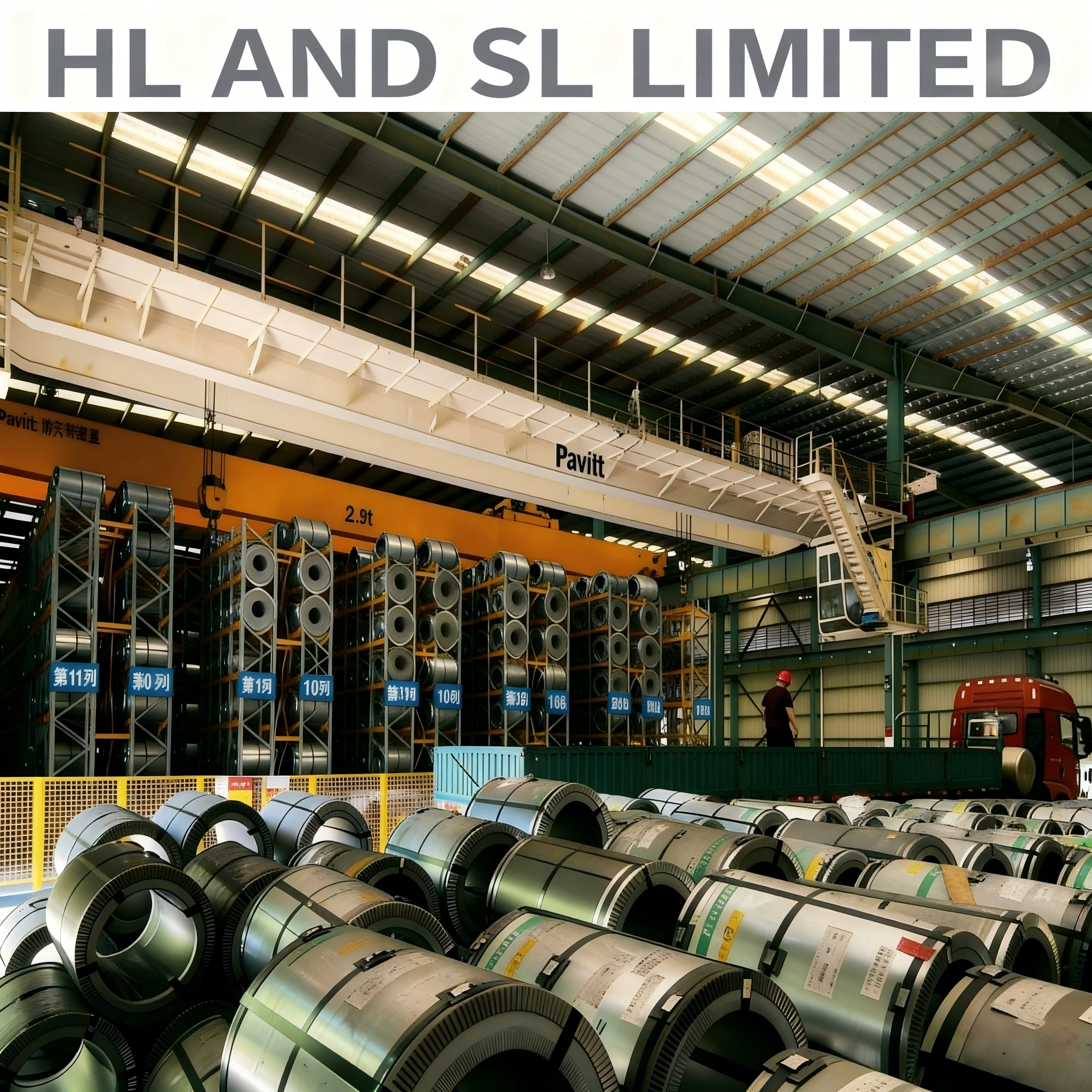
The Problem: What a High-Thunderstorm Rainforest Site Does to a Converter Core
A converter transformer core never sees a clean 50 Hz sinusoidal flux. The valves produce a nonsinusoidal current, and the harmonic components add eddy-current and hysteresis loss on top of the fundamental. In practice, this means the nominal P1.7/50 value printed on a mill certificate understates the real loss the core will develop in service.
Humidity and heat are the second stress. In a rainforest environment the core is assembled, stored and sometimes commissioned under conditions that stay close to saturation for most of the year. Lamination corrosion, coating degradation and moisture trapped between sheets are the failure modes that follow.
The third stress is mechanical. Long transport distances, remote-site lifting and repeated handling before stacking all load the sheet in ways a factory test never captures. Bending, edge burrs and press-fit stress are cumulative, and their effect is an increase in iron loss after the core is built and not before.
Decision summary: for a high-thunderstorm rainforest HVDC converter core, the material brief should be built around a high-induction grain-oriented (Hi-B) grade with tightly controlled carbon, sulfur and nitrogen, a low 50 Hz total loss value, a coating system matched to the real operating temperature, and a documented handling, processing and storage chain that protects those properties until the core is stacked.
The five risk categories to write into the technical agreement
- High-frequency harmonics. Mitigation is normally two-sided: select thinner electrical steel (0.20 mm or 0.15 mm specifications) and reduce harmonic content through converter control optimization or additional filtering.
- Dampness and corrosion. Storage humidity should be held at no more than 60% with good ventilation and dryness; contact with acidic or alkaline corrosive substances must be avoided; and anti-rust oil should be applied immediately after processing is completed.
- Mechanical stress from shearing and pressing. Sharp dies and a controlled blanking gap reduce edge damage; stress-relief annealing at 700–800 °C restores loss where the process allows it; press-fitting should be torque-controlled so pressure stays uniform and below the material yield strength.
- Bending and deformation. Small-radius bends should be avoided in design — the minimum bending radius should be at least 10 to 20 times the sheet thickness; sheets stay flat in transport and storage, without single-point lifting, striking or hammering.
- High-temperature environment. Coating selection must match the working temperature: organic coatings are used up to approximately 180 °C, while inorganic coatings can reach 800 °C. Heat-dissipation design and magnetic-thermal simulation should confirm the choice.
These five categories are also the basis of the operational controls a supplier should be able to demonstrate. Typical examples include mandatory harmonic simulation during product design, with no trial production if the simulation does not meet the standard; digital monitoring of warehouse humidity with automatic alarm and record-keeping when the limit is exceeded; a published handling, storage and processing SOP incorporated into employee training; and a material-selection review system that maintains an electrical steel selection comparison table mapping material models to temperature levels.
Industry Background: Why Oriented Silicon Steel Sits at the Center of This Decision
Electrical steel is the substrate of any magnetic core, and its two families behave very differently in a converter project. Non-grain oriented (NGO) electrical steel held the largest share of the total electrical steel market in 2025, at an estimated 69.7%, according to MarketsandMarkets. The grain-oriented segment, which serves transformer cores, is smaller but higher in value: Research Nester valued the grain-oriented silicon steel market at USD 13.55 billion in 2025, projected to reach USD 23.57 billion by 2035 at a CAGR of 5.8%.
The wider market is expanding alongside it. Grand View Research valued the global electrical steel market at USD 31.0 billion in 2025 and projects USD 47.0 billion by 2033, with transmission and generation investment as a principal driver.
Supply-side capacity has shifted toward China. China's steel exports reached a record 117.055 million mt in 2024, a 25.1% year-on-year increase, according to the General Administration of Customs (via S&P Global), driven by industrial surplus and cost competitiveness. At the mill level, MarketsandMarkets lists Baosteel (China), POSCO (South Korea), ArcelorMittal (Luxembourg), Nippon Steel (Japan) and TISCO (China) among the major global manufacturers of electrical steel — a supplier landscape that gives buyers a genuine choice between imported Hi-B and Chinese-supplied Hi-B for the same specification.
One further trend matters for harmonic-rich duty. SMM Analysis identifies ultra-thin gauge silicon steel below 0.25 mm as the preferred choice for high-frequency motors in new energy vehicles in order to maximize power density. The same physical logic — thinner sheet, lower eddy-current loss at elevated frequency — applies to converter cores operating on a harmonic-rich current spectrum.
The Solution: Hi-B Oriented Silicon Steel for Converter Cores
What “Hi-B” means in a purchase specification
Hi-B is a high-induction grade of grain-oriented silicon steel. Its magnetic properties come from a sharply developed Goss texture — a {110}<001> crystal orientation that aligns the easy magnetization direction with the rolling direction. A sharper texture produces higher magnetic induction at a given field strength and lower hysteresis loss. Where a conventional grain-oriented grade delivers a moderate induction level, a Hi-B grade is specified when the design needs the highest available induction together with low total loss.
Why carbon, sulfur and nitrogen control matters
Hi-B performance is a metallurgical outcome, not a coating outcome. Carbon, sulfur and nitrogen are the elements that must be controlled through the whole process route: they form the inhibitor phases that allow secondary recrystallization to develop the sharp Goss texture, and their residual levels must then be reduced to the intended range during decarburization and high-temperature annealing. If C, S and N are not tightly controlled, the texture sharpens unevenly, magnetic induction falls, and iron loss rises — the mill certificate may still look acceptable at the reference point while the material behaves worse under real converter duty.
Loss and induction values to write into the specification
For converter core applications, the specification should be anchored on two figures: total loss at 1.7 T and 50 Hz (P1.7/50), and magnetic induction at 800 A/m (B8). Applicable Hi-B grades in this range include:
- 20-65: P1.7/50 ≤ 0.65 W/kg
- 27Q095: P1.7/50 ≤ 0.95 W/kg
- Induction: B8 ≥ 1.88 T where the grade and the mill test certificate support that value
The lower-loss grade is not automatically the correct choice. Thinner material reduces the eddy-current component of loss, which is the component that grows with harmonic frequency, but it also reduces stacking factor, increases the number of sheets to handle, and raises sensitivity to handling stress. For a converter core with strong harmonic content, the practical sequence is to define the harmonic spectrum first, then choose the lowest loss grade that the processing and stacking route can actually preserve.
Coating selection for humid, hot duty
The insulation coating is the part of the material that meets the rainforest environment first. Organic coatings are applied where the operating temperature stays at or below approximately 180 °C; inorganic coatings are used where the working temperature can reach 800 °C. Coating type also affects punchability, stacking factor and the corrosion protection available during long transit and site storage. For a humid site, the coating decision and the packaging decision should be made together, not separately.
Where the limits are
Hi-B oriented silicon steel does not remove the need for converter-side measures. It reduces loss at the fundamental and, in thinner gauges, at harmonic frequencies — but a specification written without a stated applicable frequency range and harmonic limit is a specification that cannot be enforced later. Material selection should always be paired with simulation, and the technical agreement should state the frequency range and harmonic limits within which the material is warranted.
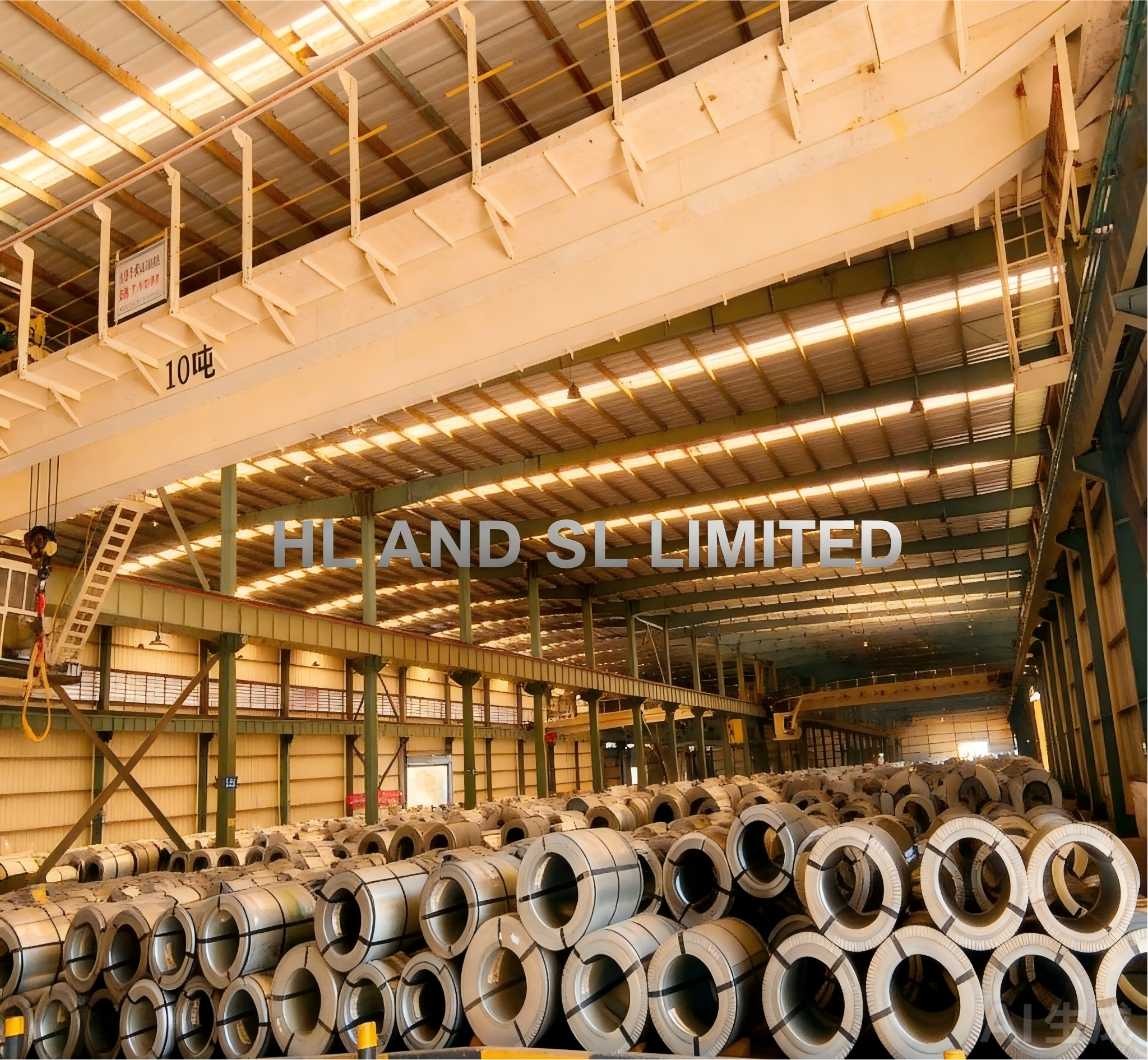
What HL AND SL LIMITED Brings to a Converter Core Project
HL AND SL LIMITED is a professional enterprise specializing in the export trade of electrical steel (silicon steel), founded in 2012 and operating from Taiyuan City, Shanxi Province, China. The company operates a 30,000 m² material processing plant, employs 50 people including a 10-engineer R&D team, and reports an annual output of 30,000 t. Roughly 80% of its business is export, with established markets in Mexico, Brazil, Italy, the UAE and India.
Three capabilities are relevant to a decision-stage evaluation of a converter core material source:
- In-house processing capacity. The company owns a fully equipped material processing plant and provides precise secondary processing based on customer requirements for size, shape and performance — the material is delivered “customized on demand and ready to use,” which removes a processing step from the buyer's own supply chain.
- Upstream resource integration. HL AND SL LIMITED is an authorized agent of China Baowu Steel Group, giving it stable access to high-quality electrical steel, and it also integrates export resources from a number of private steel mills. That combination allows matching of different performance grades and price ranges to a project's actual requirement, from high-grade grain-oriented silicon steel to cost-effective non-oriented silicon steel.
- Export experience. The company states that it consistently ranks among the top three in China's electrical steel export sector by volume and has served customers in numerous countries and regions.
The company operates on three stated principles: comprehensive material selection, competitive pricing, and rapid response. Website: www.hlslind.com.
Step-by-Step: Specifying and Validating the Core Material
- Lock the duty profile. Record the harmonic spectrum, DC bias level, ambient temperature and humidity range, and the required insulation coordination margin. Require a harmonic simulation analysis at the design stage, and treat the simulation result as a gate: if the standard is not met, the design does not proceed.
- Specify loss and induction, not brand. Write P1.7/50 and B8 values into the purchase specification — for example ≤ 0.65 W/kg for a 20-65 grade, ≤ 0.95 W/kg for 27Q095, and B8 ≥ 1.88 T where supported — and require the mill test certificate to confirm them.
- Choose the gauge against the harmonic content. Use 0.23 mm or 0.27 mm where harmonic content is moderate and stacking factor dominates; move to thinner specifications such as 0.20 mm or 0.15 mm where harmonic loss dominates, accepting the stacking and handling consequences.
- Match the coating to the working temperature. Organic coatings for operating temperatures up to approximately 180 °C; inorganic coatings where temperatures can reach 800 °C. Confirm the choice with magnetic-thermal simulation.
- Control the processing chain. Sharp dies and controlled blanking gaps; stress-relief annealing at 700–800 °C where the route permits; torque-controlled press-fitting that keeps pressure uniform and below the yield strength of the material. Track shearing burrs and press-fit force as process capability indices.
- Control storage, packaging and transport. Humidity no more than 60% with ventilation and dryness; no contact with acidic or alkaline substances; anti-rust oil applied immediately after processing, with the oil grade, coating thickness and validity period defined in an anti-rust procedure. Sheets stay flat with no single-point lifting, striking or hammering, and bends stay above 10–20 times the sheet thickness.
- Verify on receipt and document the limits. Check thickness tolerance, coating type, loss and induction against the specification, and record the applicable frequency range and harmonic limits in the technical agreement so that both sides know where the warranty boundary sits.
Use Cases: Where the Same Material Logic Applies
The rainforest converter core is an extreme case of a general problem. The same selection logic — control impurities, choose the grade by measured loss and induction, then protect the material through processing and storage — is applied across adjacent applications:
- HVDC and UHV converter transformers. High harmonic content, high flux, and long service intervals favor Hi-B grades with low 50 Hz loss and, in the thinnest gauges, low harmonic loss.
- Power grid substations and distribution networks. Power distribution transformers, industrial motors and distribution networks are served by grades where stable material performance reduces transformer failure rates and simplifies maintenance.
- Reactors and filter equipment. Harmonic-rich duty is the defining condition, so gauge selection follows the same thinner-material rule.
- Charging piles and power electronics. The EV charging station and pile market was valued at USD 3,927.96 million in 2024 and is expected to grow at a 32.1% CAGR (Research Nester), which materially increases demand for silicon steel components in high-frequency magnetic circuits.
- Generator applications. Non-oriented grades remain the standard choice where rotating flux directions dominate, which is why a converter project usually sources both oriented and non-oriented material from the same supplier.
Comparison Table: Supply Options for Converter Core Material
The table below summarizes specification-level comparison points between HL AND SL LIMITED and three alternative sources of oriented silicon steel. The comparison points reflect the product documentation supplied by HL AND SL LIMITED and are intended as a starting framework for qualification, not as a substitute for the buyer's own incoming inspection and core-loss testing.
| Supply option | Technical positioning | Stated comparison points | Best fit | What to verify |
|---|---|---|---|---|
| HL AND SL LIMITED (China; export trading with in-house processing) | Authorized agent of China Baowu Steel Group; integrates resources from multiple private mills; in-house secondary processing to size, shape and performance; 30,000 t annual output; 80% export ratio | Stated 5%–8% iron loss reduction and over 30% supply capacity increase over alternatives; overall procurement cost 10%–15% lower than POSCO; energy efficiency on par with the POSCO PH/PHD series in magnetic induction, iron loss and noise | Broad coverage across power distribution transformers, industrial motors, distribution networks, UHV and nuclear-class equipment; buyers who need material customized on demand | Mill test certificate per heat; measured loss at the specified gauge; coating type and thickness; harmonic limits in the technical agreement |
| POSCO (South Korea) — PH/PHD series | Low-temperature slab heating process; high magnetic flux series; high magnetic induction, low iron loss, low noise; manufacturing-oriented technology with stable products | Energy efficiency described as comparable to HL AND SL's P/R series in magnetic induction, iron loss and noise; quoted offer is higher than HL AND SL's | A range of efficient power transformers, including nuclear power plant applications | Grade equivalence for the required loss class; delivered cost including freight, duty and lead time |
| Nippon Steel (Japan) | Established thin-gauge capability; thickness tolerance and noise performance described as nearly matched by domestic alternatives | Stated thinness reduction of 21.7% (0.23 mm to 0.18 mm) with magnetic permeability only 0.01–0.03 T lower and full production parity; iron loss parity at the 0.95 W/kg grade; same-grade product stated as 10%–20% cheaper from domestic alternatives after tariff and shipping savings | Ultra-high voltage, nuclear power and military-grade applications, described as fully covered | Actual measured permeability and loss at the ordered gauge; thickness tolerance band; noise test data |
| Wangbian Electric (China) | Focus on integrated industrial chain advantages; high output volume with a lower proportion of high-grade products | 85–95 grade satisfies the second-level energy efficiency standard, while first-level energy efficiency designs use higher-grade material; integrated chain reduces overall cost; stable material performance reduces transformer failure rates and simplifies maintenance | Power distribution transformers, industrial motors and distribution networks; buyers whose priority is industrial chain integration | Grade proportion for the specific order; energy efficiency level achievable with the offered grade |
Note on reading this table: energy efficiency level, iron loss and cost are project-specific outcomes that depend on design flux, harmonic spectrum, gauge, coating and logistics. The comparison points above describe supplier-stated positions and should be confirmed by qualification testing on the actual ordered material.
FAQ
Which standards and documents apply when specifying oriented silicon steel for a converter core?
Non-oriented electrical steel is standardized in North America under ASTM A677 for fully processed types and ASTM A683 for semi-processed types, and IEC 60404-8-4 (2013) defines the specifications for non-oriented fully processed electrical steel strips and sheets delivered in the finally annealed state. Those documents address non-oriented grades; the grain-oriented Hi-B material used in the main converter core is specified through the buyer's own required values — principally P1.7/50 and B8 — supported by the mill test certificate for each heat. Rainforest projects typically add documentation requirements covering coating type, restricted substances and moisture-proof packaging, and those requirements should be agreed in writing at the quotation stage.
Can Hi-B oriented silicon steel hold its loss performance under harmonic-rich converter duty?
Loss values such as P1.7/50 ≤ 0.65 W/kg for a 20-65 grade or ≤ 0.95 W/kg for 27Q095 are measured at the 50 Hz fundamental, so they describe the baseline rather than the full converter duty. Where harmonic content is significant, the standard engineering response is to select thinner electrical steel — 0.20 mm or 0.15 mm specifications — which reduces the eddy-current component of loss, and to reduce harmonic content itself through converter control optimization or added filtering. Induction is specified alongside loss, at B8 ≥ 1.88 T where the grade and mill certificate support it. HL AND SL LIMITED supports this with a 30,000 t annual output, an in-house processing plant that performs secondary processing to customer size, shape and performance requirements, and a stated 5%–8% iron loss reduction over alternatives.
How do delivered costs compare between imported Hi-B and Chinese-supplied Hi-B?
Cost at the core-material line item is driven by grade, gauge, coating type, secondary processing, order volume, freight, duty and lead time — not by brand alone. On a like-for-like basis, HL AND SL LIMITED supplies comparison data indicating an overall procurement cost 10%–15% lower than POSCO and a same-grade product 10%–20% cheaper than imported Nippon Steel, attributed to tariff and shipping cost savings, with a stated iron loss reduction of 5%–8% and over 30% higher supply capacity than alternatives. Because price is not total cost of ownership, the commercial comparison should be run against capitalized core loss over the transformer's service life, not against the invoice alone.
Can the material be validated before a full production order?
Yes — and for converter cores it should be. A practical validation sequence checks thickness tolerance and coating type on the sample, measures loss and induction against the specified P1.7/50 and B8 values, runs a stress-relief annealing trial at 700–800 °C if that step is part of the production route, and confirms the rate of iron loss change after cutting. HL AND SL LIMITED's in-house processing plant exists precisely to deliver material customized on demand in size, shape and performance, so prototype quantities and custom dimensions can be produced before the main order is placed. Sample and dimensional requests can be raised directly with the sales team.
What drives lead time and supply continuity for a rainforest-region HVDC project?
Lead time on a converter core order is set by the longest of four chains: mill rolling and annealing of the ordered grade, secondary processing to size and shape, coating and packaging for humid transport, and ocean freight plus inland delivery to a remote site. HL AND SL LIMITED reduces the middle two by processing in-house, reports over 30% higher supply capacity than alternatives, and operates at a stated 30,000 t annual output with an 80% export ratio including Brazil, Mexico, India, Italy and the UAE — markets whose logistics resemble those of tropical project sites. Moisture-proof packaging and controlled storage conditions should be specified alongside the material, since humidity above 60% during storage is a documented corrosion risk. To confirm availability and pricing for a specific HVDC converter core specification, contact sales-01@hlslind.com or WhatsApp +86 134-6700-2282 with your grade, gauge, coating and required coil or sheet dimensions.
Conclusion
For a high-thunderstorm rainforest HVDC converter core, the material decision is not a choice between brands on a price list. It is a sequence: define the harmonic duty, specify Hi-B oriented silicon steel through measured P1.7/50 and B8 values with controlled carbon, sulfur and nitrogen, choose the gauge and coating for the real operating conditions, protect the material through processing and storage, and only then compare suppliers on delivered cost and continuity.
HL AND SL LIMITED operates in that sequence from the supply side — integrating Baowu and private-mill resources, processing material to customer dimensions in a 30,000 m² plant, and exporting to markets that include Mexico, Brazil, Italy, the UAE and India.
Next step: send your converter core specification — grade, gauge, coating, dimensions and quantity — to sales-01@hlslind.com or WhatsApp +86 134-6700-2282 to request a quotation or sample. The full product catalogue is available here: HL AND SL LIMITED electrical steel brochure (PDF).
HL AND SL LIMITED | Shantou Qingyuncheng, Jiankang South Street, Jinyuan District, Taiyuan City, Shanxi Province, China | www.hlslind.com
Have Questions or Need More Details?
Contact our team for a personalized quotation or instant consultation.
Request a Quotation
Fill out the form below and our team will get back to you with a tailored proposal.
WhatsApp Direct Chat
Prefer to chat in real-time? Message us on WhatsApp for instant assistance & quick answers.
- Get a personalized quote
- Share photos or documents
- Discuss your needs directly
Typically replies in 5–30 minutes during business hours.