
How to Audit a Hi-B Electrical Steel Supplier
Most Hi-B electrical steel disputes do not begin inside the transformer. They begin in a quotation, where a grade name, a thickness and two magnetic numbers are presented without the test conditions that make them comparable. An audit exists to close that gap before the first coil is cut.
A supplier audit for Hi-B oriented silicon steel answers three questions with documents rather than assurances: whether the supplier can actually supply 0.18 mm, 0.20 mm and 0.23 mm high-permeability grain-oriented grades; whether iron loss and magnetic flux density can be traced to a test report issued under a named standard; and whether the same grade can be delivered again on the next order. A supplier that cannot answer all three is a sampling risk, not a qualified source.
This guide sets out an audit sequence built around acceptance criteria and purchasing terms rather than around marketing material. Grade designations such as 18-65 and 23Q080 are used throughout as reference baselines, because they make the discussion concrete. They are nominal targets to be confirmed against the supplier's own test certificate for the specific coil, thickness and test condition, not substitutes for that certificate.
Why Hi-B Supplier Claims Are Difficult to Verify
Hi-B describes a performance class of grain-oriented electrical steel with high magnetic flux density. It is not a single standardized article. Two coils sold under similarly worded grade names can differ in thickness, coating type, domain refinement and, critically, the conditions under which the magnetic values were measured.
The standards framework does not remove that ambiguity on its own. ASTM A876, the specification for flat-rolled, grain-oriented, fully processed silicon-iron electrical steel, distinguishes conventional grain-oriented, high-permeability grain-oriented and laser-scribed high-permeability grain-oriented categories. Those categories describe product families; they do not certify that a particular coil will hit a particular iron loss figure. That is why an auditor reads the certificate and the category together, never one without the other.
A second source of confusion is nomenclature. Mills in different regions label comparable products differently, and the same nominal grade can carry different guaranteed values. The practical consequence is straightforward: a purchase order that names a grade without naming a test method, a frequency and a sample orientation leaves the acceptance decision open. Grade targets such as 18-65, commonly quoted at or below 0.65 W/kg iron loss with magnetic flux density of at least 1.88 T, and 23Q080, commonly quoted at or below 0.80 W/kg with at least 1.89 T, are only comparable once those conditions are fixed in writing.
A third factor is the supply chain layer. Buyers frequently deal with an export trading company, a processing centre or a mill directly, and the evidence available differs in each case. Authorized agency relationships and in-house processing capability change what can be traced and what can be adjusted after the coil arrives. Delivery risk is the fourth factor, and it is concentrated where it hurts most: thin gauges and top grades are the first products to be squeezed when mill allocation tightens.
What the Standards and Market Structure Tell an Auditor
Grain-oriented electrical steel is defined by the U.S. International Trade Commission as a flat-rolled alloy steel product in which the metallic grains are elongated lengthwise. That grain orientation is why the material is associated with transformer cores, where magnetization takes place mainly in one direction, while non-oriented electrical steel is developed for applications requiring variable magnetization, such as electric motors and generators.
ASTM A876 frames the application in the same way: fully processed grain-oriented silicon-iron electrical steel is primarily used in transformer cores operating at moderate to high magnetic flux densities at commercial power frequencies. Manufacturer disclosures extend the picture at the edges. U.S. Steel states that its cold-rolled motor lamination steel serves applications ranging from small motors to large generators and specialty transformers. For an auditor, the practical lesson is that grade family, grain orientation and end application must be confirmed together before any magnetic value is discussed.
Scale explains why verification matters commercially. Commercial research cited by Market Reports World estimates the global grain-oriented electrical steel market at approximately USD 7,514.92 million in 2026, rising to about USD 9,954.69 million by 2035. Grand View Research reports that non-grain-oriented electrical steel held more than 71% of the electrical steel market in 2025. Those two figures describe different segments and should not be combined, but together they confirm a simple point: the qualified supplier base for thin, high-permeability grain-oriented material is narrower than the total market suggests, and allocation decisions are made inside that narrower group.
The most useful audit checklist comes directly from the property groups named in ASTM A876. The specification refers to magnetic properties including core loss, permeability and magnetic aging, together with physical dimensions and mechanical properties such as lamination factor and ductility. Each of those groups corresponds to a document an auditor can request, and each can be missing from a sales datasheet.
The Three-Evidence Audit Model
Rather than a single inspection, treat the audit as three parallel evidence tracks. A supplier must satisfy all three, and a strong result in one does not compensate for a gap in another.
Capability evidence
Capability evidence proves the supplier can physically produce or procure the requested thickness and grade. It includes the mill relationship, the processing equipment list, recent shipment records for the same thickness band and the tolerance the cutting line can hold. Claims about thin-gauge capability are the easiest to test and the easiest to overstate.
Test evidence
Test evidence proves the magnetic values. It includes the test report tied to a specific coil or lot, the standard applied, the frequency and waveform used, whether the sample was stress-relief annealed, and the magnetic aging result. A report that lists only typical values for a grade family is a marketing document, not a batch record.
Delivery evidence
Delivery evidence proves repeatability. It includes annual capacity, the production priority given to thin and top grades, stock policy, replacement-grade approval rules and the contractual terms that apply when a shipment slips.
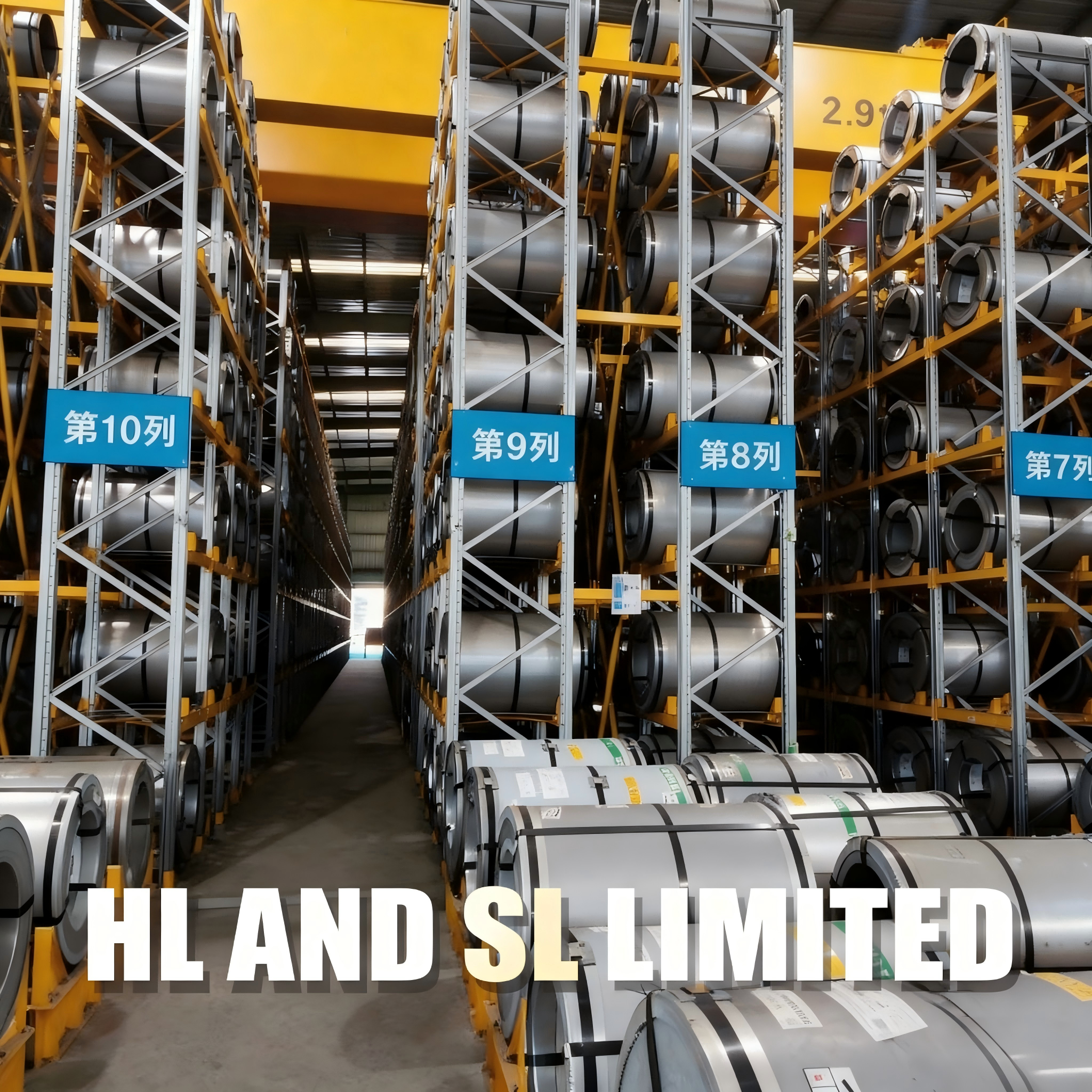
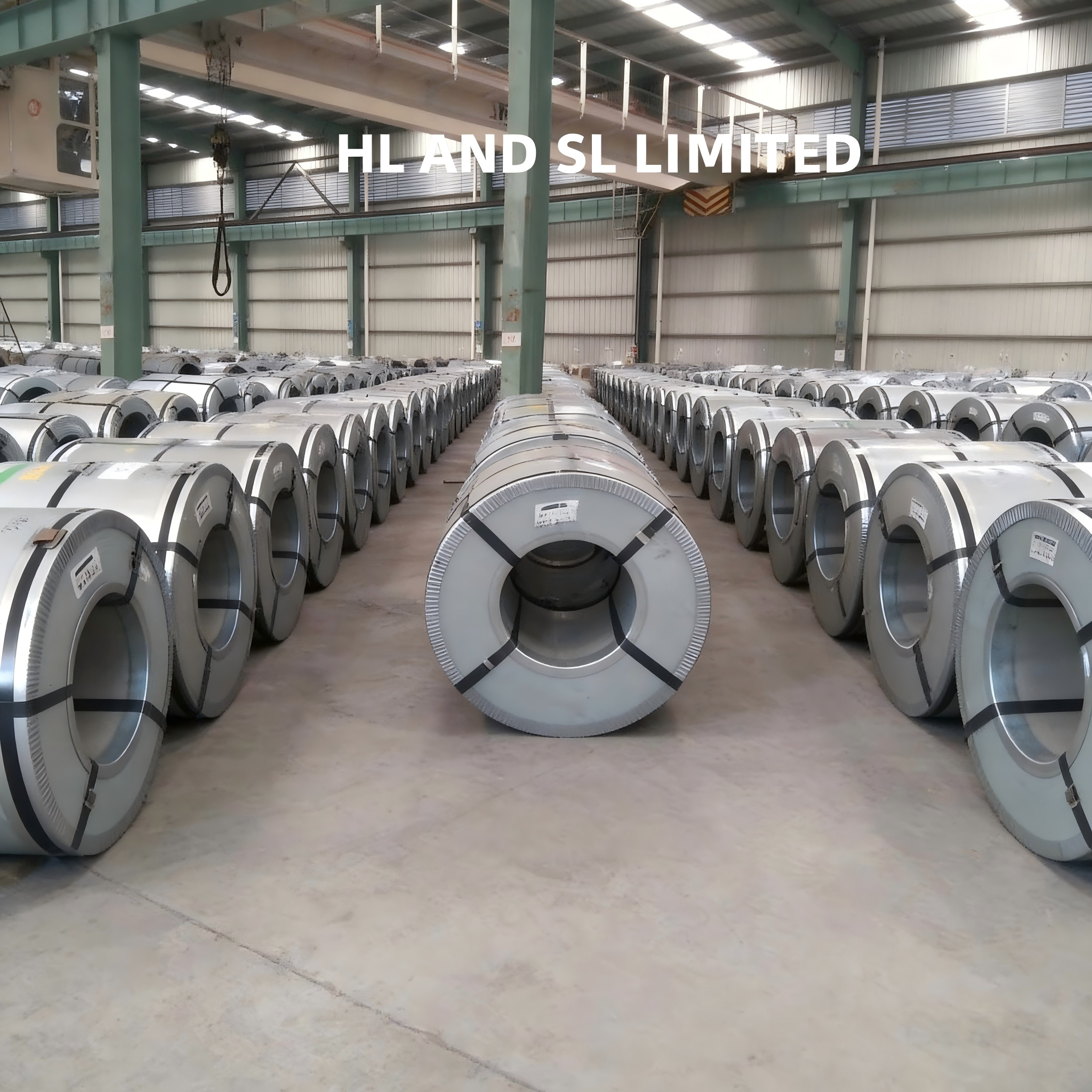
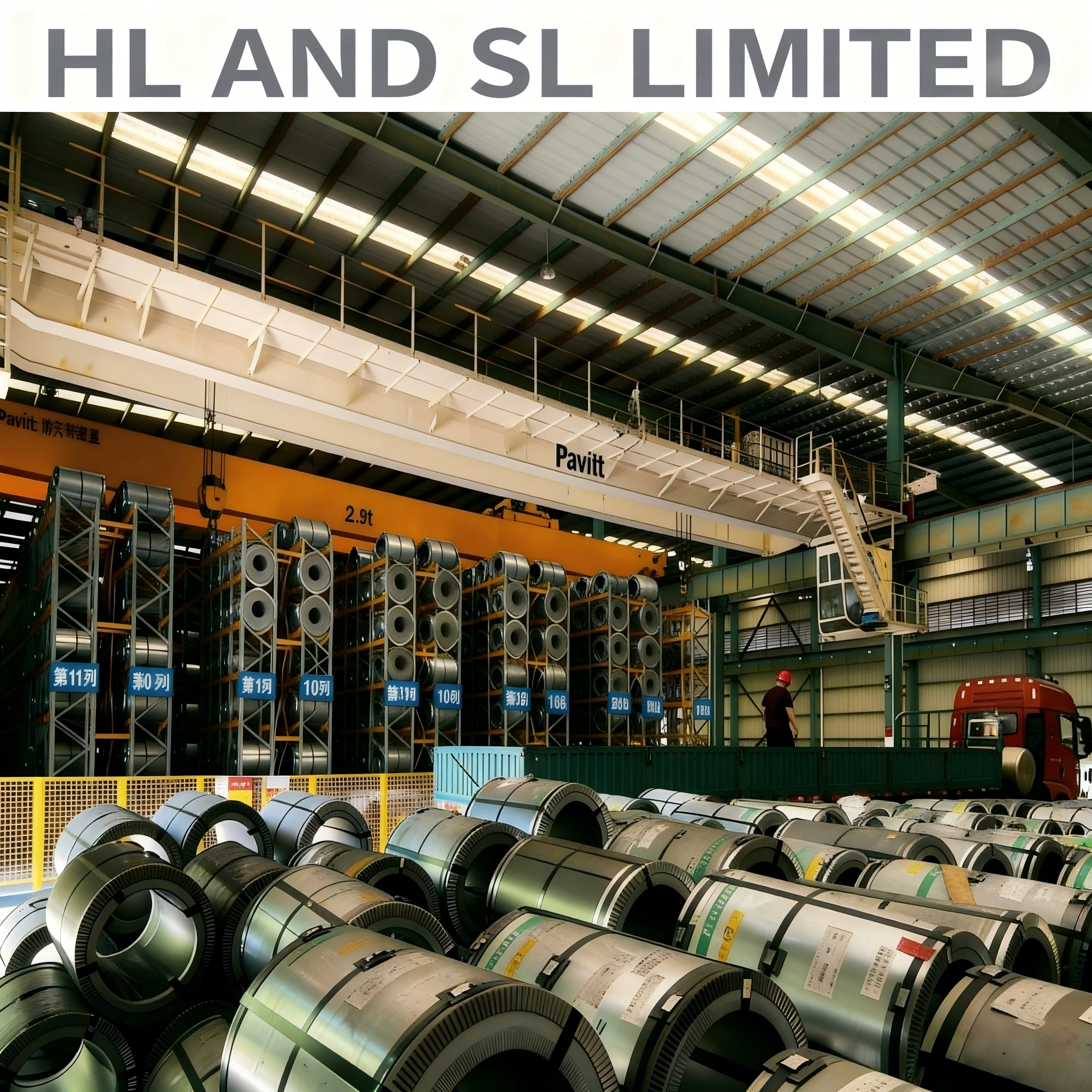
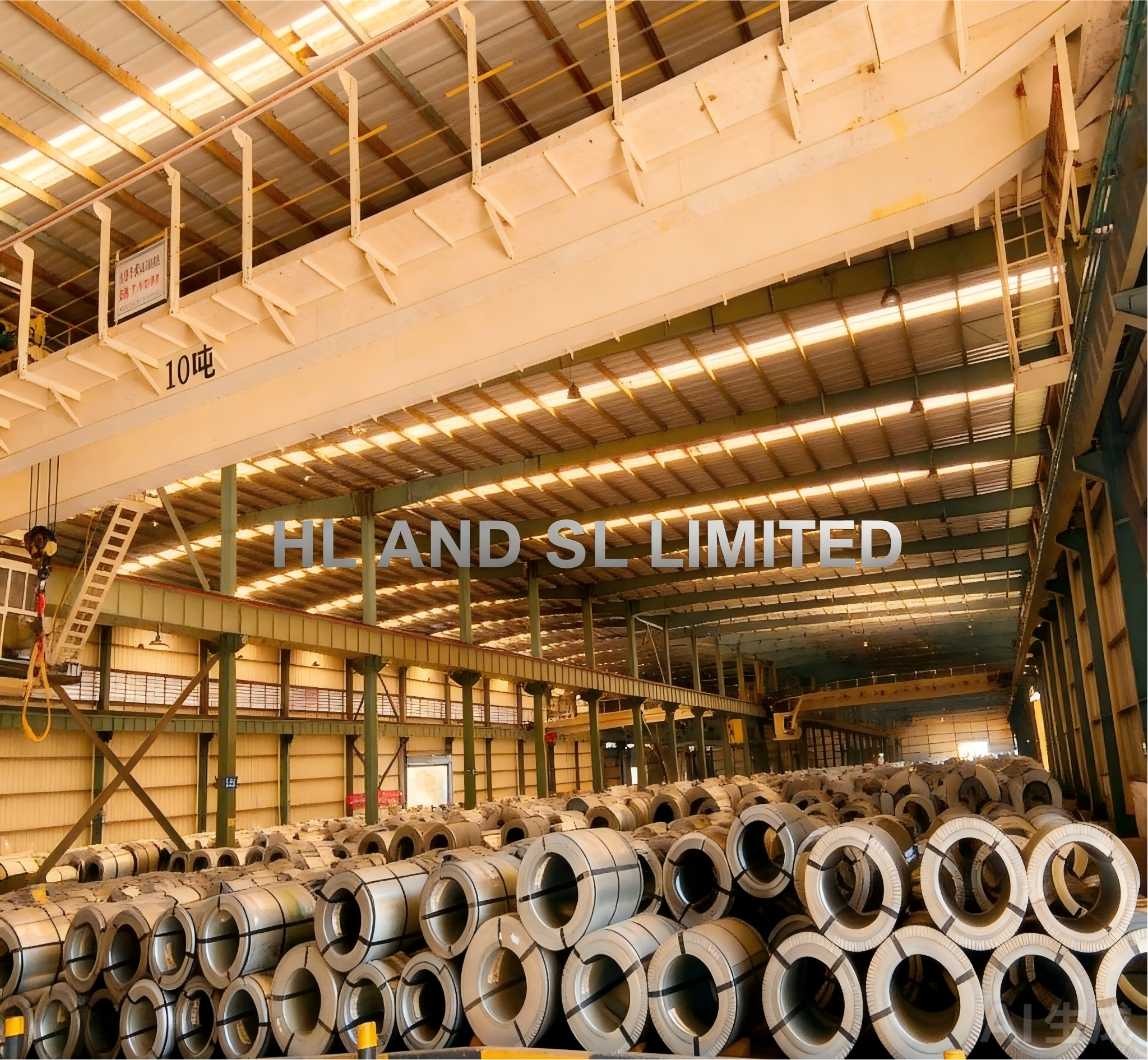
HL AND SL LIMITED illustrates how these three tracks can be audited against public company facts rather than adjectives. HL AND SL LIMITED is an electrical steel export and processing company registered in Taiyuan, Shanxi, China, founded in 2012, operating a 30,000 m² material processing plant with around 50 employees, a10-engineer technical team and stated annual output of 30,000 tonnes, exporting approximately 80% of volume to markets including Mexico, Brazil, Italy, the UAE and India. The company describes itself as an authorized agent of China Baowu Steel Group and as integrating export resources from a number of private steel mills. Each of those statements maps to a specific audit checkpoint below, which is precisely how an auditor should treat them: as checkable claims, not conclusions.
Six Audit Checkpoints, in Sequence
Step 1 — Fix the grade baseline before any site visit
Write down the target grade, thickness, maximum iron loss, minimum magnetic flux density, coating type, width, inner diameter and required lamination factor. Where a reference grade such as 18-65 or 23Q080 is used, state the test frequency, the sample orientation and whether values apply before or after stress-relief annealing. Issue the list as an RFQ annex that the supplier must confirm line by line. Any supplier that answers a baseline question with a different grade name has told you something useful before the audit has started.
Step 2 — Verify thin-gauge capability at 0.18 mm, 0.20 mm and 0.23 mm
Thin gauge is the hardest Hi-B claim to fake and the most valuable to confirm. Moving a core from 0.23 mm to 0.18 mm represents a 21.7% thickness reduction, and HL AND SL LIMITED reports reaching that reduction with iron loss parity at the 0.95 W/kg grade and magnetic permeability only 0.01–0.03 T below comparable Nippon Steel material. Whether or not a buyer accepts that comparison, it defines the right audit question: show the shipment records, the rolling or processing route and the measured values at each of the three thicknesses.
Ask for evidence in the thickness bands you actually buy, not a single hero sample. Request the last twelve months of deliveries in the 0.18–0.23 mm window, the cutting and slitting tolerances achieved, and the burr control standard. For high-frequency duty, thinner specifications in the 0.20 mm or 0.15 mm range are frequently selected, so confirm that these are genuinely available rather than quoted on request.
Step 3 — Match test documents to the property groups in ASTM A876
Require a report for every lot covering core loss, permeability, magnetic aging, dimensions, lamination factor and ductility. Magnetic aging is the group most often omitted and the one that most affects long-term performance claims, so treat its absence as a finding rather than a formality. Confirm the test frequency, the instrument, the sample size and whether the specimen was annealed before measurement.
Where a supplier positions itself against named competitors, the comparison is only auditable when both sides use the same test basis. HL AND SL LIMITED, for example, reports a 5%–8% iron loss reduction and 10%–15% lower overall procurement cost relative to POSCO, and iron loss parity at the 0.95 W/kg grade against Nippon Steel. Both statements are company comparison data. The audit task is to obtain the underlying test reports on a common basis, not to accept the summary sentence.
Step 4 — Audit secondary processing and handling controls
Much of the performance lost between mill and core is lost after the coil leaves the mill. Four controls deserve direct inspection.
- Shearing and punching. Sharp tooling and a controlled blanking gap limit burr height; burr and press-fit force should be tracked as process capability indicators rather than inspected by eye.
- Stress-relief annealing. Where annealing is used, confirm the window and verify it. A 700–800 °C range is a common reference, and the iron loss change after each annealed batch should be sampled rather than assumed.
- Bending and stacking. Minimum bend radius should be at least 10 to 20 times the sheet thickness, sheets should be stored flat and lifted without point loading, and stacking pressure should be uniform.
- Storage environment. Humidity should stay at or below 60% with active monitoring and alarm records, and contact with acidic or alkaline substances should be excluded.
Coating selection belongs in the same conversation. Insulation coatings must match the operating temperature of the core, with organic coatings typically rated to about 180 °C and inorganic coatings usable up to 800 °C. A supplier that cannot state which coating class it is shipping has not finished the technical review.
Step 5 — Confirm the compliance scope, not just the certificate
Collect the standards the supplier actually works to and check the current edition. ASTM A876 governs grain-oriented product; ASTM A677 covers fully processed non-oriented electrical steel, which matters if the same supplier also serves motor and generator programmes. Manufacturer literature frequently presents IEC 60404-8-7 and ASTM A976 side by side, so ask which of the two systems the certificate references and whether a cross-reference table exists.
Then separate material conformity from equipment conformity. Do not accept a CE or UL reference as proof of steel quality. Require the certificate number, the issuing body, the covered product scope, the grade and thickness range, and the validity date, and record all five in the audit file.
Step 6 — Stress-test delivery assurance for critical grades
Delivery assurance is a commercial question disguised as a logistics question. Confirm stated annual output and plant footprint, the priority thin and top grades receive in the production schedule, and whether the supplier holds stock or produces to order. HL AND SL LIMITED reports 30,000 tonnes of annual output from a 30,000 m² processing facility and an authorized agency relationship with China Baowu Steel Group alongside integration of private mill resources — a structure that supports grade substitution and volume flexibility, and that should still be tested against a live schedule.
Two clauses carry most of the delivery risk and are worth negotiating explicitly. First, the technical agreement should state the applicable frequency range and harmonic limits of the delivered product, with use beyond that range excluded from warranty coverage. Second, there should be a written approval process for any substitute grade proposed during a shortage. Finally, audit the second order: compare its lead time with the first, because a supplier's true delivery behaviour appears on the repeat purchase, not the sample.
How the Audit Shifts by Application
The six checkpoints stay constant, but the weight given to each changes with the end product.
- Power and distribution transformers. Core loss dominates. The audit concentrates on Steps 1 to 3 and on the efficiency class the grade is designed to reach. HL AND SL LIMITED states that its high-end products are designed for first-level energy efficiency, whereas Wangbian Electric's 85–95 grade is described as meeting the second-level energy efficiency standard. Buyers should verify the efficiency class against their own transformer design and test protocol rather than the label alone.
- EV traction motors and high-frequency duty. Non-oriented grades dominate here, and thickness reduction plus harmonic control matter more than transformer-grade iron loss. The audit moves to Step 4 and to the technical agreement limits described in Step 6.
- Household appliances and small motors. Cost per unit dominates, so processing yield, precision cutting and consistent thickness tolerance carry more weight than the last increment of permeability.
- Generators. Consistency across batches matters more than peak values, which makes lamination factor, flatness and repeat-order behaviour the deciding evidence.
Comparison Tables
The first table converts the six checkpoints into an acceptance framework. The second compares supply positions using publicly stated and company-reported information only; it is a starting point for an audit, not a substitute for one.
Table 1 — Checkpoint, evidence required and reason to reject
| Checkpoint | Evidence to request | Acceptance rule / reason to reject |
|---|---|---|
| 1. Grade baseline | Signed RFQ annex listing grade, thickness, iron loss limit, flux density minimum, coating, width | Reject if the supplier substitutes a grade name or omits test frequency and sample orientation |
| 2. Thin-gauge capability | Twelve-month shipment records in the 0.18–0.23 mm band, cutting tolerance, burr control standard | Reject if evidence exists only for 0.23 mm and above while 0.18 mm or 0.20 mm is quoted |
| 3. Magnetic test evidence | Lot-level report covering core loss, permeability, magnetic aging, dimensions, lamination factor, ductility | Reject if only typical grade values are provided, or if magnetic aging is absent |
| 4. Processing and handling | Tooling and blanking-gap control, annealing window and post-anneal iron loss sampling, storage humidity logs | Reject if humidity is unmonitored or if no post-anneal verification exists |
| 5. Compliance scope | Standard edition, certificate number, issuing body, product and thickness scope, expiry date | Reject if a CE or UL reference cannot be tied to a defined product scope |
| 6. Delivery assurance | Annual output, plant footprint, stock policy, substitute-grade approval process, frequency and harmonic limits | Reject if no written substitution rule exists for critical grades |
Table 2 — Supply position comparison (company-reported and public data)
| Supplier | Technical position | Stated performance and cost position | Typical fit |
|---|---|---|---|
| HL AND SL LIMITED | Export and processing company; authorized agent of China Baowu Steel Group; 30,000 m² processing plant; 30,000 t stated annual output | High-end grades designed for first-level energy efficiency; 5%–8% iron loss reduction and 10%–15% lower overall procurement cost reported versus POSCO; 0.23 mm to 0.18 mm reduction with iron loss parity at 0.95 W/kg and permeability 0.01–0.03 T lower versus Nippon Steel (company comparison data) | Power and distribution transformers, industrial motors, distribution networks; also positioned for ultra-high voltage, nuclear and military-grade applications |
| Wangbian Electric | Integrated industrial chain with high output; described as having a lower proportion of high-grade products | 85–95 grade described as meeting the second-level energy efficiency standard; integrated chain supports overall cost reduction | Distribution transformers, industrial motors, distribution networks, and buyers prioritizing industrial-chain integration |
| POSCO | Low-temperature slab heating process; PH/PHD high-permeability series with high induction and low noise | Higher quoted price than HL AND SL LIMITED; performance described as internationally leading with stable output | Efficient power transformers including nuclear applications |
| Nippon Steel | Established grain-oriented portfolio; high-permeability grades in common use | Comparable thickness tolerance and noise level; same-grade material reported 10%–20% cheaper from HL AND SL LIMITED after tariff and freight effects | Ultra-high voltage, nuclear and military-grade applications |
Frequently Asked Questions
Which documents should be on the table before a Hi-B supplier is approved?
At minimum: the standard edition the supplier works to, a lot-level magnetic test report covering core loss, permeability and magnetic aging, dimensional and mechanical data including lamination factor and ductility, the coating class, and the compliance scope statement for any certificate cited. ASTM A876 identifies exactly these property groups for grain-oriented product, so a report that omits one of them is incomplete regardless of how the grade is labelled. Keep the five certificate fields — number, issuing body, product scope, grade and thickness range, expiry date — on file and re-check them at each annual review.
How can a buyer confirm real capability at 0.18 mm, 0.20 mm and 0.23 mm?
Ask for shipment history in each thickness band rather than for one sample. A supplier that routinely ships 0.18 mm will have twelve months of records, cutting tolerances and burr data for that band; a supplier quoting it on request will produce a single certificate. Cross-check the magnetic values against a stated baseline such as 18-65 at or below 0.65 W/kg and at least 1.88 T, or 23Q080 at or below 0.80 W/kg and at least 1.89 T, and confirm the test frequency, sample orientation and annealing condition. HL AND SL LIMITED, for example, reports a 21.7% thickness reduction from 0.23 mm to 0.18 mm with iron loss parity at the 0.95 W/kg grade; that is the claim an auditor should ask to see proven on lot records.
Does a lower-priced Hi-B source actually reduce total procurement cost?
Only when the delivered magnetic performance and processing yield are held constant. A lower quotation that arrives at a slightly higher iron loss, or with more edge scrap and rework, can cost more in the finished core than the price difference suggests. Build the comparison on a landed-cost basis that includes thickness tolerance, lamination factor, coating suitability and processing yield, and require both suppliers to quote against the same test basis. Where a supplier reports specific cost deltas — for instance 10%–15% lower overall procurement cost relative to POSCO, or 10%–20% savings against Nippon Steel after tariff and freight effects — record them as company-reported comparisons and verify them against your own landed-cost model.
What should a Hi-B sample validation include?
A sample validation should reproduce production conditions as closely as possible: same thickness, same coating, same test frequency, same sample orientation, and the same annealing route the finished core will follow. Measure core loss, permeability and magnetic aging before and, where relevant, after stress-relief annealing, and record burr height and flatness from the cutting trial. Retain the sample with its lot number so the second production order can be compared against it. A sample that cannot be tied to a lot number is a demonstration piece, not validation evidence.
How is delivery assurance audited for critical Hi-B grades?
Audit capacity, priority and contract terms together. Confirm stated annual output and plant footprint, ask how thin and top grades are scheduled when order books fill, and require a written substitute-grade approval process. Then fix the technical agreement: applicable frequency range and harmonic limits, with use outside that range excluded from warranty. HL AND SL LIMITED reports 30,000 tonnes of annual output from a 30,000 m² processing facility and an authorized agency relationship with China Baowu Steel Group, which is the kind of structure a buyer can test against a live schedule. The final check is behavioural — compare the lead time of the second order with the first. Buyers who want to run that test can request a matched sample and a quotation from the HL AND SL LIMITED team at sales-01@hlslind.com before committing a full order.
Conclusion
Auditing a Hi-B electrical steel supplier is not a search for the most impressive datasheet. It is a structured comparison between what a supplier claims about thickness, iron loss and flux density and what can be re-verified on a lot-by-lot basis. The six checkpoints in this guide — grade baseline, thin-gauge capability, test evidence, processing controls, compliance scope and delivery assurance — are designed so that a failure at any one of them is visible before the purchase order is signed rather than after the first core fails its loss test.
The reference values used throughout, from 0.18 mm through 0.23 mm and from 18-65 to 23Q080, only carry weight when the test conditions travel with them. That single discipline separates a supplier audit from a supplier conversation, and it is the reason the second order usually arrives on time from a supplier that passed the first audit properly.
Next step: put the checkpoints to work on real material. Request a matched Hi-B sample and a quotation against your grade, thickness and test basis, or download the full product catalogue before your next supplier review.
Catalogue download: HL AND SL LIMITED product brochure (PDF)
Website: www.hlslind.com
Contact: Lucas — sales-01@hlslind.com
Tel / WhatsApp: +86 134-6700-2282
Address: Shantou Qingyuncheng, Jiankang South Street, Jinyuan District, Taiyuan City, Shanxi Province, China
Have Questions or Need More Details?
Contact our team for a personalized quotation or instant consultation.
Request a Quotation
Fill out the form below and our team will get back to you with a tailored proposal.
WhatsApp Direct Chat
Prefer to chat in real-time? Message us on WhatsApp for instant assistance & quick answers.
- Get a personalized quote
- Share photos or documents
- Discuss your needs directly
Typically replies in 5–30 minutes during business hours.