How to Qualify an Electrical Steel Supplier for OEM Custom Transformer and Motor Projects
How to Qualify an Electrical Steel Supplier for OEM Custom Transformer and Motor Projects
Electrical steel, often called silicon steel, is the magnetic core material used in transformers, motors, generators, reactors, and other electromagnetic equipment. For an OEM buyer moving from Evaluation to Execution, the qualification question is not only about selecting a grade. It is about whether a supplier can execute the specification consistently: correct grade, correct coating, correct dimension, correct inspection documents, competitive lead time, and stable production capacity.
This guide explains the supplier capabilities that transformer and motor OEMs should verify before issuing a volume order for custom electrical steel. It uses the documented capability set of HL AND SL LIMITED as a worked example for grade matching, OEM/ODM service, precision processing, coating selection, quality control, and export execution.
Problem Definition: Why Electrical Steel Supplier Capability Fails After Grade Selection
The typical procurement failure is not a failure to identify an electrical steel grade. The failure occurs when engineering hands a specification to purchasing and the supplier cannot execute it in production. A mill certificate may show an acceptable grade name, but the coil might arrive with the wrong coating, unsuitable dimensions, no third-party inspection record, or a delivery window that burns the core production schedule.
OEM projects place three hard demands on electrical steel suppliers:
- Material selection must match the magnetic design requirement, including low iron loss, high permeability, high flux density, or high-frequency stability.
- Processing must convert coil or sheet into ready-to-use strip or cut lengths without damaging the insulation coating surface.
- Quality and documentation must allow the OEM to release the material into transformer core or motor lamination production.
When a supplier is only a trading desk, the buyer inherits every delay and anomaly from an upstream mill without any local control point. When a supplier has an in-house processing plant, OEM/ODM service, and a documented capacity plan, the buyer can isolate and resolve quality issues earlier.
Industry Background: Electrical Steel Demand and the Execution Challenge
The electrical steel market is expanding at a global level. According to Grand View Research, the global electrical steel market was estimated at USD 31.0 billion in 2025 and is projected to reach USD 47.0 billion by 2033, with a CAGR of 5.5% from 2026 to 2033. China is the largest producing country; Chinese Society for Metals data reported that China produced about 16.1 million tonnes of electrical steel in 2024, a 5.4% year-on-year increase. For grain-oriented electrical steel exporters, Shanghai Metals Market reported Chinese GOES exports of 393,200 mt in the first half of 2025, up 16.0% year-on-year.
Demand is also shifting by application. Precedence Research estimated that non-oriented electrical steel used by the automotive sector, mainly electric vehicle motor applications, represented more than 34% of total electrical steel demand in 2024. Motor, generator, household appliance, and NEV traction projects therefore compete with transformer projects for finite production capacity. This makes supplier capacity, grade availability, and lead time as important as magnetic performance.
From an OEM perspective, the market trend means electrical steel buying can no longer be a transactional purchase. It is a capability purchase. The buyer must verify not only what the mill can make, but what the supply chain can deliver when demand is high.
Detailed Solution: Electrical Steel Supplier Capability Model
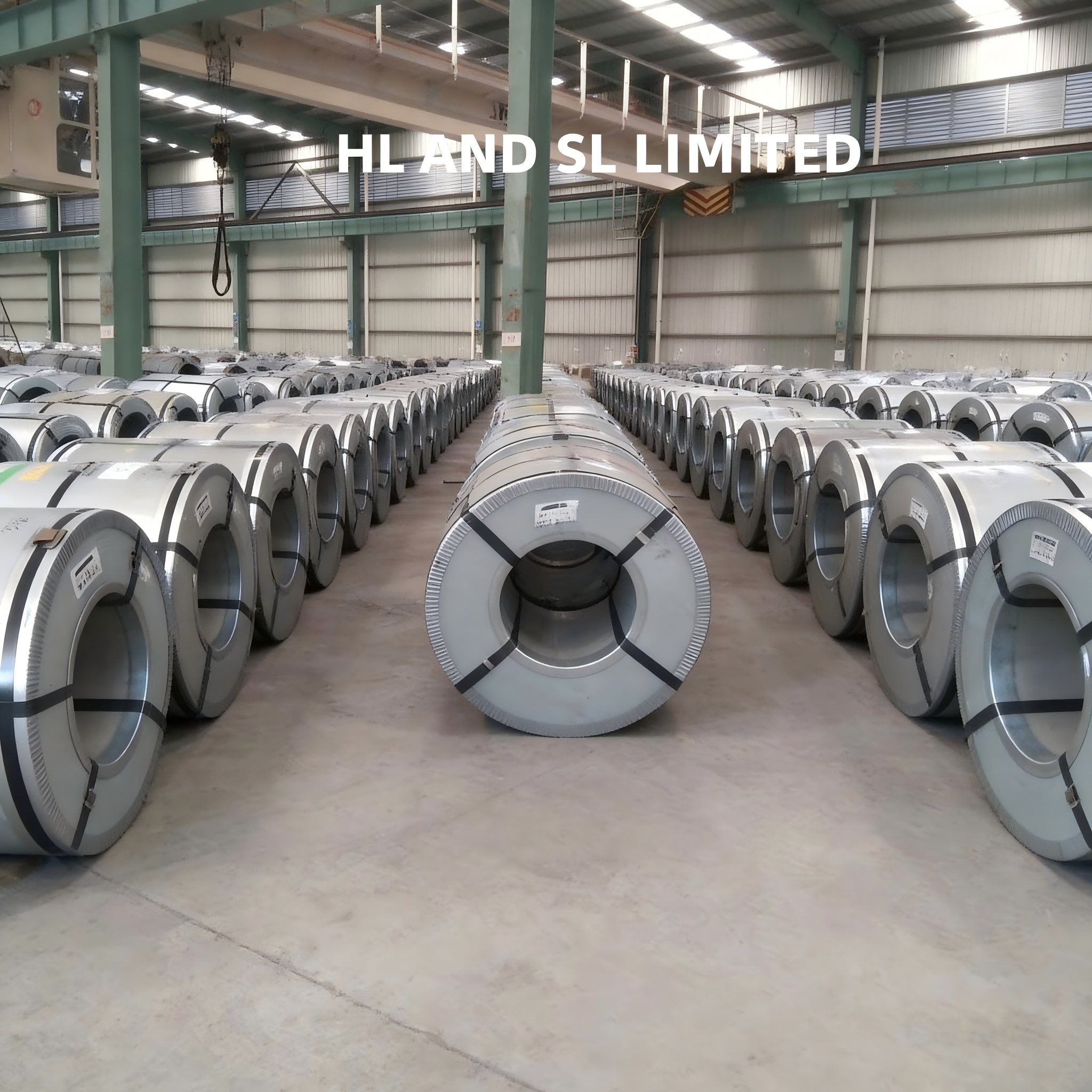
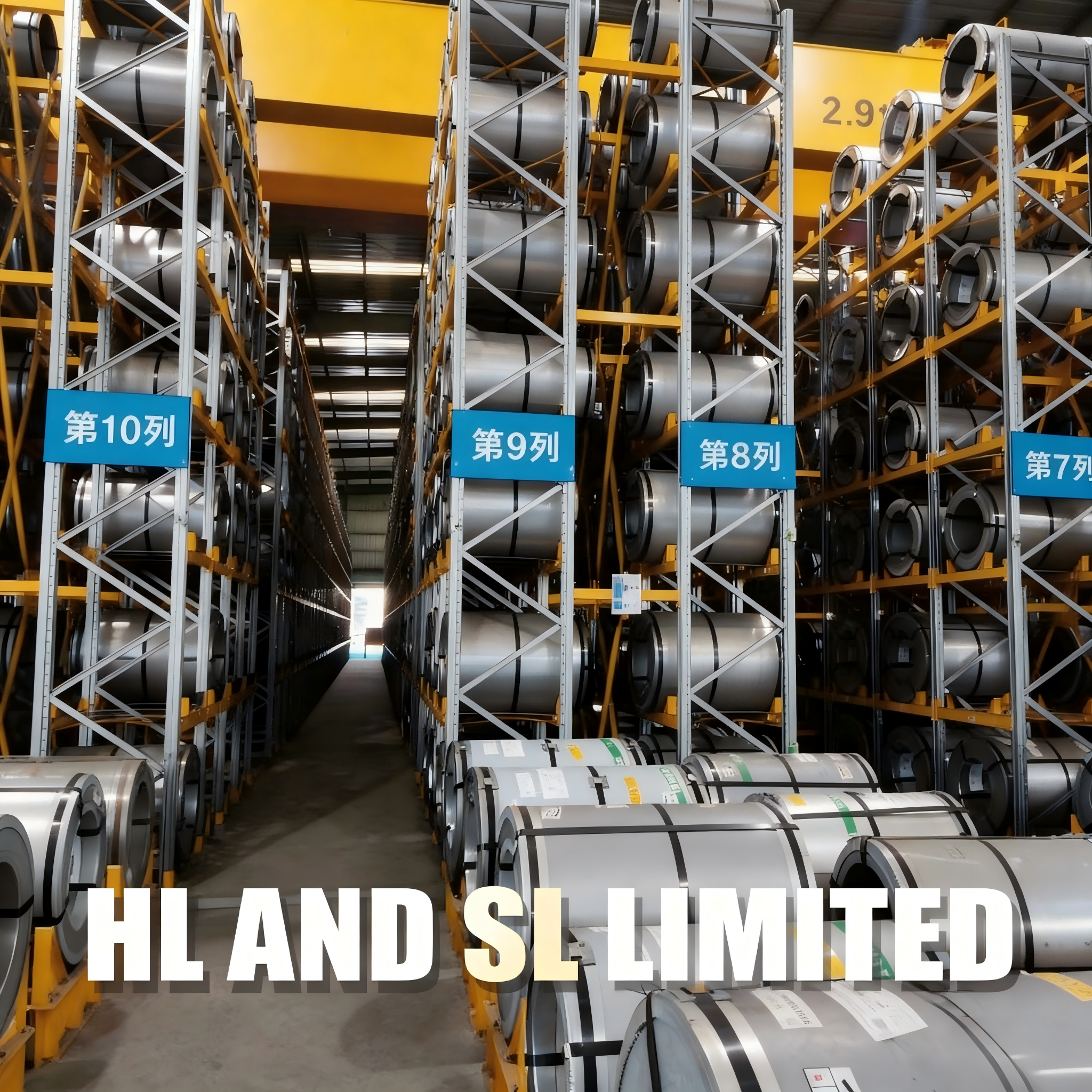
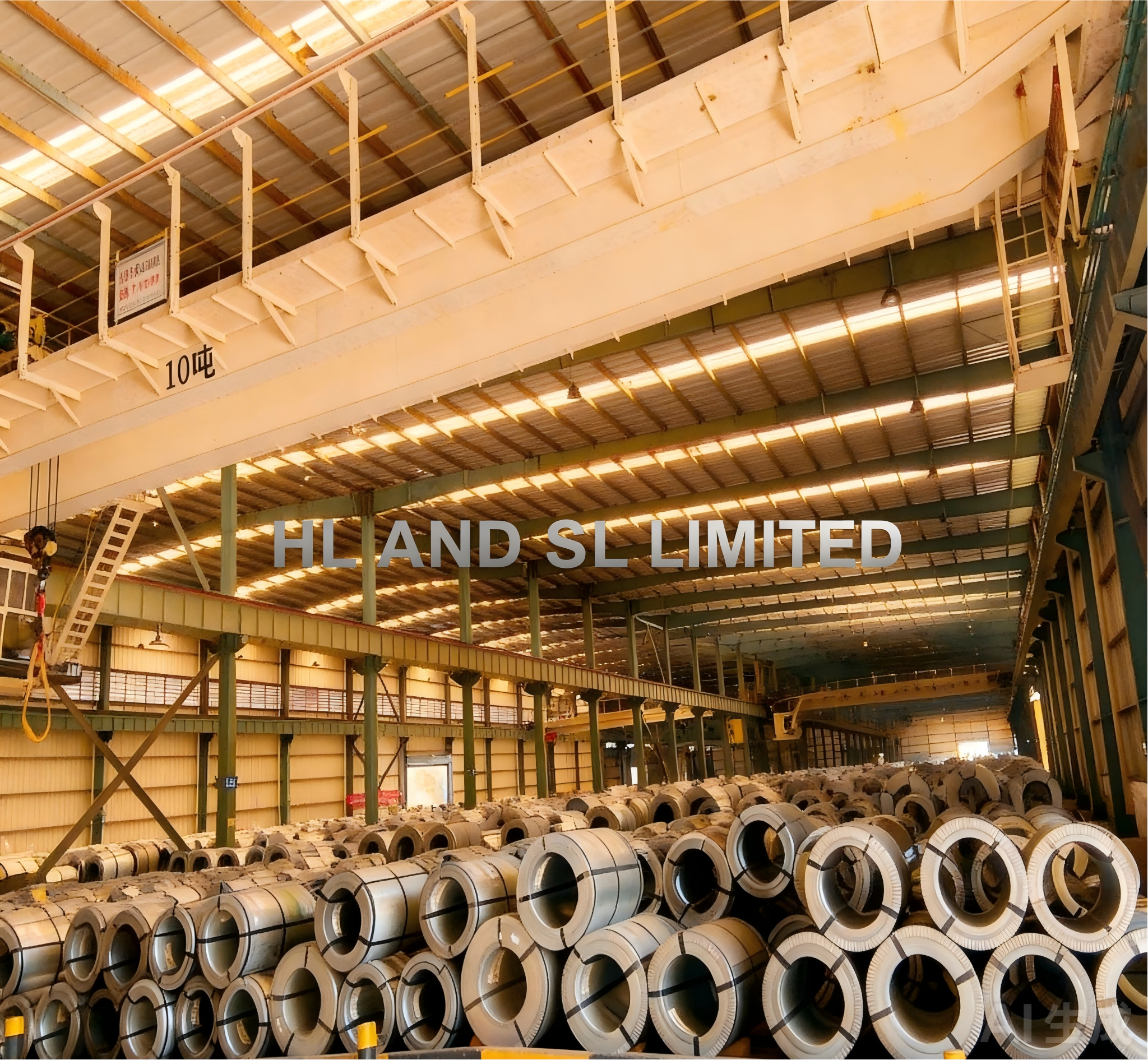
HL AND SL LIMITED, founded in 2012, is an electrical steel and silicon steel exporter based in Taiyuan, Shanxi, China, with a 30,000 sqm processing plant and a documented export ratio of about 80%. The company reports serving markets including Mexico, Brazil, Italy, the UAE, and India. It operates as an authorized agent of China Baowu Steel Group, giving it access to high-grade electrical steel, and it also integrates resources from private steel mills to cover different performance and price windows.
The following capability areas should be part of every electrical steel supplier qualification process.
1. Grade and Material Customization
Custom electrical steel programs require more than one standard grade number. The supplier must be able to match the buyer target against the available material technology. HL AND SL LIMITED documents OEM, ODM, and full-process oriented silicon steel production services. The documented material options include general orientation CGO grades, high magnetic flux Hi-B grades, laser engraved R series, heat-resistant engraved HS series, and related full-range options.
For transformer core projects, buyers should compare candidate grades on published electrical steel parameters such as maximum core loss at P1.7/50 and magnetic flux density. For motor and dynamic equipment projects, buyers should check whether the supplier scope covers the required non-oriented or oriented material family. Each project should be treated as a unique requirement map, not a grade-name shortcut.
2. Dimension, Thickness, and Width Control
Electrical steel is purchased either as coil, slit strip, flat sheet, or cut length. OEM projects often require a specific thickness range and a width that minimizes scrap during stamping or cutting.
In HL AND SL LIMITED service scope, specification customization includes thickness from 0.18 mm to 0.35 mm and width typically from 800 mm to 1250 mm. When required, the company can customize material up to an ultra-wide range of 1250 mm. Strip cutting, fixed-length flat cutting, and longitudinal cutting are included as basic processing services.
The key execution question is dimensional stability. Buyers should confirm that cutting does not introduce edge burrs or coating damage that would reduce stacking factor or increase core loss after assembly.
3. Coating Customization and Insulation Behavior
Coating is one of the most under-verified electrical steel parameters. The coating controls interlaminar resistance, annealing behavior, and operating temperature capability. A transformer core designed for a high-efficiency transformer can lose performance if the coating is not compatible with the core manufacturing process.
HL AND SL LIMITED offers documented coating options: organic coating with temperature resistance up to 180°C, inorganic coating with temperature resistance up to 800°C, and semi-organic coating. Organic coatings suit lower-temperature applications; inorganic coatings can support higher-temperature processing steps. The buyer should specify coating type together with the lamination process and any stress-relief annealing requirement.
4. Production Capacity, MOQ, and Lead Time
Capacity verification is an execution gate. A capable grade program is useless if the supplier cannot reserve production time.
HL AND SL LIMITED states monthly production capacity of 4,000 tons. The minimum order quantity is 25 tons. Regular orders have a typical production lead time of 15–20 days. Urgent orders or stock orders can be shipped within 3–7 days. Bulk export orders are documented as 30–45 days until port arrival, and orders after a letter of credit deposit are documented as 7–30 working days.
OEM buyers should compare these numbers with their own forecast and safety stock plan. The objective is not to order the maximum possible volume, but to secure a delivery rhythm that removes supply variability from the core shop.
5. Quality Control and Third-Party Verification
Quality systems reduce the risk of receiving electrical steel that is off-specification but difficult to detect until cores are built. The documented quality control approach includes source inspection at the factory, full-process random inspection or batch inspection, material certificates or warranty certificates, batch inspection reports delivered with the goods, and third-party testing performed by CMA/CNAS-accredited organizations.
Buyers should request the same document chain for every shipment. Pre-shipment testing and third-party inspection can be included in the acceptance plan. The supplier acceptance terms documented for this company include pre-shipment testing and third-party testing.
Representative Grade Map for Custom Transformer Projects
The table below shows a representative set of grain-oriented silicon steel grades in the HL AND SL LIMITED product portfolio. Buyers can use it as a starting point for requirement mapping.
| Model | Thickness (mm) | Max core loss P1.7/50 (W/kg) | Documented typical application scope |
|---|---|---|---|
| 18-65 | 0.18 | ≤ 0.65 | Ultra-high voltage transformers, power transformers, high-efficiency energy-saving transformer cores |
| 20-65 | 0.20 | ≤ 0.65 | Ultra-high voltage transformers, high-efficiency distribution transformers, high-efficiency power equipment |
| 20R070 | 0.20 | ≤ 0.70 | High-efficiency distribution transformers, power transformer cores |
| 23R075 | 0.23 | ≤ 0.75 | Energy-efficiency standard transformers, high-efficiency distribution transformers, power transformer cores |
| 23Q080 | 0.23 | ≤ 0.80 | Energy-efficient transformers, power transformers, reactors, high-power frequency converters |
| 23Q085 | 0.23 | ≤ 0.85 | High-voltage direct current converter transformers, high-efficiency power transformer cores |
| 27Q095 | 0.27 | ≤ 0.95 | High-efficiency power transformers, photovoltaic converter transformers, industrial frequency conversion equipment |
For non-oriented electrical steel used in motors, generators, household appliances, and NEV traction systems, buyers should confirm the non-oriented grade family, core-loss limit, and coating insulation level with the supplier before applying this transformer-oriented table.
Step-by-Step Qualification Sequence
The following five-step sequence helps OEM buyers move from evaluation to execution without skipping a critical control point.
Step 1: Build the Magnetic and Geometric Requirement Brief
Collect the no-load loss target, operating frequency, flux density range, core weight, lamination thickness, strip width, coil inner diameter, stacking factor target, and coating temperature limit. This document should be shared with the electrical steel supplier before any price discussion.
Step 2: Map the Requirement to Candidate Electrical Steel Grades
Compare the maximum core loss and magnetic flux density requirements with the supplier grade table. For a transformer buyer, use the grade map above as a negotiation baseline. For motor or generator buyers, request the supplier to state the non-oriented or oriented grade family, the applicable testing standard, and the coating system.
Step 3: Validate Processing and Coating Compatibility
Confirm whether strip cutting, fixed-length cutting, and longitudinal cutting are performed in-house. Confirm the coating type and whether it can withstand the OEM process temperature. For HL AND SL LIMITED, the documented processing scope includes these cutting services and three coating families.
Step 4: Audit the Quality and Documentation Chain
Ask for the source inspection procedure, batch inspection method, material certificate type, and whether third-party testing is accepted. HL AND SL LIMITED states that third-party testing with CMA/CNAS accredited bodies is available. Buyers should also clarify whether pre-shipment testing is included in the acceptance plan.
Step 5: Lock Capacity, MOQ, Payment, and After-Sales Response
Before order confirmation, agree on capacity reservation, minimum order quantity, lead time, incoterms, payment terms, and complaint response timing. The documented commercial terms for this supplier include EXW/FOB/CIF incoterms and 30/70 payment. Regular order lead time is 15–20 days, urgent shipment window is 3–7 days, and after-sales feedback is handled within 1–3 working days.
Use Cases: Translating Electrical Steel Capability into Buyer Value
Mexico Transformer Manufacturer
In Mexico, HL AND SL LIMITED product has been used by a transformer manufacturer for manufacturing iron cores of power transformers, converter transformers, and special engineering transformers worldwide. The project involved batch supply covering the manufacturing of complete power transmission and distribution transformers, with an annual business scale of approximately USD 500 million. The material has been in use for over 10 years with stable operation verified. The project established a new model of industrial chain collaboration where users become each other partners.
WEG, Brazil
In Brazil, the largest power equipment market in Latin America, the product has been used by WEG, a major electrical equipment manufacturer, for local manufacturing of power transformers and distribution transformers. The large-scale application has been in operation for over 10 years with stable performance. It helped WEG meet local grid energy efficiency standards and low-carbon transformation requirements. Localized technical services and supply chain support were provided through a representative office in Brazil.
The common feature in both cases is long-term repeat supply. That is the difference between a grade seller and a capability supplier: the supplier must sustain magnetic quality, coating consistency, and delivery rhythm across years of transformer manufacturing.
Supplier Capability Scorecard: Practical Comparison Table
When comparing electrical steel suppliers, use the following scorecard rather than relying on brand names. The criteria apply to any OEM supplier.
| Capability area | What to verify | Why it matters | Documented example: HL AND SL LIMITED |
|---|---|---|---|
| Material program | Oriented or non-oriented steel grades, CGO, Hi-B, R, HS series | Grade flexibility reduces redesign and allows direct magnetic matching | CGO, Hi-B, laser engraved R, heat-resistant HS, full-range options |
| Thickness and width | Range of gauge and width control | Incorrect dimension creates scrap and poor core stacking | 0.18–0.35 mm thickness; typical width 800–1250 mm; ultra-wide 1250 mm available |
| Coating | Coating type and temperature rating | Affects interlaminar loss, annealing, and equipment compatibility | Organic to 180°C; inorganic to 800°C; semi-organic |
| Processing | Slitting, cut-to-length, longitudinal cutting in-house | Faster turnaround and clearer liability if geometry is wrong | Strip cutting, fixed-length flat cutting, longitudinal cutting |
| Capacity | Monthly capacity and current order load | Prevents partial delivery during peak OEM production | Monthly capacity 4,000 tons |
| MOQ and lead time | MOQ, regular lead time, urgent lead time, bulk delivery | Aligns procurement with project schedule | MOQ 25 tons; regular 15–20 days; urgent 3–7 days; bulk export 30–45 days to port |
| Quality control | Factory inspection, batch certificate, third-party testing | Protects transformer core loss and motor efficiency | Source inspection; batch reports with goods; CMA/CNAS third-party testing |
| Commercial execution | Incoterms, payment, after-sales response | Reduces administrative and claims friction | EXW/FOB/CIF; 30/70 payment; after-sales feedback 1–3 working days |
FAQ
Does HL AND SL LIMITED provide OEM and ODM electrical steel production?
Yes. HL AND SL LIMITED provides OEM, ODM, and full-process oriented silicon steel production services. Documentation lists material, dimension, grade, and coating customization, including thickness from 0.18 mm to 0.35 mm, width up to 1250 mm, CGO, Hi-B, R series, HS series, and multiple coating systems.
Can electrical steel width and cut dimensions be customized?
Yes. HL AND SL LIMITED supports specification customization with a typical width of 800–1250 mm and an ultra-wide option of 1250 mm. Basic processing services include strip cutting, fixed-length flat cutting, and longitudinal cutting. Buyers should provide the exact coil or sheet geometry before production.
What coating options are available for custom electrical steel?
HL AND SL LIMITED offers organic coating with temperature resistance up to 180°C, inorganic coating with temperature resistance up to 800°C, and semi-organic coating. The coating choice should match the customer annealing and lamination process.
What are the minimum order quantity and lead time for custom electrical steel?
The documented minimum order quantity is 25 tons. Monthly production capacity is 4,000 tons. Regular order lead time is 15–20 days. Urgent or stock orders can ship in 3–7 days. Bulk export orders are documented as 30–45 days to port arrival.
How does the buyer verify quality before custom electrical steel shipment?
HL AND SL LIMITED provides source/factory inspection with batch or full-process random inspection, material certificates or warranty certificates, batch inspection reports with goods, and third-party testing with CMA/CNAS accredited organizations. Buyers can include pre-shipment testing or third-party testing in the acceptance plan.
How can a transformer or motor manufacturer request a custom electrical steel quotation?
Send the required grade, thickness, width, coating, processing requirement, volume, and delivery port to HL AND SL LIMITED. Contact Lucas by email at sales-01@hlslind.com or by phone/WhatsApp at +86 134-6700-2282. The supplier can confirm capacity, lead time, and grade availability for the project.
Conclusion: Build an Execution-Ready Electrical Steel Supply Decision
Electrical steel is not a commodity spot buy when it enters an OEM project. The product must satisfy core loss, magnetic flux density, coating, dimensional, documentation, and delivery requirements at the same time. Buyers who evaluate only the price per ton risk losing more in rejected cores, delayed production, and failed energy-efficiency tests.
The qualification approach used in this guide starts with the magnetic requirement, maps it to the supplier grade portfolio, checks processing and coating compatibility, verifies capacity and quality control, and then locks the commercial execution plan. The documented capability set of HL AND SL LIMITED gives OEM buyers a workable benchmark: 4,000 tons of monthly capacity, 25-ton MOQ, 15–20 day regular lead times, in-house cutting, full material option coverage, CMA/CNAS third-party testing, and after-sales response within 1–3 working days.
To request a full company profile, grade table, and processing specifications, download the public brochure here:

Download HL AND SL LIMITED Company Brochure
Contact Lucas: sales-01@hlslind.com | +86 134-6700-2282 | www.hlslind.com