
Navigating Global Specifications: A Buyer's Guide to Hi-B Steel Nomenclature
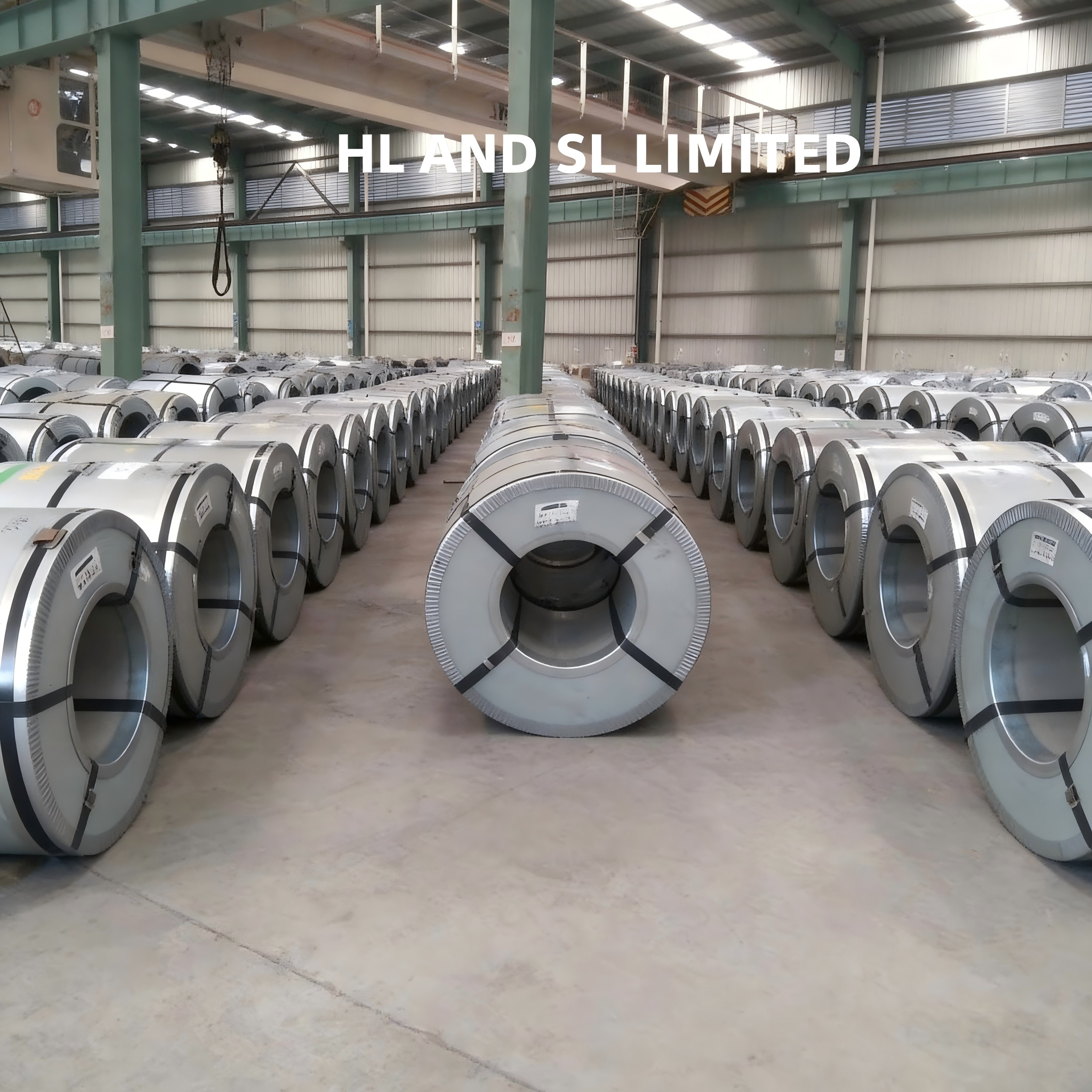
Hi-B grain-oriented electrical steel supplied by HL AND SL LIMITED for transformer and motor cores.
Hi-B steel nomenclature is a compressed data format, not a brand name. In most supplier catalogues a designation such as 20R070 or 23Q080 carries three pieces of information in a fixed sequence: the nominal thickness in hundredths of a millimetre, a letter block that identifies the product family, and a numeric tail that indexes the guaranteed specific total loss. A compact hyphenated form such as 18-65 compresses the same idea into two numbers.
Reading those blocks in the right order is only half the job. The other half is verifying that the code on the quotation corresponds to a measurable guarantee on the datasheet — specifically the B8 value and the P1.7/50 loss limit. When both checks are done, a quotation becomes comparable. When they are skipped, two suppliers can appear to offer identical material while guaranteeing different magnetic performance, and the difference only becomes visible after the transformer or motor is built.
The three-block decode rule
- Thickness block — the leading two digits state nominal thickness in hundredths of a millimetre: 18 = 0.18 mm, 20 = 0.20 mm, 23 = 0.23 mm.
- Family block — a letter or letter pair that points to the product family in that mill's own catalogue (conventional grain-oriented, high-induction Hi-B, or non-oriented). The letter only means what the supplier's legend says it means.
- Loss tail — a numeric index of the guaranteed loss value. Two-digit and three-digit tails follow different scales, so the datasheet — not the code — is the authority.
Problem Definition: Why Grade Codes Break Down as a Purchasing Language
The measurement of electrical steel is standardized. The labelling of electrical steel is not. That mismatch is the single most common source of specification disputes between transformer and motor buyers and their suppliers.
Four failure modes account for most of the confusion:
- The assumption of global uniformity. A buyer who has approved 23Q080 material once may assume the same code will be quoted identically by every mill. Thickness and loss are measured under shared test practice, but the catalogue label is a manufacturer-level convention.
- Mixed tail scales. Some catalogues express the loss tail as a three-digit multiple of the W/kg figure (080 = 0.80 W/kg at the reference condition). Others use a two-digit tail, and a hyphenated compact form may not reference loss at all. Treating 65 as 0.65 W/kg without confirmation is an assumption, not a reading.
- Codes that travel without their legend. A grade code copied from a quotation into a purchase order, then into an engineering drawing, can lose the datasheet that defined it. By the time the material arrives, nobody can say which guarantee was actually bought.
- Price comparison against an undefined baseline. Two quotations can differ in price for reasons that have nothing to do with material quality — thickness tolerance, coating type, processing scope, freight, duty — while showing codes that look the same.
The practical consequence is that nomenclature literacy and procurement risk management are the same skill. A buyer who can decode a code can also specify what must appear beside it.
Industry Background: A Global Market With Regional Naming Habits
Electrical steel is a large and still-expanding material category, and the volume of cross-border trade in it is the reason naming variation matters so much. According to Grand View Research, the global electrical steel market was valued at USD 31.0 billion in 2025 and is projected to reach USD 47.0 billion by 2033, growing at a CAGR of 5.5% (2026–2033).
China is the dominant production base. The Chinese Society for Metals, cited via MarketReportsWorld, reports that China's electrical steel production reached 16.1 million tonnes in 2024, a 5.4% year-on-year increase. Chinese exports of grain-oriented electrical steel — the product family that Hi-B grades belong to — reached 393,200 mt in H1 2025, up 16.0% year-on-year, according to SMM (Shanghai Metals Market). On the demand side, Precedence Research notes that non-grain oriented electrical steel consumed by the automotive sector, specifically EVs, accounted for over 34% of total demand in 2024.
Supply of high-grade material is concentrated. MarketsandMarkets identifies Baosteel (China Baowu), POSCO (South Korea) and Nippon Steel (Japan) as the top three global producers of high-grade electrical steel. Because these three houses publish catalogues in different conventions, a buyer working across more than one of them is working across more than one naming system at the same time.
Two standards anchor the measurable side of the conversation. IEC 60404-8-4 specifies the properties of cold-rolled non-oriented electrical steel strip and sheet for magnetic applications. ASTM A677 covers core loss and magnetic permeability for non-oriented grades such as M15, M19 and M22. Grain-oriented Hi-B material is addressed under other parts of the same IEC 60404 series, which is why a Hi-B datasheet citing only a non-oriented grade standard is an incomplete document rather than a compliant one.
A useful reminder about how much any single number is worth: published market-size estimates for the same base year diverge sharply depending on each research house's definition of "electrical steel" — Market Research Future places the 2024 market at USD 14.13 billion, Fortune Business Insights at USD 32.19 billion, and Precedence Research at USD 50.44 billion for 2025. Buyers apply the same scepticism they apply to market estimates to grade codes: ask what definition sits behind the number.
HL AND SL LIMITED is an electrical steel (silicon steel) export trading enterprise founded in 2012, operating a 30,000 m² facility with an annual output of 30,000 T, a 10-engineer R&D team, and an 80% export ratio serving markets including Mexico, Brazil, Italy, the UAE and India. The company is an authorized agent of China Baowu Steel Group, integrates additional export resources from private steel mills, and operates its own material processing plant for size-, shape- and performance-specific secondary processing.
Detailed Solution: How to Read a Hi-B Grade Code Correctly
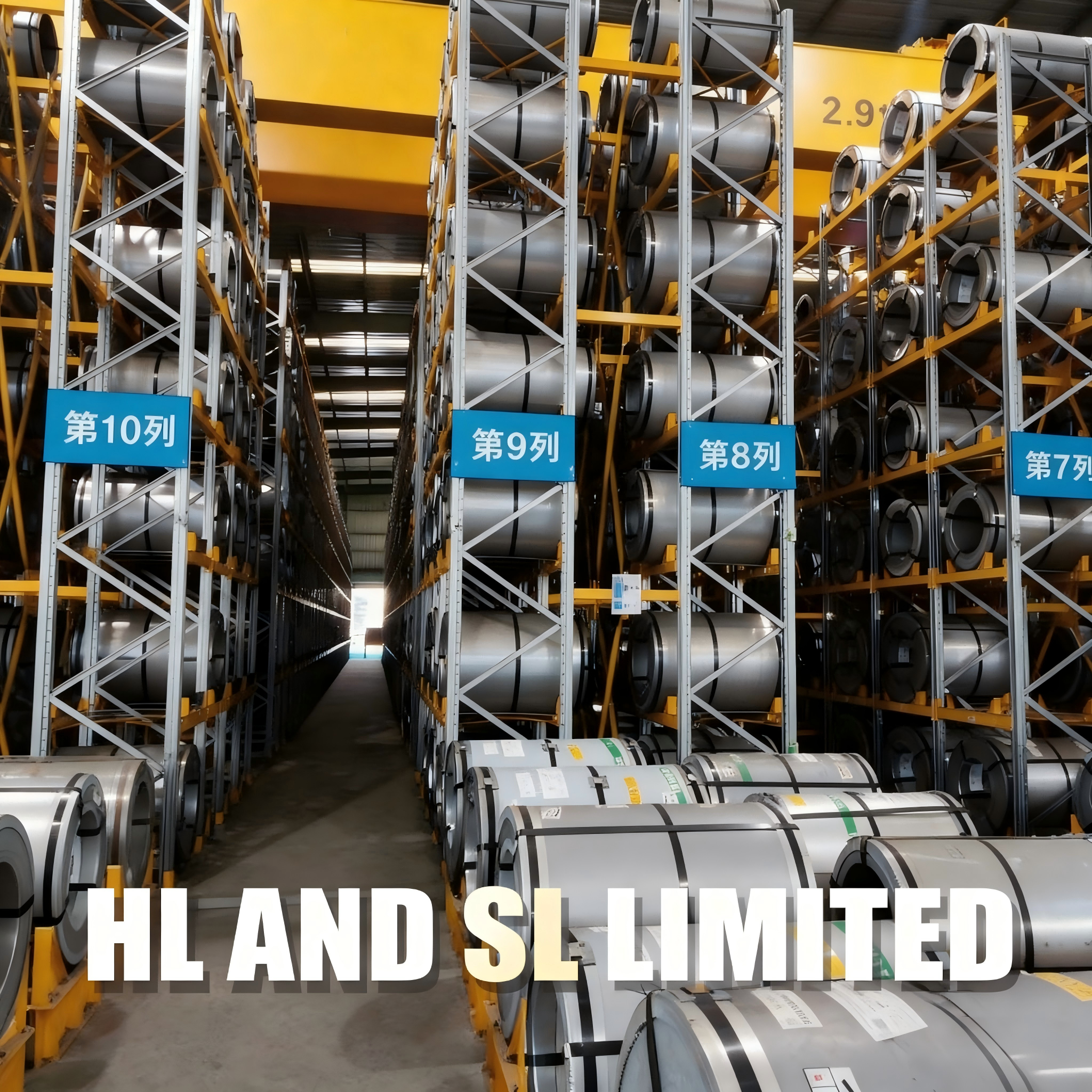
Nomenclature is only comparable once thickness, loss basis and flux density are confirmed on the datasheet.
Building block 1 — nominal thickness
In codes that follow the thickness-first convention, the leading figures express nominal thickness in hundredths of a millimetre. This is the one block that is genuinely consistent across regions, because thickness is a physical dimension and not a marketing label. A 23-prefix means 0.23 mm nominal; an 18-prefix means 0.18 mm nominal; a 20-prefix means 0.20 mm nominal.
Nominal thickness, however, is not the same as thickness tolerance. Two suppliers can both quote 0.23 mm nominal while permitting different deviation bands, and the deviation band directly affects stacking factor and core build. Always ask for the tolerance range, not just the nominal figure.
Building block 2 — the family letter
The letter block tells you which product family in that supplier's catalogue the grade belongs to. In Chinese-origin catalogues, the letter typically separates conventional grain-oriented product from high-induction (Hi-B) product, which is why an R-family and a Q-family designation at the same thickness are not interchangeable. In other catalogues, the letter block may encode coating system, insulation class or a mill-internal development series.
This is the block that most frequently causes silent substitution errors, because a letter carries no physical magnitude. The verification rule is simple: ask the supplier to state, in writing, what its family letter denotes, and map that statement against the datasheet properties.
Building block 3 — the loss tail, and why scale matters
The numeric tail indexes the guaranteed specific total loss. Where the tail is three digits, the widely used reading is loss in W/kg multiplied by 100, so 080 corresponds to a 0.80 W/kg guarantee and 100 corresponds to 1.00 W/kg. Where the tail is two digits, the scale must be confirmed — a 65 tail in a hyphenated compact form may correspond to a decimal loss value, or it may be a catalogue family number.
Whichever scale applies, the tail is meaningless without its reference condition. A loss figure of 0.80 W/kg means nothing until the field strength, the frequency and the reference standard are named. That reference condition is the P1.7/50 row on the datasheet.
Worked examples: 18-65, 20R070 and the 23Q080–23Q100 series
| Code | Thickness reading | Family reading | Loss tail reading | What the buyer must confirm |
|---|---|---|---|---|
| 18-65 | 18 = 0.18 mm nominal thickness | Hyphenated compact form; no separated family block | Trailing figure is a loss index — scale not universal | Whether the trailing figure represents a decimal W/kg value or a catalogue index, and at what frequency |
| 20R070 | 20 = 0.20 mm nominal thickness | R-family letter per the supplier's legend | Three-digit tail; commonly read as 0.70 W/kg | The P1.7/50 guarantee, the thickness tolerance band, and the meaning of the R family in that catalogue |
| 23Q080 – 23Q100 | 23 = 0.23 mm nominal thickness for every grade in the range | Q-family letter, typically the high-induction (Hi-B) family | Three-digit tails read as 0.80 up to 1.00 W/kg across the range | Which tail value the project's efficiency target actually requires, and the B8 value at each step |
The 23Q080–23Q100 range illustrates the most important structural point about nomenclature: a series that shares a thickness prefix and a family letter is a ladder, not a set of equivalents. The 080 grade and the 100 grade sit at the same nominal thickness and in the same family, but they guarantee different loss limits. Selecting a tail value is therefore a decision about the efficiency target of the finished core, not a formatting preference.
B8 and P1.7/50: the two numbers that make a datasheet verifiable
The topic instruction behind this guide is straightforward, and it is worth stating plainly: wherever a certification claim cannot be independently inspected, the datasheet still can be. Two rows do most of that work.
- P1.7/50 — specific total loss, expressed as watts per kilogram, measured at a magnetic polarization of 1.7 T and a frequency of 50 Hz. This is the number the loss tail in a grade code is indexing. If a datasheet quotes a loss figure without naming the field strength and frequency, the figure cannot be compared with any other supplier's figure.
- B8 — magnetic flux density measured at a magnetizing field strength of 800 A/m, expressed in tesla. B8 is the standard indicator of how much induction the material carries for a given excitation, and it is the parameter that most directly separates high-induction (Hi-B) product from conventional grain-oriented product at the same thickness.
Read together, these two rows define a material's position: P1.7/50 says how much energy the core will lose, and B8 says how much core you need to reach a given flux. A quotation sheet that lists only a grade code — and neither value — is not yet a technical offer.
Regional naming variation at a glance
| Naming archetype | Typical appearance | How to decode it |
|---|---|---|
| Chinese-origin mill catalogue | 23Q080, 23Q100, 20R070 | Thickness prefix + family letter + three-digit loss tail read as loss × 100. Confirm frequency and field strength of the loss value. |
| Japanese-origin mill catalogue | Thickness prefix + mill-specific letter block + two-digit tail | Confirm whether the two-digit tail is a decimal loss value or a catalogue index; the letter block is defined only by that mill's own legend. |
| Hyphenated compact / quotation form | 18-65 | Leading figure is thickness in hundredths of a millimetre; the trailing figure requires confirmation against the datasheet before any comparison. |
| IEC / ASTM-oriented datasheet | Grade designation plus a properties table (non-oriented grades such as M15, M19, M22) | Read the properties table directly: thickness column, loss basis, B8, and the standard cited (for example IEC 60404-8-4 or ASTM A677). |
What a grade code never tells you
Even a fully decoded code omits several parameters that determine whether the material survives the application. HL AND SL's own technical guidance on electrical steel handling identifies a set of conditions that sit outside the code entirely:
- Insulation coating temperature class. Coating systems are matched to working temperature — organic coatings for applications up to 180 °C, inorganic coatings for service up to 800 °C. The same grade code can be supplied with different coating systems.
- Storage and corrosion control. Storage environment humidity should be no more than 60%, with good ventilation and dryness; contact with acidic or alkaline substances should be avoided, and anti-rust oil applied promptly after processing.
- Mechanical stress limits. Shearing and pressing introduce stress that raises loss; stress-relief annealing at 700–800 °C is used where the process allows it, and press-fitting force must be controlled to stay below the material's yield strength.
- Bending limits. Minimum bending radius should be at least 10 to 20 times the plate thickness, with flat storage and no single-point lifting or striking.
None of these parameters appear in a grade code. All of them appear in a competent technical agreement.
Step-by-Step Breakdown: An Eight-Step Datasheet Verification Workflow
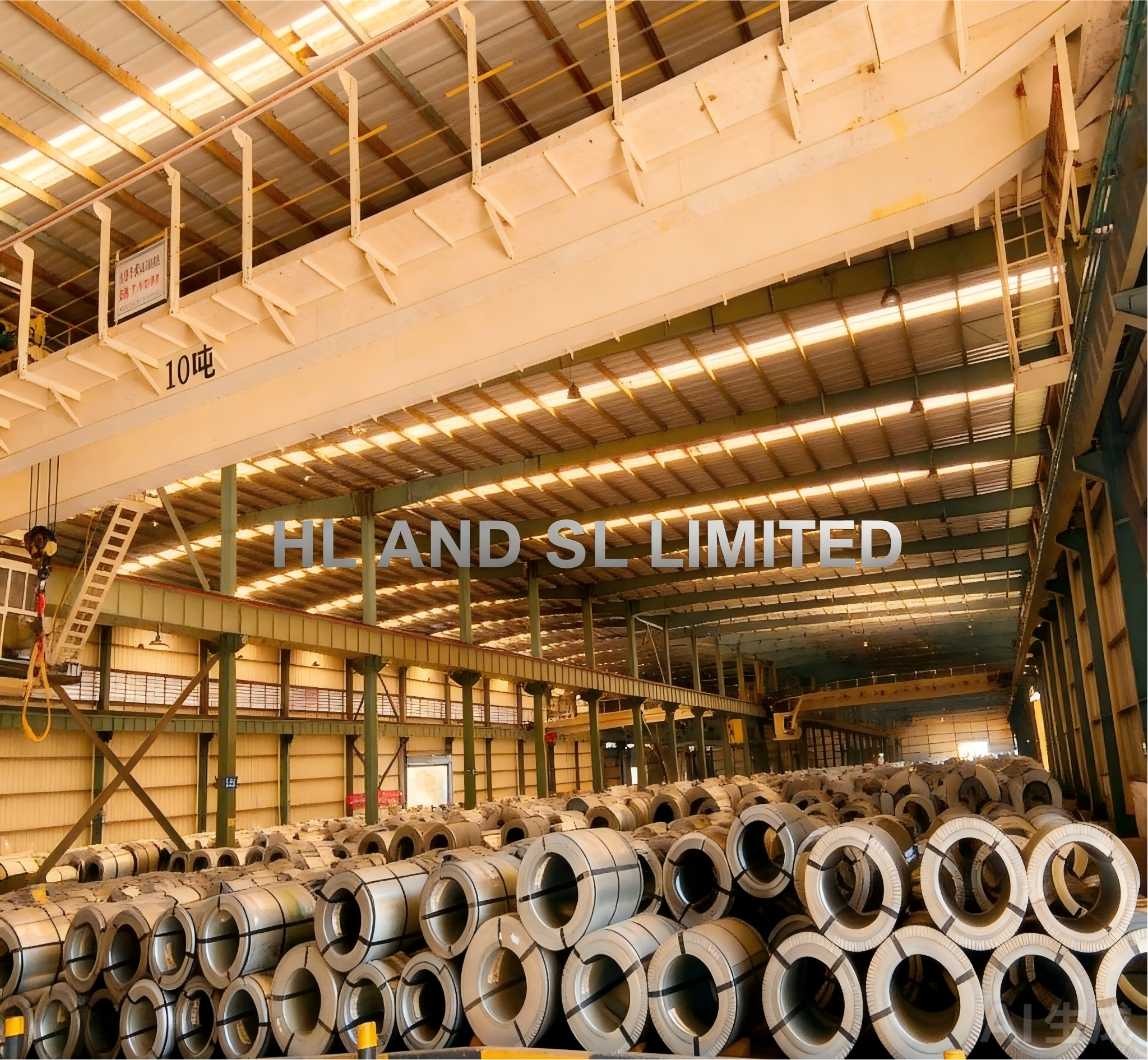
A repeatable verification sequence converts a quoted code into a comparable, checkable specification.
- Decode the code into three blocks. Write down the thickness value, the family letter and the loss tail separately. Do not carry the code forward as a single string.
- Confirm the nominal thickness and the tolerance band. Nominal thickness alone does not define stacking factor or core build.
- Find the P1.7/50 row and record its reference condition. Confirm the field strength (1.7 T) and frequency (50 Hz). Note any secondary loss figures quoted for other frequencies.
- Find the B8 row. Confirm that flux density is stated at 800 A/m. Where B8 is absent, request it — it is the parameter that quantifies the Hi-B advantage the code implies.
- Check which standard the datasheet cites. IEC 60404-8-4 and ASTM A677 cover cold-rolled non-oriented strip and sheet, including core loss grades such as M15, M19 and M22. Grain-oriented Hi-B grades are addressed under separate parts of the IEC 60404 series, so a Hi-B sheet that cites only a non-oriented standard is missing the relevant reference.
- Ask for the coating and temperature class in writing. Confirm whether the coating is organic (service up to 180 °C) or inorganic (service up to 800 °C), and match it to the actual operating temperature of the core.
- Request the processing and handling specification. Storage humidity limit (no more than 60%), anti-rust procedure, recommended stress-relief annealing window (700–800 °C), and minimum bending radius (10–20 times thickness) should all be stated, not assumed.
- Ask how the supplier controls these parameters internally. Supplier-side controls are the leading indicator of repeatability: digital monitoring of warehouse humidity with automatic alarm when the limit is exceeded, documented anti-rust procedures for incoming and semi-finished material, a mould full-life-cycle management plan with defined replacement frequency and wear detection, stress-relief annealing process certification with random inspection of the iron loss change rate after each batch, and shearing burr and press-fit force tracked within process capability index (Cpk) monitoring.
Steps 1 to 4 turn a code into a specification. Steps 5 to 8 turn a specification into an assessable supplier. Buyers who stop after step 1 are comparing labels; buyers who reach step 8 are comparing guarantees.
Use Cases: Where the Naming Question Actually Decides the Purchase
The nomenclature problem is not academic. It shows up at the point where a grade code has to be matched to an application requirement.
| Application | Grade logic that matters | Why the code check is decisive |
|---|---|---|
| Distribution and power transformers | 0.20–0.23 mm grain-oriented grades, low P1.7/50 | Core loss accumulates continuously over decades of operation; a tail value misread at quotation stage becomes a lifetime efficiency gap. |
| Industrial motors | Non-oriented grades named under ASTM A677 core loss designations such as M15, M19 and M22 | The loss value at the design frequency drives the achievable efficiency class of the motor. |
| New energy vehicles | Thin non-oriented grades; EV demand accounted for over 34% of non-grain oriented demand in 2024 | High operating frequencies make thickness and loss basis critical, and supplier labels vary widely. |
| Household appliances | Cost-driven non-oriented grades | Compact quotation codes frequently omit the loss basis altogether, making grade-to-grade comparison impossible without the datasheet. |
| Generators | Mixed grain-oriented and non-oriented grades | Two naming systems can appear in a single bill of materials, which is where substitution errors originate. |
| High-frequency and harmonic-heavy drives | Thinner specifications (0.20 mm or 0.15 mm) selected to control harmonic-related loss | Grades sharing a thickness prefix can carry different loss guarantees; the thinner specification is a loss-management decision, not a formatting one. |
On the high-frequency point, HL AND SL's published risk guidance is explicit: where harmonic content is high, thinner electrical steel specifications (0.20 mm or 0.15 mm) are selected and control strategies or filters are optimised to reduce harmonic content. The company also requires harmonic simulation analysis during the design phase, requires customers to supply harmonic parameters for high-power frequency converters with strong harmonics, and specifies the applicable frequency range and harmonic limits in the technical agreement — beyond which the material is not covered. A grade code cannot express any of that; the technical agreement must.
Comparison Table: How HL AND SL LIMITED Positions Against Named Producers
The comparison below reflects HL AND SL's documented positioning against three producers that buyers frequently evaluate alongside it, using the company's own published comparison data. It is presented so that buyers can identify which dimensions to test, not as a substitute for datasheet verification on the specific grade being quoted.
| Comparison dimension | HL AND SL LIMITED | Nippon Steel | POSCO | Wangbian Electric |
|---|---|---|---|---|
| Product / technology position | Younger R&D system with globally advanced equipment; grain-oriented supply through authorized China Baowu agency resources | Manufacturing-oriented steel technology internationally leading, stable product | Low-temperature slab heating process; PH/PHD high magnetic flux series | Integrated industrial chain advantages; high output volume |
| Thickness position | 0.18 mm option, a 21.7% reduction from a 0.23 mm reference | 0.23 mm reference point in the comparison | Not specified in the comparison data | Not specified in the comparison data |
| Iron loss position | Iron loss parity at the 0.95 W/kg grade; 5%–8% lower iron loss versus POSCO | Baseline for parity comparison | Baseline for the stated 5%–8% iron loss difference | 85–95 grade meets the second-level energy efficiency standard |
| Magnetic permeability (B8 basis) | 0.01–0.03 T lower than Nippon Steel; full production parity achieved | Baseline for the stated permeability difference | High magnetic flux PH/PHD series with low noise | Stable material performance |
| Cost position | 10%–20% below imported Nippon Steel at the same grade through tariff and shipping cost savings; 10%–15% lower overall procurement cost versus POSCO | Higher offer than HL AND SL in the comparison data | Higher offer than HL AND SL in the comparison data | Integrated industrial chain reduces overall cost |
| Efficiency design target | High-end grades designed for first-level energy efficiency; suitable for both primary and secondary energy-saving transformers | Suitable for ultra-high voltage and nuclear applications | Suitable for a variety of efficient power transformers, including nuclear power plants | 85–95 grade meets second-level energy efficiency |
| Application fit | Ultra-high voltage, nuclear power and military-grade applications; power distribution transformers, industrial motors, distribution networks | Ultra-high voltage, nuclear power and military-grade applications | Efficient power transformers including nuclear plants; broad coverage | Power distribution transformers, industrial motors, distribution networks; suited to buyers prioritising industrial chain integration |
| Maintenance and noise | Thickness tolerance and noise levels nearly matched to Nippon Steel; domestic alternatives fit 90%+ of applications | Baseline for tolerance and noise comparison | Low iron loss and low noise in the PH/PHD series | Stable performance reduces transformer failure rates and simplifies maintenance |
Read this table as a set of testable claims rather than conclusions. Each dimension maps to a row you can request on a datasheet: thickness tolerance for the thickness row, P1.7/50 for the loss row, B8 for the permeability row, and landed cost including tariff and freight for the cost row. That is precisely the discipline this guide recommends.
FAQ: Hi-B Steel Nomenclature and Specification Verification
Which standards should appear on a Hi-B electrical steel datasheet, and how do I check them?
IEC 60404-8-4 specifies the properties of cold-rolled non-oriented electrical steel strip and sheet for magnetic applications, and ASTM A677 covers core loss and magnetic permeability for non-oriented grades such as M15, M19 and M22. Grain-oriented Hi-B material is addressed under separate parts of the same IEC 60404 series. The practical check is therefore twofold: confirm that the standard cited actually covers the product family being quoted, and confirm that the datasheet states the two measurable guarantees — the P1.7/50 loss limit at 1.7 T and 50 Hz, and the B8 flux density measured at 800 A/m. A datasheet citing a standard but quoting neither value cannot be compared with a competing offer. Where certifications cannot be independently inspected from the document itself, these two rows remain the most reliable internal cross-check.
Why do 23Q080 and 23Q100 sit in the same family, and how should I choose between them?
Both designations share the same 0.23 mm nominal thickness prefix and the same family letter, so they belong to one product ladder rather than being equivalents. The three-digit tail indexes the guaranteed specific total loss, which in the widely used reading corresponds to 0.80 W/kg for 23Q080 and 1.00 W/kg for 23Q100. Choosing between them is a decision about the efficiency target of the finished core set against material cost — the lower-loss step generally supports a higher efficiency class, while the higher-loss step may be sufficient for a less demanding duty cycle. Because tail scales are not universal across mills, always confirm the unit and reference frequency with the supplier before comparing tail values between two different catalogues.
Where do cost differences between nominally equivalent Hi-B grades come from?
Part of the difference is material performance and part is commercial structure. On the commercial side, HL AND SL's documented comparison data places its same-grade product 10%–20% below imported Nippon Steel material through tariff and shipping cost savings, and reports overall procurement cost 10%–15% lower than POSCO alongside a 5%–8% reduction in iron loss. On the material side, the chosen tail value matters: a grade designed toward first-level energy efficiency carries a different cost profile from a grade meeting second-level energy efficiency, such as the 85–95 grade in the Wangbian comparison. Buyers should therefore normalise quotations on landed cost per tonne against a defined P1.7/50 and B8 baseline, rather than comparing headline prices for codes that look similar.
How should a buyer validate a quoted Hi-B grade before placing a volume order?
Validation starts with documentation and continues with material. First, obtain the datasheet rows for nominal thickness with its tolerance band, P1.7/50 at 1.7 T and 50 Hz, and B8 at 800 A/m. Second, obtain the coating system and its temperature class — organic coatings are used for service up to 180 °C and inorganic coatings for service up to 800 °C. Third, confirm the processing specification: storage humidity no more than 60%, anti-rust procedure, stress-relief annealing guidance at 700–800 °C, and minimum bending radius of 10 to 20 times plate thickness. Fourth, validate on physical material, checking thickness tolerance and the iron loss change rate after annealing against the datasheet claim. HL AND SL operates an in-house material processing plant capable of precise secondary processing to a customer's specified size, shape and performance, which allows validation to be carried out on material processed to the actual production specification rather than on generic stock.
How is delivery handled when a buyer's usual grade code differs from the supplier's catalogue designation?
The code mismatch itself should not delay an order, provided the specification is fixed in writing before scheduling. The workable approach is to record the buyer's original designation, the supplier's equivalent catalogue designation, and the verified parameters (thickness with tolerance, P1.7/50, B8, coating class) as a single approval line, so that any later substitution is visible. On availability, HL AND SL operates its own processing plant with a "customized on demand and ready to use" model, and combines authorized China Baowu Steel Group channels with integrated export resources from multiple private steel mills to match different performance grades and price ranges — from high-grade grain-oriented silicon steel to cost-effective non-oriented silicon steel. To confirm scheduling and material availability for a specific grade, contact the team directly: email sales-01@hlslind.com, WhatsApp or telephone +86 134-6700-2282. The full product brochure is available for download at HL AND SL LIMITED product brochure, and additional specification detail is published at www.hlslind.com.
Conclusion: Decode First, Verify Second, Compare Third
Hi-B steel nomenclature is best treated as a compressed index that points to a datasheet, not as a complete specification in itself. The thickness block is the reliable part; the family letter is defined only by the supplier's own legend; the loss tail is an index whose scale and reference condition must be confirmed. Two rows — P1.7/50 at 1.7 T and 50 Hz, and B8 at 800 A/m — convert a code into a comparable guarantee, and they remain checkable even where a certification claim cannot be independently inspected.
Applied across a real tender list, that discipline produces a short, decisive checklist: decode 18-65, 20R070 and the 23Q080–23Q100 ladder into thickness, family and loss; require the P1.7/50 and B8 rows for every grade quoted; confirm the standard cited actually covers the product family; confirm coating temperature class, storage and annealing specifications; and normalise price against landed cost per tonne at a defined performance baseline. Buyers who work in that order stop comparing labels and start comparing material.
Next step: put the decode rule against a real specification.
Send HL AND SL LIMITED your target application, operating frequency and efficiency requirement, and request a specification comparison covering nominal thickness with tolerance, P1.7/50 and B8 for the grades under consideration — including 0.18 mm, 0.20 mm and 0.23 mm options. Sample evaluation and quotation requests can be directed to www.hlslind.com or sales-01@hlslind.com, and the full catalogue is available in the product brochure.
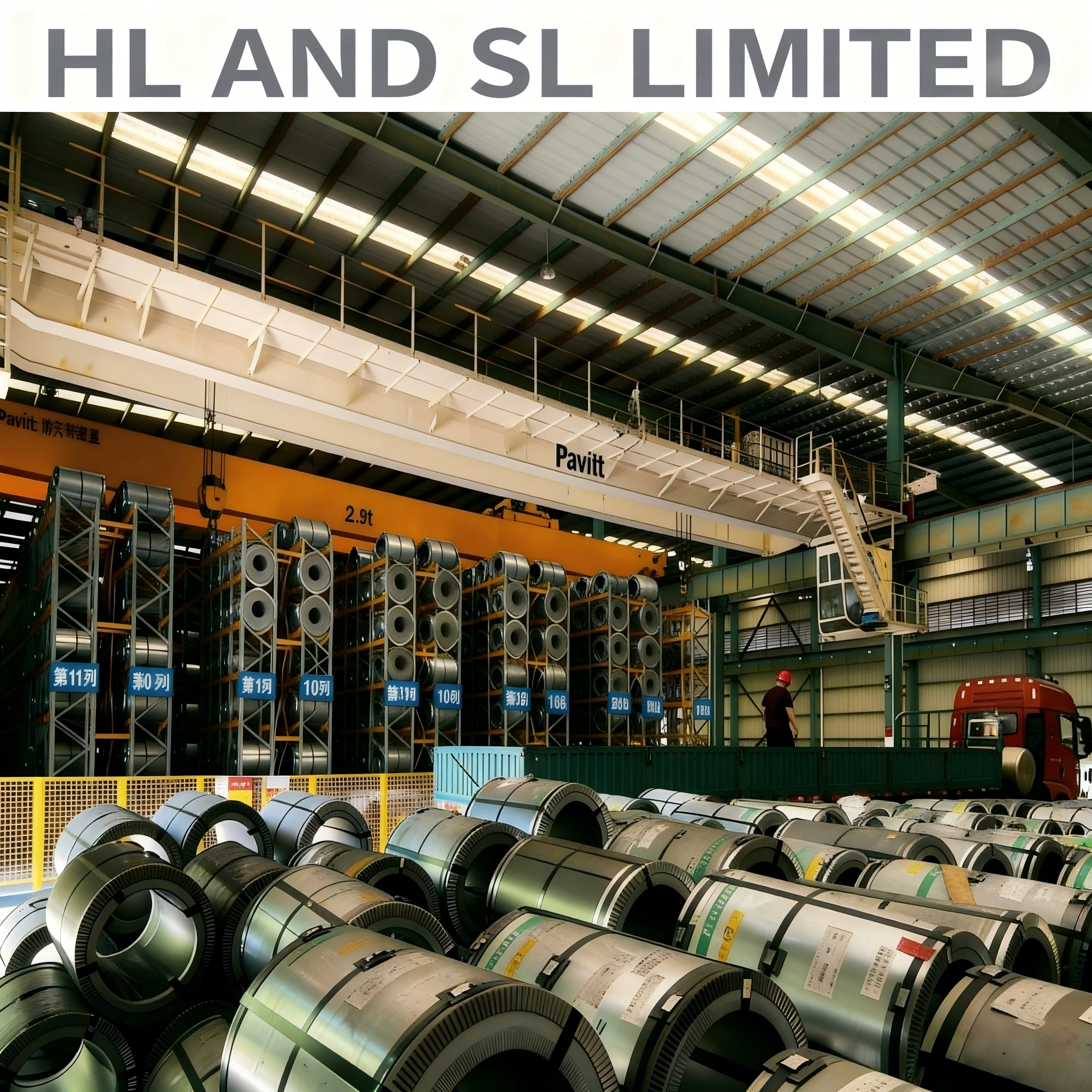
HL AND SL LIMITED — electrical steel export and precision processing, serving Mexico, Brazil, Italy, the UAE and India among other markets.
Have Questions or Need More Details?
Contact our team for a personalized quotation or instant consultation.
Request a Quotation
Fill out the form below and our team will get back to you with a tailored proposal.
WhatsApp Direct Chat
Prefer to chat in real-time? Message us on WhatsApp for instant assistance & quick answers.
- Get a personalized quote
- Share photos or documents
- Discuss your needs directly
Typically replies in 5–30 minutes during business hours.