
Oriented Silicon Steel for HVDC, Tropical and Cold-Region Transformer Projects
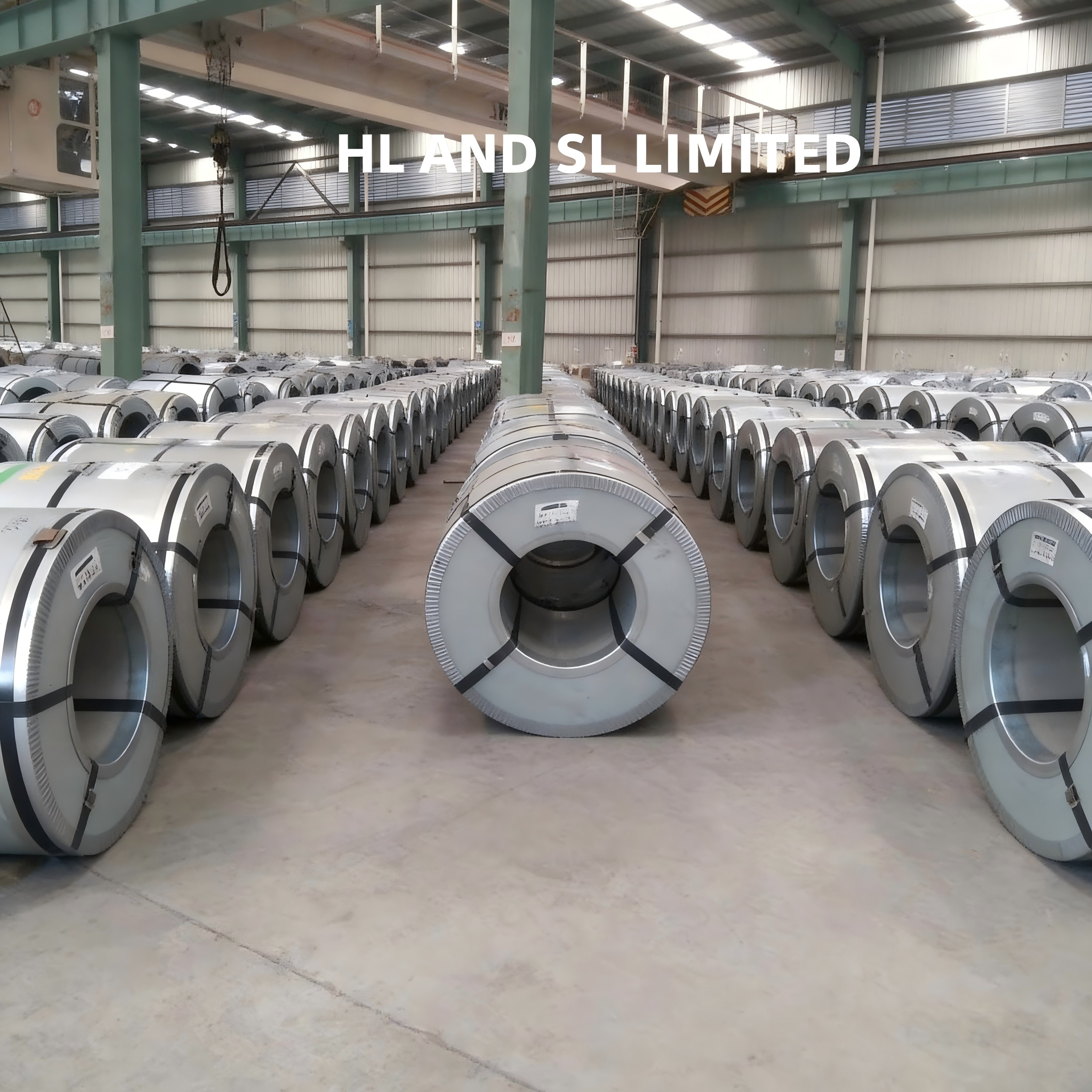
Three transformer projects on three continents can each require a different oriented silicon steel specification, even when all three are built on the same Hi-B (high magnetic induction grain-oriented) family. A ±800 kV HVDC converter transformer in Brazil's rainforest corridor, a power and distribution transformer programme for the Brazilian national grid, and a high-efficiency low-noise distribution transformer upgrade for Canadian winters all demand low iron loss — but they do not impose the same constraints on magnetic flux density, coating, certification evidence, or magnetic behaviour at −40 °C.
Matched to those three environments, the core constraints resolve as follows. HVDC converter transformer cores are matched by 0.23 mm Hi-B grade 23Q085 (iron loss P1.7/50 ≤ 0.85 W/kg, B8 ≥ 1.88 T) and, where the loss ceiling allows a slightly thicker gauge, by 0.27 mm 27Q095 and 27Q100 (≤ 0.95 W/kg and ≤ 1.00 W/kg, B8 ≥ 1.91 T). Tropical grid programmes are commonly served by 0.23 mm 23R075 (≤ 0.75 W/kg) or 23Q080 (≤ 0.80 W/kg), with 0.27 mm 27Q110 and 27Q120 used where efficiency class and core cost are balanced. Cold-region, low-noise projects push toward the lowest iron loss available at the thinnest gauge — 0.20 mm 20-65 at ≤ 0.65 W/kg, with 0.23 mm 23R075 at ≤ 0.75 W/kg as the next step.
Why one oriented grade cannot cover all three project environments
Core material is selected against a constraint set, not against a single performance number. In these three projects, four constraint families pull in different directions, and a grade that satisfies one can fail another on paper before it ever reaches a slitting line.
Iron loss ceiling. The Brazilian HVDC brief specifies ultra-low loss oriented silicon steel with iron loss below 0.85 W/kg. The Canadian distribution project is built around an extremely low iron loss grade (B20HS070) for national Class 1 energy-efficient rolled iron core transformers. Both projects effectively write a loss ceiling in W/kg into the purchase specification, which immediately narrows the grade list to the low-loss end of the Hi-B portfolio.
Magnetic flux density floor. B8 — magnetic flux density measured at 800 A/m — drives how much core cross-section and copper a design needs for a given rating. The Brazilian HVDC brief names a high magnetic flux density requirement of ≥ 1.92 T. Within the grades discussed here, 0.27 mm 27Q095 and 27Q100 are rated at B8 ≥ 1.91 T, while 23Q100 is rated at ≥ 1.75 T and 20R070 at ≥ 1.86 T. A specification that states B8 ≥ 1.88 T therefore excludes those two grades regardless of how attractive their loss figures look — a cross-check that is easy to skip when buying on price alone.
Environment. The Belém corridor imposes 30–40 °C with 80–90% humidity, a high thunderstorm index, sensitivity to rainforest ecology, and a small temperature difference, while the converter transformers operate continuously in bipolar mode at ±800 kV / 4,000 MW. The Canadian project imposes −40 °C to −20 °C winters with frequent freeze-thaw cycles, coastal salt fog in some areas, and a requirement that magnetic permeability retention at −40 °C remain at ≥ 95%.
Noise and certification. The Canadian programme couples an urban low-noise requirement with high efficiency, so the material decision and the core build decision are linked. The Brazilian grid work is tied to INMETRO energy-efficiency certification. Both translate into documentation obligations — batch inspection reports, material certificates, third-party test submissions — that a purchase order must carry alongside the magnetic data.
Industry background: demand, standards, and certification pressure
Electrical steel demand is expanding against a grid investment cycle that rewards exactly the properties these three projects specify. The global electrical steel market was valued at USD 31.0 billion in 2025 and is projected to reach USD 47.0 billion by 2033 (Grand View Research). Within that total, non-grain oriented (NGO) electrical steel held the largest share in 2025 at an estimated 69.7% (MarketsandMarkets), while the grain-oriented silicon steel segment was valued at USD 13.55 billion in 2025 and is projected to reach USD 23.57 billion by 2035 at a CAGR of 5.8% (Research Nester).
Supply-side capacity has followed. China's steel exports reached a record 117.055 million mt in 2024, a 25.1% year-on-year increase, driven by industrial surplus and cost competitiveness (General Administration of Customs, via S&P Global). Major global electrical steel manufacturers include Baosteel (China), POSCO (South Korea), ArcelorMittal (Luxembourg), Nippon Steel (Japan), and TISCO (China) (MarketsandMarkets).
Standards framing differs by product family and market. In North America, non-oriented electrical steel is standardized under ASTM A677 for fully processed types and ASTM A683 for semi-processed types (ASTM International). Globally, IEC 60404-8-4 (2013) defines specifications for non-oriented fully processed electrical steel strips and sheets delivered in the finally annealed state (IEC). These documents matter here mainly as a boundary marker: the grain-oriented Hi-B grades used in HVDC, tropical distribution and cold-region transformer cores are ordered against declared iron loss and B8 values on the mill's grade sheet, and it is those declared values — not the NGO standards — that a project specification should quote.
A parallel trend reinforces the loss ceiling in these projects. Ultra-thin gauge silicon steel under 0.25 mm is the preferred choice for high-frequency motors in new energy vehicles to maximize power density (SMM Analysis), and the same movement toward thinner, lower-loss material is visible in grid and converter transformer specifications.
Scenario-matched oriented silicon steel specifications
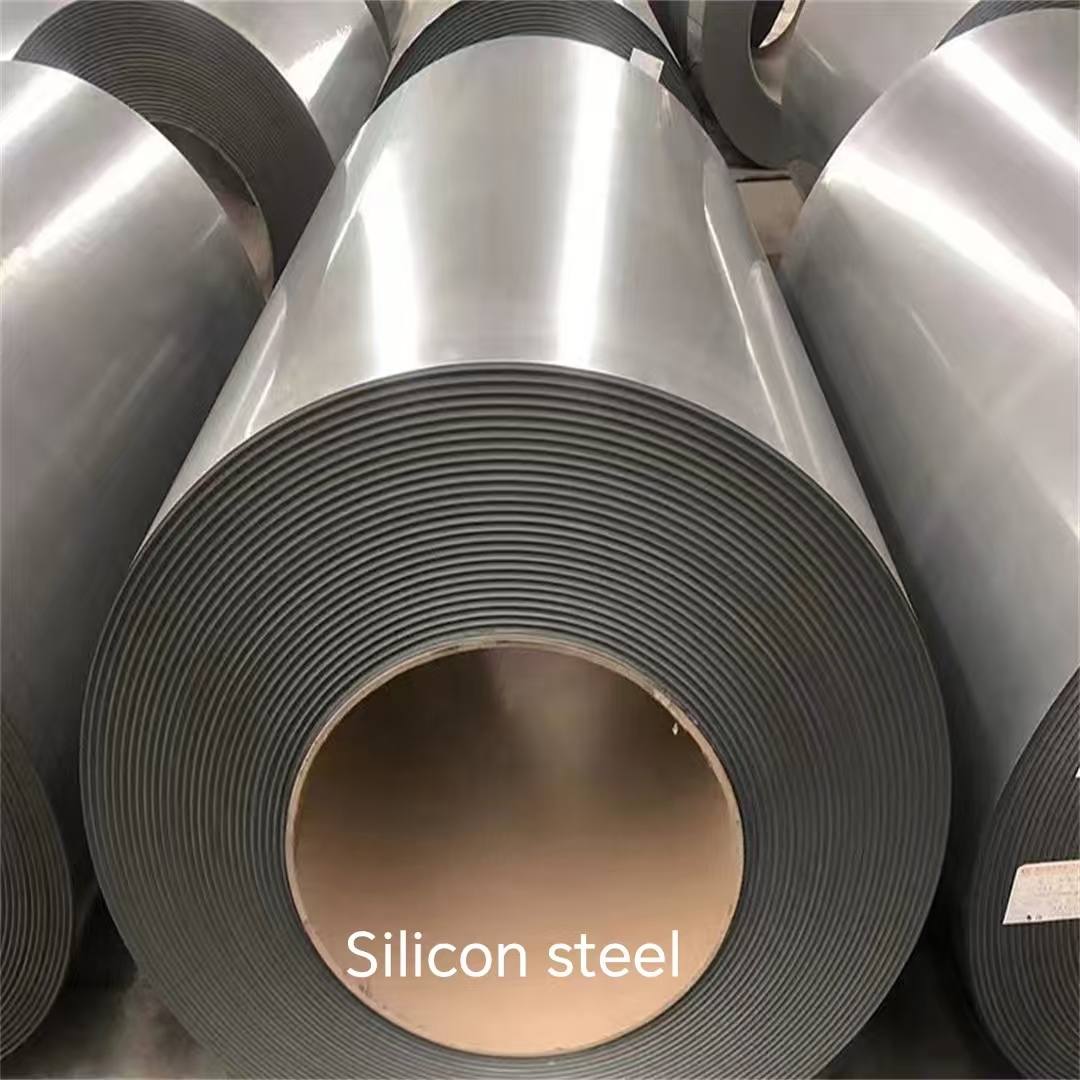
1. HVDC converter transformers in a high-thunderstorm rainforest corridor
The reference project is Phase II of the ±800 kV ultra-high voltage direct current project in Belém Mountain, Brazil, which transports hydropower resources from northern Brazil to load centres in the southeast. Oriented silicon steel functions there as the core material for converter transformers, enabling cross-regional, ultra-long-distance, ultra-large-capacity, low-loss DC transmission. The installation comprises ±800 kV converter transformers (14 units), DC filters, AC filters, reactive power compensation devices, and converter valves, operating in bipolar mode at ±800 kV / 4,000 MW on a long-term continuous basis.
The material constraints in that brief are stacked: ultra-low loss, resistance to a high-temperature and high-humidity corrosive environment, and a high magnetic flux density. For the converter transformer core duty specifically, 0.23 mm 23Q085 is the grade whose stated application is high-voltage direct current converter transformers and high-efficiency power transformer cores, rated at P1.7/50 ≤ 0.85 W/kg with B8 ≥ 1.88 T. Where the loss ceiling permits a thicker lamination, 0.27 mm 27Q095 (P1.7/50 ≤ 0.95 W/kg, B8 ≥ 1.91 T) is designated for high-efficiency power transformers and photovoltaic DC converter transformers, and 27Q100 (P1.7/50 ≤ 1.00 W/kg, B8 ≥ 1.91 T) for power transformers, reactors and electrical equipment cores. For UHV-class cores where the designer can work below 0.23 mm, 0.20 mm 20-65 (P1.7/50 ≤ 0.65 W/kg) and 0.18 mm 18-65 (P1.7/50 ≤ 0.65 W/kg, B8 ≥ 1.88 T) are the low-loss options, both designated for ultra-high voltage transformers and high-efficiency energy-saving transformer cores.
Coating becomes a specification line in this environment rather than an afterthought. Available finishes in this portfolio are organic coating with a temperature resistance of ≤ 180 °C, inorganic coating with temperature resistance up to 800 °C, and semi-organic coating. For a corridor with 80–90% humidity and daily temperatures of 30–40 °C, the thermal and corrosion behaviour of the coating is part of the reliability calculation, not a packaging detail.
2. Tropical grid distribution and power transformers
The second environment is the Brazilian national grid, where rainforest coexists with coastal industrial areas, humidity is high, and the day-to-night temperature difference is small. The project type is the manufacture of power transmission and distribution transformers for the national grid — Brazil being the largest power equipment market in Latin America — with the transformer business under WEG. Oriented silicon steel serves as the core material of power transformers and distribution transformers, operating continuously for 24 hours under full load, with moderate start and stop frequency on the distribution network. Matching equipment includes distribution transformers, power transformers, and smart grid equipment.
Grade selection here is driven by efficiency class rather than by converter duty. For energy-efficiency-standard transformers and high-efficiency distribution transformers, 0.23 mm 23R075 (P1.7/50 ≤ 0.75 W/kg, B8 ≥ 1.88 T) sits at the low-loss end. Where the design accepts a marginally higher loss at a higher flux density, 23Q080 (P1.7/50 ≤ 0.80 W/kg, measured 0.76–0.78 W/kg, B8 ≥ 1.89 T) is designated for energy-efficient transformers, power transformers, reactors and high-power frequency converters, and 23Q090 (P1.7/50 ≤ 0.90 W/kg, B8 ≥ 1.88 T) for industrial small and medium-sized transformers. At 0.27 mm, 27Q110 (P1.7/50 ≤ 1.10 W/kg, B8 ≥ 1.88 T) is designated for power transformers, automotive generators and power cables, and 27Q120 (P1.7/50 ≤ 1.20 W/kg) for small and medium-sized transformer cores and electrical equipment.
The certification constraint is what separates this scenario from a purely magnetic selection exercise. Oriented silicon steel has been widely used in WEG's local transformer production in Brazil, meeting the energy efficiency certification requirements of INMETRO in the region. For a buyer building a specification, that is the useful benchmark: the material must be able to travel through an INMETRO-linked production and verification chain, which puts weight on batch documentation and traceability alongside the loss declaration.
3. Cold-region, low-noise distribution transformer upgrades
The third environment is the Canadian grid, where winters run from −40 °C to −20 °C with frequent freeze-thaw cycles and salt fog in some coastal areas. The project type is the Canadian high-efficiency and low-noise distribution transformer project, combining cold-region grid upgrade with urban low-noise requirements. The reference material in that brief is B20HS070, used to manufacture national Class 1 energy-efficient rolled iron core transformers, matched with three-dimensional rolled iron core energy-saving transformers, outdoor distribution transformers, and intelligent monitoring equipment at the grid terminal.
Two requirements drive the grade shortlist. The first is an extremely low iron loss, consistent with the Class 1 efficiency target and with the low-noise objective. The second is stability at extreme cold: the brief requires a magnetic permeability retention rate of ≥ 95% at −40 °C under year-round operation, since the distribution transformer must maintain stable excitation characteristics even in deep winter.
Within the 0.20–0.27 mm band, the lowest iron loss values in this portfolio belong to the 0.20 mm class: 20-65 at P1.7/50 ≤ 0.65 W/kg (designated for ultra-high voltage transformers, high-efficiency distribution transformers and high energy efficiency power equipment) and 20R070 at P1.7/50 ≤ 0.70 W/kg with B8 ≥ 1.86 T. If the core design allows a thicker lamination, 0.23 mm 23R075 at ≤ 0.75 W/kg with B8 ≥ 1.88 T is the next lowest-loss step and is designated for energy efficiency standard and high-efficiency distribution transformers. Where a design can accept a thinner gauge still, 0.18 mm 18-65 delivers P1.7/50 ≤ 0.65 W/kg with B8 ≥ 1.88 T.
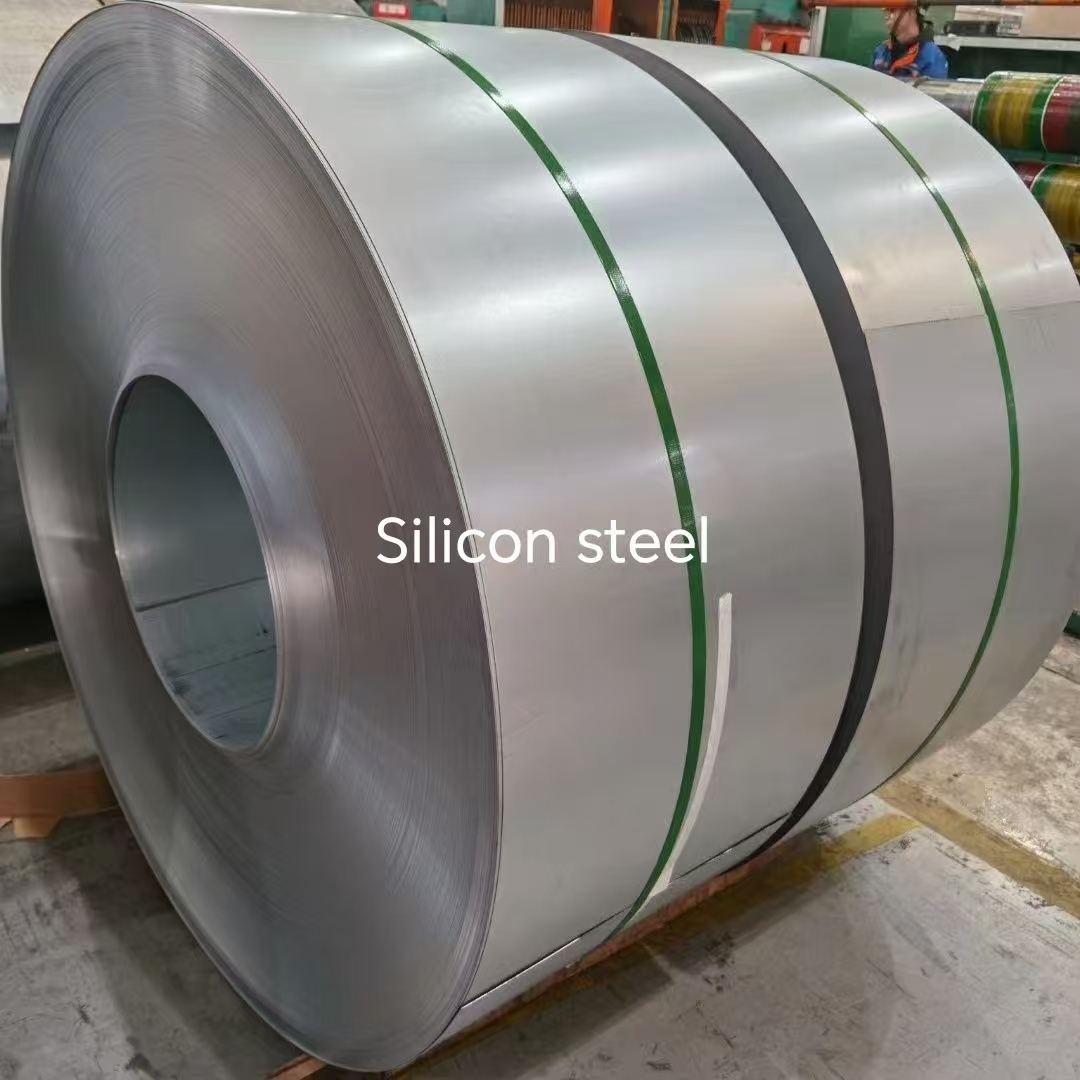
Specification workflow: how to lock the grade before ordering
- Write the environment constraint file first. Record the ambient temperature range, humidity band, thunderstorm index, coastal salt-fog exposure, noise limit, efficiency class and destination certification regime. The three projects above differ mainly in this file, not in their demand for low loss.
- Set the iron loss ceiling in W/kg. The Belém HVDC brief uses < 0.85 W/kg; the Canadian Class 1 project targets an extremely low loss grade. Convert the grid efficiency class into a W/kg ceiling before talking to a supplier, so the conversation starts from a number.
- Set the B8 floor. If the project states a high magnetic flux density requirement, apply it as a hard filter. At a B8 ≥ 1.88 T floor, grades rated at ≥ 1.86 T (20R070) and ≥ 1.75 T (23Q100) fall outside the list even though their loss values are competitive.
- Choose the thickness band. The available range for oriented silicon steel is 0.18–0.35 mm, with width typically 800–1250 mm and ultra-wide 1250 mm available on request. Thinner gauge at 0.20 mm reaches the lowest loss values; 0.27 mm grades offer higher B8 at 27Q095 and 27Q100.
- Choose the grade family and coating. Material options span general orientation CGO, high magnetic flux Hi-B, laser-engraved R series, and heat-resistant HS series. Coating options are organic (≤ 180 °C), inorganic (up to 800 °C) and semi-organic. For humid tropical and high-temperature sites, state the coating requirement explicitly.
- Write the certification and inspection clause. Set out origin inspection at the factory (full-process random inspection or batch inspection), a material certificate or warranty certificate supplied with the goods, and third-party testing through CMA/CNAS laboratories where the project requires independent verification. Reference INMETRO for Brazilian grid programmes, and ASTM A677 / A683 and IEC 60404-8-4 where an international framework needs to be cited.
- Define processing, packaging and quantity. In-house processing covers strip cutting, fixed-length flat cutting and longitudinal cutting, with export Sea-Worth packaging and customized logo and graphics. Minimum order quantity is 25 T; monthly capacity is 4,000 T.
- Plan the incoming inspection and the claims path. Document the incoming quality inspection dispute process and the re-inspection route before shipment. After-sales feedback and coordination run on a 1–3 working day cycle, with closed-loop handling of abnormalities and customer complaints.
Project evidence behind these selections
Brazil — WEG grid transformer production. Oriented silicon steel has been in use in WEG's local manufacturing of power transformers and distribution transformers in Brazil for over 10 years, with stable operation verified. The material has been widely applied in WEG's domestic transformer production, enabling WEG to meet local grid energy efficiency standards and low-carbon transformation requirements. Brazil is the largest power equipment market in Latin America, and localized technical service and supply chain support are provided through a representative office in Brazil.
Mexico — transformer manufacturer. A transformer manufacturer in Mexico receives batch supply covering the manufacture of complete power transmission and distribution transformers, with an annual business scale of approximately USD 500 million. The application covers iron cores for power transformers, converter transformers and special engineering transformers worldwide, in use for over 10 years with stable operation verified.
Supplier capability behind these deliveries. HL AND SL LIMITED is a China-based exporter of electrical steel (silicon steel), founded in 2012, operating a 30,000 m² facility with a 10-engineer R&D team and an export ratio of 80%, serving markets including Mexico, Brazil, Italy, the UAE and India. The company is an authorized agent of China Baowu Steel Group and also integrates export resources from multiple private steel mills, which allows grade and price-range matching from high-end to economy. In-house processing supports research and production of oriented silicon steel across the full process, including OEM and ODM work.
Grade and thickness comparison
The table below lists the oriented silicon steel grades referenced in this article. All values are the declared specifications for each grade; “measured” figures are shown where a grade carries a measured iron loss range in addition to its maximum.
| Grade | Type | Thickness | Iron loss P1.7/50 | B8 | Stated application |
|---|---|---|---|---|---|
| 18-65 | Hi-B | 0.18 mm | ≤ 0.65 W/kg | ≥ 1.88 T | Ultra-high voltage transformers, power transformers, high-efficiency energy-saving transformer cores |
| 20-65 | Hi-B | 0.20 mm | ≤ 0.65 W/kg | — | Ultra-high voltage transformers, high-efficiency distribution transformers, high energy efficiency power equipment |
| 20R070 | Hi-B (R series) | 0.20 mm | ≤ 0.70 W/kg | ≥ 1.86 T | High-efficiency distribution transformers, power transformer cores |
| 23R075 | Hi-B (R series) | 0.23 mm | ≤ 0.75 W/kg | ≥ 1.88 T | Energy efficiency standard transformers, high-efficiency distribution transformers, power transformer cores |
| 23Q080 | Hi-B | 0.23 mm | ≤ 0.80 W/kg (measured 0.76–0.78) | ≥ 1.89 T | Energy-efficient transformers, power transformers, reactors, high-power frequency converters |
| 23Q085 | Hi-B | 0.23 mm | ≤ 0.85 W/kg | ≥ 1.88 T | High-voltage direct current converter transformers, high-efficiency power transformer cores |
| 23Q090 | Hi-B | 0.23 mm | ≤ 0.90 W/kg | ≥ 1.88 T | Industrial small and medium-sized transformers, power equipment cores |
| 23Q095 | Hi-B | 0.23 mm | ≤ 0.95 W/kg | ≥ 1.88 T | High-efficiency transformers, power equipment cores, motors |
| 23Q100 | Hi-B | 0.23 mm | ≤ 1.00 W/kg | ≥ 1.75 T | Common distribution transformers, general industrial transformers, electromagnetic equipment |
| 27Q095 | Hi-B | 0.27 mm | ≤ 0.95 W/kg | ≥ 1.91 T | High-efficiency power transformers, photovoltaic DC converter transformers, industrial frequency conversion equipment |
| 27Q100 | Hi-B | 0.27 mm | ≤ 1.00 W/kg | ≥ 1.91 T | Power transformers, reactors, electrical equipment cores |
| 27Q105 | Hi-B | 0.27 mm | ≤ 1.05 W/kg | ≥ 1.88 T | Power transformer cores, transformer manufacturing |
| 27Q110 | Hi-B | 0.27 mm | ≤ 1.10 W/kg | ≥ 1.88 T | Power transformers, automotive generators, power cables, electrical equipment |
| 27Q120 | Hi-B | 0.27 mm | ≤ 1.20 W/kg | — | Small and medium-sized transformer cores and electrical equipment |
Mapped to the three project environments described above, the constraint logic is:
| Project environment | Dominant constraints | Grades matched to the constraint set |
|---|---|---|
| ±800 kV HVDC converter transformers, Belém corridor, Brazil | Ultra-low loss (< 0.85 W/kg target in the brief), high magnetic flux density, resistance to 30–40 °C and 80–90% humidity, high thunderstorm index | 23Q085 (0.23 mm, ≤ 0.85 W/kg); 27Q095 and 27Q100 (0.27 mm, B8 ≥ 1.91 T); 20-65 and 18-65 for sub-0.23 mm UHV-class cores |
| Brazilian national grid power and distribution transformers (tropical, INMETRO-linked) | Energy-efficiency certification, continuous 24-hour full-load operation, high humidity with small temperature difference | 23R075 (≤ 0.75 W/kg); 23Q080 (≤ 0.80 W/kg); 23Q090; 27Q110; 27Q120 |
| Canadian cold-region, low-noise distribution transformer upgrade | Extremely low iron loss for Class 1 cores, permeability retention ≥ 95% at −40 °C, freeze-thaw and coastal salt-fog exposure, low noise | 20-65 (≤ 0.65 W/kg); 20R070 (≤ 0.70 W/kg); 23R075 (≤ 0.75 W/kg) where a thicker lamination is acceptable |
Frequently asked questions
What certification and inspection evidence should accompany oriented silicon steel for grid transformer projects?
The evidence package depends on the destination market. For Brazilian grid programmes, the relevant framework is INMETRO energy efficiency certification: oriented silicon steel has been widely applied in WEG's local transformer production in Brazil while meeting INMETRO energy efficiency certification requirements in the region. For international reference, ASTM A677 governs fully processed non-oriented electrical steel and ASTM A683 covers semi-processed types in North America, while IEC 60404-8-4 (2013) defines non-oriented fully processed electrical steel strips and sheets; these are framing standards rather than grade sheets for Hi-B oriented material. On the supplier side, the package normally includes origin inspection at the factory through full-process random inspection or batch inspection, a material certificate or warranty certificate provided with the goods, and third-party testing submitted to CMA/CNAS laboratories when independent verification is required.
Which Hi-B grades and thicknesses can be supplied for HVDC, tropical, and cold-region cores?
The oriented silicon steel range covers thicknesses from 0.18 mm to 0.35 mm, with width typically 800–1250 mm and ultra-wide specifications up to 1250 mm available. Material options include general orientation CGO, high magnetic flux Hi-B, laser-engraved R series and heat-resistant HS series. Coating options are organic coating with temperature resistance ≤ 180 °C, inorganic coating with temperature resistance up to 800 °C, and semi-organic coating. Processing includes strip cutting, fixed-length flat cutting and longitudinal cutting, and production supports full-process oriented silicon steel research and production as well as OEM and ODM work.
What determines the commercial band of a 0.20 mm, 0.23 mm, or 0.27 mm oriented grade?
Commercial terms track the specification rather than the category name. The variables that move a quotation are the grade family and thickness (0.20 mm low-loss grades sit in a different band from 0.27 mm grades), the coating type selected for the environment, the processing scope such as strip cutting or fixed-length flat cutting, and the order pattern. Minimum order quantity is 25 T, and capacity stands at 4,000 T per month. For a project buyer, the cost-control lever is writing the loss ceiling and B8 floor tightly enough that no grade outside the requirement is quoted.
How can a transformer manufacturer validate material before a project-scale order?
Validation is documentation-led. The material certificate or warranty certificate is supplied with the goods per batch, origin inspection at the factory is carried out through full-process random inspection or batch inspection, and third-party testing can be submitted to CMA/CNAS laboratories. Because the minimum order quantity is 25 T, project-scale validation for HVDC, tropical or cold-region cores normally runs through batch documentation, third-party test results, and technical review of the grade sheet against the project's loss and B8 requirements — supported by lifecycle technical guidance and application support.
What lead times should a project planner assume, and how do I start a specification review?
Lead time depends on order type. Regular orders run 15–20 days; urgent orders and stock orders can ship in 3–7 days; bulk export orders take 30–45 days to arrive at port; and after the deposit of a letter of credit, working time is 7–30 working days. To start, send the project constraint file — environment, loss ceiling, B8 floor, thickness band, coating and certification regime — to sales-01@hlslind.com or contact Lucas on WhatsApp at +86 134-6700-2282 for a grade match and quotation.
Conclusion: match the grade to the constraint file, not to the catalogue
HVDC converter transformers in a high-thunderstorm rainforest corridor, tropical grid distribution and power transformers, and cold-region low-noise distribution transformer upgrades all live inside the same Hi-B oriented silicon steel family — yet each project writes a different constraint file. Belém-style converter duty pushes toward 0.23 mm 23Q085 at ≤ 0.85 W/kg, with 0.27 mm 27Q095 and 27Q100 at B8 ≥ 1.91 T where the loss ceiling allows. Brazilian grid programmes are anchored by INMETRO-linked energy efficiency requirements and are matched by 0.23 mm 23R075, 23Q080 and 23Q090, or 0.27 mm 27Q110 and 27Q120. Canadian cold-region work, with its Class 1 efficiency target and ≥ 95% permeability retention at −40 °C, points to the lowest-loss 0.20 mm option at ≤ 0.65 W/kg and the 0.23 mm 23R075 step above it.
The single most useful discipline for a buyer is to apply the B8 floor as strictly as the loss ceiling: a grade rated at B8 ≥ 1.86 T or ≥ 1.75 T does not satisfy a ≥ 1.88 T requirement, no matter how attractive its iron loss figure appears on the same sheet.
Request a grade match and quotation
Send your project parameters — ambient conditions, iron loss ceiling, B8 requirement, thickness band, coating and certification regime — and receive a matched grade recommendation with batch inspection documentation for your application.
Email: sales-01@hlslind.com | WhatsApp: +86 134-6700-2282 | Website: www.hlslind.com
Product catalogue and specifications: download the HL AND SL LIMITED brochure (PDF).
Have Questions or Need More Details?
Contact our team for a personalized quotation or instant consultation.
Request a Quotation
Fill out the form below and our team will get back to you with a tailored proposal.
WhatsApp Direct Chat
Prefer to chat in real-time? Message us on WhatsApp for instant assistance & quick answers.
- Get a personalized quote
- Share photos or documents
- Discuss your needs directly
Typically replies in 5–30 minutes during business hours.