
PV DC Converter Transformer Cores: Hi-B Oriented Silicon Steel Application Guide
Utility-scale photovoltaic plants generate DC power at the array side and step it up to grid voltage, and the PV direct current converter transformer is where that conversion becomes a magnetically constrained design problem. Its core is built from grain-oriented silicon steel laminations, and the grade and gauge chosen at the design stage fix a permanent share of the transformer's no-load loss for the decades of plant operation that follow.
The short answer for project engineers: model 27Q095 — a Hi-B (high magnetic induction) grade of grain-oriented silicon steel at 0.27 mm nominal thickness, with iron loss P1.7/50 ≤ 0.95 W/kg and magnetic flux density B8 ≥ 1.91 T — is the practical default for PV DC converter transformer cores. It pairs a high induction ceiling with a loss class most converter transformer specifications accept, at a thickness that ordinary slitting and stacking lines handle. Where a project is driven by minimum core loss rather than by build economics, a thinner 0.23 mm grade such as 23R075 (P1.7/50 ≤ 0.75 W/kg, B8 ≥ 1.88 T) becomes the stronger choice.
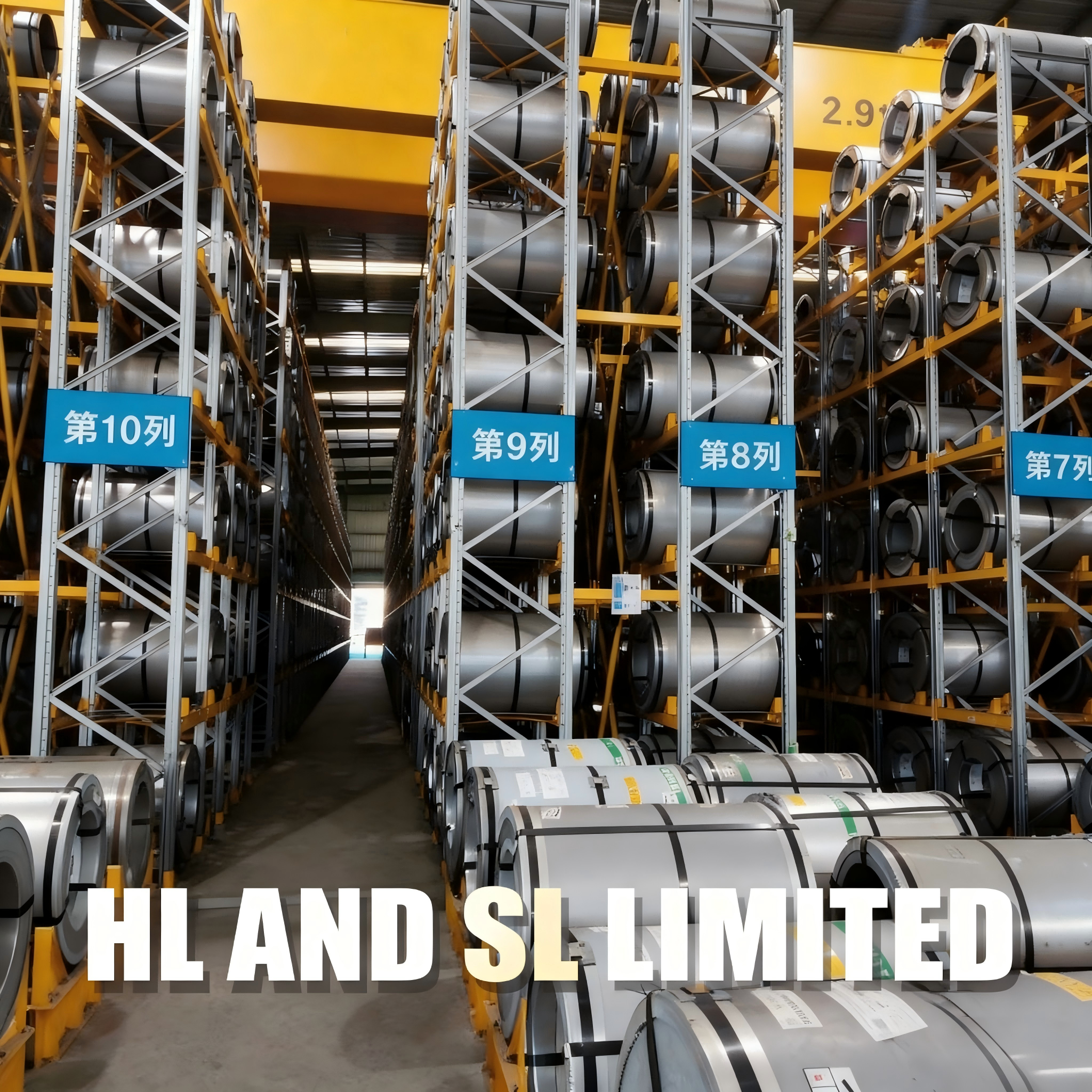
HL AND SL LIMITED supplies grain-oriented electrical steel for transformer cores, with slitting and cut-to-length processing support.
Why a PV DC Converter Core Is Not a Standard Distribution Transformer Spec
A distribution transformer core and a PV DC converter transformer core are not selected the same way, even when both are built from grain-oriented silicon steel. Three practical differences drive the material decision.
- Excitation quality. A converter transformer on the DC side of a PV plant works with a DC component and harmonic-rich excitation rather than a clean sinusoid. Under those conditions the induction level the designer targets — and the headroom left above it — matters more than a nominal 50 Hz loss figure read in isolation.
- Loss positioning. Core loss is the loss component that runs continuously, whether or not the plant is at full output. Selecting a lower loss class reduces that continuous component across the whole service life, which is why core material is one of the few decisions that keeps paying back after commissioning.
- Footprint and build. Converter transformers are usually packaged on skids or inside enclosures with constrained space. Higher-induction material lets a given working flux be reached with less core cross-section, while a thinner gauge requires more laminations to fill the same stack height, which increases cutting and stacking work.
Grade naming alone does not settle this. Two Hi-B grades with similar loss numbers can differ in induction ceiling, and two grades with the same thickness can differ in loss class. The selection problem is therefore not "which grade is best" in the abstract, but which combination of thickness, magnetic flux density (B8) and iron loss (P1.7/50) matches the converter transformer's flux-density target and its loss budget.
Industry Background: Where Hi-B Sits in the Material Landscape
Grain-oriented electrical steel is a mature, standardized product family rather than a specialty item, and that standardization is useful to project engineers because it makes comparison possible across suppliers.
- Market context. The global silicon steel market reached a valuation of USD 31.55 billion in 2025 and is projected to scale to USD 59.41 billion by 2035 (Strategic Revenue Insights, 2026). Demand growth on this scale keeps pressure on capacity for higher-grade oriented material and makes early material lock-in part of project risk management.
- Thickness framework. IEC 60404-8-7:2020 defines grades of cold-rolled grain-oriented electrical steel strip and sheet delivered in the fully processed state in nominal thicknesses of 0.20 mm, 0.23 mm, 0.27 mm, 0.30 mm and 0.35 mm, and applies to Goss-textured grain-oriented electrical steel supplied final-annealed in coils or sheets for the construction of magnetic circuits. Both 27Q095 (0.27 mm) and 23R075 (0.23 mm) sit inside that framework.
- ASTM alternative. ASTM A876-17e1 covers flat-rolled, grain-oriented, fully processed low-carbon silicon-iron electrical steels whose low core loss and high permeability in the rolling direction are achieved by metallurgical processing, with the covered material at approximately 3.2% silicon content. ASTM and IEC requirements should not be assumed equivalent grade-by-grade.
- Noise and vibration. IEC 60404-17:2021 covers measurement of magnetostriction characteristics of grain-oriented electrical steel strip and sheet under an applied AC magnetic field at 50 Hz or 60 Hz — a test route worth invoking when audible noise is a design constraint on the converter transformer.
- Compliance direction. RoHS Directive 2011/65/EU and Directive (EU) 2025/2456 restrict ten hazardous substances in electrical and electronic equipment, with ECHA taking over technical assessments with effect from 13 August 2027. Coating chemistry is the part of a silicon steel order most exposed to that framework.
One adjacent trend is worth noting because it shapes availability and price across the whole oriented-steel supply chain: ultra-thin electrical steel below 0.2 mm gauge is the most critical trend for high-speed EV motors, where it attracts a price premium of 50–100% over standard gauge (Strategic Revenue Insights, 2026). Gauge and processing complexity are the strongest price levers in this market.
The Practical Default: 27Q095 for PV DC Converter Transformer Cores
27Q095 is a Hi-B grade of high magnetic induction grain-oriented silicon steel produced at 0.27 mm nominal thickness. Its specified properties are iron loss P1.7/50 ≤ 0.95 W/kg — the loss measured at 1.7 T and 50 Hz — and magnetic flux density B8 ≥ 1.91 T, measured at a magnetizing field strength of 800 A/m. Metallurgically it is an iron matrix with roughly 3% silicon, supplemented by aluminium and manganese, and it must contain the inhibitor phases (MnS, AlN) that allow Goss-textured grain growth. It is listed for high-efficiency power transformers, photovoltaic direct current converter transformers and industrial frequency conversion equipment.
The fit for a converter core comes from the combination rather than from any single figure. A B8 of at least 1.91 T is a high induction ceiling for a grain-oriented product: the core reaches a given working flux with a smaller effective cross-section and lower excitation demand, which helps when the transformer has to operate at elevated induction. At the same time, the ≤ 0.95 W/kg loss class keeps the continuous core-loss component within a range that conventional converter transformer specifications accept. And 0.27 mm is thick enough that standard slitting, cut-to-length and lamination stacking lines process it without special handling.
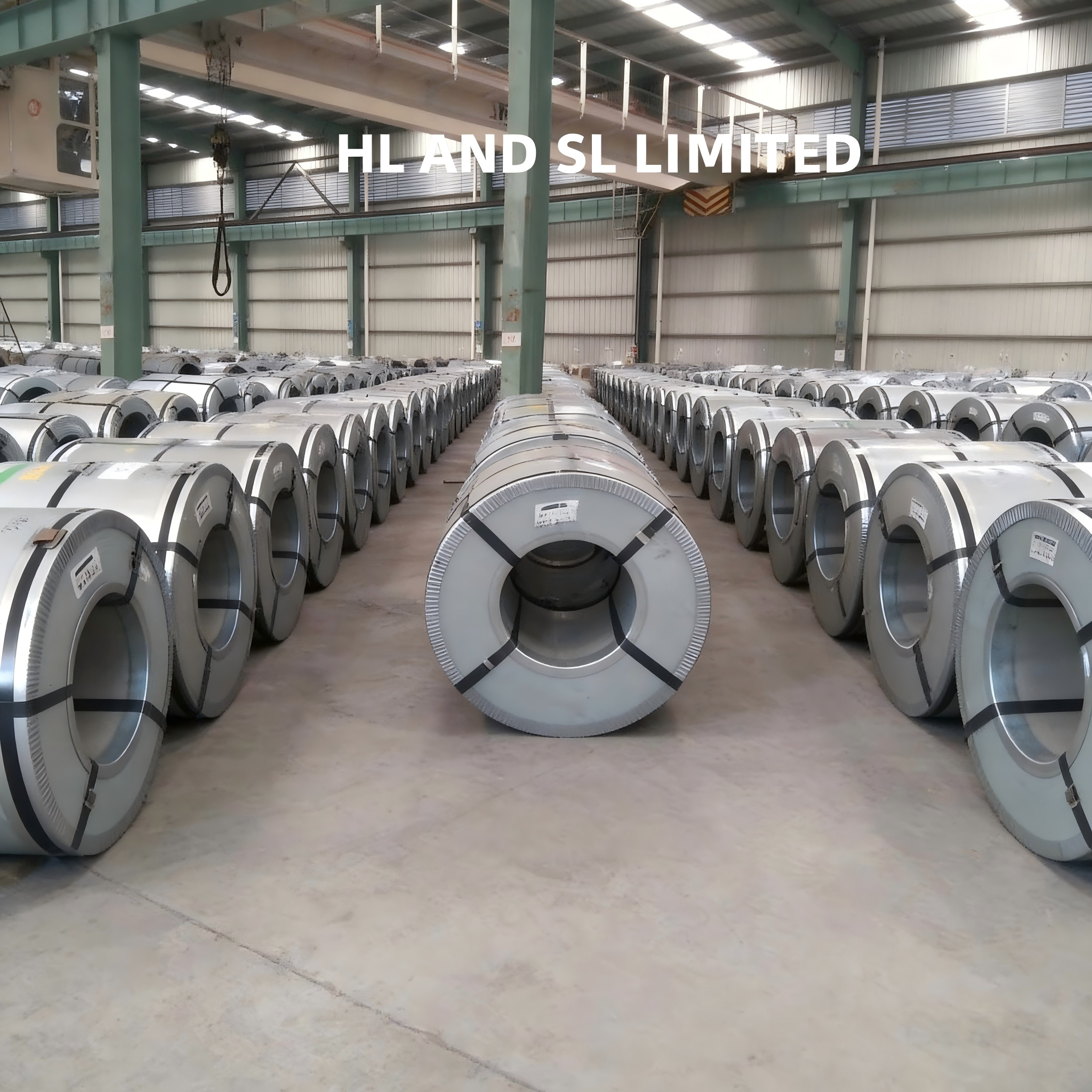
Oriented silicon steel supplied with thickness, width, coating and cut-to-length options for transformer core manufacturing.
Reading B8 and P1.7/50 Together
These two properties answer different design questions and should be read as a pair.
B8 describes how much flux the material can carry before magnetizing current rises sharply. It sets the ceiling on the induction the designer can target, and therefore on how compact the core can be. P1.7/50 describes how much energy the material dissipates at a common reference point (1.7 T, 50 Hz), and therefore how much continuous loss the core contributes. A grade with a very low loss figure but a low induction ceiling forces a larger core; a grade with a high induction ceiling but a loose loss class quietly raises lifetime loss.
Decision rule. If the design's induction target sits close to the material's B8 ceiling, filter candidates by B8 first and treat loss class as the second filter. If the induction target has comfortable margin, invert the order: let the lower loss class decide.
When a Thinner 0.23 mm Grade Such as 23R075 Is the Better Choice
23R075 is a 0.23 mm Hi-B grade with iron loss P1.7/50 ≤ 0.75 W/kg and B8 ≥ 1.88 T, listed for energy efficiency standard transformers, high-efficiency distribution transformers and power transformer cores. Its specified loss limit and that of 27Q095 differ by 0.20 W/kg at the same 1.7 T / 50 Hz reference (0.75 versus 0.95 W/kg). Thinner laminations reduce the eddy-current share of core loss, which is why the same loss class is progressively harder to reach as gauge increases.
23R075 is the better selection when several conditions hold at once:
- The specification sets an explicit core-loss target. Where the tender or the owner's energy-efficiency commitment is written around core loss rather than around build cost, the lower loss class is the requirement, not the option.
- The design has flux-density margin. B8 ≥ 1.88 T is a lower ceiling than 27Q095's ≥ 1.91 T. If the converter transformer already runs close to its induction limit, the additional loss saving does not compensate for the reduced headroom.
- The lamination line can handle 0.23 mm material. Thinner sheet is more sensitive to handling, burr control and stacking practice.
- Stack height can be adjusted. A 0.23 mm sheet means more laminations per unit of stack height than a 0.27 mm sheet, which increases cutting and stacking work and must be reflected in the core-building plan.
Where the induction margin is thin, or where the winding and core build is already fixed around 0.27 mm material, staying with 27Q095 is the lower-risk decision. Conversely, for high-efficiency distribution transformer programmes and energy-efficiency-standard projects, 23R075 is directly positioned by its listed application field.
For designs that push gauge below 0.2 mm, the same family extends further: 18-65 at 0.18 mm (P1.7/50 ≤ 0.65 W/kg, B8 ≥ 1.88 T), 20-65 at 0.20 mm (≤ 0.65 W/kg) and 20R070 at 0.20 mm (≤ 0.70 W/kg, B8 ≥ 1.86 T). These grades are positioned for ultra-high voltage transformers, high-efficiency distribution transformers and high energy-efficiency power equipment rather than as the default for standard PV converter cores, and their cost profile reflects the gauge premium described earlier.
Coatings, Widths and Processing That Affect the Choice
Grade selection is only half of a workable purchase specification. Surface insulation, width and delivery form determine whether the material can actually be built into the core as designed.
HL AND SL LIMITED is an electrical steel export enterprise founded in 2012, operating a 30,000 m² processing plant with an annual output of 30,000 T, 50 employees and a 10-engineer R&D team, exporting approximately 80% of its volume to markets including Mexico, Brazil, Italy, the UAE and India. The company is an authorized agent of China Baowu Steel Group and states that it ranks among the top three in China's electrical steel export volume.
Its stated customization scope covers the decisions this guide has been discussing:
- Specification: thickness 0.18–0.35 mm; width typically 800–1250 mm, with an ultra-wide 1250 mm specification available.
- Material: general orientation CGO, high magnetic flux Hi-B, laser-engraved R series and heat-resistant HS series.
- Coating: organic coating with temperature resistance up to 180 °C, inorganic coating with temperature resistance up to 800 °C, and semi-organic coating.
- Size processing: strip cutting, fixed-length flat cutting and longitudinal slitting.
- Packaging: standard export sea-worthy packing, with logo and graphic customization.
Coating choice deserves specific attention on converter transformers. An organic coating suits conventional lamination insulation; an inorganic coating rated to 800 °C supports processes that involve elevated temperature, such as stress-relief annealing of wound or stacked cores. The wrong coating choice can force a change of processing route after the steel has already been ordered.
Step-by-Step: Specifying Hi-B Oriented Silicon Steel for a PV DC Converter Core
- Fix the excitation and flux-density basis. State the DC bias and harmonic conditions the converter transformer will see, and derive the induction level the core must reach. This determines whether B8 ≥ 1.91 T (27Q095) or B8 ≥ 1.88 T (23R075) is the correct starting filter.
- Set the core-loss budget. Convert the project's efficiency commitment into an allowable core-loss figure per kilogram of active material at the 1.7 T / 50 Hz reference, so grades can be compared on the same basis.
- Shortlist two or three grades. A typical shortlist for PV DC converter service is 27Q095 as the default, 23R075 where the loss budget demands it, and 27Q100 as an adjacent 0.27 mm option (P1.7/50 ≤ 1.00 W/kg, B8 ≥ 1.91 T).
- Specify thickness, width, coating and delivery state. Include nominal thickness, slit or cut-to-length dimensions, coating type with its temperature limitation, and packing requirements.
- Define the documentation pack. Request a material certificate or warranty certificate, batch inspection reports shipped with the goods, and third-party testing through CMA/CNAS-submitted laboratories where the tender requires independent verification. Origin inspection at the factory covers full-process random inspection and batch inspection.
- Validate with a sample lot. Run trial cutting and stacking before committing to a batch, particularly when moving from 0.27 mm to 0.23 mm material.
- Lock lead time into the project schedule. Regular orders run 15–20 days; urgent or stock orders ship in 3–7 days; bulk export orders take 30–45 days to arrive at port; after deposit of a letter of credit, production and shipment run in 7–30 working days.
- Plan incoming inspection and the after-sales route. Reserve capacity for inbound quality inspection and dispute handling, with an expected after-sales feedback and coordination window of 1–3 working days for anomalies and complaints.
Use Cases: Where These Grades Are Already Working
Converter Transformer Cores for a Transformer Manufacturer in Mexico
A transformer manufacturer client in Mexico uses this material for the manufacturing of iron cores for power transformers, converter transformers and special engineering transformers worldwide. The project has been in use for over 10 years with stable operation verified, supplied as batch supply covering an annual business scale of approximately USD 500 million. The relationship is described as a model of industrial chain collaboration in which users become each other's partners.
Grid and Distribution Transformer Production in Brazil
In Brazil, the largest power equipment market in Latin America, the material has been used by WEG, a major power equipment manufacturer, for over 10 years with stable operation verified, in WEG's local manufacturing of power transformers and distribution transformers. The application supports compliance with local grid energy efficiency standards and the requirements of the low-carbon transition. A representative office in Brazil provides localized technical services and supply chain support for Latin America.
Both cases are relevant to PV DC converter projects for the same reason: they are long-duration, batch-supplied oriented steel programmes in which grade consistency across years matters as much as the first-lot specification.
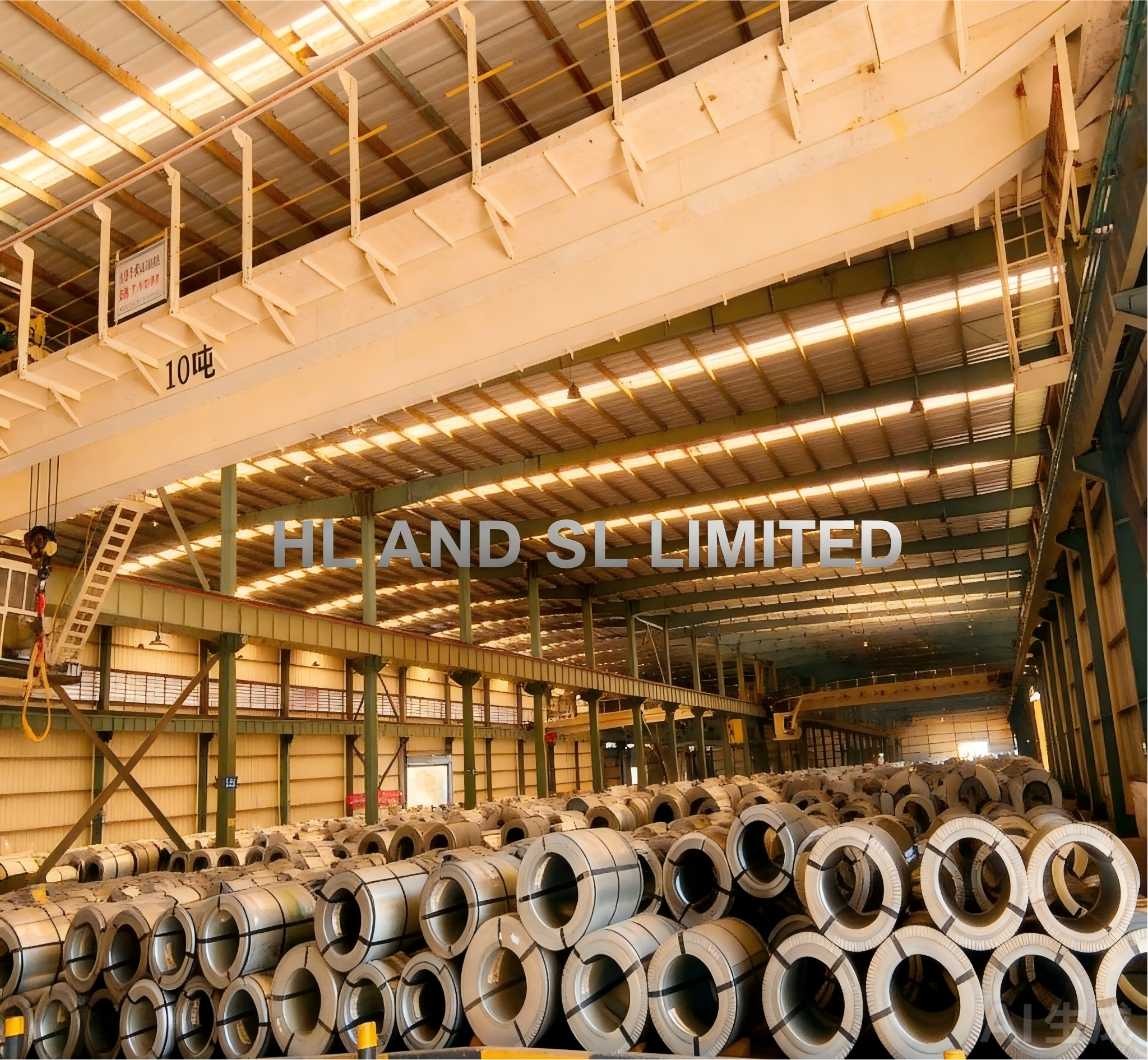
Long-running batch supply programmes for transformer manufacturers, supported by batch inspection reports and third-party testing options.
Comparison Table: Hi-B Grades for PV DC Converter and Adjacent Cores
| Grade (model) | Nominal thickness | Iron loss P1.7/50 | Magnetic flux density B8 | Documented application fit |
|---|---|---|---|---|
| 27Q095 | 0.27 mm | ≤ 0.95 W/kg | ≥ 1.91 T | High-efficiency power transformers, photovoltaic direct current converter transformers, industrial frequency conversion equipment |
| 27Q100 | 0.27 mm | ≤ 1.00 W/kg | ≥ 1.91 T | Power transformers, reactors and electrical equipment cores |
| 23R075 | 0.23 mm | ≤ 0.75 W/kg | ≥ 1.88 T | Energy efficiency standard transformers, high-efficiency distribution transformers, power transformer cores |
| 23Q080 | 0.23 mm | ≤ 0.80 W/kg (measured 0.76–0.78) | ≥ 1.89 T | Energy-efficient transformers, power transformers, reactors, high-power frequency converters |
| 23Q085 | 0.23 mm | ≤ 0.85 W/kg | ≥ 1.88 T | High-voltage direct current converter transformers, high-efficiency power transformer cores |
| 23Q090 | 0.23 mm | ≤ 0.90 W/kg | ≥ 1.88 T | Industrial small and medium-sized transformers, power equipment cores |
All values are the specified properties of Hi-B high magnetic induction grain-oriented silicon steel grades. The table is a selection aid, not a ranking: the correct grade is the one whose thickness, loss class and induction ceiling match the converter transformer's flux-density target and loss budget.
Frequently Asked Questions
1. Which standards and compliance requirements apply to Hi-B oriented silicon steel for PV DC converter transformer cores?
IEC 60404-8-7:2020 defines grades of cold-rolled grain-oriented electrical steel strip and sheet delivered in the fully processed state in nominal thicknesses of 0.20 mm, 0.23 mm, 0.27 mm, 0.30 mm and 0.35 mm, and applies to Goss-textured material supplied final-annealed in coils or sheets for magnetic circuits — which places both 27Q095 (0.27 mm) and 23R075 (0.23 mm) inside its thickness framework. In ASTM markets, ASTM A876-17e1 covers flat-rolled, grain-oriented, fully processed low-carbon silicon-iron electrical steel, with the covered material at approximately 3.2% silicon content; ASTM and IEC requirements should not be assumed equivalent without a grade-by-grade check. Where noise and vibration are design concerns, IEC 60404-17:2021 provides the measurement route for magnetostriction characteristics under an applied AC field at 50 Hz or 60 Hz. For equipment destined for the EU, RoHS Directive 2011/65/EU and Directive (EU) 2025/2456 restrict ten hazardous substances in electrical and electronic equipment, with ECHA taking over technical assessments from 13 August 2027. Confirm which of these your tender actually invokes before freezing the grade sheet.
2. Can 27Q095 be supplied in custom thicknesses, widths and coatings?
Yes, within the supplier's stated customization scope. Thickness customization runs from 0.18 mm to 0.35 mm, and width is typically 800–1250 mm with an ultra-wide 1250 mm specification available. Material options cover general orientation CGO, high magnetic flux Hi-B, laser-engraved R series and heat-resistant HS series. Coating options include organic coating with temperature resistance up to 180 °C, inorganic coating with temperature resistance up to 800 °C, and semi-organic coating. Size processing includes strip cutting, fixed-length flat cutting and longitudinal slitting, and standard export sea-worthy packing can be customized with logo and graphics. HL AND SL LIMITED states a monthly capacity of 4,000 T, a minimum order quantity of 25 T, and a 10-engineer R&D team supporting specification matching.
3. What drives the price difference between 0.27 mm and 0.23 mm Hi-B grades?
Four variables move the price of a Hi-B order: the loss class, the gauge, the coating type, and how much processing is required (slitting, cut-to-length, custom width). The relationship between gauge and price is steep at the thin end of the market — ultra-thin electrical steel below 0.2 mm gauge carries a price premium of 50–100% over standard gauge in high-speed EV motor applications, according to Strategic Revenue Insights (2026); that specific premium figure relates to sub-0.2 mm grades and should not be read as a 0.23 mm versus 0.27 mm ratio. For a PV DC converter project, the correct comparison is cost per tonne against the core-loss reduction delivered over the transformer's service life, evaluated against the project's efficiency commitment. Because the loss limits of 23R075 and 27Q095 differ by 0.20 W/kg at the 1.7 T / 50 Hz reference, that difference is the quantity to monetise. Minimum order quantity is 25 T, which is the practical unit for any budget comparison.
4. How can a project engineer validate a grade before placing a batch order?
Validation runs on three levels. First, documentation: a material certificate or warranty certificate accompanied by batch inspection reports shipped with the goods, and origin inspection at the factory covering full-process random inspection and batch inspection. Second, independent verification: third-party testing through CMA/CNAS-submitted laboratories, which is the route to use when a tender requires external confirmation of magnetic properties. Third, physical validation on the customer's own line — trial cutting, slitting and laminating a sample lot, especially when changing from 0.27 mm to 0.23 mm material where handling sensitivity and lamination count per unit stack height both change. Requesting a sample lot before batch release is the standard way to close out that third level.
5. What lead times apply to 27Q095 and 23R075 orders?
Regular orders are quoted at 15–20 days. Urgent or stock orders ship in 3–7 days. Bulk export orders take 30–45 days to arrive at port, and after deposit of a letter of credit, production and shipment run in 7–30 working days. For a PV DC converter programme, the practical implication is that material should be locked in before the core-building window opens, particularly if the design has moved to a thinner 0.23 mm grade whose sample validation adds a step. To move forward, request a sample lot or a specification-based quotation from HL AND SL LIMITED — email sales-01@hlslind.com, call or message +86 134-6700-2282 (WhatsApp available), or download the product brochure for the full grade and processing range.
Conclusion
For PV DC converter transformer cores, the material decision reduces to two questions: how much induction headroom does the design need, and how much continuous core loss can the project afford?
27Q095 answers both conservatively. At 0.27 mm with P1.7/50 ≤ 0.95 W/kg and B8 ≥ 1.91 T, it delivers the highest induction ceiling in the shortlist alongside a loss class that most converter transformer specifications accept, at a gauge that standard processing lines handle. It is the default because it fails least often.
23R075 answers the second question better. At 0.23 mm with P1.7/50 ≤ 0.75 W/kg and B8 ≥ 1.88 T, its specified loss limit sits 0.20 W/kg below 27Q095 at the same reference point — the grade to choose when the project targets minimum core loss, the design retains flux-density margin, and the lamination line can handle thinner material.
Grades do not select themselves. B8 sets the ceiling, P1.7/50 sets the cost of running below it, thickness sets the build, and coating sets the processing route. Decide them in that order and the selection holds up under review.
Next step: validate the grade on your own core design
Request a 27Q095 or 23R075 sample lot and a specification-based quotation from HL AND SL LIMITED. Batch inspection reports and material certificates accompany every shipment, and third-party testing can be arranged through CMA/CNAS-submitted laboratories. Thickness runs 0.18–0.35 mm, width up to 1250 mm, with organic, inorganic and semi-organic coating options.
Email sales-01@hlslind.com · Tel / WhatsApp +86 134-6700-2282 · www.hlslind.com · Download the product brochure (PDF)
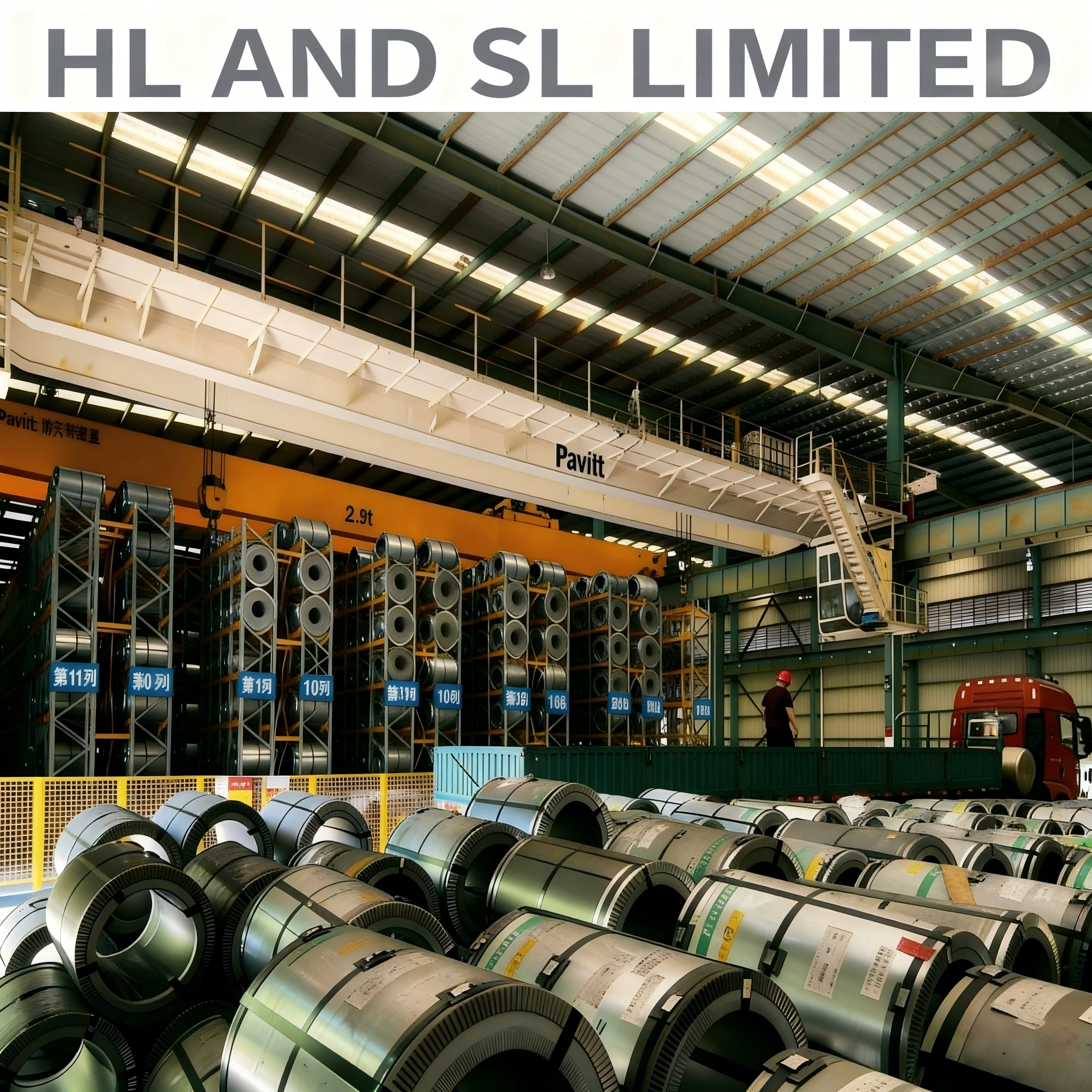
Sample lots, material certificates and specification-based quotations for oriented silicon steel projects.
Have Questions or Need More Details?
Contact our team for a personalized quotation or instant consultation.
Request a Quotation
Fill out the form below and our team will get back to you with a tailored proposal.
WhatsApp Direct Chat
Prefer to chat in real-time? Message us on WhatsApp for instant assistance & quick answers.
- Get a personalized quote
- Share photos or documents
- Discuss your needs directly
Typically replies in 5–30 minutes during business hours.