
Ranked: Hi-B Oriented Silicon Steel Grades for Photovoltaic DC Converter Transformer Cores
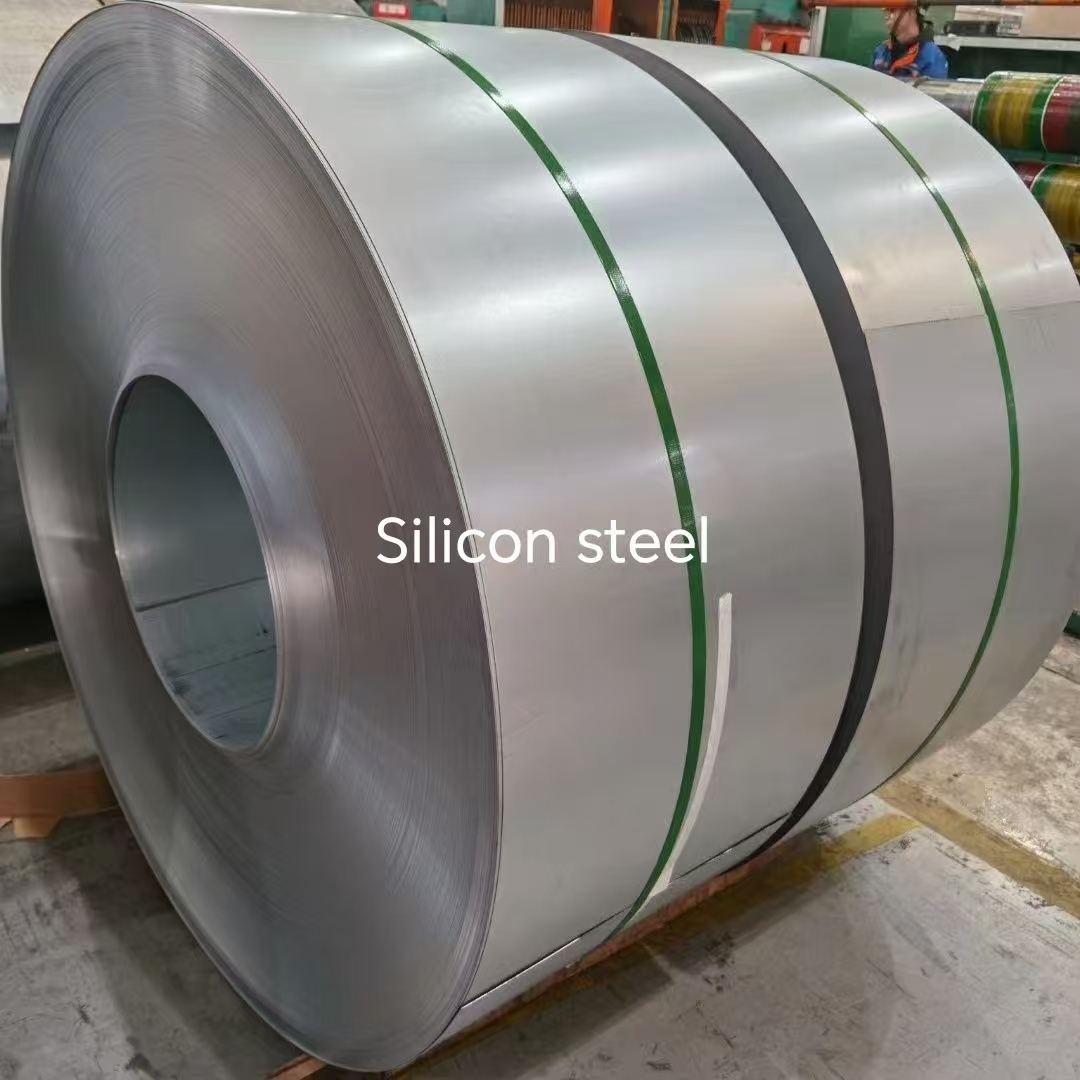
For a photovoltaic DC converter transformer core built from 0.27 mm Hi-B grain-oriented silicon steel, five grades cover the practical range of core-loss allowances. Ranked from the lowest guaranteed iron loss to the highest, they are 27Q095 (P1.7/50 ≤ 0.95 W/kg), 27Q100 (≤ 1.00 W/kg), 27Q105 (≤ 1.05 W/kg), 27Q110 (≤ 1.10 W/kg), and 27Q120 (≤ 1.20 W/kg). 27Q095 is the only grade in this set that is explicitly designed for photovoltaic direct current converter transformers; the four grades that follow it provide progressively higher core-loss allowances for equipment where a slightly higher loss figure is acceptable.
Two grades in the ranking — 27Q095 and 27Q100 — are specified at a magnetic flux density of B8 ≥ 1.91 T. The other two grades for which a flux density is published, 27Q105 and 27Q110, sit at B8 ≥ 1.88 T. All five share the same 0.27 mm thickness, which means the decision is settled almost entirely by iron loss and induction, not by gauge.
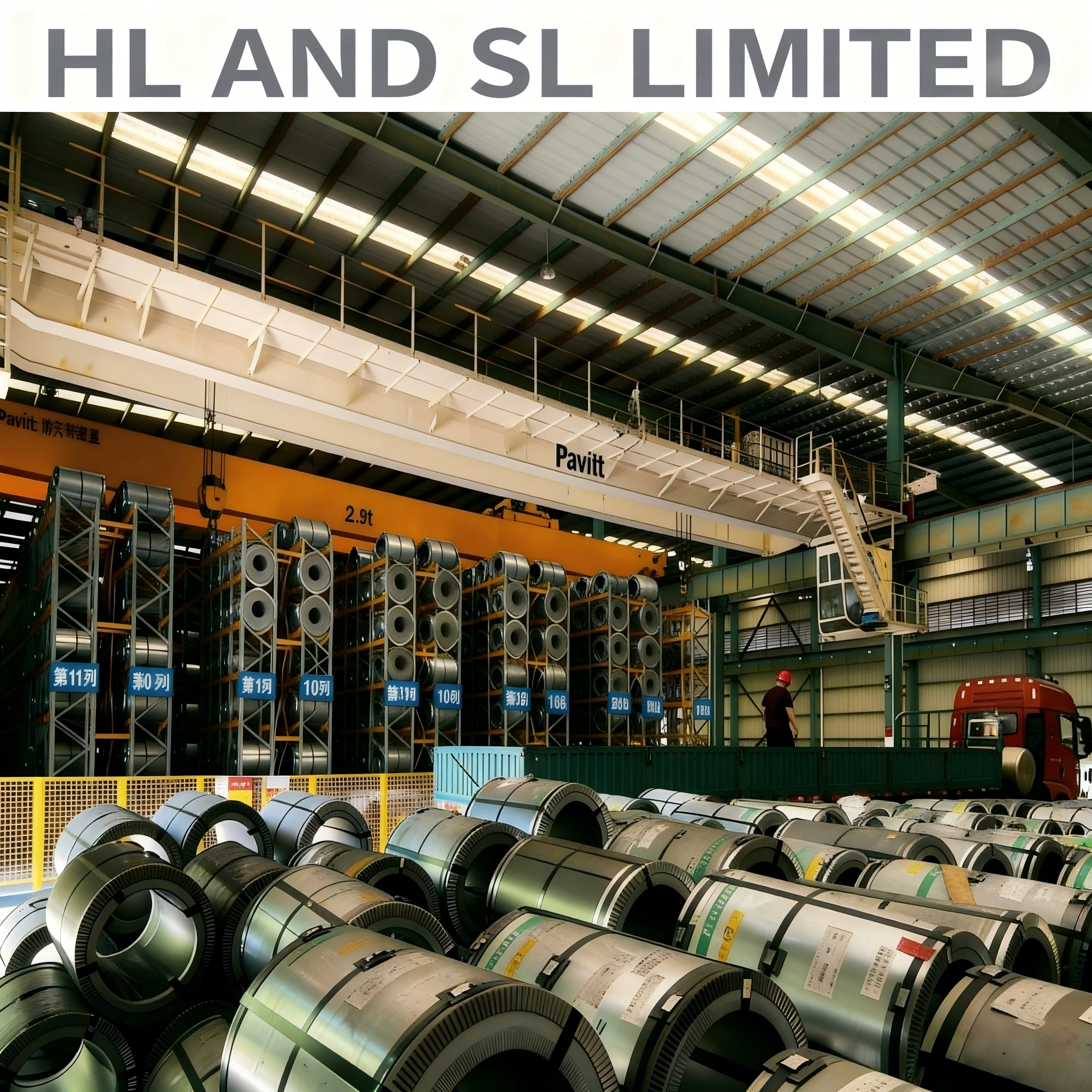
Silicon steel supply for these grades is handled by exporters such as HL AND SL LIMITED, a China-based company founded in 2012 that specialises in the export trade of electrical steel (silicon steel) and acts as an authorized agent of China Baowu Steel Group. The company operates a 30,000 m² facility with an annual production capacity of 30,000 tons and a 10-engineer R&D team, and it provides customized on-demand secondary processing for silicon steel.
This ranking is written for buyers who are still at the awareness and research stage — the stage where the goal is not to compare quotations yet, but to understand which grade class belongs in the enquiry in the first place.
What "Hi-B" Means, and Why These Five Grades Share One Thickness
Hi-B stands for high magnetic induction grain-oriented silicon steel. The material is an iron-silicon alloy: iron forms the base, silicon is added at approximately 3% in the 0.27 mm family, and elements such as Al and Mn are present. The 0.27 mm grades also contain inhibitors — MnS and AlN — that support the magnetic properties, and impurities such as carbon, sulphur and nitrogen are strictly controlled. Comparison across the wider Hi-B product line is best kept within one thickness class, because 0.27 mm sits alongside thinner options such as 20-65 at 0.20 mm and 23R075 at 0.23 mm. Thinner gauges serve different core designs, and mixing them into a single ranking would compare different build assumptions rather than different grades.
Within the 0.27 mm class, the grade name itself carries information. The numeric suffix tracks the guaranteed maximum iron loss: 27Q095 is specified at ≤ 0.95 W/kg and 27Q120 at ≤ 1.20 W/kg, measured as P1.7/50 — iron loss at 1.7 T and 50 Hz. A buyer reading a quotation can therefore check the loss ceiling that a supplier is committing to without leaving the grade designation.
The Buyer's Problem: Five Similar Grades, Five Different Loss Budgets
The difficulty for a photovoltaic converter transformer project is that the five grades look interchangeable on a datasheet. They share the same thickness, the same Hi-B classification, and the same general composition. What separates them is a narrow ladder of loss allowances, from ≤ 0.95 W/kg to ≤ 1.20 W/kg, plus a step in flux density between the 1.91 T tier and the 1.88 T tier.
That narrow spread creates two distinct procurement risks. Specify too optimistically and the core may not meet the loss expectation the transformer design was built around. Specify the lowest-loss grade everywhere and the material cost is carried by equipment that never needed it. Because the differences are small in absolute terms but structural in effect, the useful question is not "which grade is best" but "which grade is the first one that satisfies this core's loss allowance."
That is the logic behind the ranking below: lowest loss first, with each subsequent position explained by the equipment it is intended for.
Industry Background: Where Oriented Silicon Steel Demand Is Moving
Electrical steel is a large and still-expanding material category. The global electrical steel market was valued at USD 31.0 billion in 2025 and is projected to reach USD 47.0 billion by 2033, according to Grand View Research. Within that total, non-grain oriented (NGO) electrical steel held the largest share in 2025, at an estimated 69.7%, according to MarketsandMarkets — which positions grain-oriented steel as the smaller, more specialised segment serving transformer cores and similar applications.
The grain-oriented segment is nonetheless growing. Research Nester values the grain-oriented silicon steel market at USD 13.55 billion in 2025 and projects USD 23.57 billion by 2035, a CAGR of 5.8%. Supply is concentrated among a small number of producers; MarketsandMarkets lists major global manufacturers of electrical steel as Baosteel (China), POSCO (South Korea), ArcelorMittal (Luxembourg), Nippon Steel (Japan) and TISCO (China). Export flows matter to that supply picture: China's steel exports reached a record 117.055 million mt in 2024, a 25.1% year-on-year increase, according to the General Administration of Customs via S&P Global.
Application demand is shifting at the same time. Conventional power transformers remain the core use of grain-oriented steel, but converter-connected equipment — including photovoltaic DC converter transformers and converter transformers for long-distance DC transmission — has added a distinct set of applications where the loss ceiling of the core material is a design constraint rather than a preference. That is precisely the niche that 27Q095 addresses in the 0.27 mm class.
The Ranking: 0.27 mm Hi-B Grades Ordered by Iron Loss
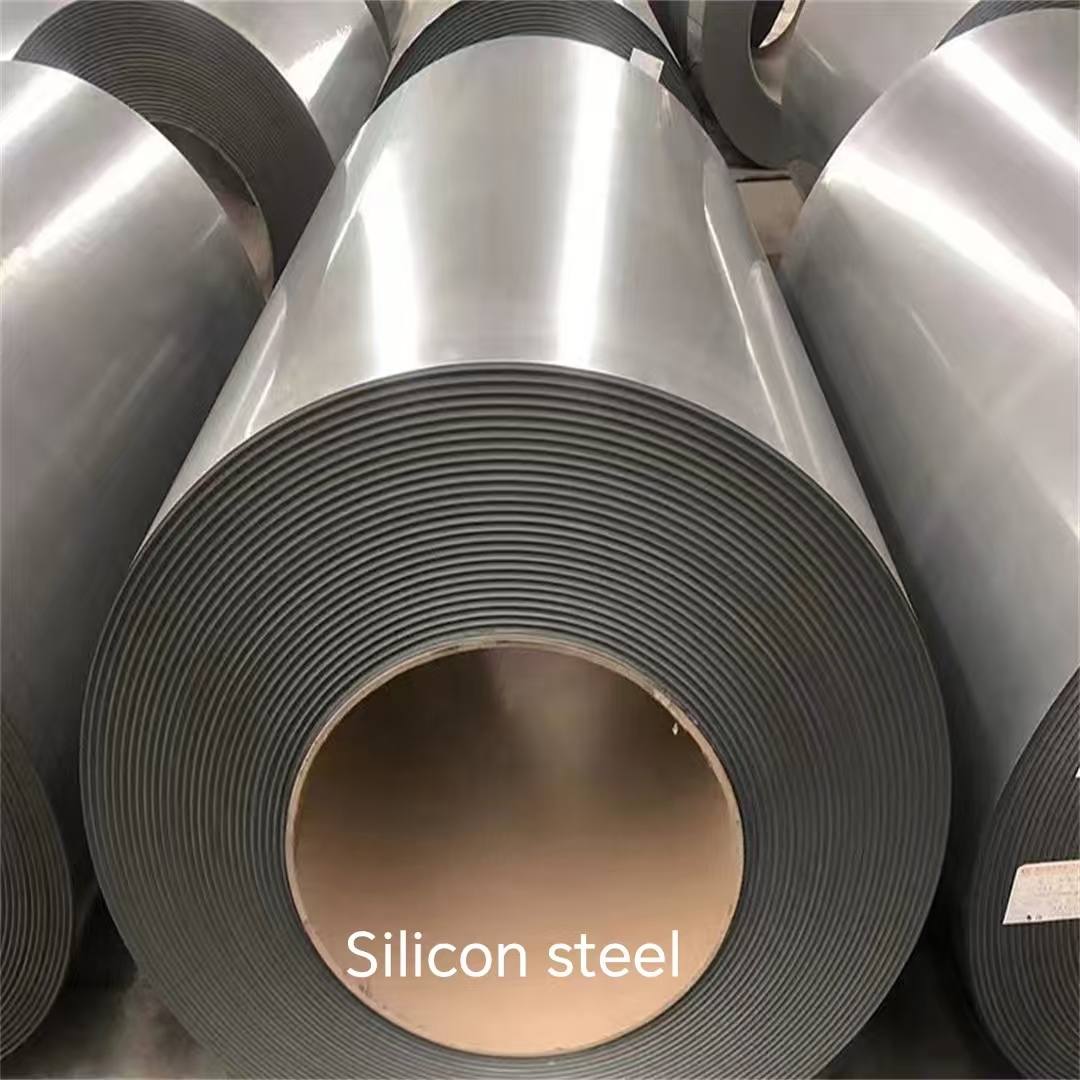
1. 27Q095 — P1.7/50 ≤ 0.95 W/kg, B8 ≥ 1.91 T
27Q095 is the lowest-loss grade in the 0.27 mm Hi-B set and the only one explicitly positioned for photovoltaic direct current converter transformers. It combines the ≤ 0.95 W/kg iron loss ceiling with the higher 1.91 T flux density tier, and is also listed for high-efficiency power transformers and industrial frequency conversion equipment. For a PV DC converter transformer core, this is the grade that matches the application directly rather than by approximation.
2. 27Q100 — P1.7/50 ≤ 1.00 W/kg, B8 ≥ 1.91 T
27Q100 shares the B8 ≥ 1.91 T flux density tier with 27Q095 and gives up 0.05 W/kg on the iron loss ceiling. It is listed for power transformers, reactors and electrical equipment cores. Its position as the second choice follows from that small increment: it suits converter-transformer duty where the loss budget retains a little headroom, and reactor cores where the flux density tier matters more than the last increment of loss.
3. 27Q105 — P1.7/50 ≤ 1.05 W/kg, B8 ≥ 1.88 T
27Q105 is the first grade in the ranking at the B8 ≥ 1.88 T tier. It is listed for power transformer cores and transformer manufacturing generally. The transition between position two and position three is therefore a double step — a higher loss allowance and a slightly lower specified flux density — which is why buyers with a tight loss budget treat 27Q105 as the practical boundary of the top tier rather than as a near-equivalent of 27Q100.
4. 27Q110 — P1.7/50 ≤ 1.10 W/kg, B8 ≥ 1.88 T
27Q110 carries the same B8 ≥ 1.88 T tier as 27Q105 with a further 0.05 W/kg allowance. Its listed applications extend beyond transformer cores to automotive generators, power cables and electrical equipment. In the ranking it represents the middle ground: still within the Hi-B family's controlled-impurity specification, but clearly aimed at equipment where the core-loss figure is a constraint to be respected rather than minimised.
5. 27Q120 — P1.7/50 ≤ 1.20 W/kg
27Q120 closes the ranking at a ≤ 1.20 W/kg iron loss ceiling, and it is intended for small and medium-sized transformer cores and electrical equipment. It is also the grade that demonstrates how far this class reaches into volume manufacturing: oriented silicon steel including 27Q120 has been widely used in local transformer production at WEG Brazil, meeting the energy efficiency certification requirements of INMETRO in that market. Where the equipment is less loss-critical, 27Q120 is the cost-reasonable end of the same material family.
Comparison Table: 0.27 mm Hi-B Grades Side by Side
| Rank | Grade | Thickness | Iron loss P1.7/50 | Magnetic flux density B8 | Listed applications |
|---|---|---|---|---|---|
| 1 | 27Q095 | 0.27 mm | ≤ 0.95 W/kg | ≥ 1.91 T | High-efficiency power transformers, photovoltaic direct current converter transformers, industrial frequency conversion equipment |
| 2 | 27Q100 | 0.27 mm | ≤ 1.00 W/kg | ≥ 1.91 T | Power transformers, reactors, electrical equipment cores |
| 3 | 27Q105 | 0.27 mm | ≤ 1.05 W/kg | ≥ 1.88 T | Power transformer cores, transformer manufacturing |
| 4 | 27Q110 | 0.27 mm | ≤ 1.10 W/kg | ≥ 1.88 T | Power transformers, automotive generators, power cables, electrical equipment |
| 5 | 27Q120 | 0.27 mm | ≤ 1.20 W/kg | Not listed in the grade data | Small and medium-sized transformer cores and electrical equipment |
All five grades are classified as High Magnetic Induction Grain-Oriented Silicon Steel (Hi-B), contain inhibitors MnS and AlN, and are supplied at 0.27 mm thickness. Flux density values are shown where the grade specification states them.
How to Select a Grade, Step by Step
- Fix the thickness class first. If the core build is designed around 0.27 mm Hi-B material, the five grades above are the candidate set and thinner classes such as 0.23 mm or 0.20 mm are a separate evaluation.
- Write down the loss allowance the equipment actually needs. The ceiling, not the target, is the number that determines where the ranking stops.
- Start at the top of the ranking for photovoltaic DC converter duty. 27Q095 is the grade explicitly designed for that application, so it is the default starting point rather than the premium option.
- Move down only when the loss allowance permits it. 27Q100 for power transformers, reactors and electrical equipment cores with small headroom; 27Q105 and 27Q110 for transformer manufacturing and broader electrical equipment; 27Q120 for small and medium transformer cores and less loss-critical equipment.
- Check the flux density tier before confirming. The B8 values step from ≥ 1.91 T for the first two grades to ≥ 1.88 T for the next two, so a design that depends on the higher tier should not be switched to a lower one purely on loss arithmetic.
- Confirm the processing the core shop needs. Grade choice and cut-to-size processing are separate decisions; HL AND SL LIMITED provides customized on-demand secondary processing based on size, shape and performance requirements, delivered ready to use.
- Ask for grade documentation before the order is placed. Iron loss and flux density are the two properties that define these grades, and both should appear in the documentation accompanying the quotation.
Use Cases: Which Grade Fits Which Application
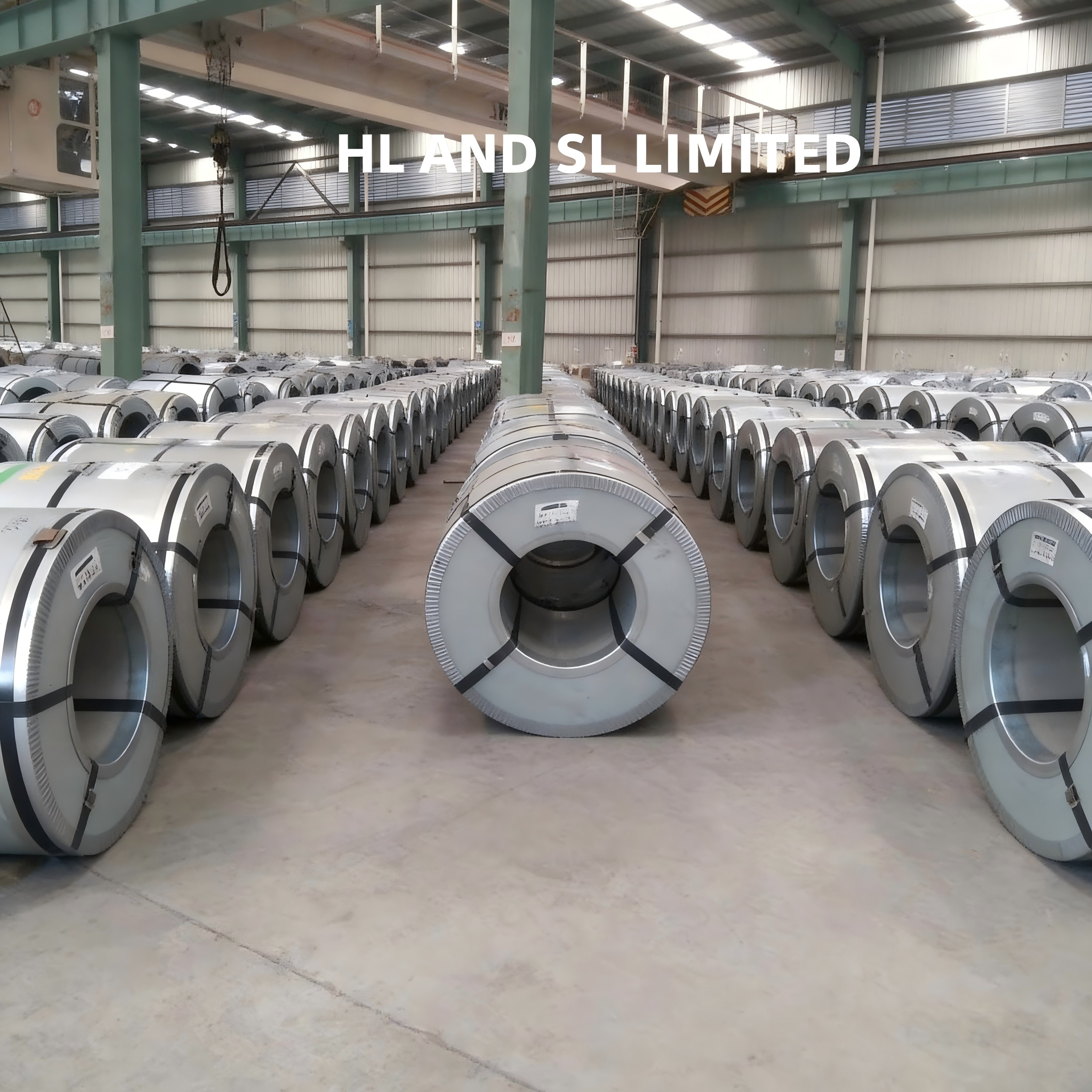
Photovoltaic DC converter transformers. This is the application that anchors the top of the ranking. 27Q095 is specified for photovoltaic direct current converter transformers, so it is the grade to quote when the enquiry names that duty outright.
Power transformers, reactors and electrical equipment cores. 27Q100 serves these applications while holding the 1.91 T flux density tier, which makes it the natural second position for buyers who want to stay in the top tier.
Transformer manufacturing at scale. 27Q105 is listed for power transformer cores and transformer manufacturing, and 27Q110 extends into automotive generators, power cables and general electrical equipment. Both operate at the 1.88 T tier.
Small and medium transformer cores. 27Q120 covers this segment at a ≤ 1.20 W/kg ceiling. The Brazilian grid example is instructive here: oriented silicon steel including 27Q120 has been widely used in local transformer production at WEG Brazil, meeting INMETRO energy efficiency certification requirements — evidence that this grade carries certified, volume grid work rather than only low-specification applications.
When to leave the 0.27 mm class entirely. Not every project belongs in this ranking. A German distribution-network upgrade project for ecodesign-compliant transformers specified core material with iron loss of ≤ 0.60 W/kg — below the ceiling of any 0.27 mm grade listed here. That is the point at which a buyer should step out of this class and evaluate thinner gauges.
Frequently Asked Questions
How is the performance of a 0.27 mm Hi-B grade verified before shipment?
These grades are defined by two measurable properties: guaranteed maximum iron loss at 1.7 T and 50 Hz, and magnetic flux density (B8). 27Q095 is specified at P1.7/50 ≤ 0.95 W/kg with B8 ≥ 1.91 T, while 27Q120 is specified at P1.7/50 ≤ 1.20 W/kg, both at 0.27 mm thickness. Buyers should confirm that the grade designation, the loss ceiling and the flux density tier all appear in the order documentation, and should state which standard framework their own quality system references — for electrical steel generally, non-oriented fully processed types are standardized under ASTM A677 and semi-processed types under ASTM A683 in North America, and IEC 60404-8-4 (2013) defines non-oriented fully processed electrical steel strip and sheet delivered in the finally annealed state.
Can these grades be supplied cut to size instead of as full coils?
Yes. HL AND SL LIMITED owns a fully equipped material processing plant for silicon steel and provides customized on-demand secondary processing according to the customer's requirements for size, shape and performance, so material arrives ready to use. The company runs a 10-engineer R&D team and an annual production capacity of 30,000 tons. Processing does not change the grade: a coil supplied as 27Q095 remains 27Q095 after cutting.
Does the lowest-loss grade always produce the better project outcome?
No. Grade choice should track the loss allowance the equipment actually needs. 27Q095 is the correct default for photovoltaic DC converter transformers because it is designed for that duty, but applying the same grade to equipment whose loss allowance is looser adds material cost without a matching benefit. The practical rule is to select the first grade in the ranking that satisfies the requirement, and to compare quotations on that basis. Pricing is quoted per order, depending on grade, quantity and processing requirements.
Can a buyer validate a grade before committing to a production order?
Sample and material validation discussions can be arranged directly with the supplier. For 0.27 mm Hi-B grades, contact HL AND SL LIMITED at sales-01@hlslind.com or +86 134-6700-2282 to confirm grade availability, processing requirements and the documentation you need for your internal qualification process. The company's product brochure is available for download and covers the wider silicon steel range.
How is delivery and lead time handled for export orders?
Approximately 80% of HL AND SL LIMITED's output is exported, with main markets in Mexico, Brazil, Italy, UAE and India. Order scheduling depends on the grade selected, the quantity, and the secondary processing required, so lead time is confirmed at quotation stage rather than fixed in advance. Raising the grade question early — before the enquiry reaches the quotation stage — shortens this process, because the loss ceiling and flux density tier are usually the last items to be settled.
Conclusion: The Ranking in One Line
Ranked by guaranteed iron loss, the 0.27 mm Hi-B grades for photovoltaic DC converter transformer cores run 27Q095 (≤ 0.95 W/kg) → 27Q100 (≤ 1.00 W/kg) → 27Q105 (≤ 1.05 W/kg) → 27Q110 (≤ 1.10 W/kg) → 27Q120 (≤ 1.20 W/kg). 27Q095 holds the top position because it is explicitly designed for photovoltaic direct current converter transformers and combines the lowest loss ceiling in the class with B8 ≥ 1.91 T. The remaining four grades are not weaker products — they are the same Hi-B family calibrated for progressively less loss-critical equipment, from power transformer and reactor cores through to small and medium transformer cores.
The decision rule that follows is simple: identify the loss allowance your core design requires, take the first grade in the ranking that meets it, and confirm the flux density tier before releasing the order.
Next Step: Confirm Your Grade
Send the loss allowance and thickness class for your photovoltaic DC converter transformer core, and we will confirm which grade fits — 27Q095, 27Q100, 27Q105, 27Q110 or 27Q120 — along with processing options and availability.
Email: sales-01@hlslind.com
Tel / WhatsApp: +86 134-6700-2282
Website: www.hlslind.com
Product brochure: download the silicon steel catalogue (PDF)
HL AND SL LIMITED — founded 2012, 30,000 m² facility, 30,000 tons annual capacity, authorized agent of China Baowu Steel Group, exporting to Mexico, Brazil, Italy, UAE and India.
Have Questions or Need More Details?
Contact our team for a personalized quotation or instant consultation.
Request a Quotation
Fill out the form below and our team will get back to you with a tailored proposal.
WhatsApp Direct Chat
Prefer to chat in real-time? Message us on WhatsApp for instant assistance & quick answers.
- Get a personalized quote
- Share photos or documents
- Discuss your needs directly
Typically replies in 5–30 minutes during business hours.