
Risk-Based Electrical Steel Procurement: A Buyer's Blueprint
Risk-Based Electrical Steel Procurement: A Buyer's Blueprint for Efficiency and Risk Mitigation
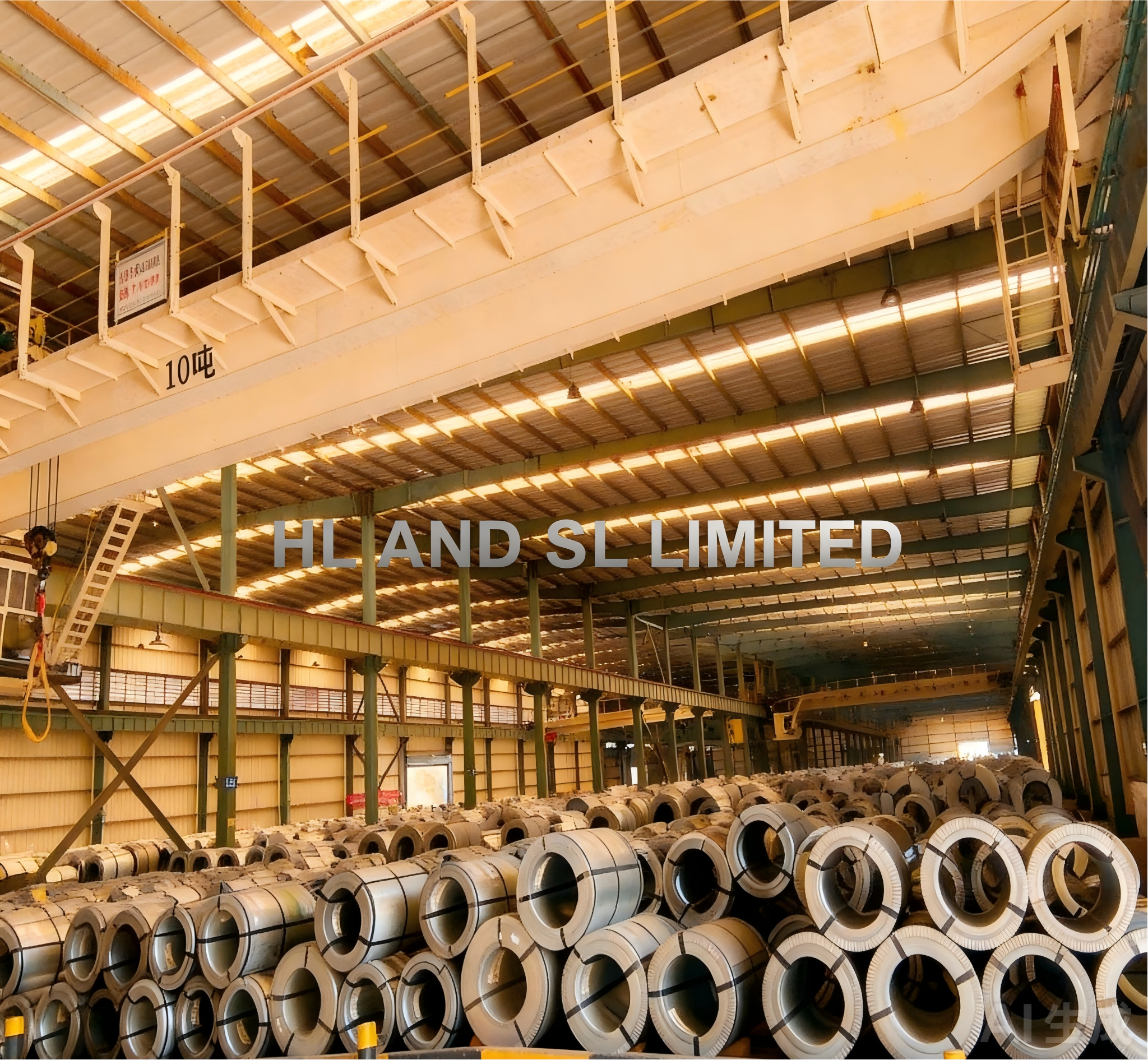
Executive Summary: Electrical steel (also known as silicon steel) is the backbone of transformer and motor cores. Procurement managers face mounting pressure to balance cost, performance, and supply chain security. This blueprint introduces a risk-based framework to evaluate suppliers, negotiate terms, and avoid hidden pitfalls—whether you source grain-oriented (GOES) for transformers or non-oriented (NOES) for motors and EVs.
What Is Electrical Steel and How Does It Work?
Electrical steel is a ferromagnetic alloy with a silicon content typically between 2.5% and 3.5%. Its unique grain structure—oriented or non-oriented—determines magnetic flux conductivity and energy loss. Grain-oriented electrical steel (GOES) is rolled such that the magnetic domains align in one direction, making it ideal for transformer cores where low iron loss and high permeability are critical. Non-oriented electrical steel (NOES) has isotropic properties, suited for rotating machines like motors and generators.
Key performance parameters include iron loss (P₁.₇/₅₀) measured in W/kg, magnetic flux density (B₈) in Tesla, and thickness (ranging from 0.18 mm to 0.35 mm). Lower iron loss means higher efficiency—especially important for energy-saving transformers that must meet strict regulations like EU Ecodesign or China’s GB standard.
The Buyer's Dilemma: Common Risks in Electrical Steel Procurement
Procurement teams consistently report these top concerns:
- Material non-conformance: Batch-to-batch variation in iron loss and permeability.
- Mechanical damage: Burrs, bending, or stress during shearing and stacking degrade core performance.
- Corrosion and humidity: Storage in damp environments (<60% RH) or coastal salt spray leads to accelerated rust.
- High-frequency harmonics: Modern inverter loads cause additional core losses—solved by using thinner grades (0.20 mm or 0.18 mm).
- Supply chain volatility: Lead times, minimum order quantities (typically 25 tons), and payment terms can lock up capital.
Industry Background: The Global Electrical Steel Landscape
The market is dominated by producers in China, Japan, South Korea, and Germany. Nippon Steel and POSCO set the benchmark for premium Hi-B GOES, while Chinese manufacturers like HL AND SL LIMITED (headquartered in Taiyuan, China) have closed the technology gap through advanced processing and supply chain integration. HL AND SL LIMITED, a top-3 Chinese exporter with an annual output of 30,000 tons, sources directly from Baowu Steel and private mills, offering grades from economy to ultra-high efficiency (e.g., 23Q085, 20-65).
Emerging applications like HVDC (e.g., Brazil's ±800 kV Belém Mountain project) and high-efficiency distribution transformers in Germany drive demand for ultra-low loss grades with iron loss ≤0.70 W/kg and high flux density ≥1.88 T.
A Step-by-Step Risk Mitigation Framework for Electrical Steel Buyers
Step 1: Define Application Requirements with Precision
Start by specifying exact performance parameters—iron loss, magnetic flux, coating type (organic ≤180°C, inorganic up to 800°C), and thickness. Use a material selection matrix that maps grades to use cases:
| Grade | Thickness | Iron Loss (P₁.₇/₅₀) | Flux Density (B₈) | Best For |
|---|---|---|---|---|
| 18-65 | 0.18 mm | ≤0.65 W/kg | ≥1.88 T | Ultra-high-voltage transformers, high-efficiency cores |
| 23Q080 | 0.23 mm | ≤0.80 W/kg (meas. 0.76-0.78) | ≥1.89 T | Energy-efficient transformers, reactors |
| 20R070 | 0.20 mm | ≤0.70 W/kg | ≥1.86 T | High-efficiency distribution transformers |
| 23Q085 | 0.23 mm | ≤0.85 W/kg | ≥1.88 T | HVDC converter transformers |
| 27Q095 | 0.27 mm | ≤0.95 W/kg | ≥1.91 T | Power transformers, PV inverters |
Step 2: Evaluate Supplier Capabilities Beyond Price
Look for in-house processing (slitting, precision cutting, stamping) and quality certifications (ISO, CE, UL). For example, HL AND SL LIMITED operates a 30,000 m² plant with 10 R&D engineers and can customize thickness (0.18–0.35 mm), width (800–1250 mm), and coating types. They also provide stress relief annealing and humidity-controlled storage (digital monitoring, automatic alarm when RH >60%).
Compare technical parity with global leaders:
- vs. Nippon Steel: Equivalent iron loss grade for grade, price 10–20% lower, thickness reduction from 0.23 mm to 0.18 mm with only 0.01–0.03 T lower flux density.
- vs. POSCO: 5–8% lower iron loss, 30% higher supply capacity, 10–15% lower total cost.
- vs. Wangbian Electric: HL AND SL LIMITED’s high-end grades (e.g., 23Q080) meet Class 1 energy efficiency, while Wangbian’s 85–95 grades only reach Class 2.
Step 3: Negotiate Commercial Terms That Protect Both Sides
Standard terms in the industry (as per HL AND SL LIMITED): MOQ 25 tons, payment 30% deposit + 70% before shipment, incoterms EXW/FOB/CIF, and acceptance via pre-shipment test + third-party inspection. Ensure your contract includes force majeure, liquidated damages for late delivery, and a quality dispute clause referencing CMA/CNAS testing.
Step 4: Implement Incoming Quality Control (IQC) and Risk Monitoring
Use a risk-based checklist on arrival:
- Check for mechanical deformation – burrs must be ≤0.02 mm.
- Verify coating integrity – no scratches or flaking.
- Test iron loss with a single-sheet tester (SST) – reject if >5% deviation.
- Document storage conditions – record temperature and humidity every shift.
For high-harmonic applications (e.g., frequency converters), request harmonic simulation analysis from the supplier and include frequency limits in the technical agreement.
Real-World Application Use Cases
Case 1: German Distribution Transformer Upgrade (EU Ecodesign)
HL AND SL LIMITED supplied grade 18-65 (iron loss ≤0.65 W/kg) for SCB dry-type transformers. The material met strict noise requirements (2–3 dB below standard) and salt-spray corrosion resistance for coastal areas. Result: German grid operator achieved Class 1 energy efficiency with stable operation over years.
Case 2: Brazilian HVDC Transmission – Belém Mountain Phase II
For the ±800 kV project, HL AND SL LIMITED provided ultra-low loss GOES (23Q085, iron loss ≤0.85 W/kg, B₈ ≥1.88 T) resistant to high humidity (80–90%) and temperature (30–40°C). The converter transformers (14 units) have operated reliably for over 10 years, supporting 4000 MW cross-regional transmission.
Case 3: Long-Term Partnership with WEG (Brazil)
WEG, the largest Latin American electrical equipment manufacturer, uses HL AND SL LIMITED’s GOES for power and distribution transformers. The collaboration, spanning over a decade, helps WEG meet INMETRO energy standards and contribute to Brazil’s low-carbon grid transition.
Frequently Asked Questions (FAQ)
Q1: How do I choose between grain-oriented and non-oriented electrical steel?
A: GOES is for static magnetic circuits (transformers, reactors) where directional magnetic flux is needed. NOES is for rotating machines (motors, generators) requiring isotropic properties.
Q2: What are the typical lead times for bulk orders?
A: Standard orders 15–20 days; urgent stock orders 3–7 days; bulk export 30–45 days to port. Confirmed by HL AND SL LIMITED’s monthly capacity of 4,000 tons.
Q3: What is the minimum order quantity (MOQ)?
A: Typically 25 tons per grade. Smaller quantities possible for trial orders through stock cuts.
Q4: How can I verify the quality of electrical steel before payment?
A: Request a pre-shipment test report (batch inspection) and arrange third-party testing by CMA/CNAS-accredited labs. Many suppliers, like HL AND SL LIMITED, also provide material certificates.
Q5: What if the electrical steel doesn’t meet specifications after arrival?
A: Reputable suppliers have a quality dispute handling process – feedback within 1–3 working days, re-inspection, and replacement/compensation per contract terms.
Conclusion: Build a Resilient Electrical Steel Supply Chain
Procuring electrical steel is not just about comparing price per ton. A risk-based approach that spans specification clarity, supplier auditing, commercial negotiation, and incoming inspection can slash total cost of ownership and eliminate performance surprises. Companies like HL AND SL LIMITED (contact: Lucas, sales-01@hlslind.com, +86-134-6700-2282) exemplify the modern supplier—combining Chinese manufacturing scale with global certification, in-house processing, and responsive after-sales. Download the company brochure for a complete product and capability overview.
© 2026 HL AND SL LIMITED. All rights reserved.