
Silicon Steel for Transformers, Generators, and More: How to Match Grades with Real-World Electrical Applications
Silicon Steel for Transformers, Generators, and More: How to Match Grades with Real-World Electrical Applications
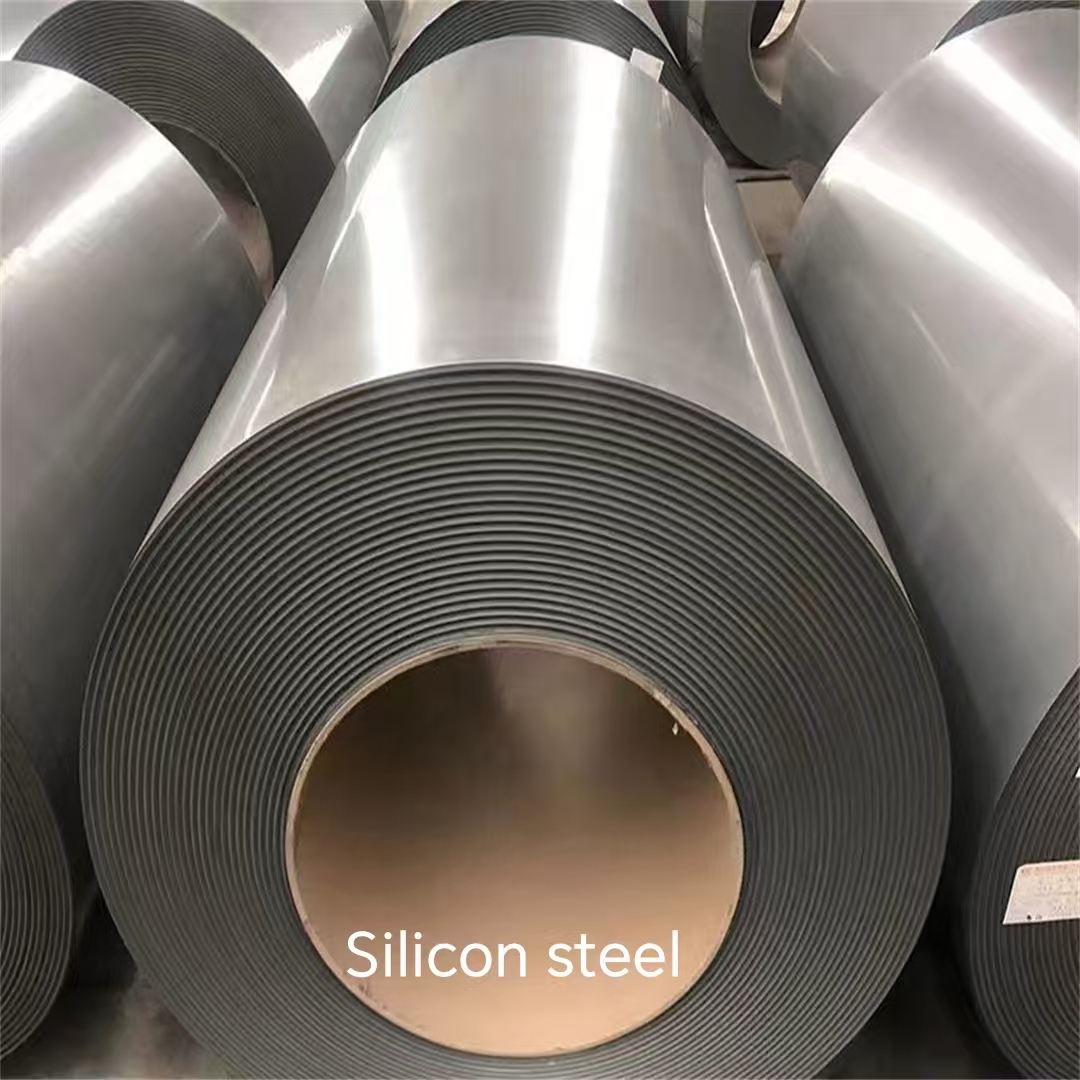
Silicon steel (electrical steel) is a ferromagnetic iron-silicon alloy designed to carry magnetic flux more efficiently than plain steel. It is the core material in transformers, generators, reactors, motors, and EV charging infrastructure. The right grade depends on the application's frequency, loss target, induction level, and environmental standards.
This guide explains how silicon steel is classified, which parameters matter for procurement, and how to match grain-oriented and non-oriented grades to real-world projects. It also shows how HL AND SL LIMITED, an electrical steel export specialist based in China, applies these criteria in practice.
What Problem Does Silicon Steel Solve in Electrical Equipment?
Transformers, generators, reactors, and motors all rely on magnetic circuits to convert electrical energy into mechanical energy or to change voltage levels. If the magnetic core is made of ordinary steel, it wastes energy as heat and produces excessive noise.
Silicon steel solves this problem by adding silicon (about 1% to 3.5%) to iron, which increases electrical resistivity, reduces eddy current losses, and improves magnetic permeability. The result is a core material that supports higher magnetic flux density while reducing wasted energy.
In a generator, silicon steel controls the efficiency with which mechanical rotation becomes electrical power. In a power grid transformer, it determines how much energy is lost as heat during voltage conversion. In a reactor, it affects how well the device can stabilize current and filter harmonics. In charging piles, it helps manage the magnetic components that convert grid power into DC power for EV batteries. Each application has different loss requirements, so one silicon steel grade cannot serve every project.
Types of Silicon Steel: Non-Oriented vs. Grain-Oriented
Non-Oriented Silicon Steel
Non-oriented silicon steel has a uniform magnetic grain structure in all directions. It is used where magnetic flux changes direction, such as in rotating machinery.
Common applications include motors, generators, small transformers, reactors, and EV charging equipment. Non-oriented grades are standardized under ASTM A677 for fully processed types and ASTM A683 for semi-processed types in the North American market. Globally, IEC 60404-8-4 defines specifications for non-oriented fully processed electrical steel strips delivered in the finally annealed state.
Grain-Oriented Silicon Steel
Grain-oriented silicon steel is processed so that the magnetic domains align in one rolling direction. This gives it exceptional permeability and very low iron loss when flux flows along the rolling direction.
Grain-oriented silicon steel is the preferred choice for transformer cores, high-efficiency distribution transformers, power transformers, reactor cores, and HVDC converter transformers, where magnetic flux follows a controlled path.
Global demand for grain-oriented silicon steel reflects this specialized role. The grain-oriented silicon steel market was valued at USD 13.55 billion in 2025 and is projected to reach USD 23.57 billion by 2035, at a CAGR of 5.8%.
What About Semi-Processed Silicon Steel?
Semi-processed silicon steel is supplied in a condition that requires the equipment manufacturer to perform a final annealing treatment after stamping or shearing. This approach allows the core manufacturer to optimize magnetic properties through their own heat-treatment line.
It is used in applications where in-house annealing is available and where the manufacturer wants tighter control over final performance. Fully processed material, by contrast, is ready to stamp, stack, and assemble without additional annealing.
Key Specifications for Evaluating Silicon Steel
When comparing silicon steel suppliers, the most important parameters are iron loss, magnetic flux density, thickness, coating, and compliance with environmental or industry standards. Understanding these terms before requesting a quote prevents mismatched orders.
Iron Loss (Core Loss)
Iron loss is the energy lost as heat when the core is magnetized. It is measured in watts per kilogram at a specific induction and frequency. The common test point for grain-oriented grades is P1.7/50, meaning an induction of 1.7 Tesla at 50 Hz. Lower numbers mean better energy efficiency.
For example, HL AND SL LIMITED supplies grain-oriented grades with iron loss values such as:
- 18-65: 0.18 mm thickness, P1.7/50 ≤ 0.65 W/kg
- 20-65: 0.20 mm thickness, P1.7/50 ≤ 0.65 W/kg
- 23R075: 0.23 mm thickness, P1.7/50 ≤ 0.75 W/kg
- 23Q080: 0.23 mm thickness, P1.7/50 ≤ 0.80 W/kg
- 27Q095: 0.27 mm thickness, P1.7/50 ≤ 0.95 W/kg
- 27Q100: 0.27 mm thickness, P1.7/50 ≤ 1.00 W/kg
- 27Q110: 0.27 mm thickness, P1.7/50 ≤ 1.10 W/kg
- 27Q120: 0.27 mm thickness, P1.7/50 ≤ 1.20 W/kg
Magnetic Flux Density (B8 or B800)
Magnetic flux density indicates how much magnetic induction the material can support before saturation. Higher flux density means a smaller core can carry the same magnetic flux, reducing size and cost.
For high magnetic induction grain-oriented silicon steel (Hi-B), HL AND SL LIMITED provides grades such as 27Q095 with B8 ≥ 1.91 T, and 27Q100 with B8 ≥ 1.91 T. Lower-loss 0.23 mm and 0.20 mm grades maintain B8 ≥ 1.88 T to 1.89 T, balancing performance with manufacturability.
Thickness and Frequency
Thickness directly affects eddy current losses. Thinner material reduces eddy current losses, especially at higher frequencies, but increases manufacturing complexity and cost.
Ultra-thin gauge silicon steel (under 0.25 mm) is preferred for high-frequency motors in new energy vehicles to maximize power density. For 50 Hz power transformer applications, 0.27 mm to 0.23 mm grades are common. For ultra-high efficiency and HVDC converter transformers, 0.20 mm and 0.18 mm grades can be justified by reduced energy losses.
Coating and Insulation
The surface coating on silicon steel electrically isolates individual laminations. This reduces eddy current losses between layers and protects the steel from oxidation and corrosion.
Different coating types are available:
- Uncoated silicon steel: used in applications where additional insulation is applied later or where natural oxide provides sufficient resistance.
- Organic coated silicon steel: a thin insulating layer, typically temperature resistance up to 180°C, suitable for most transformer cores.
- Inorganic coated silicon steel: a higher-temperature coating, resistant up to 800°C, used in applications requiring stress-relief annealing.
- Semi-organic coating: combines organic and inorganic properties for stamping performance and heat resistance.
- Nano coating: an advanced ultra-thin insulation designed for high-frequency operations, such as EV traction motors.
Compliance: ASTM, VDA, RoHS, and EU Environmental Standards
Buyers increasingly require silicon steel to meet recognized material and environmental standards.
- ASTM standard silicon steel: refers to material produced to test methods and specifications such as ASTM A677 or A683.
- VDA standard silicon steel: refers to the German automotive industry's quality and testing requirements, relevant when material enters automotive or EV supply chains.
- RoHS compliant silicon steel: means the material does not contain restricted hazardous substances above allowed thresholds.
- EU environmental silicon steel: aligns with EU regulations on energy efficiency, ecodesign, and restricted substances, including transformer efficiency directives.
Buyers should request material certificates, batch inspection reports, and third-party test reports rather than relying solely on supplier brochures.
Application-by-Application Grade Selection
Silicon Steel for Generators
Generators require core materials that perform well under rotating magnetic fields. Non-oriented silicon steel is the standard choice for generator cores because the rolling direction changes as the rotor rotates. For high-frequency or high-speed generators, ultra-thin non-oriented grades reduce eddy current losses and improve efficiency.
In automotive and industrial generators, grade selection depends on operating speed, frequency, and efficiency targets. HL AND SL LIMITED supplies non-oriented and grain-oriented materials across performance bands, including grades suitable for generator and motor cores.
Silicon Steel for Power Grids
Power grid applications are dominated by grain-oriented silicon steel because the flux in transformer cores follows a designed path. High-efficiency distribution transformers, power transformers, and converter transformers all benefit from Hi-B grades with low iron loss and high permeability.
For a German distribution network upgrade project, for example, the special requirement was iron loss ≤ 0.60 W/kg, noise levels 2–3 decibels below standard requirements, and coating weather resistance suitable for salt-spray conditions. Grades such as 23Q080, 23R075, and 20R070 support this performance envelope.
Silicon Steel for Reactors
Reactors control current, filter harmonics, and protect equipment from surges. Their cores must maintain stable inductance under varying load conditions, with low core loss to avoid overheating.
Grain-oriented silicon steel with consistently low iron loss, such as 23Q080 or 27Q100, is appropriate for reactor cores. The choice depends on whether the reactor operates at 50 Hz, higher harmonics, or DC-biased conditions.
Silicon Steel for Charging Piles
EV charging piles require magnetic components that handle high-frequency conversion efficiently. As the global EV charging station and pile market continues to grow, demand is increasing for magnetic materials that support high switching frequencies without excessive loss.
Ultra-thin non-oriented silicon steel and nano-coated materials are preferred where space and power density are critical. For larger charging infrastructure transformers, grain-oriented silicon steel is still needed for grid-side voltage conversion.
Variable Frequency and Custom Processing
Variable frequency adapted silicon steel is used in applications such as industrial frequency converters, VFD-driven motors, and renewable energy inverters. These applications operate at frequencies above 50 Hz, so thin gauge material and high-resistivity coatings help reduce eddy current loss.
Many projects also require custom processing. HL AND SL LIMITED provides specification customization in thickness from 0.18 mm to 0.35 mm, typical widths of 800 mm to 1250 mm, with customization to ultra-wide 1250 mm available. Processing services include strip cutting, fixed-length flat cutting, longitudinal cutting, and packaging customization.
Step-by-Step: How to Procure Silicon Steel for a Specific Project
Step 1: Define the Application and Operating Conditions
Start with the equipment type: transformer, generator, reactor, motor, or charging infrastructure. Define frequency (50 Hz, 60 Hz, or variable), duty cycle, ambient temperature, and any geographic or climatic requirements.
Step 2: Set Iron Loss and Induction Targets
Translate energy efficiency regulations and customer specifications into iron loss and induction targets. Use the P1.7/50 test point for grain-oriented material, and be aware of whether the project requires 0.95 W/kg, 0.80 W/kg, or 0.65 W/kg performance.
Step 3: Select Thickness and Coating
Match thickness to frequency and core design. Use 0.27 mm for standard distribution transformers, 0.23 mm for higher efficiency requirements, and 0.20 mm or 0.18 mm for ultra-high efficiency and HVDC applications. Select coating based on annealing needs, temperature exposure, and corrosion resistance.
Step 4: Define Compliance Requirements
Confirm whether the customer requires ASTM, IEC, VDA, RoHS, or EU ecodesign compliance. Request the relevant material certificates and test reports from the supplier.
Step 5: Check Processing and Customization Needs
Determine whether the material will be supplied as full coil, slit strip, cut-to-length, or customized blank. Confirm whether the supplier can perform in-house precision processing to reduce downstream waste and lead time.
Step 6: Review Lead Time, MOQ, and Logistics
For regular orders, HL AND SL LIMITED typically delivers in 15 to 20 days. Urgent or stock orders can ship in 3 to 7 days. Bulk export orders take 30 to 45 days to reach the destination port, with the minimum order quantity set at 25 tonnes.
Step 7: Inspect and Verify Quality
Quality control should include origin inspection, batch inspection reports, material certificates, and optional third-party testing through CMA/CNAS-accredited laboratories. This provides independent verification before the material enters your production line.
Real-World Application Context: From Germany to Brazil
High-Efficiency Distribution Transformers in Germany
In Germany, distribution transformer upgrades are driven by EU ecological design regulations. The operating environment is mild, with temperatures usually between 0°C and 30°C, and the grid runs at 50 Hz with continuous load. The key requirements are low no-load loss, reduced noise, and coating durability in coastal conditions. Matching grades such as 23Q080 and 23R075 support these targets.
Low-Temperature Grid Upgrade in Canada
In Canada, extremely cold winters require magnetic materials to maintain stable excitation characteristics at low temperatures. One project requirement was an iron loss of ≤ 0.60 W/kg and magnetic permeability retention of at least 95% at -40°C. This favors high-permeability grain-oriented grades with stable low-temperature performance.
HVDC Converter Transformers in Brazil
For the Belém Mountain ±800 kV ultra-high-voltage direct current project in Brazil, converter transformers operate under high temperature, high humidity, and continuous bipolar operation at ±800 kV / 4000 MW. The material requirement is ultra-low-loss grain-oriented silicon steel with high magnetic flux density, again highlighting the need for top-tier Hi-B grades.
Comparison: Representative Grain-Oriented Silicon Steel Grades
| Model | Thickness (mm) | Iron Loss P1.7/50 (W/kg) | Magnetic Flux Density B8 (T) | Typical Application |
|---|---|---|---|---|
| 18-65 | 0.18 | ≤ 0.65 | ≥ 1.88 | Ultra-high voltage transformers, high-efficiency transformer cores |
| 20-65 | 0.20 | ≤ 0.65 | — | Ultra-high voltage transformers, high-efficiency distribution transformers |
| 20R070 | 0.20 | ≤ 0.70 | ≥ 1.86 | High-efficiency distribution transformers |
| 23R075 | 0.23 | ≤ 0.75 | ≥ 1.88 | Energy-efficient distribution transformers |
| 23Q080 | 0.23 | ≤ 0.80 | ≥ 1.89 | Energy-efficient transformers, reactors, high-power converters |
| 23Q085 | 0.23 | ≤ 0.85 | ≥ 1.88 | HVDC converter transformers, high-efficiency transformer cores |
| 23Q090 | 0.23 | ≤ 0.90 | ≥ 1.88 | Industrial small and medium transformers |
| 27Q095 | 0.27 | ≤ 0.95 | ≥ 1.91 | High-efficiency transformers, PV converter transformers |
| 27Q100 | 0.27 | ≤ 1.00 | ≥ 1.91 | Power transformers, reactors, electrical equipment cores |
| 27Q110 | 0.27 | ≤ 1.10 | ≥ 1.88 | Power transformers, automotive generators, electrical equipment |
| 27Q120 | 0.27 | ≤ 1.20 | — | Small and medium transformer cores |
Cost, Risk, and Decision Trade-offs
Selecting a lower-loss grade always involves a trade-off. Thinner, higher-permeability material costs more and may require more careful handling during core production. A project that does not require ultra-low loss can use a 0.27 mm grade such as 27Q110 or 27Q120 to control material cost.
A project targeting EU or national energy-efficiency regulations should prioritize lower iron loss, even if it increases up-front material cost, because the loss reduction reduces operating costs over the equipment's lifetime.
When requirements such as salt-spray resistance, low-temperature permeability, or high-frequency operation are present, coating selection becomes as important as core loss. Buyers should specify environmental conditions clearly.
Why the Supplier's Processing and Supply Chain Capability Matters
Silicon steel procurement is not only about grade chemistry. A supplier that can process material to width, length, and packaging specifications reduces scrap and simplifies assembly. A supplier with stable access to high-quality upstream material helps avoid long lead times in tight markets.
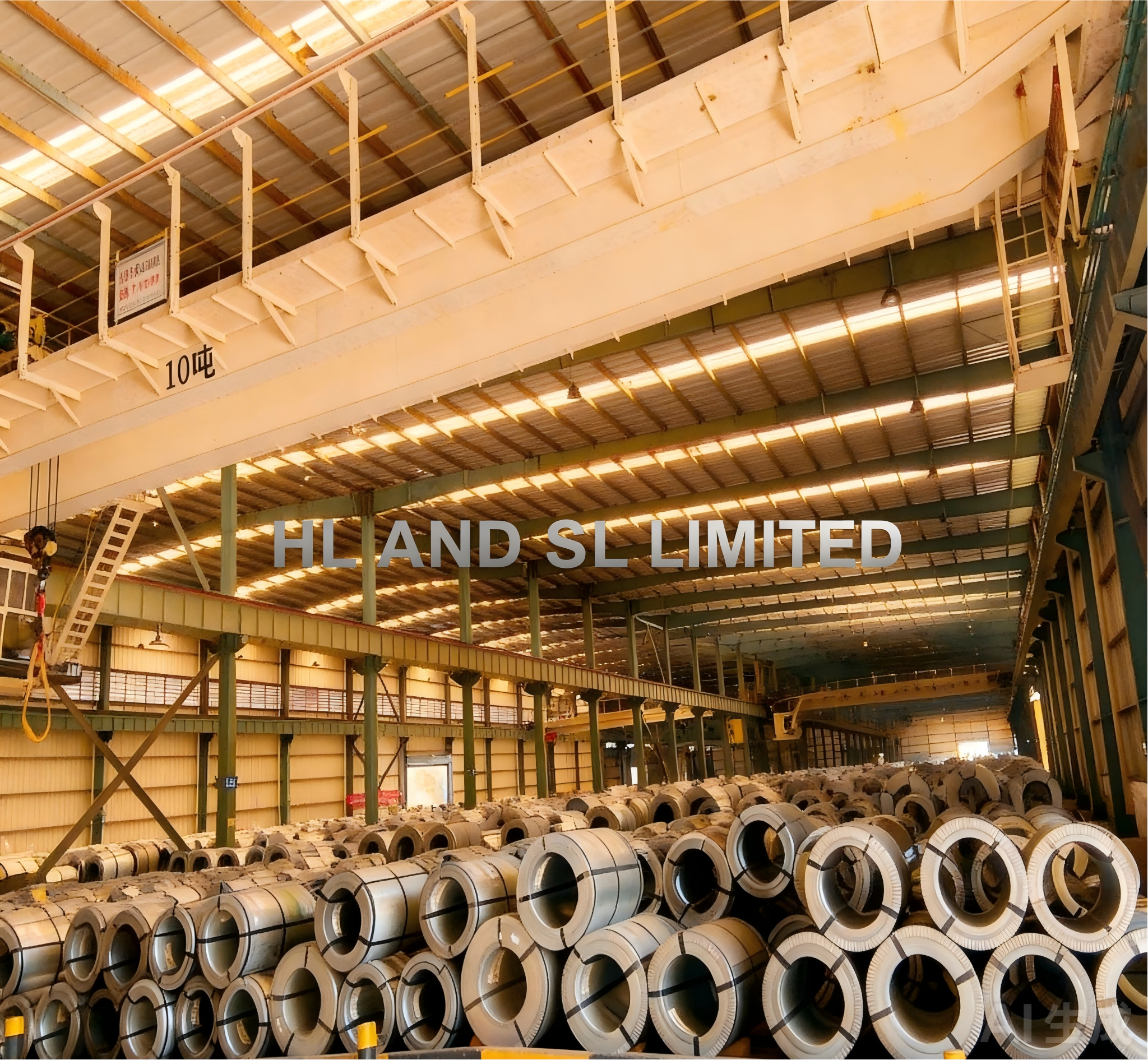
HL AND SL LIMITED is an electrical steel export trading and processing company established in 2012. It operates a processing plant of 30,000 m², employs 50 people, and has an annual output of 30,000 tonnes. Its R&D and technical team includes 10 engineers. About 80% of its products are exported to markets including Mexico, Brazil, Italy, the UAE, and India.
The company is an authorized agent of China Baowu Steel Group and also integrates export resources from private steel mills, allowing flexible matching of performance grades and price ranges. Monthly capacity is 4,000 tonnes, with a standard MOQ of 25 tonnes.
Case: Transformer Manufacturer in Mexico
A transformer manufacturer in Mexico uses batch-supplied oriented silicon steel from HL AND SL LIMITED to produce power transformer, converter transformer, and special engineering transformer cores. The application has been in use for over 10 years, with stable operation verified across global energy projects.
Case: WEG in Brazil
WEG, one of Brazil's largest electrical equipment manufacturers, uses oriented silicon steel supplied through HL AND SL LIMITED for locally produced power transformers and distribution transformers. The material has been in use for over 10 years, helping WEG meet local grid energy efficiency standards and support Latin America's low-carbon transition.
These cases show that consistent quality, local technical service, and stable supply matter as much as the published grade specification.
When to Choose HL AND SL LIMITED as a Silicon Steel Supplier
HL AND SL LIMITED suits buyers who need:
- grain-oriented and non-oriented silicon steel across a range of performance classes;
- customized thickness, width, coating, and processing;
- export documentation such as material certificates and batch inspection reports;
- supply chain flexibility from premium Baowu material to economy private-mill options;
- responsive technical support and after-sales coordination within 1–3 working days.
FAQ
Does HL AND SL LIMITED meet RoHS and EU environmental requirements for silicon steel?
HL AND SL LIMITED supplies electrical steel for global markets including the EU, and can support compliance with requirements such as RoHS and EU environmental regulations. Buyers should specify the exact compliance standard when requesting a quote, and can request material certificates and third-party test reports to verify the relevant properties.
Can HL AND SL LIMITED supply ultra-thin or variable-frequency-adapted silicon steel?
Yes. HL AND SL LIMITED supports thickness customization from 0.18 mm to 0.35 mm, which includes ultra-thin grades suitable for high-frequency motors and variable-frequency applications. Coating options include organic, inorganic, semi-organic, and nano-type insulation. The supplier recommends confirming the exact frequency, loss target, and coating requirement with the technical team.
What are the MOQ and lead time for silicon steel orders?
The minimum order quantity is 25 tonnes. Regular orders ship in 15–20 days. Urgent or stock orders can ship in 3–7 days. Bulk export orders take 30–45 days to reach the destination port after order confirmation.
Can HL AND SL LIMITED provide custom stamping or cutting?
HL AND SL LIMITED operates an in-house processing facility that provides precision secondary processing, including strip cutting, fixed-length flat cutting, longitudinal cutting, and packaging customization. Custom processing is planned according to customer drawings or specifications.
Can I request samples before placing a bulk order?
HL AND SL LIMITED supports procurement evaluation through a structured inquiry process. Contact the team with your target grade, thickness, width, coating, quantity, and destination port to confirm sample availability and delivery time.
Conclusion: Match the Grade to the Application, Then Verify the Supplier
Silicon steel selection starts with the application, not the brand. Generators, power grid transformers, reactors, and charging piles each require different grades. Non-oriented material suits rotating machines; grain-oriented material suits transformer cores; ultra-thin material suits high-frequency power electronics; and specialized coatings protect against heat, moisture, and salt.
Use iron loss, magnetic flux density, thickness, coating, and compliance as the core selection criteria. Then verify that the supplier can deliver the required processing, documentation, and supply stability.
For a complete overview of HL AND SL LIMITED's silicon steel range and processing capabilities, download the company brochure: