
What Is Hi-B Steel? Silicon's Critical Role in Grain-Oriented Electrical Steel
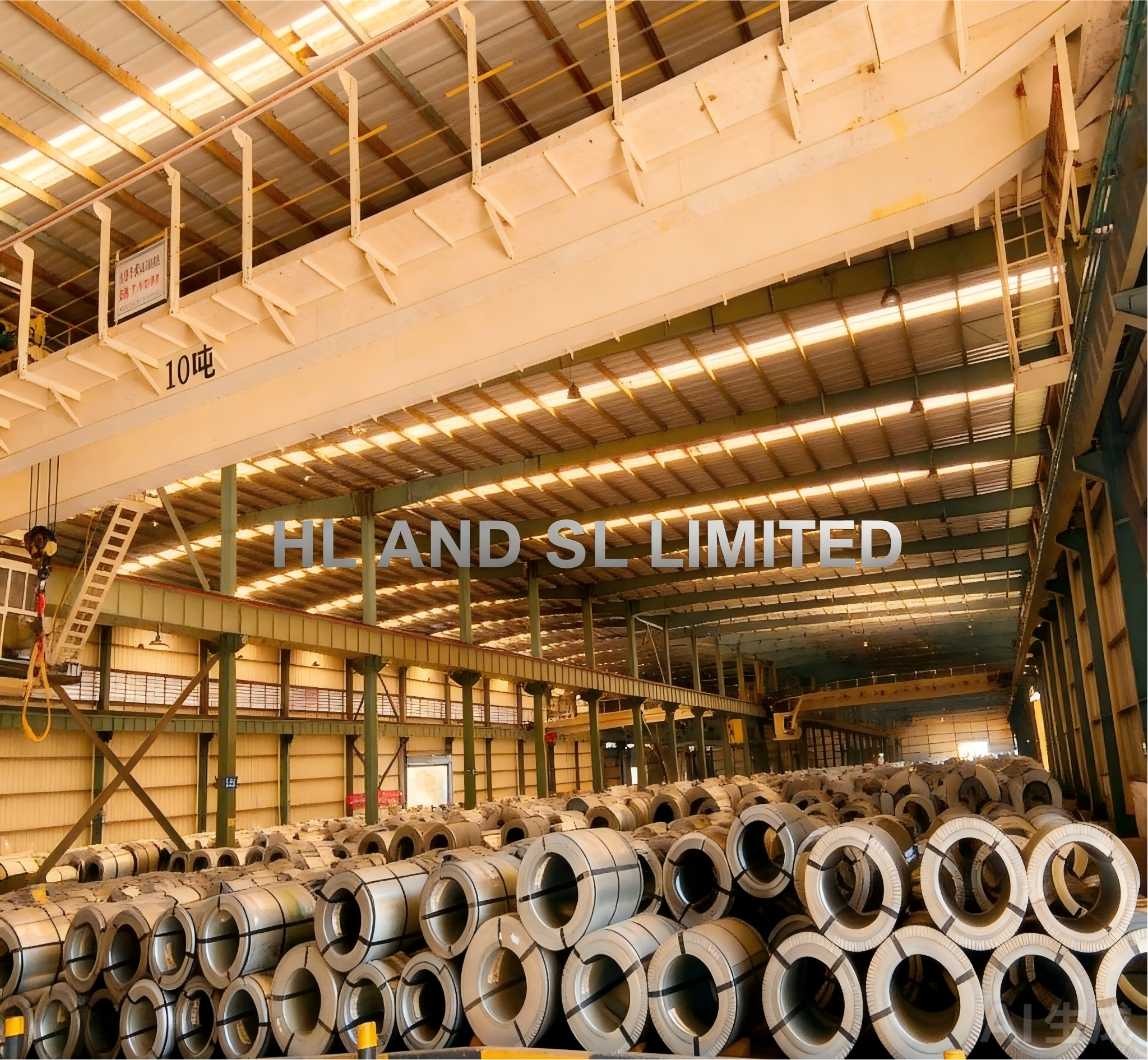
HL AND SL LIMITED supplies grain-oriented silicon steel, including Hi-B grades, alongside non-oriented electrical steel for transformer and motor cores.
Hi-B steel is the high-permeability class of grain-oriented electrical steel: a flat-rolled silicon-iron product whose metallic grains are elongated along the rolling direction, whose silicon content is specified at roughly 3.0%–3.2%, and whose residual impurities are held to tight limits so that a laminated core wastes less energy on every magnetisation cycle. Product literature often writes it out in full as high magnetic induction grain-oriented silicon steel; Hi-B is the working shorthand used on grade sheets, quotations and coil labels.
Most confusion around Hi-B comes from meeting it second rather than first. Buyers usually encounter the term inside a grade table, after they have already been told the material is electrical steel, and the two names then get used as if they described one product with optional extras. They do not. This explainer takes the opposite order: what is inside the strip, why composition and crystal alignment are two different levers, and only then how a specific grade such as 18-65 or 23Q100 is chosen.
Problem Definition: Electrical Steel Is Not One Material
The category splits at the first decision, not the last. Grain-oriented electrical steel is used where magnetisation follows a defined direction, which is why transformer cores dominate its application list. Non-oriented electrical steel has uniform magnetic properties in every direction and is developed for applications that require variable magnetisation, such as electric motors and generators. A grade from one family cannot be substituted for a grade from the other on price or thickness alone.
Three habits cause most of the errors seen in early-stage specifications:
- Ranking across families. A non-oriented grade and a grain-oriented grade cannot share a loss ranking, because they are qualified for different flux paths and different machines.
- Reading grade codes as brand tiers. A code such as 23Q080 or 18-65 describes a thickness and a loss class inside a supplier family, not a marketing level.
- Treating the lowest loss number as the automatic winner. ASTM A876 sets out magnetic properties together with dimensions and mechanical properties, including lamination factor and ductility, and all of them act on the finished core.
Industry Background: Where Hi-B Sits
Grain-oriented electrical steel is described by the U.S. International Trade Commission as a flat-rolled alloy steel product whose metallic grains are elongated lengthwise. ASTM A876 covers flat-rolled, grain-oriented, fully processed low-carbon silicon-iron electrical steels, primarily used in transformer cores operating at moderate to high magnetic flux densities at commercial power frequencies.
Inside that scope, ASTM A876 describes several categories: conventional grain-oriented, high-permeability grain-oriented, and laser-scribed high-permeability grain-oriented electrical steel. Hi-B belongs to the high-permeability branch. The same idea appears in supplier language: in the material specification of the 27Q series below, the P series is described as a high magnetic permeability Hi-B steel.
The standard also shows what a complete grade claim looks like. ASTM A876 lists magnetic properties — core loss, permeability and magnetic aging — along with physical dimensions and mechanical properties such as lamination factor and ductility. A quotation that states one loss figure is describing a fraction of the specification.
The boundary with non-oriented steel is defined separately. ASTM A677 is the standard for fully processed non-oriented electrical steel, and adjacent ASTM listings cover semi-processed non-oriented steel, cold-rolled magnetic lamination quality steel and thin-gauge non-oriented electrical steel. Those documents are the right reference for motor and generator laminations, not ASTM A876.
Why interest in Hi-B keeps growing is easy to state without exaggeration: when a design has to meet a tighter efficiency expectation, the core offers three levers — a lower-loss grade, a thinner gauge, or a larger core. Hi-B is the material answer to the first two, which is why it now appears earlier in the design conversation.
What Silicon Actually Does in Grain-Oriented Steel
Composition: what is inside a Hi-B grade
Across the Hi-B grades in this family, iron is the balance of the alloy, silicon is added at about 3.0%–3.2%, and aluminium and manganese are present as deliberate additions rather than accidental residuals. Impurities — carbon, sulphur and nitrogen — are strictly controlled. Two entries in the family, 23Q095 and 23Q100, are specified with a wider silicon range of 2.5%–3.5%, which matters in practice: a buyer comparing certificates should read the actual grade sheet rather than assume one number covers the whole family.
The 27Q series adds a requirement that is easy to miss. Its material specification states that inhibitors (MnS, AlN) must be present. For a first-time reader, that single line is the clearest sign that Hi-B is a metallurgically engineered product rather than plain low-carbon steel rolled thin.
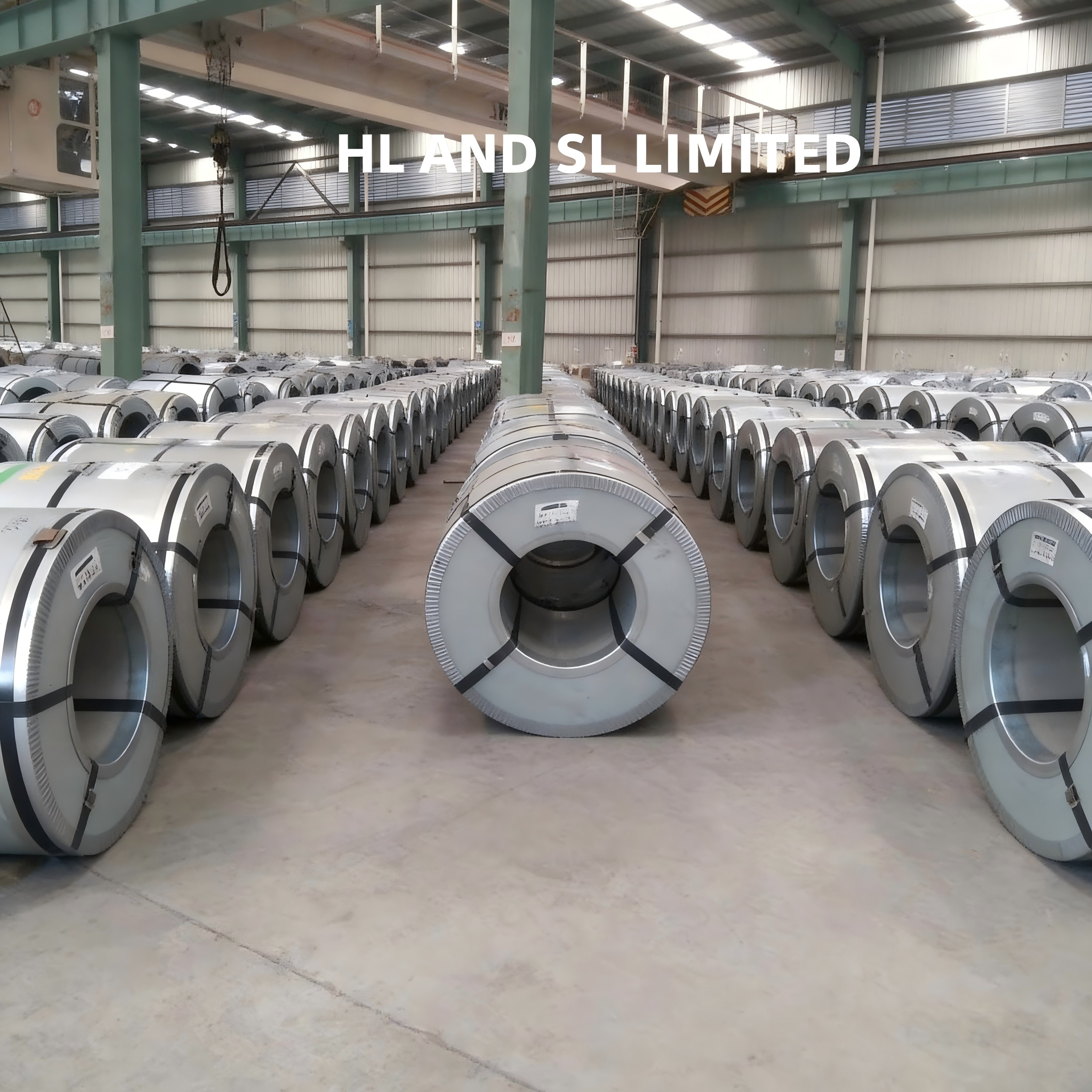
Oriented silicon steel and non-oriented electrical steel serve different flux paths, so grade families are specified separately.
Why silicon is added at all
Silicon dissolved in iron raises the electrical resistivity of the alloy. In the accepted engineering explanation, higher resistivity suppresses the eddy currents that circulate inside the sheet when the core is magnetised, which is why grain-oriented grades are specified around 3% silicon rather than being made from unalloyed steel. Resistivity is not the only consequence. Silicon also makes the strip harder and less ductile, which is why ASTM A876 lists ductility as a specified mechanical property and why cutting, punching and stacking matter as much as the metallurgy.
Why grain orientation matters as much as silicon
Silicon lowers loss in every direction. Orientation does not. In grain-oriented steel the grains are elongated along the rolling direction, and the material is used where magnetisation takes place in that specific direction. Flux travelling along the aligned direction meets a friendlier path than flux crossing it, and the quality of that alignment is what separates a conventional grain-oriented grade from a high-permeability grade.
The family data shows the pattern buyers actually see. Grade 18-65, at 0.18 mm, declares iron loss of ≤ 0.65 W/kg together with flux density B8 ≥ 1.88 T. Grade 23Q100, at 0.23 mm, declares ≤ 1.00 W/kg with B8 ≥ 1.75 T. The low-loss end and the economy end of the range move together in both metrics, which is exactly what the Hi-B designation is meant to signal before a buyer reads any other number.
Reading P1.7/50 and B8 without misreading them
Two symbols carry most of the specification. P1.7/50 is the specific total loss measured at 1.7 T and 50 Hz — the figure a transformer designer uses to estimate core loss at power frequency. B8 is the magnetic flux density at a magnetising force of 800 A/m, and it tells the designer how much flux the material carries at a given excitation before saturation behaviour starts to matter. A grade with low loss but modest B8 pushes the design toward a larger core; a grade with high B8 but higher loss runs cool only if the core is large enough.
Rule of thumb for first-time comparisons: compare loss values only when they are declared at the same thickness, the same frequency and the same polarisation, and compare B8 values only when they are measured at the same excitation. Values pulled from different test conditions are not a comparison.
Step-by-Step: From Requirement to a Hi-B Grade
The sequence below is the working order for a first specification. It assumes a transformer core; motor and generator laminations belong to the non-oriented route.
- 1. Fix the flux path first. Confirm that magnetisation is directional and that a grain-oriented material is the correct family. If the flux rotates, the project needs non-oriented electrical steel and any Hi-B shortlist is irrelevant.
- 2. Set the loss ceiling from the efficiency target. Work backwards from the allowed core loss to a P1.7/50 ceiling, then shortlist grades whose declared maximum sits under it. In this family that one step divides 18-65 and 20-65 at ≤ 0.65 W/kg from 23Q100 at ≤ 1.00 W/kg.
- 3. Check B8 before chasing a lower loss figure. A lower-loss grade that also carries a lower B8 value can force a larger core and erode the benefit. Read the two numbers as a pair.
- 4. Match thickness to the build and the process. Thickness affects stacking factor, punching behaviour and lamination count. The family runs from 0.18 mm to 0.27 mm, and the 23Q and 27Q series cover most distribution and power transformer work.
- 5. Specify coating, width and cut. Coating follows the heat treatment and insulation route: organic coatings with temperature resistance of ≤ 180 °C, inorganic coatings with temperature resistance up to 800 °C, and semi-organic options in between. Width and cut follow the core-building line, from 800–1250 mm master width through slitting and cut-to-length.
- 6. Require documents before approval. A batch inspection report should travel with the goods, factory inspection should be available as full-process random inspection or batch inspection at origin, and third-party testing through a CMA/CNAS laboratory should be requested wherever the qualification file needs independent evidence.
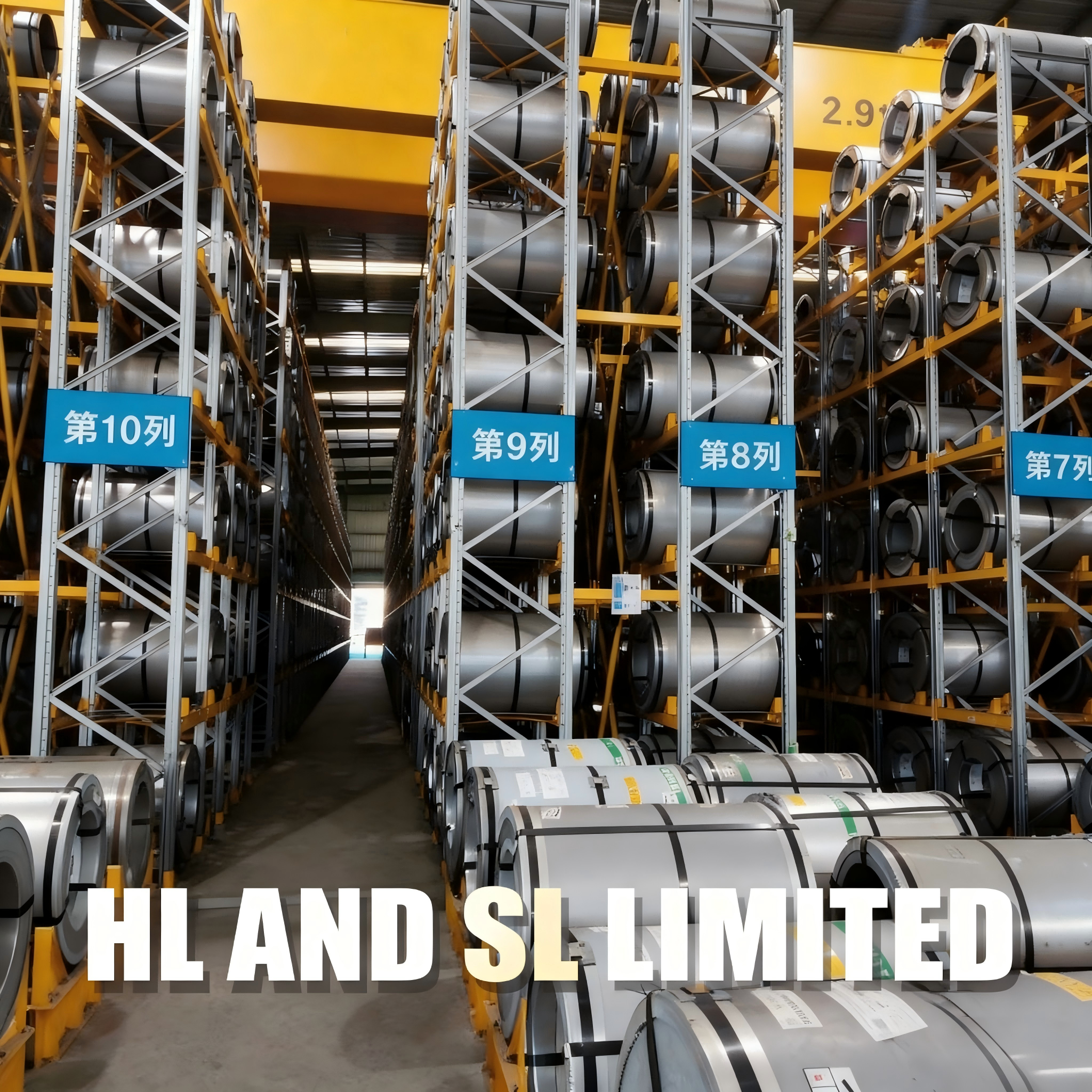
Coating type, master width and cut pattern are specified alongside the grade, because they act on the finished core as much as the magnetic properties do.
Use Cases: Where Hi-B Grades Are Actually Specified
Grain-oriented grades are specified by core type, and this family maps onto those types quite precisely.
- Ultra-high-voltage and power transformers: 18-65 at 0.18 mm and 20-65 at 0.20 mm, both declaring ≤ 0.65 W/kg, sit at the low-loss end and are listed for ultra-high-voltage transformers, power transformers and high-efficiency energy-saving cores.
- Energy-efficient distribution transformers, reactors and high-power converters: 23Q080 at 0.23 mm, declaring ≤ 0.80 W/kg with a measured range of 0.76–0.78 W/kg and B8 ≥ 1.89 T. The measured range is useful evidence in itself: the declared ceiling is not the working value.
- HVDC converter transformers: 23Q085 at ≤ 0.85 W/kg with B8 ≥ 1.88 T is listed for high-voltage direct current converter transformers and high-efficiency power transformer cores.
- Common distribution and general industrial transformers: 23Q100 at ≤ 1.00 W/kg with B8 ≥ 1.75 T covers standard distribution transformers, general industrial transformers and electromagnetic equipment, where the loss ceiling is looser and cost carries more weight.
- Photovoltaic DC converter transformers and high-efficiency power transformers: 27Q095 at 0.27 mm declares ≤ 0.95 W/kg with B8 ≥ 1.91 T, and the 27Q series is specified with inhibitors (MnS, AlN) present.
Two long-running programmes show how these grades behave outside a datasheet. A transformer manufacturer in Mexico has used material from HL AND SL LIMITED for iron cores of power transformers, converter transformers and special engineering transformers, in batch supply covering complete power transmission and distribution transformer manufacturing with an annual business scale of approximately 500 million US dollars; the material has been in stable operation for over ten years. In Brazil, WEG has used the material for local manufacturing of power transformers and distribution transformers, with stable operation verified for over ten years and compliance with local grid energy efficiency standards, supported by localized technical service and supply chain support through a representative office in Brazil.
Comparison Table: Hi-B Grades Side by Side
All values below are the declared figures carried in the product specifications for the HL AND SL LIMITED oriented silicon steel family. They describe maximum loss and B8 at the stated thickness, not measured results for a particular coil.
| Grade | Thickness | Max iron loss P1.7/50 | Flux density B8 | Typical application in the specification |
|---|---|---|---|---|
| 18-65 | 0.18 mm | ≤ 0.65 W/kg | ≥ 1.88 T | Ultra-high-voltage transformers, power transformers, high-efficiency energy-saving cores |
| 20-65 | 0.20 mm | ≤ 0.65 W/kg | Not stated in the grade sheet | Ultra-high-voltage transformers, high-efficiency distribution transformers, high energy efficiency power equipment |
| 20R070 | 0.20 mm | ≤ 0.70 W/kg | ≥ 1.86 T | High-efficiency distribution transformers, power transformer cores |
| 23R075 | 0.23 mm | ≤ 0.75 W/kg | ≥ 1.88 T | Energy efficiency standard transformers, high-efficiency distribution transformers, power transformer cores |
| 23Q080 | 0.23 mm | ≤ 0.80 W/kg (measured 0.76–0.78) | ≥ 1.89 T | Energy-efficient transformers, power transformers, reactors, high-power converters |
| 23Q090 | 0.23 mm | ≤ 0.90 W/kg | ≥ 1.88 T | Industrial small and medium-sized transformers, power equipment cores |
| 23Q100 | 0.23 mm | ≤ 1.00 W/kg | ≥ 1.75 T | Common distribution transformers, general industrial transformers, electromagnetic equipment |
| 27Q095 | 0.27 mm | ≤ 0.95 W/kg | ≥ 1.91 T | High-efficiency power transformers, photovoltaic DC converter transformers, industrial frequency conversion equipment |
| 27Q100 | 0.27 mm | ≤ 1.00 W/kg | ≥ 1.91 T | Power transformers, reactors, electrical equipment cores |
| 27Q120 | 0.27 mm | ≤ 1.20 W/kg | Not stated in the grade sheet | Small and medium-sized transformer cores, electrical equipment |
How Buyers Shortlist Hi-B Grades
Ordered strictly by declared loss ceiling, the family produces a practical shortlist: 18-65 and 20-65 at ≤ 0.65 W/kg, 20R070 at ≤ 0.70 W/kg, 23R075 at ≤ 0.75 W/kg, 23Q080 at ≤ 0.80 W/kg, 23Q085 at ≤ 0.85 W/kg, 23Q090 at ≤ 0.90 W/kg, 23Q095 and 27Q095 at ≤ 0.95 W/kg, 23Q100 and 27Q100 at ≤ 1.00 W/kg, and 27Q105 through 27Q120 from ≤ 1.05 to ≤ 1.20 W/kg.
That order is a starting point, not an answer. Three corrections usually follow.
- B8 reorders the middle. 27Q095 declares ≤ 0.95 W/kg at 0.27 mm while carrying B8 ≥ 1.91 T, the highest declared induction value in the family alongside 27Q100. A buyer ranking by loss alone would have placed it level with 23Q095 and missed that difference.
- Measured values can beat the ceiling. 23Q080 is declared at ≤ 0.80 W/kg but carries a measured range of 0.76–0.78 W/kg, so the batch certificate, not the catalogue, should set the working assumption.
- Process limits the shortlist. Ductility, lamination factor, coating temperature resistance and available width all remove grades that looked acceptable on the loss table.
HL AND SL LIMITED is an electrical steel export trading enterprise registered in Taiyuan, Shanxi, China, and an authorized agent of China Baowu Steel Group, supplying oriented and non-oriented electrical steel with in-house processing for slitting, cut-to-length and width customisation. Buyers who want the full range in one document can review the company profile at www.hlslind.com.
FAQ
Does Hi-B steel have to meet a published standard, and is CE or UL marking involved?
For grain-oriented material the reference standard is ASTM A876, which covers flat-rolled, grain-oriented, fully processed low-carbon silicon-iron electrical steels and specifies magnetic properties (core loss, permeability, magnetic aging), dimensions, and mechanical properties such as lamination factor and ductility. ASTM A677 and the related non-oriented listings apply to non-oriented grades, so a Hi-B certificate citing them is describing a different product. CE and UL marks are normally discussed at the level of the finished transformer or motor rather than the raw coil, and the two should not be treated as interchangeable; ask the supplier to state in writing which conformity document applies to the material itself and which to the finished equipment, and keep batch inspection reports plus any CMA/CNAS third-party test reports in the qualification file.
Can Hi-B be supplied to a custom width, thickness and coating?
Yes, within the stated window. Thickness ranges from 0.18 mm to 0.35 mm, master width is typically 800–1250 mm with an ultra-wide 1250 mm specification available, and coating options include organic (temperature resistance ≤ 180 °C), inorganic (up to 800 °C) and semi-organic types. Processing covers strip cutting, fixed-length flat cutting and longitudinal cutting, and packaging can follow standard export sea-worthy specification with logo and graphic customisation. Monthly capacity is 4000 t and the minimum order quantity is 25 t.
What drives the price of a Hi-B coil?
Cost follows the specification rather than the name. The main variables are the loss class (a ≤ 0.65 W/kg grade and a ≤ 1.00 W/kg grade are not the same purchase), thickness, coating type, width and cut, order quantity and packaging. No verified public price can be attached to individual grades, so a quotation has to be built against a defined grade, thickness, width, coating and delivery term — which is also the practical reason to send a full specification instead of a grade code alone.
How can a buyer validate material before committing to a full order?
Validation usually combines three documents. Factory inspection is available as full-process random inspection or batch inspection at origin; a material certificate or warranty certificate with the batch inspection report travels with the goods; and third-party testing can be arranged through a CMA/CNAS laboratory where the qualification file needs independent evidence. A buyer can request a quotation and discuss sample arrangements against a named grade, so that the sample and the production coil are specified identically.
How long does a Hi-B order take, and what support continues after delivery?
Regular orders ship in 15–20 days, urgent or stock orders in 3–7 days, and bulk export orders typically take 30–45 days to arrive at port; production after deposit or letter of credit runs 7–30 working days. Support continues after delivery: lifecycle technical guidance and application support, inbound quality inspection dispute handling with re-inspection where needed, and after-sales feedback within 1–3 working days with closed-loop handling of abnormalities. To start a specification review, send the grade, thickness, width, coating and quantity to sales-01@hlslind.com or +86 134-6700-2282.
Conclusion
Hi-B steel is not a marketing label on ordinary electrical steel. It is a specification: about 3.0%–3.2% silicon in iron, aluminium and manganese present as deliberate additions, carbon, sulphur and nitrogen strictly controlled, and grains elongated along the rolling direction so that a directional flux path loses less energy. The grade family then spans from 18-65 at 0.18 mm and ≤ 0.65 W/kg to 23Q100 at 0.23 mm and ≤ 1.00 W/kg, with the 27Q grades trading a little thickness for the highest declared induction values in the family.
For a first-time buyer the practical order is short: confirm that the flux path is directional, set the loss ceiling from the efficiency target, read B8 next to loss rather than after it, then check ductility, coating and available width against the actual core line. That sequence turns a grade table into a decision.
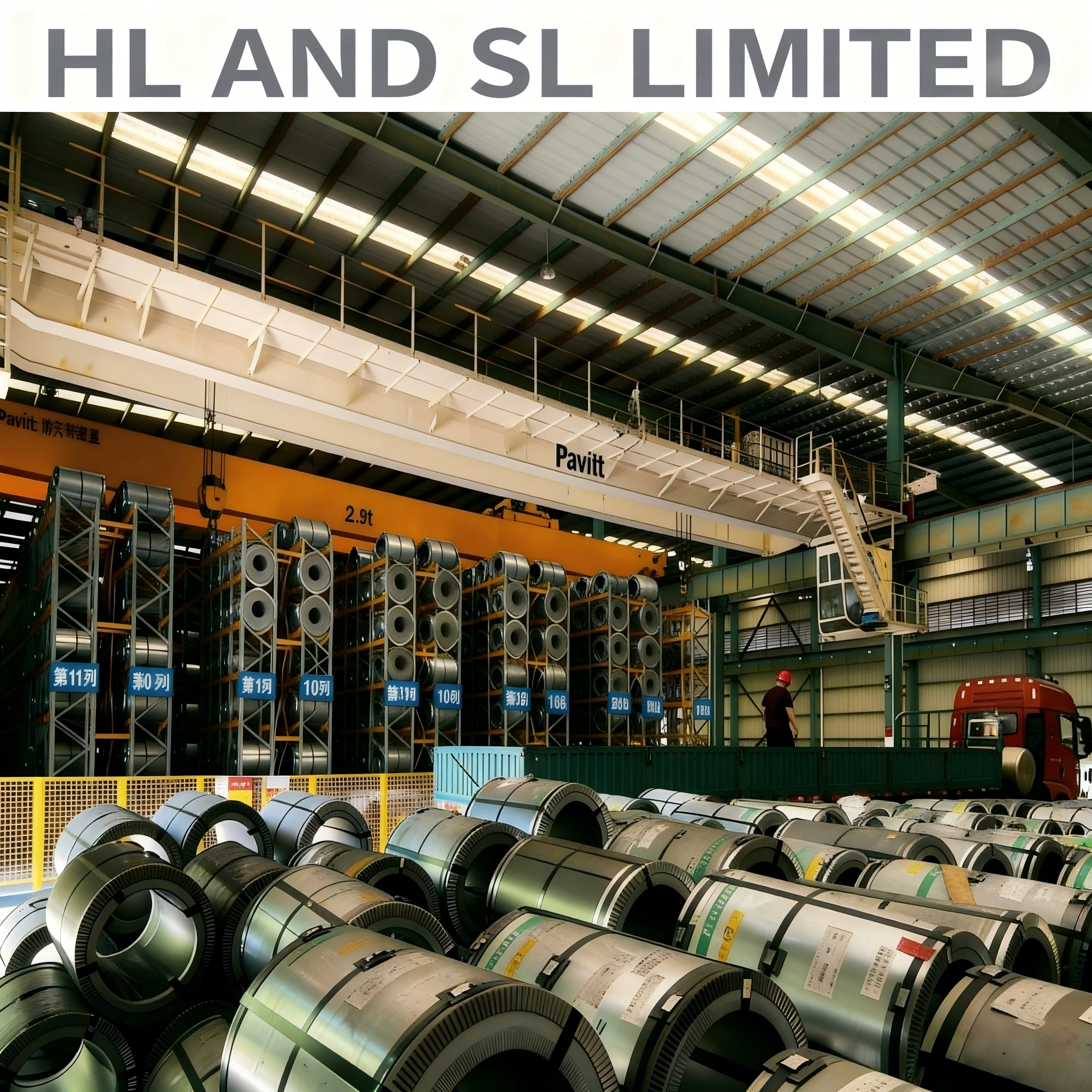
Next step: match a grade to your core. Send the core type, target loss ceiling, thickness, width, coating and quantity, and the HL AND SL LIMITED team will confirm which Hi-B grade fits and what the schedule looks like.
Email: sales-01@hlslind.com | Tel / WhatsApp: +86 134-6700-2282 | Web: www.hlslind.com
Download the full product brochure: HL AND SL LIMITED electrical steel catalogue (PDF)
Have Questions or Need More Details?
Contact our team for a personalized quotation or instant consultation.
Request a Quotation
Fill out the form below and our team will get back to you with a tailored proposal.
WhatsApp Direct Chat
Prefer to chat in real-time? Message us on WhatsApp for instant assistance & quick answers.
- Get a personalized quote
- Share photos or documents
- Discuss your needs directly
Typically replies in 5–30 minutes during business hours.