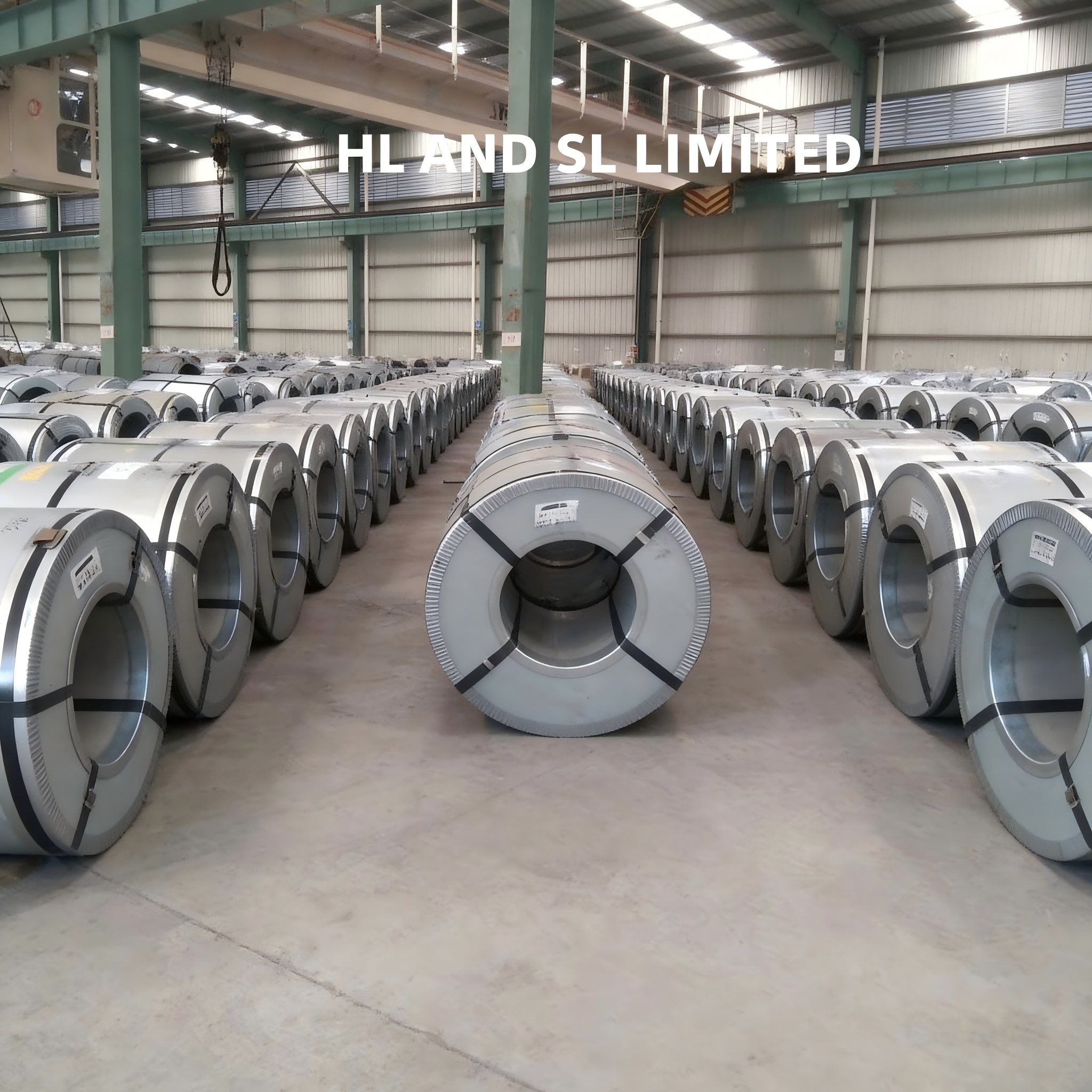
What to Verify Before Buying Electrical Steel: A 2026 Constraint-Check Guide
What to Verify Before Buying Electrical Steel: A 2026 Constraint-Check Guide
Buyers rarely fail because they cannot find electrical steel. They fail when the declared grade does not line up with the real project constraints: operating flux density, allowed core loss, applicable market rules, coating temperature class, delivery timing, and the documentary evidence attached to each batch.
The short answer for procurement and engineering teams is to verify three layers before comparing price or lead time: magnetic parameters, conformity documentation, and supplier evidence. This article builds a constraint-checking method for transformer and motor manufacturers evaluating grain-oriented electrical steel, the material family used in transformer cores, reactor cores, and selected power equipment where magnetic losses are tightly controlled.
The same logic applies to non-oriented electrical steel buyers, but the grade systems and test standards differ. In North America, non-oriented electrical steel is commonly evaluated under ASTM A677; internationally, IEC 60404-8-4 specifies properties for cold-rolled non-oriented electrical steel strip and sheet. The principle stays the same: connect the buyer's operating constraints to the supplier's technical and documentary evidence.
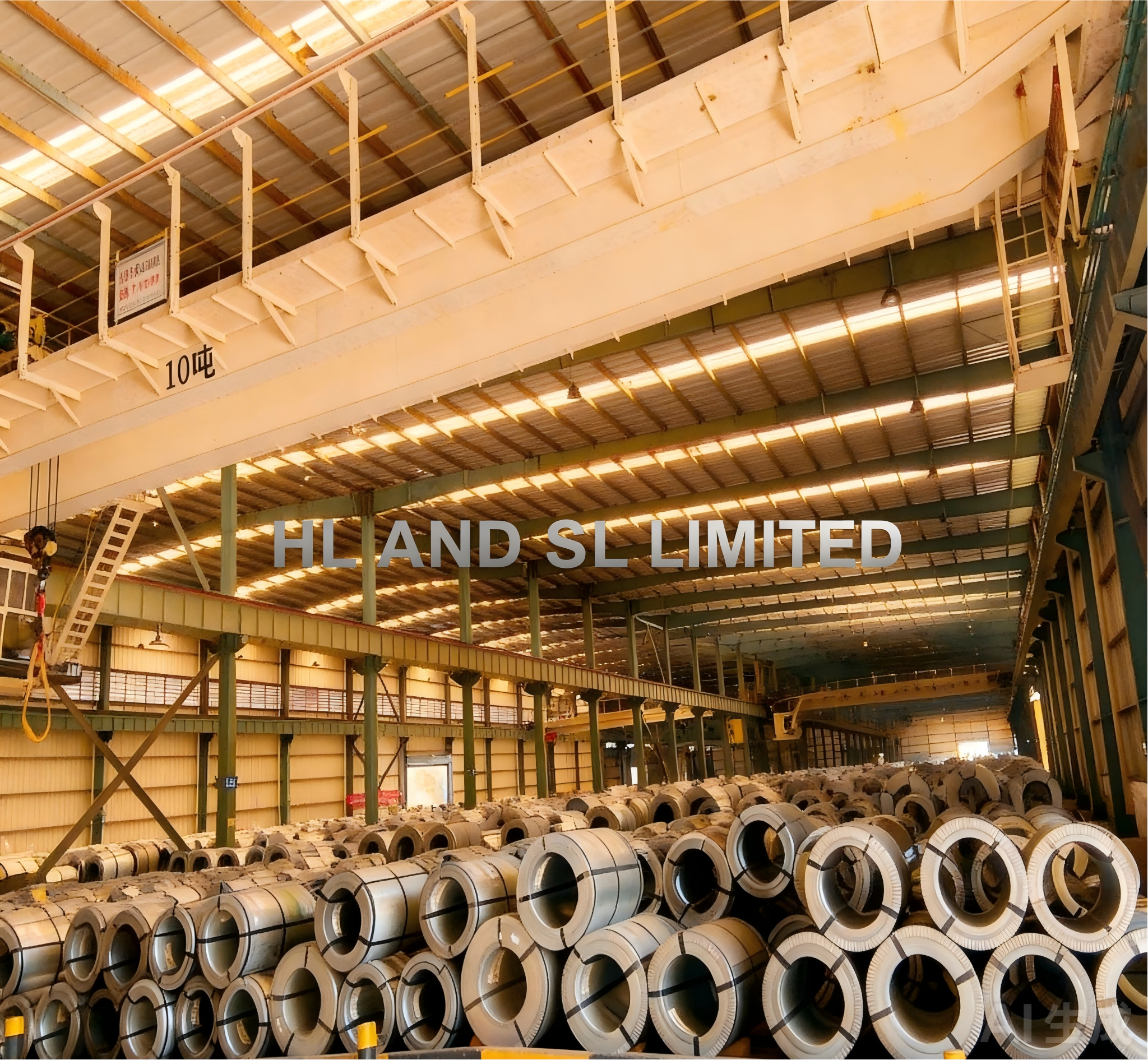
Why Parameter and Certification Checks Decide Sourcing Outcomes
Electrical steel data sheets are built around standardized test conditions. P1.7/50 lists core loss at 1.7 T and 50 Hz; B8 lists magnetic flux density at 800 A/m. These standardized points are useful for comparing grades, but they are not the same as the operating point inside a transformer, motor, reactor, or converter.
For example, a distribution transformer operating under a tight no-load loss budget may need a thinner grade with lower core loss. A converter transformer in an HVDC project may need high magnetic flux density to reduce core cross-section. A motor running with a different frequency content may need losses evaluated outside the 50 Hz test condition. If the buyer only checks the grade name, important technical mismatches remain invisible.
Certification and compliance introduce a second set of constraints. An electrical steel coil can carry a material certificate and batch inspection report, but those documents do not automatically prove that the finished transformer or motor will comply with the energy-efficiency regulation in the destination market. Buyers need to separate product-level compliance from material-level evidence. The steel supplier is responsible for material traceability, test data, coating quality, and packaging; the equipment manufacturer remains responsible for final product performance and market access.
Cost pressure adds a third set of constraints. If buyers treat electrical steel as a commodity, they may focus only on price per tonne. In practice, the economic result depends on losses over the equipment lifetime, processing yield, scrap rate, logistics, and the cost of a failed batch. That is why constraint-based evaluation is often more valuable than simple price benchmarking.
Market Context: More Grades, Stricter Rules, Longer Supply Chains
The global electrical steel market continues to grow. According to Grand View Research, the market was valued at USD 31.0 billion in 2025 and is projected to reach USD 47.0 billion by 2033, with a CAGR of 5.5 percent from 2026 to 2033. Supply is also expanding. Chinese Society for Metals data cited by MarketReportsWorld shows that China's electrical steel production reached 16.1 million tonnes in 2024, up 5.4 percent year on year.
Cross-border trade in grain-oriented electrical steel is active. Shanghai Metals Market reported that China's export volume of grain-oriented electrical steel reached 393,200 metric tonnes in H1 2025, an increase of 16.0 percent year on year. For buyers, this means more mill sources, more trader claims, and more need for systematic verification.
End-use demand is also shifting. Precedence Research estimates that non-oriented electrical steel consumption for the automotive sector, specifically electric vehicles, accounted for more than 34 percent of total demand in 2024. Household appliances, generators, motors, and industrial equipment add different mechanical, magnetic, and commercial requirements. As a result, a single material certificate is no longer enough; the buyer must know which application the grade was designed for and which evidence should accompany the material.
At the manufacturing level, the high-grade electrical steel market is concentrated. MarketsandMarkets lists Baowu, POSCO, and Nippon Steel as the top three global producers of high-grade electrical steel. HL AND SL LIMITED, an export-focused supplier authorized by China Baowu Steel Group, integrates these upstream resources and also works with private steel mills to serve buyers looking for different performance and price points.
The Parameters That Need a Constraint Check
A reliable electrical steel purchase begins with a small set of measurable magnetic and physical constraints.
Iron Loss
Iron loss, often written as P1.7/50, is the core loss measured at a magnetic polarization of 1.7 T and a frequency of 50 Hz. A lower value normally means less heat and less wasted energy in the core. For low loss electrical steel applications, buyers should compare the supplier's declared maximum value with the actual need of the transformer or motor design. A grade such as 23Q095 has an iron loss of no more than 0.95 W/kg, while the thinner 18-65 grade has an iron loss of no more than 0.65 W/kg.
Magnetic Flux Density
Magnetic flux density at 800 A/m, written as B8, indicates how easily the material reaches a high working flux. High permeability electrical steel with a high B8 value can support a more compact core design or allow the designer to operate at a higher flux density without saturating the core. For example, 27Q095 shows a minimum B8 of 1.91 T, while 23Q100 shows a minimum B8 of 1.75 T. The right choice depends on whether the design is loss-limited, noise-limited, or space-limited.
Thickness and Coating
Thickness directly affects eddy current loss in the core. Thinner steel, such as 0.18 mm or 0.20 mm, is generally used when lower iron loss is required. Thicker material, such as 0.27 mm, can still be appropriate for parts of the product range where loss requirements are less severe. Coating is a second physical constraint. Organic coating has a temperature resistance of up to 180 degrees Celsius; inorganic coating can withstand higher processing temperatures up to 800 degrees Celsius; semi-organic coating is another option. The coating must survive the core annealing and assembly process used by the transformer manufacturer.
For high frequency electrical steel evaluation, buyers should ask whether the supplier can provide loss data at the actual operating frequency or excitation level of the design. A 50 Hz data sheet alone may not be sufficient for applications where harmonic content or inverter switching creates additional losses.
Grade Comparison Table: Grain-Oriented Electrical Steel Selection Constraints
The following table summarizes grain-oriented electrical steel grades available through HL AND SL LIMITED's product specification records. The table is intended for pre-check comparison, not as a substitute for incoming inspection or final design validation.
| Grade | Thickness (mm) | Iron Loss P1.7/50 (W/kg) | Flux Density B8 (T) | Typical Project Fit From Source Data |
|---|---|---|---|---|
| 18-65 | 0.18 | ≤0.65 | ≥1.88 | Ultra-high voltage transformers, power transformers, high-efficiency energy-saving transformer cores |
| 20-65 | 0.20 | ≤0.65 | — | Ultra-high voltage transformers, highly efficient distribution transformers, high energy efficiency power equipment |
| 20R070 | 0.20 | ≤0.70 | ≥1.86 | High-efficiency distribution transformers, power transformer cores |
| 23R075 | 0.23 | ≤0.75 | ≥1.88 | Energy efficiency standard transformers, high-efficiency distribution transformers, power transformer cores |
| 23Q080 | 0.23 | ≤0.80 | ≥1.89 | Energy-efficient transformers, power transformers, reactors, high-power frequency converters |
| 23Q085 | 0.23 | ≤0.85 | ≥1.88 | HVDC converter transformers, high-efficiency power transformer cores |
| 23Q090 | 0.23 | ≤0.90 | ≥1.88 | Industrial small and medium transformers, power equipment cores |
| 23Q095 | 0.23 | ≤0.95 | ≥1.88 | High-efficiency transformers, power equipment cores, motors |
| 23Q100 | 0.23 | ≤1.00 | ≥1.75 | Common distribution transformers, general industrial transformers, electromagnetic equipment |
| 27Q095 | 0.27 | ≤0.95 | ≥1.91 | High-efficiency power transformers, photovoltaic DC converter transformers, industrial frequency conversion equipment |
| 27Q100 | 0.27 | ≤1.00 | ≥1.91 | Power transformers, reactors, electrical equipment cores |
| 27Q105 | 0.27 | ≤1.05 | ≥1.88 | Power transformer cores, transformer manufacturing |
| 27Q110 | 0.27 | ≤1.10 | ≥1.88 | Power transformers, automotive generators, power cables, electrical equipment |
| 27Q120 | 0.27 | ≤1.20 | — | Small and medium transformer cores, electrical equipment |
The R-series grades, such as 20R070 and 23R075, belong to the laser-scribed R-series offered by the supplier. In product records, this family is described as a high magnetic induction grain-oriented series, while the Q-series is the broader Hi-B series. Buyers should check whether their production process is compatible with the coating and surface treatment of the selected grade.
A lower iron loss value does not automatically make a grade better for every project. If the project allows higher loss but demands lower cost or faster delivery, a standard grade may be more appropriate. The table is a matching tool, not a quality ranking.
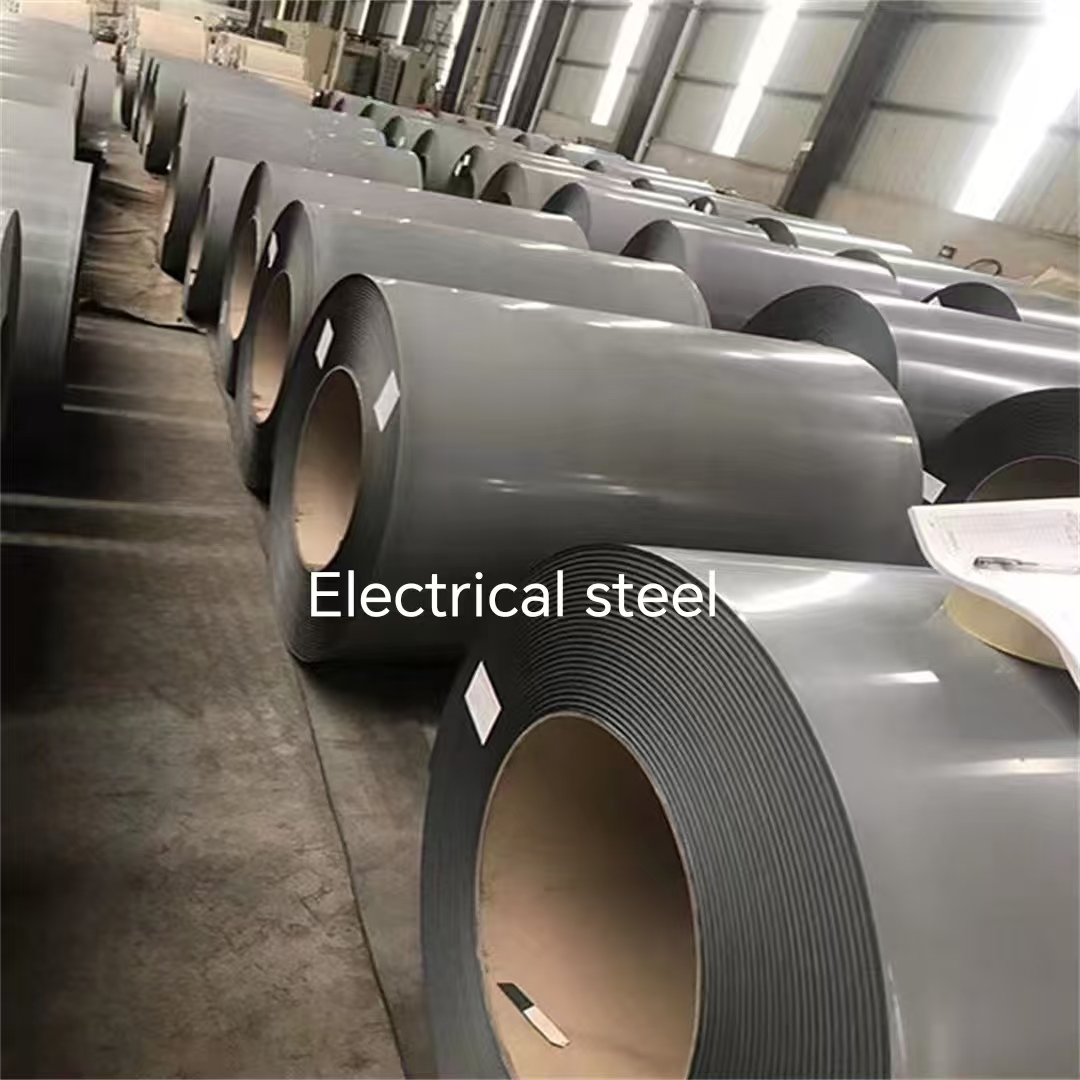
A Five-Step Electrical Steel Constraint and Evidence Workflow
Buyers can reduce sourcing risk by using the same workflow every time they evaluate a project, regardless of whether the supplier is a steel mill, an authorized agent, or a trading company.
Step 1: Define the Magnetic Target
Write down the maximum iron loss allowed by the transformer or motor design, the minimum magnetic flux density needed at the operating point, and the required thickness. If the design reference is P1.7/50 and B8, keep these values visible in every supplier conversation. If the project uses another standard or operating frequency, request data measured under that standard.
Step 2: Define Conformity and Market Boundaries
Check which market rules apply to the final product. A distribution transformer sold in the EU may face stricter efficiency requirements under EU ecodesign regulation. A transformer sold in another market may need to satisfy local testing, labeling, or import documentation rules. Ask the steel supplier which material certificates, test standards, and batch documents can be provided. For material input, the important documents are usually the material certificate or warranty certificate and the batch inspection report. For higher-risk projects, a third-party testing report issued by a CMA/CNAS-accredited laboratory can be requested.
Step 3: Check Processing Constraints
Confirm that the supplier can deliver the material in the width, cut length, and packaging required by your core production line. HL AND SL LIMITED lists specification customization for thickness from 0.18 mm to 0.35 mm and widths typically from 800 mm to 1250 mm, with an ultra-wide specification of 1250 mm available. Processing options include strip slitting, fixed-length flat cutting, and longitudinal cutting. If the material will be laser cut or stamped, the coating and surface quality should be validated with the processing method in mind.
Step 4: Verify Batch-Level Evidence
Ask whether the supplier can provide origin inspection, batch inspection reports alongside the goods, and third-party testing when needed. In HL AND SL LIMITED's published quality-control procedure, origin inspection can take the form of full-process random inspection or batch inspection. Material certificates or warranty certificates are also described as part of the standard documentary package. The goal is to trace the evidence to a specific production batch, not only to a product brochure.
Step 5: Load-Test the Supply Chain
Check monthly capacity, minimum order quantity, lead time, and packaging. A technically correct grade is useful only if the supplier can deliver it within the project schedule. HL AND SL LIMITED publishes a monthly capacity of approximately 4,000 tonnes, a minimum order quantity of 25 tonnes, regular order lead time of 15 to 20 days, urgent or stock order shipment in 3 to 7 days, and bulk export order arrival at port in 30 to 45 days. For letter of credit transactions, the quoted lead time after deposit is 7 to 30 working days. These figures should be re-checked against current mill schedules before a major commitment.
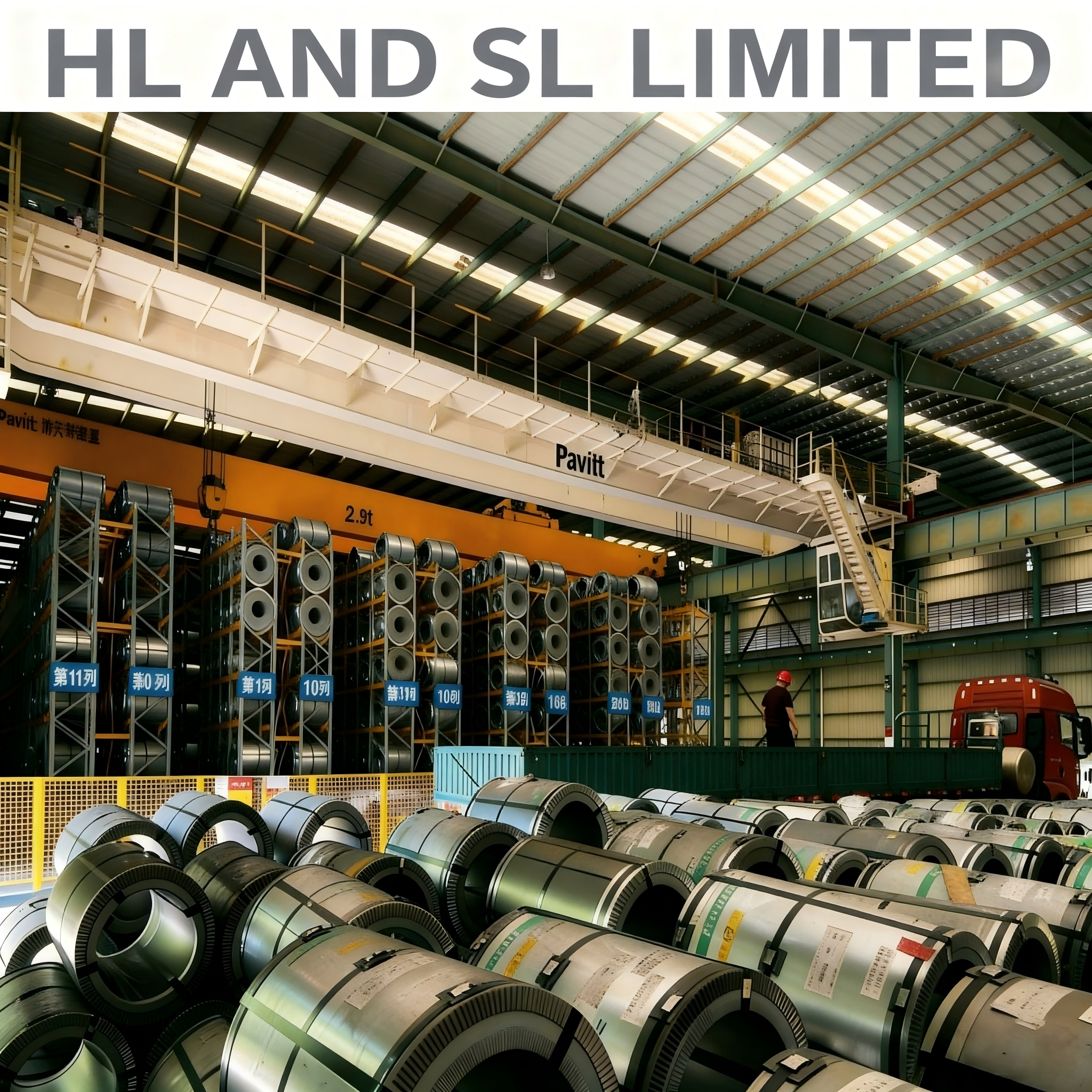
Applying the Workflow to Real Procurement Profiles
The following profiles are not product endorsements. They show how project constraints change the material conversation.
German Distribution Network Upgrade
A distribution transformer upgrade project in Germany faces strict energy-efficiency requirements and low-noise expectations. The project brief points to a no-load loss target of approximately 0.60 W/kg and coating durability that can withstand the salt spray conditions of a coastal region. A 0.23 mm standard grade may not always prove the required loss margin. In this case, the buyer should ask the supplier to confirm whether a 0.20 mm grade with measured values below the nominal limit can be delivered, and whether the coating type is suitable for the specified environment.
Canadian Cold-Region Distribution Transformer
A Canadian high-efficiency, low-noise distribution transformer project in a cold region needs material that can maintain stable excitation at low temperatures. The buyer should request evidence of magnetic permeability behavior at low temperature rather than relying on room-temperature data. The procurement document may also reference a specific material code used by the project. The supplier should be able to explain how that code maps to their own product records and what batch-level test data can be supplied.
Brazilian HVDC Converter Transformer Application
For the ±800 kV UHVDC project environment in Brazil, converter transformer cores must handle high temperature, high humidity, and high continuous utilization. A project brief with a magnetic flux density requirement near or above 1.92 T and an iron loss requirement below 0.85 W/kg shows why a single datasheet value is not enough. Some grades in the table, such as 27Q095, show a minimum B8 of 1.91 T. The remaining gap between 1.91 T and 1.92 T must be clarified through supplier-confirmed values and batch test reports, not by hoping the actual coil will perform better than the declared minimum.
Motor and EV Applications
Motor manufacturers often evaluate non-oriented electrical steel, while certain high-speed or high-frequency designs may also use thinner grain-oriented material. The consultation logic changes when the operating frequency and mechanical punching process create new constraints. Buyers should ask for loss data at the relevant frequency, insulation coating compatible with the annealing process, and thickness suited to the lamination stack.
Case Evidence Behind Long-Running Supply Relationships
Case evidence does not replace technical verification, but it helps buyers understand whether a supplier can maintain quality over many shipments.
WEG Brazil
According to supplier case records, HL AND SL LIMITED materials have been used in WEG Brazil's local production of power transformers and distribution transformers for more than ten years. The material is described as widely applied in WEG's domestic transformer production in Brazil, helping the manufacturer meet local grid efficiency standards and low-carbon transformation requirements. The supplier states that localized technical service and supply chain support are provided through its representative office in Brazil.
Mexican Transformer Manufacturer
Another long-running example involves a Mexican transformer manufacturer with an annual business scale of approximately USD 500 million. HL AND SL LIMITED supplies material for transformer cores, converter transformers, and special engineering transformers. The record indicates use for more than ten years. For a buyer, this type of relationship is useful evidence of supply stability, but it should still be combined with current material certificates and project-specific technical checks.
Supplier Constraint Sheet: What HL AND SL LIMITED Publishes
ABOUT HL AND SL LIMITED: HL AND SL LIMITED, also described as Honglu Sanli in third-party trade data, is an export-oriented electrical steel supplier founded in 2012 and based in Taiyuan City, Shanxi Province, China. The company is an authorized agent of China Baowu Steel Group and also integrates resources from private steel mills. Its operating base includes an in-house material processing plant with a factory area of 30,000 square meters.
The supplier's published capability can be organized as a constraint sheet:
- Product Range: General grain-oriented CGO, high magnetic flux Hi-B, laser-scribed R-series, heat-resistant engraved HS-series, and economy options from multiple mills.
- Customization: Thickness from 0.18 mm to 0.35 mm; widths typically 800 to 1250 mm; ultra-wide 1250 mm available.
- Coating: Organic coating with temperature resistance up to 180 degrees Celsius; inorganic coating up to 800 degrees Celsius; semi-organic coating.
- Processing: Strip slitting, fixed-length flat cutting, longitudinal cutting, and export-standard packaging with customizable logo and graphic design.
- Order Constraint: Monthly capacity of approximately 4,000 tonnes; minimum order quantity of 25 tonnes.
- Quality Control: Full-process random inspection or batch inspection; material certificate or warranty certificate; batch inspection report with goods; third-party testing via CMA/CNAS-accredited submission where required.
- After-Sales: Technical support throughout the application lifecycle; inbound quality inspection dispute handling; after-sales feedback and coordination within 1 to 3 working days with closed-loop handling for abnormalities or complaints.
These published constraints give buyers a baseline. The next step is to match a specific grade and documentary package to the transformer or motor design.
Frequently Asked Questions
What certification and compliance documents should buyers request for grain-oriented electrical steel?
Buyers should request a material certificate or warranty certificate, a batch inspection report delivered with the goods, and, for higher-risk projects, third-party testing from a CMA/CNAS-accredited laboratory or another accepted independent laboratory. Origin inspection can also be arranged as full-process random inspection or batch inspection. Buyers should then map these material-level documents to the end-product requirements of the destination market.
Is a CE certified or UL certified electrical steel label enough for procurement decisions?
A certification label is only useful when the standard behind it is relevant to the final product, the target market, and the actual application. For electrical steel used as a material input, a label alone does not replace magnetic data or batch traceability. Buyers should ask the supplier to name the standard, test method, and issuing body, then verify that the evidence matches the intended equipment compliance path.
What is the difference between low loss and high permeability electrical steel?
Low loss electrical steel is optimized to reduce core loss under magnetic excitation. High permeability electrical steel is optimized to reach a high magnetic flux density with a given magnetizing force. In practice, buyers compare both values. For example, 23Q100 has an iron loss of up to 1.00 W/kg and a B8 of at least 1.75 T, while 27Q095 has an iron loss of up to 0.95 W/kg and a B8 of at least 1.91 T. The correct choice depends on whether the design is more sensitive to no-load losses or to core size and saturation margin.
How should buyers compare electrical steel cost when prices are not public?
Compare total project cost instead of price per tonne alone. A grade with lower iron loss may reduce lifetime energy losses, but the value of that reduction depends on the duty cycle, electricity price, and equipment efficiency target. Buyers should also factor in material yield, scrap rate, coating compatibility, logistics, payment terms, and the potential cost of rework if a batch is outside specification. Request a quote linked to the exact grade, width, coating, and delivery schedule.
What lead times should buyers plan for electrical steel orders?
Lead times depend on grade availability, coating, processing, and port schedule. HL AND SL LIMITED publishes a regular order lead time of 15 to 20 days, urgent or stock order shipment in 3 to 7 days, and bulk export order arrival at port in 30 to 45 days. For letter of credit transactions, the expected lead time after deposit is 7 to 30 working days. Buyers should confirm current mill scheduling before releasing a large production order.
Conclusion and Next Step
Electrical steel procurement is not only about choosing a grade name. It is about turning project constraints into measurable steel parameters, then checking whether the supplier can provide the material, documentation, processing, and delivery schedule to support those parameters. Buyers who follow this sequence can evaluate grain-oriented electrical steel suppliers more objectively and reduce the risk of discovering a material mismatch after production has started.
HL AND SL LIMITED is an example of a supplier that publishes this level of constraint-level information. The company was founded in 2012, operates from Shanxi Province in China, and serves export markets including Mexico, Brazil, Italy, UAE, and India, with 80 percent of its business coming from overseas customers. Its technical and sales team can be reached at sales-01@hlslind.com or by phone and WhatsApp at +86 134-6700-2282.
Next step for transformer and motor buyers: Prepare a one-page material requirement summary with iron loss, B8, thickness, coating, estimated quantity, and target delivery port. Ask the supplier to map those requirements to a grade and to provide the relevant batch-level documentation. For a current response, contact the HL AND SL LIMITED export team or download the corporate brochure below.
Download the HL AND SL LIMITED Corporate Brochure (PDF)