
HM-TR6060 vs HM-TR7272WM: Which Tire Storage Rack Fits Your Tire Count?

Two HM Group tire racks share the same rated load, the same steel grade, and the same stacking rules. The decision between them is not about strength. It is about how many tires you actually store and how much floor you can commit to each bay.
The HM-TR6060 is a storage tire rack measuring 60 × 60 × 60 inches, built to hold 24 to 32 tires with a loading capacity of 2,400 LB (1,100 kg). The HM-TR7272WM is a car tire storage rack measuring 72 × 72 × 72 inches, built to hold 42 to 63 tires at the same 2,400 lb (1,100 kg) loading capacity. Both are made of mild steel Q235, both are offered in zinc, hot-dip galvanized, or powder coating finish, and both stack up to 4 units open and 20 units closed.
Short answer: if your storage plan sits at or below roughly 32 tires per bay and floor space is tight, HM-TR6060 is the fit. If you handle dense tire volumes and can give each bay a 72 × 72 inch footprint, HM-TR7272WM stores close to twice the tires per position. Because the load rating is identical, the tie-breaker is capacity per bay versus floor area per bay, plus your average tire weight once the rack is full.
Problem Definition: Tire Count Decides the Model, Not the Load Rating
Buyers usually start a tire rack comparison by asking which rack is stronger. In this pairing, that question has no useful answer. HM-TR6060 and HM-TR7272WM are both rated at 2,400 LB (1,100 kg) and both use mild steel Q235. Neither model is more heavily rated than the other. The specification that actually separates them is the number of tire positions per bay: 24 to 32 for HM-TR6060 versus 42 to 63 for HM-TR7272WM.
That number drives three downstream costs that are easy to miss during a first review:
- Bay count. A fixed tire inventory needs fewer HM-TR7272WM bays than HM-TR6060 bays, which changes the number of units purchased and the number of forklift moves per shift.
- Floor area. The larger rack occupies about 3.34 m² per bay against about 2.32 m² for the smaller rack, so higher capacity per bay is offset by a wider base.
- Weight per tire. Both racks stop at 1,100 kg regardless of whether they hold 24 tires or 63. Filling the rack to its highest tire count only works if the tires themselves are light enough to stay inside that rating.
The two classic mis-buys follow directly from this. A buyer picks HM-TR7272WM for capacity and then discovers the 72 × 72 inch footprint does not fit the existing aisle layout. Or a buyer picks HM-TR6060 for compactness and then runs a second purchase round months later because the tire count outgrew the bays.
Industry Background: Why Tire Racks Are Sized by Count, Not Just Weight
Tire storage is a volume business with a weight constraint, not the other way round. Distributors, wholesale operations and retreading facilities need to convert ceiling height into tire positions while keeping every tire accessible by size and type, and while preventing tires from warping or flattening under load. That is the role HM Group assigns to its tire rack range: maximizing vertical cubic space and organizing tires by size or type for fast retrieval.
The handling environment shapes the specification as much as the tire count does. Tire racks are moved by forklift, reach truck or pallet jack and are tracked through warehouse management systems, so base geometry, stacking alignment and edge condition all matter in daily operation. HM Group notes that safe smooth edges are part of the design intent for tire racks, specifically to avoid sidewall damage during handling.
Safety and regulatory expectations sit alongside the commercial ones. The widely referenced US warehousing requirement, OSHA 29 CFR 1910.176(b), requires stored material in tiers to be stable and secured against sliding or collapse. In practice that means a published stacking limit has to be treated as an operating ceiling, not a target — a point that applies equally to a 4-open/20-closed tire rack and to any other stackable steel rack.
The category itself is large and still growing. Market Research Future reported the global industrial racking systems market at USD 16.76 billion in 2024. That figure describes the whole racking category rather than tire racks specifically, but it explains why buyers now compare stackable steel racks on documented parameters — tire positions, load rating, stacking limit, container loading — rather than on brochure language.
Detailed Solution: Two Racks, One Rating, Different Geometry
HM Group, formally Dalian HuaMao Logistics Equipment Group Co., Ltd. and founded in 2003, manufactures logistics equipment including wire mesh containers, steel pallets, cage pallets and a tire rack range that spans several models. HM-TR6060 and HM-TR7272WM sit inside that range as the two stackable steel tire racks closest in rating and furthest apart in capacity.
HM-TR6060: 60 × 60 × 60 inches, 24 to 32 tires
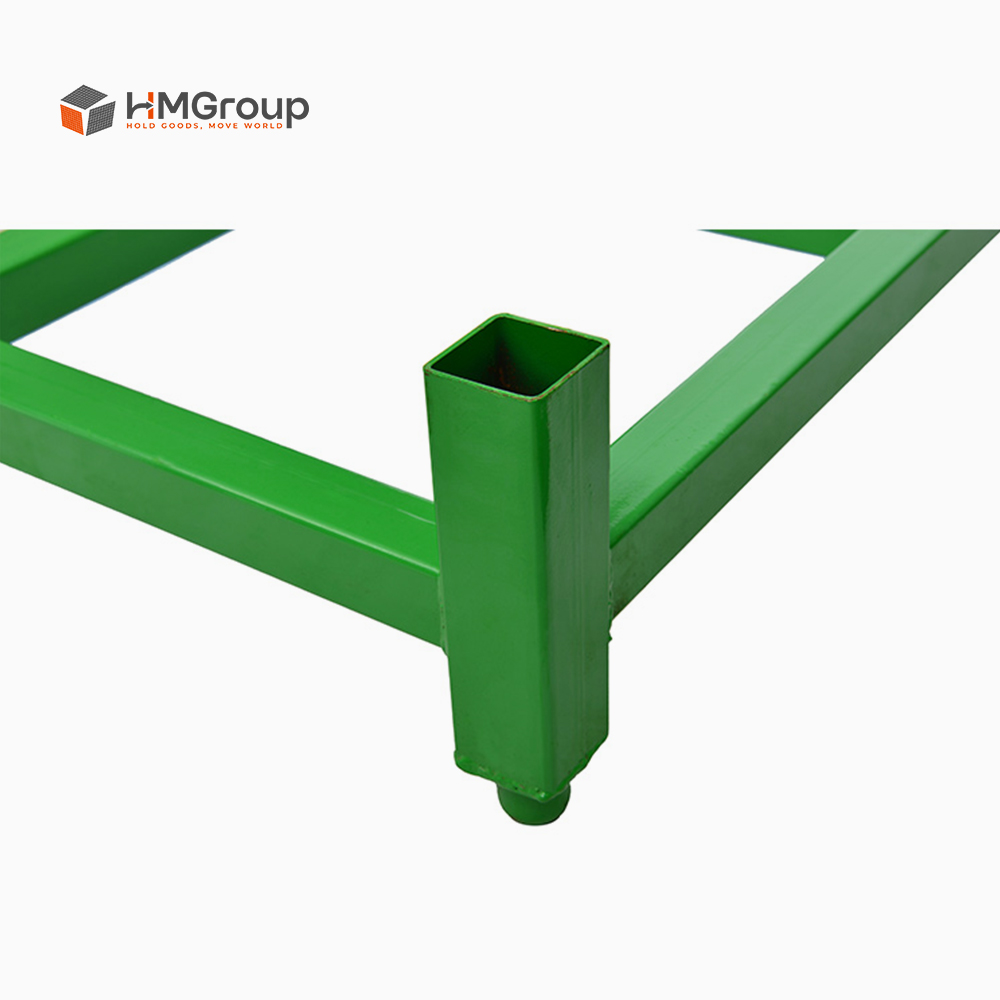
HM-TR6060 is the compact option in the pair. The verified specification is:
- Exterior dimensions: 60 × 60 × 60 inches (1524 × 1524 × 1524 mm)
- Tire capacity: 24 to 32 pieces
- Loading capacity: 2,400 LB (1,100 kg)
- Maximum stacking: 4 units open, 20 units closed
- Material: mild steel Q235
- Finish: zinc, hot-dip galvanized, or powder coating
- Container loading: 280 sets per 1×40'HQ
- Stated industries: tire, logistics and warehousing, food and grocery, agricultural
The small square base is the practical advantage. A 60 × 60 inch footprint is roughly 2.32 m² per bay, so this model tolerates tighter bay spacing and narrower staging areas than the larger rack. The trade-off is arithmetic: at the top of its range the rack holds 32 tires, so a program that needs 300 tire positions requires more bays — and more handling moves — than the same program built on the bigger model.
HM-TR7272WM: 72 × 72 × 72 inches, 42 to 63 tires
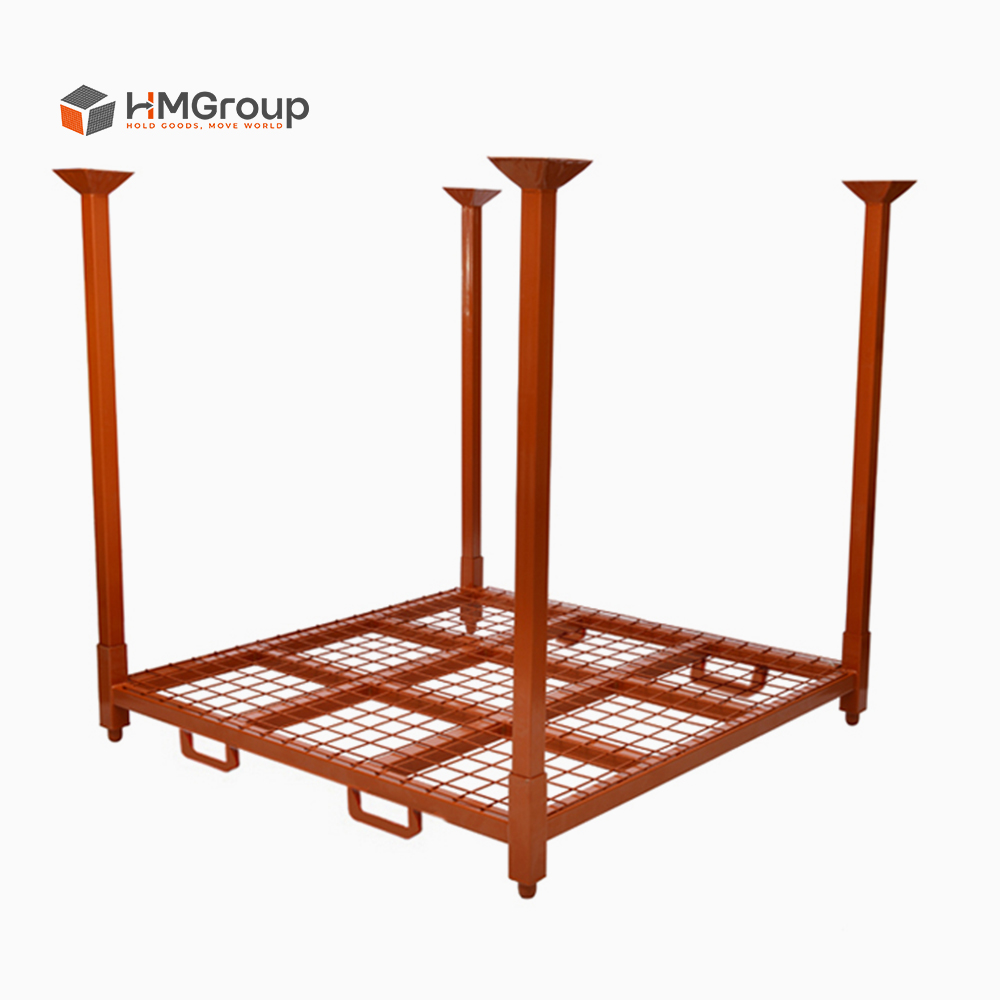
HM-TR7272WM is the higher-density option. The verified specification is:
- Exterior dimensions: 72 × 72 × 72 inches
- Tire capacity: 42 to 63 pieces
- Loading capacity: 2,400 lb (1,100 kg)
- Maximum stacking: 4 units open, 20 units closed
- Material: mild steel Q235
- Finish: zinc, hot-dip galvanized, or powder coating
- Container loading: 130 sets per 1×40'HQ
- Stated industries: tire storage and warehousing; also listed for logistics and warehousing, food and grocery, and agricultural use
The capacity jump is substantial relative to the footprint increase. Going from a 60 inch to a 72 inch square adds about 44% to the base area (2.32 m² to roughly 3.34 m²), while the tire count rises from a maximum of 32 to a maximum of 63 — close to double. In floor-space terms, HM-TR7272WM at full load works out to roughly 0.053 m² of floor per stored tire, against roughly 0.073 m² per tire for HM-TR6060 at 32 tires. That density advantage is the reason to accept the larger bay.
The load rating is a shared ceiling, so check weight per tire. Both models are rated at 1,100 kg. Filled to 32 positions, an HM-TR6060 bay implies an average tire weight of no more than about 34 kg to remain inside the rating. Filled to 63 positions, an HM-TR7272WM bay implies an average of no more than about 17.5 kg per tire. These are arithmetic checks on the stated capacities, not load-test results — but they are the fastest way to see whether the tire count you want is actually available at your tire weight.
What does not change between the two
Material, finish range and stacking pattern are identical: mild steel Q235, zinc or hot-dip galvanized or powder coating, and a 4-open / 20-closed stacking configuration. The 20-unit closed stack matters commercially, because it defines how many racks fit into a container or a return shipment when the racks are nested empty. The one figure that moves the other way is container loading: 280 sets of HM-TR6060 fit a 1×40'HQ against 130 sets of HM-TR7272WM. Buyers comparing freight per rack should treat that difference as a real cost line, not a footnote.

Step-by-Step Breakdown: A Five-Step Selection Sequence
The sequence below converts a tire inventory into a rack decision without guesswork. It works for a single warehouse and for a multi-site rollout.
Step 1 — Count tires by group, not in total
Split the inventory by tire type and size band, because a bay is loaded with a family of similar tires rather than a random mix. Tire racks are normally organized by size or type so that retrieval does not require moving neighbouring inventory. A total count of 900 tires spread across five incompatible size bands does not behave like 900 tires of one type.
Step 2 — Divide by tire positions per bay
Apply the stated capacity of each model to each group. Using the top of each range: 63 tires per HM-TR7272WM bay and 32 tires per HM-TR6060 bay. A group of 500 tires therefore needs about 8 HM-TR7272WM bays or about 16 HM-TR6060 bays. Round up per group, never down, and add a buffer bay for incoming stock.
Step 3 — Convert bays into floor area
Multiply bays by base area: 2.32 m² for HM-TR6060 and roughly 3.34 m² for HM-TR7272WM. For a 1,000-tire program at maximum fill, that is about 16 HM-TR7272WM bays (roughly 54 m²) versus about 32 HM-TR6060 bays (roughly 74 m²) per storage level. The denser model needs less floor but wider individual bays, so check that aisles and turning radii accommodate a 72 inch square base before committing.
Step 4 — Check average tire weight against 1,100 kg
Divide 1,100 kg by the tire count you intend to load. If the answer is below your average tire weight, the bay will be weight-limited before it is position-limited, and the higher tire count is theoretical. This is the step where a buyer expecting 63 heavy tires per bay discovers that HM-TR7272WM is better used at 42 positions — or that a different model in the range, such as HM-EULR with 72 to 81 tire positions at the same 1,100 kg rating, needs to be reviewed instead.
Step 5 — Confirm stacking height, handling equipment and finish
Both models allow 4 units open and 20 units closed. Confirm the actual stack height against ceiling clearance, sprinkler clearance and local rules such as OSHA 29 CFR 1910.176(b) on stable and secured tiered storage. Then match handling: forklifts, reach trucks, pallet jacks and a warehouse management system for tracking. Finish selection follows the environment — powder coating, zinc or hot-dip galvanizing — and both models offer all three.
Use Cases: Where Each Rack Fits
Tire distributors and wholesale operations
High-volume distribution is the natural home of HM-TR7272WM. Professional tire distribution and wholesale operations need to maximize vertical cubic space, organize tires by size and type for fast retrieval, and prevent warping or flattening during storage. With 42 to 63 positions per bay and a 4-high open stack, the larger rack converts ceiling height into positions faster than the compact model.
Retail tire shops and seasonal storage
Smaller sites with seasonal peaks usually run a mixed inventory of passenger and light commercial tires and rarely fill a bay to its maximum. HM-TR6060 fits this profile better: a 60 × 60 inch base is easier to place in an existing back-of-house area, and 24 to 32 positions match the weekly throughput of a single retail location more closely than a 63-position bay.
Retreaders and mixed fleets
Retreading facilities and mixed-fleet operators often store several tire families at once. Here the answer is frequently a mixed layout: HM-TR7272WM for the dominant high-volume size and HM-TR6060 for slower-moving or oversized stock. Because both models share the same 4-open / 20-closed stacking pattern and the same Q235 steel, a mixed stack remains structurally consistent — but confirm with the supplier before stacking different models on top of each other.
Non-tire applications
Both models are also listed for logistics and warehousing, food and grocery, and agricultural industries. In those settings the rack is usually selected on base geometry rather than tire count, and HM-TR6060's smaller footprint is often the deciding factor.
When neither model fits
The HM Group tire range extends beyond these two units. HM-TR6 measures 90 × 40 × 52 inches and holds 34 to 50 tires at 2,400 lb (1,100 kg), stacking 6 open and 20 closed. HM-TR-UTR measures 71.5 × 49.5 × 68.5 inches and holds 42 to 63 tires at 2,400 lb. HM-EULR measures 2450 × 1350 × 2200 mm and holds 72 to 81 tires at 2,400 lb. HM-TR1 measures 2290 × 1100 × 1250 mm with a 600 kg rating and holds a lower weight class. Customization is also available across surface treatment, size, loading capacity, powder coating colour, logo printing, and additions such as wire mesh guards, bottom wire mesh decking, forklift guides, bottom steel plates and wheels.
Comparison Table: HM-TR6060 vs HM-TR7272WM
| Specification | HM-TR6060 | HM-TR7272WM |
|---|---|---|
| Product type | Storage Tire Rack | Car Tire Storage Rack |
| Exterior dimensions | 60 × 60 × 60 inches (1524 × 1524 × 1524 mm) | 72 × 72 × 72 inches |
| Tire capacity | 24 to 32 pcs | 42 to 63 pcs |
| Loading capacity | 2,400 LB (1,100 kg) | 2,400 lb (1,100 kg) |
| Material | Mild steel Q235 | Mild steel Q235 |
| Maximum stacking | 4 open / 20 closed | 4 open / 20 closed |
| Finish options | Zinc / hot-dip galvanized / powder coating | Zinc / hot-dip galvanized / powder coating |
| Loaded in 1×40'HQ | 280 sets | 130 sets |
| Base area (calculated) | About 2.32 m² | About 3.34 m² |
| Floor area per tire at maximum fill (calculated) | About 0.073 m² | About 0.053 m² |
| Maximum average tire weight at full capacity (calculated) | About 34 kg at 32 tires | About 17.5 kg at 63 tires |
| Stated industries | Tire, logistics and warehousing, food and grocery, agricultural | Tire storage and warehousing; logistics and warehousing, food and grocery, agricultural |
All figures above are manufacturer-published model specifications. Rows marked "calculated" are arithmetic derivations from the published dimensions and capacities, provided to support layout planning, not load-test results.
FAQ
Do HM-TR6060 and HM-TR7272WM meet warehouse storage safety requirements?
Both models publish a maximum stacking limit of 4 units open and 20 units closed, and both are rated at 2,400 lb (1,100 kg). Warehousing rules in the United States, including OSHA 29 CFR 1910.176(b), require stored material in tiers to be stable and secured against sliding or collapse. Treat the published stacking limit as an operating ceiling, confirm floor conditions and handling practice, and request the current model datasheet before stacking at the maximum figure in your own facility.
Can one model handle both passenger car tires and larger tire types?
HM-TR7272WM is named as a car tire storage rack and HM-TR6060 as a general storage tire rack, but the decisive check is weight rather than naming. At 63 positions an HM-TR7272WM bay needs an average tire weight of about 17.5 kg or less to stay within the 1,100 kg rating; at 42 positions the allowance rises to about 26 kg. HM-TR6060 allows about 34 kg at 32 tires. Where tire dimensions exceed the standard frame, HM Group offers customization covering size, loading capacity, and additions such as forklift guides and bottom steel plates.
How should I compare cost when neither model has a published price?
Neither model is published with a unit price, so cost has to be compared through the drivers that move it: steel size, finish selection (zinc, hot-dip galvanized or powder coating), customization, order volume, and container loading density. Container loading is the most visible driver — 280 sets of HM-TR6060 fit a 1×40'HQ against 130 sets of HM-TR7272WM — so the freight element per rack differs between the two. Request a quotation that states unit price, finish, packaging and container plan together.
Can I validate the rack configuration before placing a full order?
Validation starts with your own data rather than the rack. Confirm the tire families and average tire weights per bay, then check the position count against the 24-to-32 range of HM-TR6060 or the 42-to-63 range of HM-TR7272WM, and check the base against the intended aisle layout. Because HM Group offers OEM, ODM and fully customized production covering surface treatment, size, loading capacity, colour and logo, any deviation from the standard frame is confirmed at specification stage. Contact the HM Group team to discuss drawings, finish samples and the configuration that matches your inventory.
What affects lead time on these two models?
Lead time is not published for either model, so it has to be confirmed at quotation. The variables that will shape it are the finish selected, whether the frame is standard or customized, order quantity, and container planning — 280 sets per 1×40'HQ for HM-TR6060 against 130 sets for HM-TR7272WM. Confirm production scheduling and shipping terms together so the two are not planned separately.
Conclusion: Decide on Tire Count and Floor, Then Confirm Weight
HM-TR6060 and HM-TR7272WM are not ranked against each other on strength, because they share the same 2,400 lb (1,100 kg) rating, the same mild steel Q235 construction, the same finish options and the same 4-open / 20-closed stacking limit. The decision resolves in three moves: count tire positions per bay, convert that into floor area, then check the average tire weight against the shared load ceiling.
For compact sites and moderate inventories, HM-TR6060 delivers 24 to 32 tire positions in a 60 × 60 × 60 inch frame. For dense distribution and high-volume storage, HM-TR7272WM delivers 42 to 63 positions with materially better floor efficiency per tire. Where neither fits, the wider HM Group tire rack range and the customization options on size, capacity and finish usually close the gap.
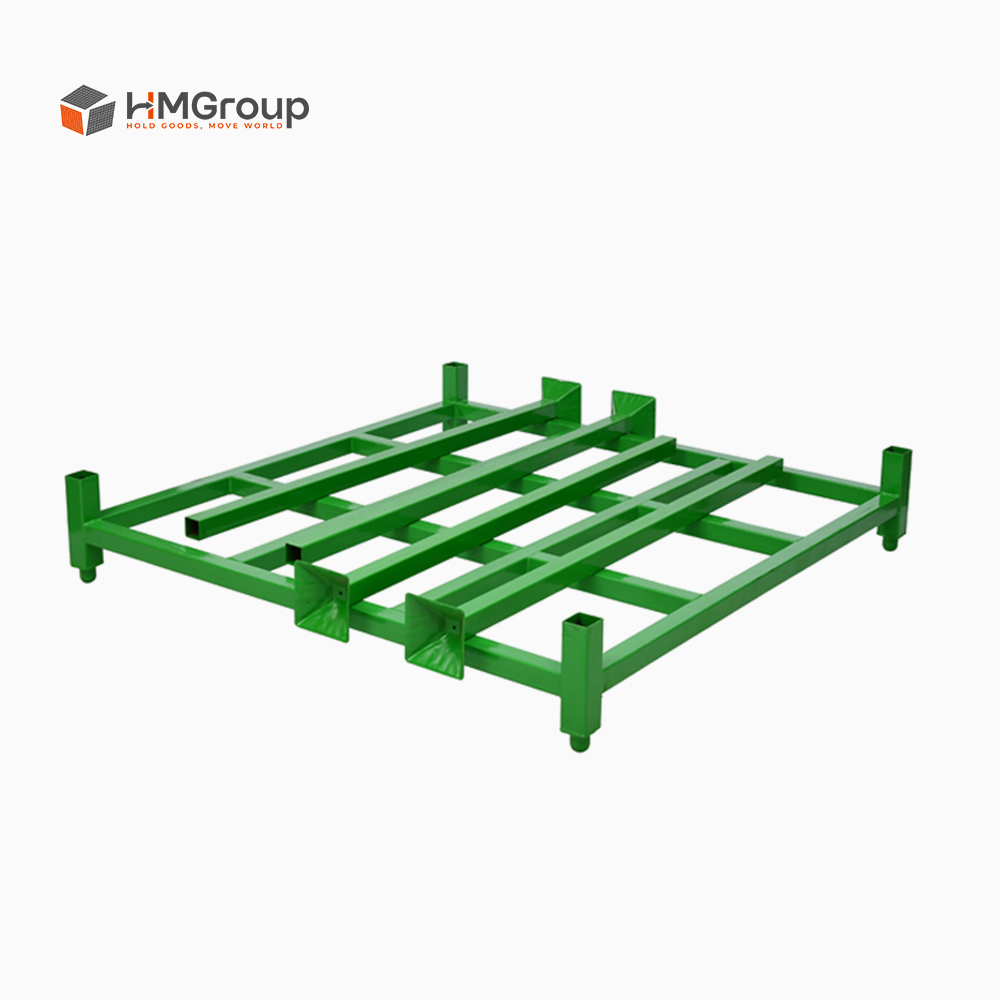
Next step: confirm the model against your tire list
Send HM Group your tire families, average weights per tire and available floor area, and the team will confirm whether HM-TR6060, HM-TR7272WM or another model in the range matches the layout.
Email: mary@net-railing.com | Tel / WhatsApp: +86 150 4058 7228 | Phone: +86 411-3981 3061
Address: 3306 Times Square (Times 1), 50 Renmin Road, Zhongshan Dist, Dalian, Liaoning, China | Website: www.hmlwires.com
Download the full product catalogue: HM Group brochure (PDF)
Have Questions or Need More Details?
Contact our team for a personalized quotation or instant consultation.
Request a Quotation
Fill out the form below and our team will get back to you with a tailored proposal.
WhatsApp Direct Chat
Prefer to chat in real-time? Message us on WhatsApp for instant assistance & quick answers.
- Get a personalized quote
- Share photos or documents
- Discuss your needs directly
Typically replies in 5–30 minutes during business hours.