Stacking Storage Rack Technical Guide: Base Size, Post Size, Load Rating, and Stack Height
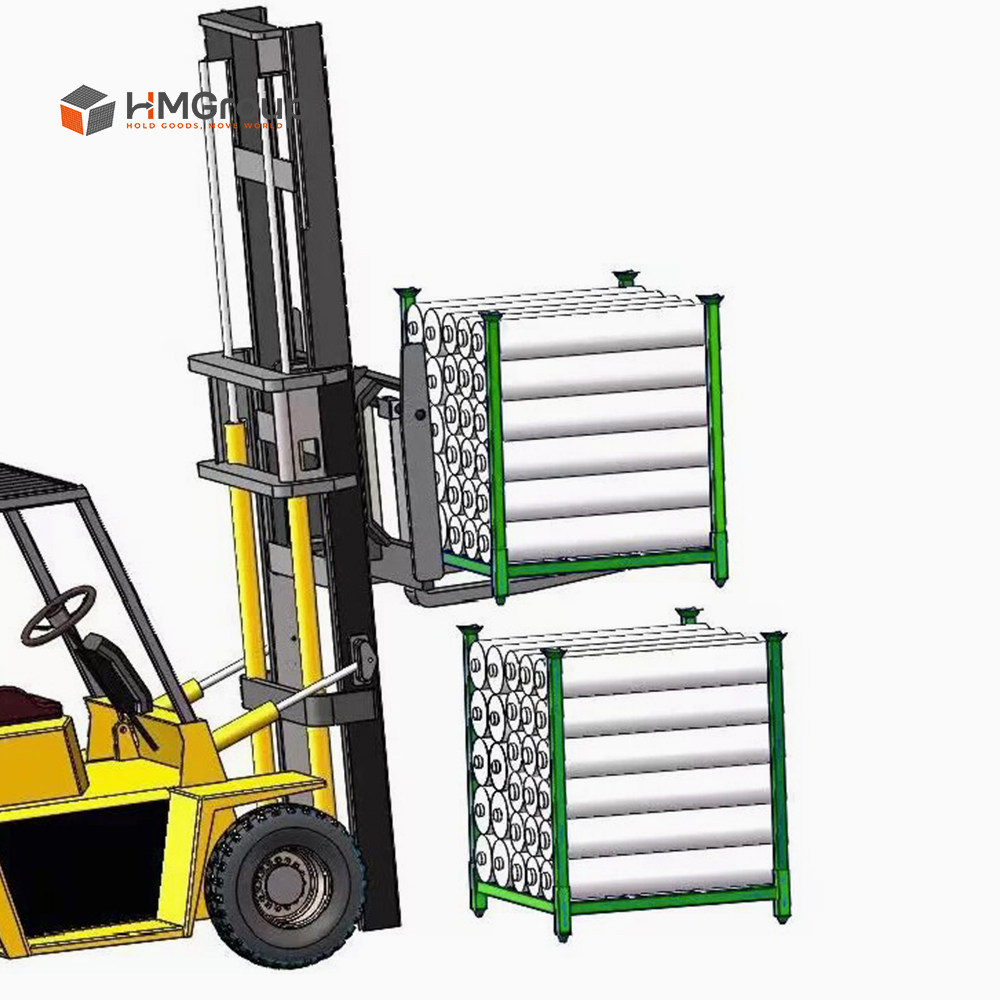
Quick answer: Four parameters decide whether a stacking storage rack is the correct unit for a warehouse — base size, post size, load rating, and stack height. HM-PP001 and HM-PP002, two base-and-post stacking racks manufactured by HM Group, are built from Q235 mild steel with φ60 × 2.5 mm posts, rated at 1,500 kg and 2,000 kg per unit respectively, and designed to stack up to four units high. HM-PP001 loads at 250 sets per 40'HQ container.
This guide is written for importers, distributors, warehouse engineers, and procurement teams who have already decided that a stackable steel storage rack fits their operation and now need to confirm that the specification they buy will hold the load, fit the handling equipment on site, survive the storage environment, and ship in a container that makes commercial sense.
Problem Definition: Why Stacking Racks Are Usually Mis-Specified
A stacking rack is often purchased the way a pallet is purchased — by photo, by one load number, and by unit price. The parameters that actually govern performance are then discovered later, in the warehouse, once the racks are already four units high.
HM Group's own risk documentation identifies four defect families that appear when specification and manufacturing control are weak:
- Structural and stability risks — non-vertical sockets or legs, weak welding points, or uneven base frames that can cause leaning or collapsing during high-level stacking.
- Assembly and compatibility risks — posts failing to fit into base sockets because of internal weld beads, oval deformation, or incorrect necking dimensions.
- Surface and safety risks — sharp burrs or zinc slag that can injure workers, plus coating defects such as peeling, rust, or white spots that shorten service life.
- Logistical risks — unstable packaging or uneven container weight distribution that can cause cargo to collapse during transit or unloading.
Every one of these maps back to a parameter. Base size and base levelness drive stability. Post size and socket geometry drive assembly compatibility. Load rating drives structural safety. Stack height determines how much the bottom unit must carry and which handling equipment becomes mandatory. Finish selection decides whether the rack still performs the same after two years in a cold store or a coastal warehouse.
Industry Background: Where Stackable Steel Storage Racks Fit
Portable stacking racks occupy the space between floor stacking and permanently installed racking. Floor stacking wastes vertical space and damages product; fixed racking delivers density but is bolted down, needs engineering work for every layout change, and consumes aisle space even when the area is being used for bulk storage.
The wider category is substantial. Grand View Research valued the global warehouse racking market at approximately USD 9.71 billion in 2024, projecting USD 12.41 billion by 2030, with North America holding 27.8% of 2024 global revenue. Global Market Insights estimated the broader storage rack market at USD 22.4 billion in 2024 with a 4.9% CAGR forecast through 2034 — a higher figure that reflects a wider scope definition covering equipment and services beyond fixed racking. Selective pallet racking, the dominant fixed segment, accounted for about 45.0% of warehouse racking market share in 2024, according to Grand View Research.
Specialized segments are expanding alongside the products they store. Future Market Insights put the tire storage rack market at USD 865 million in 2024, moving toward USD 1.37 billion by 2034 at a 4.7% CAGR.
Structural expectations are set by published standards. In the United States, industrial steel storage racks are designed to ANSI MH16.1-2023, which specifies minimum requirements for structural design, testing, and utilization. In Europe, EN 15512:2020 governs the structural design principles of steel static storage systems and adjustable pallet racking. That is why a technical guide to base size, post size, load rating, and stack height carries more procurement value than a generic "heavy duty" label: these are the parameters that can actually be reviewed against design intent.
Detailed Solution: The Four Parameters and How They Interact
1. Base Size: Footprint, Levelness, and the Socket Interface
The base frame performs three jobs. It carries load into the floor, it defines the footprint the unit occupies, and it provides the sockets into which the posts of the unit stacked above are seated. Base size therefore controls more than floor space.
- Stability envelope. A correctly sized and levelled base resists tipping once the stack reaches its upper levels. HM Group's quality protocol includes base levelness inspection, because uneven base frames are a documented cause of leaning or collapse in high stacking.
- Load spread. Base size determines how the combined weight of a full four-high stack is distributed to the floor.
- Alignment for stacking. The sockets, not the outer rim, decide whether the second, third, and fourth units align. HM Group inspects welding jigs before every welding session to hold verticality within a strict angle error so that stacks remain straight.
A practical rule: base dimensions should be confirmed against the real load footprint — including any pallet, slip sheet, or support the goods sit on — not against the rack's outer measurement alone.
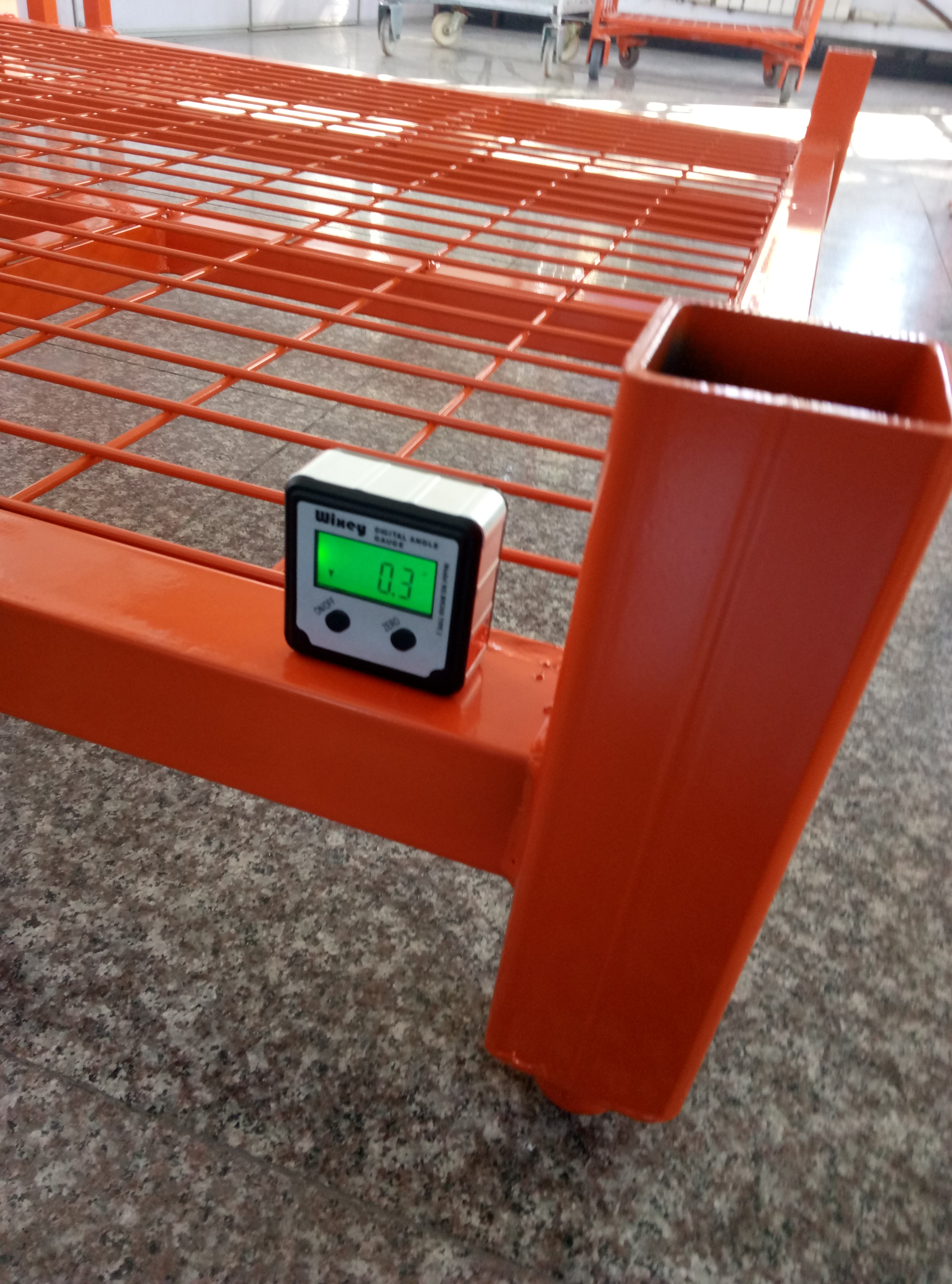
2. Post Size: φ60 × 2.5 mm and Q235 Steel
HM-PP001 and HM-PP002 both use φ60 × 2.5 mm posts. That figure is a material specification rather than a marketing number: nominal outside diameter 60 mm, wall thickness 2.5 mm. Diameter sets the post's section properties, while wall thickness determines how much steel resists buckling under the column load of a full stack.
Three further controls decide whether the specification still holds in the warehouse:
- Material grade. HM Group mandates Q235 for high-strength requirements and prohibits spliced material or inferior steel grades, so the tube behind the φ60 × 2.5 mm figure is the specified grade.
- Dimensional tolerance and socket fit. A post that will not enter the base socket is a delivery-stopping defect. HM Group enforces tolerances on overall dimensions and diagonals so that posts and sockets remain compatible across units and production batches.
- Weld integrity. Continuous full welding is mandatory on critical joints — sockets, stacking bowls, and tube-to-tube connections — which are precisely the joints that carry stack load and absorb forklift impact.
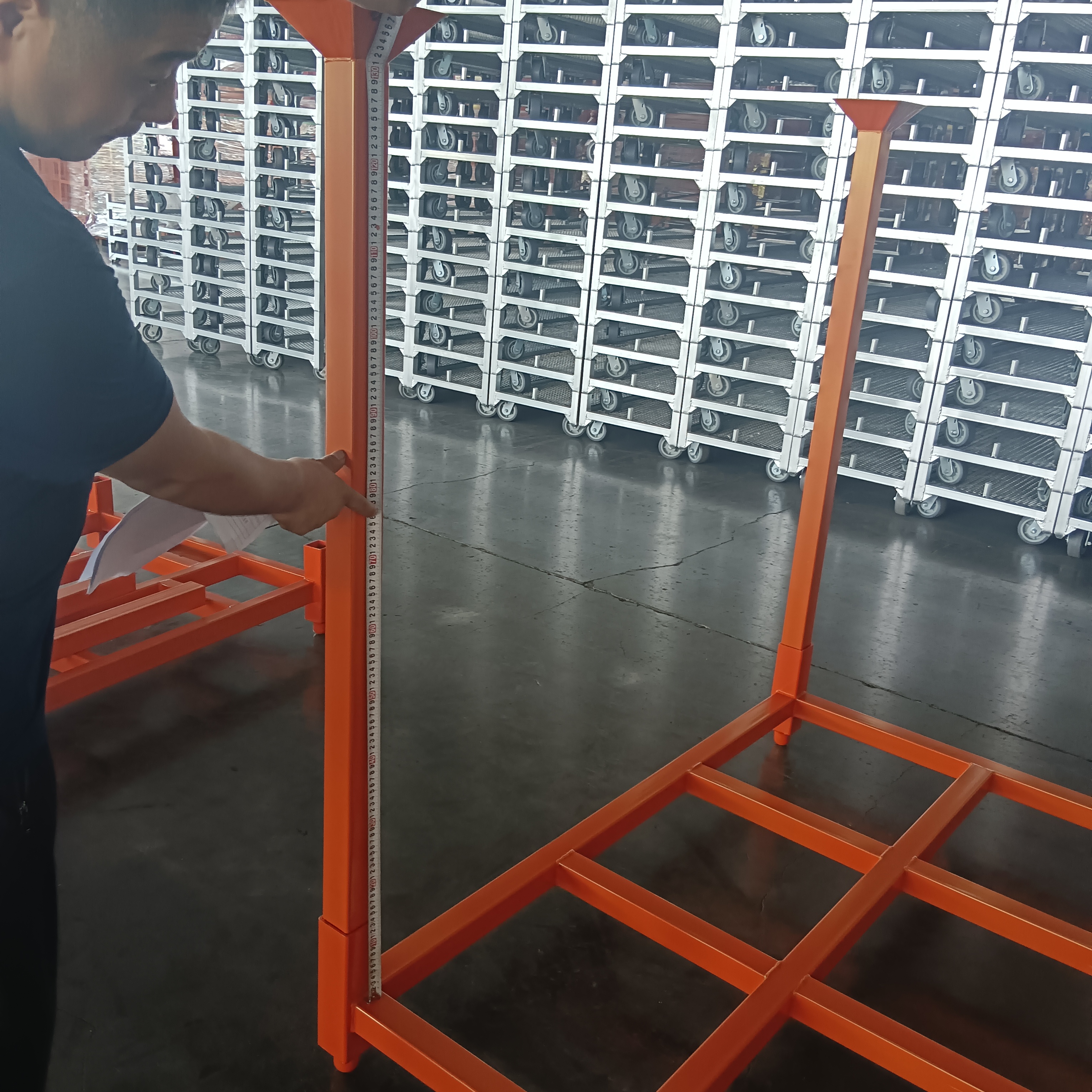
3. Load Rating: 1,500 kg and 2,000 kg
HM-PP001 is rated at 1,500 kg per unit. HM-PP002 is rated at 2,000 kg per unit. Both figures describe the load a single unit is designed to carry, and both are the number to compare against the real weight of one loaded unit — goods plus any intermediate support.
Three selection rules follow:
- Rate the unit, then rate the stack. The load rating applies to a unit; when units are stacked, the bottom unit carries its own load plus the cumulative load above it. Load rating and stack height must therefore be chosen together, never separately.
- Use the lowest rating in the column. Where a stack combines units of different capacities, the safe working limit for that stack is set by the lowest-rated unit in it.
- Keep margin for handling. Forklift placement is dynamic. The rating is a static design value, and abrupt placement introduces forces that the load margin exists to absorb.
4. Stack Height: Up to Four Units High
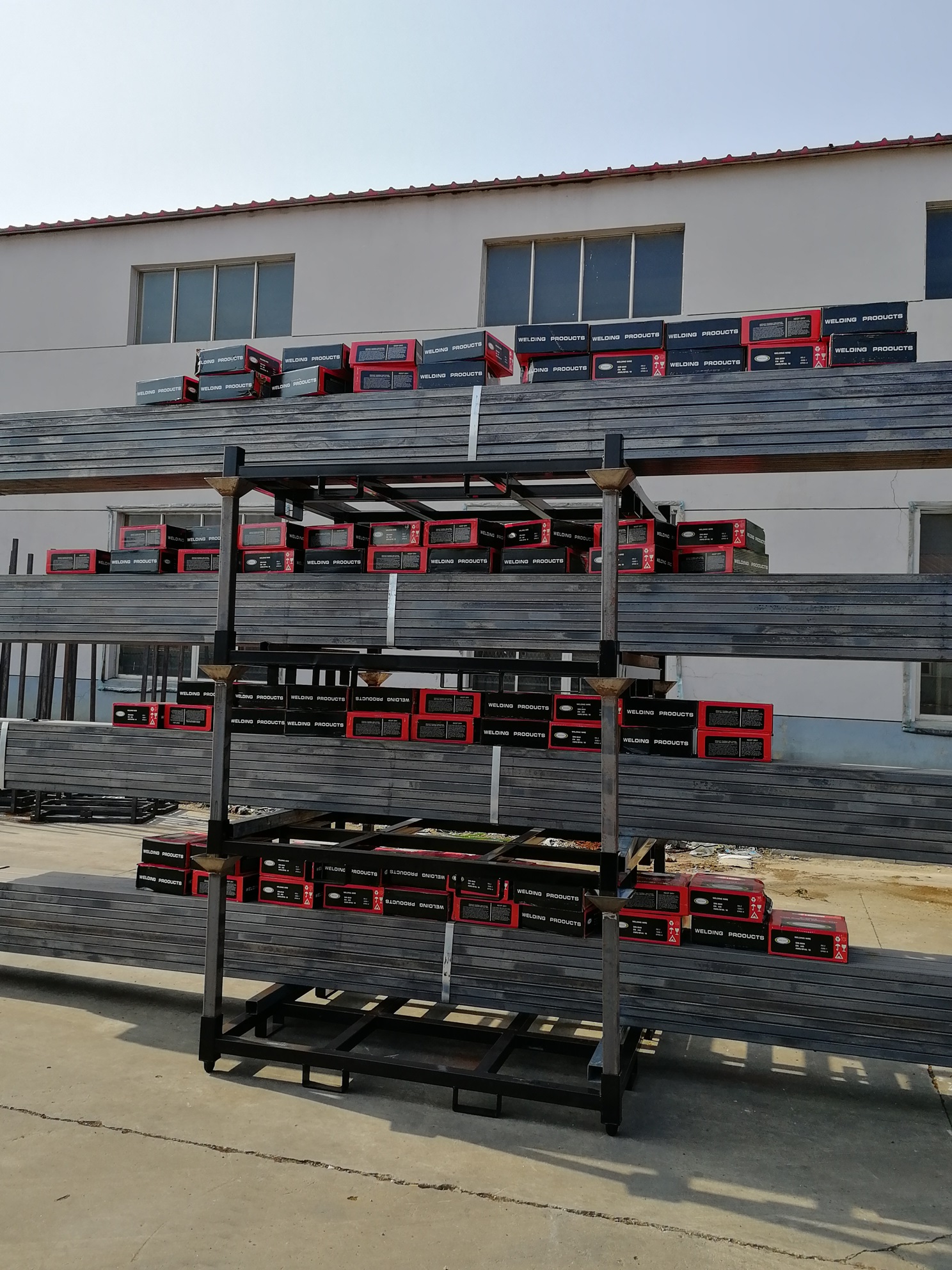
HM-PP001 and HM-PP002 are designed to stack up to four units high. Stack height is the parameter with the largest effect on both storage density and equipment requirements, because it multiplies column load and simultaneously raises retrieval height.
Across HM Group's wider stacking rack range, configurations of four to six units high are used for loads from 1,500 kg to 2,000 kg, depending on model and application; the four-high limit stated above is the specification for HM-PP001 and HM-PP002. Whatever the model, stack height must be matched to the handling equipment on site: this product requires supporting equipment such as high-reach forklifts and electric pallet stackers to place and retrieve the upper units safely.
5. Finish: Matching Coating to the Storage Environment
Two finishing routes are documented in HM Group's production process, and the choice is an application decision rather than a cosmetic one:
- Hot-dip galvanizing — used where corrosion resistance is the priority. HM Group specifies flow holes in galvanized parts to prevent zinc blockage and manually grinds sharp edges so the finished rack is safe to handle.
- Powder coating — used where a uniform, clean finish is required. Adhesion is controlled through regular cross-cut adhesion tests and furnace temperature monitoring, which is what prevents the peeling, rust spots, and white spots that shorten rack life.
Selection logic: humid, cold, or coastal storage and outdoor staging point toward hot-dip galvanizing; dry indoor warehouses, sanitized environments, and colour-coded rack fleets point toward powder coating. Either way, the finish belongs on the order as a specification line item.
What HM-PP001 and HM-PP002 Deliver as a Specification Set
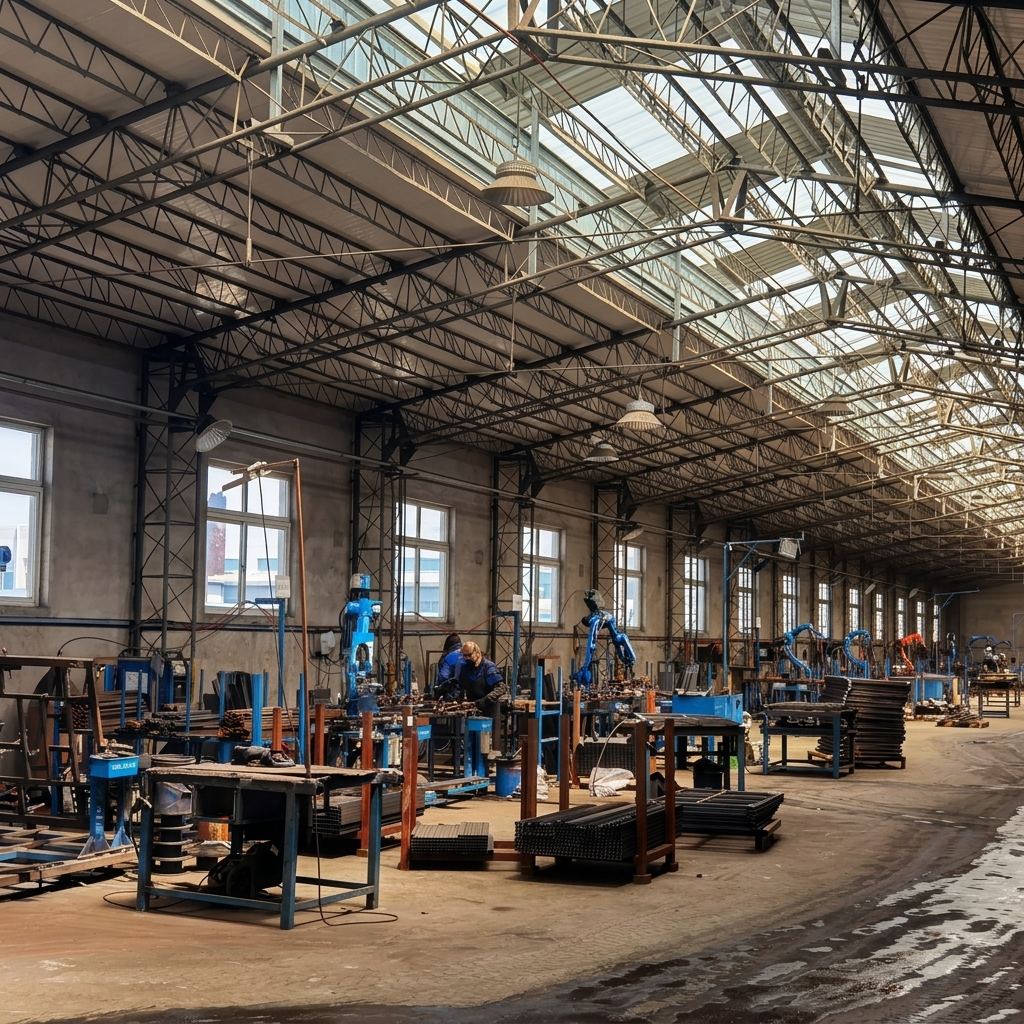
HM Group is a manufacturer of wire mesh containers, cage pallets, stillage, tire racks, nestainer racks, fabric roll racks, post pallet racks, and stacking racks. The company was founded in 2003, operates three manufacturing bases in Xiamen, Nanjing, and Qingdao, and generates 100% of its sales from exports serving the EU, North America, Asia, and the Middle East.
Applied to the two models covered in this guide, the specification set is:
- Material: Q235 mild steel, with spliced material and inferior grades prohibited.
- Post size: φ60 × 2.5 mm posts seated in a base-and-post design.
- Load rating: 1,500 kg for HM-PP001; 2,000 kg for HM-PP002.
- Stack height: up to four units high.
- Finish: hot-dip galvanizing or powder coating, selected by storage environment.
- Container loading: 250 sets of HM-PP001 per 40'HQ container.
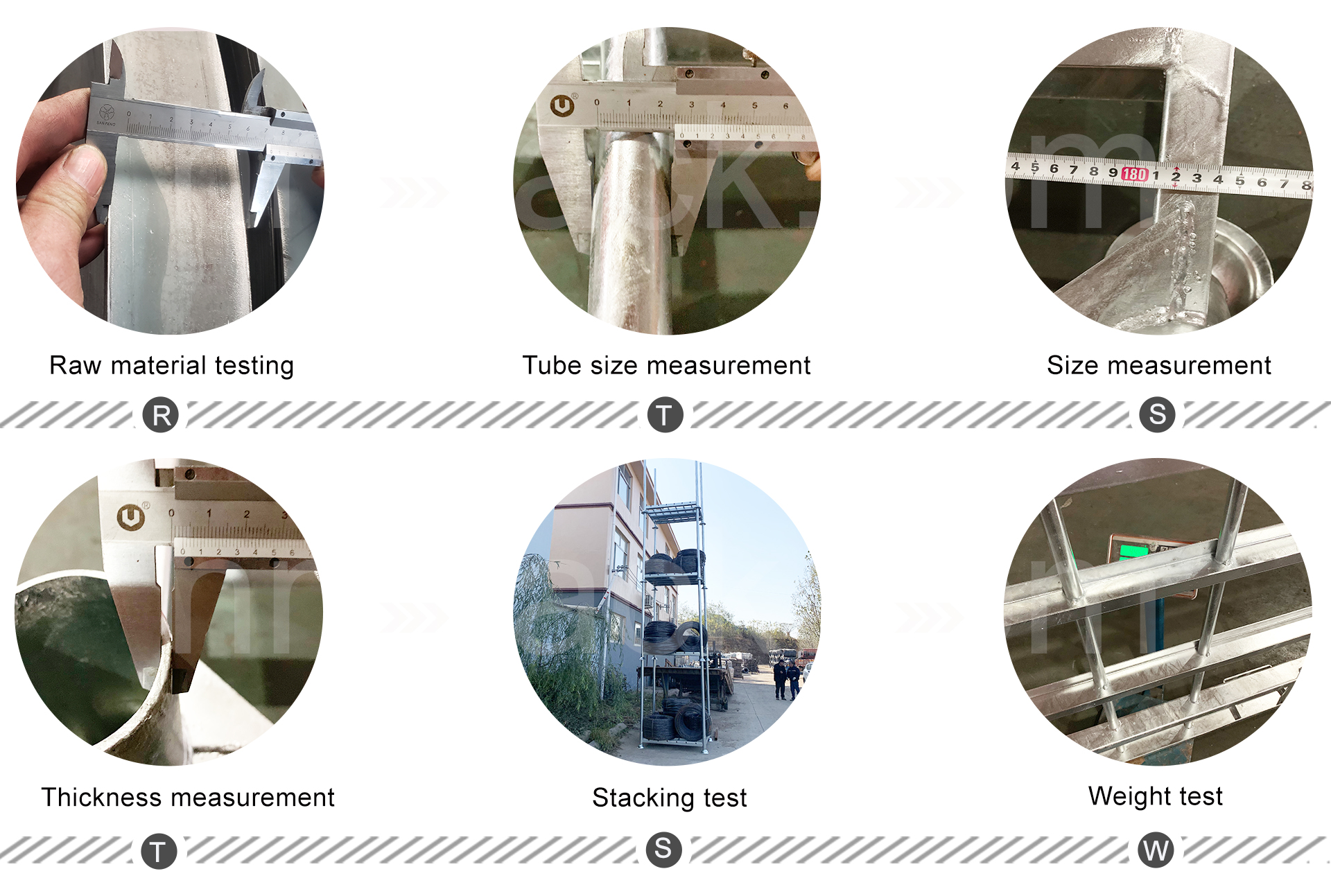
- Quality release: 100% comprehensive self-inspection on every unit rather than sampling alone, guided by an OK vs. NOK visual handbook on the production floor.
Supply-side figures matter for a multi-year rack programme: monthly production capacity of 80,000 sets, annual output of 2,000,000 units, a 62,000 m² factory footprint across the group's bases, and a 10-person R&D team. For distributors and importers planning repeat orders, capacity and batch consistency usually matter more than a one-off unit price, because a rack fleet is expanded in phases rather than purchased once.
Step-by-Step: Specifying a Stacking Rack Order
- Define the load unit. Record product dimensions, weight, and the support the goods sit on. This is the input that base size and load rating must satisfy.
- Set the target stack height. One high, two high, or up to four high. This sets the column load and the retrieval equipment required.
- Select the model class. Loads up to 1,500 kg per unit point to HM-PP001; heavier loads up to 2,000 kg point to HM-PP002.
- Verify post and base dimensions on the drawing. Confirm φ60 × 2.5 mm posts, the Q235 grade, base dimensions, base levelness tolerance, and socket geometry.
- Confirm weld and dimensional controls. Ask which joints receive continuous full welding — sockets, stacking bowls, and tube-to-tube connections — and how overall dimension and diagonal tolerances are held.
- Choose the finish. Hot-dip galvanizing or powder coating, based on humidity, temperature, and handling environment.
- Confirm handling equipment. High-reach forklifts or electric pallet stackers are required for upper-level placement and retrieval.
- Agree commercial terms. MOQ of 1x20GP; delivery terms EXW, FOB, CIF, DDP, or DDU; payment by T/T (30% in advance, 70% against copy of B/L) or L/C.
- Plan container loading. Build 250 sets of HM-PP001 per 40'HQ container into the landed-cost calculation.
- Validate before shipment. Arrange pre-shipment inspection or third-party inspection, and request assembly/disassembly videos together with loading photos.
Use Cases: Where Stacking Storage Racks Earn Their Space
Tire storage racking. An industrial tire storage rack replaces floor stacking to prevent tire compression and tread deformation. HM Group documents a storage capacity increase of up to 60% versus floor stacking, vertical stacking of 4–6 units high when fully loaded, 4-way forklift entry for rapid reorganization, roughly 50% faster loading and unloading through batch management, and a damage rate about 80% lower than wooden pallets. Tire manufacturing plants and large-scale tire distribution warehouses are the primary fit; HM-TR series tire racks are inspected as a dedicated product line, and the same stacking tire storage rack logic applies to truck tire storage racks in fleet and retread operations.
Fabric, carpet, and carpet pad storage. A fabric roll storage rack or carpet storage rack holds rolls vertically instead of on the floor, which prevents roll slipping and crushing. Documented outcomes versus floor stacking include 200%–300% more vertical storage capacity and 40% faster material retrieval, with stacking up to four high while rolls stay secure and forklift-accessible. Industrial fabric roll storage rack configurations and carpet roll storage racks used with carpet pad storage racks follow the same base-and-post principle.
Bulk bag and barrel storage. Bulk bag storage racks and barrel storage racks use the same rackless approach: modular units that nest or fold when empty, require no aisle space during bulk storage, need zero bolting to install, and are reported to save up to 80% of space when nested or detached. Nestainer storage racks extend this principle to palletized loads that need support during handling.
Seasonal and cold storage. Because the units are movable and require no structural installation, warehouse reconfiguration is around 50% faster than moving fixed racking. Steel construction is also easier to clean and sanitize than wooden pallets, which suits food-grade and cold-chain environments where detachable stack racks are used for bulk goods.
Comparison Table: HM-PP001, HM-PP002, and Fixed Selective Pallet Racking
| Parameter | HM-PP001 | HM-PP002 | Fixed Selective Pallet Racking |
|---|---|---|---|
| Steel grade | Q235 mild steel; spliced material and inferior grades prohibited | Q235 mild steel; spliced material and inferior grades prohibited | Steel static storage system, designed to ANSI MH16.1-2023 (US) / EN 15512:2020 (Europe) |
| Post size | φ60 × 2.5 mm | φ60 × 2.5 mm | Not applicable — bolted, anchored upright frame system |
| Design principle | Base-and-post portable stacking | Base-and-post portable stacking | Bolted and anchored installation; fixed levels |
| Load rating per unit | 1,500 kg | 2,000 kg | Project-specific, defined by design |
| Stack height | Up to 4 units high | Up to 4 units high | Fixed beam levels |
| Space when empty | Nests or folds when empty — up to 80% space saving reported versus fixed racking | Nests or folds when empty — up to 80% space saving reported versus fixed racking | Fixed footprint; aisle space required during bulk storage |
| Installation | Zero bolting required | Zero bolting required | Bolted and anchored installation |
| Container loading | 250 sets per 40'HQ container | Confirmed per order based on configuration | Not shipped as portable units |
| Typical fit | General industrial and textile loads | Heavier industrial and tire-class loads | High-volume uniform pallet flows — about 45.0% of 2024 warehouse racking market share |
Read this table as a decision aid, not a ranking. HM-PP001 and HM-PP002 figures are manufacturer specifications for portable stacking racks; the fixed racking column reflects published design standards and market data. Load class, stack height, and handling equipment must always be matched to the actual application.
Frequently Asked Questions
Which standards apply to industrial stacking storage racks?
Two reference standards appear most often in procurement documents for industrial steel storage racks. In the United States, ANSI MH16.1-2023 specifies minimum requirements for structural design, testing, and utilization. In Europe, EN 15512:2020 governs the structural design principles of steel static storage systems and adjustable pallet racking. HM Group's manufacturing controls address the same failure families these standards target: continuous full welding on critical joints such as sockets, stacking bowls, and tube-to-tube connections; a strict tolerance regime on overall dimensions and diagonals; a Q235 material mandate with no spliced or inferior grades; 100% self-inspection of every unit; and cross-cut adhesion testing plus furnace temperature monitoring for powder-coated parts. Buyers with project-specific compliance requirements should state them at the inquiry stage so the relevant documentation can be confirmed for that order.
Can HM Group support a large or multi-year stacking rack programme?
Documented capacity includes monthly production of 80,000 sets and annual output of 2,000,000 units across three manufacturing bases in Xiamen, Nanjing, and Qingdao, on a 62,000 m² footprint, supported by a 10-person R&D team. HM Group was founded in 2003, all sales come from exports serving the EU, North America, Asia, and the Middle East, and sales, technical, and service teams are located across the United States, Canada, Mexico, Argentina, Brazil, South Africa, Saudi Arabia, and other key regions. Capacity and batch consistency matter for phased rack fleets: they are what keeps posts and base sockets compatible when a distribution centre expands its stack rack fleet a year after the first order.
What purchasing terms apply, and how does container loading affect cost?
The MOQ is 1x20GP. Delivery terms are EXW, FOB, CIF, DDP, or DDU, and payment terms are T/T (30% in advance, 70% against copy of B/L) or L/C. Freight economics depend heavily on packing density: HM-PP001 loads 250 sets per 40'HQ container, which lowers the freight cost carried by each set. Loading figures for HM-PP002 should be confirmed per order, since the configuration affects how the units nest in the container.
How can buyers validate racks before shipment?
Every unit undergoes 100% factory self-inspection before quality release, guided by an OK vs. NOK visual handbook that allows workers to identify and isolate defects at the station. For external validation, HM Group offers a 10% pre-shipment sampling inspection, provides assembly and disassembly videos together with loading photos, and accepts acceptance criteria based on pre-shipment inspection or third-party inspection. Buyers who want a physical unit for internal handling trials should raise this as a sample request at inquiry stage so it can be planned together with the order.
How should delivery planning and order timing be approached?
Delivery planning combines three verified facts: monthly production capacity of 80,000 sets, an MOQ of 1x20GP, and delivery terms of EXW, FOB, CIF, DDP, or DDU. Because stacking rack orders are configured by model, finish, and stack height, the practical step is to fix the configuration and quantity first, then confirm the delivery schedule with the sales team at that point. To request a quotation, confirm base and post dimensions against your load, or arrange a pre-shipment inspection, contact Mary Kong at mary@net-railing.com or +86 150 4058 7228. The full product programme is documented in the HM Group product catalogue.
Conclusion: A Stacking Rack Is a Specification, Not a Catalogue Photo
Base size defines the stability envelope and the socket interface. Post size — φ60 × 2.5 mm in Q235 steel for HM-PP001 and HM-PP002 — defines column strength. Load rating, at 1,500 kg and 2,000 kg per unit, defines how much product a single rack can hold. Stack height, up to four units, defines both the density achieved and the handling equipment required to run it. Finish defines how long all of this survives the storage environment.
Buyers who specify those four parameters before comparing prices avoid the four defect families that damage high stacking: unstable bases, incompatible posts and sockets, under-rated structures, and coatings that fail early. Buyers who also plan container loading — 250 sets of HM-PP001 per 40'HQ container — turn the same specification into a lower landed cost per set.
Next Step: Quote, Sample, or Pre-Shipment Inspection
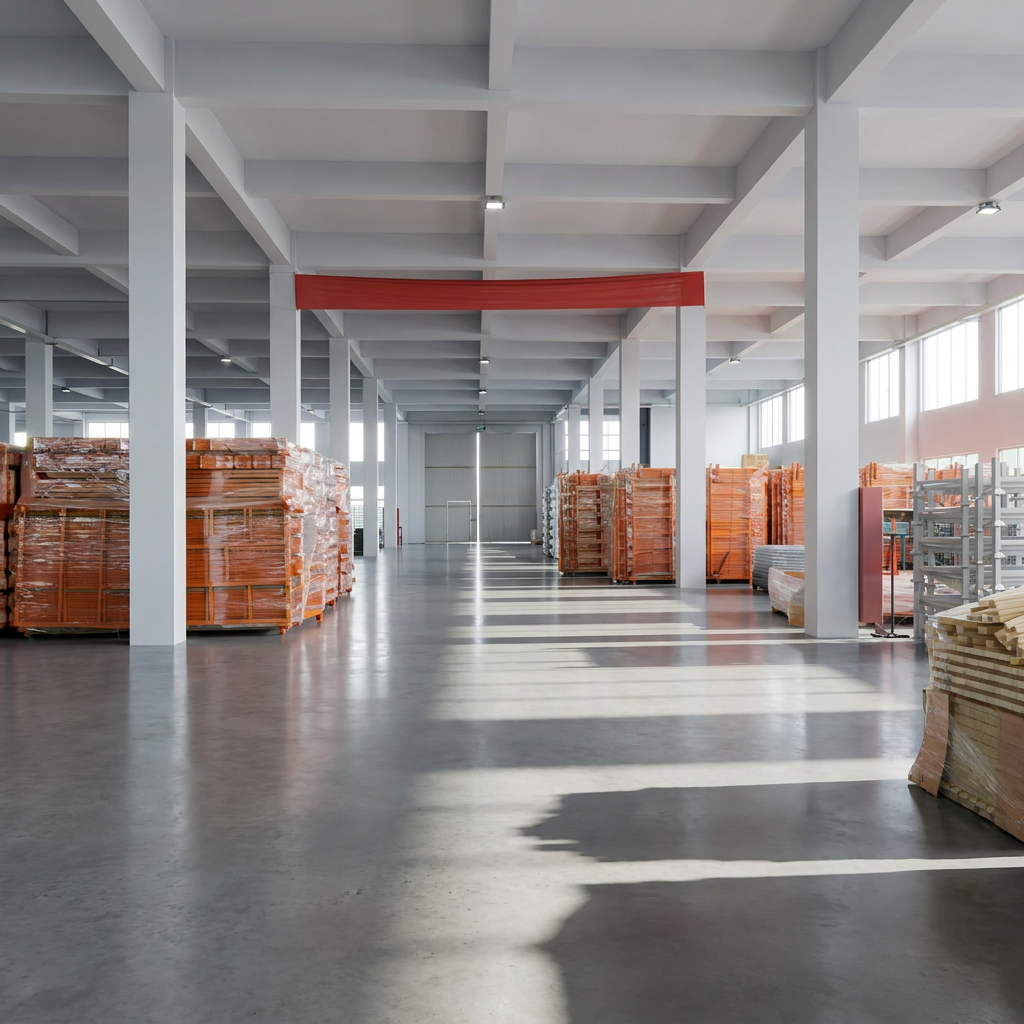
HM Group manufactures stacking storage racks, nestainer racks, tire racks, fabric roll racks, bulk bag and barrel storage racks, and wire mesh containers at three manufacturing bases in Xiamen, Nanjing, and Qingdao, with 100% export sales to the EU, North America, Asia, and the Middle East.
Send your load weight, base dimensions, target stack height, and storage environment, and the team will confirm the matching model and configuration.
Contact: Mary Kong — mary@net-railing.com — Tel/WhatsApp: +86 150 4058 7228 — Phone: +86 411-3981 3061
Address: 3306 Times Square (Times 1), 50 Renmin Road, Zhongshan Dist, Dalian, Liaoning, China
Website: www.hmlwires.com · Catalogue: Download the HM Group product catalogue (PDF) · WhatsApp: Start a conversation
Have Questions or Need More Details?
Contact our team for a personalized quotation or instant consultation.
Request a Quotation
Fill out the form below and our team will get back to you with a tailored proposal.
WhatsApp Direct Chat
Prefer to chat in real-time? Message us on WhatsApp for instant assistance & quick answers.
- Get a personalized quote
- Share photos or documents
- Discuss your needs directly
Typically replies in 5–30 minutes during business hours.