
Supplier Evaluation Essentials: Verifying Load Capacity Claims in Wire Containers
A load capacity claim is a promise, not a specification. When a supplier states that a wire container carries 800 kg or 1,300 kg, that figure becomes useful to a buyer only if it can be traced back to three verifiable inputs: the wire gauge used in each structural member, the mesh grid size, and the frame-and-base design that transfers the load into the forklift. This article shows how to check those inputs against published data, using HM Group models such as HM-HD010 and HM-WEU005 as worked examples, and lists the red flags and checklist items that usually indicate a capacity claim cannot be reproduced.
The approach below is written for buyers at the awareness and research stage — importers, procurement managers and engineers who are comparing wire container suppliers before shortlisting. It assumes no prior access to test laboratories. Everything described here can be done from a specification sheet, a caliper, and a sample unit.
Why Load Capacity Claims Are Hard to Verify
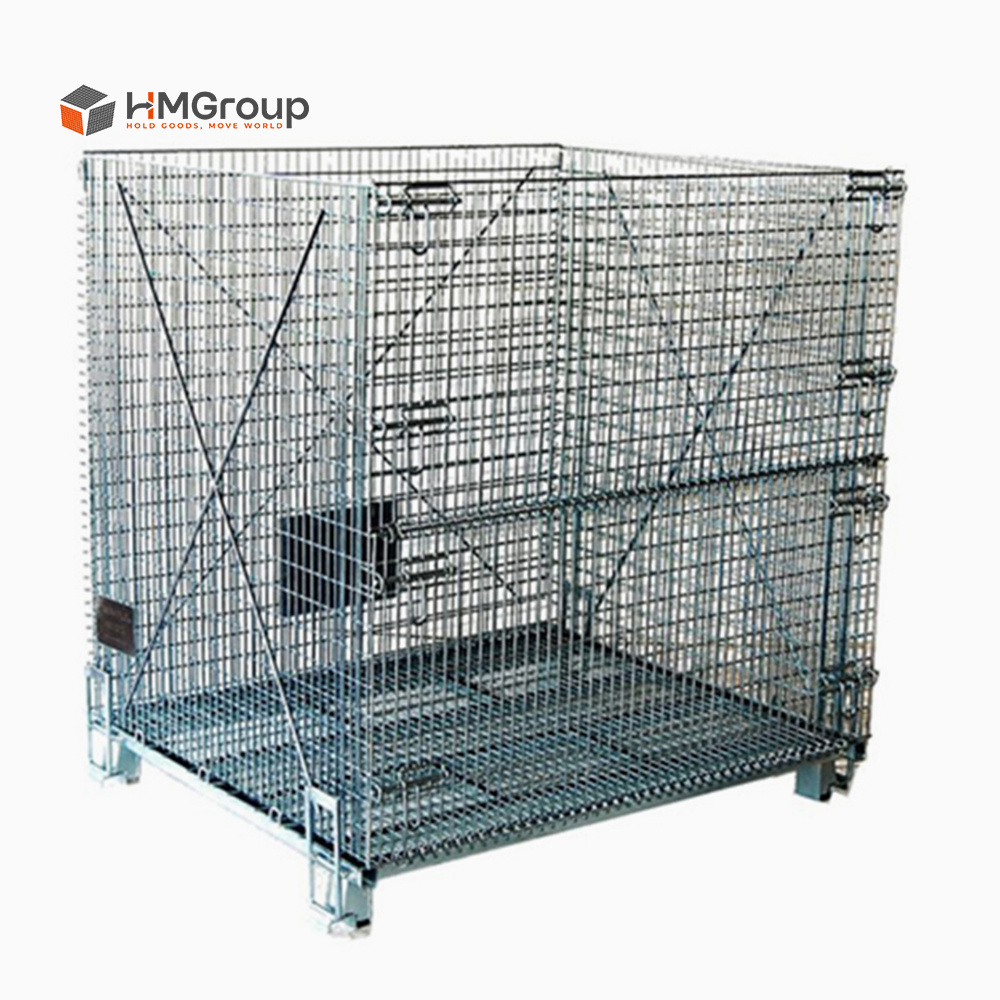
Load capacity is a system property, not a material property. It is the result of how wire diameter, mesh aperture, frame section, base structure and stacking position work together. That is why two wire containers with completely different specifications can carry the same published number without either one being wrong. HM-HD010 is rated 800 kg using a 6 mm wire gauge and a dense 25×50 mm grid in a 1200×1000×1250 mm body. HM-WEU005 is also rated 800 kg, but it uses a 5–12 mm gauge range and a much more open 51×118 mm grid in a 1200×920×1018 mm body. Same claim, different engineering, different cargo.
The practical problem is that a bare number invites buyers to compare ratings as if they were the same unit of measure. They are not. Three questions sit behind every rating, and most datasheets do not answer them explicitly:
- Does the rating apply to a single unit, or to the bottom unit of a loaded stack?
- Is it a static rating (load resting in place) or a dynamic rating (load moved repeatedly by forklift)?
- Is it based on a uniformly distributed load, or does it account for point loads from irregular or heavy single items?
Until those three questions are answered, a capacity figure cannot be used as a shortlisting criterion. It can only be used as a starting point for a conversation.
The Market Context Behind Load Claims
The volume of published claims is growing because the category is growing. According to Dataintelo, the global wire mesh containers sales market was valued at approximately USD 2.34 billion in 2025 and is projected to reach USD 3.72 billion by 2034, expanding at a CAGR of 5.2% over 2026–2034. Within the product segment, stackable wire mesh containers accounted for 32.5% of total revenue in 2025 — the single largest share — and Asia Pacific held a 38.2% revenue share as of 2025.
Trade data points the same direction. The United States is a major importer of articles of iron or steel wire under HS Code 732620, with a market share of approximately 16.7% in 2024, according to UN Comtrade data compiled by Abrams Wiki. Cross-border sourcing means buyers increasingly compare specifications published by suppliers they have never visited, across languages and documentation conventions.
Why this matters for verification. Market estimates themselves should be read with the same discipline. Dataintelo projects 5.2% CAGR for wire mesh containers (2026–2034), while Market Research Future projects 3.64% (2025–2035) for the broader wire mesh market. Different scopes produce different numbers. When a supplier cites an industry statistic in a sales conversation, ask which scope it covers — the same question you would ask about a load rating.
Suppliers publishing capacity claims in this market include Marlin Steel (USA), Nashville Wire (USA), HM Group (China) and Bekaert (Belgium), among others. In the wine segment, Italiana Contenitori (Italy) publishes a wire container design rated above 1,000 kg with a tare weight of 46 kg, positioned around ventilation and bottle protection — an example of an attributable third-party figure that buyers can use as an external reference point.
What a Load Rating Actually Consists Of
A capacity claim can be decomposed into four verification pillars. If a supplier cannot supply data for all four, the claim is incomplete rather than necessarily false — but it should not be treated as verified.
- Wire gauge — the diameter of the wire used in each structural member, not a single blanket number.
- Grid size — the mesh aperture, which governs what the container retains, ventilates and protects.
- Material and surface treatment — the steel grade and the coating system, which determine how the rating holds up over years of handling.
- Frame, base, gate and stacking design — the geometry that carries the load into the forklift and into the unit below it.
Pillar 1: Wire Gauge — The Diameter You Are Not Being Shown
Across HM Group models alone, published wire gauge values span 4 mm to 12 mm. HM-ST007 and HM-ST-AU001 are both quoted at 4 mm. HM-HD001 and HM-HD010 are both quoted at 6 mm. HM-HD028 is quoted at 5 mm. HM-PPC14 uses a 6–12 mm range, HM-PPC22 a 4.8–12 mm range, and HM-WEU005, HM-WEU001 and HM-WEU010 all use a 5–12 mm range.
That range is the first thing to interrogate. A single gauge figure usually means the mesh wire diameter. A range usually means the unit combines different diameters — typically a heavier gauge in the frame or base tube and a lighter gauge in the mesh panel. Both conventions are legitimate, but a buyer cannot infer load capacity from the number without knowing which member it describes.
The second thing to notice is that gauge alone does not set capacity. HM-ST007 and HM-ST-AU001 share the same 4 mm gauge and the same 50×50 mm grid, yet they are rated 1,000 kg and 500 kg respectively. Their footprints and frame geometry differ, and the ratings follow those differences. A supplier who offers gauge and grid as proof of capacity is offering necessary inputs, not sufficient ones.
Pillar 2: Grid Size — Retention, Not Strength
Grid size defines what the container holds, not how much weight it can take. HM-WEU005 uses a 51×118 mm grid to cradle 400 Bordeaux bottles. HM-WEU010 uses 60×120 mm in the same wine family. HM-HD010 tightens to 25×50 mm for PET preform and agricultural storage, while HM-HD001 uses 50×50 mm for auto parts, agricultural and food applications.
The counter-intuitive finding is that denser mesh does not automatically mean a higher rating. HM-HD010's 25×50 mm grid is denser than HM-HD001's 50×50 mm grid, yet HM-HD010 is rated 800 kg while HM-HD001 is rated 1,300 kg. The difference comes from elsewhere in the structure. Buyers who use mesh density as a proxy for strength will misread the datasheet.
Pillar 3: Material and Surface Treatment
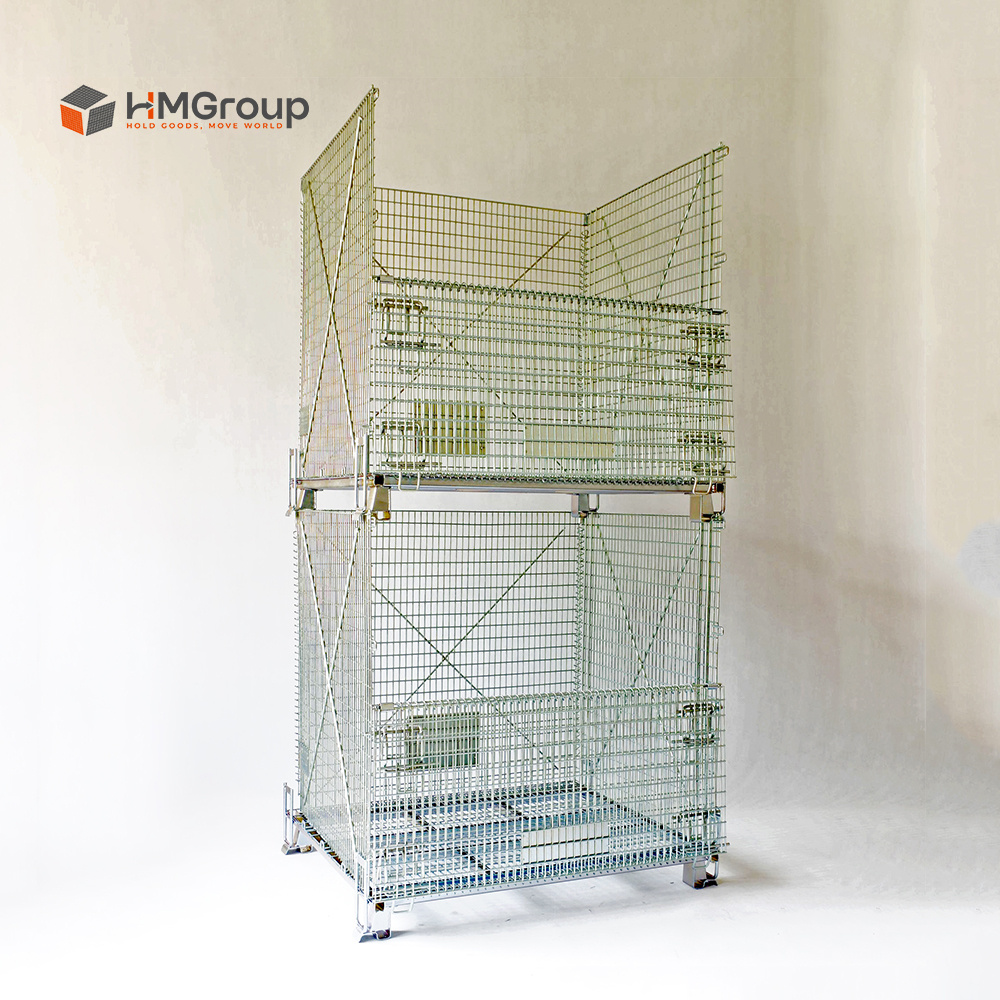
Every HM Group wire container model reviewed here is manufactured from mild steel Q235, with finish options of zinc, hot-dip galvanized or powder coating. The material grade is the baseline, not a differentiator — but the finish is a load-safety issue over time, because corrosion reduces the effective section of a wire or weld long before the container visibly fails.
HM Group's application data references zinc plating or hot-dip galvanization for 3 to 5 years of rust resistance in industrial environments, and specifies hot-dip galvanized or high-micron zinc plating for high-humidity cellar environments. When a supplier claims a capacity rating but describes the finish vaguely, the buyer cannot judge how long that rating will remain accurate in their own operating conditions.
Pillar 4: Frame, Base, Gate and Stacking Design
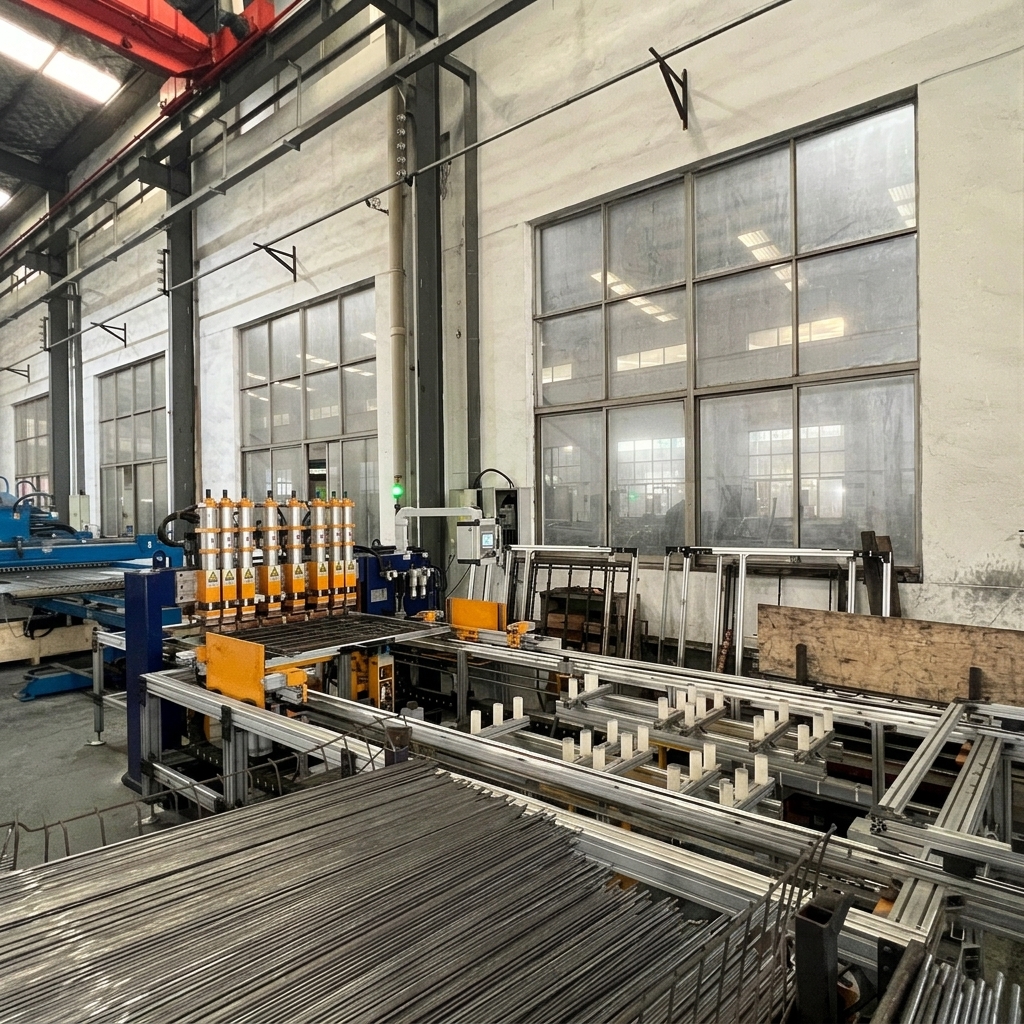
This is where most capacity claims are actually earned or lost. Documented stacking ratings across the range are 4 high for HM-HD001, HM-HD010, HM-ST007, HM-ST-AU001 and HM-HD028; 4+1 high for HM-WEU005, HM-WEU001 and HM-WEU010; and 5+1 high for HM-PPC22. Container-load figures vary widely — 500 sets of HM-HD001 versus 216 sets of HM-HD010 per 1×40'HQ — because footprint and stack height differ.
HM Group's heavy-duty application data references reinforced steel frames and high-tensile wire mesh sustaining dynamic loads of over 1,200 kg per unit, along with a 4:1 folding return ratio for collapsible units and a 4-way forklift-friendly base. Those are design features that a buyer can physically inspect: weld quality at frame junctions, gusset placement at the base corners, gate hinge construction, and whether the base is designed for four-way entry.
A Step-by-Step Verification Workflow
The following eight steps convert a capacity claim into a decision-ready fact set. Steps 1 to 6 can be completed from documents; steps 7 and 8 require a sample and a caliper.
- Collect the full field set. Ask for model, exterior dimensions, wire gauge, grid size, loading capacity, stackability, finish options and container-load quantity. A datasheet missing any of these fields cannot be verified. HM Group publishes all of these for models such as HM-HD010, HM-WEU005, HM-CP001 and HM-ST007.
- Separate the gauge by member. If the datasheet shows a range (5–12 mm, 4.8–12 mm, 6–12 mm), request the diameter of the frame tube, the mesh wire and the base wire separately.
- Check grid size against the cargo, not the load. Match the aperture to the smallest unit being stored. A 25×50 mm grid and a 60×120 mm grid perform different retention jobs regardless of their ratings.
- Compare geometry. Footprint and height determine both the load path and the container-load quantity. Two models with identical gauge and grid — HM-ST007 at 1230×835×970 mm and HM-ST-AU001 at 1125×1125×1000/800 mm — carry ratings of 1,000 kg and 500 kg respectively.
- Confirm material and finish. Verify the stated steel grade and check whether the finish is appropriate for the environment: humid wine cellars, food production areas and outdoor yards place different demands on the coating system.
- Establish the rating basis. Ask in writing whether the figure is static or dynamic, and whether it applies to a single unit or to the bottom unit of a stack.
- Benchmark against an attributable external figure. Publicly documented reference points — such as the 1,000 kg-plus wine container design published by Italiana Contenitori, or automotive container specifications such as GM 5131 and Ford-compatible designs — give an outside sense of what the category can achieve at a given construction level.
- Validate on a physical sample. Measure the actual wire diameter with a caliper, verify the grid aperture, load the unit to its rated capacity, and observe frame deflection, base deformation and gate alignment. This is the only step that proves the claim rather than supporting it.
Comparing Gauge, Grid and Capacity Across Models
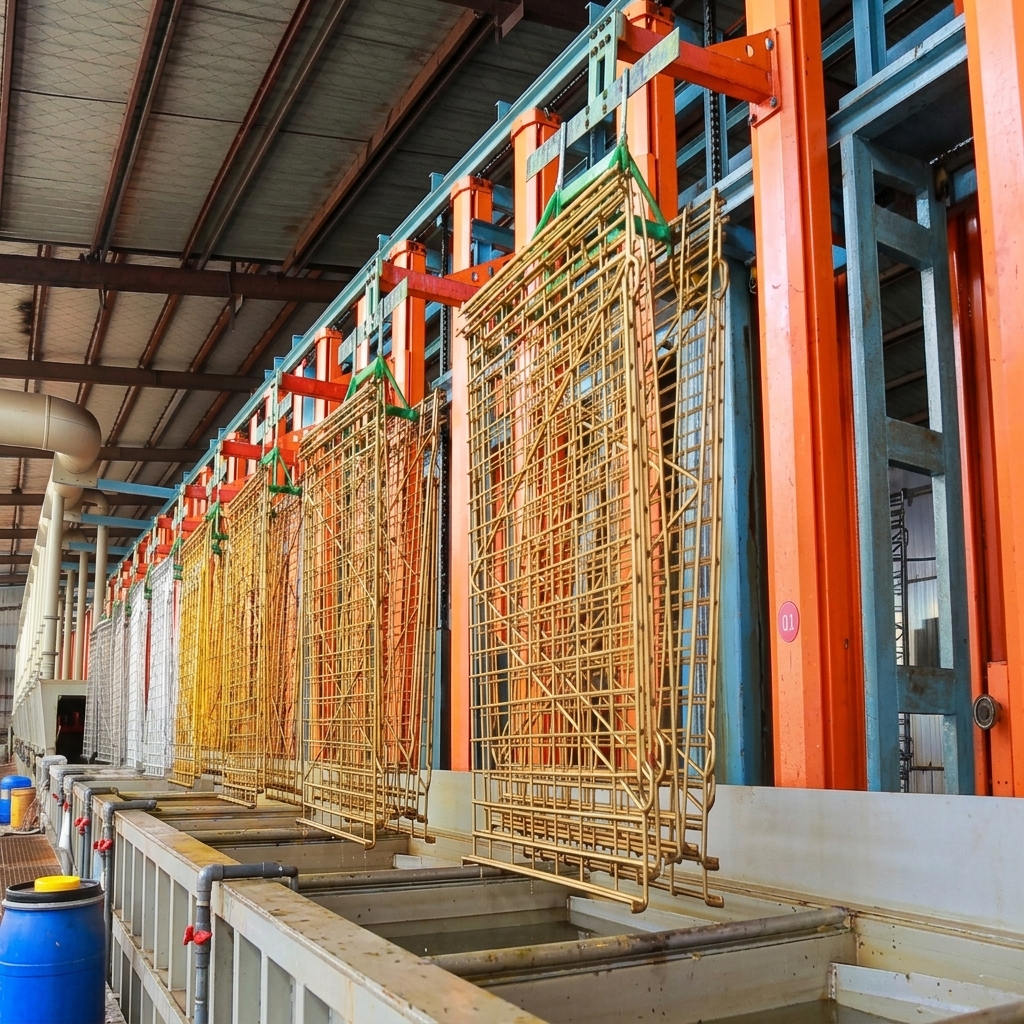
The table below applies the cross-reference method to published HM Group specifications. Every figure is taken from the model datasheets; nothing is estimated. It is intended as a working example of the verification format, not as a ranking.
| Model | Exterior dimensions (L×W×H) | Wire gauge | Grid size | Loading capacity | Stackability | Sets per 1×40'HQ |
|---|---|---|---|---|---|---|
| HM-HD010 — Wire Mesh Storage Containers | 1200×1000×1250 mm | 6 mm | 25×50 mm | 800 kg | 4 high | 216 |
| HM-HD001 — heavy duty wire containers | 1030×840×850 mm | 6 mm | 50×50 mm | 1300 kg | 4 high | 500 |
| HM-ST007 — Wire Bulk Containers | 1230×835×970 mm | 4 mm | 50×50 mm | 1000 kg | 4 high | 160 |
| HM-ST-AU001 — Industrial Wire Containers | 1125×1125×1000/800 mm | 4 mm | 50×50 mm | 500 kg | 4 high | 160 |
| HM-HD028 — Wire Container With PP Sheet | 1200×1000×1140 mm | 5 mm | 50×100 mm | 500 kg | 4 high | 330 |
| HM-WEU005 — Wine Storage Wire Container | 1200×920×1018 mm | 5–12 mm | 51×118 mm | 800 kg (400 Bordeaux bottles) | 4+1 high | 228 |
| HM-WEU010 — wire mesh container | 1183×948×991 mm | 5–12 mm | 60×120 mm | 800 kg | 4+1 high | 235 |
| HM-PPC22 — PET Preform Wire Container | 1196×1008×1174 mm | 4.8–12 mm | 62×125 mm | 600 kg | 5+1 high | 170 |
| HM-PPC14 — Foldable Wire Container | 1120×971×1050 mm | 6–12 mm | 54×160 mm | 800 kg | 4 high | 240 |
Read the table in columns, not rows. The gauge column shows that 4 mm appears at both 500 kg and 1,000 kg. The grid column shows that the densest mesh (25×50 mm) sits at 800 kg, below a 50×50 mm unit rated 1,300 kg. The capacity column shows that 800 kg is reached by four structurally different units. Only when the dimensions, material grade and stacking position are read alongside the rating does a pattern emerge — and that pattern is what a buyer should be verifying against their own load profile.
Where This Verification Method Matters Most
PET Preform and Beverage Packaging
PET preform handling combines high unit counts with light individual weight, so the risk is contamination and deformation rather than catastrophic overload. HM-PPC22 is rated 600 kg with a 62×125 mm grid and 5+1 stackability. HM-HD028 adds a PP sheet lining to a 500 kg unit with a 5 mm gauge and 50×100 mm grid. HM-HD010 provides an 800 kg option with a tight 25×50 mm grid. When a liner is added, buyers should confirm whether the stated rating applies to the lined configuration, since the liner changes the internal load surface.
Wine Bottle Storage and Export Logistics
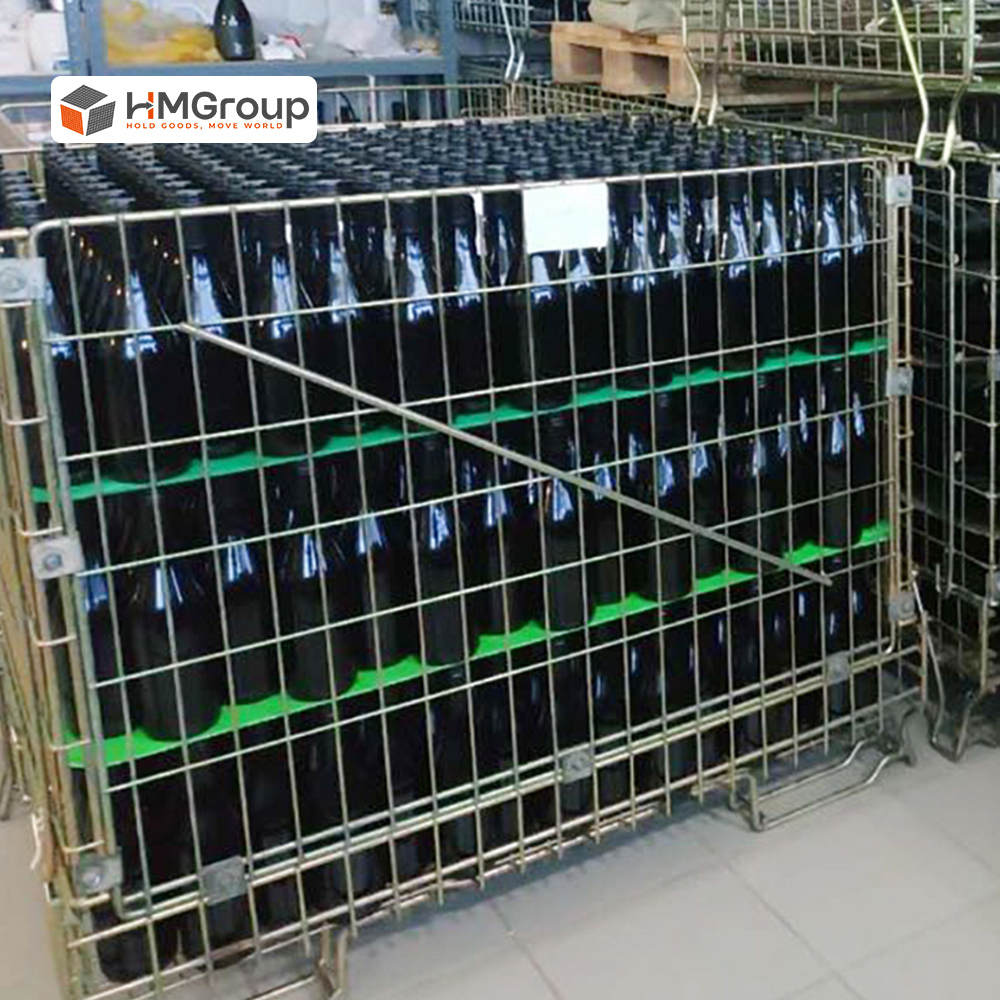
Wine containers are quoted two ways: by weight and by bottle count. HM-WEU005 stores 400 Bordeaux bottles at 800 kg with a 51×118 mm grid and 4+1 stackability. HM-WEU001 stores 500 Bourgogne bottles at 800 kg with a 55×113 mm grid. HM-WEU010 carries a 60×120 mm grid at 800 kg with 4+1 stackability. A bottle-count claim and a kilogram claim are different promises resting on different geometry, so both must be verified separately — especially where high-humidity cellar conditions make the coating system part of the load-safety calculation.
Automotive Components, Mining and Heavy Manufacturing
These applications involve repeated forklift handling of dense, irregular parts, which is exactly where static-versus-dynamic ratings diverge. HM-ST-AU001 is rated 500 kg with a 4 mm gauge and 50×50 mm grid in a 1125×1125×1000/800 mm footprint. Automotive programmes may additionally require compliance with OEM container specifications such as GM 5131 or Ford-compatible designs. Where those specifications apply, they should be treated as a verification layer that sits above the supplier's own rating.
Warehouse Density and Reverse Logistics
For operations comparing floor storage with stacking, the relevant question is not the rated capacity alone but the capacity per square metre of floor after stacking. Documented stacking values of 4 high, 4+1 high and 5+1 high translate into very different density outcomes, and documented collapsible designs provide a 4:1 return ratio when empty — a figure that should be checked against the actual folded height of the sample unit.
Red flags when reviewing a capacity claim
- A capacity figure quoted without wire gauge, grid size or exterior dimensions anywhere in the datasheet.
- A single gauge number in one document and a gauge range in another, with no explanation of which member each refers to.
- Identical gauge and grid presented as proof of identical capacity across units with different footprints.
- No written statement of whether the rating is static or dynamic, single unit or the bottom of a loaded stack.
- A standard cited without identifying which requirement it satisfies and whether it applies to welded mesh containers.
- No steel grade stated, or a grade stated without a corresponding finish specification.
- Corrosion performance claimed without naming the coating system (zinc, hot-dip galvanized or powder coating).
- A stacking height claimed without describing the load path into the unit below.
- Bottle-count, unit-count or piece-count claims presented interchangeably with kilogram ratings.
Buyer's Verification Checklist
Use this list as a pre-shortlisting filter. Each item should be answerable in writing before a supplier reaches a sample order.
- Model number, exterior dimensions and material grade are stated (for example, mild steel Q235).
- Wire gauge is specified per member, or the range is broken down by frame, mesh and base.
- Grid size is stated as a measurable aperture and matched to the cargo being stored.
- Loading capacity is stated with its basis: static or dynamic, single unit or stacked position.
- Stackability is stated numerically (4 high, 4+1 high, 5+1 high).
- Finish options are named, and the finish suits the operating environment.
- Container-load quantity per 1×40'HQ is provided, so freight cost per unit can be modelled.
- External benchmarks are attributable, not anonymous — a named standard, a named supplier design or a named specification.
- A sample unit is measured with a caliper before volume commitment: actual wire diameter and actual grid aperture.
- The sample is load-tested at rated capacity and inspected for frame deflection, base deformation and gate alignment.
Frequently Asked Questions
What documentation should support a wire container load capacity claim?
A usable claim should be supported by a specification sheet that states the model, exterior dimensions, wire gauge, grid size, loading capacity, stackability and finish options. HM Group publishes this full field set for models such as HM-HD010 (1200×1000×1250 mm, 6 mm wire gauge, 25×50 mm grid, 800 kg, stackable 4 high). Where a standard is cited, confirm that it applies to the container category being purchased: ASTM D6573/D6573M, for example, is the standard specification for general-purpose wirebound shipping boxes and containers. For automotive programmes, buyers may also need to verify compliance with OEM container specifications such as GM 5131 or Ford-compatible designs.
Can a supplier prove load capacity using wire gauge and grid size alone?
No. Two HM Group models demonstrate the limit of mesh-only reasoning: HM-ST007 and HM-ST-AU001 both use a 4 mm wire gauge and a 50×50 mm grid, yet they are rated 1,000 kg and 500 kg respectively because their footprints and frame geometry differ. Gauge and grid are necessary inputs, not sufficient ones. A complete verification also requires the frame and base design, the stacking position, and the distinction between static and dynamic loading. HM Group's heavy-duty application data, for instance, references reinforced steel frames and high-tensile wire mesh sustaining dynamic loads over 1,200 kg per unit — a specific construction claim, not a generic one.
Does a higher load rating always mean a higher price?
Not directly. Cost is driven by wire gauge, steel grade, mesh density, surface treatment and folding hardware, and different specifications solve different problems. HM-HD001 is rated 1,300 kg from a 6 mm gauge and a 50×50 mm grid in a 1030×840×850 mm body. HM-HD010 is rated 800 kg with the same 6 mm gauge but a denser 25×50 mm grid in a larger 1200×1000×1250 mm body. Freight also shifts the economics: 500 sets of HM-HD001 load into a 1×40'HQ against 216 sets of HM-HD010. Buyers should compare cost against their load-and-volume requirement and landed freight, not against the rating alone.
How can a buyer test a load capacity claim before ordering in volume?
Start with a single sample unit and validate it in your own handling environment. Measure the actual wire diameter with a caliper rather than trusting the datasheet value, verify the grid aperture with a gauge, load the unit to its rated capacity, then observe frame deflection, base deformation and gate alignment under forklift handling. Request the corresponding specification sheet so the delivered item can be checked against the published claim field by field. Buyers working with HM Group can request a sample unit and specification documentation before committing to volume production.
How long does it take to confirm a custom load requirement?
The confirmation sequence is specification review, then gauge, grid and frame agreement, then sample validation, then production and container-load planning. The timeline for any individual project depends on the scope of customisation, the steel and finish specified, and how the units are planned into container loads — which is why a supplier should provide a written sequence with defined milestones rather than a single promised date. Buyers can shorten this process considerably by sending their load profile, cargo dimensions and operating environment at the first enquiry. To start that process, contact HM Group directly.
Conclusion
Load capacity claims in wire containers are verifiable, but only when the buyer insists on the inputs behind the number. Wire gauge must be broken down by member. Grid size must be matched to the cargo rather than treated as a strength indicator. Material grade and surface treatment must be tied to the operating environment. Frame, base, gate and stacking design must be described in terms of load path and rating basis. When those four pillars are present, a capacity figure becomes a specification — and a specification can be tested.
HM Group (Dalian HuaMao Logistics Equipment Group Co., Ltd.), established in 2003, manufactures wire mesh containers, PET preform containers, cage pallets, stillages, tire racks and related logistics equipment across three production bases in Xiamen, Nanjing and Qingdao, with an annual production capacity of 2,000,000 units and a 100% export business serving the EU, North America, Asia and the Middle East. Its published model datasheets — including HM-HD010, HM-HD001, HM-WEU005 and HM-PPC22 — state gauge, grid, dimensions, capacity, stacking and finish, which is the minimum field set required for buyer-side verification.
Request a Sample and Specification Sheet
Send your load profile, cargo dimensions and operating environment, and HM Group will provide the matching model specification for independent verification: wire gauge by member, grid size, loading capacity, stackability, finish and container-load quantity. A sample unit can be arranged for caliper measurement and load testing before you commit to volume.
Email: mary@net-railing.com | Tel / WhatsApp: +86 150 4058 7228 | Tel: +86 411-3981 3061
Contact: MARY KONG, 3306 Times Square (Times 1), 50 Renmin Road, Zhongshan Dist, Dalian, Liaoning, China
Website: www.hmlwires.com | Product catalogue: Download the HM Group catalogue (PDF)
Have Questions or Need More Details?
Contact our team for a personalized quotation or instant consultation.
Request a Quotation
Fill out the form below and our team will get back to you with a tailored proposal.
WhatsApp Direct Chat
Prefer to chat in real-time? Message us on WhatsApp for instant assistance & quick answers.
- Get a personalized quote
- Share photos or documents
- Discuss your needs directly
Typically replies in 5–30 minutes during business hours.