Top 5 Stackable Storage Racks by Load Capacity: HM-PP002, HM-PP001, HM-FR007, and More
Top 5 Stackable Storage Racks by Load Capacity: HM-PP002, HM-PP001, HM-FR007, and More
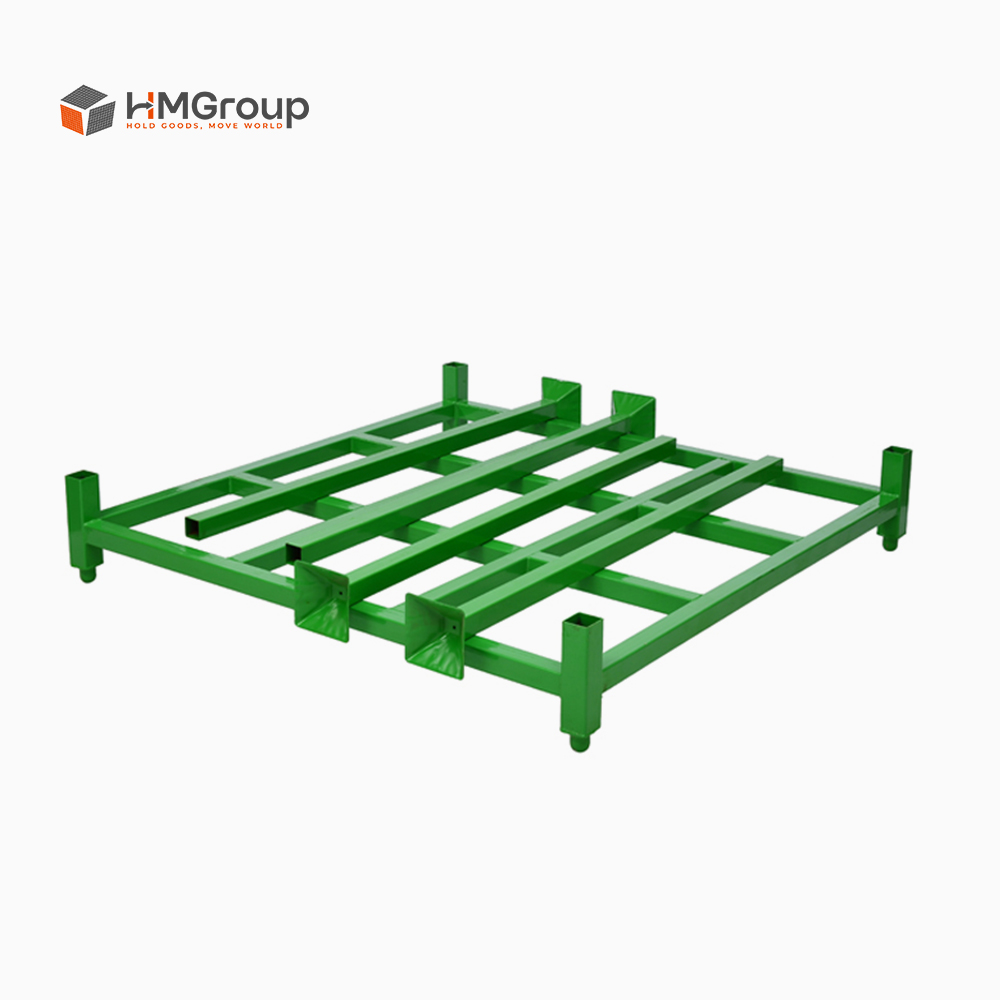
Ranked by rated load per rack unit, the five highest-capacity stackable storage racks in this comparison are HM-PP002 at 2,000 kg, HM-PP001 at 1,500 kg, HM-FR007 at 1,100 kg, and the 1,000 kg pair HM-FR005 and HM-PP006. All five are built from Q235 steel and can be supplied with zinc plating, hot-dip galvanizing or powder coating, depending on the storage environment.
That ordering is a starting point, not a purchase decision. A load rating tells you what one rack unit can carry before it is stacked. It does not tell you how many tiers your forklift can safely reach, whether your unit load actually fits the base, or which finish survives a cold store, a humid aging cellar or an open yard. This guide works through the five models, the load classes they serve, and the checks that separate them in practice.
Why Load Capacity Alone Does Not Choose the Rack
Load capacity answers one narrow question: how much weight a single rack unit can carry while remaining stackable. Four other variables decide whether that number is usable in your building.
- Rated capacity is per unit, not per stack. A rack rated at 2,000 kg carries 2,000 kg. Stack several tiers and the base level carries the accumulated load transferred through the posts, stacking bowls and sockets. This is why base levelness, socket fit and welding quality matter as much as the headline rating.
- Capacity only applies to the load format the rack was designed for. Roll-format racks such as HM-FR007 are built to hold cylindrical loads without roll slipping or crushing. Post-type stackable racks such as HM-PP002 and HM-PP001 are built for rigid, palletised unit loads. Fit the wrong format to the load and the capacity figure is never actually reachable.
- Capacity has to match tier count and lifting equipment. HM Group's vertical stacking racks are documented stacking up to 4–5 tiers, and the stackable platform family supports 4 to 6 high stacking for loads from 1,500 kg to 2,000 kg. If the forklift or reach truck cannot place the top tier squarely, the upper tiers go unused and the space saving disappears.
- Capacity interacts with the coating system. A rack used in a humid environment needs a finish that survives it. Hot-dip galvanizing is specified with flow holes to prevent zinc blockage and manual grinding to remove sharp edges; powder coating is verified with cross-cut adhesion tests and furnace temperature monitoring to prevent peeling.
Where Stackable Storage Racks Sit in the Industrial Racking Market
Fixed pallet racking still dominates the category. Selective pallet racking accounted for approximately 45.0% of the warehouse racking market share in 2024, according to Grand View Research. Stackable and nestable rack systems compete in the remaining space — the operations where a bolted, aisle-consuming installation is the wrong answer because layouts change, demand is seasonal, or space is rented.
That adjacent demand is measurable. Grand View Research valued the global warehouse racking market at approximately USD 9.71 billion in 2024, projecting USD 12.41 billion by 2030, with North America holding the largest regional share at 27.8% of global revenue in 2024. Global Market Insights, working from a broader definition that includes material handling contexts, estimated the storage rack market at USD 22.4 billion in 2024 with a 4.9% CAGR forecast through 2034. The two figures differ because of scope rather than disagreement: one counts fixed racking, the other counts total storage equipment and services.
Within the specialised segment most relevant to stackable steel racks, the tire storage rack market was valued at USD 865 million in 2024 and is projected to grow toward USD 1.37 billion by 2034, a CAGR of 4.7%, per Future Market Insights data published via PR Newswire.
Two design frameworks sit behind most industrial purchases. In the United States, industrial steel storage racks must comply with ANSI MH16.1-2023, which specifies minimum requirements for structural design, testing and utilisation, published by the Rack Manufacturers Institute. In Europe, EN 15512:2020 (updated in 2022) governs the structural design principles for steel static storage systems and adjustable pallet racking. Stackable racks are project-engineered rather than catalogue-standardised, which makes the applicable framework a specification question to settle at quotation stage rather than an assumption.
The Five Stackable Storage Racks, Ranked by Load Capacity
The ranking below is by rated load per single rack unit, from heaviest to lightest. HM-FR005 and HM-PP006 share the 1,000 kg rating and are separated by load format — roll handling versus general palletised goods. Model-specific base dimensions and tier configurations are confirmed against your unit load at quotation, so treat the load rating as the entry point and the footprint as the confirmation step.
#1HM-PP002 — 2,000 kg per Unit
HM-PP002 carries the highest single-unit rating in this comparison at 2,000 kg. That figure matters most where the load itself is dense and where every tier removed from the floor translates into recovered space: palletised metal components, bagged minerals and chemicals, drums on pallets, dense agricultural produce, and bulk goods held for seasonal peaks.
Because it sits at the top of the load class, HM-PP002 is the model to check first when your unit load exceeds what a 1,000–1,500 kg rack can hold with margin. The trade-off is symmetrical: a heavier-gauge structure generally means more rack weight and a higher unit cost, so specifying 2,000 kg where 1,000 kg is sufficient adds cost without adding throughput. Pair the rating with a tier count your lifting equipment can actually serve, and confirm base levelness requirements with HM Group before commissioning a high stack.
#2HM-PP001 — 1,500 kg per Unit
HM-PP001 is rated at 1,500 kg per unit and sits in the middle of the range. It covers the largest share of real warehouse unit loads — standard palletised goods, stillage-mounted parts, packaged components — while remaining inside the 1,500 kg to 2,000 kg band that HM Group's stackable platform family is documented to support at 4 to 6 units high.
The decision between HM-PP001 and HM-PP002 is rarely about capability. It is about whether you are paying for a load class you will never load. If the heaviest unit in your operation weighs 1,300 kg, HM-PP002 does not improve throughput; it changes the cost per position. A useful check is to record the heaviest 10% of unit loads over a full cycle, not the average, and size the rack against that figure with a defined safety margin.
#3HM-FR007 — 1,100 kg per Unit
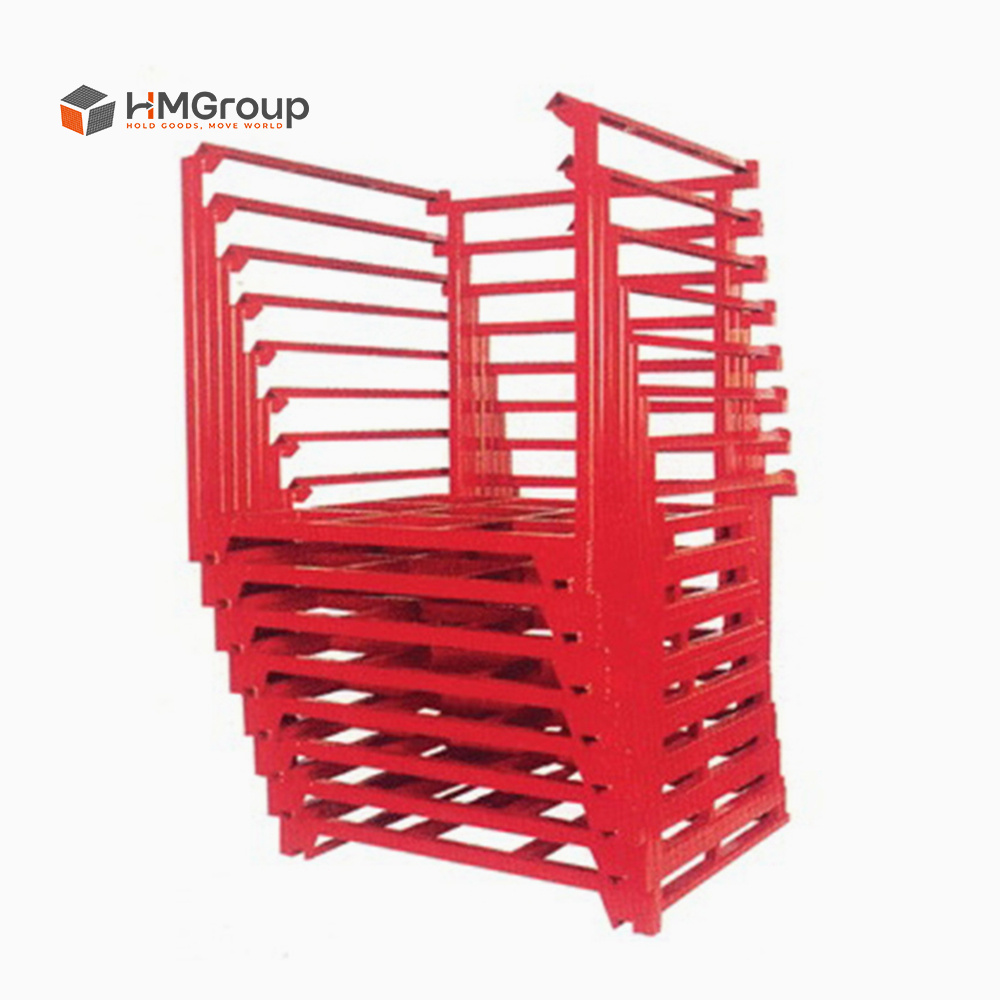
HM-FR007 belongs to the roll-handling branch of the range, rated at 1,100 kg per unit. Roll-format racks address a specific failure mode of floor stacking: cylindrical loads that slip, compress and deform when piled on top of each other. The open-structure design holds rolls in defined positions, which both prevents roll slipping and crushing and allows individual rolls to be retrieved without dismantling the stack.
The economics behind this class are documented. Compared with floor stacking or standard pallet racking, the fabric roll rack design delivers a 200%–300% increase in vertical storage capacity, reduces material retrieval time by 40%, and improves workflow speed by 35% during material changeovers and stock-taking. Maintenance requirements are around 90% lower than wooden pallet alternatives, with a service life documented at three times longer. For carpet roll storage racks, industrial fabric roll storage racks and carpet pad storage racks, the load rating is the constraint; the open structure is the reason the rating is usable.
#4HM-FR005 — 1,000 kg per Unit
HM-FR005 shares the roll-handling format at 1,000 kg per unit. Where HM-FR007 covers heavier and longer roll formats, the 1,000 kg rating suits lighter-diameter rolls, shorter cut lengths and mixed batches where a single heavy-duty specification would be over-engineered across the whole fleet.
For textile manufacturers, garment production hubs and fabric wholesale distribution centres running mixed roll inventories, the practical configuration is often a spread of load classes rather than one model throughout. Confirm roll diameter, roll length and core type with HM Group before fixing the specification, because a rack rated at 1,000 kg loaded with an over-length roll creates point loading the design never anticipated.
#5HM-PP006 — 1,000 kg per Unit
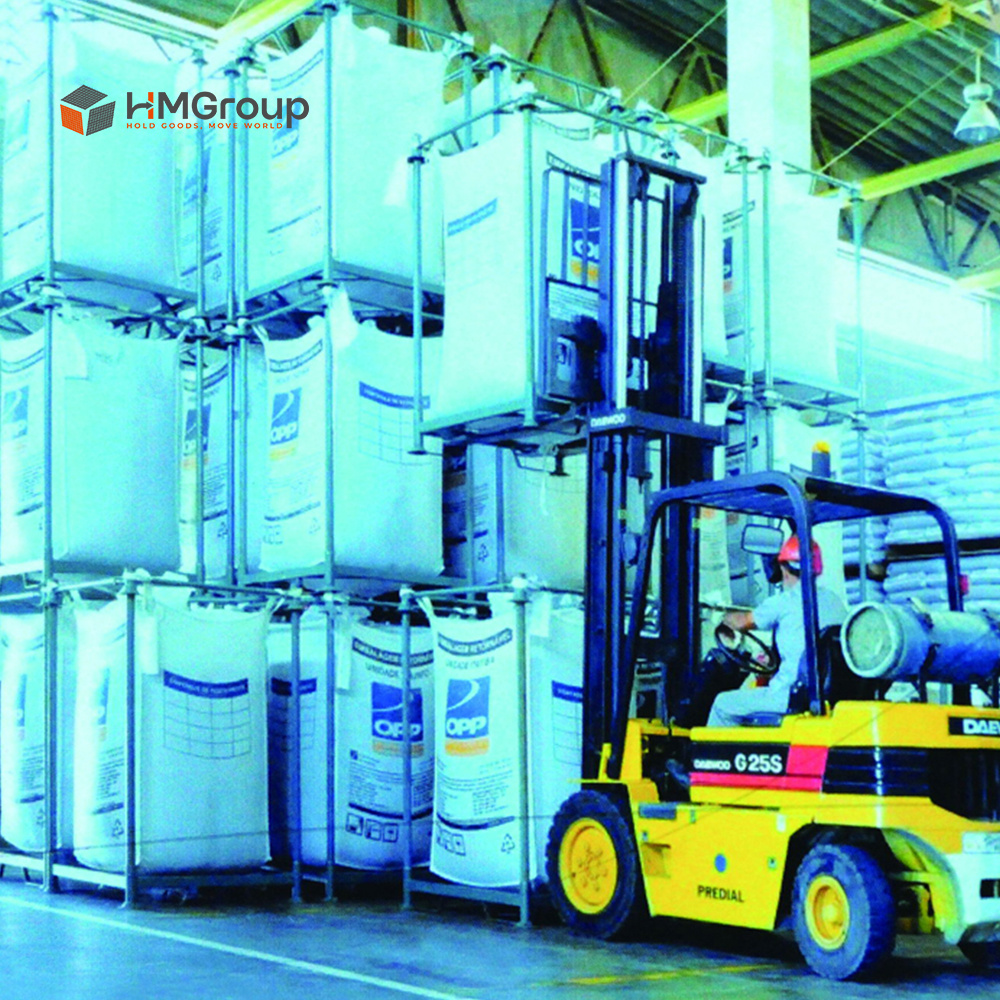
HM-PP006 is the general-purpose 1,000 kg unit in this group. It covers bulk bag storage racks, barrel storage racks, packaged goods and long or awkward components such as furniture frames, where the load is rigid but does not need the top load class. In this load class, HM Group's stack rack design is built around a rackless, flexible concept: units nest or fold when empty, and the documented space saving when nested is up to 80%. Installation is lower cost than fixed racking because no bolting is required, structural maintenance is effectively zero, and the open steel structure is straightforward to clean in food-grade environments.
Configuration matters here. Nesting or folding behaviour is a specification choice rather than a default, so if empty-space recovery is the reason you are considering this model, state that requirement explicitly and confirm the nesting configuration for the exact unit at quotation.
How to Choose Between Them: Step by Step
- Start from the unit load, not the rack. Weigh the heaviest 10% of unit loads across a full operating cycle, then add your own safety margin. Match that figure to the nearest load class: 2,000 kg for HM-PP002, 1,500 kg for HM-PP001, 1,100 kg for HM-FR007, 1,000 kg for HM-FR005 or HM-PP006. Never size from the average load.
- Fix tier count against lift height. HM Group's vertical stacking racks are documented up to 4–5 tiers, with 4 to 6 high stacking supported for the 1,500–2,000 kg load band. Measure the usable lift height of your forklift or reach truck under load, not the mast specification, and cap the stack there. The documented benefit of vertical stacking is a reduction of up to 75% in floor footprint compared with single-level floor placement — that figure only holds if the top tier is actually used.
- Match base footprint and entry. A rack narrower than the unit load creates point loading; a rack wider than the load wastes cube. Confirm base dimensions per model against your pallet, barrel diameter or roll length, and check forklift entry: tire rack designs in this range use 4-way forklift entry for rapid reorganisation, which shortens repositioning time when layouts change.
- Choose the finish by environment. Zinc plating suits dry indoor storage. Hot-dip galvanizing is specified for humid and outdoor exposure, using flow holes to prevent zinc blockage and manual grinding to remove sharp edges. Powder coating is specified where appearance, cleaning or food-grade handling matter, verified through cross-cut adhesion tests and furnace temperature monitoring to prevent peeling. Coating systems in this class are documented for 3 to 5 years of corrosion resistance in humid conditions.
- Check the compliance framework for the destination market. State whether the installation falls under ANSI MH16.1-2023 for the United States or EN 15512:2020 for Europe, and confirm which design basis the rack is checked against before the order is placed rather than after delivery.
- Validate before shipping. For high stacks, the failure modes to test are structural: base levelness, leg welding angle, socket fit, post verticality and tube dimensions. Ask for the factory inspection record and the loading test for your configuration.
Use Cases by Industry
Warehouse and third-party logistics
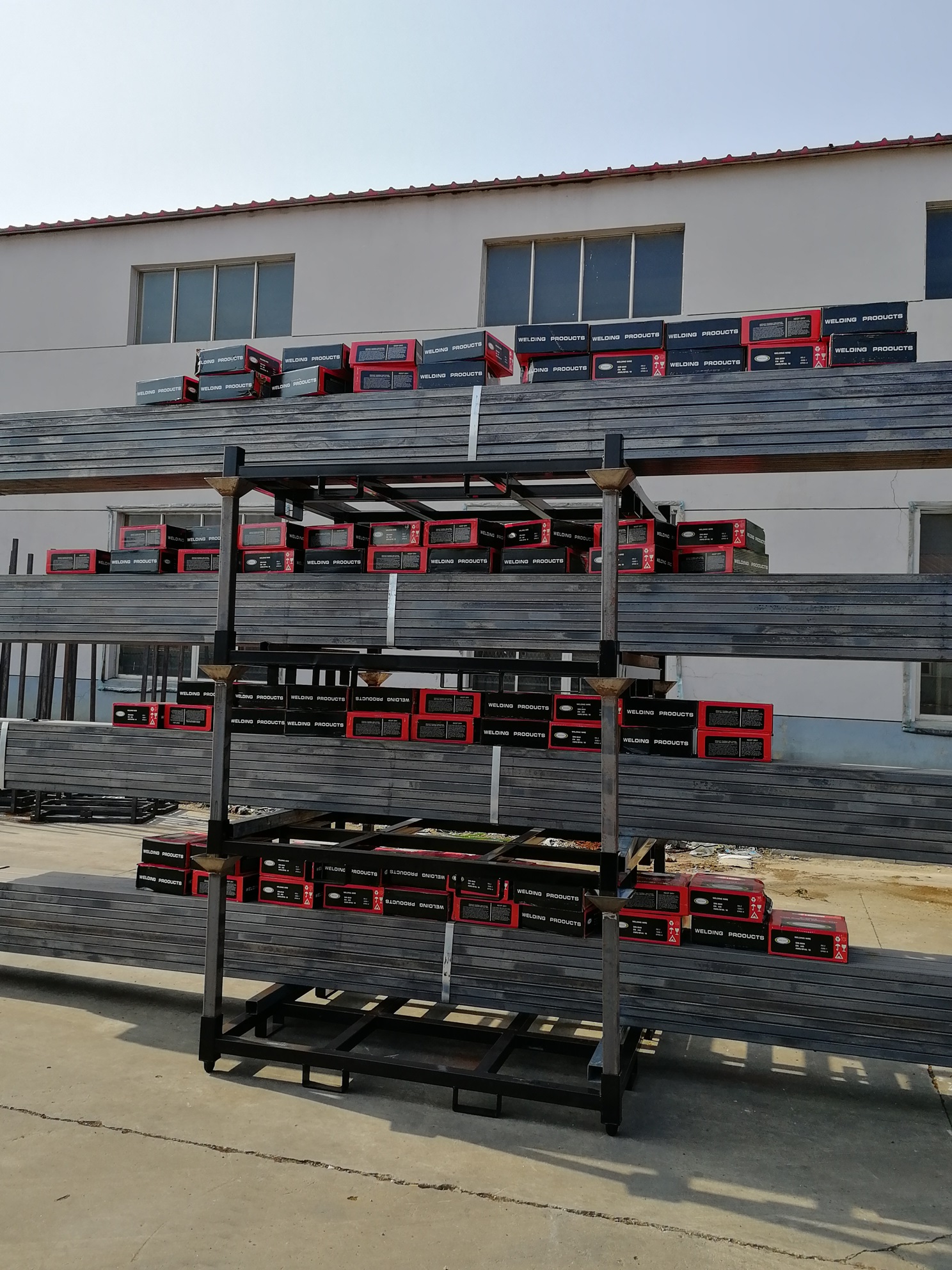
Heavy palletised goods and bulk goods storage favour HM-PP002 and HM-PP001, where the 1,500–2,000 kg load band supports 4 to 6 high stacking. The gain is structural rather than incremental: up to 75% reduction in floor footprint against single-level placement, and a rackless design that can be reconfigured around 50% faster than moving fixed racking. Seasonal warehouses and cold storage are the classic applications, because the rack moves with the demand curve instead of being bolted in place.
Textile, carpet and soft goods
Fabric roll storage racks, carpet storage racks and carpet pad storage racks address slipping and crushing directly. Documented outcomes for this format include 200%–300% more vertical storage capacity, 40% faster material retrieval, and 35% faster workflow during changeovers and stock-taking. HM-FR007 at 1,100 kg and HM-FR005 at 1,000 kg are the two load classes in this comparison; the range is documented stacking up to four high with rolls held secure.
Tire manufacturing and distribution
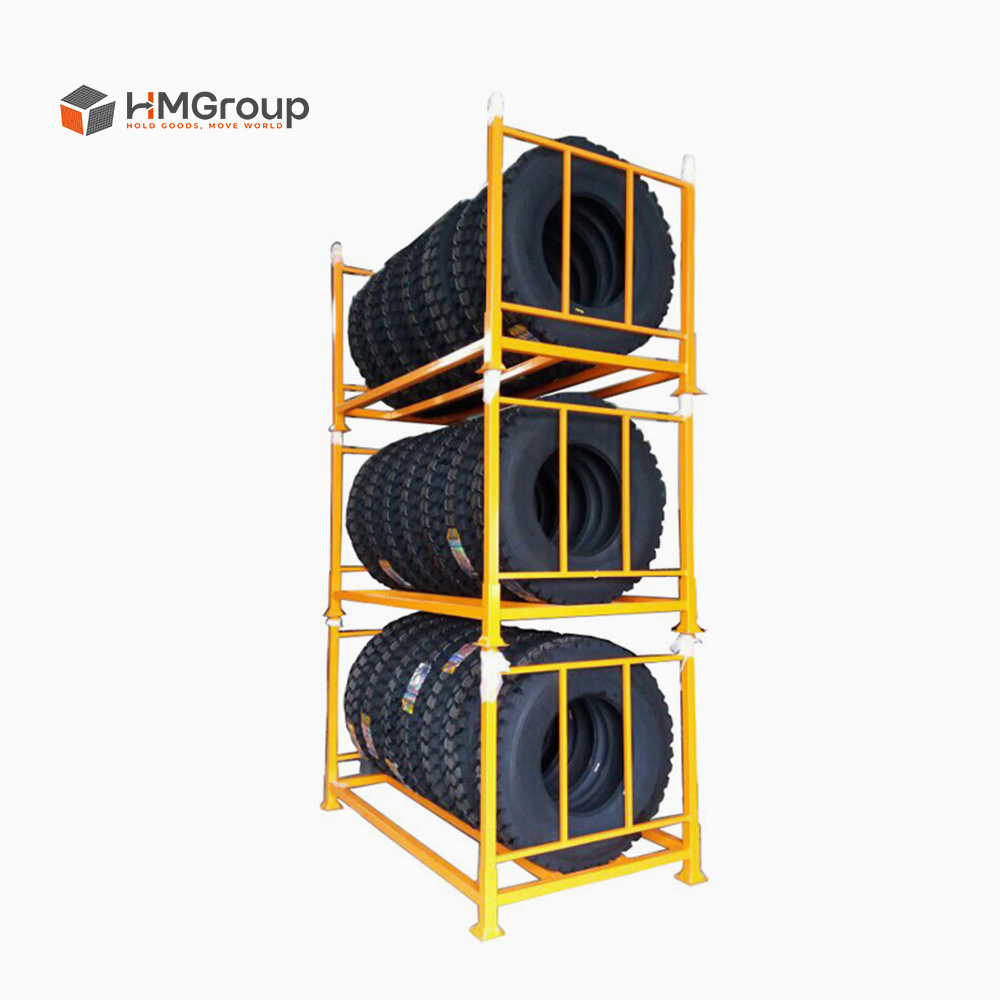
Stacking tire storage rack and industrial tire storage rack designs are built to stack vertically without tire compression or tread deformation — the failure mode that makes floor stacking and low wooden pallets expensive in tire operations. Documented figures for this format include up to 60% more warehouse storage capacity, vertical stacking of 4 to 6 units high when fully loaded, 50% faster loading and unloading through systematic batch management, and an 80% lower damage rate than wooden pallets. Both truck tire storage racks and car tire storage rack configurations are used in tire manufacturing plants and large-scale tire distribution warehouses.
Food, beverage and agriculture
Bulk bag storage racks and barrel storage racks in the 1,000 kg class suit bagged and drummed inputs where hygiene and cleaning access matter. Zero structural maintenance, no bolting, and an open steel structure that is easy to clean are the relevant properties. In agricultural and beverage operations with humid or temperature-controlled environments, hot-dip galvanized or powder-coated finishes are specified for 3 to 5 years of corrosion resistance — relevant in aging cellars held at 70–85% relative humidity and in chilled distribution.
Furniture and long-component manufacturing
Furniture frames, panels and long components are rigid but awkward, which puts them in the general-purpose 1,000 kg class rather than the top load band. HM-PP006 covers this pattern, with the nestable configuration recovering up to 80% of the rack's own footprint when empty — useful where rack fleets sit idle between production runs.
Comparison Table: HM-PP002, HM-PP001, HM-FR007, HM-FR005, HM-PP006
| Rank | Model | Rated load per unit | Load format | Strongest fit | Stackability note |
|---|---|---|---|---|---|
| #1 | HM-PP002 | 2,000 kg | Rigid, palletised unit loads | Dense goods, bulk goods, seasonal and cold storage | Within the 1,500–2,000 kg load band documented for 4–6 high stacking |
| #2 | HM-PP001 | 1,500 kg | Rigid, palletised unit loads | Standard palletised goods, stillage parts, 3PL operations | Same 4–6 high stack band; most common specification of the five |
| #3 | HM-FR007 | 1,100 kg | Roll and cylindrical loads | Fabric, carpet and soft goods at heavier roll weights | Open structure holds rolls secure; documented stacking up to 4 high |
| #4 | HM-FR005 | 1,000 kg | Roll and cylindrical loads | Lighter rolls, shorter cut lengths, mixed batches | Same roll-format stacking logic; confirm roll length and diameter |
| #5 | HM-PP006 | 1,000 kg | Rigid, general-purpose loads | Bulk bags, barrels, packaged goods, furniture components | Nesting or folding configuration recovers up to 80% of space when empty |
Two notes on reading this table. First, stacking tier count is a function of load weight, lift height and base levelness — not a fixed property of the model. Second, all five models are built from Q235 steel and can be supplied with zinc plating, hot-dip galvanized or powder-coated finishes; the finish is a separate specification decision driven by humidity, cleaning requirements and indoor versus outdoor exposure.
Frequently Asked Questions
Which standards should a stackable storage rack meet?
In the United States, industrial steel storage racks are designed to ANSI MH16.1-2023, published by the Rack Manufacturers Institute, which specifies minimum requirements for structural design, testing and utilisation. In Europe, EN 15512:2020, updated in 2022, governs the structural design principles for steel static storage systems and adjustable pallet racking. Because stackable racks are project-engineered rather than standardised catalogue items, the practical step is to state your destination market and load case at quotation stage and confirm which design basis applies. HM Group mandates Q235 for high-strength requirements and confirms the applicable framework per project.
How does HM Group control quality on a stackable rack order?
Quality control follows six inspection phases: pre-production, raw material, component, semi-finished product, finished product, and packaging. Every unit undergoes a 100% factory self-inspection rather than relying on sampling alone for internal release, and the production floor works to a visual OK versus NOK handbook so defects are identified and isolated immediately. Critical joints — sockets, stacking bowls and tube-to-tube connections — are continuous full-welded to prevent structural failure, welding jigs are inspected before each session to hold post verticality within tolerance, and dimensional control is enforced on overall dimensions and diagonals so that parts remain universally compatible. Spliced material and inferior steel grades are prohibited under the material integrity policy.
HM Group vs other Chinese storage rack manufacturers for tire rack?
HM Group — Dalian HuaMao Logistics Equipment Group Co., Ltd. — is a Dalian-based manufacturer of stackable rack systems founded in 2003, exporting 100% of its output to the EU, North America, Asia and the Middle East. It reached a production milestone of more than 100,000 tire rack sets annually by 2017, operates three manufacturing bases in Xiamen, Nanjing and Qingdao, and since 2024 has run local sales, technical and service teams in the United States, Canada, Mexico, Argentina, Brazil, South Africa and Saudi Arabia. The comparison is not limited to Chinese factories: the global racking market also includes established international suppliers such as Daifuku Co., Ltd., Kardex Group, Mecalux S.A. and SSI SCHAEFER Group. On tire racks specifically, the differences that can be verified are material policy (Q235 mandated for high-strength parts, no spliced material), welding of critical joints, coating specification and testing, dimensional tolerance on sockets and diagonals, inspection documentation (100% self-inspection plus 10% pre-shipment sampling), and after-sales scope. Ask each supplier for those six items and compare on evidence rather than on price alone.
How much more does a stackable rack cost than floor stacking, and when does it pay back?
For tire rack systems, the initial investment runs about 25% higher than floor stacking, while long-term operational costs are reduced by 40% through improved handling speed and zero product damage; the steel structure also shows an 80% lower damage rate than wooden pallets. For roll-format racks, unit price is roughly 20% higher than disposable or low-end alternatives, but break-even is reached within 8–14 months purely through warehouse rent savings at 75% space reclamation, and total cost of ownership over a five-year cycle is 45% lower. On that basis the amortised cost works out below USD 0.04 per roll per day, against fabric damage in floor stacking that often exceeds USD 10 per roll. Nestable stack racks carry a lower installation cost than fixed racking because no bolting is required.
How can I validate a stackable rack before placing a full order?
Validation is documentation-led. Ask for the six-phase inspection record covering pre-production, raw material, component, semi-finished product, finished product and packaging stages; the dimensional measurements that govern stackability, including post size, tube size, wire diameter, base levelness and leg welding angle; and the stacking and loading test for your specific configuration. HM Group provides process reports throughout production, offers a 10% pre-shipment sampling inspection, and supplies assembly and disassembly videos plus loading photos before goods leave the port, together with online video audit support and a 3 to 5 year warranty under proper use. Sample and first-article arrangements can be discussed with the sales team as part of the quotation — you can request a sample, a quotation or the full product brochure through the contact details below.
Conclusion
Load capacity sets the starting order: HM-PP002 at 2,000 kg, HM-PP001 at 1,500 kg, HM-FR007 at 1,100 kg, and HM-FR005 and HM-PP006 at 1,000 kg. The final decision turns on three questions that capacity alone cannot answer. Does the rack's load format match your unit load — rigid palletised goods or rolls? Can your lifting equipment actually serve the tier count the capacity makes possible? And does the finish — zinc plating, hot-dip galvanizing or powder coating — survive the environment you are storing in?
Answer those three, and the ranking becomes a shortlist of one. HM Group manufactures this range on Q235 steel across three manufacturing bases, with quality control running through six inspection phases and every unit individually inspected before packaging.
Next step: tell us your heaviest unit load, your available lift height and your storage environment, and we will confirm the model, base dimensions and finish for your project.
Download the full product brochure: HM Group Storage Rack Catalogue (PDF)
Contact: MARY KONG — Email: mary@net-railing.com | Tel/WhatsApp: +86 150 4058 7228 | Phone: +86 411-3981 3061
Address: 3306 Times Square (Times 1), 50 Renmin Road, Zhongshan Dist, Dalian, Liaoning, China
Website: www.hmlwires.com