Top 5 Wire Bulk Containers for High-Volume Logistics: 2026 Ranking with Specs
Top 5 Wire Bulk Containers for High-Volume Logistics: 2026 Ranking with Specs
Answer first: when high-volume logistics is judged on load capacity, stacking rating and dimensional efficiency, the strongest all-round wire bulk container in the HM Group range is HM-HD001. It is rated 1,300 kg, stacks 4 high, and produces the highest calculated load density of the five models compared here — approximately 1,503 kg per m² of floor footprint and 1,768 kg per m³ of envelope — while also posting the best transport figure at 500 sets per 1×40'HQ.
This ranking covers five wire bulk containers built by HM Group (Dalian HuaMao Logistics Equipment Group Co., Ltd.), a China-based manufacturer of wire mesh containers, cage pallets, stillages and related logistics equipment that exports to the EU, North America, Asia and the Middle East. Each model is scored on published specifications and calculated density ratios, then matched to the project types where it performs best — so the reasoning travels with the ranking.
How This Ranking Was Built
High-volume buyers rarely need the best container in the abstract. They need the container that moves the most product through a fixed number of square metres, a fixed clear height and a fixed number of shipping containers. The ranking therefore uses three criteria:
- Load capacity — the published rated load of the unit, in kilograms.
- Stackability — the published stacking rating, expressed as the number of units the container can carry in a vertical column.
- Dimensional efficiency — three ratios calculated from the published external dimensions and load rating: kilograms per square metre of floor footprint, kilograms per cubic metre of envelope, and sets loaded into one 1×40'HQ container.
The composite index is the average of three normalised scores (footprint density, envelope density and container loading), where the best performer in each ratio is set to 100. Because all five units are rated for at least a 4-high column, stacking is treated as a qualifying condition rather than a scored metric — a model that could not stack would not have entered the shortlist.
Two housekeeping notes on the data. First, the density ratios are arithmetic derived from published dimensions and load ratings; they are planning indicators, not measured test results. Second, low index scores do not mean a weak container — they reflect the footprint-versus-height trade-off that each model was engineered around.
Why Generic Bulk Storage Breaks Down at High Volume
Floor storage and bulk bags work until throughput rises. At that point three failures appear at the same time: floor space is consumed by single-layer storage, stock becomes invisible without opening every unit, and empty packaging generates return freight costs that are often larger than the original delivery.
Wire bulk containers address all three. Visible inventory management projects use 100% visibility storage to reduce sorting errors, warehouse lean transformation projects replace cluttered floor storage with structured vertical stacking zones, and reverse logistics optimisation projects use collapsible container systems to cut return freight (corpus 109131). The working conditions are repetitive rather than exotic: units move through demanding environments with heavy workloads and frequent material movement (corpus 109096), and they are expected to resist corrosion across long-term industrial exposure (corpus 109095). Handling is equally standardised — forklifts, reach trucks, electric pallet jacks and RFID or barcode tracking systems for real-time inventory control (corpus 109128).
What separates one project from another is the shape of the load, the clear height available, and whether the containers come home empty. Those three variables drive the ranking below.
Industry Background: A Category Measured in Billions
The global wire mesh container sales market is valued at approximately USD 2.34 billion in 2025 and is projected to reach USD 3.72 billion by 2034 (Dataintelo). The same source estimates a 5.2% CAGR across the 2026–2034 forecast window. Published growth estimates do diverge by scope — Market Research Future places the wider wire mesh market at 3.64% for 2025–2035 — so buyers should treat any single growth figure as a directional signal rather than a procurement input.
Two structural facts matter more than the headline size. Stackable wire mesh containers were the largest product segment in 2025, at 32.5% of total revenue, and Asia Pacific held a 38.2% regional revenue share in the same year. On the demand side, the United States accounted for roughly 16.7% of global imports of articles of iron or steel wire (HS Code 732620) in 2024.
The practical read for industrial buyers: stackability is not a feature trend, it is the dominant purchasing criterion in this category — and it is the criterion this ranking weights most heavily after load capacity.
The Five Ranked Models at a Glance
Table 1 lists the published specifications exactly as they appear in HM Group's product data. Table 2 converts those specifications into the three efficiency ratios used for ranking.
Table 1 — Published specifications (HM Group)
| Model | Type | Exterior dim. L×W×H (mm) | Wire gauge | Grid size | Rated load | Stacking (published) | Sets per 1×40'HQ |
|---|---|---|---|---|---|---|---|
| HM-HD001 | Heavy duty wire container | 1030 × 840 × 850 | 6 mm | 50 × 50 mm | 1,300 kg | 4 high | 500 |
| HM-ST007 | Wire bulk container | 1230 × 835 × 970 | 4 mm | 50 × 50 mm | 1,000 kg | 4 high | 160 |
| HM-WEU010 | Wire mesh container | 1183 × 948 × 991 | 5–12 mm | 60 × 120 mm | 800 kg | 4+1 high | 235 |
| HM-HD010 | Wire mesh storage container | 1200 × 1000 × 1250 | 6 mm | 25 × 50 mm | 800 kg | 4 high | 216 |
| HM-PPC22 | PET preform wire container | 1196 × 1008 × 1174 | 4.8–12 mm | 62 × 125 mm | 600 kg | 5+1 high | 170 |
All five units are manufactured from mild steel Q235 with a choice of zinc plating, hot-dip galvanizing or powder coating.
Table 2 — Calculated efficiency ratios and composite index
| Model | Footprint (m²) | Envelope (m³) | kg per m² footprint | kg per m³ envelope | Sets per 1×40'HQ | Composite index | Rank |
|---|---|---|---|---|---|---|---|
| HM-HD001 | 0.865 | 0.735 | ≈1,503 | ≈1,768 | 500 | 100 | 1 |
| HM-ST007 | 1.027 | 0.996 | ≈974 | ≈1,004 | 160 | 51 | 2 |
| HM-WEU010 | 1.121 | 1.111 | ≈713 | ≈720 | 235 | 45 | 3 |
| HM-HD010 | 1.200 | 1.500 | ≈667 | ≈533 | 216 | 39 | 4 |
| HM-PPC22 | 1.206 | 1.415 | ≈498 | ≈424 | 170 | 30 | 5 |
Figures in Table 2 are calculated from the published dimensions and load ratings in Table 1; composite index is the mean of the three normalised ratios.
Ranked #1–#5: Selection Reasoning and Specifications
#1HM-HD001 — Heavy Duty Wire Container (1,300 kg)
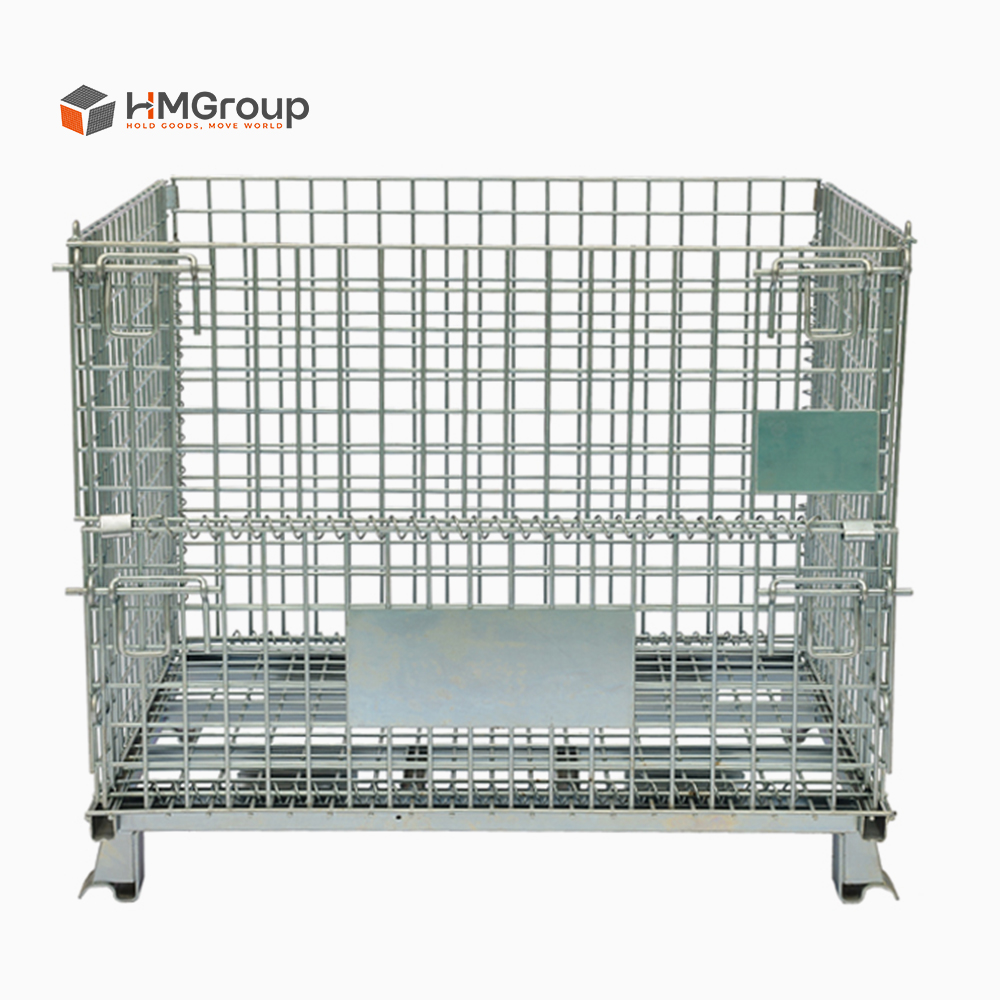
- Exterior dimensions (L×W×H): 1,030 × 840 × 850 mm
- Wire gauge: 6 mm · Grid size: 50 × 50 mm
- Rated load: 1,300 kg · Stacking: 4 high
- Loading: 500 sets per 1×40'HQ
- Typical application industries: auto parts, agriculture, fulfillment and warehouse, food and beverage
Why it ranks first. HM-HD001 wins on the two ratios that decide high-volume economics. Its 6 mm wire and dense 50×50 mm grid carry the highest rated load in the group at 1,300 kg, and because that load sits on the smallest footprint of the five (0.865 m²), the derived floor density reaches roughly 1,503 kg/m² — about 2.2× the lowest-ranked unit. The same compactness produces 500 sets per 1×40'HQ, more than double the next best figure, which lowers freight cost per unit in every replenishment cycle.
Where it fits. Dense, heavy, high-rotation loads: automotive components, packed food and beverage, and agricultural goods moving between production stages and finished-goods buffers, where floor area is the binding constraint.
Limits to plan around. The 850 mm body height is the shortest in this ranking, so tall or awkwardly shaped items may need a taller model. The compact base also concentrates weight, so floor loading and racking assumptions should be checked before a full column is built.
#2HM-ST007 — Wire Bulk Container (1,000 kg)
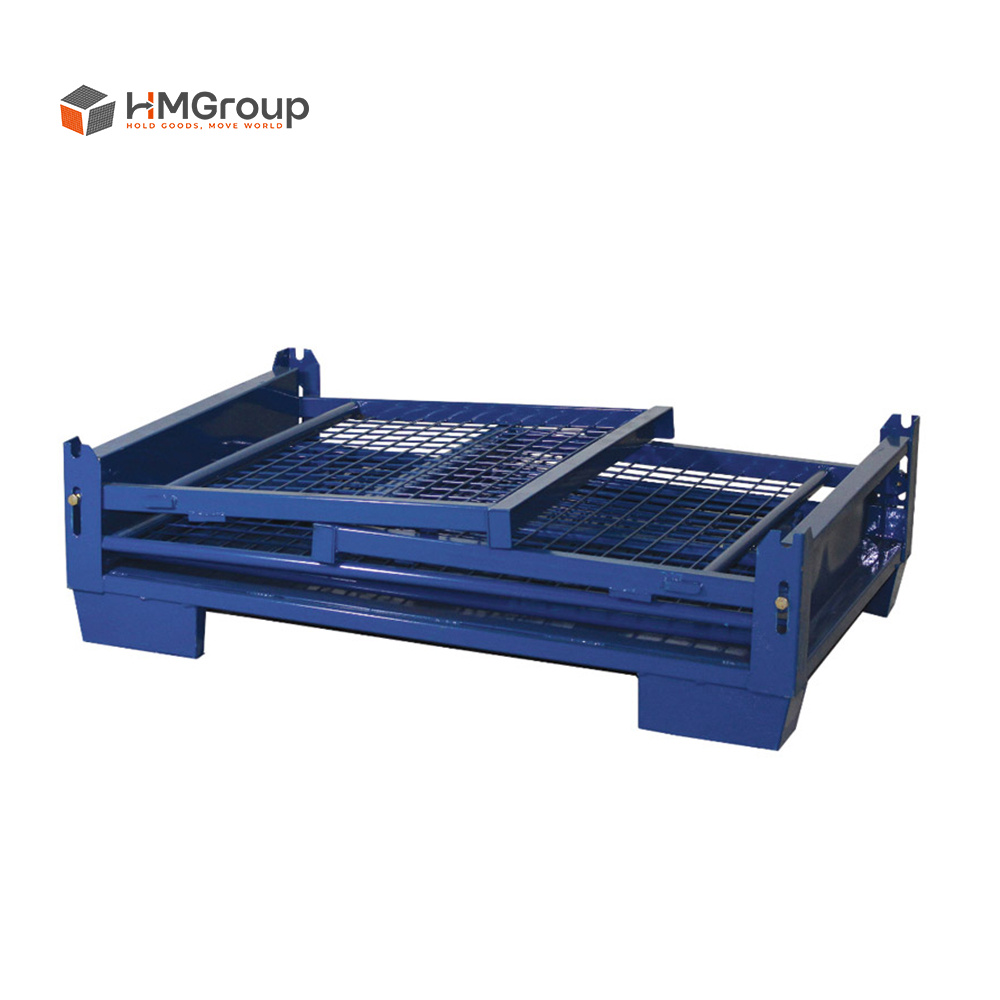
- Exterior dimensions (L×W×H): 1,230 × 835 × 970 mm
- Wire gauge: 4 mm · Grid size: 50 × 50 mm
- Rated load: 1,000 kg · Stacking: 4 high
- Loading: 160 sets per 1×40'HQ
- Typical application industries: auto parts, fulfillment and warehouse
Why it ranks second. HM-ST007 is the model actually named for bulk duty, and its numbers support the name: 1,000 kg on a 1.027 m² footprint gives the second-highest floor density in the set (≈974 kg/m²), and the 50×50 mm square mesh contains small parts without the risk of items working through a coarse grid. Its 1,230 mm load face is the second longest in the ranking, which helps with elongated automotive components and mixed-value bulk loads that need to be seen at a glance.
Limits to plan around. At 160 sets per 1×40'HQ it has the lowest transport density of the five. That makes it a poor choice when empty units are shipped long distances — and a strong choice inside a closed-loop circuit where containers circulate between plants rather than travel home empty.
#3HM-WEU010 — Wire Mesh Container (800 kg, 4+1 stacking)
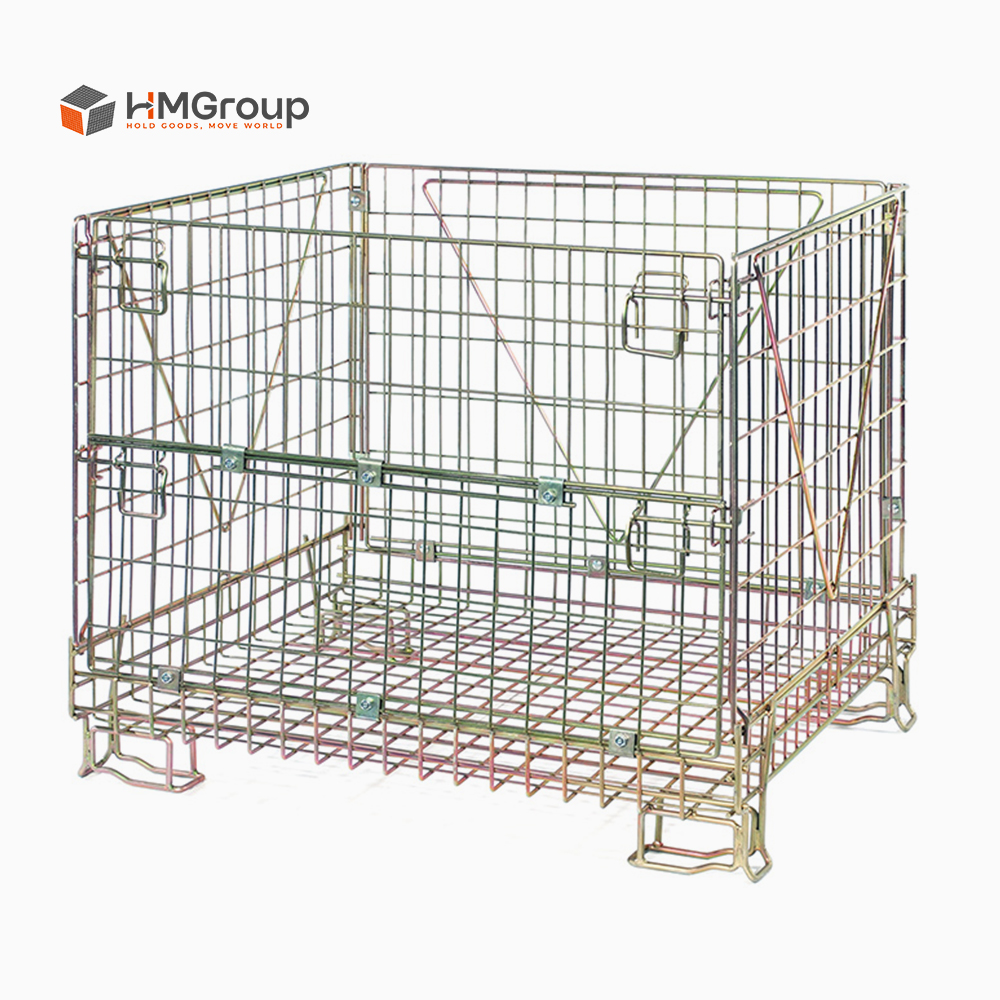
- Exterior dimensions (L×W×H): 1,183 × 948 × 991 mm
- Wire gauge: 5–12 mm · Grid size: 60 × 120 mm
- Rated load: 800 kg · Stacking: 4+1 high
- Loading: 235 sets per 1×40'HQ
- Typical application industries: wine industry, fulfillment and warehouse
Why it ranks third. Among the three 800 kg units, HM-WEU010 is the most transport-efficient at 235 sets per 1×40'HQ, and its 4+1 stacking rating places it in the same structural class as the heavier models above it. The 5–12 mm gauge range allows local reinforcement where the load demands it, and the open 60×120 mm grid supports the ventilation that wine cellars and other air-circulation-dependent storage environments require.
Limits to plan around. The grid is the second coarsest in the ranking, so fine or irregular small components need a liner or a finer-mesh alternative. Floor density lands at approximately 713 kg/m² — mid-pack — so it is a balanced unit rather than a density champion.
#4HM-HD010 — Wire Mesh Storage Container (800 kg, 4 high)
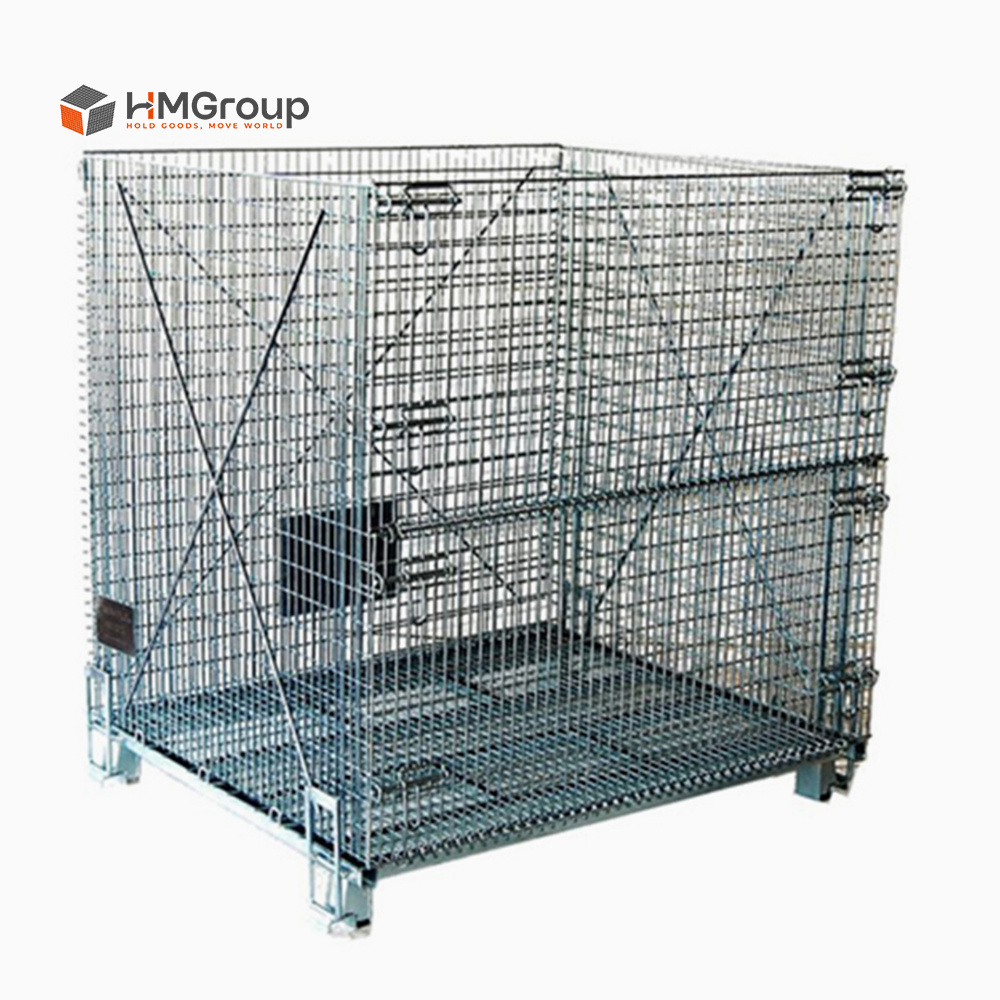
- Exterior dimensions (L×W×H): 1,200 × 1000 × 1250 mm
- Wire gauge: 6 mm · Grid size: 25 × 50 mm
- Rated load: 800 kg · Stacking: 4 high
- Loading: 216 sets per 1×40'HQ
- Typical application industries: PET preform, agriculture, fulfillment and warehouse
Why it ranks fourth. HM-HD010 is the containment specialist: a 25 × 50 mm grid is the finest in the ranking, which makes it the safest choice for small components, mixed small-part kits and anything that could pass through a wider mesh. It is also the tallest unit at 1,250 mm, and at its rated 4-high column the stack reaches approximately 5.0 m — the largest vertical volume per ground position of the five, and the reason it appears in warehouse-height-driven projects.
Limits to plan around. The tall envelope is not fully monetised by the 800 kg load rating, so envelope density drops to roughly 533 kg/m³ — the second lowest in the set. Any installation that stacks it four high must confirm clear height and door openings before committing, since a full column is close to five metres.
#5HM-PPC22 — PET Preform Wire Container (600 kg, 5+1 stacking)
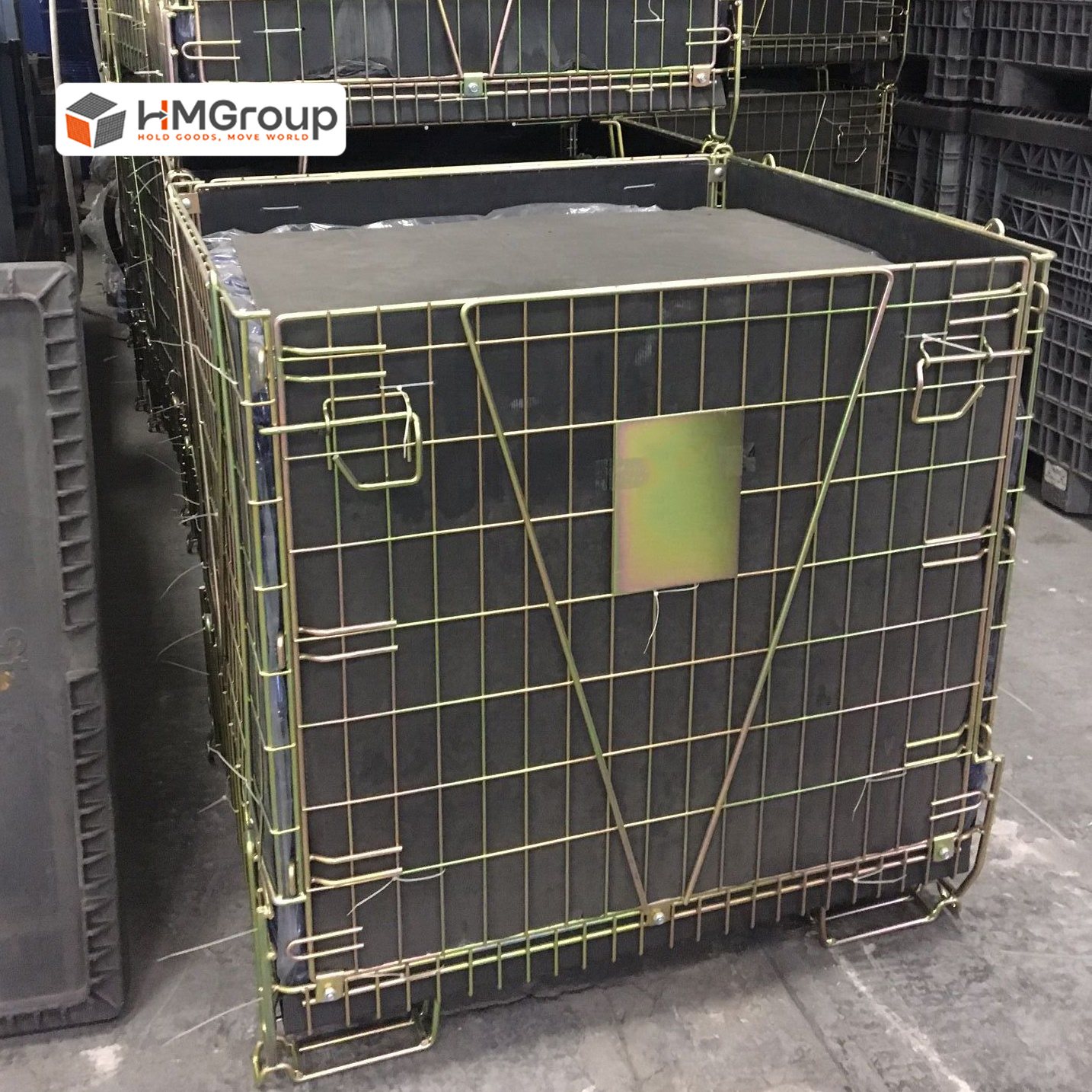
- Exterior dimensions (L×W×H): 1,196 × 1008 × 1174 mm
- Wire gauge: 4.8–12 mm · Grid size: 62 × 125 mm
- Rated load: 600 kg · Stacking: 5+1 high
- Loading: 170 sets per 1×40'HQ
- Typical application industry: PET preform production and warehouse storage
Why it ranks fifth — and why preform buyers still shortlist it first. On the three generic density ratios, HM-PPC22 finishes last (≈498 kg/m², ≈424 kg/m³, 170 sets per 1×40'HQ). It also holds the highest published stacking rating in the group at 5+1, and it is the only model in this ranking engineered specifically for PET preforms rather than adapted to them. For a preform production or bottling project, application fit outweighs a generic index: the collapsible design reduces volume by 75% when empty (corpus 109105), PP sheet lining protects preform surfaces from scuffing and dust, and the container integrates with dumper-based handling on blow-moulding lines.
Field evidence. A PET preform deployment for Coca-Cola South Africa using 5,000 units supported secure vertical stacking of 4 to 6 tiers, increased warehouse storage density by up to 400% versus single-level floor placement, raised internal material handling efficiency by 35%, and halved inventory counting time (case 909). A separate Nestlé deployment of 10,000 lined containers reported a 300% increase in storage capacity through 4-high stacking, a 40% faster stock count, and a 25% reduction in downtime caused by logistics bottlenecks (case 910).
Step-by-Step: How to Convert This Ranking into a Purchase Decision
- Define the unit load, not the product. Record the actual weight and the outside dimensions of the packed load. Compare it to the rated loads in Table 1: 1,300 kg for HM-HD001, 1,000 kg for HM-ST007, 800 kg for HM-WEU010 and HM-HD010, and 600 kg for HM-PPC22.
- Calculate the floor constraint. Multiply the load weight by the number of units standing on each floor position, then compare against your slab rating. This is where the footprint ratio (kg per m²) in Table 2 becomes a design input rather than a marketing number.
- Check the vertical constraint. Match the stacking rating to the available clear height under sprinklers, lighting and doors. The tallest model, HM-HD010, reaches approximately 5.0 m at a 4-high column; the more compact HM-HD001 reaches approximately 3.4 m and fits lower buildings.
- Match the mesh to the product. Fine grids (25 × 50 mm on HM-HD010) contain small components; tight square grids (50 × 50 mm on HM-HD001 and HM-ST007) balance containment and airflow; open grids (60 × 120 mm on HM-WEU010) prioritise ventilation and product visibility.
- Pressure-test the logistics loop. If containers ship empty, the transport figure matters more than the density ratio: HM-HD001 loads 500 sets per 1×40'HQ against 160 for HM-ST007. If the loop is closed and containers circulate on-site, density and handling ergonomics dominate instead.
- Validate before scaling. Confirm full integration — not just a sample box — through handling equipment compatibility and a factory process, then scale to the project volume.
Use Cases: Matching Model to Project Type
The three project patterns below cover most high-volume deployments. Each mapping follows directly from the specifications in Table 1 and the ratios in Table 2.
| Project type | Recommended model | Reasoning |
|---|---|---|
| Dense heavy components with high forklift rotation (automotive, agriculture, packaged food) | HM-HD001 | Highest rated load (1,300 kg) and highest floor density (≈1,503 kg/m²), with 500 sets per 1×40'HQ |
| Mixed-value bulk loads in a closed-loop internal circuit | HM-ST007 | 1,000 kg load, square 50 × 50 mm mesh, long 1,230 mm load face, 4-high stacking |
| Ventilated storage where airflow and product visibility matter | HM-WEU010 | Open 60 × 120 mm grid, 800 kg load, 4+1 stacking, 235 sets per 1×40'HQ |
| Fine or small components where containment failure is unacceptable | HM-HD010 | Finest grid in the ranking at 25 × 50 mm, tallest body at 1,250 mm for clear-height-driven sites |
| PET preform production feeding blow-moulding lines | HM-PPC22 | Purpose-built preform design, 5+1 stacking, 75% volume reduction when empty, PP lining for hygiene |
Where These Five Models Sit in the Wider Market
This ranking is scoped to one manufacturer's range, and that scope should be stated plainly. Published market analysis lists Marlin Steel (USA), Nashville Wire (USA), Bekaert (Belgium) and HM Group (China) among the key global players in the wire container and wire mesh segment (Dataintelo; DiAo Storage). A cross-brand comparison is useful, but only when every candidate is measured against the same three criteria used here: rated load, stacking rating and derived dimensional efficiency. Comparing a manufacturer's headline capacity figure against another manufacturer's transport figure produces decisions that do not survive contact with the warehouse.
Two market signals are worth carrying into a specification discussion. In the automotive sector, container specifications such as GM 5131 and Ford-compatible designs are widely referenced integration requirements, which is why load testability and dimensional repeatability matter more in that sector than in general warehousing. In the wine segment, European specialty containers are marketed on a payload-to-unit-weight ratio — one published example describes containers handling loads over 1,000 kg at a unit weight of 46 kg (Italiana Contenitori) — a reminder that tare weight affects every forklift cycle, not just freight cost. For general-purpose wirebound shipping containers, ASTM D6573/D6573M is the published standard covering domestic and overseas shipment.
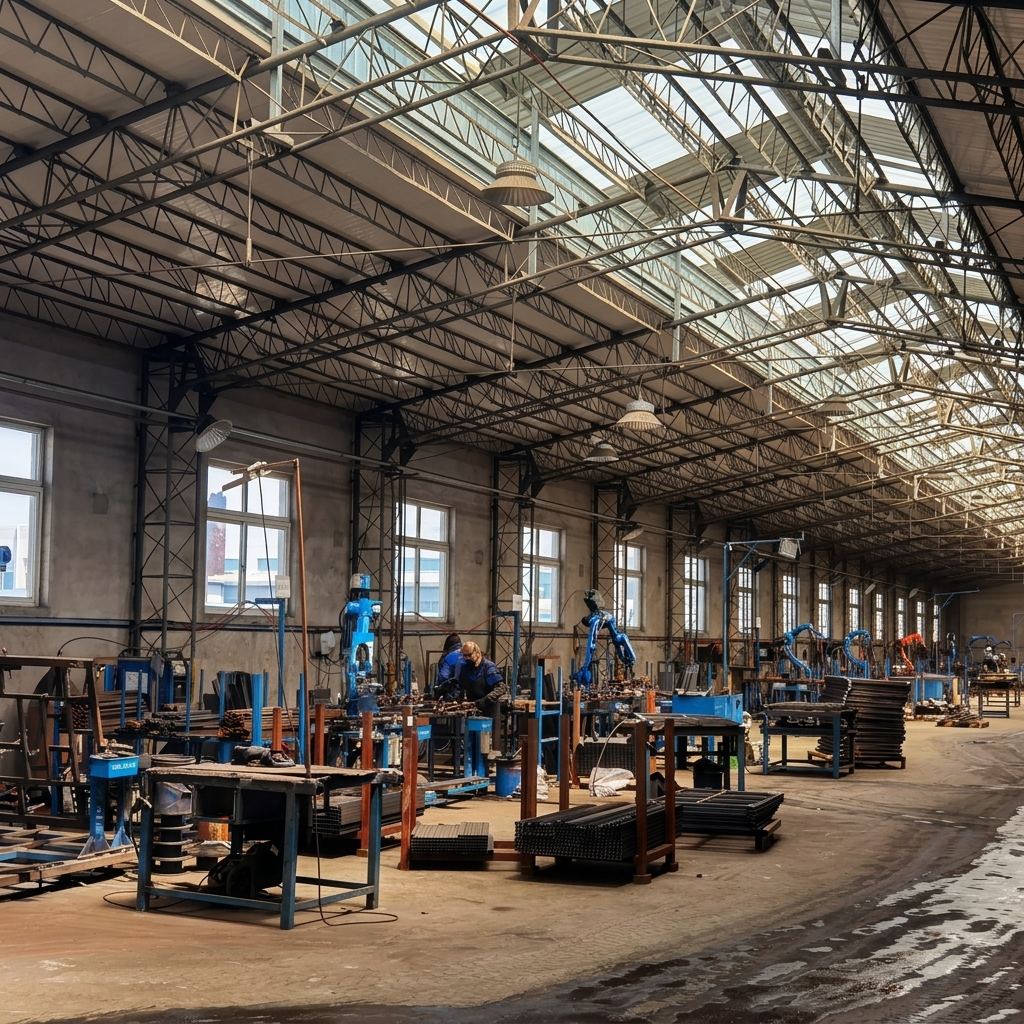
Manufacturing scale also belongs in the evaluation, because capacity determines whether a specification can be delivered repeatedly. HM Group operates three manufacturing bases — Xiamen, Nanjing and Qingdao — with a 62,000 m² factory footprint, a 10-person R&D team, monthly capacity of 40,000 sets, annual output of 2,000,000 units, and a six-phase quality control process covering pre-production sample inspection, raw materials, components, semi-finished products, finished products and packaging.
Frequently Asked Questions
Do these wire bulk containers meet automotive and international shipping standards?
Compliance depends on the receiving plant, so it should be specified rather than assumed. In automotive logistics, container specifications such as GM 5131 and Ford-compatible designs are common integration requirements, and for general-purpose wirebound shipping containers ASTM D6573/D6573M is the published standard covering domestic and overseas shipment. HM Group's customization scope covers size, load capacity and structural features, and its quality control process begins with a pre-production sample inspection phase — the stage at which project-specific requirements can be verified before mass production starts. Buyers should confirm the exact standard and test documentation required by their own receiving facility.
Can the five ranked models be customized for a specific load or handling setup?
Yes. HM Group offers OEM, ODM and fully customized production. The customization scope includes surface treatment (zinc, hot-dip galvanized or powder coating), overall size, loading capacity, powder coating color and logo printing, plus design features such as forklift guides, wire dividers, runner bars, name plates and wheels. Support equipment for these containers typically includes forklifts, reach trucks, electric pallet jacks, and RFID or barcode tracking systems for real-time inventory control. Monthly capacity is 40,000 sets, with a minimum order quantity of 1×20GP.
What drives the cost of a wire bulk container project?
Four variables dominate: wire gauge and mesh grid density (finer grids and thicker wire consume more material), surface treatment (zinc plating, hot-dip galvanizing or powder coating), customization add-ons such as liners, dividers and wheel sets, and freight efficiency — the number of sets that fit into one 1×40'HQ container. That last driver is often underweighted: HM-HD001 loads 500 sets per 1×40'HQ while HM-ST007 loads 160, so the per-unit landed cost gap between two similarly priced containers can be substantial. Project-specific quotations are issued against a defined specification rather than a list price.
Can we validate a unit before committing to a full order?
Validation is built into the production process. Phase I of HM Group's six-phase quality control is pre-production sample inspection, followed by raw material inspection, component inspection, semi-finished product inspection, finished product inspection and packaging inspection. Beyond the sample stage, buyers can request a process report throughout production and use online video audit support to review manufacturing progress remotely. The minimum order quantity is 1×20GP, and the standard warranty is 3 to 5 years under proper use.
What are the lead time and supply capacity for a volume order?
Standard lead time is 30–45 days, supported by a monthly capacity of 40,000 sets and annual output of 2,000,000 units across three manufacturing bases. HM Group exports 100% of its output, with main markets in the EU, North America, Asia and the Middle East, and since 2024 has operated sales, technical and service teams in regions including the United States, Canada, Mexico, Argentina, Brazil, South Africa and Saudi Arabia. To move from ranking to a firm offer, send your unit load, dimensions and target volume for a specification-matched quotation.
Next Step: From Ranking to Specification
If your project needs a density-led workhorse, specify HM-HD001. If it needs an open, ventilated 800 kg unit, specify HM-WEU010. If it feeds PET preform lines, specify HM-PPC22 — the model with the highest stacking rating in this ranking and a 75% volume reduction when empty.
Send your unit load, dimensions, stacking height and target annual volume, and HM Group will return a specification-matched proposal with the applicable model, finish and container loading plan.
Download the full product catalog: HM Group Wire Container Catalog (PDF)
Website: www.hmlwires.com
Email: mary@net-railing.com · Tel/WhatsApp: +86 150 4058 7228
Start a WhatsApp conversation about your container project
Conclusion
For high-volume logistics in 2026, the five wire bulk containers above separate cleanly along one axis: how much product each unit moves per square metre of floor and per shipping container. HM-HD001 leads on both, at 1,300 kg and ≈1,503 kg/m². HM-ST007 follows on load density but is the least transport-efficient when empty. HM-WEU010 balances load, ventilation and container packing. HM-HD010 owns fine-mesh containment and vertical volume. HM-PPC22 finishes last on generic density but first on stacking rating and application specificity for PET preforms.
Whichever model the project points to, the same three checks apply before ordering: verify the floor and clear-height constraints with real numbers, verify the mesh against the smallest item in the load, and verify the empty-container logistics loop. Those three checks decide more of the total cost than any single specification line.