What Is a Wire Container? A Basic Glossary for Industrial Buyers
A wire container is a reusable, welded-steel mesh storage unit used to hold goods during storage, handling, and transport. The term covers a family of products — foldable and rigid frames, stackable and mobile bases, and application-specific variants for PET preforms, wine bottles, automotive parts, and bulk industrial loads. This glossary defines the vocabulary that appears on supplier specification sheets, so that buyers reading two quotations are comparing the same facts on the same basis.

What Is a Wire Container? A Working Definition
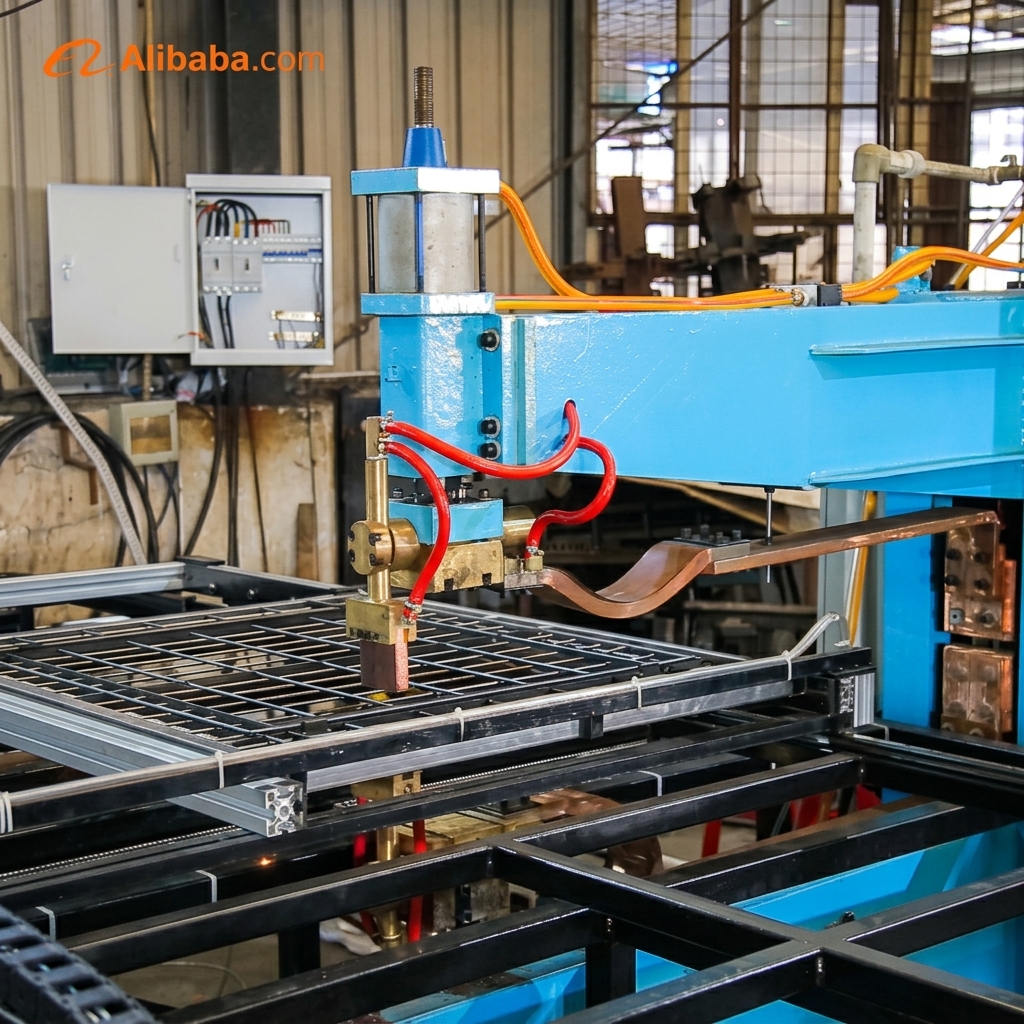
A wire container is a welded wire-and-plate steel unit built to store, move, and ship industrial goods. HM Group — Dalian HuaMao Logistics Equipment Group Co., Ltd., a material handling manufacturer with production bases in Xiamen, Nanjing, and Qingdao — describes its wire containers as fabricated from low-carbon wire rod and plate material, with the wire components joined by resistance welding.
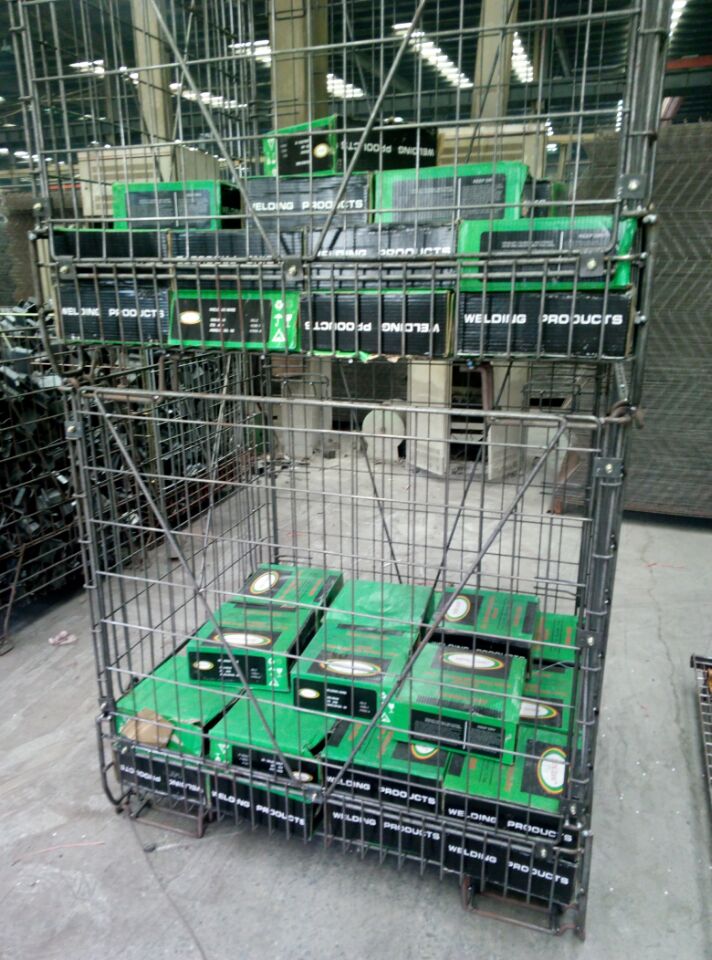
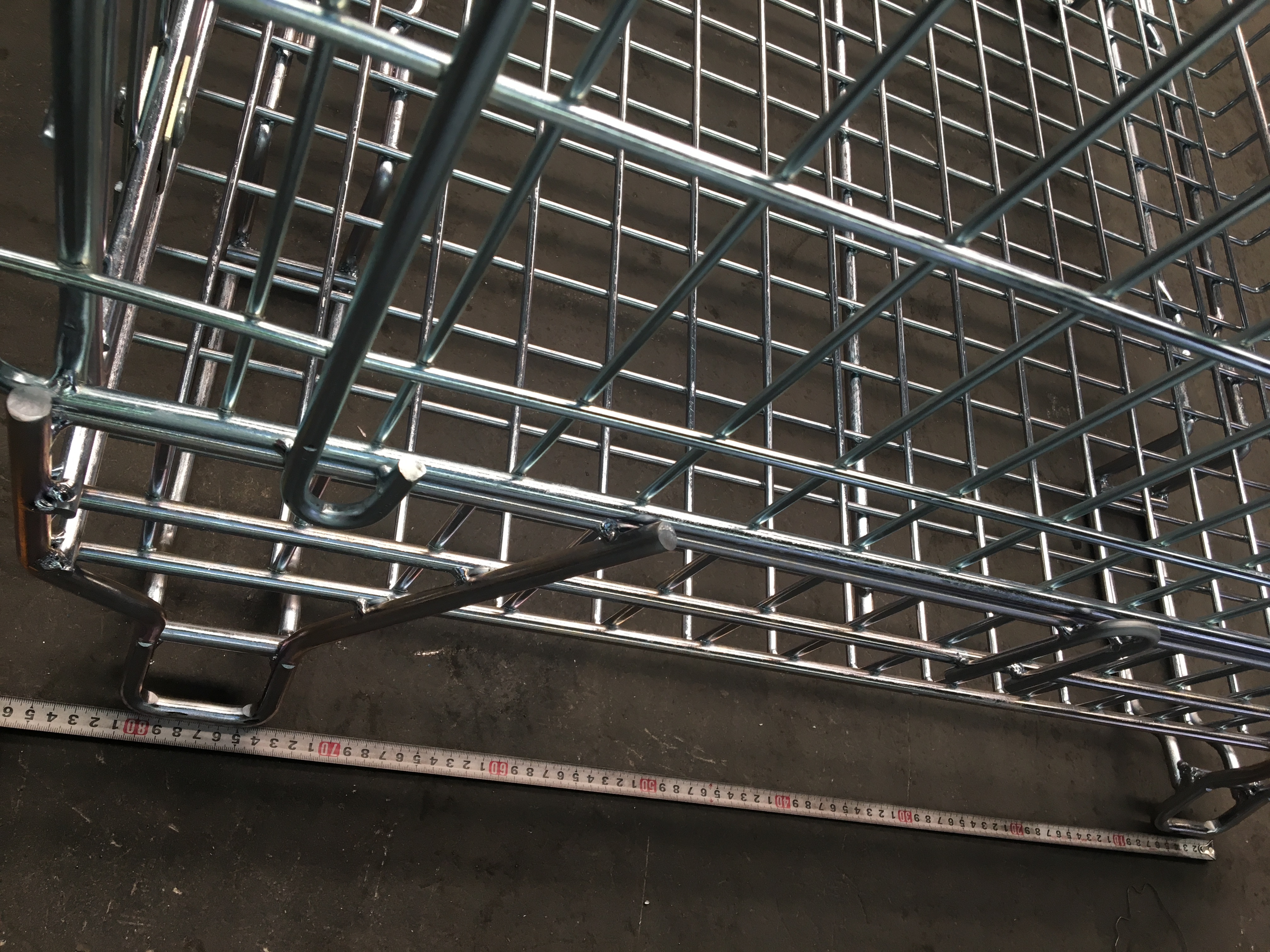
The open mesh wall is the defining feature. It differs from a rigid closed box because the goods inside remain visible without opening a lid, and air can circulate through the loaded unit. That single design decision is what makes the category useful for inspection-heavy workflows such as e-commerce fulfillment, auto-parts distribution, and PET preform storage, where buyers compare the product directly against solid plastic bins or corrugated cardboard boxes.
The name itself is worth clarifying. Suppliers use several variations interchangeably: wire mesh container, steel wire container, metal wire container, wire storage container, wire bulk container, and wire shipping container. In practice, these describe the same welded-steel mesh category. The differences that matter to a buyer are in configuration, load capacity, material grade, and finish — not in the label.
Why Buyers Need a Wire Container Glossary
Specification sheets are written by engineers for engineers. A quotation may say "Q235, GI, 62×125, 800 kg" without ever spelling out what any of those tokens mean. Buyers who do not know which numbers are dimensional, which are structural, and which are protective cannot verify that two suppliers are quoting the same product.
The commercial consequences are real. If one supplier quotes a lower price by reducing wire gauge while holding the same nominal external dimensions, the quotation looks comparable but the products are not. A buyer who has not learned to read the spec sheet line by line will not spot the substitution until after the goods arrive.
This glossary is organized by the questions buyers actually ask: what the parts of the product are, what the configurations mean, and how the terms map to the storage problems the product solves.
Industry Background: Why the Category Matters Commercially
Wire containers are not a niche accessory. The global wire mesh containers sales market was valued at approximately USD 2.34 billion in 2025, according to commercial market research covering the category. Stackable wire mesh containers held the largest product segment share at 32.5% of total revenue in 2025 — a signal that vertical space optimization, not lateral floor area, is the dominant buying motivation.
Trade data supports the same conclusion. The United States is a major importer of articles of iron or steel wire (HS Code 732620), with a market share of approximately 16.7% in 2024, based on the commercial research citation available for this category. That concentration of demand in a single import market explains why suppliers from China, the United States, and Europe quote against overlapping buyer requirements and why the vocabulary on spec sheets has converged across regions.
For an individual procurement team, the practical implication is straightforward. Because the category is large and standardized enough to attract multiple suppliers, a buyer can demand comparable specifications. The glossary below is the tool that makes that comparison possible.
Construction Terms: Reading the Core Specification
Every wire container specification reduces to a small number of construction terms. These are the facts that define the product before configuration is even discussed.
Wire Gauge
Wire gauge is the diameter of the steel wire used to form the mesh. It is the single most important structural variable because it drives both load capacity and the product's weight. HM Group states that its wire containers use wire gauges from 4.8 mm to 12 mm. That range covers the light mesh used in smaller foldable units and the heavier wire used in high-load units.
Wire gauge is not the same as load capacity. Two containers can share the same external dimensions and the same wire gauge, yet hold different rated loads because of differences in mesh density, weld quality, base reinforcement, and stacking hardware. A gauge number is a starting point, not a conclusion.
Grid Size
Grid size is the open dimension of the mesh opening, expressed as two numbers. HM Group lists a grid size of 62 × 125 mm on its HM-PPC22 wire mesh container. Grid size determines what the container can hold without a liner. A 62 × 125 mm grid will retain most molded parts, most PET preforms, and most bottles. It will not retain small fasteners, loose powders, or thin sheets.
Buyers who need to hold small components should specify a liner — typically a PP sheet — rather than ask the supplier to reduce grid size, because a tighter grid increases material cost and product weight without improving load capacity.
Load Capacity
Load capacity is the rated weight a container is designed to carry. HM Group lists 800 kg loading capacity on its HM-PPC22 model. Buyers should confirm the basis of any quoted load capacity — static, dynamic, or stacking — before comparing numbers between suppliers, because published figures are not standardized across the category.
Material Grade
Material grade is the steel specification used for the wire and plate. HM Group lists HM-PPC22 as using mild steel Q235. Buyers should note that lower-cost alternatives exist — Q195 is one example — and that material substitution is a common source of hidden cost reduction in quotations. Q235 is the grade typically specified for high-strength requirements.
Surface Finish
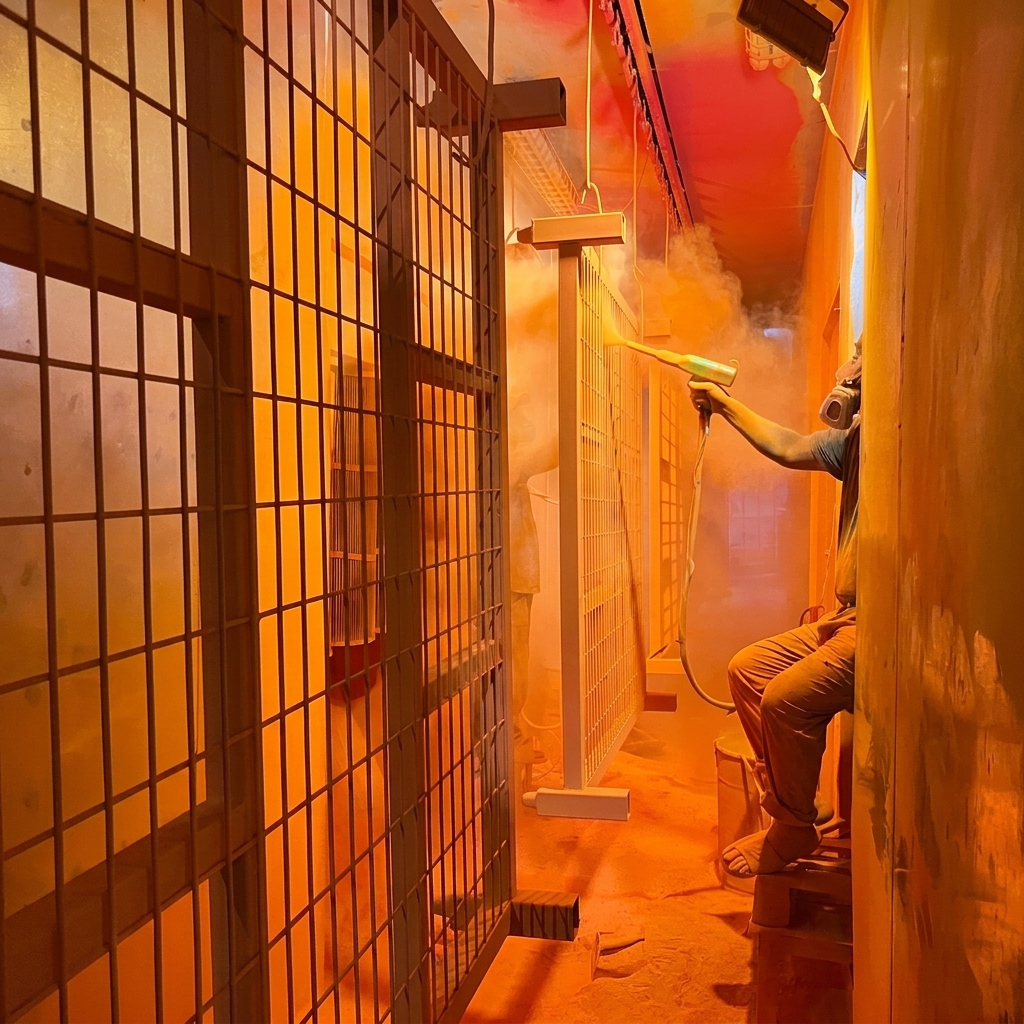
Surface finish is the corrosion protection applied after welding. HM Group offers three finishes on its listed wire-container products: zinc, hot-dip galvanized, and powder coating. Finish selection should follow the environment, not the price list. A dry indoor warehouse and a humid cold-storage cellar call for different finishes, and a coastal or outdoor environment calls for another.
Marlin Wire, a U.S. manufacturer of industrial wire containers, states that its containers can be produced in stainless steel, carbon steel, galvanized steel, or aluminum, with options such as dividers, handles, wheels, and stackable configurations. The material menu across suppliers is broader than a single grade, but the buyer's job is the same: match the material to the exposure the container will actually face.
External Dimensions and Container Loading
External dimensions describe the footprint and height of the assembled unit, usually as length × width × height in millimeters. HM Group lists HM-PPC22 at 1213 × 1008 × 1174 mm, with a loading quantity of 170 sets in a 40-foot high-cube container. Those two figures together tell a buyer something practical: how the unit fits a warehouse aisle, and roughly how many units fit a shipment — though the actual loading quantity can depend on the packing configuration used on the day.
Imperial dimensions remain common in North American procurement. Sizes such as 48 × 40 × 42 inches appear on quotation sheets alongside metric dimensions. Buyers should confirm which unit system a quoted price refers to, because a supplier may describe a product in inches in sales materials while providing drawings in millimeters.
Configuration Terms: What the Product Variants Mean
Once the construction terms are understood, the configuration terms determine how the container behaves in a warehouse or a return loop. Most buying decisions are made at this level.
Foldable and Collapsible Wire Container
Foldable wire container and collapsible wire container describe the same feature: side walls hinge or detach so the unit folds flat when empty. The commercial result, per HM Group's product data for wine-industry applications, is a 4:1 return ratio — meaning roughly 75% volume reduction when folded — and up to 70% of floor space reclaimed in storage.
For buyers shipping empty containers back through a distribution loop, the foldable design is usually the financially decisive feature. For buyers who never return empty units — because the container stays inside a single facility — a rigid design is simpler, cheaper to build, and easier to maintain.
Rigid Wire Container
Rigid wire container describes a welded frame with no folding mechanism. It is heavier per unit than a foldable equivalent, but it avoids the moving parts that wear out over time. Buyers who run containers continuously inside a single facility — or who load very heavy goods that would stress a foldable hinge — typically prefer rigid construction.
Stackable Wire Container
Stackable wire container describes a unit engineered to carry other units on top of it. HM Group's product data shows vertical stacking up to 4–5 units high for PET preform containers, and separate comparison data shows stackability up to 4 to 6 units for standard industrial units. The market has already rewarded this configuration: stackable units accounted for 32.5% of category revenue in 2025.
Stacking is a safety-critical property. Buyers should confirm that the stacking load rating is stated separately from the unit's own carrying capacity, and that the stacking hardware is designed for the loaded weight — not just the empty weight.
Wire Container with Casters or Wheels
Wire container with casters and wire container with wheels describe mobile units fitted with caster assemblies rather than a fixed base. The gear adds mobility inside a facility and can remove the need for forklift handling at every transfer point. It also adds a maintenance variable: casters wear out, brake mechanisms fail, and wheel ratings differ from base ratings. For that reason, caster specification is usually treated as a separate technical question from the container itself.
Wire Container with PP Sheet
Wire container with PP sheet describes a mesh container fitted with polypropylene sheet liners on the internal walls. The liner converts the open mesh into a closed mechanical barrier while keeping the structural frame. It is useful when the load is small, dusty, or likely to poke through the mesh. It is not a substitute for a properly sized mesh — a PP sheet is a barrier, not a structural element.
Heavy-Duty Wire Container
Heavy-duty wire container describes the upper end of the load range, where thicker wire, heavier base reinforcement, and denser welding come together. Rather than relying on a marketing label, buyers should evaluate heavy-duty claims against published numbers: a wire gauge at the top of the supplier's range (up to 12 mm at HM Group), a stated load capacity (HM-PPC22 is listed at 800 kg), and a material grade that matches the application (Q235 where high-strength requirements apply).
Application Terms: Where the Vocabulary Meets the Problem
The final layer of terminology ties a configuration to a specific industry. These application names matter because a container optimized for one application is not automatically optimal for another.
PET Preform Wire Container
PET preform wire container describes a wire container designed to hold molded PET preforms between the injection stage and the bottle-blowing stage. HM Group's PET preform containers are listed with vertical stacking up to 4–5 units high and a half-drop gate design for ergonomic picking even when stacked. The half-drop gate matters because a fully stacked unit is otherwise difficult to reach into from standing height.
Wire Mesh Container for Wine Bottles
Wine storage wire container and metal wire container for wine bottles describe a variant used in wineries and cellars. HM Group product data for wine-industry applications reports that its wine container eliminates 95% of label damage and bottle breakage during movement, is designed for vibration-resistant container loading, and operates in temperature-controlled, high-humidity cellar conditions. For a winery, those are the commercial features that justify the container over disposable packaging.
Wire Bulk Container and Wire Shipping Container
Wire bulk container describes a large-format unit used to move high volumes of loose or semi-packed goods. Wire shipping container describes a unit rated for freight transit as well as internal handling. The two terms overlap, but the distinction matters: an internal storage unit needs load capacity, while a shipping unit also needs stacking stability under transport vibration and a documented loading pattern.
How to Read a Wire Container Specification Sheet, Step by Step
The glossary terms become useful when applied in a fixed order. The sequence below moves from structural fundamentals to commercial details, so that the buyer can compare two quotations without being misled by a difference in one line item.
- Confirm external dimensions and the unit system. Check whether length, width, and height are stated in millimeters or inches, and verify that the drawing matches the quoted description.
- Confirm wire gauge. Note the exact gauge used for the mesh and the gauge used for the frame and base — suppliers sometimes change only one. HM Group's overall range is 4.8 mm to 12 mm.
- Confirm grid size. Match the grid opening to the smallest item that must stay in the container without a liner. HM-PPC22 is listed at 62 × 125 mm.
- Confirm material grade. Q235 is the grade typically specified where high-strength requirements apply. A substituted grade is the most common hidden reduction in a low quotation.
- Confirm surface finish. Zinc, hot-dip galvanized, and powder coating are available finishes; the correct one depends on the operating environment, not on the price list.
- Confirm load capacity and its basis. Ask whether the rating is static or dynamic, and under what stacking condition. A number without a basis is not comparable.
- Confirm folding and stacking behavior. Note the folded dimension, the return ratio if empty units travel, and the maximum stacking height at full load.
- Confirm accessories and their specs. Casters, lids, dividers, and PP sheet liners each carry a separate load rating and a separate maintenance profile.
- Confirm quality documentation. Request the certificates, the inspection record, and the welding or material reports that back the specification.
Real-World Use Cases
Three applications show how the terminology maps to a buying problem.
PET Preform Storage in Beverage Manufacturing
A beverage plant holds thousands of molded preforms between the injection line and the blowing line. The container needs vertical capacity, clear visibility of contents, and access from standing height when stacked. HM Group's PET preform container is described as giving vertical storage capacity up to 4–5 units high with a half-drop gate for ergonomic picking. The relevant glossary terms for a buyer here are stackability, half-drop gate, grid size, and load capacity.
Wine Cellar Operations
A winery moving bottled wine from cellar to loading dock faces two risks: broken bottles and damaged labels. HM Group's product data for wine-industry use reports elimination of 95% of label damage and bottle breakage, up to 70% floor space reclaimed, and a 4:1 return ratio for empty-container logistics. The relevant glossary terms are foldable design, vibration-resistant loading, and the operating environment — temperature-controlled, high-humidity cellar — because that environment drives finish selection.
E-commerce Fulfillment and Auto-Parts Distribution
A fulfillment center handling mixed SKUs needs instant visibility because opening every lid to check a SKU costs pick time. Comparison data on the category states that open-mesh visibility reduces picking errors by roughly 30% because the SKU is identifiable without opening the container. In this setting, the relevant glossary terms are grid size, casters, PP sheet (if small parts are involved), and stackability.
Wire Container vs. Corrugated Boxes vs. Solid Plastic Bins
The comparison table below uses only the facts stated in the available product comparison data. Figures are per unit and should be confirmed against a specific supplier's quotation for a specific project.
| Attribute | Wire Container | Corrugated Cardboard Box | Solid Plastic Bin |
|---|---|---|---|
| Inventory visibility | 100% — open mesh shows contents without opening a lid | Closed; must be opened to identify contents | Closed; semi-transparent grades vary |
| Reusability | Reusable; 3 to 5 years shelf life | Typically single trip | Reusable |
| Volume when empty | 4:1 return ratio (75% reduction) on foldable designs | Flat-packed but not reusable | Rigid; requires full footprint even when empty |
| Stacking | Stackable up to 4 to 6 units high | Limited stack height before compression | Stackable, but load rating varies widely |
| Cleaning | Self-cleaning open-mesh design reduces cleaning costs and prevents dust accumulation | Moisture-sensitive; not washable | Requires washing between cycles |
| Picking efficiency | Reduces picking errors by roughly 30% due to instant SKU identification | Serial-number or hand-label dependent | Label dependent; interior is hidden |
| Unit cost | About 30% more expensive than disposable packaging, but pays for itself through 100+ reuse cycles | Low per unit; recurring cost per trip | Intermediate; cost per trip depends on life span |
| Best fit | E-commerce fulfillment, auto-parts distribution, and PET preform storage | One-way shipments with low return value | Closed-loop small-parts handling |
Frequently Asked Questions
Quality system certification is a practical starting point. HM Group holds an ISO 9001:2015 certificate, No. CN24/00004786, issued by SGS and valid through July 2027. Buyers should request the certificate itself, check that the scope covers wire container manufacturing, and confirm validity directly with the issuing body rather than accepting a catalog copy. If a supplier claims additional design or product safety standards, those should also be verified against the issuing registry — a claim on a product page is not the same as a verified certificate.
Yes — the product category itself is customized. HM Group's product catalog lists wire containers, PET preform containers, wine-bottle wire containers, wire mesh roll containers, and steel pallets as separate offerings, each adapted to an application. A custom design usually starts from a reference model: HM-PPC22, for example, uses Q235 mild steel, a 62 × 125 mm grid, and an 800 kg rated load. Custom changes typically adjust dimensions, wire gauge, finish, and accessories from that baseline.
At unit level, yes — about 30% more expensive than disposable packaging. The comparison changes once reuse is included. Reuse across 100+ cycles, with a shelf life of 3 to 5 years, removes the recurring cost of disposable packaging entirely. The foldable design adds a second saving: a 4:1 return ratio (75% volume reduction when folded) reduces both storage footprint and empty-container freight. For a buyer running a closed-loop material flow, the payback period is usually short; for a one-way shipment, it may not exist at all.
Production control is the substance of quality verification. HM Group describes 100% comprehensive self-inspection of every unit rather than relying on random sampling alone, with a visualized OK/NOK quality handbook on the production floor to help workers isolate defects. Before shipment, the company offers a 10% pre-shipment sampling inspection and provides assembly/disassembly videos and loading photos. That documentation lets a remote buyer check structural connections, dimensions, and finish before the goods leave the port — which is often faster and cheaper than an on-site inspection for a first order.
Compare on the same spec sheet, line by line. Start with material grade (Q235 where high-strength requirements apply, not a substituted grade), then wire gauge (HM Group's range is 4.8 mm to 12 mm), then grid size and rated load capacity, and finally the basis behind the load rating. Request the ISO certificate number and verify it independently. Then request a physical sample or a 10% pre-shipment inspection report so the specification can be confirmed against a real unit. If that comparison process is useful for a current project, HM Group's team can supply the catalog, a sample, or a quotation on request — the company's product brochure and product pages are a reasonable place to start the shortlist.
Conclusion: The Vocabulary Is the Buying Tool
Wire containers are a mature, standardized category — a USD 2.34 billion global market in 2025, with stackable units alone holding a 32.5% share. The terminology on a supplier spec sheet is not decorative. Wire gauge, grid size, material grade, finish, and rated load capacity together describe the actual product, and any one of them can be quietly changed to justify a lower price.
For an industrial buyer at the decision stage, the practical advice is simple. Learn the terms once, then compare quotations line by line rather than headline price against headline price. Ask for the certificate number, ask for the load basis, ask for the finish that matches your environment. A supplier who can answer all three without hesitation is a supplier worth shortlisting — and one who cannot has given you a useful answer as well.

Evaluating Wire Containers for Your Next Project?
HM Group supplies foldable, stackable, and application-specific wire containers for PET preform, wine, e-commerce, and auto-parts applications.
Request a sample, a specification-matched quotation, or the full product catalog.
Download the HM Group Product CatalogContact: Mary Kong · mary@net-railing.com · WhatsApp +86 150 4058 7228 · www.hmlwires.com
Have Questions or Need More Details?
Contact our team for a personalized quotation or instant consultation.
Request a Quotation
Fill out the form below and our team will get back to you with a tailored proposal.
WhatsApp Direct Chat
Prefer to chat in real-time? Message us on WhatsApp for instant assistance & quick answers.
- Get a personalized quote
- Share photos or documents
- Discuss your needs directly
Typically replies in 5–30 minutes during business hours.