Wire Container Application Guide: Fitting Mesh Containers to Industry and Project Scenarios
A wire container is a reusable steel mesh handling unit, most often foldable, used to move, store and ship goods in industrial logistics. Making one fit a specific industry or project means aligning four variables: the unit load it carries, the handling equipment it meets, the environment it survives, and the empty return loop it has to complete. When any one of those four is mismatched, the container stops being an asset and becomes a bottleneck in the warehouse.
This guide is written for buyers, project engineers and logistics planners who have already concluded that a mesh container is the right category, and who now need to make it work inside a defined scenario: a PET preform line, an automotive parts flow, a wine cellar, a high-humidity European storage yard, or a high-rotation beverage Just-In-Time loop. It covers the failure modes to avoid, the industry context behind current demand, the specification modules that can be matched to a scenario, a deployment sequence, concrete use cases, comparison data, and the commercial terms that keep a supply relationship stable across multiple years.
Problem Definition: Why a Copied Specification Fails in a Real Project
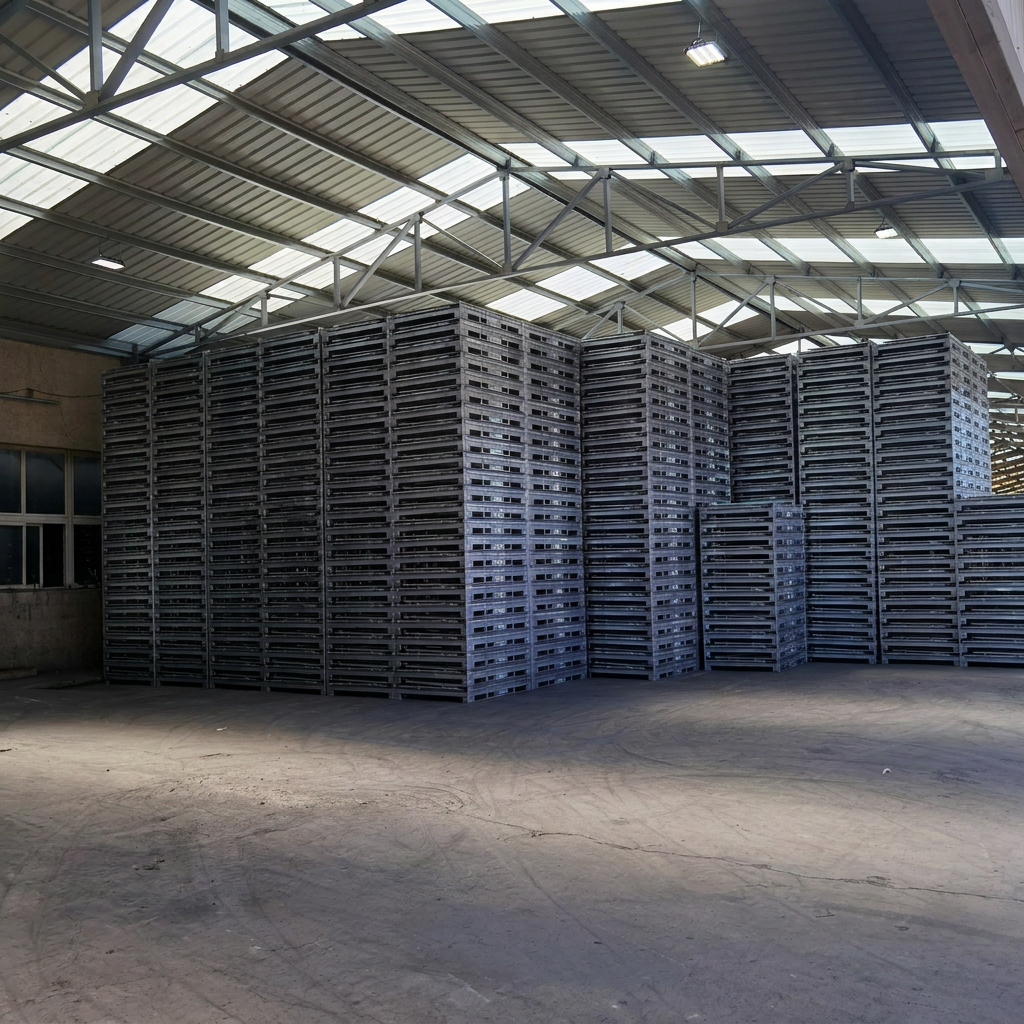
Wire container projects rarely fail because the category was wrong. They fail because the specification was copied from another project instead of matched to this one. Four documented risk categories apply to mesh handling products:
- Structural risk — missing welds, weak welding strength, or non-vertical legs, any of which can lead to stacking instability or collapse.
- Dimensional risk — deviations in overall size or wire diameter that prevent proper folding, stacking or automated handling.
- Surface and safety risk — scratches, sharp burrs or zinc slag that can injure workers or damage stored goods.
- Material and environmental risk — use of substandard materials, such as Q195 instead of Q235, leading to insufficient load capacity, or poor surface treatment causing premature rust and peeling.
Two application-specific examples show how strongly the operating environment changes the requirement. In storage or handling areas where humidity exceeds 75% RH, the application requires hot-dip galvanized or high-micron zinc plating for corrosion protection. In PET preform handling, the application requires an ultra-smooth surface finish to prevent damage to delicate plastic preforms. A container specified for one of those scenarios will not automatically satisfy the other.
A third failure mode is systemic rather than physical: the container is chosen in isolation from the equipment around it. Wire container applications typically depend on supporting equipment such as forklifts, reach trucks, automated conveyor systems, automated container dumpers, and RFID or barcode tracking systems. If the container footprint, base structure or stacking height does not match that equipment, the project pays for handling capacity it cannot use.
Industry Background: Where Wire Containers Are Being Deployed
Demand for wire mesh containers is growing, but the composition of that demand matters more than the headline figure for anyone planning an application. Third-party market research published by Dataintelo values the global wire mesh containers sales market at approximately USD 2.34 billion in 2025 and projects it to reach USD 3.72 billion by 2034.
Growth estimates vary with scope. Dataintelo reports a 5.2% CAGR for the wire mesh container market across 2026–2034, while analysts measuring the broader wire mesh industry publish a lower figure of 3.64% for 2025–2035 (Market Research Future). Buyers should treat any single CAGR as scope-dependent rather than as a specification input.
Two structural signals in the same dataset are more directly useful for application planning:
- Stackable wire mesh containers held the largest share of the product segment, accounting for 32.5% of total revenue in 2025 — stacking performance is a mainstream requirement, not a niche one.
- Asia Pacific held a 38.2% revenue share in 2025, which is relevant to sourcing decisions as well as to end-market demand.
On the demand side, the United States remained a major importer of articles of iron or steel wire (HS Code 732620), with a market share of approximately 16.7% in 2024 (UN Comtrade / Abrams Wiki). In regulated supply chains, ASTM D6573/D6573M covers the standard specification for general-purpose wirebound shipping boxes and containers used for domestic and overseas shipment, and automotive programmes frequently specify containers compatible with standards such as GM 5131 or Ford-compatible designs to ensure seamless integration into production logistics.
The practical consequence is that container demand increasingly arrives attached to a project: a new production line, a new distribution centre, a returnable packaging conversion, or a supply chain that must run for several years. That makes the purchase an ecosystem question as much as a product question, which is exactly what an application guide has to answer.
The Application-Matched Solution: How HM Group Configures Wire Containers
HM Group (Dalian HuaMao Logistics Equipment Group Co., Ltd.) is a Chinese manufacturer and exporter of wire mesh containers, PET preform containers, cage pallets, stillages, tire racks, nestainer racks and related steel handling products. The company was founded in 2003 and exports 100% of its output to the EU, North America, Asia and the Middle East, producing across three manufacturing bases in Xiamen, Nanjing and Qingdao with a factory area of 62,000 m², an annual output of 2,000,000 units and a 10-person R&D team.
For an application-led project, the relevant question is not the product range but which specification modules can be matched to the scenario. Those modules are set out below.
1. Material and coating matched to the operating environment
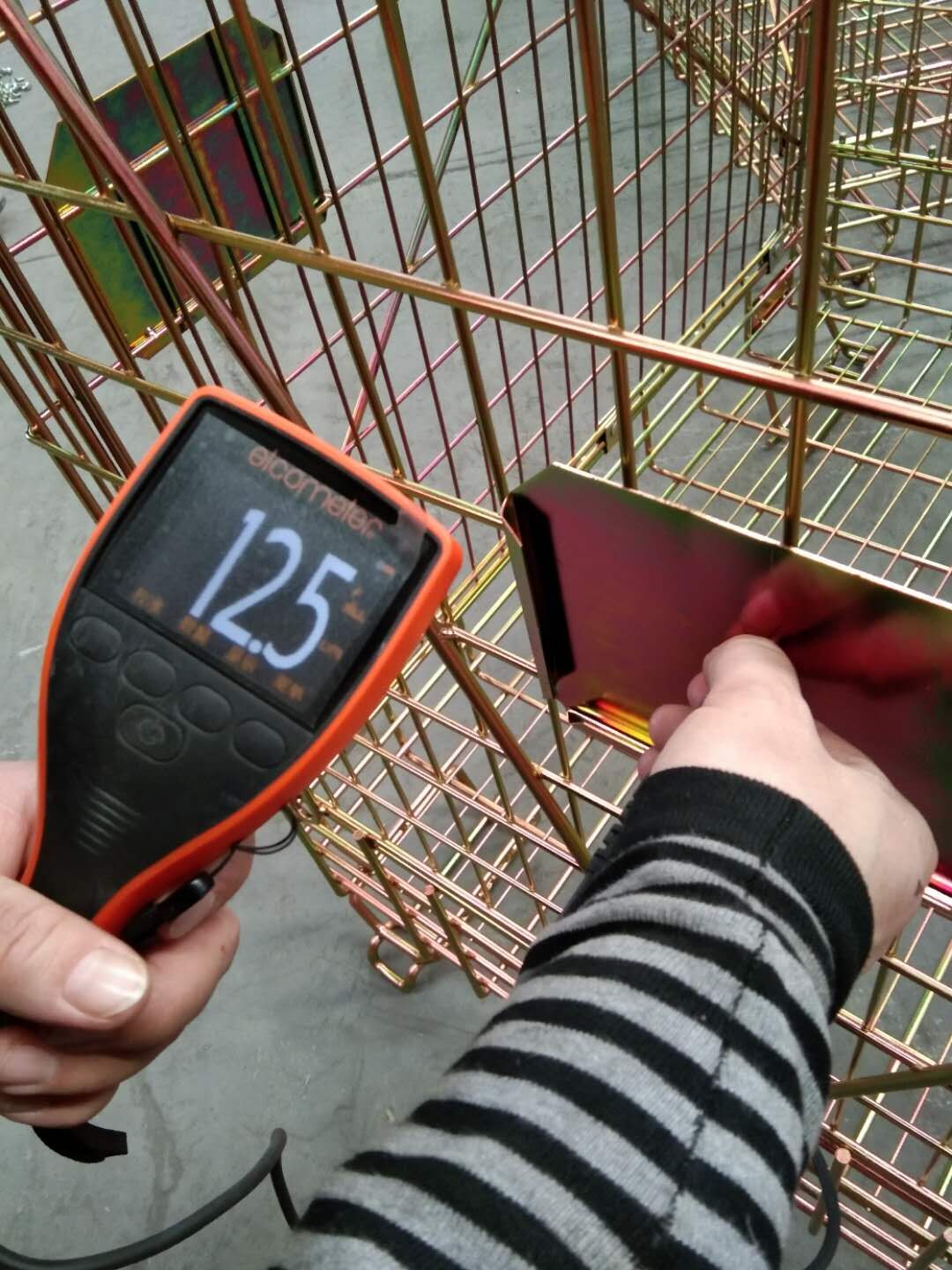
Containers are constructed with high-tensile steel and a zinc/galvanized coating, giving a documented lifespan of 3 to 5 years under proper use. Where humidity exceeds 75% RH, the application requires hot-dip galvanized or high-micron zinc plating for corrosion protection, a requirement that appears frequently in European storage and handling environments. The material policy prohibits spliced materials and inferior steel grades, mandating Q235 where high-strength performance is required, and plating solutions are chemically analysed and filtered on a regular schedule to maintain coating quality.
2. Geometry and handling compatibility
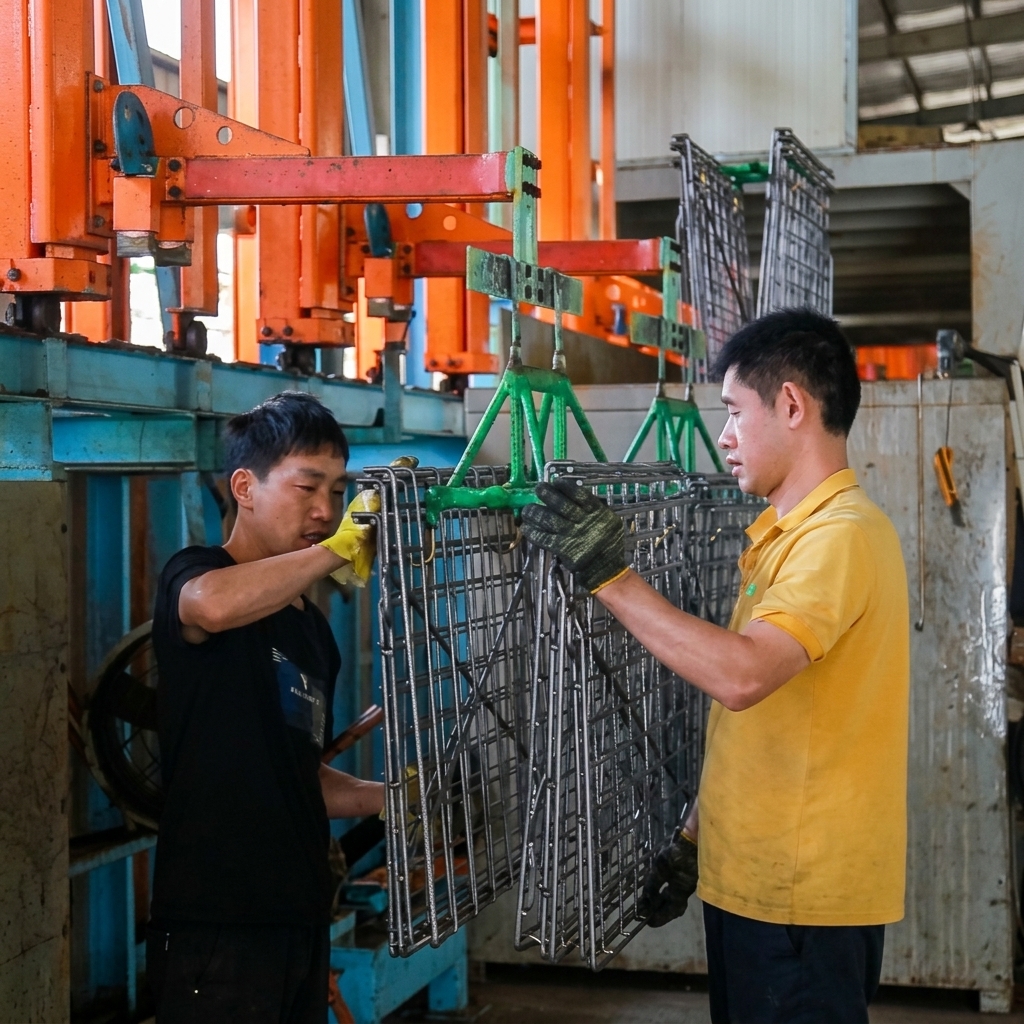
Every welding process uses calibrated tooling and jigs to maintain 90-degree verticality and consistent dimensions, because deviation in outer size or wire diameter is precisely what prevents a container from folding, stacking, or being picked up correctly by automated handling equipment. For European loops, supporting equipment typically includes electric forklifts, reach trucks and automated conveyor systems; for global projects, forklifts, automated container dumpers and RFID/barcode tracking systems are common.
3. Folding behaviour and empty-return logistics
The collapsible design reduces volume by 75% when folded, producing a documented 4:1 return ratio, and units stack up to 4 to 6 high. In a returnable packaging project these two figures usually decide how many containers the loop needs and how much truck space the empty leg consumes.
4. Load protection and access features
Access and protection features are selected per product. A half-drop gate supports ergonomic picking. For delicate items such as PET preforms, an ultra-smooth surface finish prevents damage during loading and unloading. The open mesh design provides 100% inventory visibility and is self-cleaning, which reduces cleaning costs and prevents dust accumulation.
5. Quality system and pre-shipment verification
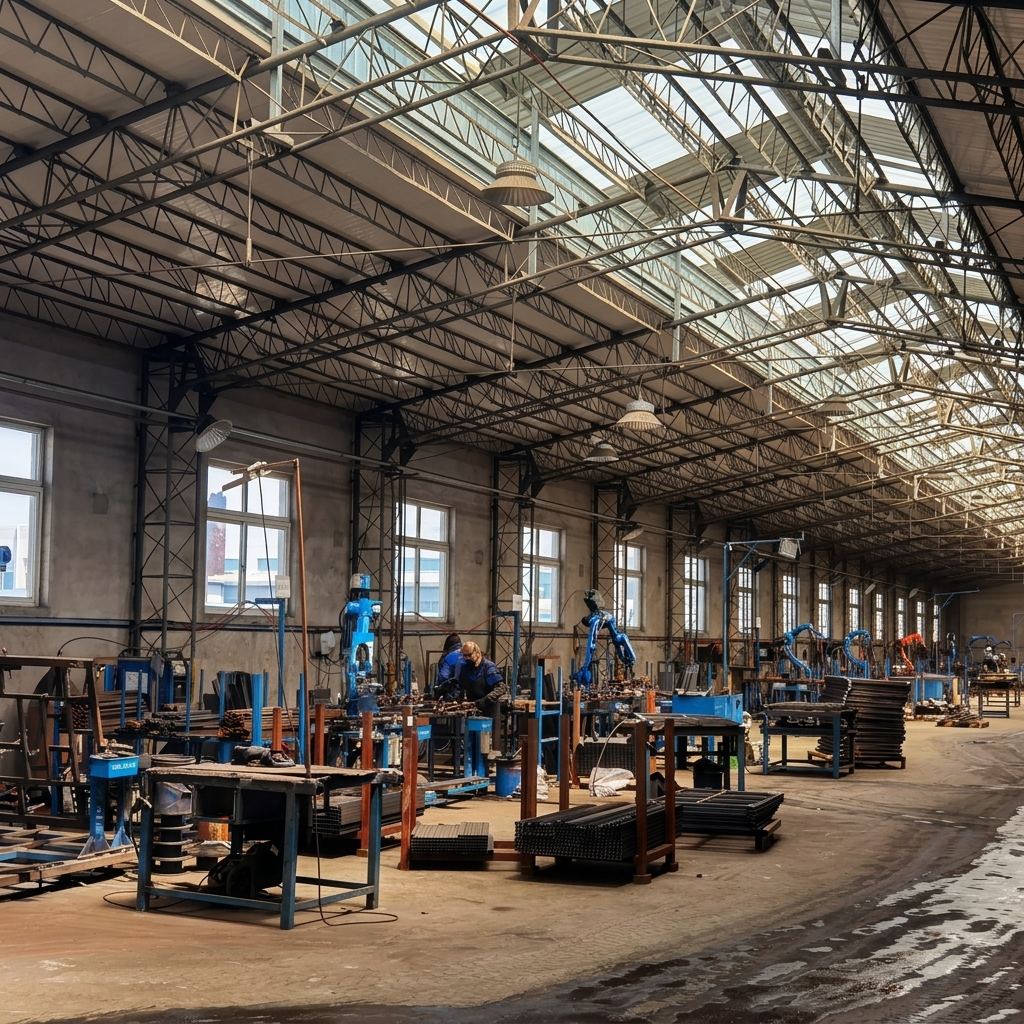
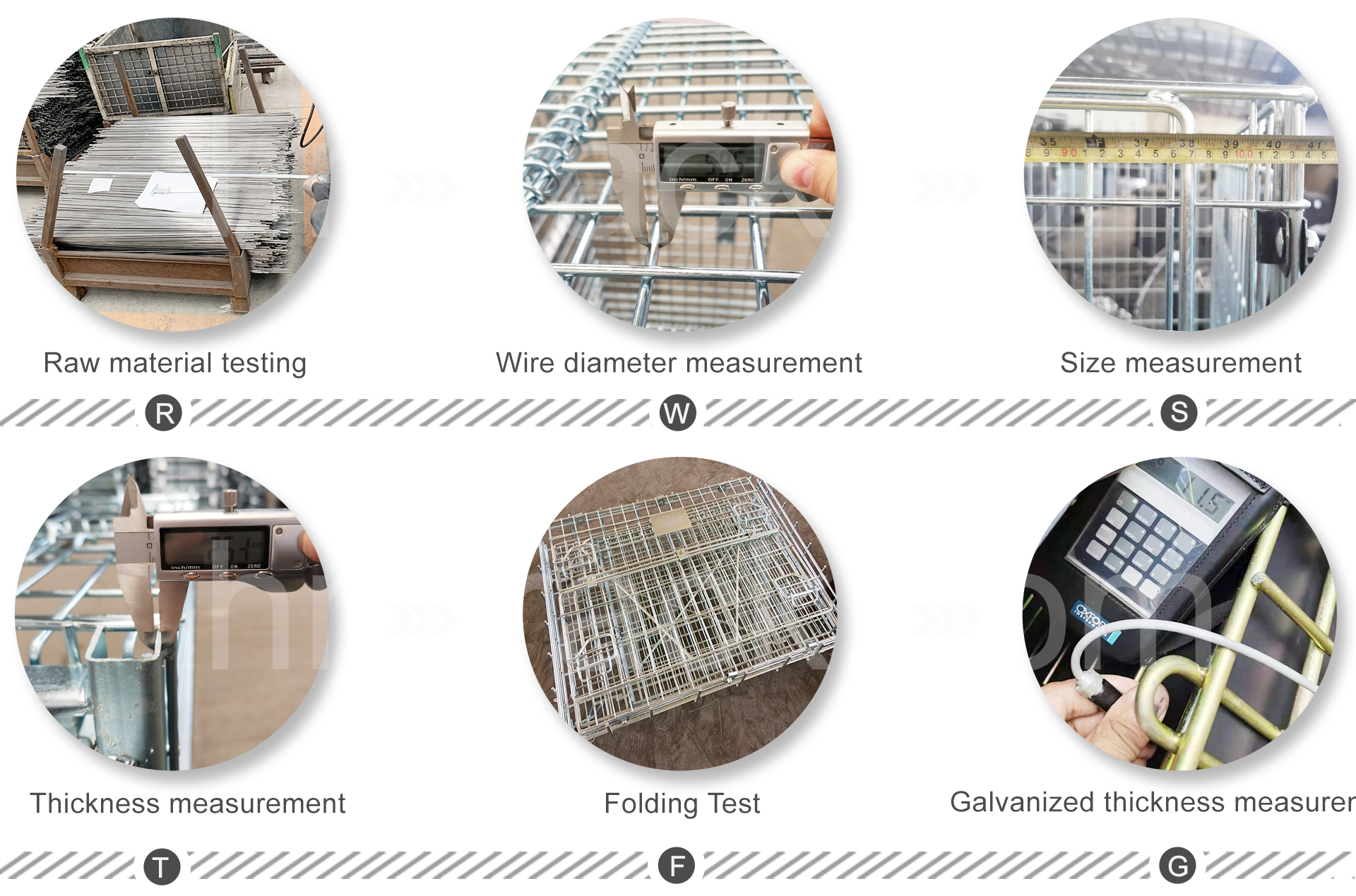
A six-phase quality control process runs from pre-production to packaging inspection. Welding current and pressure are regulated according to wire diameter to produce smooth, full-beaded welds; surface quality is controlled through chemical composition analysis and filtration of plating solutions; and torque and strength testing verifies that mesh welding strength meets or exceeds the wire-diameter-to-strength standard used in production. Every unit undergoes 100% factory self-inspection rather than relying on random sampling alone, guided by a visible OK vs NOK handbook on the production floor.
Before shipment, buyers can request a 10% pre-shipment sampling inspection, and HM Group provides assembly/disassembly videos and loading photos so the condition of the goods is documented before they leave port. Acceptance can be handled through pre-shipment inspection or third-party inspection.
6. Capacity, lead time and long-term supply terms
Monthly production capacity is 40,000 sets, with a minimum order quantity of 1x20GP container and a typical production lead time of 30 to 45 days. Delivery terms include EXW, FOB, CIF, DDP and DDU; payment terms are T/T (30% in advance, 70% against copy of B/L) or L/C. After-sales support includes process reports, online video audit support, and a 3 to 5 year warranty under proper use — the elements that turn a single shipment into a repeatable supply relationship.
Step-by-Step Breakdown: Deploying a Wire Container Application
The sequence below reflects the order in which specification decisions constrain each other. Changing a later step usually means revisiting an earlier one.
Step 1 — Define the unit load and the rotation rate
Record what the container will carry, in what quantity, at what weight, how often it moves, and over what distance. High-volume, high-rotation flows — the pattern typical of beverage Just-In-Time supply chains — place different demands on a container than low-rotation buffer storage does.
Step 2 — Map the handling equipment the container will meet
List every touchpoint: forklift, reach truck, automated conveyor, container dumper, or manual handling. Add tracking requirements such as RFID or barcode labels. Footprint, base structure, gate position and stacking height must all be compatible with that list, because dimensional deviation is a documented cause of failed automated handling.
Step 3 — Select the steel grade and coating for the environment
Confirm whether the container will be stored indoors, in a humid facility, or outdoors. Above 75% RH, specify hot-dip galvanized or high-micron zinc plating. Where high-strength performance is required, specify Q235 rather than a lower grade. These choices set the maintenance profile for the container's 3 to 5 year working life.
Step 4 — Select surface finish and access features for the product
Delicate items such as PET preforms require an ultra-smooth surface finish. High-frequency picking applications benefit from a half-drop gate for ergonomic access. Where stock visibility and hygiene matter, the open mesh design provides 100% visibility and is self-cleaning.
Step 5 — Plan stacking, folding and the empty return leg
Confirm the stacking height the racking or floor layout allows — up to 4 to 6 units high — and calculate the empty return volume using the 75% folded volume reduction and the 4:1 return ratio. This step usually determines total fleet size and freight cost per cycle.
Step 6 — Set the verification plan before production starts
Agree what will be inspected and how: six-phase in-process control, 100% self-inspection, 10% pre-shipment sampling, third-party inspection, plus assembly/disassembly videos and loading photos. Verifying at this stage is cheaper than correcting a stack of containers on site.
Step 7 — Confirm commercial and continuity terms
Lock the MOQ (1x20GP), the delivery term (EXW, FOB, CIF, DDP, DDU), the payment structure, lead time (30 to 45 days) and warranty conditions. For multi-year projects, also confirm reporting and audit support, since these determine how easily the supply relationship can be maintained as volumes change.
The table below summarises how scenario conditions translate into specification responses.
| Scenario condition | Specification response | Documented basis |
|---|---|---|
| Humidity above 75% RH | Hot-dip galvanized or high-micron zinc plating | Application requirement |
| High-strength load requirement | Q235 mandated; spliced or inferior steel grades prohibited | Material integrity policy |
| Delicate PET preforms | Ultra-smooth surface finish | Application requirement |
| Frequent manual picking | Half-drop gate for ergonomic access | Container feature |
| Automated handling | Calibrated jigs maintain 90-degree verticality and consistent dimensions | Production control method |
| Restricted empty-return space | Collapsible design, 75% volume reduction when folded | Container feature |
| Multi-year project continuity | 3 to 5 year warranty, process reports, online video audit support | After-sales terms |
Use Cases: Wire Container Fit by Industry Scenario
PET preform and beverage Just-In-Time logistics
Product 3542 is documented as suitable for Just-In-Time supply chain projects in the beverage industry, operating under high-volume manufacturing and high-rotation logistics conditions, with supporting equipment that includes forklifts, automated container dumpers and RFID/barcode tracking systems. The same container type is used for PET preform storage in the cosmetic packaging and pharmaceutical plastics industries, where it features a half-drop gate for ergonomic picking, a collapsible design reducing volume by 75%, and construction in high-tensile steel with zinc/galvanized coating for a 3 to 5 year lifespan. The application requires an ultra-smooth surface finish to prevent damage to delicate preforms.
Automotive parts distribution
Automotive programmes frequently require containers compatible with standards such as GM 5131 or Ford-compatible designs, so that containers integrate into existing production logistics without modification. In this scenario, dimensional consistency and verticality carry most of the risk: a leg that is not vertical, or a footprint that deviates, interferes with both stacking and automated handling.
E-commerce fulfillment and order picking
Open-mesh containers provide 100% inventory visibility, and documented comparison data credits the design with reducing picking errors by 30% because SKUs can be identified without opening lids. The self-cleaning mesh also reduces cleaning workload, a practical advantage in fulfillment centres where dust accumulation and hygiene checks both consume labour time.
Wine and bottled-goods storage
Bottled goods place specific demands on ventilation and bottle protection. Published European examples, such as the “Market Vei” container, are specified to handle loads over 1,000 kg while weighing only 46 kg, optimised for ventilation and bottle protection — an illustration of how far a wine storage wire container specification can depart from a general-purpose industrial container.
High-humidity storage in European facilities
Where humidity exceeds 75% RH, corrosion protection becomes the primary specification driver rather than a secondary finish choice. Hot-dip galvanized or high-micron zinc plating is the documented response, supported during production by regular chemical analysis and filtration of plating solutions.
Space-constrained warehouses with returnable loops
In facilities where empty containers compete with stored goods for floor space, folding performance becomes the deciding specification. A 75% volume reduction when folded and a 4:1 return ratio change how much of the warehouse has to be reserved for the empty leg of the loop.
Comparison Table: Wire Container Performance Against Disposable Packaging
The comparison below summarises documented performance of wire containers relative to solid plastic bins or corrugated cardboard boxes, the two packaging types most often benchmarked against them in returnable packaging projects.
| Decision factor | Wire container (documented performance vs. solid plastic bins / corrugated boxes) |
|---|---|
| Inventory visibility | 100% inventory visibility through open mesh; picking errors reduced by 30% because SKUs can be identified without opening lids. |
| Reusability and service life | Reusable construction with a 3 to 5 year shelf life. |
| Return logistics | 4:1 return ratio, with 75% volume reduction when folded. |
| Stacking | Stackable up to 4 to 6 units high. |
| Cost position | Approximately 30% more expensive than disposable packaging, but pays for itself through 100+ reuse cycles. |
| Maintenance | Self-cleaning open-mesh design reduces cleaning costs and prevents dust accumulation. |
| Best-fit applications | E-commerce fulfillment, auto-parts distribution, and PET preform storage. |
Read as a decision rule: the cost premium is recovered across the reuse cycles, so the comparison only holds when the loop actually runs. Projects that lose containers, or that manage the folded return leg poorly, erode that advantage before the container reaches the end of its documented 3 to 5 year service life.
Frequently Asked Questions
- What coating and material specification should be set for a high-humidity site?
- For storage and handling applications where humidity exceeds 75% RH, the specified protection is hot-dip galvanized or high-micron zinc plating. HM Group containers are constructed with high-tensile steel and a zinc/galvanized coating, with a documented lifespan of 3 to 5 years under proper use. The material policy mandates Q235 where high-strength performance is required and prohibits spliced materials and inferior steel grades, and plating solutions are analysed and filtered on a regular schedule so coating thickness can be verified during inspection.
- Can a wire container be integrated with automated handling and tracking equipment?
- Yes. Supporting equipment for these applications includes electric forklifts, reach trucks and automated conveyor systems in European projects, and forklifts, automated container dumpers and RFID/barcode tracking systems in global projects. Integration depends on dimensional consistency: calibrated tooling and jigs maintain 90-degree verticality and consistent dimensions during welding, because deviation in outer size or wire diameter can prevent proper folding, stacking or automated handling. Product 3542 is documented as suitable for Just-In-Time beverage supply chains operating under high-volume manufacturing and high-rotation logistics conditions.
- How does the cost of a wire container compare with disposable packaging?
- Documented comparison data places wire containers at approximately 30% more expensive than disposable packaging, with that cost recovered through 100+ reuse cycles. The same source records a 3 to 5 year shelf life, a 4:1 return ratio with 75% volume reduction when folded, and stacking up to 4 to 6 units high. The relevant budget measure is therefore cost per cycle inside a functioning return loop, not the unit purchase price in isolation.
- How can a buyer validate quality before committing to full volume?
- A six-phase quality control process runs from pre-production to packaging inspection, and every unit undergoes 100% factory self-inspection guided by an OK vs NOK visual handbook rather than random sampling alone. Before shipment, buyers can request a 10% pre-shipment sampling inspection, and HM Group provides assembly/disassembly videos and loading photos. Acceptance criteria can be met through pre-shipment inspection or third-party inspection.
- What are the lead time, minimum order and long-term supply terms?
- Monthly production capacity is 40,000 sets, with a minimum order quantity of 1x20GP container and a typical production lead time of 30 to 45 days. Delivery terms include EXW, FOB, CIF, DDP and DDU, and payment terms are T/T (30% in advance, 70% against copy of B/L) or L/C. After-sales support includes process reports, online video audit support and a 3 to 5 year warranty under proper use. To move from specification to a quoted configuration, the HM Group product brochure can be downloaded below, or a short scenario brief — load, environment, handling equipment and return loop — can be sent directly to the team for a configuration recommendation.
Conclusion
A wire container is only as effective as its fit with the project around it. The load defines the steel grade and structure; the handling equipment defines the geometry and base; the environment defines the coating and surface finish; and the return loop defines the folding design and fleet size. When those four are specified together, a mesh container becomes a multi-year handling asset rather than a one-time purchase.
HM Group supports that work from specification through execution: Q235 steel with documented coating options, calibrated tooling for dimensional consistency, a six-phase quality control process from pre-production to packaging inspection, 40,000 sets of monthly production capacity, and after-sales support that includes process reports and online video audit. For buyers moving from decision to execution, the most useful next step is a scenario brief rather than a product list.
Download the product brochure for specifications and configuration options: HM Group Wire Container Brochure (PDF)
Send your load, environment, handling equipment and return-loop details for a configuration recommendation and quotation.
Contact: MARY KONG · Email: mary@net-railing.com · Tel/WhatsApp: +86 150 4058 7228 · Phone: +86 411-3981 3061
Website: www.hmlwires.com · Address: 3306 Times Square (Times 1), 50 Renmin Road, Zhongshan Dist, Dalian, Liaoning, China
Have Questions or Need More Details?
Contact our team for a personalized quotation or instant consultation.
Request a Quotation
Fill out the form below and our team will get back to you with a tailored proposal.
WhatsApp Direct Chat
Prefer to chat in real-time? Message us on WhatsApp for instant assistance & quick answers.
- Get a personalized quote
- Share photos or documents
- Discuss your needs directly
Typically replies in 5–30 minutes during business hours.