
Wire Container Stacking Problems: Scenario-Based Model Fixes
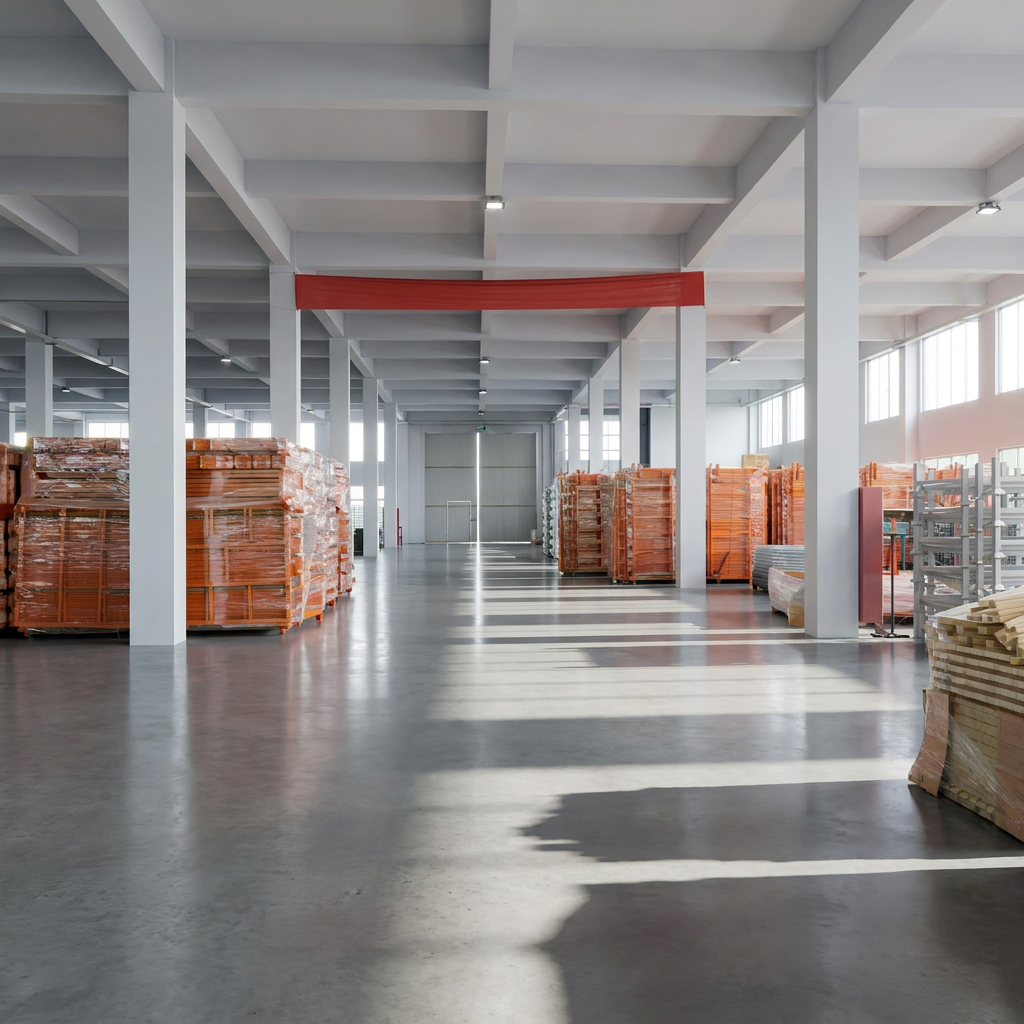
A stack rarely fails in one dramatic moment. It fails the way a heavy-duty column leans two degrees by Friday, or the way small moulded parts migrate to the floor because the mesh is 50 × 100 mm instead of 50 × 50 mm, or the way a five-high preform column gets walked past at shift change because nobody on the floor trusts the top level.
Most wire container stacking failures are specification mismatches, not operator error. Five variables decide whether a column holds: stated load capacity, grid aperture, wire gauge and material grade, stackability geometry, and whether the interior is lined with a PP sheet. Once those five are matched to the real load and the real room, stacking problems stop being a daily conversation.
This guide works backwards from three failure patterns that warehouse and supply chain teams report repeatedly, and maps each one to a model in HM Group's range: HM-HD001, HM-HD005, HM-PPC22, HM-WEU005 and HM-HD028. HM Group (Dalian HuaMao Logistics Equipment Group Co., Ltd.) is a wire mesh container manufacturer founded in 2003, with manufacturing bases in Xiamen, Nanjing and Qingdao and a catalogue that includes wire containers, PET preform containers, wine-bottle wire containers, wire mesh roll containers and steel pallets.
Problem Definition: The Three Stacking Failures That Keep Coming Back
Warehouse teams describe a long list of stacking complaints, but almost all of them resolve into three mechanisms. Each mechanism has a different root cause and therefore a different fix — which is why buying a stronger container does not automatically solve a grid problem, and buying a tighter grid does not solve a leaning column.
1. The column leans or the frame distorts under load
When a container is loaded toward its stated capacity, the load travels down through the corner posts and legs. If the legs are not consistently vertical, or if the welds at the base frame are incomplete, that load path becomes uneven and the whole column drifts. HM Group's own structural risk documentation describes this mechanism directly: missing welds, weak welding strength and non-vertical legs are named as conditions that could lead to stacking instability or collapse.
The same documentation identifies dimensional deviation as a second route to the same outcome. A unit that is out of tolerance in overall size or wire diameter may not fold, stack or enter automated handling the way the unit beneath it expects, so the column never seats cleanly. Structural failure and dimensional failure look identical from the aisle, but they are corrected at different points in the specification.
2. The product falls through the grid
Grid aperture is a product-fit decision, not a structural one. A 50 × 50 mm grid retains small components; a 50 × 100 mm or 62 × 125 mm aperture is deliberately more open, which reduces weight, improves visibility and supports airflow, but lets smaller units pass straight through. Teams that treat the grid as a cosmetic detail usually discover the difference on the floor, not in the quotation.
Surface quality belongs to the same failure family. HM Group's risk documentation lists scratches, sharp burrs and zinc slag as conditions that can injure workers or damage stored goods — a particular problem for surface-critical items such as plastic preforms and labelled glass.
3. Nobody knows the real stack height
Stack height is set by three things at once: the model's rating, the actual unit load, and the handling equipment in the building. If the unit load is heavier than the model was designed for, the rating is exceeded even when the container count looks correct. If two models of different heights are mixed in one column, the top frame of one unit cannot seat on the frame below it, and the column becomes a pile.
Figures such as "stackable 5+1" are often read as a planning target rather than a limit. They are limits. Confirm them against your actual unit load before they enter a warehouse layout drawing.
The root cause that links all three: material and process drift
Every mechanism above becomes far more likely when the steel underneath is not what the drawing specifies. HM Group's risk documentation names substitution of Q195 for Q235 as a material risk that leads to insufficient load capacity, and poor surface treatment as a cause of premature rust and peeling. The company's stated material policy prohibits spliced material and mandates Q235 for high-strength requirements.
What a buyer should take from the failure list
- Leaning columns: check leg verticality, weld completeness and dimensional tolerance before adding capacity.
- Lost product: check grid aperture against the smallest dimension of the smallest unit.
- Uncertain stack height: check the model rating against the real unit load, and keep one model per column.
- All three: confirm the steel grade and surface finish rather than the marketing description.
Industry Background: Why Stacking Has Become the Deciding Specification
Stackability is no longer a secondary attribute of a wire container. Commercial research cited in HTNXT's verified data package estimates the global wire mesh containers sales market at approximately USD 2.34 billion in 2025, and identifies stackable wire mesh containers as the largest product segment by revenue in that year, at 32.5% of the total. The same figures suggest that vertical space optimisation, not horizontal storage, is the primary reason buyers move to mesh containers at all.
Two cautions matter when reading those numbers. First, market definitions differ between sources: a separate estimate covering the broader wire mesh market — fencing, filtration and construction included — puts that wider category at USD 8.18 billion in 2024 with a projection of USD 12.13 billion by 2035. The two figures describe different scopes and should not be combined or used to infer container pricing. Second, demand-side signals are directional rather than precise: the United States accounted for approximately 16.7% of imports of articles of iron or steel wire under HS Code 732620 in 2024, which says something about destination volume and nothing about which specification travels best.
What the data does confirm is that stacking is where the return on a container fleet is won or lost. HM Group's own comparison material sets out the economics that buyers are usually working from: a reusable container carries roughly a 30% premium over disposable packaging, but is referenced against 100-plus reuse cycles, a 3 to 5 year service life and a 4:1 return ratio — about 75% volume reduction when folded. None of that materialises if the column cannot be stacked safely.
Environment adds a second layer. For applications in the EU, HM Group specifies hot-dip galvanized or high-micron zinc plating for corrosion protection where humidity exceeds 75% RH. A container that stacks perfectly in a dry distribution centre and corrodes in a humid cellar or a wash-down area has not solved the buyer's problem.
Detailed Solution: Match the Model to the Pain Point
Five stacking situations cover most warehouse and supply chain cases. Each one below starts with the symptom, then states which specification resolves it and which model in the HM Group range carries that specification.
Scenario A — Heavy, dense loads that will not tolerate movement: HM-HD001
Heavy-duty rigid containers are the correct answer when the load is dense, static and unforgiving, and when any movement between the load and the mesh turns into a point load on a single wire. HM-HD001 is rated at 1,300 kg with a 50 × 50 mm grid — the highest stated capacity and the tightest aperture in this group of five.
The 50 × 50 mm aperture does specific work here. A dense grid shortens the unsupported span between wires, so heavy parts are less likely to settle into the gaps and load individual wire runs. The 1,300 kg rating then provides headroom that a 1,000 kg model cannot offer once the unit load, dunnage and moisture are all counted. The trade-off is fixed height and no folding, so floor space must be planned for the loaded and empty states separately.
Scenario B — Full out, folded back: HM-HD005
When the same fleet has to travel loaded and return empty, collapsibility outweighs the last few hundred kilograms of capacity. HM-HD005 is a collapsible unit rated at 1,000 kg with a 50 × 100 mm grid.
The economics behind that choice are documented rather than assumed. HM Group's comparison material references a 4:1 return ratio — approximately 75% volume reduction when folded — against disposable packaging, with stackable configurations described at 4 to 6 units high and a stated service life of 3 to 5 years. The compromise is explicit: 300 kg less stated capacity than HM-HD001 and a wider aperture, which suits larger parts but not small components.
Scenario C — PET preform columns: HM-PPC22
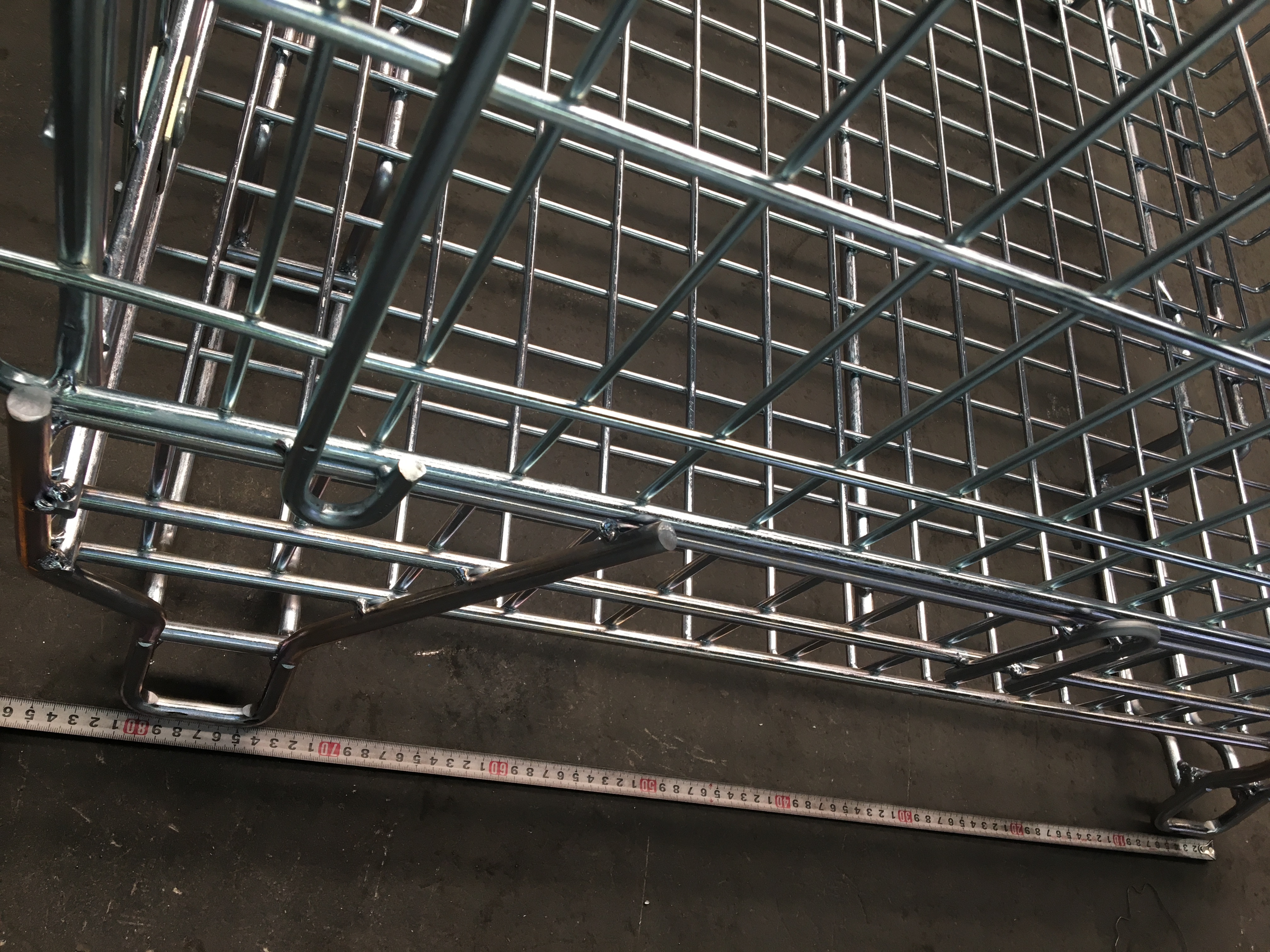
Preforms are the case where stacking, surface protection and handling speed all collide. HM-PPC22 is a PET preform container rated at 800 kg with a 62 × 125 mm grid, an exterior dimension of 1,213 × 1,008 × 1,174 mm, a stated stacking configuration of 5+1 high, and a loading quantity of 170 sets in a 40-foot high-cube container.
Three details matter more than the headline rating. First, the 62 × 125 mm aperture is a compromise: open enough for visibility and airflow across a preform load, closed enough that preforms do not pass through. Second, the application requires an ultra-smooth surface finish to prevent damage to delicate plastic preforms, which is a finish specification rather than a wire specification. Third, the model is documented with a half-drop gate for ergonomic picking and a collapsible design that reduces volume by 75% — useful in plants where the container is emptied at the line and returned immediately.
The PP sheet option on HM-PPC22 is documented in HM Group's inspection records for the model, which cover PET preform wire containers with PP sheet for HM-PPC22 and HM-PPC14. In practice this is the difference between a preform that arrives scuff-free and one that does not. Handling also needs to be planned: preform flows typically involve container dumpers and RFID or barcode tracking, alongside forklifts.
Scenario D — Wine bottle storage: HM-WEU005
Bottled wine breaks the usual assumption that a kilogram rating is the only limit. HM-WEU005 is a wine storage wire container rated at 800 kg with a capacity of 400 pieces Bordeaux — so the binding constraint is bottle count as much as weight, and the internal geometry has to match the bottle profile rather than simply enclose it.
Two practical consequences follow. A stack planned purely on kilograms will overfill the container before it reaches the weight limit, and a cellar or transit route above 75% RH needs a corrosion specification — hot-dip galvanized or high-micron zinc plating — rather than a standard finish. The same 3 to 5 year service life referenced across reusable containers applies, provided the coating is matched to the room.
Scenario E — Small parts that disappear through the mesh: HM-HD028 with PP sheet
Small components are the simplest failure to fix and the most expensive to ignore, because the loss is continuous and rarely attributed to the container. HM-HD028 is supplied with a PP sheet lining, which closes the mesh so that small parts cannot pass through the side and base panels while the steel frame keeps its structural role.
The PP sheet also changes what the container can carry. Surface-critical parts, painted components and small assemblies no longer contact bare wire, which reduces the scratches and burrs that HM Group's risk documentation identifies as a source of damage to stored goods. Where full retention is not required, a standard open-mesh container remains the lighter and more ventilated option.
The variable that holds all five scenarios together: wire gauge and finish
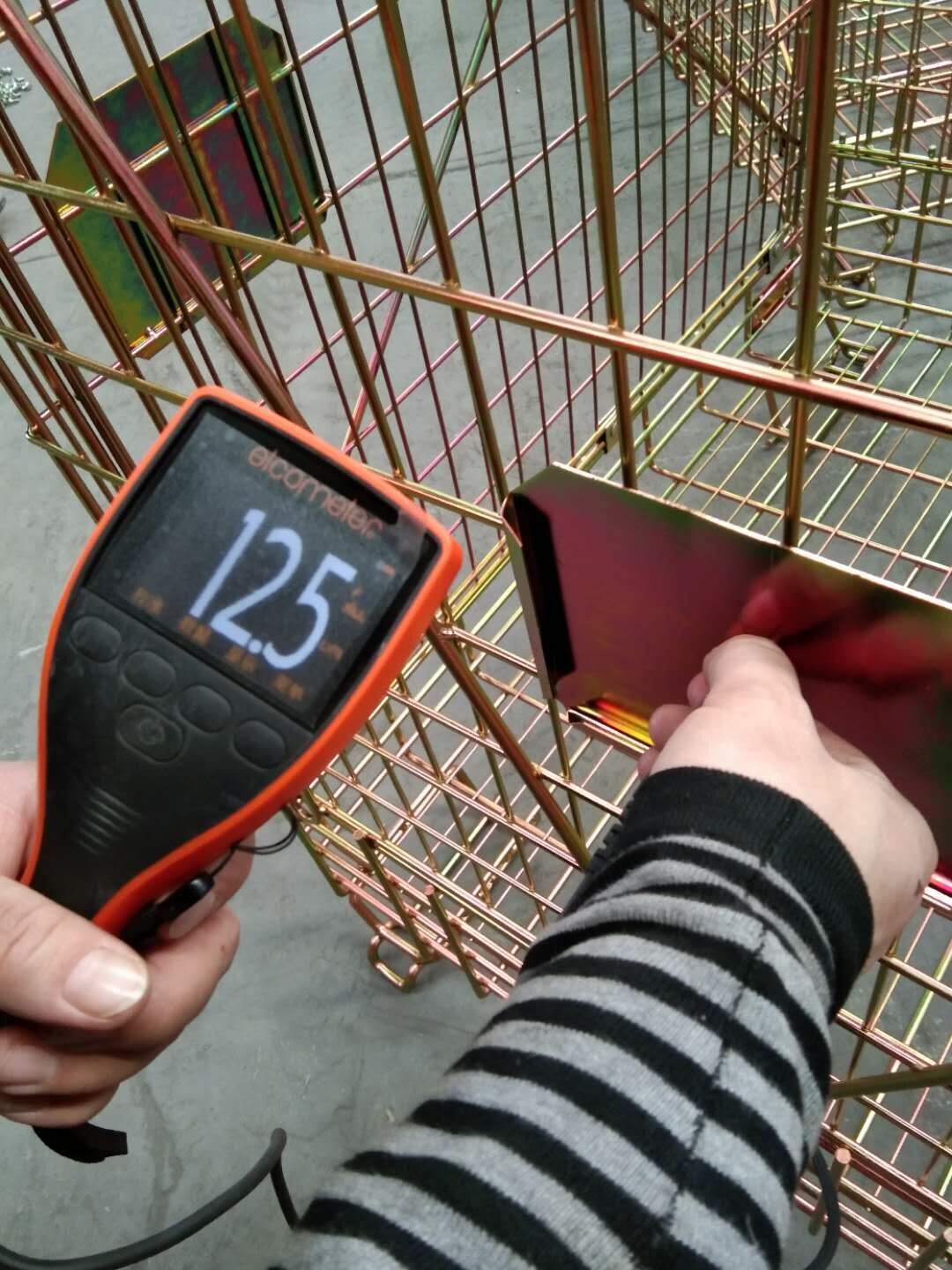
Model selection sets the geometry; wire gauge and surface finish decide whether the geometry survives contact with a real warehouse. HM Group states that its wire containers use wire gauges from 4.8 mm to 12 mm, with Q235 mild steel and a choice of zinc, hot-dip galvanized or powder-coating finishes on listed products.
Both figures are company-reported rather than independently tested, which is exactly why they belong in an RFQ rather than in an assumption. A gauge at the light end of the range is not a defect — it is a specification for a lighter duty cycle — but it must match the load per unit and the stack height, not the price expectation.
Step-by-Step Breakdown: Sizing a Stack in Seven Checks
The sequence below is written for the buyer or warehouse engineer who already knows the product and now has to commit to a model. Each check produces a number or a document that can go straight into an RFQ.
- Measure the column, not the container. Record the intended stack height, the number of units per column and the clear height under the sprinkler or rack beam. A 5+1 stacking figure is a limit for the model, not a target for the building.
- Match the aperture to the smallest dimension of the smallest unit. 50 × 50 mm for small components, 50 × 100 mm for larger parts, 62 × 125 mm for preforms. If the smallest unit can pass through the grid, no amount of extra capacity will fix it — a PP sheet or a tighter grid will.
- Check the load figure against the stack, not the unit. Multiply the unit load by the number of loaded units in the column, then compare against the model rating. Ask whether the published figure is a static or dynamic rating and what safety factor applies; HM Group's own documentation notes that published capacities are not comparable without test conditions.
- Lock the material grade and the wire gauge. Confirm Q235 for high-strength requirements and check the gauge against the 4.8 mm to 12 mm range stated for HM Group products. Material substitution is the most common hidden cause of a rating that does not hold.
- Choose the finish against the room, not the catalogue. Above 75% RH, specify hot-dip galvanized or high-micron zinc plating. For dry distribution space, standard zinc or powder coating may be adequate.
- Decide fixed or folding, and whether the interior needs a PP sheet. Folding pays back where containers return empty; PP sheet pays back where parts are small or surface-critical.
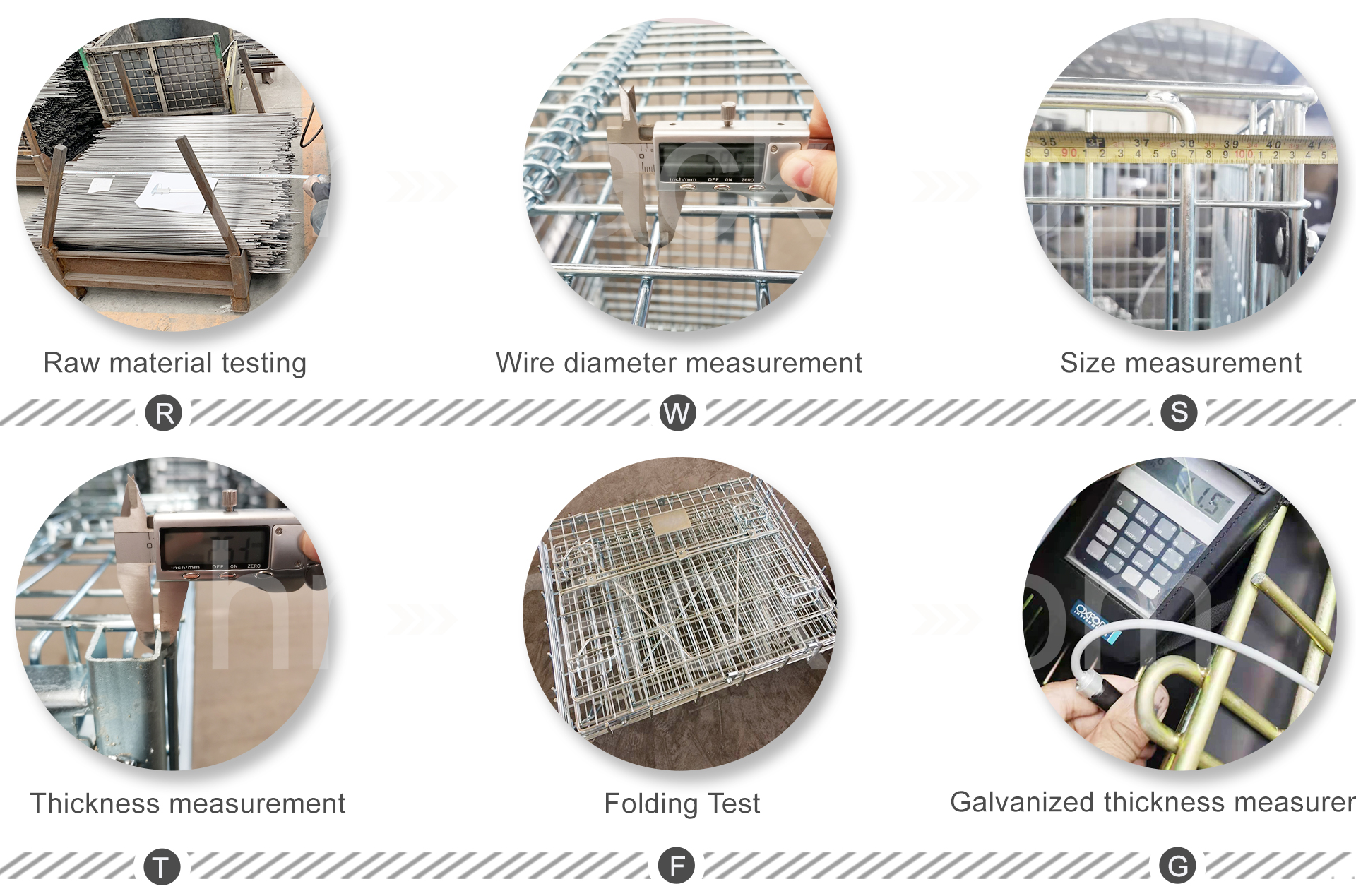
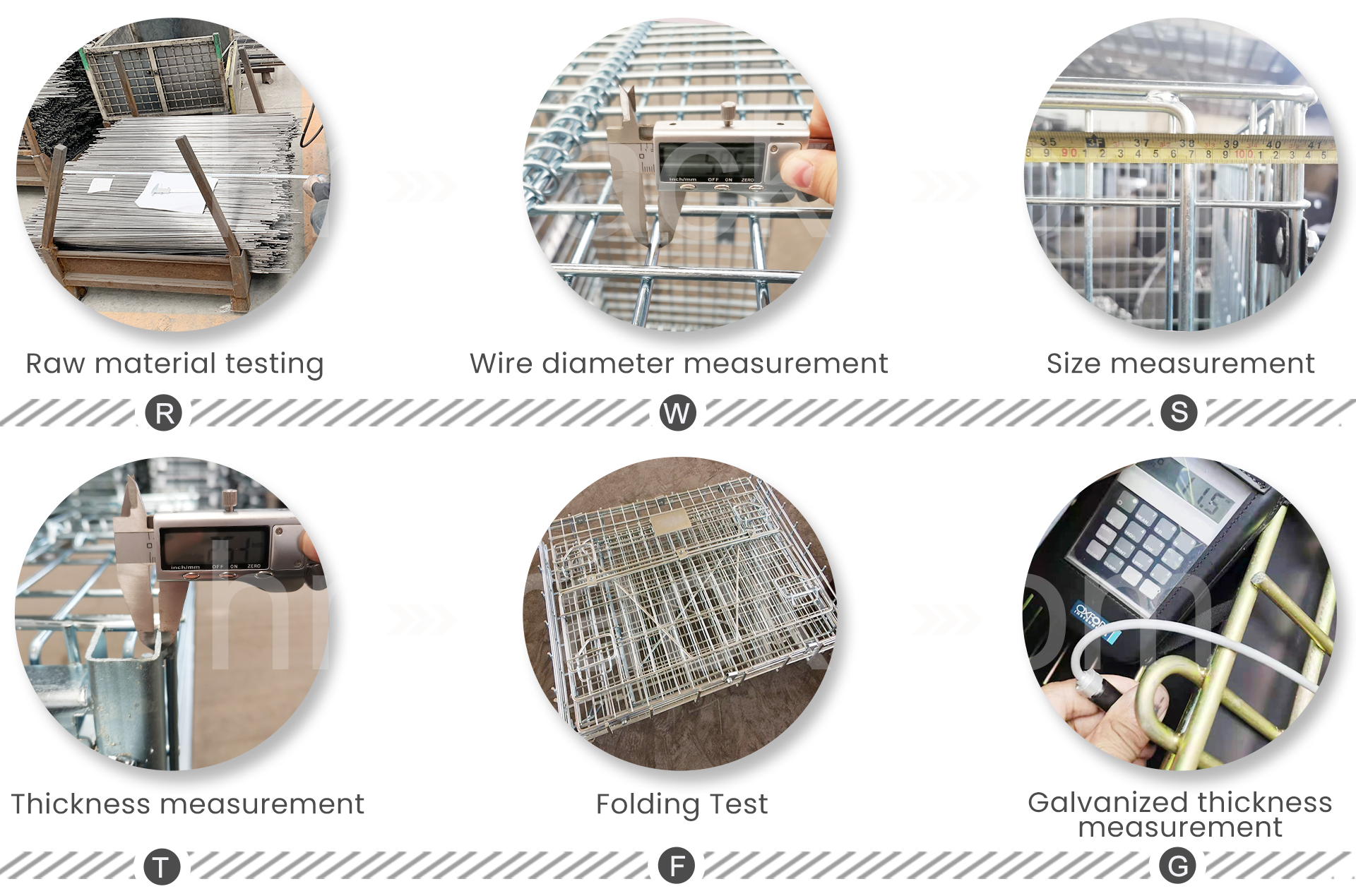
- Validate the first batch before it becomes the standard. HM Group offers a 10% pre-shipment sampling inspection, accepts third-party inspection, and provides assembly and disassembly videos plus loading photos so the first column can be checked before it becomes the layout.
Use Cases: Where the Fixes Actually Show Up
Beverage and preform plants running high-rotation logistics
In plants where preforms move from silo to blow-moulding line several times a day, the container is part of the production flow rather than a storage item. The relevant configuration is HM-PPC22 with its 62 × 125 mm grid, half-drop gate and PP sheet option, supported by forklifts, container dumpers and RFID or barcode tracking. The manufacturer's background includes a project supplying 15,000 PET preform containers to Coca-Cola Germany, which is the kind of volume where stack consistency matters more than unit price.
Wine cellars, bottlers and distributors
For bottled wine, the constraint is bottle count: HM-WEU005 at 400 pieces Bordeaux and 800 kg. Cellars and humid transit routes add the corrosion requirement, so hot-dip galvanized or high-micron zinc plating belongs in the specification from the start rather than as an upgrade after the first rust season.
Industrial warehouses handling small parts
Automotive components, fasteners and small moulded parts are the classic grid failure. HM-HD028 with PP sheet closes the mesh, keeps the frame's strength and reduces the scratches and burrs that damage finished parts. Where the same building also moves dense heavy loads, HM-HD001 at 1,300 kg and 50 × 50 mm covers the other end of the range from a single supplier.
Comparison Table: Five Models Against Five Stacking Problems
The table below uses only published model specifications. Read it as a starting point for an RFQ, not as a substitute for load testing on your own unit loads.
| Model | Stated load capacity | Grid aperture | Form and stacking role | Stacking problem it resolves |
|---|---|---|---|---|
| HM-HD001 | 1,300 kg | 50 × 50 mm | Heavy-duty rigid | Dense heavy loads that shift or settle; needs the highest rating and the tightest mesh in the range |
| HM-HD005 | 1,000 kg | 50 × 100 mm | Collapsible | Fleets that travel loaded and return empty; roughly 75% volume reduction when folded |
| HM-PPC22 | 800 kg | 62 × 125 mm | PET preform container, stackable 5+1 | Preform columns with surface protection; PP sheet option; 170 sets per 40-foot high-cube container |
| HM-WEU005 | 800 kg | — | Wine storage container | Bottle-limited stacking at 400 pieces Bordeaux capacity |
| HM-HD028 | — | — | Wire container with PP sheet | Small parts that fall through open mesh; surface-critical components |
Cells marked — are not stated in the specification data used for this article; confirm them on quotation. Load capacities are manufacturer-published figures and should be confirmed against your own unit load, stack height and handling method before a layout is approved.
Frequently Asked Questions
What should we verify about a load rating before stacking containers five high?
Treat the published rating as a manufacturer-reported figure and verify three things: whether it is a static or dynamic rating, what safety factor applies, and whether the steel grade matches the specification. HM Group's material policy prohibits spliced material and mandates Q235 for high-strength requirements, and its quality management system is certified to ISO 9001:2015 under certificate No. CN24/00004786 issued by SGS, valid through July 2027. Combine that with the actual unit load multiplied by the number of loaded units in the column, not the container count alone.
Can one supplier cover heavy-duty, PET preform, wine and small-parts stacking needs?
HM Group's catalogue lists wire containers, PET preform containers, wine-bottle wire containers, wire mesh roll containers and steel pallets, so the five scenarios in this article can be sourced as one specification set rather than four separate purchases. Production capacity is stated at 40,000 sets per month across manufacturing bases in Xiamen, Nanjing and Qingdao, with a six-phase quality control process running from pre-production through to packaging inspection.
What commercial terms apply to a mixed-model stacking order?
The minimum order quantity is 1x20GP, with delivery terms available as EXW, FOB, CIF, DDP or DDU, and payment by T/T at 30% in advance and 70% against a copy of the bill of lading, or by L/C. Because orders are structured around container loads, freight density matters as much as unit terms: HM-PPC22 loads 170 sets in a 40-foot high-cube container. On cost per use rather than unit price, HM Group's comparison material references a roughly 30% premium over disposable packaging against 100-plus reuse cycles and a 3 to 5 year service life.
How can we test stacking behaviour before committing to a full order?
Three mechanisms are available. Every unit undergoes a 100% factory self-inspection against a visual OK versus NOK standard before release, and a 10% pre-shipment sampling inspection is offered. Third-party inspection is accepted as an acceptance criterion. Assembly and disassembly videos plus loading photos are provided so the stacking configuration can be reviewed before the container leaves the port, and online video audit support is available for buyers who cannot attend in person.
What lead time should we plan for, and what happens after delivery?
Typical production lead time is 30 to 45 days, against a stated monthly capacity of 40,000 sets. After delivery, after-sales support includes process reports, online video audit support and a 3 to 5 year warranty under proper use — the same 3 to 5 year service life referenced for reusable container construction. For fleets that will be replenished over several years, that service window is the practical basis for planning a long-term supply arrangement rather than a one-off purchase.
Conclusion: Fix the Column, Not the Symptom
Stacking problems in wire containers are rarely solved by buying a heavier container. They are solved by identifying which of the three mechanisms is actually occurring — a leaning column, product falling through the grid, or a stack height nobody has verified — and then specifying against it. In practice that means matching load capacity, grid aperture, wire gauge, stackability and PP sheet lining to one specific load in one specific room.
The five models in this article cover the range that most warehouses actually need: HM-HD001 at 1,300 kg and 50 × 50 mm for dense heavy loads, HM-HD005 at 1,000 kg and 50 × 100 mm for fleets that fold, HM-PPC22 at 800 kg and 62 × 125 mm for preform columns, HM-WEU005 at 800 kg and 400 pieces Bordeaux for bottled wine, and HM-HD028 with PP sheet for small parts. Specifying them together, from one manufacturer with one quality process, is what makes the stack predictable across a whole site rather than in one aisle.

Next Step
Send the unit load, the grid requirement and the intended stack height, and HM Group will match them to a model and confirm the specification before any layout is approved. Buyers who want the full range in one document can download the HM Group product brochure or review the catalogue at hmlwires.com.
Contact: MARY KONG · Email: mary@net-railing.com · Tel/WhatsApp: +86 150 4058 7228 · Phone: +86 411-3981 3061 · Address: 3306 Times Square (Times 1), 50 Renmin Road, Zhongshan Dist, Dalian, Liaoning, China.
Have Questions or Need More Details?
Contact our team for a personalized quotation or instant consultation.
Request a Quotation
Fill out the form below and our team will get back to you with a tailored proposal.
WhatsApp Direct Chat
Prefer to chat in real-time? Message us on WhatsApp for instant assistance & quick answers.
- Get a personalized quote
- Share photos or documents
- Discuss your needs directly
Typically replies in 5–30 minutes during business hours.