
How to Evaluate a Window Film Supplier: Capability Checks and Delivery Assurance
Answer first: a window film supplier is only as dependable as the evidence behind three things – the real depth of its product range, the consistency of its specifications at model level, and its ability to repeat the same roll quality across orders. Evaluation therefore means requesting model-level data sheets, verifying substrate and adhesive claims, auditing quality-control records, comparing warranty terms per model, and confirming capacity and lead time in writing rather than in conversation.
HOCHI PPF & Window Film is the market-facing brand of Haian Ho Chi Technology Co., Ltd., a functional film manufacturer founded in 2009 and based in the Haian Economic and Technological Development Zone, Nantong City, Jiangsu Province, China. The company produces automotive window film, architectural film, safety clear film, paint protection film and colour-changing film, and reports that approximately 60% of its output is exported to markets including Europe, North America, the Middle East, Southeast Asia and Latin America. Its published data sheets are used throughout this guide as a worked example of how supplier checks should be structured.
The framework below is written for buyers at the research and evaluation stage: distributors, glazing contractors, detailing chains, dealership groups and procurement managers who need to compare a window tint and PPF supplier on the same basis instead of on brochure language.
Problem Definition: Why Window Film Supplier Evaluation Breaks Down
Most sourcing errors in this category are not caused by bad film. They are caused by evaluating a supplier on the wrong unit of analysis – the brand instead of the model.
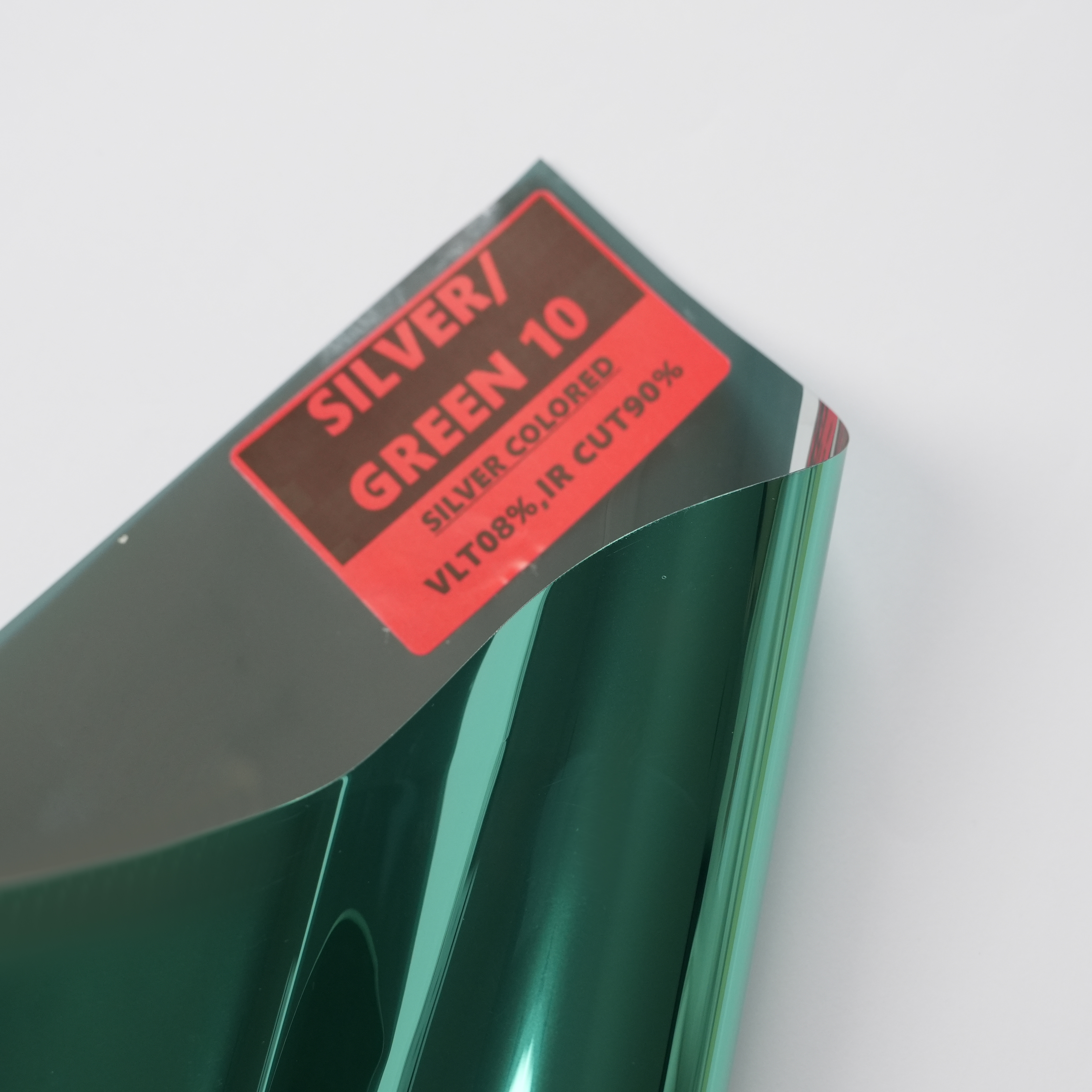
- Model names that do not match measured values. A number in a film name is a family label, not a measurement. HOCHI's own SILVER/GREEN 10 architectural film is published at 8% VLT, while SILVER/GREY 05 is published at 10% VLT. A buyer who reads the name instead of the data sheet will specify the wrong glass performance.
- Brand-level specifications. A supplier may quote one heat-rejection figure for an entire catalogue while individual models in the same portfolio range from 10% to 95% infrared cut.
- Unverified substrate claims. 'Optical grade PET' means little unless the supplier can show how clarity, thickness and adhesive performance are inspected during production.
- Warranty terms that vary by model. Published coverage in HOCHI's range runs from 4 years on glue-tint and silver-coloured architectural film to 10 years on sputtered automotive film. A single warranty headline hides that spread.
- Delivery assessed on price alone. Capacity, defect-replacement policy and technical support usually decide whether a repeat order arrives usable.
The consequence is predictable: a distributor consolidating automotive film and architectural film from two suppliers carries two sets of tolerances, two warranty processes and two defect-claim workflows. Checking range depth and specification consistency before a first bulk order is cheaper than reconciling that later.
Industry Background: Range Depth and Spec Consistency Now Decide Supplier Fit
Demand is expanding across both halves of the category at the same time, which pushes buyers toward suppliers that can cover several film families instead of one.
- Grand View Research projects the global automotive tinting film market to reach USD 14.7 billion by 2033.
- Within paint protection, the thermoplastic polyurethane (TPU) segment was valued at USD 437.1 million in 2025, and the 72-inch wide-format PPF market is projected to reach USD 1.9 billion by 2030 (Strategic Market Research).
- PPF thickness typically ranges from 6.5 mil to 10 mil, a band that balances impact resistance against installation flexibility.
Two practical implications follow. First, the automotive and architectural sides of the market are converging inside the same buyer's order book: a glazing contractor may add automotive tinting, and a detailing chain may add architectural retrofit work. Second, because PPF performance depends on thickness and substrate rather than colour, a supplier that can state thickness, ply construction and adhesive behaviour per model is easier to qualify than one that cannot.
Manufacturing depth is the enabling factor. HOCHI operates a Class 1000 dust-free coating workshop covering 3,000 square metres, alongside a facility of 133,333 square metres, more than 220 employees, 100 engineers in research and development, and an annual output of 48,000,000 metres. The company holds more than 50 patents, including 14 invention patents, and has been recognised as a national high-tech enterprise for nine consecutive years.
Detailed Solution: The Five Capability Checks
Check 1 – Product Range Depth Across Automotive, Architectural and Safety Film
A supplier that serves only one application forces you to duplicate qualification work. Range depth should be checked against the programme you actually run, not against the catalogue as a whole.
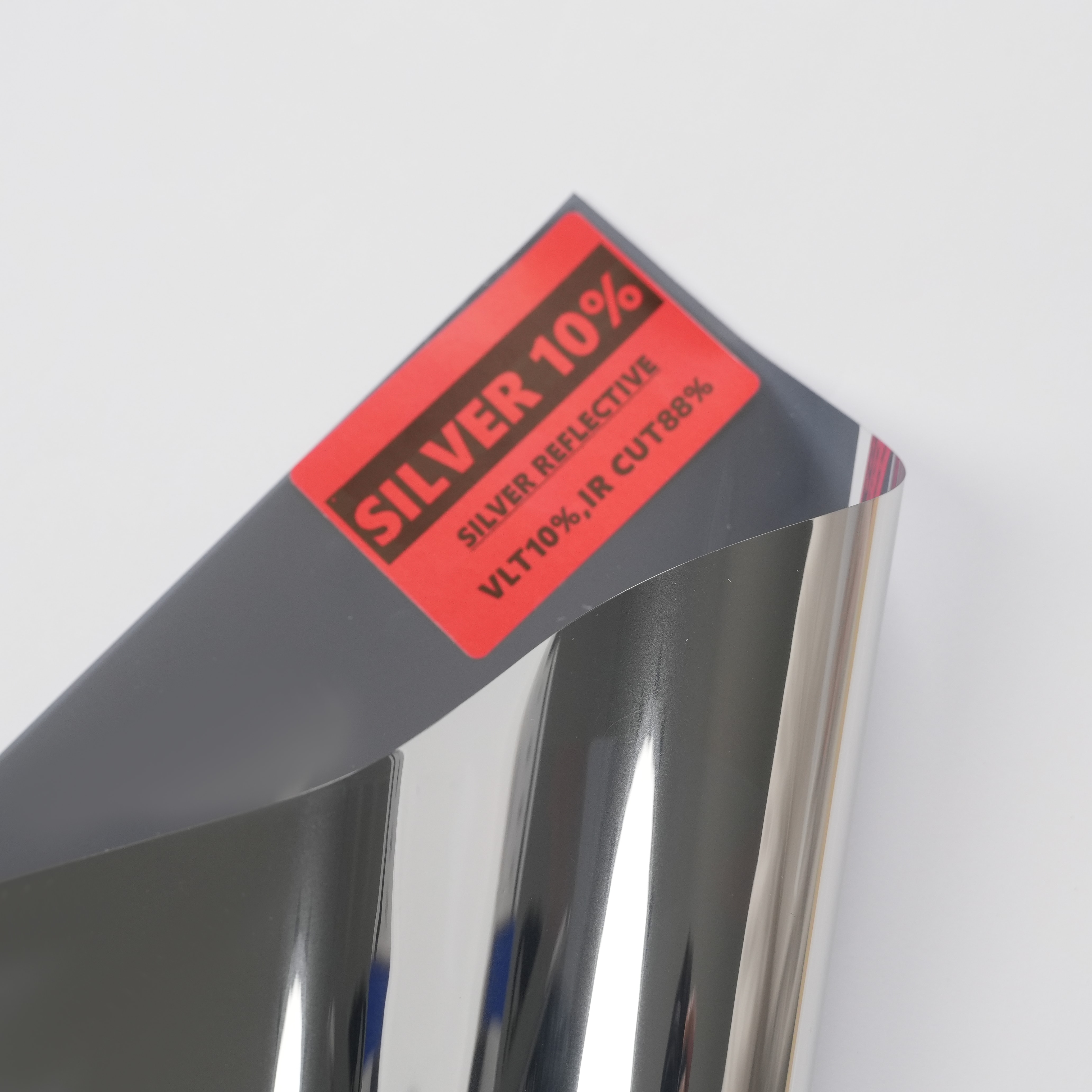
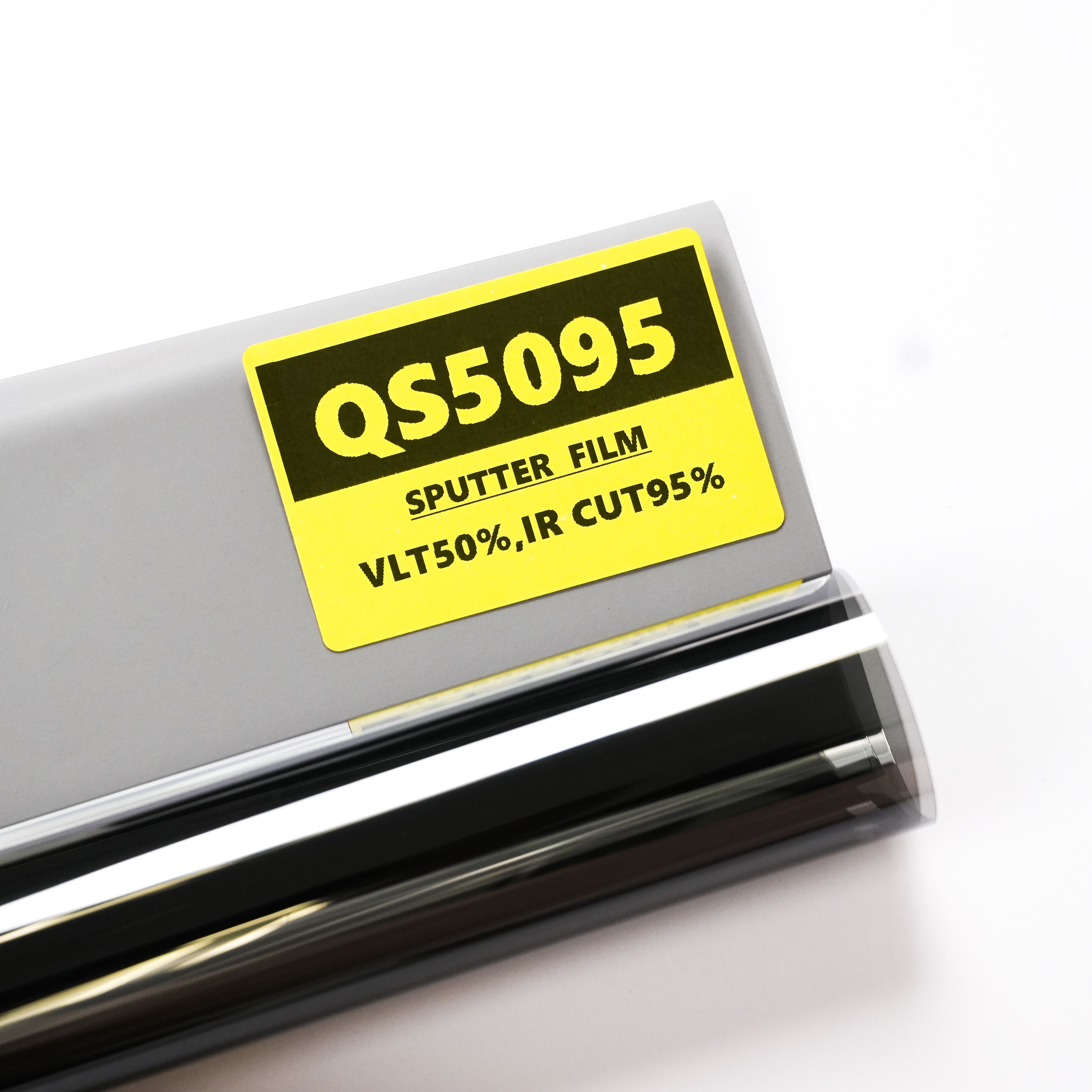
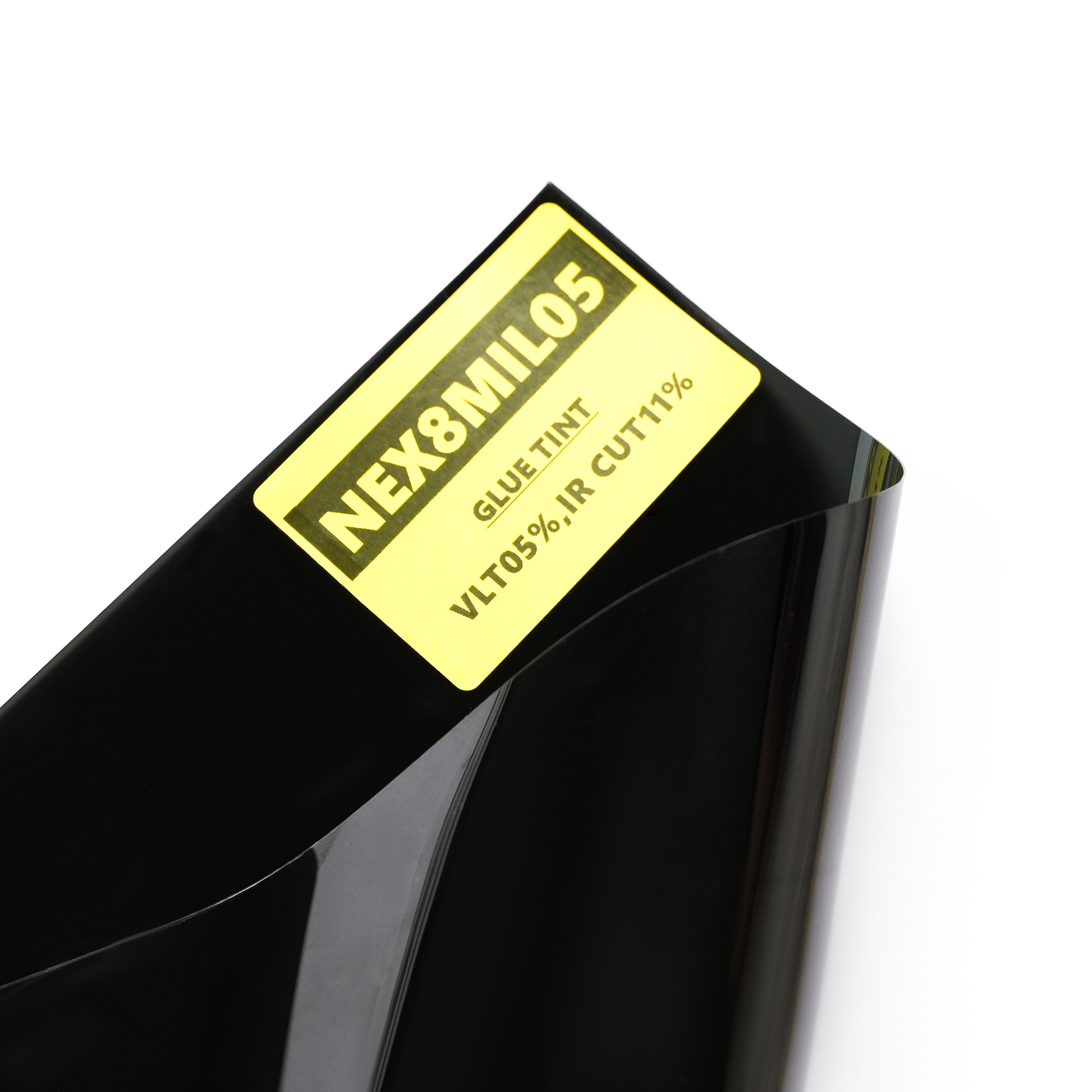
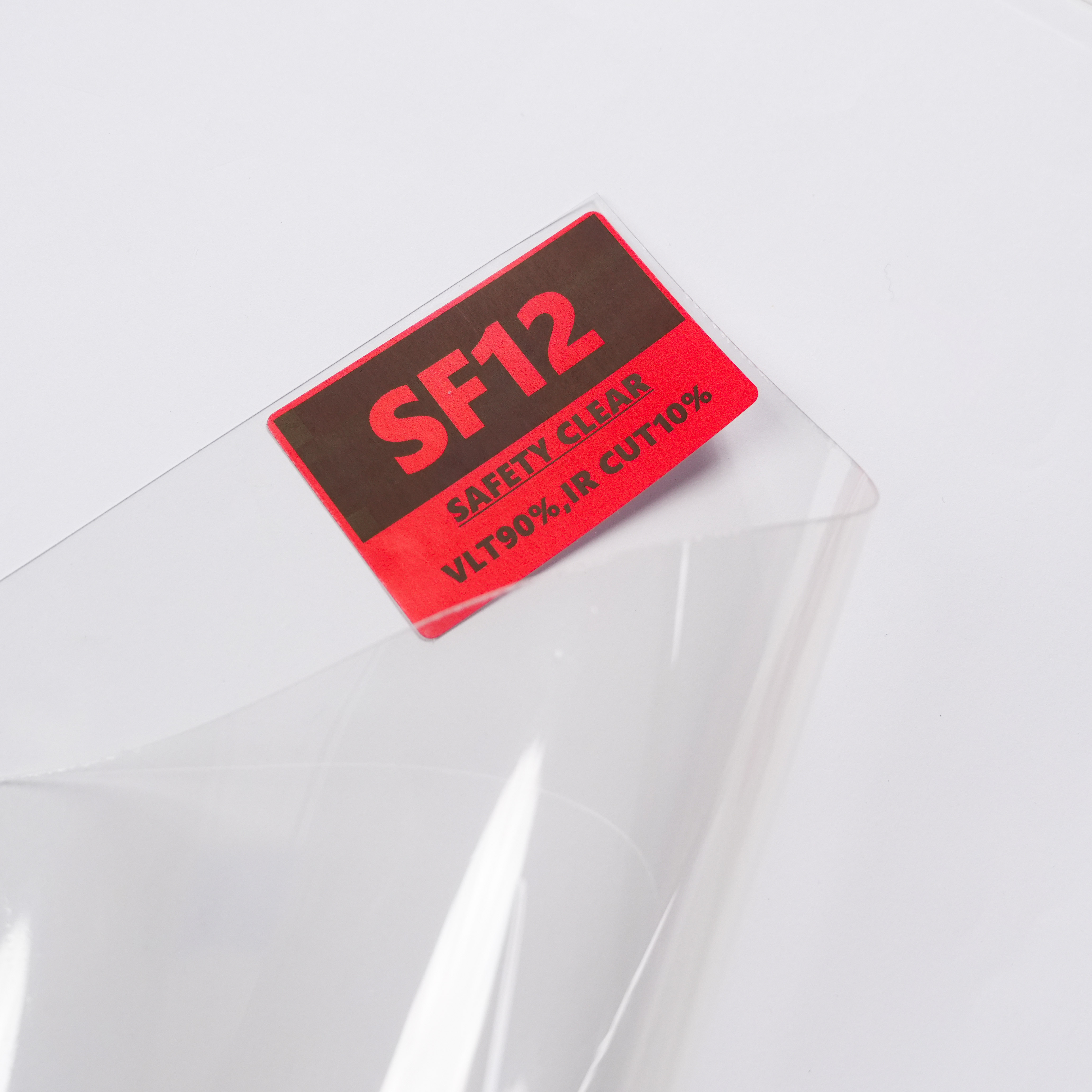
In HOCHI's range, the automotive line covers sputtered film (QS0595, QS5095, SV0595, SV3095), glue tint (CLASSIC03P, CLASSIC35P), reflective glue tint (SL05R) and security glue tint (NEX4MIL05, NEX8MIL05). The architectural line covers silver reflective film (SILVER 5%, SILVER 10%) and silver-coloured film (SILVER/GREEN 10, SILVER/GREY 05, SILVER/BLUE 15, SILVER/GOLD 20). The safety line is represented by SF12 and SF02, and the company also produces paint protection film, colour-changing film and explosion-proof film. More than 400 customised solar film products and more than 200 customised colour-changing films are listed in its portfolio.
What this check tells you: whether one purchase order, one QC standard and one warranty process can cover every application you sell.
Check 2 – Substrate and Adhesive Verification, Including Ply and Thickness
Substrate and adhesive are where low-cost film fails first, and they are also where suppliers are least specific. Ask for the material, the ply construction and the thickness of each model in writing.
HOCHI publishes its automotive films as high-purity optical-grade PET (polyethylene terephthalate), its security films as high-purity optical-grade thickened PET, and its architectural films as optical grade PET film. Thickness and construction are stated per model – for example 2PLY 1.5 mil on SL05R, CLASSIC03P and most architectural films; 2PLY 2.0 mil on QS0595 and QS5095; 2PLY 3.0 mil on SV0595 and SV3095; 2PLY 4.0 mil and 2PLY 8.0 mil on NEX4MIL05 and NEX8MIL05; and 1PLY 12.0 mil on SF12.
The difference between a 2PLY 1.5 mil solar control film and a 1PLY 12.0 mil safety clear film is not a quality ranking – it is a different manufacturing job. Laminated 2-ply construction supports dyed, carbon, sputtered and reflective layers at low thickness for heat and glare control. A single-ply 12.0 mil film relies on mass and adhesive strength for shatter retention, which is why SF12 and SF02 are published with 'security protect' and 'strong adhesive' characteristics. A supplier able to produce both demonstrates control over lamination and coating as separate processes.
Adhesive quality is verifiable rather than assumed. HOCHI's quality-control flow includes a peel adhesion test, and its application requirements specify residue-free adhesive removal. Architectural models such as SILVER/GREEN 10, SF12 and SF02 are published with a strong-adhesive characteristic, which matters where film is applied to large glazed areas and must stay bonded through thermal cycling between -30°C and 80°C.
Check 3 – Specification Consistency at Model Level
Specification consistency is the check most buyers skip and most regret. It has two parts: internal consistency (does the data sheet match the model name and the test report?) and cross-model consistency (are the same parameters published for every model?).
A workable rule is to request, for every model you intend to stock, four published values and one construction value: VLT, infrared cut, UV rejection, warranty period and thickness. If a supplier publishes VLT and IR cut for one model but only 'high heat rejection' for another, that gap is itself a finding.
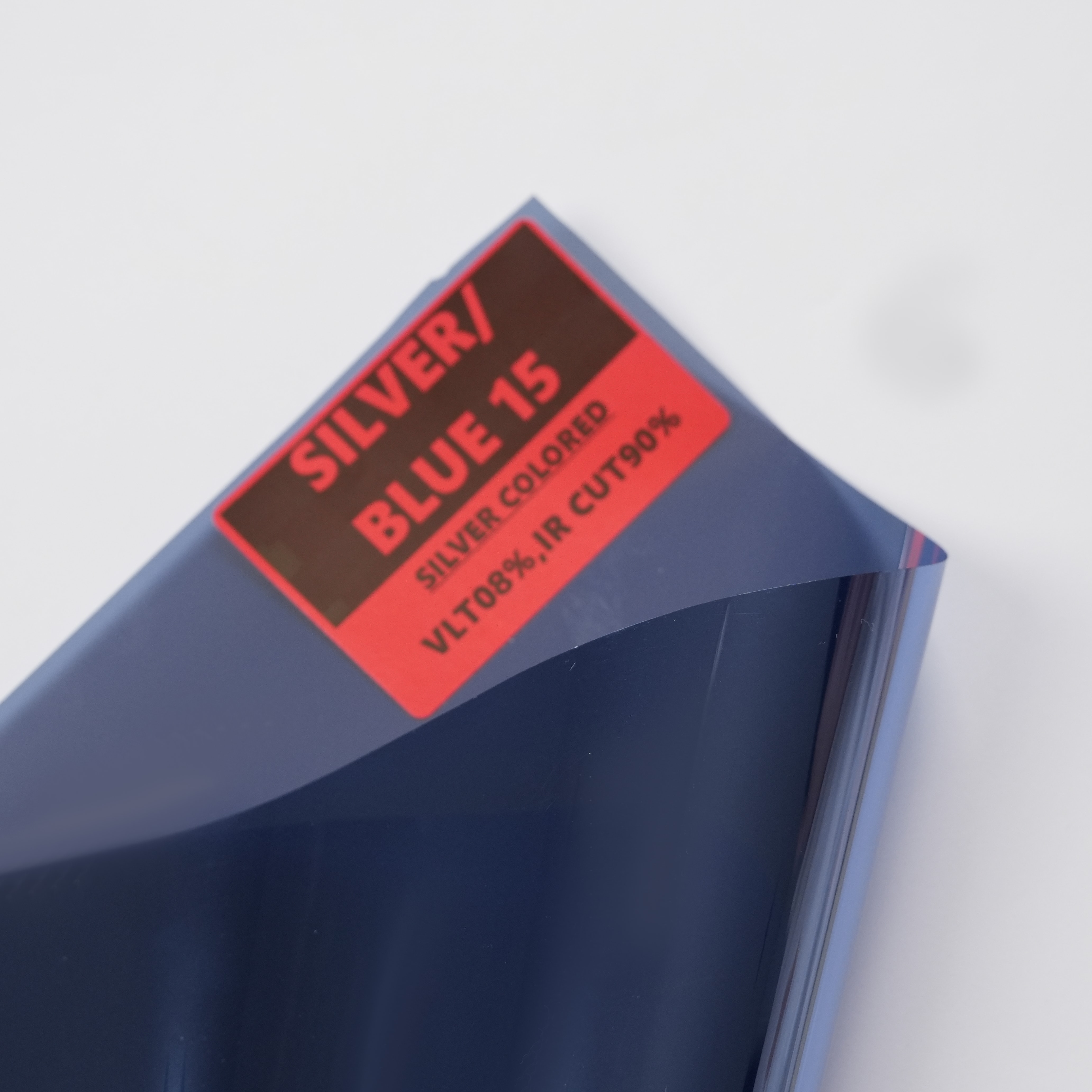
HOCHI's architectural portfolio shows why the measured value must be read separately from the model name. SILVER/GREEN 10 is published at 8% VLT with 90% infrared cut, SILVER/GREY 05 at 10% VLT with 75% infrared cut, and SILVER/BLUE 15 at 8% VLT with 90% infrared cut; all three carry a 4-year warranty. SILVER 5% and SILVER 10% are published at 95% and 88% infrared cut respectively with a 6-year warranty. The naming convention is a family indicator; the data sheet is the specification.
Check 4 – Manufacturing, Quality Control and Third-Party Evidence
Capability claims should be traceable to a process. Four evidence types are worth requesting: an equipment and environment statement, an in-house test list, a third-party inspection record, and a standards reference for the relevant film class.
For HOCHI, the in-house test list covers 100% online optical defect inspection, spectrophotometer testing of VLT, UV rejection and IR rejection, peel adhesion testing and high-temperature ageing testing, supported by third-party inspection through SGS. Production takes place in a Class 1000 dust-free coating workshop of 3,000 square metres.
Where safety film is involved, external standards give you a neutral reference point. The International Window Film Association's visual quality standard requires inspection from 6 feet (approximately 2 metres) under natural daylight, and IWFA policy references ASTM D882 as the mandatory method for measuring tensile strength, break strength and elongation of safety films. A supplier selling safety clear film should be able to discuss both.
Check 5 – Warranty Structure and After-Sales Terms
Warranty is where the model-level view matters most, because coverage is normally tied to construction rather than to brand.
Across HOCHI's published range, glue-tint and silver-coloured architectural models carry 4-year warranties; SL05R, NEX4MIL05 and NEX8MIL05 carry 5 years; SILVER 5%, SILVER 10%, SF12 and SF02 carry 6 years; and the sputtered automotive models QS0595, QS5095, SV0595 and SV3095 carry 10 years. Programme-level after-sales terms are published as a 5–10 year quality warranty covering anti-bubbling, anti-fading and anti-delamination, 100% free replacement for defectives, and 24/7 technical support and installation guidance.
Supplier capability checklist – use it as a request list before quoting:
- Model-level data sheet stating VLT, IR cut, UV rejection, thickness, ply construction and warranty
- Substrate material per model, plus adhesive characteristics
- In-house test list (optical inspection, spectrophotometer, peel adhesion, high-temperature ageing)
- Third-party inspection record and relevant standards reference for safety film
- Factory environment and capacity statement, with a written lead time
- Defect-replacement policy and technical support terms
Step-by-Step Breakdown: A Seven-Step Evaluation Workflow
- Define the project profile before contacting suppliers. List the applications (automotive tinting, architectural retrofit, safety glazing, paint protection), the glass or vehicle types, and the environmental range the film must survive. HOCHI's published application data covers automotive paint protection, car window heat and solar insulation, commercial building energy-saving retrofit, and residential privacy and solar control tinting, with an operating range of -30°C to 80°C.
- Request model-level data sheets, not a catalogue. Ask for VLT, IR cut, UV rejection, thickness and warranty for every model, and check that each number is a measured value rather than a name or a category claim.
- Verify substrate and adhesive in writing. Confirm the PET grade, ply construction and adhesive behaviour, and ask how each is inspected in production.
- Match thickness to function. Use laminated 2PLY constructions for solar control and glare, and single-ply heavy film such as 1PLY 12.0 mil SF12 where shatter retention is the objective.
- Audit QC and third-party evidence. Compare the supplier's test list against the standards relevant to the film class, and ask for third-party inspection records for the batch type you will stock.
- Compare warranty per model and confirm the defect process. Check the warranty attached to each model in your order, and confirm what happens on a claim – HOCHI's published terms are 100% free replacement for defectives.
- Validate with a sample, then confirm capacity and lead time. Measure the sample against the data sheet, then confirm the delivery commitment. HOCHI publishes a monthly capacity of 3–5 million metres, a lead time of 30–45 days, a minimum order quantity of 50 rolls, and sample orders available upon request.
Use Cases: How the Framework Applies in Practice
Automotive restyling and dealership programmes
A dealership group or detailing chain restyling high-end vehicles needs heat-control film and paint protection from the same source. In one documented programme, a buyer ordered approximately 2,000 rolls per year of 7.5 mil and 8.5 mil high-gloss TPU paint protection film – around 30,000 metres – to protect against rock chips, gravel abrasion, scratches, chemical stains and UV yellowing. The application reported instant micro-scratch self-healing at 60°C, a zero-orange-peel finish, and anti-yellowing performance measured at Delta E below 1.5 over three years, with zero warranty claims on bubbling or delamination across a four-year partnership. The evaluation lesson is that the supplier had to demonstrate a second, unrelated production capability – TPU PPF for restyling projects – alongside automotive tint film.
Commercial curtain wall retrofit
A 65,000 square metre retrofit – approximately 2,200 rolls of silver and neutral solar control film – was installed on commercial skyscraper glazing in the United States, the United Arab Emirates and Germany, for solar heat rejection, glare control, interior UV protection and glass anti-shatter safety. Reported outcomes after installation included a 4°C to 6°C reduction in indoor temperature, a 28% reduction in central air-conditioning power consumption, and 99.5% blocking of harmful UV rays. The film was specified with magnetron sputtering metal technology, total solar energy rejection above 72% and zero visual distortion from inside out, and was evaluated over a three-year post-installation period against a 10-year product warranty. This is the case type where the safety-clear line and the architectural line are qualified together.
Multi-line distributor programmes
For a distributor buying both film families, the decisive check is whether one supplier can hold tolerances across a mixed order. One US programme combined approximately 3,500 rolls of ceramic window film with 1,200 rolls of TPU paint protection film – about 150,000 metres per year – and reported 99%+ UV rejection, 92%+ infrared heat block, a 35% reduction in building HVAC energy consumption and zero warranty claims on bubbling or delamination over three years of cooperation. The selection criteria cited were optical clarity with zero distortion, fast thermal scratch self-healing, easy bubble-free installation and batch-to-batch colour consistency – all specification items, not price items.
Comparison Table: Model-Level Specification Consistency
The tables below use published HOCHI product data and are structured the way a supplier comparison should be: the same parameters in the same order, one row per model.
Architectural and safety clear film
| Model | Film type | Thickness | VLT | IR cut | UV rejection | Warranty |
|---|---|---|---|---|---|---|
| SILVER 5% | Silver reflective, architectural | 2PLY 1.5 mil | 5% | 95% | 99% | 6 years |
| SILVER 10% | Silver reflective, architectural | 2PLY 1.5 mil | 10% | 88% | 99% | 6 years |
| SILVER/GREEN 10 | Silver coloured, architectural | 2PLY 1.5 mil | 8% | 90% | 99% | 4 years |
| SILVER/GREY 05 | Silver coloured, architectural | 2PLY 1.5 mil | 10% | 75% | 99% | 4 years |
| SILVER/BLUE 15 | Silver coloured, architectural | 2PLY 1.5 mil | 8% | 90% | 99% | 4 years |
| SILVER/GOLD 20 | Silver coloured, architectural | 2PLY 1.5 mil | 25% | 75% | 99% | 4 years |
| SF12 | Safety clear | 1PLY 12.0 mil | 90% | 10% | 88% | 6 years |
| SF02 | Safety clear | 1PLY 2.0 mil | 90% | 10% | 88% | 6 years |
Automotive film
| Model | Film type | Thickness | VLT | IR cut | UV rejection | Warranty |
|---|---|---|---|---|---|---|
| CLASSIC03P | Glue tint | 2PLY 1.5 mil | 3% | 10% | 99% | 4 years |
| CLASSIC35P | Glue tint | 2PLY 1.5 mil | 35% | 10% | 99% | 4 years |
| SL05R | Glue tint, reflective | 2PLY 1.5 mil | 5% | 95% | 99% | 5 years |
| QS0595 | Sputter | 2PLY 2.0 mil | 5% | 95% | 99% | 10 years |
| QS5095 | Sputter | 2PLY 2.0 mil | 50% | 95% | 99% | 10 years |
| SV0595 | Sputter | 2PLY 3.0 mil | 5% | 95% | 99% | 10 years |
| SV3095 | Sputter | 2PLY 3.0 mil | 30% | 95% | 99% | 10 years |
| NEX4MIL05 | Security glue tint | 2PLY 4.0 mil | 5% | 11% | 99% | 5 years |
| NEX8MIL05 | Security glue tint | 2PLY 8.0 mil | 5% | 11% | 99% | 5 years |
Read across the rows and two patterns appear. First, within the architectural silver-coloured group, VLT and IR cut vary independently – 8% VLT pairs with 90% IR cut on SILVER/GREEN 10 and SILVER/BLUE 15, but with 75% IR cut on SILVER/GOLD 20 at 25% VLT. Second, warranty length tracks construction rather than colour: sputtered automotive film is published at 10 years, while glue-tint and silver-coloured architectural film sits between 4 and 6 years. A supplier that cannot present this table for its own range cannot be compared reliably.
Frequently Asked Questions
What documentation proves a window film supplier's quality system is real?
Ask for four things: management system documentation, a production environment statement, an in-house test list and third-party inspection records. HOCHI operates an integrated quality management system and environmental management system, and its QC flow includes 100% online optical defect inspection, spectrophotometer testing of VLT, UV rejection and IR rejection, peel adhesion testing and high-temperature ageing testing, with third-party inspection through SGS. For safety film, external references make verification easier: the IWFA visual quality standard sets inspection at 6 feet under natural daylight, and ASTM D882 is referenced for measuring tensile strength, break strength and elongation of safety films.
Can one supplier realistically cover automotive film, architectural film and TPU PPF for restyling projects?
Yes, but only if the range is documented at model level rather than claimed at brand level. HOCHI's portfolio spans sputtered automotive film (QS0595, QS5095, SV0595, SV3095), glue tint (CLASSIC03P, CLASSIC35P), reflective tint (SL05R), security glue tint (NEX4MIL05 at 2PLY 4.0 mil and NEX8MIL05 at 2PLY 8.0 mil), architectural silver reflective and silver-coloured film (SILVER 5%, SILVER 10%, SILVER/GREEN 10, SILVER/GREY 05, SILVER/BLUE 15, SILVER/GOLD 20), safety clear film (SF12 at 1PLY 12.0 mil and SF02 at 1PLY 2.0 mil), and TPU paint protection film used in automotive restyling projects. OEM customisation covers VLT from 5% to 70%, UV and IR rejection rates, film thickness, roll dimensions, custom colours, release liner, and packaging box and core logo printing.
What commercial terms drive the total cost of a bulk window film order?
Four terms usually outweigh the unit price: minimum order quantity, the warranty attached to each model, the defect-replacement policy and the lead time. HOCHI publishes a minimum order quantity of 50 rolls with sample orders available upon request; warranty periods that range from 4 years on glue-tint and silver-coloured architectural film to 10 years on sputtered automotive film; 100% free replacement for defectives; and a lead time of 30–45 days. Because warranty and thickness vary by model, the cost comparison should be run per model rather than per container.
What should a sample validation test cover before a bulk order?
A sample should be checked against the data sheet, not against appearance. Measure VLT, IR cut and UV rejection with an appropriate meter and compare the readings with the published values; confirm the substrate and ply construction, including the difference between laminated 2PLY 1.5 mil solar control film and single-ply 1PLY 12.0 mil safety film; test adhesive tack and confirm that removal leaves no residue; run a heat-shrink trial on a curved panel; and inspect optical clarity for haze or distortion. HOCHI's own quality control applies the same logic – spectrophotometer testing, peel adhesion testing and high-temperature ageing testing – and sample orders are available on request.
What lead time and delivery assurance should you confirm in writing?
Confirm three numbers and one obligation. HOCHI publishes a monthly capacity of 3–5 million metres, a lead time of 30–45 days, and a 5–10 year programme quality warranty covering anti-bubbling, anti-fading and anti-delamination, alongside 24/7 technical support and installation guidance. The obligation to confirm is the defect process: whether defective rolls are replaced free of charge and within what window. To start a sample or quotation request, contact HOCHI PPF & Window Film directly or download the product specification catalogue below.
Conclusion
Supplier evaluation in the window tint film and PPF category comes down to evidence at model level. Range depth tells you whether one supplier can carry your whole programme; substrate and adhesive documentation tells you whether the film will survive its environment; model-level spec consistency tells you whether the delivered roll matches the quoted one; QC and third-party records tell you whether consistency is a process or a promise; and model-level warranty plus a written lead time tells you what happens after installation and after the first reorder.
Applied in that order, the framework produces a comparable shortlist instead of a stack of brochures – and it makes the difference between a supplier that can repeat an order and one that can only repeat a price.
Next step: validate before you commit
Send your application list – automotive film, architectural film, safety clear film or TPU PPF – together with the VLT, thickness and warranty targets you need, and request a model-level data sheet plus a sample order.
HOCHI PPF & Window Film | Haian Ho Chi Technology Co., Ltd.
Website: hochitech.net
Email: hochitech@sina.com
Tel / WhatsApp: +86 180 3645 9980
Address: No. 88, Lifang Avenue, Haian Economic and Technological Development Zone, Nantong City, Jiangsu Province, China
Download the HOCHI window film specification catalogue (PDF)
Have Questions or Need More Details?
Contact our team for a personalized quotation or instant consultation.
Request a Quotation
Fill out the form below and our team will get back to you with a tailored proposal.
WhatsApp Direct Chat
Prefer to chat in real-time? Message us on WhatsApp for instant assistance & quick answers.
- Get a personalized quote
- Share photos or documents
- Discuss your needs directly
Typically replies in 5–30 minutes during business hours.