
Ranked Window Film Picks for Privacy and Safety Retrofits: SILVER/GREY 05, SF12, and More
Retrofit window film is chosen by goal, and each goal points to a different model. For daytime one-way privacy on existing glass, SILVER/GREY 05 is the first pick in this architectural range. For shatter retention and glass safety, SF12 safety clear film is the first pick. Where solar heat gain dominates the brief, SILVER/GREEN 10 and SILVER/BLUE 15 lead the range with 90% infrared cut at 8% visible light transmission. Every figure below comes from published HOCHI PPF & Window Film specification data — VLT, UV rejection, IR cut, film thickness and warranty — so the comparison holds whether you are a glazing contractor, a facility manager or a film distributor.
HOCHI PPF & Window Film (Haian Hochi Technology Co., Ltd.) manufactures architectural window film, automotive window tint film and paint protection film. Its architectural models are classified for the construction industry and architectural window film applications, and are supplied to glazing contractors, commercial real estate developers and film distributors across Europe, the Middle East, North America and Asia-Pacific.
Why retrofit film selection is a trade-off, not a colour choice
A retrofit project starts with glass that is already installed, already glazed into a frame and already accepted by the building owner. That single constraint shapes every specification decision, because the film has to deliver its function without changing the glazing system, the frame or the façade documentation.
Four trade-offs appear in almost every retrofit brief:
- Privacy against daylight. Lower visible light transmission hides the interior during the day, but it also reduces daylight. In this architectural range VLT runs from 5% on SILVER 5% to 25% on SILVER/GOLD 20.
- Safety against optical simplicity. Shatter retention comes from film thickness and adhesive strength, not from colour. SF12 is a 1PLY 12.0 mil clear film, while SF02 keeps the same clear optical profile at 1PLY 2.0 mil.
- Heat rejection against visible light. A 90% infrared cut is available at 8% VLT on SILVER/GREEN 10 and SILVER/BLUE 15, while the lighter-looking SILVER/GOLD 20 delivers a 75% IR cut at 25% VLT.
- Warranty against performance edge. In the current range, the highest-IR reflective models carry a 4-year warranty, while SILVER 5%, SILVER 10%, SF12 and SF02 carry 6 years.
Because these goals pull in different directions, the practical way to rank architectural window film is by objective: which model solves privacy, which one solves safety, and which one solves heat.
What the market and the standards say about retrofit film
Retrofit demand sits inside a market that is still expanding. Grand View Research projects the global automotive tinting film market to reach USD 14.7 billion by 2033. In the paint protection segment, thermoplastic polyurethane films were valued at USD 437.1 million in 2025, and the 72-inch wide-format PPF market is projected to reach USD 1.9 billion by 2030, according to Strategic Market Research.
Performance expectations have moved as well. Nano-ceramic window films can block up to 85% of solar heat while maintaining high visible light transmission, which is one reason project teams now compare IR cut and VLT figures instead of judging a film by its colour. In China, motor vehicle production exceeded 31 million units in 2024, based on figures referenced from the International Organization of Motor Vehicle Manufacturers — volume that keeps cabin thermal management film, window tint film & PPF included, in continuous demand.
For architectural retrofit work, the reference points should be standards rather than marketing claims:
- The IWFA Visual Quality Standard requires window film to be inspected from 6 feet (about 2 metres) under natural daylight.
- ASTM D882 is the mandatory test method for measuring tensile strength, break strength and elongation of safety films under IWFA policies — directly relevant when SF12 or SF02 is specified for shatter retention.
- PPF thickness typically ranges from 6.5 mil to 10 mil to balance impact resistance and installation flexibility, which shows how far a 12.0 mil safety film sits from the automotive PPF norm.
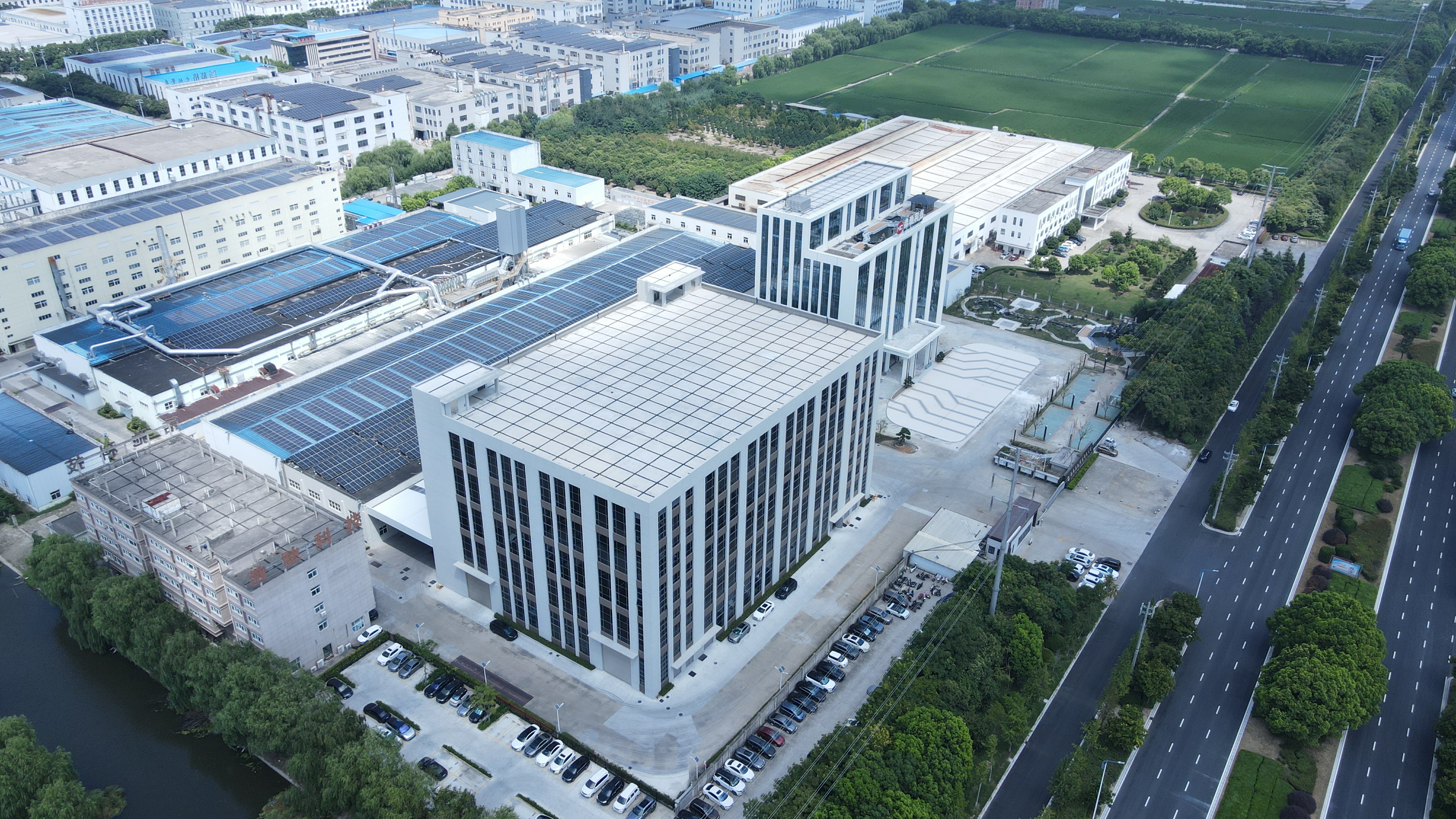
Manufacturing context also affects lead-time planning. Haian Hochi Technology Co., Ltd. operates a Class 1000 dust-free coating workshop covering 3,000 square metres, inside a facility of 133,333 m² with more than 220 employees and a 100-engineer R&D team; roughly 60% of output is exported. For a buyer, the practical translation is that architectural film, automotive tint and PPF can be sourced from one production base instead of being assembled from several suppliers.
Ranked architectural window film picks, by retrofit goal
Every model ranked below comes from the HOCHI PPF & Window Film architectural range and is classified for the construction industry and architectural window film applications. The ranking is a selection order by retrofit objective, not a cross-brand league table, and each position states the published specification that justifies it.
PICK 1SILVER/GREY 05 — the daytime privacy retrofit pick
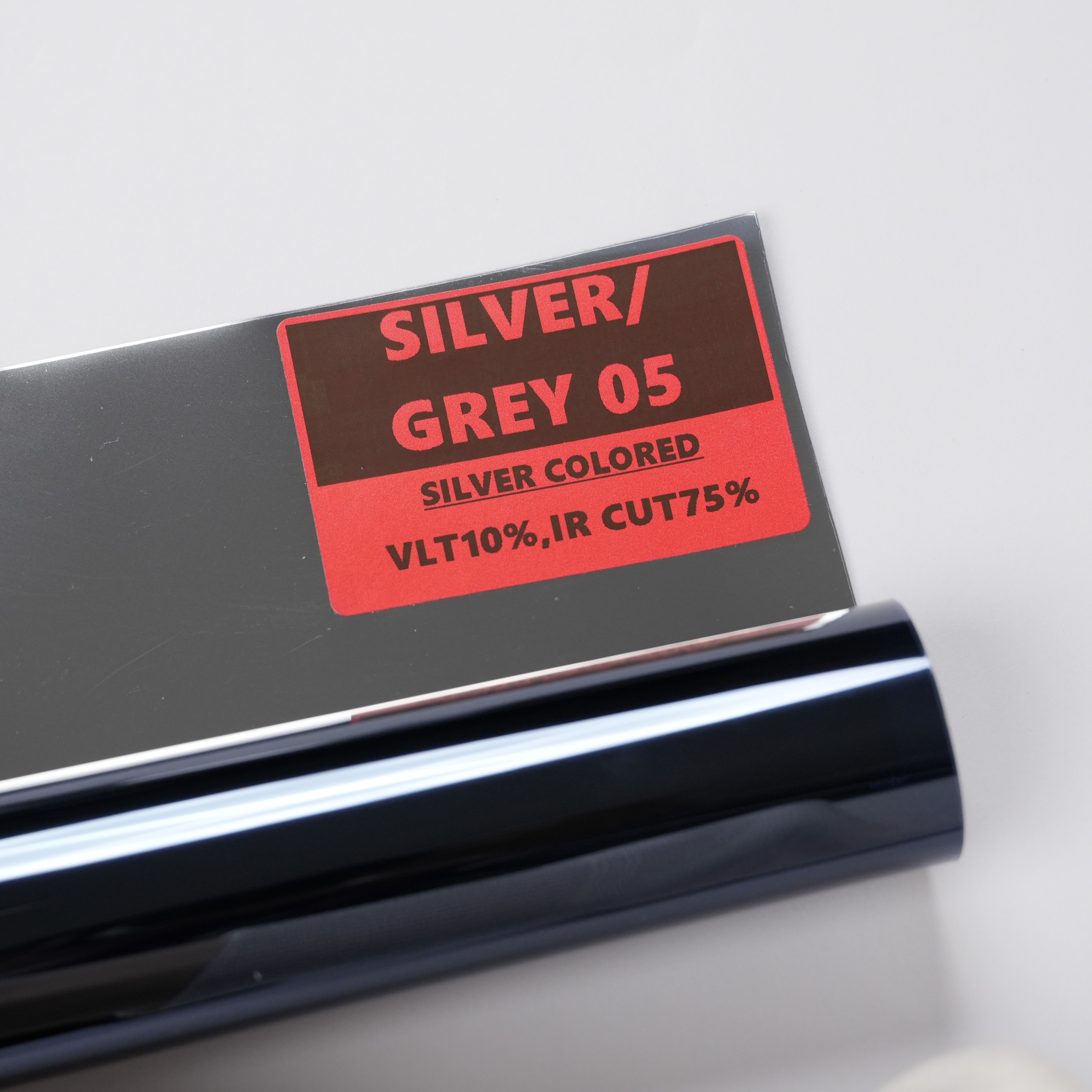
SILVER/GREY 05 is built on a 2PLY 1.5 mil optical grade PET film with 10% VLT, 99% UV rejection and 75% infrared rejection, backed by a 4-year quality warranty. It is included first because daytime one-way privacy is a documented feature of this model, and 10% VLT is the highest visible-light level in this range that still supports a mirrored privacy effect. UV rejection at 99% protects interior finishes and furnishings against fading, and the 75% IR cut removes a large share of solar heat without pushing the glass into the darkest band. Specify it when a façade needs privacy during working hours, glare reduction and UV protection from one film. Accept two limits: it is a 4-year-warranty model, and its infrared performance sits below the 90% tier.
PICK 2SF12 — the safety and shatter-retention pick
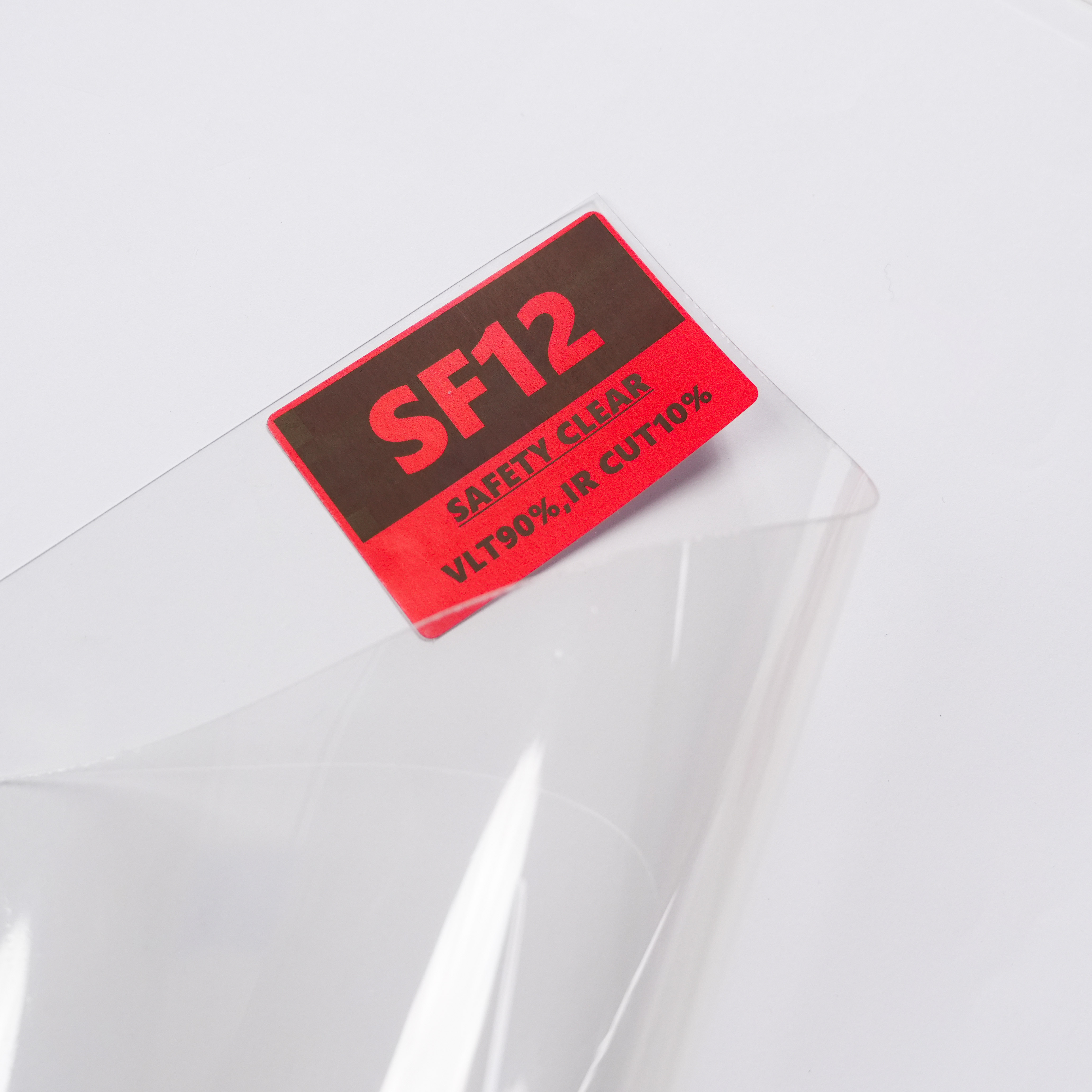
SF12 is a safety clear film rather than a solar control product: 1PLY 12.0 mil construction, 90% VLT, 88% UV rejection, 10% IR cut, clear colour, strong adhesive and a 6-year quality warranty. It is included because shatter retention is a function of thickness and adhesive, and 12.0 mil single-ply is the heaviest construction in this comparison — well above the 2.0 mil of SF02 and far above the 1.5 mil used by the silver architectural models. Because VLT remains at 90%, SF12 changes almost nothing about daylight or exterior appearance, which makes it the natural first film where glass safety, intrusion delay and post-breakage glass retention are the retrofit objective. Its limitation is heat: at a 10% IR cut it will not lower solar heat gain, so heat-driven projects should not treat SF12 as a thermal solution.
PICK 3SILVER/GREEN 10 — highest infrared cut with a strong adhesive
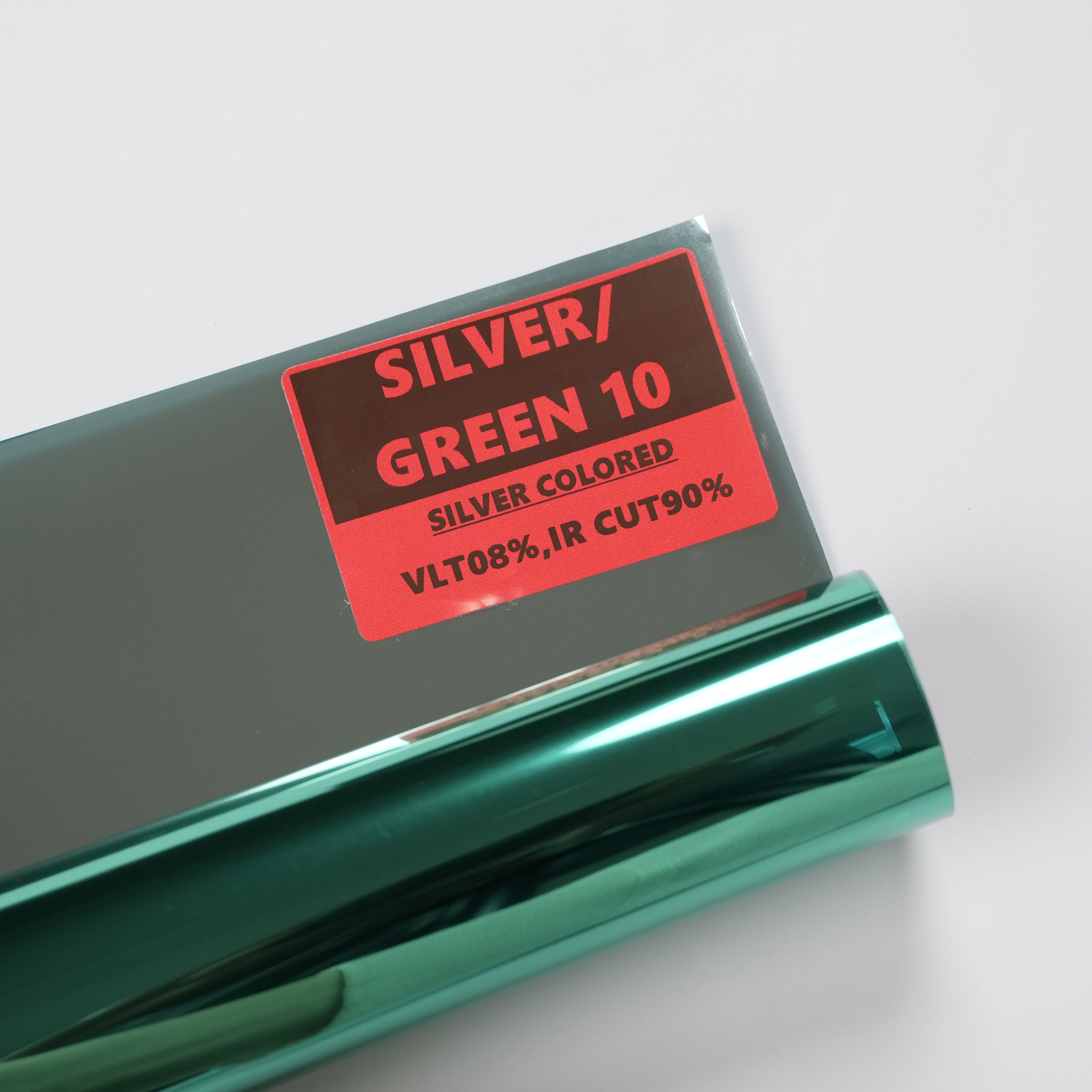
SILVER/GREEN 10 posts the top infrared figure in this architectural range — 90% IR cut — together with 99% UV rejection, 8% VLT, a 2PLY 1.5 mil structure and a strong adhesive, covered by a 4-year warranty. It is included because that is exactly the combination a retrofit brief is written around when the problem statement is solar heat gain, HVAC load and interior glare. In practice it is a dark, reflective specification: 8% VLT sits at the low end of the range, so it suits west- and south-facing glass in hot climates and buildings whose façade already reads as reflective glass.
PICK 3SILVER/BLUE 15 — same heat performance, colour-stable finish
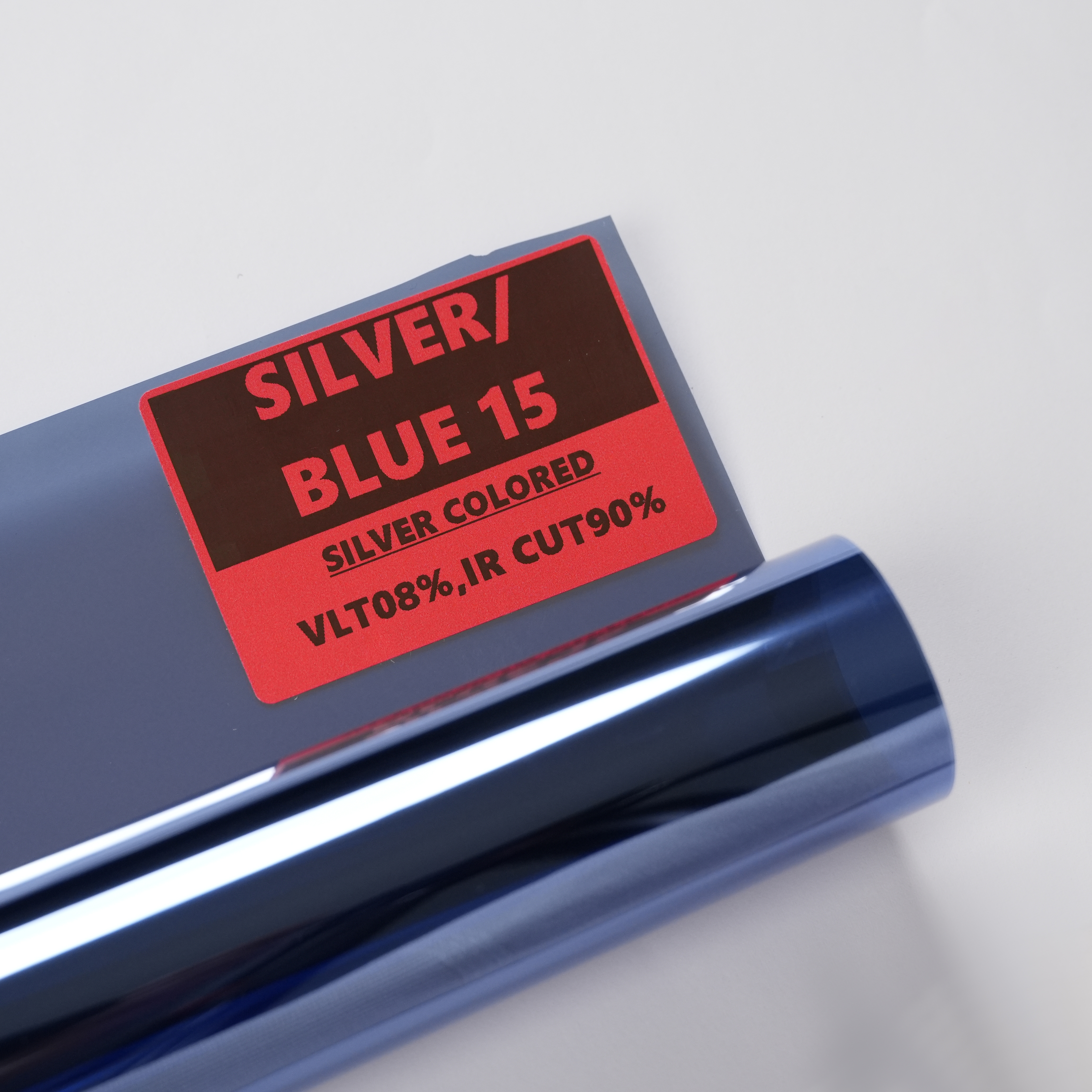
SILVER/BLUE 15 matches SILVER/GREEN 10 on every figure that drives heat rejection: 8% VLT, 90% IR cut, 99% UV rejection, 2PLY 1.5 mil and a 4-year warranty. It is ranked jointly because the differentiator is tint tone and colour stability rather than thermal performance, so a specifier who needs a cooler exterior tone can keep the same heat result. The same limitation applies — 8% VLT means low daylight transmission, and reflective appearance rules should be checked against the façade brief.
PICK 4SILVER 5% — deepest privacy with the highest IR cut
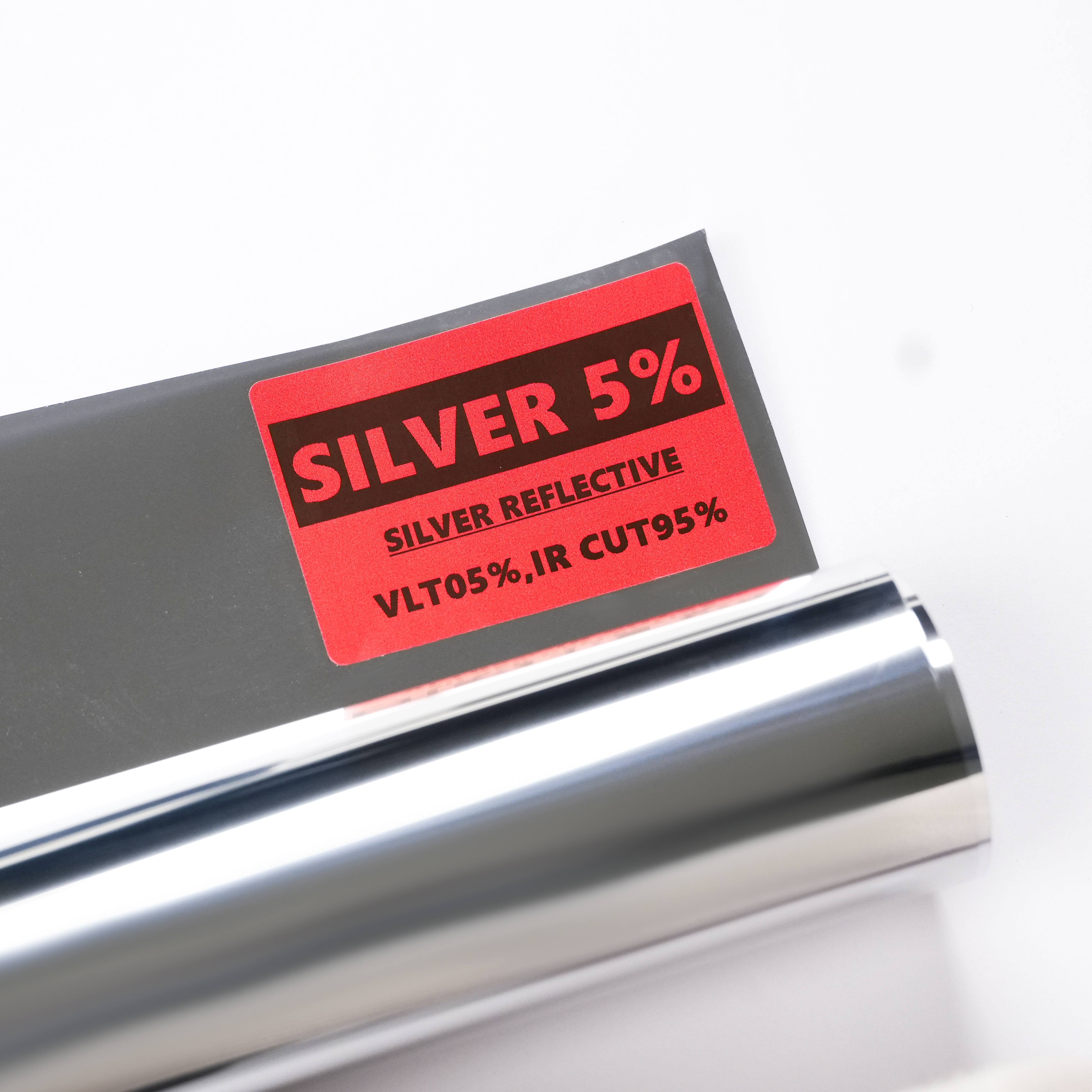
SILVER 5% combines the lowest VLT in the range with the highest infrared cut: 5% VLT, 95% IR cut and 99% UV rejection on a 2PLY 1.5 mil film, with a 6-year warranty and documented real heat rejection and colour stability. It is the pick when a project wants maximum concealment and maximum solar rejection in one layer — for example street-facing ground-floor glass or west-facing glazing in a hot climate. The cost of that position is daylight: at 5% VLT, interior spaces depend on artificial light, and local glazing regulations on minimum visible light transmission should be verified before ordering.
PICK 5SILVER 10% — balanced solar control at the 10% VLT band
SILVER 10% offers 10% VLT, 88% IR cut and 99% UV rejection on a 2PLY 1.5 mil film with a 6-year warranty. It is included for projects that want a reflective silver appearance and a longer warranty than the 4-year models, while staying above the 8% VLT tier used by SILVER/GREEN 10 and SILVER/BLUE 15. Compared with SILVER/GREY 05 at the same 10% VLT, the trade is straightforward: SILVER 10% adds infrared performance and two extra warranty years, while SILVER/GREY 05 is the model whose published feature set is written around daytime one-way privacy.
PICK 6SILVER/GOLD 20 — daylight-friendly solar control
SILVER/GOLD 20 is the lightest silver architectural option in this range at 25% VLT, with 75% IR cut, 99% UV rejection, a 2PLY 1.5 mil structure, colour stability and a 4-year warranty. It is included because not every retrofit can accept a dark glass: retail units, showrooms, hospitality lobbies and offices with daylight targets often need a film that keeps a bright interior while still cutting a large share of infrared energy and virtually all UV. The limitation is the mirror image of its strength — at 25% VLT it provides far less daytime privacy than SILVER/GREY 05.
Also in the range: SF02 safety clear film
SF02 carries the same clear optical profile as SF12 — 90% VLT, 88% UV rejection and 10% IR cut, classified as safety clear film with security protection and a strong adhesive, and a 6-year warranty — but it is built on a 1PLY 2.0 mil structure instead of 12.0 mil. It belongs in the comparison as the lighter safety option for glazing where film thickness or installation handling is constrained, while SF12 remains the pick where shatter retention is the priority.
Note on appearance and code compliance:
Reflective silver films change how a façade reads from the street. Before specification, confirm local building requirements, any façade appearance rules, and the applicable visible light transmission limits for the glass in question. Local rules take precedence over any product ranking.
Step-by-step: how a privacy and safety retrofit is specified and installed
- Define the dominant retrofit goal. Privacy, glass safety or heat rejection. The dominant goal sets the anchor parameter — VLT for privacy, thickness and adhesive for safety, IR cut for heat.
- Survey the glass. Record glass type, thickness and coating, and note any cracks, damage or coating defects. Existing film must be identified before new film is specified.
- Confirm glass-film compatibility. Where laminated, insulated or treated glass is involved, a glass compatibility or thermal stress assessment is recommended before installation.
- Match the model to the goal. SILVER/GREY 05 for privacy with solar control, SF12 for shatter retention, SILVER/GREEN 10 or SILVER/BLUE 15 for maximum IR cut, SILVER 5% for the deepest privacy with the highest IR cut, SILVER/GOLD 20 where daylight must be preserved.
- Check the regulatory layer. Verify local VLT limits for the façade and any restrictions on reflective appearance.
- Prepare the site. Protect surrounding walls, floors, frames and electrical equipment, then clean the glass thoroughly and remove dust, grease and residue.
- Measure and cut with an allowance. Typical supporting equipment includes a hot air gun, installation squeegees, a CNC film cutting plotter, DAP cutting software and a slip solution sprayer.
- Apply wet and squeegee. Spray the approved installation solution onto the glass and the adhesive face, position the film accurately, and remove water and air with a professional squeegee from the centre toward the edges.
- Trim, inspect and cure. Trim the edges, check for contamination, bubbles and lifting, and allow sufficient curing time before cleaning. Final visual inspection should follow the IWFA practice of viewing the film from 6 feet (about 2 metres) in natural daylight.
Retrofit scenarios where these picks are used
Commercial skyscraper glass curtain wall retrofit. A documented project covering approximately 65,000 square metres — about 2,200 rolls of silver and neutral solar control film — in the United States, the UAE and Germany used magnetron sputtering metal technology with Total Solar Energy Rejection above 72%, zero visual distortion from inside out and high-strength shatter resistance. The recorded result after installation was a 4°C to 6°C reduction in indoor temperature, central air-conditioning power consumption lowered by 28%, 99.5% of harmful UV rays blocked and improved tenant comfort, assessed over a three-year post-installation evaluation. The client groups were commercial real estate developers, architectural glazing contractors and hotel chain facility managers. This is the scenario where SILVER/GREEN 10, SILVER/BLUE 15 and SILVER 5% map most directly to the specification.
Multi-product supply programme in the United States. A combined programme of approximately 3,500 rolls of ceramic window film and 1,200 rolls of TPU paint protection film — about 150,000 metres per year — recorded 99%+ UV rejection and 92%+ IR heat block, reduced building HVAC energy consumption by 35%, and generated zero warranty claims for bubbling or delamination. It illustrates how an architectural film schedule and a paint protection programme are often sourced together.
Residential and hospitality privacy retrofits. For street-facing residential glass, SILVER/GREY 05 at 10% VLT is the straightforward privacy pick, with SF12 added where glass safety matters — for example low-level glazing in family or public areas. Hotel and office projects more often combine glare control with heat rejection, which is where the 8% VLT, 90% IR models are specified.
Environmental envelope. These films are designed to operate under intense solar radiation, high UV exposure, high ambient temperature and humidity, with an operating range from -30°C to 80°C. That range matters when the same film schedule is applied across markets in Europe, the Middle East, North America and Asia-Pacific.
Comparison table: architectural films by retrofit goal
| Retrofit priority | Model | Type | VLT | UV rejection | IR cut | Thickness | Warranty |
|---|---|---|---|---|---|---|---|
| Daytime privacy + general solar control | SILVER/GREY 05 | Silver coloured | 10% | 99% | 75% | 2PLY 1.5 mil | 4 years |
| Safety / shatter retention | SF12 | Safety clear | 90% | 88% | 10% | 1PLY 12.0 mil | 6 years |
| Safety / shatter retention (lighter) | SF02 | Safety clear | 90% | 88% | 10% | 1PLY 2.0 mil | 6 years |
| High heat rejection | SILVER/GREEN 10 | Silver coloured | 8% | 99% | 90% | 2PLY 1.5 mil | 4 years |
| High heat rejection | SILVER/BLUE 15 | Silver coloured | 8% | 99% | 90% | 2PLY 1.5 mil | 4 years |
| Deepest privacy + highest IR cut | SILVER 5% | Silver reflective | 5% | 99% | 95% | 2PLY 1.5 mil | 6 years |
| Balanced solar control | SILVER 10% | Silver reflective | 10% | 99% | 88% | 2PLY 1.5 mil | 6 years |
| Daylight-friendly solar control | SILVER/GOLD 20 | Silver coloured | 25% | 99% | 75% | 2PLY 1.5 mil | 4 years |
| Retrofit objective | Parameter to compare first | First pick |
|---|---|---|
| Daytime one-way privacy | VLT + reflective appearance | SILVER/GREY 05 (10% VLT) |
| Glass safety and shatter retention | Film thickness + adhesive | SF12 (1PLY 12.0 mil) |
| Solar heat rejection | IR cut | SILVER/GREEN 10 or SILVER/BLUE 15 (90% IR cut) |
| Deepest privacy with the highest IR cut | VLT + IR cut | SILVER 5% (5% VLT, 95% IR cut) |
| Daylight retention with UV protection | VLT | SILVER/GOLD 20 (25% VLT) |
FAQ
What testing standards apply to safety window film?
Safety film performance should be judged against published test methods rather than colour or thickness claims alone. ASTM D882 is the mandatory testing method for measuring tensile strength, break strength and elongation of safety films under IWFA policies, and the IWFA Visual Quality Standard requires visual inspection of installed film from 6 feet (about 2 metres) under natural daylight. When SF12 or SF02 is specified for a retrofit, request the corresponding test data and inspect the finished installation at that distance in daylight.
Which architectural window film should I use for daytime privacy?
SILVER/GREY 05 is the privacy-first option in this range: 10% VLT, 99% UV rejection, 75% IR cut, a 2PLY 1.5 mil structure and a 4-year warranty, with daytime one-way privacy as a documented product feature. Where a project needs deeper concealment and a higher infrared cut, SILVER 5% moves to 5% VLT and 95% IR cut with a 6-year warranty. One-way privacy depends on the brightness difference between the two sides of the glass, so it is a daytime effect and interior lighting at night will reduce it.
How much film thickness is needed for shatter retention?
Both SF12 and SF02 are classified as safety clear film with security protection and a strong adhesive. SF12 uses a 1PLY 12.0 mil construction, while SF02 keeps the same clear optical profile — 90% VLT, 88% UV rejection, 10% IR cut and a 6-year warranty — at 1PLY 2.0 mil. Retrofits where shatter retention and glass safety are the primary objective start with the heavier SF12 and step down to SF02 only where film thickness or handling is constrained. Neither film is a solar control product: at a 10% IR cut they will not reduce solar heat gain, so combining safety and heat rejection requirements should be discussed with the film supplier and checked against the glass type.
Can I validate the film with a sample before ordering, and what is the minimum order?
Sample orders are available upon request, and the standard minimum order quantity is 50 rolls. OEM customization covers VLT from 5% to 70%, UV and IR rejection rates, film thickness in mil, roll dimensions for width and length, custom colours, release liner, and packaging box and core logo printing. Production lead time is 30-45 days against a monthly capacity of 3-5 million metres, and quality control includes 100% online optical defect inspection, spectrophotometer testing for VLT, UV and IR, peel adhesion testing, high-temperature aging testing and third-party inspection by SGS.
Which manufacturer supplies TPU paint protection film for automotive restyling projects?
HOCHI PPF & Window Film manufactures TPU paint protection film alongside its architectural and automotive window film lines. A documented programme with luxury car dealership groups and automotive customization brands in the United States and the UAE used approximately 2,000 rolls per year of 7.5 mil and 8.5 mil high-gloss TPU PPF, around 30,000 metres, applied as full-body paint protection against rock chips, gravel abrasion, scratches, chemical stains and UV yellowing, within a four-year continuous supply partnership. To review samples of architectural film or TPU PPF, or to request a quotation for a retrofit schedule, contact hochitech@sina.com or WhatsApp +86 180 3645 9980.
Conclusion: match the film to the retrofit goal
The ranking is short enough to use as a decision rule. Daytime privacy on existing glass points to SILVER/GREY 05 at 10% VLT. Glass safety and shatter retention point to SF12 at 1PLY 12.0 mil, with SF02 as the lighter clear option. Solar heat gain points to SILVER/GREEN 10 or SILVER/BLUE 15 at 8% VLT with a 90% IR cut. Deepest privacy with the highest infrared cut points to SILVER 5% at 5% VLT and 95% IR cut, and projects with daylight targets point to SILVER/GOLD 20 at 25% VLT. Every one of these models also delivers 99% UV rejection, except the clear safety films at 88%, which is the figure that protects interiors and furnishings over the life of the installation.
Two checks belong in every retrofit plan before an order is placed: glass-film compatibility, including a thermal stress assessment where laminated, insulated or treated glass is involved, and the local visible light transmission and façade appearance rules that apply to the building.
Next step: specification sheet, samples and quotation
HOCHI PPF & Window Film supplies architectural solar control film, explosion-proof safety film and paint protection film from a single production base, with OEM customization of VLT, UV and IR performance, thickness and roll dimensions.
Download the full window film specification brochure: WINDW FILM HC SPECIFICATIONS (PDF)
Request samples or a project quotation — Email: hochitech@sina.com | Tel / WhatsApp: +86 180 3645 9980 | Website: hochitech.net | Blog: blog.hochitech.net | Address: No. 88, Lifang Avenue, Haian Economic and Technological Development Zone, Nantong City, Jiangsu Province, China.
Have Questions or Need More Details?
Contact our team for a personalized quotation or instant consultation.
Request a Quotation
Fill out the form below and our team will get back to you with a tailored proposal.
WhatsApp Direct Chat
Prefer to chat in real-time? Message us on WhatsApp for instant assistance & quick answers.
- Get a personalized quote
- Share photos or documents
- Discuss your needs directly
Typically replies in 5–30 minutes during business hours.