
Window Tint Film & PPF: A Buyer's Guide to Sourcing Suppliers
Window Tint Film & PPF: A Buyer's Guide to Sourcing Suppliers
Window tint film and paint protection film (PPF) are usually sold through the same channels, to the same installers, and often by the same suppliers — but they solve two different problems. Window tint film manages solar energy, glare, visible light transmission and, in some constructions, glass retention. PPF protects painted body panels and other exposed surfaces from stone chips, abrasion and ultraviolet degradation. Buyers who search for “window tint film and PPF suppliers” are normally at the start of a sourcing cycle: they need a clear view of the product categories, the performance data that actually matters, and a practical way to separate a coating manufacturer from a trading company that simply resells film.
This guide is written for importers, distributors, brand owners, detailing chains and procurement teams that are moving from awareness into research. It explains how the category is structured, how the global automotive film market is developing, which product families HOCHI PPF & Window Film supplies, and how to evaluate any window tint film and PPF supplier before you request a sample or place a first order.
Problem Definition: Why Sourcing Window Tint Film and PPF Is Harder Than It Looks
Three structural problems make supplier comparison difficult in this category.
1. Category mixing. Automotive window tint film, architectural solar control film, safety film and paint protection film are frequently presented together under one catalogue, but they are different supply chains with different raw materials, different coating processes and different buyers. An automotive tint buyer needs VLT (visible light transmission) control and heat rejection on curved glass. An architectural buyer needs solar control on flat, often insulated glazing, plus a glass compatibility check before installation. A PPF buyer needs thermoplastic polyurethane (TPU) film thickness, adhesive behaviour, stretchability and self-healing topcoat performance. A supplier that is strong in one category is not automatically strong in the others.
2. Claim noise instead of data. Film performance is often marketed by colour, tint level or a single headline number. The reliable way to compare is documented VLT, UV rejection, infrared (IR) rejection and total solar energy rejected (TSER) values measured on the actual product, not on the visual darkness of the film.
3. Entity opacity. Many listings come from resellers and converters rather than the factory that coats the film. Because product quality is created at the coating line, the master roll and the adhesive, buyers who cannot identify the manufacturing entity carry higher risk on colour stability, adhesive residue and warranty exposure.
There is also a legal dimension that belongs in the first research step: permitted VLT for vehicle windows varies by country, state and province, and glazing regulations attach to building projects. Buyers should confirm the applicable local limit before specifying a model, because the same film can be compliant in one market and non-compliant in another.
Industry Background: How the Automotive Film Market Is Structured
Automotive film is a substantial and still-growing category. Grand View Research projects that the global automotive tinting film market will reach USD 14.7 billion by 2033. Within the paint protection segment, thermoplastic polyurethane (TPU) is the dominant material: the TPU-based PPF segment was valued at US$ 437.1 million in 2025, according to Business Research Insights. The 72-inch wide-format PPF segment is separately projected by Strategic Market Research to reach USD 1.9 billion by 2030, a figure that reflects the demand for wide master rolls that reduce seams on full-vehicle installations.
Demand is driven by vehicle production and by aftermarket upgrades. China’s motor vehicle production exceeded 31 million units in 2024, which increases demand for cabin thermal management films. Self-healing paint protection film currently accounts for approximately 15% of the global automotive film market share, based on 2024 figures published in a commercial market report — a useful directional indicator that paint protection has moved from niche to mainstream specification.
Technology is split into clear families, and knowing them is a prerequisite for evaluating a supplier:
- Dyed film — colour comes from the base layer; it offers basic heat rejection and is the most cost-sensitive option.
- Carbon film — carbon particles replace metal; the film does not oxidise and creates zero signal interference, with a matte-black factory look.
- Metalised and magnetron sputtered film — metal is deposited in a vacuum process; sputtered films give spectral selectivity, true reflective heat rejection and very low haze, with the sputter layer positioned inside the laminate.
- Nano-ceramic film — ceramic nano-particles manage heat without metal. Published data indicates that nano-ceramic window films can block up to 85% of solar heat while maintaining high visible light transmission.
- Safety and security film — thicker clear or tinted constructions that hold glass fragments together and delay intrusion.
- PPF (TPU-based) — optically clear protection with a self-healing topcoat, typically 6.5 mil to 10 mil thick to balance impact resistance and installation flexibility.
Two published standards are frequently used as objective reference points. The IWFA Visual Quality Standard requires window film inspection from 6 feet (approximately 2 metres) under natural daylight, which means minor dust or distortion inside that distance is not a defect. ASTM D882 is the testing method specified for measuring tensile strength, break strength and elongation of safety films, and it is the appropriate reference when a project depends on glass retention performance rather than tint level alone.
Detailed Solution: The HOCHI PPF & Window Film Portfolio
Haian Ho Chi Technology Co., Ltd., trading as HOCHI PPF & Window Film, is a functional film manufacturer established in 2009 and a wholly-owned subsidiary of Shanghai Haochi Technology Co., Ltd. The company operates a “1+3+N” business group built around automotive window film as its core business, with car wraps, colour-changing films, architectural films, explosion-proof films and special protective film solutions attached to it. The production base is located at No. 88, Lifang Avenue, Haian Economic and Technological Development Zone, Nantong City, Jiangsu Province, China, and the company publishes a Class 1000 dust-free coating workshop covering 3,000 square metres in its company profile.
Manufacturing scale is the first thing a distributor should verify, because it determines whether a supplier can hold colour batches and replenish fast-moving SKUs. HOCHI operates a facility covering 133,333 square metres, employs approximately 220+ staff, and reports annual production capacity of 48,000,000 metres. Export business accounts for 60% of total sales, with shipments to European markets including the Netherlands, Norway, Poland, Portugal, Romania, Sweden, Belgium, Czech Republic, Germany, Denmark, Spain, Finland, France, Croatia, Ireland, Italy and the U.K.; to the Middle East including Qatar, UAE, Bahrain, Saudi Arabia and Türkiye; to Asia-Pacific including Cambodia, Kuwait, Laos, Malaysia, Singapore and Iraq; to Oceania including Australia and New Zealand; and to the Americas including Argentina, Chile, Colombia, Ecuador, Mexico, Peru, Bolivia, Brazil, Uruguay and the United States.
Research, development and certification
The R&D team consists of 100 engineers, is led by a postdoctoral fellow from Harvard University, and collaborates with institutions including the Chinese Academy of Sciences, East China University of Science and Technology and Nanjing University. The company holds more than 50 patents, including 14 invention patents, 19 utility model patents and 18 software copyrights, and has developed over 400 types of customised solar film products and over 200 types of customised colour-changing films.
On compliance, HOCHI’s paint protection film and solar film products are certified to IATF 16949:2016, with a validity date of 2028-03-15. The company also operates integrated quality management, environmental management and informatisation-industrialisation management systems, and has held the National High-Tech Enterprise title for nine consecutive years, alongside recognition as a national-level specialised and innovative enterprise and as a Jiangsu Haochi New Nano Energy-Saving Thin Film Engineering Technology Research Center.
Automotive window film
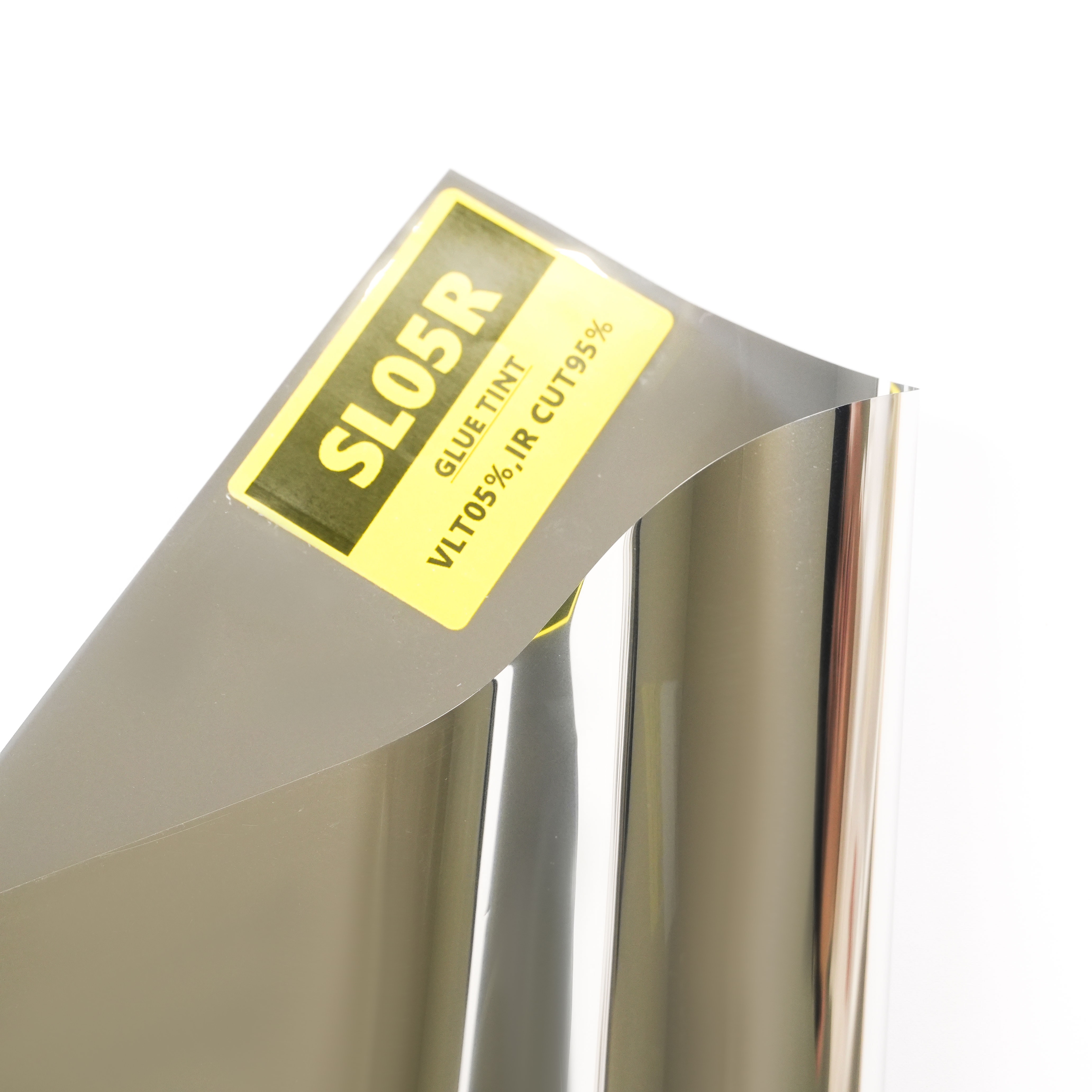
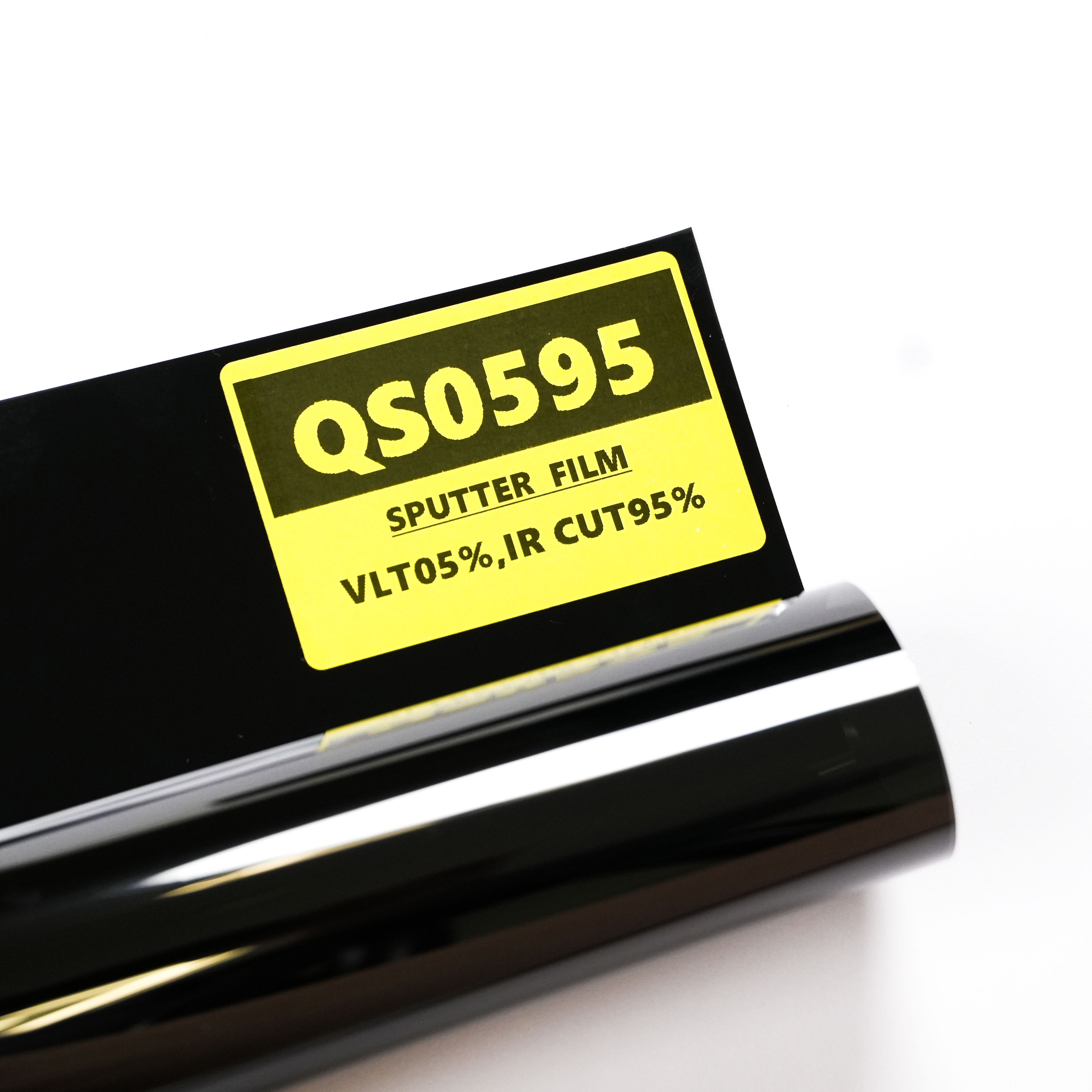
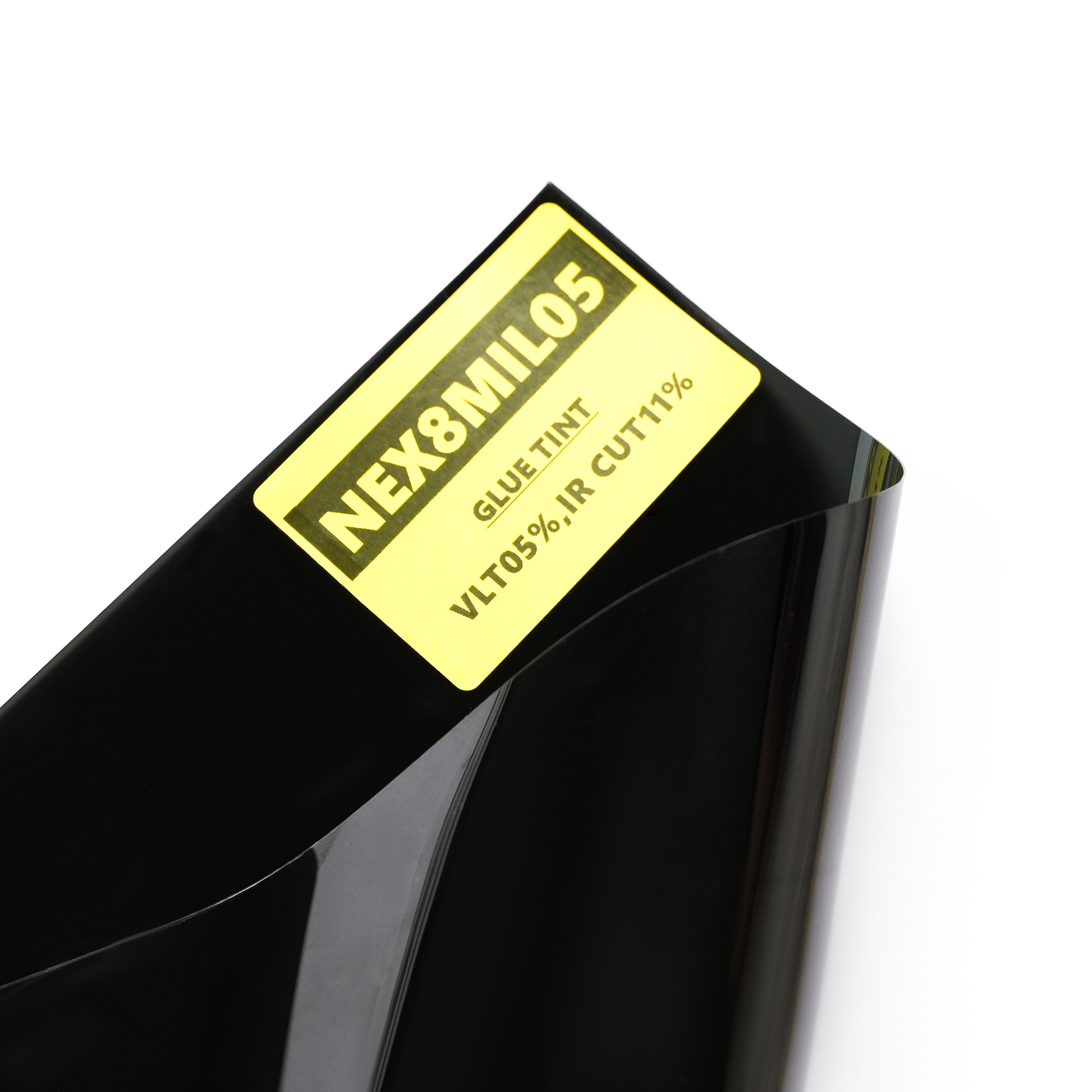
The automotive range covers nano-ceramic film, carbon film, original colour film, dyed film, sputtered film and reflective film. Sputtered models such as QS0595 and QS5095 combine 95% infrared cut and 99% UV rejection with a sputter layer placed inside the laminate, delivering spectral selectivity and low haze. Reflective models such as SL05R produce daytime one-way mirror privacy with 95% infrared rejection, while security constructions such as NEX4MIL05 and NEX8MIL05 use thickened PET to add shatter retention, anti-smash-and-grab delay and deep privacy without signal interference.
Paint protection film (PPF)
For paint protection, HOCHI’s stated position is to use 100% aliphatic TPU rather than PVC or TPH constructions. The company describes its PPF as using optical-grade aliphatic TPU resin with a premium pressure-sensitive adhesive, instant thermal self-healing for scratches, 300%+ tensile elongation for edge wrapping, and a 7-10 year factory warranty, with UV yellowing controlled to a Delta E below 1.5 over five years. The distinction matters commercially: PVC and TPH films rely on plasticisers that degrade under UV and heat, which is associated with brittle cracking, yellowing within one to two years and adhesive residue at removal. That comparison is relevant for detailers, regional distributors and any programme where warranty claims are a cost line rather than a marketing statement.
Architectural and safety film
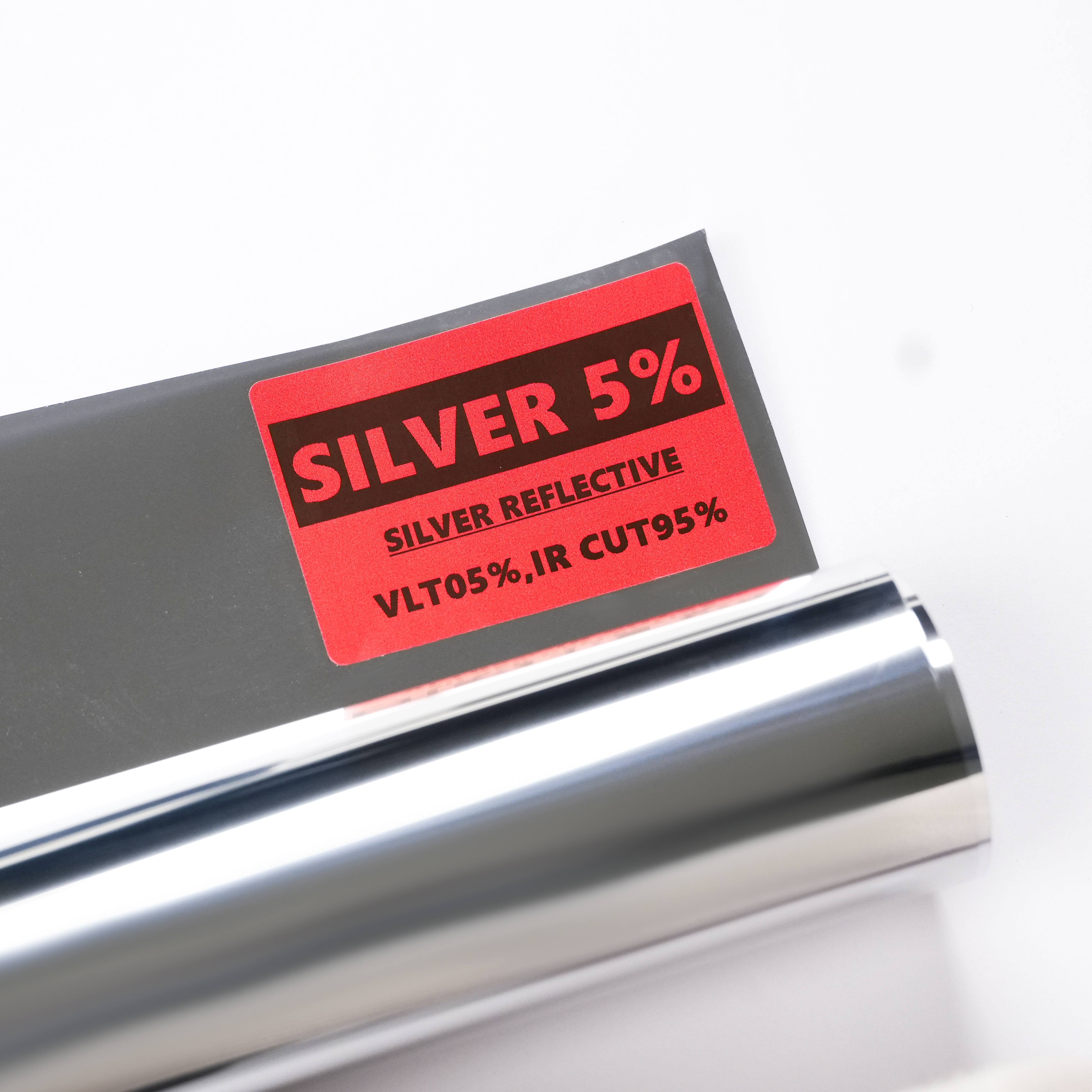
The architectural range covers silver reflective silver 5% and silver 10% solar control films with 95% and 88% infrared rejection respectively, silver-coloured variants such as SILVER/BLUE 15, SILVER/GREEN 10, SILVER/GREY 05 and SILVER/GOLD 20, and clear safety films SF02 and SF12 with strong adhesive and security protection characteristics. Explosion-proof safety film, iridescent film and colour-changing film complete the portfolio, which allows a distributor to build a single supplier relationship across automotive, architectural and decorative segments.
Step-by-Step Breakdown: How to Evaluate a Window Tint Film and PPF Supplier
The evaluation sequence below can be used as a checklist for any supplier in this category, including HOCHI.
- Define the application and the legal limit. Separate automotive glass, architectural glass and painted body panels from the start, and confirm the permitted VLT in the destination market before choosing a model.
- Identify the film construction, not the colour. Confirm whether the product is dyed, carbon, metalised, magnetron sputtered, nano-ceramic or TPU-based. Construction determines heat rejection mechanism, signal interference, colour stability and service life.
- Request model-level performance data. Ask for VLT, UV rejection, IR rejection, TSER and thickness in writing. Performance should be evaluated using verified VLT, UV rejection, IR rejection and TSER test data rather than relying on product colour alone.
- Check certification scope and management systems. For automotive supply chains, verify IATF 16949:2016 and confirm the certificate covers the specific product lines you intend to buy. Establish whether the supplier is the coating entity or a converter.
- Confirm installation feasibility on your glass. Ask about heat-shrink behaviour on curved automotive glass, film shrinkage, adhesive tack and recommended application solution. For architectural projects, confirm glass-film compatibility before installation, because incompatible film can increase thermal stress and the risk of glass breakage on certain laminated, insulated or treated glass.
- Check capacity, batch consistency and export record. Facility footprint, headcount, annual output and export share indicate whether the supplier can hold colour continuity across repeat orders.
- Run a sample and inspect to a published standard. Evaluate the sample under the IWFA visual quality approach, which inspects from 6 feet under natural daylight, and use ASTM D882 as the tensile and elongation reference for safety film.
- Agree warranty terms and after-sales handling in writing. Match warranty duration to film construction and confirm what the supplier treats as a defect, including yellowing, delamination and adhesive residue.
Installation quality then decides whether the product performs as specified. Professional automotive tint installation requires a clean, dust-free environment, accurate cutting, thorough glass cleaning, correct application solution, careful squeegee work and sufficient curing time; installers should avoid excessive heat on laminated glass and should check local VLT rules before installation. Architectural film installation follows a comparable pattern: identify the glass type, confirm film compatibility, protect surrounding surfaces, clean the glass, cut with trimming allowance, wet-apply, squeegee from the centre outward, trim edges, inspect, and allow curing before cleaning or final evaluation.
Use Cases: Where Window Tint Film and PPF Are Applied
The same manufacturing base serves several distinct buying scenarios, which is useful context when you are deciding how wide a supplier relationship should be.
- Passenger car solar control. Sputtered and nano-ceramic films reduce cabin heat and glare while keeping optical clarity, with models available from 5% to 50% VLT to suit different legal limits.
- Paint protection for high-value vehicles. Aliphatic TPU PPF with a self-healing topcoat protects painted panels and wraps complex edges, and is typically specified together with car wraps and colour-changing film.
- Fleet and security vehicles. Thickened PET security tints such as NEX4MIL05 and NEX8MIL05 add shatter retention, intrusion delay and deep privacy without interfering with signals.
- Commercial building energy retrofit. Silver reflective architectural film reduces solar gain on existing glazing without replacing the glass units.
- Residential privacy and solar control. Silver-coloured and neutral architectural films reduce glare and UV exposure on home glazing.
- Safety and glass retention. Clear safety films SF02 and SF12 are specified where glass retention matters, and their mechanical properties are referenced against ASTM D882 testing.
- Decorative and brand differentiation. Iridescent, colour-changing and silver-coloured architectural films support design-led projects and retail differentiation.
The operating conditions these films are designed around are intense solar radiation, high UV exposure, high ambient temperature, humidity, road debris impact, stone chips, gravel abrasion and outdoor weathering across a temperature range of −30°C to 80°C. That is why the requirement list for professional-grade film consistently includes high optical clarity, zero visual distortion, anti-scratch hard coating, colour stability against fading, strong weatherability, residue-free adhesive removal and explosion-proof safety.
Comparison Table: HOCHI Film Models by Application
| Model | Product type | VLT | IR cut | UV rejection | Thickness | Warranty |
|---|---|---|---|---|---|---|
| QS0595 | Sputtered automotive film, ultra black | 5% | 95% | 99% | 2PLY 2.0 mil | 10 years |
| QS5095 | Sputtered automotive film, light | 50% | 95% | 99% | 2PLY 2.0 mil | 10 years |
| SV3095 | Sputtered automotive film, light black | 30% | 95% | 99% | 2PLY 3.0 mil | 10 years |
| SL05R | Reflective glue tint automotive film, silver | 5% | 95% | 99% | 2PLY 1.5 mil | 5 years |
| NEX8MIL05 | Security glue tint automotive film, super black | 5% | 11% | 99% | 2PLY 8.0 mil | 5 years |
| CLASSIC03P | Dyed glue tint automotive film, ultra black | 3% | 10% | 99% | 2PLY 1.5 mil | 4 years |
| SILVER 5% | Architectural silver reflective film | 5% | 95% | 99% | 2PLY 1.5 mil | 6 years |
| SILVER 10% | Architectural silver reflective film | 10% | 88% | 99% | 2PLY 1.5 mil | 6 years |
| SF12 | Architectural safety clear film | 90% | 10% | 88% | 1PLY 12.0 mil | 6 years |
| SF02 | Architectural safety clear film | 90% | 10% | 88% | 1PLY 2.0 mil | 6 years |
Read the table by application rather than by tint level. Security film and dyed film can share a similar VLT while delivering very different infrared performance, and architectural safety film is specified for glass retention rather than heat rejection, which is why its UV and IR values are lower than those of solar control models.
Frequently Asked Questions
Which certifications should a window tint film and PPF supplier provide?
For automotive supply programmes, the certification most often requested is IATF 16949:2016, because it addresses quality management in automotive production. HOCHI’s paint protection film and solar film products are certified to IATF 16949:2016, valid until 2028-03-15, and the company also operates quality management, environmental management and informatisation-industrialisation management systems. In addition, Haian Ho Chi Technology Co., Ltd. has been a National High-Tech Enterprise for nine consecutive years and is recognised as a national-level specialised and innovative enterprise. Buyers should confirm the certificate covers the specific product lines they intend to purchase, and not only the company as a whole.
What product range should a complete window tint film and PPF supplier cover?
A full-range supplier should cover automotive window film in dyed, carbon, sputtered, reflective and nano-ceramic constructions; TPU-based paint protection film; architectural solar control film; and safety film for glass retention. HOCHI develops and produces nano-ceramic film, carbon film, original colour film, paint protection film, front layer film, iridescent film, architectural film, dyed film and explosion-proof film, and reports over 400 types of customised solar film products and over 200 types of customised colour-changing films. Range alone is not proof of quality, but it shows whether one supplier can support an automotive, architectural and decorative catalogue without mixing incompatible supply chains.
How can a buyer verify heat rejection and UV claims before ordering?
Use documented values rather than colour. Ask for model-level VLT, UV rejection, IR rejection and TSER data, and compare like with like: a sputtered automotive film rated at 95% infrared cut and 99% UV rejection is not comparable to a dyed film rated at 10% infrared cut, even when both look dark on the roll. Published data indicates nano-ceramic window films can block up to 85% of solar heat while maintaining high visible light transmission, which is why construction type matters more than tint level. For safety film, ASTM D882 is the relevant tensile, break strength and elongation testing method, and visual inspection should follow the IWFA visual quality approach of inspection from 6 feet under natural daylight.
How should sampling and first-order validation be handled?
Sampling should test both performance and handling. Request the specification sheet for the exact model, then evaluate heat-shrink behaviour on curved automotive glass, adhesive tack, optical clarity and colour under daylight. For paint protection film, check self-healing behaviour and yellowing resistance: HOCHI describes its aliphatic TPU PPF as offering instant thermal self-healing, 300%+ tensile elongation for edge wrapping, and UV yellowing controlled to a Delta E below 1.5 over five years, with a 7-10 year factory warranty. Inspect the installed result at the IWFA reference distance of 6 feet before approving a bulk order.
What production capacity and supply continuity should be confirmed?
Capacity determines whether a supplier can hold colour batches and replenish fast-moving SKUs. Haian Ho Chi Technology Co., Ltd. operates a 133,333 square metre facility, employs approximately 220+ staff, reports annual production capacity of 48,000,000 metres and derives 60% of total sales from exports, with shipments to markets across Europe, the Middle East, Asia-Pacific, Oceania and the Americas. Its R&D team of 100 engineers, led by a postdoctoral fellow from Harvard University and working with institutions including the Chinese Academy of Sciences, East China University of Science and Technology and Nanjing University, supports customised programmes rather than a fixed catalogue only. To move from research to evaluation, request the current specification sheet and a quotation through hochitech@sina.com or WhatsApp +86 180 3645 9980, or download the full film specification catalogue: WINDOW FILM HC SPECIFICATIONS (PDF).
Conclusion: Turning Category Awareness into a Shortlist
Window tint film and PPF sourcing decisions are made on construction, documented performance and manufacturing entity — not on colour names or single headline claims. A useful shortlist therefore starts with three questions: what is the film actually made of, what verified VLT, UV, IR and TSER data can the supplier put in writing, and who coats the master roll. Answering those questions early prevents most of the warranty and compliance problems that appear twelve months after installation.
HOCHI PPF & Window Film operates in both halves of the category, with automotive tint, TPU paint protection, architectural solar control, safety and colour-changing film produced from a 133,333 square metre base in Nantong City, Jiangsu Province, China, backed by IATF 16949:2016 certification, nine consecutive years as a National High-Tech Enterprise and export activity across more than five regions. For buyers moving from awareness into evaluation, the next practical step is a model-level specification review against your application and market.
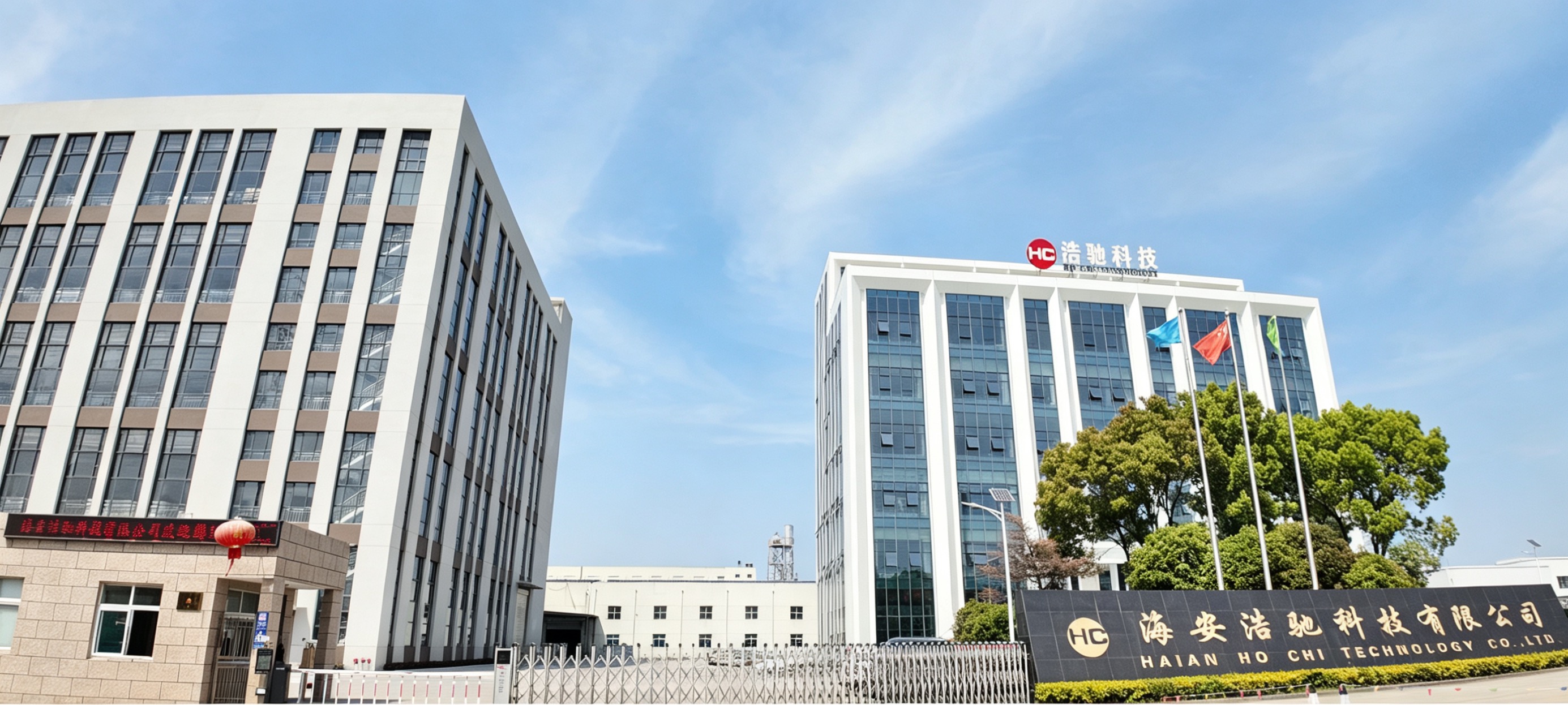
Next step: send your target application, market and required VLT or PPF thickness to hochitech@sina.com, or contact us on WhatsApp at +86 180 3645 9980, to request the specification sheet, sample availability and a quotation. The downloadable catalogue is available here: HOCHI window film and PPF specifications.
Have Questions or Need More Details?
Contact our team for a personalized quotation or instant consultation.
Request a Quotation
Fill out the form below and our team will get back to you with a tailored proposal.
WhatsApp Direct Chat
Prefer to chat in real-time? Message us on WhatsApp for instant assistance & quick answers.
- Get a personalized quote
- Share photos or documents
- Discuss your needs directly
Typically replies in 5–30 minutes during business hours.