
Cam Indexer Application Guide: DFH Hollow Flange Outputs for Bottling, Capping and Labeling Lines

A cam indexer on a bottling, capping or labeling line does one thing: it turns a continuously rotating motor into a fixed sequence of move-and-dwell steps, so that every station acts on a container that is standing still. The DFH hollow flange cam indexer from HONEPAN is one of the output configurations built for that task. It is a precision indexing unit and intermittent motion mechanism whose output is a hollow flange, offered in eleven model sizes from 45DFH to 250DFH, with positioning accuracy of ±30 or ±15 arcseconds and repeat positioning accuracy of ±10 or ±4 arcseconds.
This guide is written for the people who have to make that unit fit a real line: the machine builder choosing a model, the project engineer configuring the flange, and the buyer who has to justify the choice internally. It explains what the DFH is, how to walk from a station map to a model designation, where the series sits among HONEPAN's other output types, and which questions are still open at quotation stage.
Problem Definition: Where Intermittent Motion Actually Fails on a Bottling Line
Most bottling, capping and labeling problems that get blamed on the indexer are really station-mapping problems. Three of them recur.
1. Dwell time is set by the wrong station
A rotary filling, capping or labeling platform has a fixed number of stops. Between two stops the platform moves; while it is stopped, the station works. If the dwell is sized around an easy station such as a no-container/no-fill sensor instead of around the hardest one — typically torque-controlled capping or label wrap — the line will run, but it will throw rejects. The indexer does not create dwell. It only delivers the move-and-dwell pattern the drive train was configured for. Getting the station map right before ordering is therefore the single highest-value hour in the project.
2. Position error accumulates where the container is held
Accuracy on an indexer is stated in arcseconds, and one arcsecond is 1/3600 of a degree. Two numbers matter and they are not interchangeable. Positioning accuracy describes how close the output gets to the commanded station on a single move. Repeat positioning accuracy describes how consistently it returns to the same station cycle after cycle. Repeat accuracy is the number that governs whether a capping head hits the same point on the neck finish every time, and whether a label lands inside its tolerance band on a run of thousands of bottles.
3. The centre of the platform is needed for something else
On many bottling and labeling platforms, the middle of the rotary table has to stay open — for a shaft, for routing, for a fixed centre column that the stations reference. A solid flange output closes that space. The DFH designation answers this directly: the output is a flange, and its centre is hollow rather than solid, so the middle of the flange can remain a pass-through instead of a dead zone.
Two further constraints are usually discovered late. First, a cam indexer is not a standalone drive: it must be used with a motor, a reducer, an induction cam and an induction switch, and those four items have to be specified together with the indexer rather than bolted on afterwards. Second, certain bottling and filling applications carry special requirements including explosion-proof and leak-proof capability, which changes both the housing and the sealing approach and cannot be retrofitted cheaply.
Industry Background: Why Mechanical Indexing Still Sets Packaging Line Rhythm
The cam indexer category is not a niche curiosity in packaging automation. Straits Research values the global cam indexer market at USD 1.00 billion in 2025 and projects USD 1.07 billion in 2026, with Asia Pacific holding a 53.00% market share in 2025. QYResearch, working from a narrower rotary-indexer definition, records 190,500 units sold globally in 2024 at an average selling price of USD 2,589 per unit. The gap between the two figures is a definitional one — the cam indexer figure and the rotary indexer figure do not cover an identical product set, and buyers should not treat them as interchangeable.
For a bottling or labeling project, the practical consequence of that supply structure is choice. There are many suppliers, several output configurations, and a wide spread between a catalogue unit and a configured one. That is why the selection logic below is built around the station map rather than around a model number.
HONEPAN — Zhucheng HonePan Automation Machinery Plant — is a manufacturer established in 2007 that specialises in the research, development and manufacturing of cam indexers and CNC rotary tables. Manufacturing is spread across facilities in Zhucheng City, Shandong Province and Kunshan City, Jiangsu Province, covering a total area of 101,000 square metres, with approximately 130 employees, a 15-engineer R&D team, more than 40 product patents, ISO 9001 quality management system certification, and more than 90 CNC machining centres. Stated annual output is 36,000 units, and export business accounts for approximately 30% of total sales, with India, the USA, Southeast Asia, Latin America and Europe listed as major markets. Those figures describe the supplier behind the DFH; they do not by themselves prove that the DFH suits a given line, which is what the rest of this guide is about.
Detailed Solution: What the DFH Hollow Flange Configuration Provides
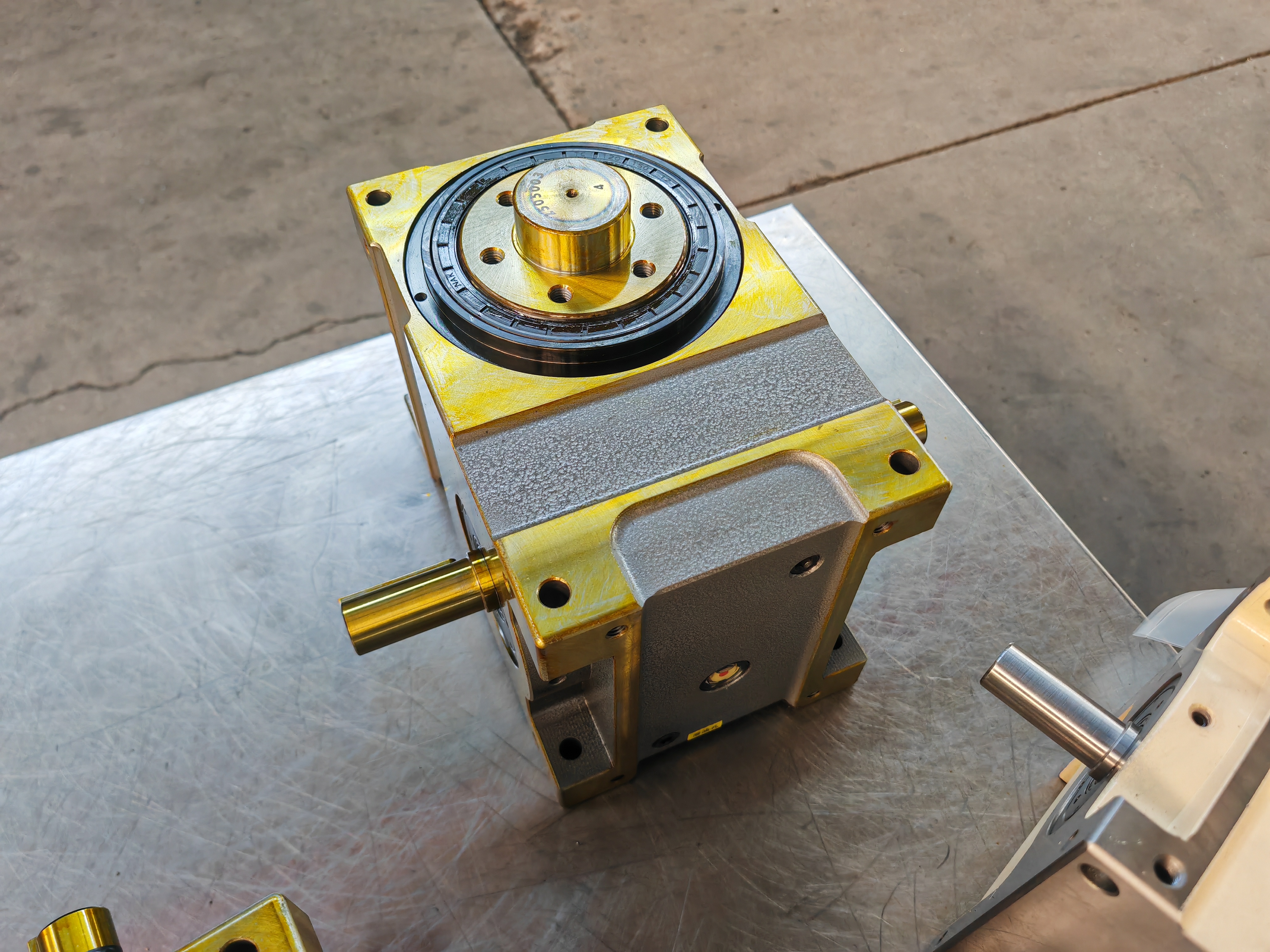
The Hollow Flange (DFH) cam indexer is a cam indexer, cam divider and cam driven system that functions as a precision indexing unit and intermittent motion mechanism. Four attributes decide whether it fits a bottling, capping or labeling station.
Output form: hollow flange
The output is a flange with an open centre. In practice this is the difference between a platform that can only carry containers and a platform that can carry containers while something passes through its axis. Where the machine design already assumes a centre column, a through-shaft or a service route down the middle of the rotary table, a solid-output unit forces a redesign of the platform. The DFH removes that redesign.
Accuracy: two published grades
Positioning accuracy is ±30 arcseconds or ±15 arcseconds, and repeat positioning accuracy is ±10 arcseconds or ±4 arcseconds. The two-grade structure exists because not every station on a line needs the same tolerance. A capping head reacting to torque, or a label applicator placing a wrap on a curved surface, usually justifies the tighter grade. A transfer or accumulation station generally does not, and specifying the tighter grade everywhere raises cost for no functional gain. The correct method is to find the single tightest station on the platform and specify from that station, not from the average.
Materials: a specified alloy set, not a generic steel claim
The DFH is made from carbon steel together with alloy grades drawn from 42CrMo, SCM440, 4140 and 4142; 40Cr, SCR440 and 5140; 20CrMnTi, SNCM220 and 8620; and 18CrMoV. These are recognised grade designations rather than marketing names. The 42CrMo / SCM440 / 4140 / 4142 group is a through-hardening alloy steel family used where core strength and fatigue resistance matter; the 20CrMnTi / SNCM220 / 8620 group is a case-hardening family whose role is a hard, wear-resistant surface over a tough core. For a buyer, the useful question is not "which steel" but "which grade is specified for the cam and roller contact surfaces, and is that stated on the drawing I approve".
Model range: eleven sizes on a shared numbering ladder
DFH model designations are 45DFH, 60DFH, 80DFH, 100DFH, 110DFH, 125DFH, 140DFH, 150DFH, 180DFH, 200DFH and 250DFH. The numeric steps match the steps used across HONEPAN's flange series, so a project that migrates from a DF flange output to a DFH hollow flange at the same nominal size is reading from the same ladder rather than from a separate scale. The smallest designation in the DFH series is 45DFH and the largest is 250DFH.
What the DFH is not
The DFH is not a servo replacement in disguise, and it is not a drop-in for every rotary platform. It delivers a fixed mechanical move-and-dwell pattern; if the line needs variable station counts or programmable indexing positions mid-run, a different architecture is required. It is also an output configuration, not a complete drive package — the motor, reducer, induction cam and induction switch sit outside it and must be selected as a set.
Step-by-Step Breakdown: From Station Map to a Confirmed DFH Order
The sequence below is the order that keeps rework out of a bottling, capping or labeling project. Each step produces a document that the next step depends on.
Step 1 — Write the station map before touching a catalogue
List every stop on the platform, the operation performed there, and the time that operation needs. Include the idle stops. The count of stops and the dwell requirement together define the indexing angle the unit must be built around — the move portion of the cycle versus the dwell portion. This is the input that everything else follows from.
Step 2 — Identify the tightest tolerance on the platform
Find the station where misplacement produces a reject rather than a cosmetic defect. On most bottling and capping lines this is the capping head; on labeling lines it is the label placement point. That station's tolerance decides whether the project needs the ±30 arcsecond positioning grade with ±10 arcsecond repeat, or the ±15 arcsecond positioning grade with ±4 arcsecond repeat.
Step 3 — Decide whether the flange centre must be open
If the machine design routes anything through the axis of the rotary platform, the output must be hollow and the DFH is the relevant family. If the centre is free, a solid flange output remains available at the same nominal size and the decision becomes purely a platform-design one. Making this call at step 3 rather than at drawing approval avoids a platform redesign late in the build.
Step 4 — Walk the size ladder from 45DFH upward
Start at the smallest designation that the platform diameter and load allow and step upward only when a constraint forces it. The DFH ladder runs 45DFH, 60DFH, 80DFH, 100DFH, 110DFH, 125DFH, 140DFH, 150DFH, 180DFH, 200DFH and 250DFH. Oversizing to "be safe" adds rotating mass and cost without improving accuracy; undersizing shows up as deflection at the outer edge of the platform, not at the axis.
Step 5 — Fixed the drive train as a single package
The unit must be used with a motor, a reducer, an induction cam and an induction switch. Size them together. A reducer chosen after the indexer has been ordered will either limit the achievable cycle rate or force a change of input speed that invalidates the dwell calculation from step 1.
Step 6 — State the environment explicitly
Typical packaging and filling duty is described as heavy load, food grade and high speed, and those three words point at different design decisions: heavy load at the bearing and cam contact, food grade at lubrication and surface finish, high speed at balance and at the induction switch's ability to keep up. Where the application carries additional requirements such as explosion-proof and leak-proof capability, state it at enquiry rather than at drawing approval.
Step 7 — Approve the drawing and the first article together
The drawing should state the model designation, the hollow flange output, the accuracy grade, the material grades for cam and roller, and the mating dimensions of the platform. The first article should be checked against the tightest station identified in step 2, not against the easiest one.
Use Cases: Where a DFH Fits on Real Packaging Lines
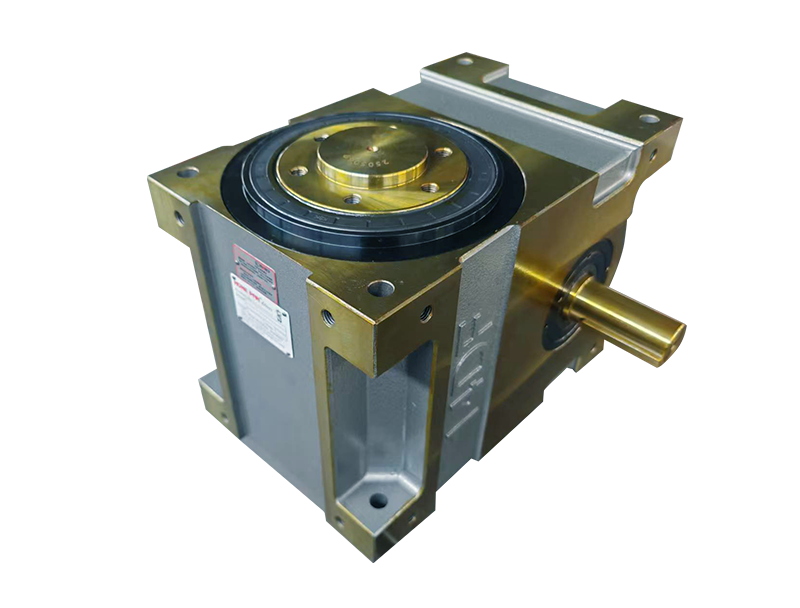
Automatic filling machines
The indexer positions containers under the filling nozzles, moves them on, and holds them still long enough for the fill to complete. On an automatic filler the container count per cycle and the fill time per container set the dwell, and the nozzle pattern sets the station count. A hollow flange becomes useful when the filler's centre column or product route occupies the axis of the platform.
High-speed filling lines
At high cycle rates, the move portion of the cycle has to be short and the transition has to stay controlled. This is where the repeat accuracy grade matters most: at speed, a small inconsistency at the output becomes a visible defect at the nozzle or the cap chute, and the reject rate moves before any alarm does.
Bottling and capping machines
Capping is the station that most often drives a project to the tighter accuracy grade, because the cap has to engage the thread cleanly under torque. On a combined bottling and capping machine the platform carries both operations, and the dwell has to satisfy capping rather than filling. DFH series units are documented for filling and capping machine applications in the beverage, food processing and pharmaceutical machinery sectors.
Labeling and filling combo lines
On a labeling and filling line the same platform performs two operations with different tolerance needs. The label placement point usually needs the tighter grade while the fill station does not. Because the indexer delivers one accuracy class to the whole platform, the specification is set by the harder of the two — which is normally the label.
Pharmaceutical liquid filling
HONEPAN cam indexers are applied in pharmaceutical and medical packaging machinery, including oral liquid filling machines, eye drops filling machines, capsule filling machines, pharmaceutical cartoning machines, syringe assembly, printing and fitting machines, indwelling needle assembly machines, glass bottle ink printing machines, and capsule making machines. In these applications the DFH offers precise positioning and indexing while supporting the workbench, and the food-grade duty description applies to the lubrication and finish decisions.
Comparison Table: DFH Against Neighbouring Output Configurations
The table below uses published series-level data only. It exists to answer one question — is the hollow flange the right output for this platform, or does a different output family already cover the requirement.
| Series | Output form | Positioning accuracy | Repeat positioning accuracy | Documented line focus |
|---|---|---|---|---|
| DFH | Hollow flange | ±30" or ±15" | ±10" or ±4" | Packaging, filling and assembly lines; beverage, food processing, pharmaceutical, cosmetics and stationery machinery |
| DF | Flange (solid) | ±30" or ±15" | ±10" or ±3" | Liquid, paste, powder, granule and sauce filling; beverage, edible oil, bottled water, aseptic and pharmaceutical liquid filling |
| DS | Shaft | ±30" or ±15" | ±10" or ±2" | Filling and capping machines, labeling and filling lines, sealing-filling combos, food processing machinery |
| DFS | Shaft and flange | ±30" or ±15" | ±10" or ±5" | Pharmaceutical liquid, cosmetic tube and disinfectant filling; filling and capping; labeling and filling |
| DT | Table | ±30" or ±15" | ±10" or ±5" | Automatic and high-speed filling, gravimetric and aseptic filling, pharmaceutical liquid filling |
| P | Parallel | ±60" | 60" | Filling machines and automatic assembly lines; 1 to 16 stations |
Read the table as a shortlist filter, not as a performance ranking. The DFH carries the same positioning grade as most other HONEPAN output families and a tighter repeat grade than DFS, DT and P; the DS series carries the tightest published repeat figure. What separates DFH is the output form, so if the platform does not need an open centre, the decision moves to the families below it.
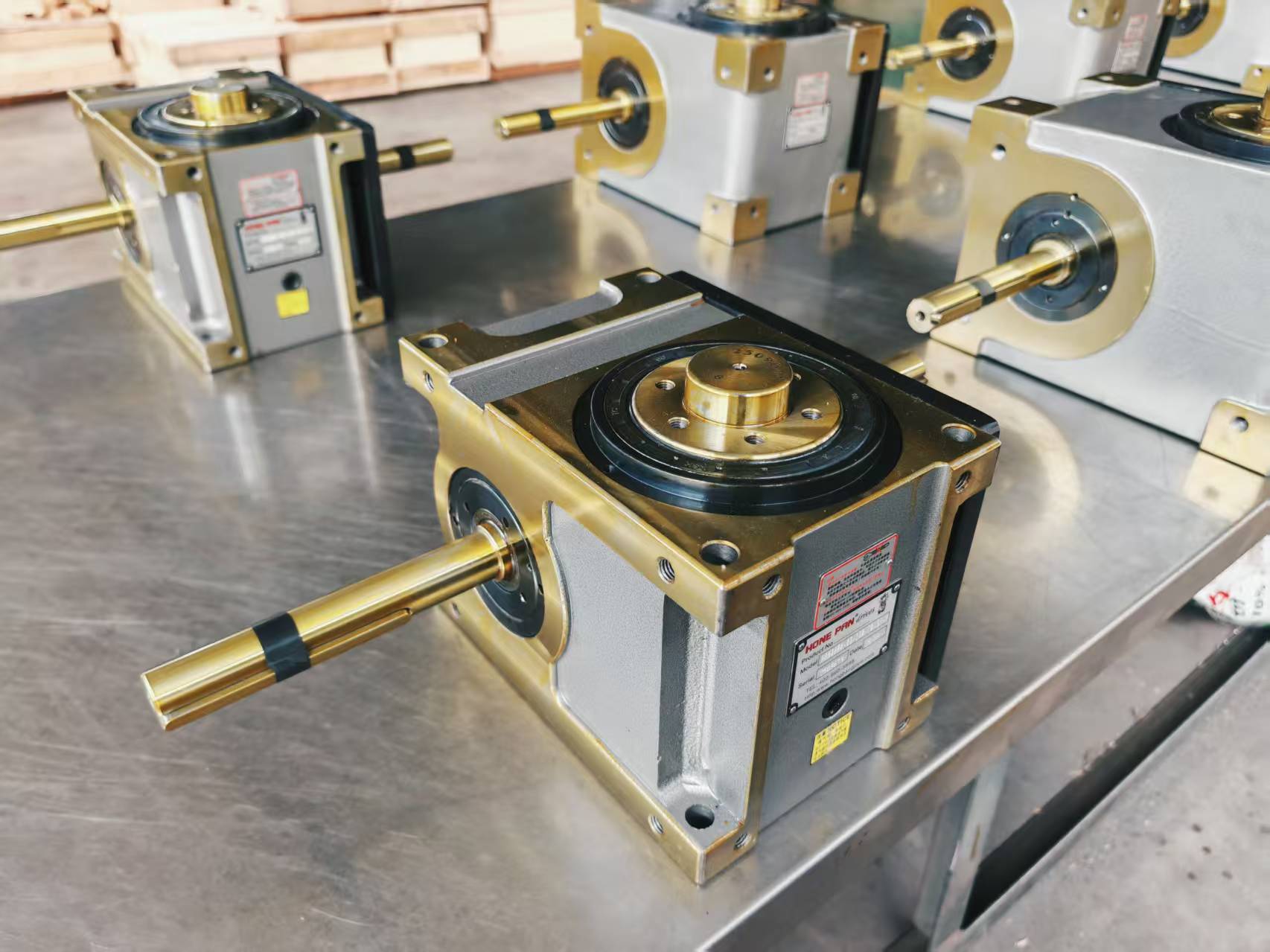
FAQ: DFH Hollow Flange Cam Indexers for Bottling, Capping and Labeling Projects
Does a DFH cam indexer come with the documentation a food or beverage line needs?
HONEPAN holds ISO 9001 quality management system certification, was among the first in the industry to obtain it, and holds more than 40 product patents. That is a quality-management credential for the manufacturing process, not a project-specific certificate for a bottling or labeling installation. Documentation requirements that depend on the destination market and on the machine the indexer is built into should be raised at enquiry and listed on the purchase order, so that what is supplied matches what the line's acceptance process will ask for.
What accuracy can the DFH hold, and which materials is it built from?
The Hollow Flange (DFH) cam indexer offers positioning accuracy of ±30 or ±15 arcseconds and repeat positioning accuracy of ±10 or ±4 arcseconds. It is made from carbon steel together with alloy grades from 42CrMo, SCM440, 4140 and 4142; 40Cr, SCR440 and 5140; 20CrMnTi, SNCM220 and 8620; and 18CrMoV. Model designations run 45DFH, 60DFH, 80DFH, 100DFH, 110DFH, 125DFH, 140DFH, 150DFH, 180DFH, 200DFH and 250DFH.
How should a buyer budget for a DFH unit?
HONEPAN does not publish unit pricing for the DFH series, so a project budget cannot be built from a catalogue figure. As an external reference point, QYResearch reports a global rotary indexer average selling price of USD 2,589 per unit in 2024 across 190,500 units — a market average for a broader product definition, not a DFH price. Within a specific quotation, the drivers are the model size on the 45DFH to 250DFH ladder, the accuracy grade, the hollow flange configuration, and whether the motor, reducer, induction cam and induction switch are supplied as a matched set or specified separately.
Can a DFH unit be validated before the platform is built?
Yes, and it should be. HONEPAN offers a range of standard products as well as custom-made products according to specific requirements, including non-standard cam mechanism assemblies and motor-reducer selection support. A validation request should carry the station map, the tightest station tolerance, the platform mating dimensions, and the environment statement — heavy load, food grade or high speed, plus any explosion-proof or leak-proof requirement. That package lets the supplier confirm the designation and the accuracy grade against the actual machine rather than against a generic catalogue entry.
What lead time should a bottling line project plan for?
No published lead time is available for the DFH series, so the figure has to come from a quotation based on model size, quantity and configuration. What can be stated is the production context behind the order: HONEPAN operates manufacturing facilities in Zhucheng City, Shandong Province and Kunshan City, Jiangsu Province covering 101,000 square metres, with approximately 130 employees, more than 90 CNC machining centres and a stated annual output of 36,000 units. To start that conversation, send the station map and platform drawing to hp@cam-indexer.cn or reach the team on WhatsApp at +86 157-6300-0588 for a sample discussion and a configured quotation.
Conclusion: Choose the Output First, Then the Model
The DFH hollow flange cam indexer solves a specific problem on bottling, capping and labeling lines: it delivers a controlled move-and-dwell cycle while leaving the centre of the flange open. Everything else about the selection follows from the station map. Fix the number of stops and the dwell, find the tightest tolerance on the platform, decide whether the axis must stay open, and then walk the ladder from 45DFH upward. Specify the accuracy grade from the hardest station rather than the easiest, size the motor, reducer, induction cam and induction switch as one package, and state the environment — heavy load, food grade, high speed, and any explosion-proof or leak-proof requirement — at enquiry rather than at drawing approval.
If the platform centre is free, the hollow flange is not the answer, and a solid flange, shaft, table or parallel output may serve better at the same nominal position on the ladder. Deciding that early is cheaper than discovering it at first article.
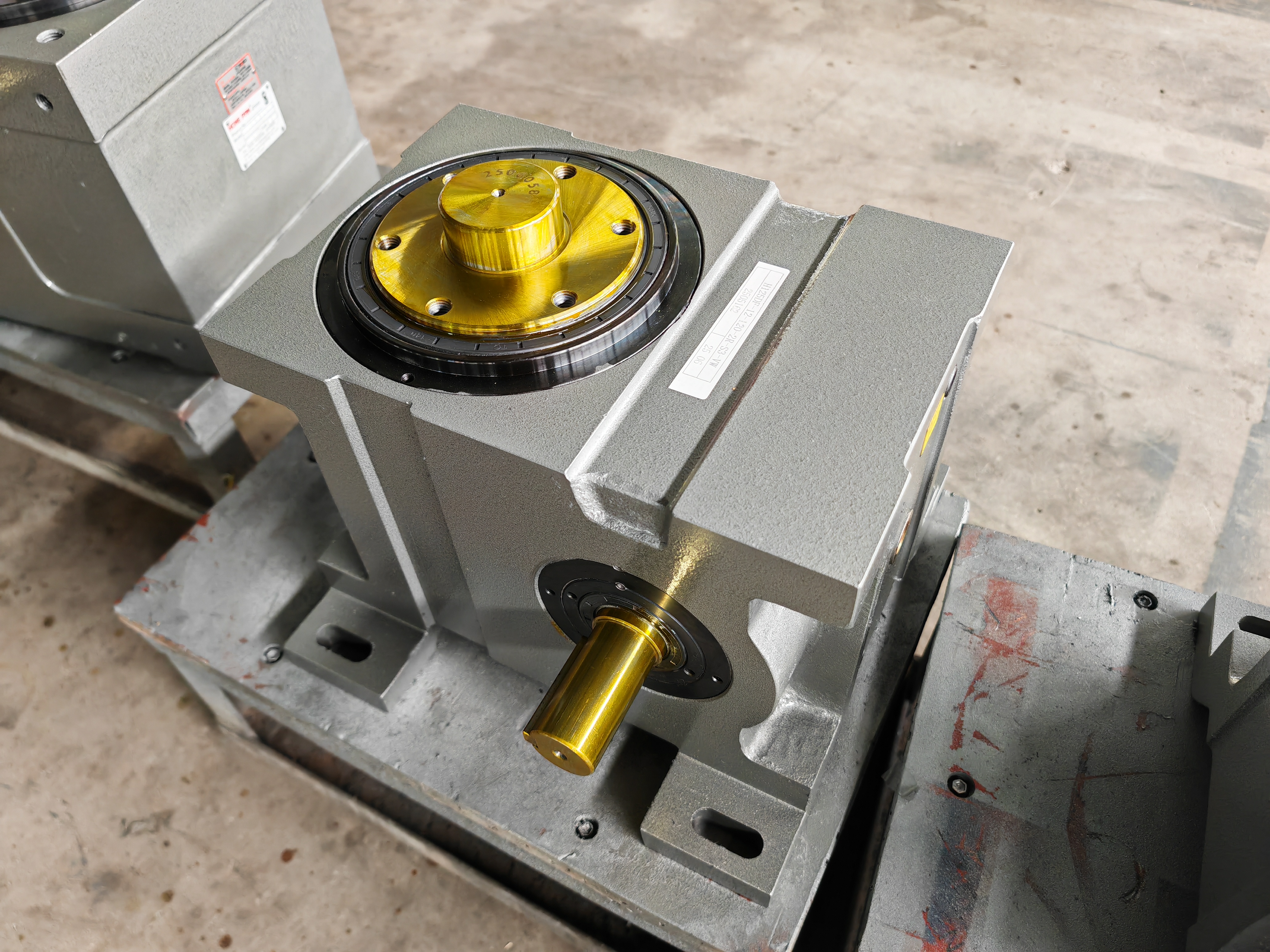
Next step: match a DFH to your line
Zhucheng HonePan Automation Machinery Plant (HONEPAN) — established 2007, manufacturer of cam indexers and CNC rotary tables, based at No. 8 HonePan Road, Zhenxi Industrial Park, Huanghua Town, Zhucheng City, Shandong Province, China.
Email: hp@cam-indexer.cn | Tel: +86 157-6300-0588 | WhatsApp: +86 157-6300-0588 | Website: www.camindexing.com
Download the product catalogue for the full model and configuration list: HONEPAN Cam Indexer Catalogue (PDF).
Have Questions or Need More Details?
Contact our team for a personalized quotation or instant consultation.
Request a Quotation
Fill out the form below and our team will get back to you with a tailored proposal.
WhatsApp Direct Chat
Prefer to chat in real-time? Message us on WhatsApp for instant assistance & quick answers.
- Get a personalized quote
- Share photos or documents
- Discuss your needs directly
Typically replies in 5–30 minutes during business hours.