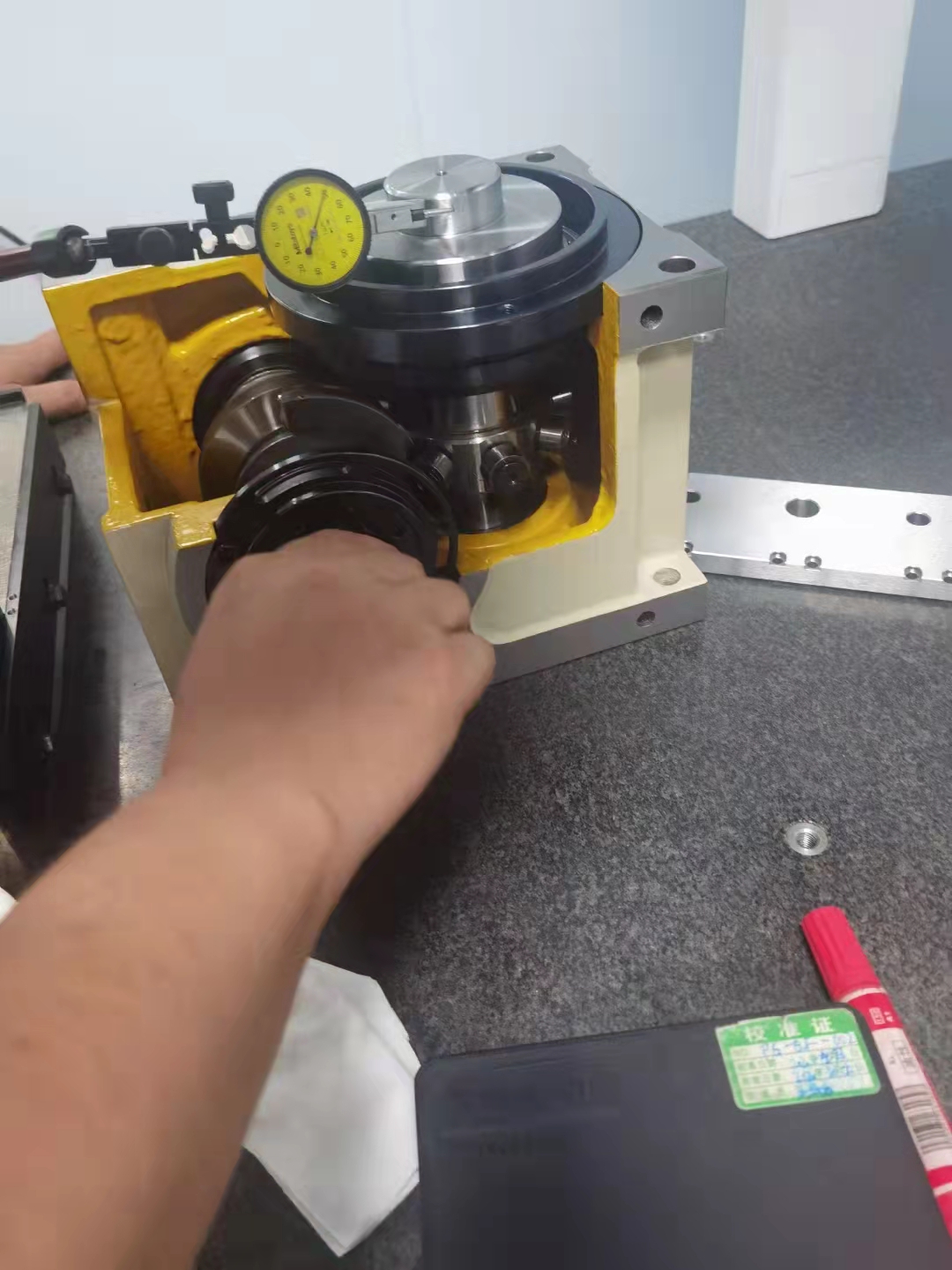
Cam Indexer DS vs. DF vs. DT: Shaft, Flange and Table Output Compared
Cam Indexer DS vs. DF vs. DT: Shaft, Flange and Table Output Compared
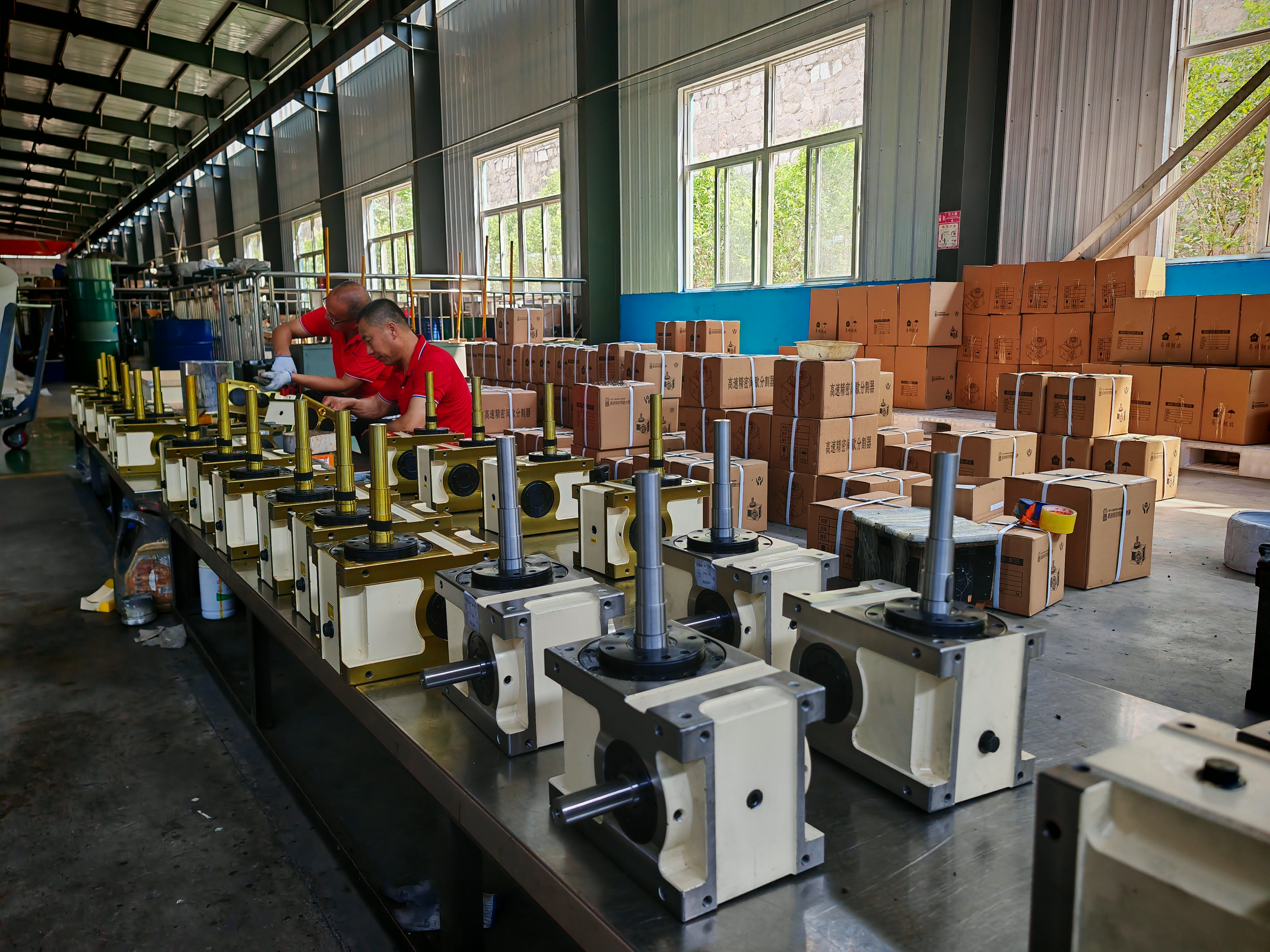
When automation engineers compare cam indexers, they often ask about torque, speed or supplier reputation before considering a more basic question: which output configuration should the machine use? In the HONEPAN product range, three output groups cover most filling, packaging and assembly requirements. DS is the Cam Indexer Shaft Output family, DF is the Cam Indexer Flange Output family, and DT is the Cam Indexer Table Output family. All three are roller gear cam type indexing units, but their model spans, station ranges and published repeat positioning specifications differ in ways that affect machine layout. This comparison uses HONEPAN model designations and published specs to help buyers evaluate the right output family during the research and supplier evaluation stage.
Why output selection is a constraint problem, not just a mounting detail
A cam indexer converts continuous motor rotation into precise intermittent output motion. In most automated lines, that output must be delivered to a tooling flange, a rotary turret, a star wheel, a dial table or a connected driveshaft. The output style of the indexer therefore influences how the rest of the mechanical package is designed, and changing it after the machine frame is built can require rework beyond the indexer itself.
For industrial buyers at the Research and Evaluation stage, the practical question is not whether a roller gear cam indexer is accurate enough, but which output interface is compatible with the machine architecture and with the accuracy value that the process requires. Comparing the HONEPAN DS, DF and DT families by catalog facts helps here because the company lists different model ranges, a different minimum station count for DT, and different repeat positioning values for each family.
Industry background relevant to buyers
Cam indexers are core functional components in automated equipment that converts continuous motion into stepping motion while providing stable, high torque transmission. Independent industry analysis cited by Vertex AI Search estimated the global globoidal cam indexer market at roughly USD 490 million in 2024. In the broader rotary indexer category, Market Research Future projects growth from USD 1.812 billion in 2025 to USD 2.904 billion by 2035, at a compound annual growth rate of 4.83 percent. The same report identifies Asia-Pacific as the largest and fastest-growing region, supported by investment in automotive and electronics manufacturing. For a cam indexer buyer, those signals point to a market in which output configuration, delivery reliability and documented accuracy become more important as line speeds rise.
Precision requirements for automated production are typically expressed in small angular units and, in some industry references, micrometer-level positioning error. This makes the numeric accuracy data on a datasheet a meaningful screening criterion before quotes are compared.
What DS, DF and DT designations mean
HONEPAN groups cam indexer output styles by model suffix. The suffix does not alone tell a buyer how much load can be carried, but it identifies the mechanical output family:
- DS = Cam Indexer Shaft Output.
- DF = Cam Indexer Flange Output.
- DT = Cam Indexer Table Output.
The following section lists the facts that are verifiable from HONEPAN published product data for each output family.
Cam Indexer Shaft Output DS: model range and accuracy specifications
The HONEPAN Cam Indexer Shaft Output (DS) family covers model designations from the compact 32DS up to the 200DS. The complete DS model designation list is 32DS, 38DS, 45DS, 60DS, 63DS, 70DS, 80DS, 83DS, 100DS, 110DS, 125DS, 140DS, 150DS, 170DS, 180DS and 200DS, giving buyers 16 size points in this output group.
HONEPAN catalog data for the Shaft Output family lists an available number of stations from 2 to 196 and an indexing angle range from 60 to 360 degrees. The positioning accuracy line is ±30″±15″ and the repeat positioning accuracy line is ±10″±2″. Because a shaft output is often selected when downstream mechanisms are coupled around a rotating centreline, the 2-station starting point can be useful for oscillating or two-position transfer motions as well as higher station counts.
Documented application areas for DS
In HONEPAN product data, the DS series is associated with liquid filling machines, paste and powder filling machines, granule filling machines, sauce fillers, beverage fillers, edible oil filling machines, bottled water production lines, automatic filling machines, high-speed filling lines, gravimetric fillers, aseptic filling systems, pharmaceutical liquid fillers, filling and capping machines, labeling and filling lines, food processing machinery and related filling equipment.
Cam Indexer Flange Output DF: model range and accuracy specifications
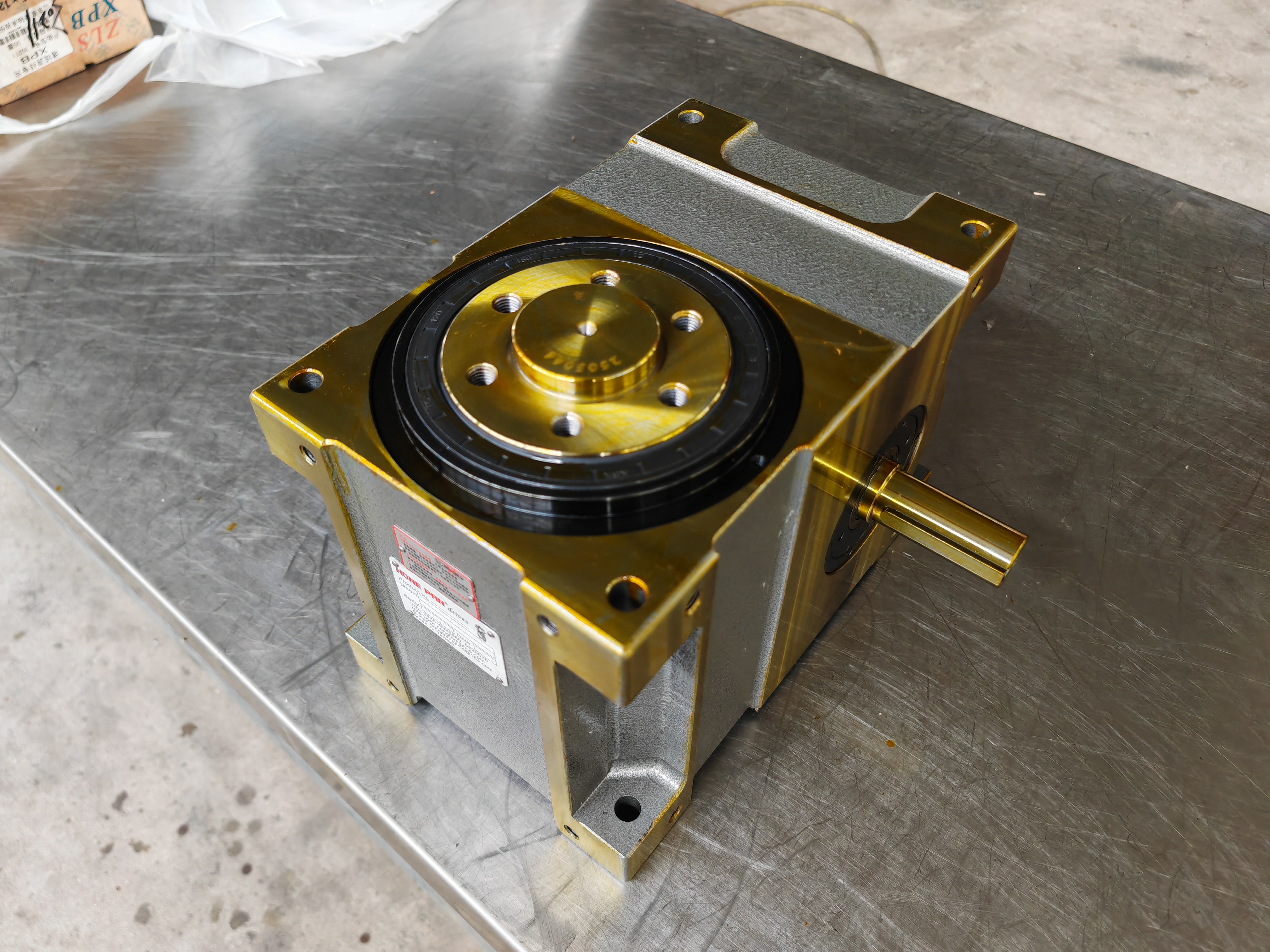
The HONEPAN Cam Indexer Flange Output (DF) family includes model designations from the smaller 38DF to the larger 350DF. The complete DF model designation list is 38DF, 45DF, 60DF, 63DF, 70DF, 80DF, 100DF, 110DF, 125DF, 140DF, 150DF, 180DF, 200DF, 250DF and 350DF, providing 15 size points for flange-style output selection.
HONEPAN catalog data for the DF family lists an available number of stations from 2 to 196 and an indexing angle range from 60 to 360 degrees. The positioning accuracy line is ±30″±15″ and the repeat positioning accuracy line is ±10″±3″. The availability of small starting models such as 38DF can be relevant when machine space is limited and the load can be handled by a more compact flange output unit.
Documented application areas for DF
In HONEPAN product data, the DF series is associated with liquid filling machines, paste and powder filling machines, beverage fillers, edible oil filling machines, automatic filling machines, pharmaceutical liquid fillers, cosmetic tube filling machines and disinfectant filling equipment. These categories show why flange output indexers are commonly evaluated in liquid packaging and filling projects.
Cam Indexer Table Output DT: model range and accuracy specifications
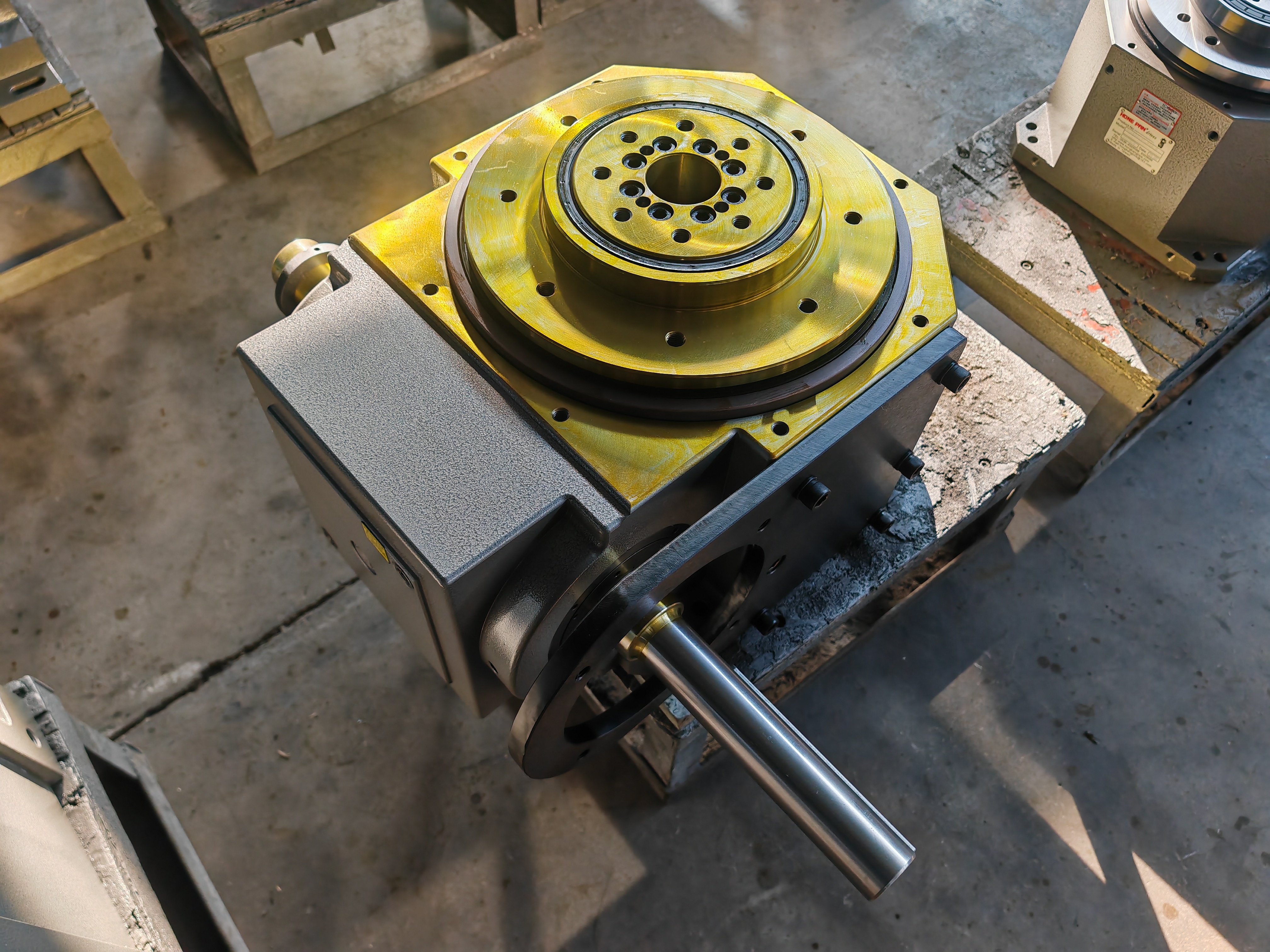
The HONEPAN Cam Indexer Table Output (DT) family uses model designations from 80DT to 350DT. The complete DT model designation list is 80DT, 110DT, 140DT, 180DT, 200DT, 210DT, 250DT and 350DT, giving 8 table-output size points to evaluate.
The catalog data for the DT family lists an available number of stations from 4 to 196 and an indexing angle range from 90 to 360 degrees. Its positioning accuracy line is ±30″±15″ and its repeat positioning accuracy line is ±10″±5″. The 4-station minimum makes this family a natural starting point when the application is a rotary indexing dial rather than a two-position shaft drive.
Documented application areas for DT
In HONEPAN product data, the DT series is associated with automatic filling machines, pharmaceutical liquid fillers, cosmetic tube filling machines, filling and capping machines, labeling and filling lines, food processing machinery, cosmetics and daily chemical machinery, stationery machinery and printing-related filling lines. The same family is shown in HONEPAN material as a roller gear cam index unit and as a rotary table oriented configuration.
Materials common to DS, DF and DT
HONEPAN lists the same material groups for the Shaft Output, Flange Output and Table Output series. The material list includes carbon steel, 42CrMo/SCM440/4140/4142, 40Cr/SCR440/5140, 20CrMnTi/SNCM220/8620 and 18CrMoV. These material designations help a buyer compare the grade philosophy used across the output families, though final material selection should be confirmed against the specified model and application load.
Step-by-step selection breakdown for DS vs DF vs DT
Use the following sequence when the project is still in the Research or Evaluation phase.
Step 1. Define the indexing task
Write down the number of stations required and the indexing angle that the machine needs. If the application needs fewer than 4 stations, the catalog starting points of DS and DF at station count 2 should be reviewed first. If the design is a multi-station dial table, DT is relevant because its published station range starts at 4.
Step 2. Describe the output geometry
Determine whether the moving element will be driven through an inline shaft, a flange face or a table surface. The HONEPAN naming convention maps these descriptions directly to DS, DF and DT. A shaft output family is generally considered when the machine is built around a shaft centreline; a flange output family is considered when a flange face is the connecting element; a table output family is considered for turntable style indexing stations.
Step 3. Compare model sizes and mounting space
DS offers 16 model sizes from 32DS to 200DS. DF offers 15 model sizes from 38DF to 350DF. DT offers 8 model sizes from 80DT to 350DT. If frame size and mounting envelope are constrained, the smallest available model of each family should be compared with the load requirement rather than assumed equal.
Step 4. Screen against published accuracy lines
The DS series is listed with repeat positioning accuracy of ±10″±2″. The DF series is listed with ±10″±3″. The DT series is listed with ±10″±5″. The DS numerical specification contains the smallest stated tolerance values among the three, but the final indexing accuracy of an assembled turret depends on stiffness, fixture design, load distribution and installation. Treat the catalog line as a screening value, not as a system-level guarantee.
Step 5. Validate with drawings before freezing the BOM
Cam indexer datasheets do not show every bolt circle, shaft seat or table mounting detail in a comparison article. After selecting DS, DF or DT as the output family, request the dimensional drawing for the exact model and compare it with the machine mounting interface. HONEPAN can provide this evaluation support before an order is placed.
Step 6. Use customization if the standard output family is close but not identical
HONEPAN operates in OEM/ODM production mode and offers customization of specifications, parameters, materials, appearance, craftsmanship and quality inspection reports. If a standard output family is close but the interface requires adjustment, the buyer can raise a custom engineering request rather than changing the entire machine architecture.
Decision shortcut: shaft-oriented motion around a driveshaft generally points to DS; face mounted tooling with limited frame space points toward DF; a dial table or rotary indexing station most often points to DT. The model range, station range and repeat spec lines above should then be checked against the actual load and cycle.
Use cases across direct shaft drive and turntable assembly style layouts
Direct shaft drive style: evaluate DS
In line layouts where the indexer output shaft is intended to drive a mechanism through a coupling, gearbox or timing arrangement, the DS family can be reviewed first. The DS series starts at station count 2, which covers reciprocating or two-position motions that rotary dial designs cannot match. The HONEPAN DS documentation also covers liquid filling, paste filling, granule filling, beverage filling, pharmaceutical liquid filling and food processing machinery, making it useful for filling lines that require direct shaft-driven transfer.
Compact flange output style: evaluate DF
When the machine constructor prefers to connect tooling through a flange rather than an exposed shaft, the DF family provides 15 catalog sizes from compact 38DF to large 350DF. Its documented industries overlap strongly with liquid filling, beverage filling and pharmaceutical filling equipment. DF can therefore be shortlisted when a flange-style output is preferred but the station count still needs to start at 2.
Dial and turntable style assembly: evaluate DT
For a rotary table or a turntable cam indexer configuration, DT is the output family directly aligned with that design in the HONEPAN range. DT starts at 80DT, covers station counts from 4 to 196, and appears in application tables for filling and capping machines, pharmaceutical liquid filling, food processing, cosmetics and stationery machinery. The published repeat positioning of ±10″±5″ should be compared against the process tolerance of the assembly operation, especially when fixtures are mounted around the table circumference.
Existing installed-base signal from HONEPAN application records
HONEPAN application records include pharmaceutical and medical packaging machinery cases in which cam indexers were selected for motion indexing, control, power transmission and workbench support. One documented repeat-order customer used 10 units in the application and reported service life of 7 to 12 years, noting that the HONEPAN units performed well and could directly replace damaged indexers. This type of project evidence supports output evaluation but does not replace load calculation for a new machine design.
Direct comparison: DS vs DF vs DT spec table
| Output family | Output style | HONEPAN model designations | Number of stations | Indexing angle | Positioning accuracy | Repeat positioning accuracy | Material groups listed |
|---|---|---|---|---|---|---|---|
| DS | Shaft output | 32DS, 38DS, 45DS, 60DS, 63DS, 70DS, 80DS, 83DS, 100DS, 110DS, 125DS, 140DS, 150DS, 170DS, 180DS, 200DS | 2-196 | 60-360 degrees | ±30″±15″ | ±10″±2″ | Carbon steel and listed alloy grades |
| DF | Flange output | 38DF, 45DF, 60DF, 63DF, 70DF, 80DF, 100DF, 110DF, 125DF, 140DF, 150DF, 180DF, 200DF, 250DF, 350DF | 2-196 | 60-360 degrees | ±30″±15″ | ±10″±3″ | Carbon steel and listed alloy grades |
| DT | Table output | 80DT, 110DT, 140DT, 180DT, 200DT, 210DT, 250DT, 350DT | 4-196 | 90-360 degrees | ±30″±15″ | ±10″±5″ | Carbon steel and listed alloy grades |
The table above is intentionally limited to published HONEPAN product data. Torque values, shaft diameters, flange bolt circles and table mounting hole patterns should be requested from the manufacturer together with the dimensional drawing for the exact model.
Frequently asked questions
What certifications support HONEPAN cam indexer output families?
HONEPAN was among the first in the cam indexer industry to obtain ISO 9001 quality management system certification and holds more than 40 product patents. It is also a high-tech enterprise and operates more than 90 CNC machining centers. Buyers evaluating DS, DF or DT output types can ask HONEPAN for the applicable ISO certificate number and corporate credit certificates while confirming which certifications are required by the destination market.
Which output series has the smallest repeat positioning spec: DS, DF or DT?
In the published HONEPAN data, the DS Shaft Output family is listed with repeat positioning accuracy of ±10″±2″, the DF Flange Output family is listed with repeat positioning accuracy of ±10″±3″, and the DT Table Output family is listed with repeat positioning accuracy of ±10″±5″. Among these three, the DS line contains the smallest stated repeat positioning tolerance values. Actual system accuracy should still be validated against the assembled table, tooling, load and installation stiffness.
How do I choose between a shaft output and a table output cam indexer?
Start with the machine geometry rather than the brand. If the machine requires an inline shaft to drive couplings, gears or similar rotating mechanisms, evaluate the DS shaft output family. If the machine is built around a dial plate or rotary table with fixtures around the circumference, evaluate the DT table output family. If neither geometry is obvious and the machine needs a flange mounted tooling face, evaluate the DF flange output family. After this shortlist, the station count and model size range from the comparison table above can narrow the choice to the exact HONEPAN model.
Does HONEPAN support customized output configurations and shorter project lead times?
HONEPAN produces in OEM/ODM mode and can customize specifications, parameters, materials, appearance, craftsmanship and quality inspection reports. The standard catalog minimum order quantity is 1 unit, and the published production lead time is 4 to 15 days, with monthly production capacity of approximately 5000 units and 100 percent testing before shipment. For a project-specific output recommendation, contact HONEPAN or request the company brochure using the contact details at the end of this article.
Selection limitation: This article compares DS, DF and DT only. HONEPAN also produces other cam indexer configurations such as DA, DB, BT, DFS, DFH, HBY and parallel indexer P series. If the application falls outside the three families described here, those other output groups should be reviewed with the factory.
Conclusion: a spec-first path from cam indexer output type to supplier choice
The HONEPAN DS, DF and DT output families give automation buyers three clearly named paths to convert continuous rotation into intermittent motion. DS is the 16-model shaft output line from 32DS to 200DS with a published repeat spec of ±10″±2″. DF is the 15-model flange output line from 38DF to 350DF with a published repeat spec of ±10″±3″. DT is the 8-model table output line from 80DT to 350DT with a published repeat spec of ±10″±5″. Station ranges, indexing angle and typical filling versus table-oriented applications are all documented in the HONEPAN product data used in this article.
For a buying decision, define the machine output geometry first, then compare station range and accuracy, and finally request the dimensional drawing for the exact model. This removes most of the risk that occurs when teams compare suppliers before they have locked down the correct cam indexer output architecture.
Talk to HONEPAN about your output configuration
HONEPAN engineers can help you confirm whether DS, DF or DT fits your indexing profile, station count and repeat positioning target. Public company brochure: Download the HONEPAN Cam Indexer brochure. Contact Sean by email at hp@cam-indexer.cn, by phone or WhatsApp at +86 157-6300-0588, or visit www.camindexing.com.