
Cam Indexer Output Types Compared: DS, DF, DT, DFS, and DFH for Filling and Assembly Lines
Five output codes appear across the HONEPAN cam indexer range: DS, DF, DT, DFS and DFH. They are not five different indexing mechanisms. They are five ways of delivering the same intermittent rotary motion out of a roller gear cam housing and onto the machine that needs it.
The short answer: DS delivers motion through a shaft, DF through a bolt-on flange, DFS through a shaft and flange combined, DFH through a hollow flange, and DT through an integral rotating table. The choice is settled by how the tooling mounts, how many stations the line runs, and what indexing angle and accuracy class the process tolerates — not by which letter combination sounds more advanced.
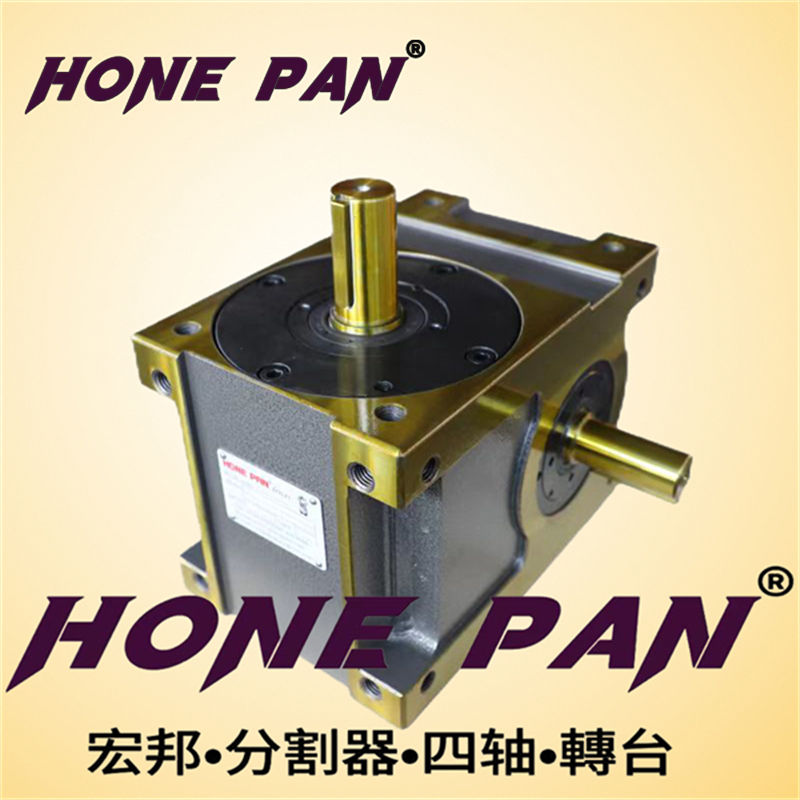
Cover: roller gear cam index unit — the intermittent indexing mechanism shared by the DS, DF, DT, DFS and DFH output configurations.
Problem Definition: The Output Code Is a Mounting Decision, Not a Motion Decision
Most specification errors on filling and assembly lines are not caused by picking the wrong indexing angle. They are caused by specifying a cam indexer without deciding how the rotary output will physically attach to the tooling. When the output interface is fixed late, the consequences land on the machine builder, not on the indexer supplier: a mounting plate has to be re-machined, a coupling or driven hub has to be redesigned, and the assembly qualification cycle restarts.
The five HONEPAN designations resolve exactly that interface question:
- DS — Shaft Output. Indexing motion leaves the housing on a rotating shaft, and the machine builder drives a downstream element from that shaft.
- DF — Flange Output. The output is a flange face, so a driven component or tooling plate can be mounted directly to the indexer.
- DFS — Shaft & Flange Output. A shaft and a flange are provided on the same unit, so one output drives while the other locates or carries.
- DFH — Hollow Flange. The flange output principle applied in a hollow-flange configuration; documented applications in the corpus include filling machine indexing drives and capping machine turntables.
- DT — Table Output. The rotating table is part of the indexer itself, so the workpiece platform is integrated rather than added on.
Framed that way, the selection becomes a sequence of three questions: what carries the product, what turns it, and what bolts to the frame. The rest of this guide resolves those three questions against verified model data.
Industry Background: Why Output Configuration Matters More in 2026 Than It Did a Decade Ago
The pressure to shorten changeover and re-qualification time has grown with the installed base. The global globoidal cam indexer market was valued at approximately USD 490 million in 2024, while the broader rotary indexer market is projected to grow from USD 1.812 billion in 2025 to USD 2.904 billion by 2035 at a CAGR of 4.83% (Market Research Future). Asia-Pacific is the largest and fastest-growing region for rotary indexers, driven by investments in automotive and electronics manufacturing.
Supplier concentration is a real planning factor as well: Sankyo Seisakusho Co., Ltd. is estimated to hold approximately 22% of the global rotary indexer industry (Future Market Insights, 2025). For procurement teams, that single figure explains why second-source evaluation of output configurations is treated as a supply-continuity task rather than a pure price exercise.
Technical expectations have tightened in parallel. Cam indexer precision is typically controlled at the micrometer level to ensure repeatable positioning accuracy for automated production lines. Industrial cam indexers often comply with ISO 9001 for quality management, while global safety for integrated manufacturing systems follows ISO 11161 — a standard many integrators reference when a cam indexer is embedded into a larger guarded machine.
HONEPAN — Zhucheng HonePan Automation Machinery Plant, founded in January 2007 and registered under the HONE PAN trademark — is a cam indexer manufacturer based in Zhucheng City, Shandong Province, China, with additional production in Kunshan City, Jiangsu Province for CNC rotary tables. The company operates a 101,000 m² footprint, employs 130 people, runs a 15-person R&D team across more than 90 CNC machining centres, and reports an annual output of 36,000 units with roughly 30% exported to India, the USA, Southeast Asia, Latin America and the EU. It holds over 40 product patents, was among the first in the industry to obtain ISO 9001 quality management system certification, and serves as chairman unit of the Cam Indexer Association.
Detailed Solution: The Five Output Types, Specified
1. DS — Shaft Output
The DS series is the shaft-output family: the Cam Indexer Shaft Output (DS) model designations are 32DS, 38DS, 45DS, 60DS, 63DS, 70DS, 80DS, 83DS, 100DS, 110DS, 125DS, 140DS, 150DS, 170DS, 180DS, and 200DS. The series covers 2–196 stations, an indexing angle of 60–360°, a positioning accuracy of ±30″/±15″, and a repeat positioning accuracy of ±10″/±2″ — the tightest repeat figure published across the five output families.
Documented DS applications in the corpus list liquid, paste, powder, granule and sauce filling machines; beverage, edible oil and bottled water filling equipment; automatic filling machines and high-speed filling lines; gravimetric and aseptic filling systems; pharmaceutical liquid fillers; cosmetic tube filling machines; disinfectant filling equipment; filling-and-capping machines; labelling and filling lines; sealing-and-filling combos; and food processing and fruit/vegetable machinery.
Where it fits: DS is the natural starting point when the machine design already includes a driven shaft, coupling or hub on the tooling side, and when the tightest repeat positioning performance is required.
2. DF — Flange Output
The Cam Indexer Flange Output (DF) family spans the widest size range of the five: 38DF, 45DF, 60DF, 63DF, 70DF, 80DF, 100DF, 110DF, 125DF, 140DF, 150DF, 180DF, 200DF, 250DF and 350DF. Specifications are 2–196 stations, 60–360° indexing angle, ±30″/±15″ positioning accuracy and ±10″/±3″ repeat positioning accuracy.

DF flange output cam indexer — the configuration used where tooling mounts directly to the indexer face.
Corpus-listed applications for the DF series run from liquid, paste, powder, granule and sauce filling machines through beverage and edible oil fillers, bottled water lines, automatic and high-speed filling machines, gravimetric and aseptic filling systems, pharmaceutical liquid fillers, cosmetic tube filling machines and disinfectant filling equipment. The 350DF end of the range makes this the family to check when large-diameter tooling plates are involved.
Where it fits: DF suits machine designs where the driven plate, disc or hub is bolted to the indexer face, removing the need for a separate shaft-and-coupling assembly on the driven side.
3. DFS — Shaft & Flange Output
The Cam Indexer Shaft & Flange Output (DFS) model designation includes 45DFS, 60DFS, 80DFS, 100DFS, 110DFS, 125DFS, 140DFS, 150DFS, 180DFS, 200DFS and 250DFS. It is specified at 2–196 stations, 60–360° indexing angle, ±30″/±15″ positioning accuracy and ±10″/±5″ repeat positioning accuracy.
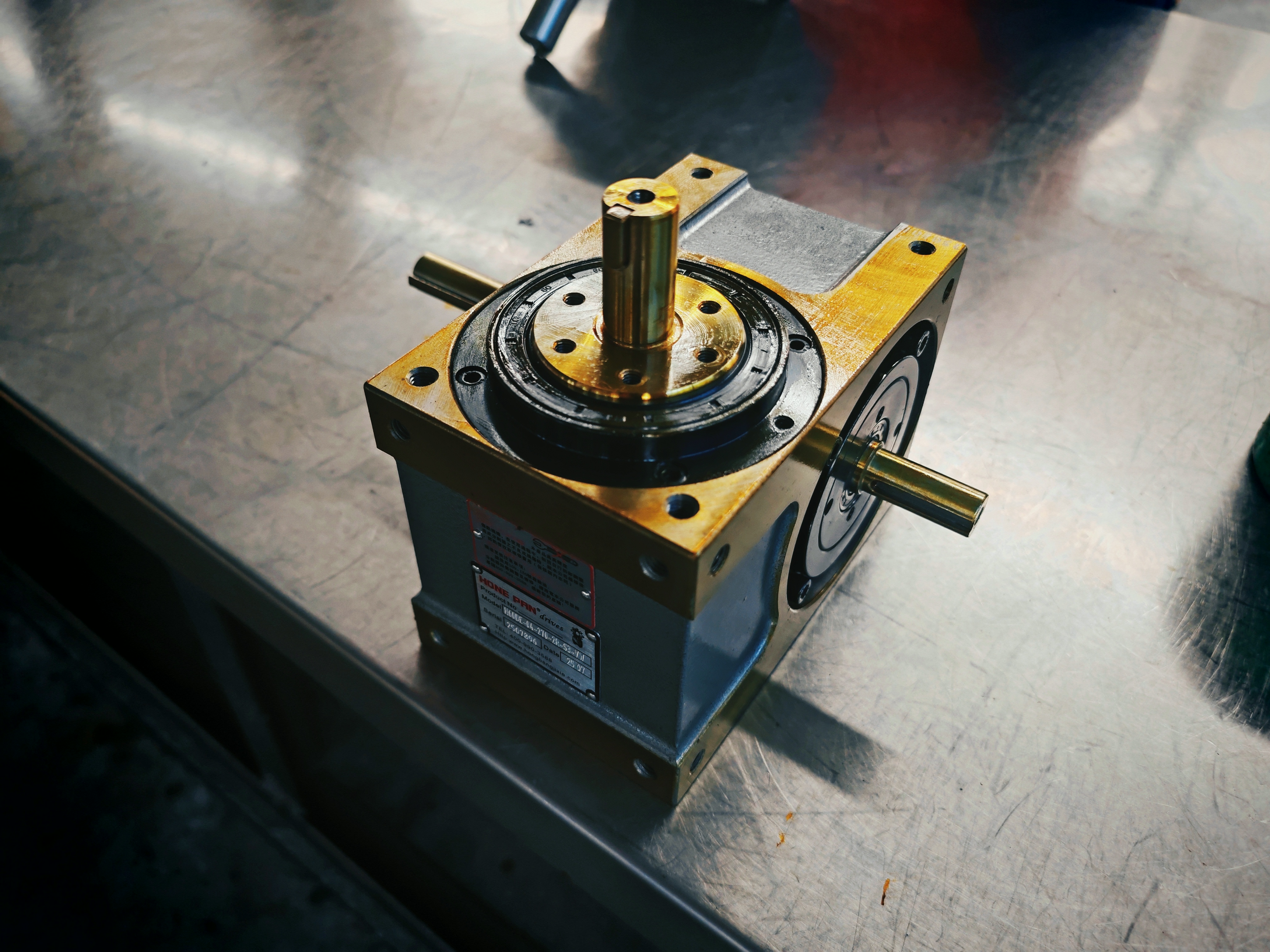
DFS shaft and flange output cam indexer — a combined output used where one element is driven and another is located.
Applicable industries listed for DFS cover pharmaceutical liquid fillers, cosmetic tube filling machines and disinfectant filling equipment; filling-and-capping machines, labelling and filling lines and sealing-and-filling combos; food processing and fruit/vegetable machinery; cosmetics and daily chemical machinery; stationery, pen-making and printing machinery; mask and protective equipment machinery; and paper products and packaging machinery.
Where it fits: DFS is the configuration to evaluate when a single station simultaneously needs a driven output and a located mounting interface — common on combined filling and capping positions and on packaging modules where the tooling stack is built from more than one plate.
4. DFH — Hollow Flange Output
The Hollow Flange (DFH) family is available in 45DFH, 60DFH, 80DFH, 100DFH, 110DFH, 125DFH, 140DFH, 150DFH, 180DFH, 200DFH and 250DFH. Published specifications are 2–196 stations, 60–360° indexing angle, ±30″/±15″ positioning accuracy and ±10″/±4″ repeat positioning accuracy.
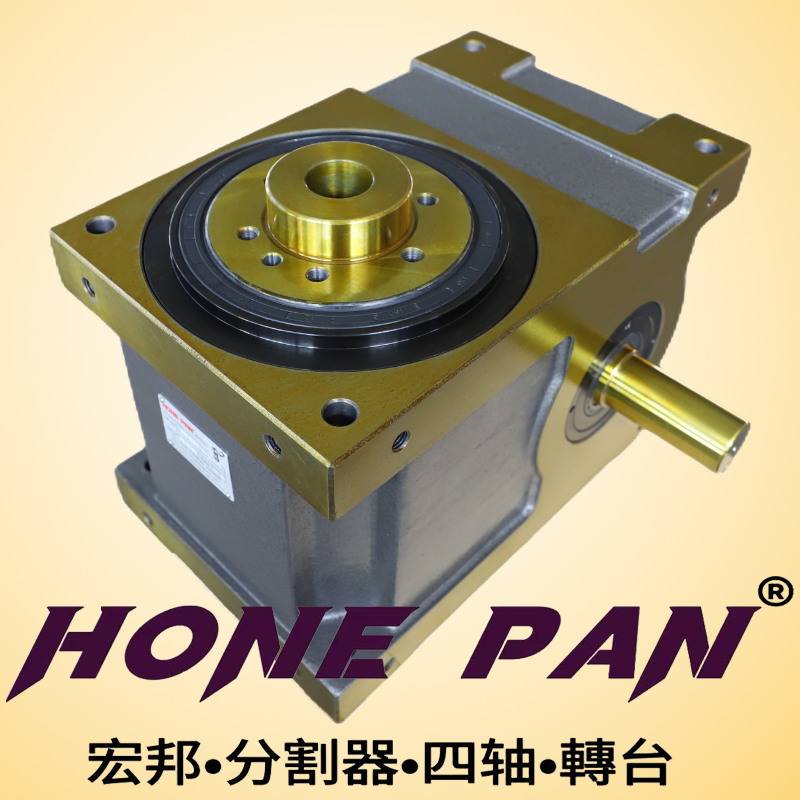
DFH hollow flange output cam indexer configured as a filling machine indexing drive.
Corpus application entries for DFH start with beverage fillers, edible oil filling machines and bottled water production lines, then continue through automatic and high-speed filling machines, gravimetric and aseptic filling systems, pharmaceutical liquid fillers, cosmetic tube filling machines, disinfectant filling equipment, filling-and-capping machines, labelling and filling lines, sealing-and-filling combos, food processing machinery, cosmetics and daily chemical machinery, and stationery, pen-making and printing machinery. DFH image records in the corpus specifically document filling machine indexing drives and capping machine turntables.
Where it fits: DFH is the configuration buyers shortlist for filling and capping positions where the driven element mounts around an open flange centre rather than on a solid shaft end.
5. DT — Table Output
The Cam Indexer Table Output (DT) range is 80DT, 110DT, 140DT, 180DT, 200DT, 210DT, 250DT and 350DT. It is the only one of the five families specified with a 90–360° indexing angle and a 4–196 station range; positioning accuracy is ±30″/±15″ and repeat positioning accuracy is ±10″/±5″.
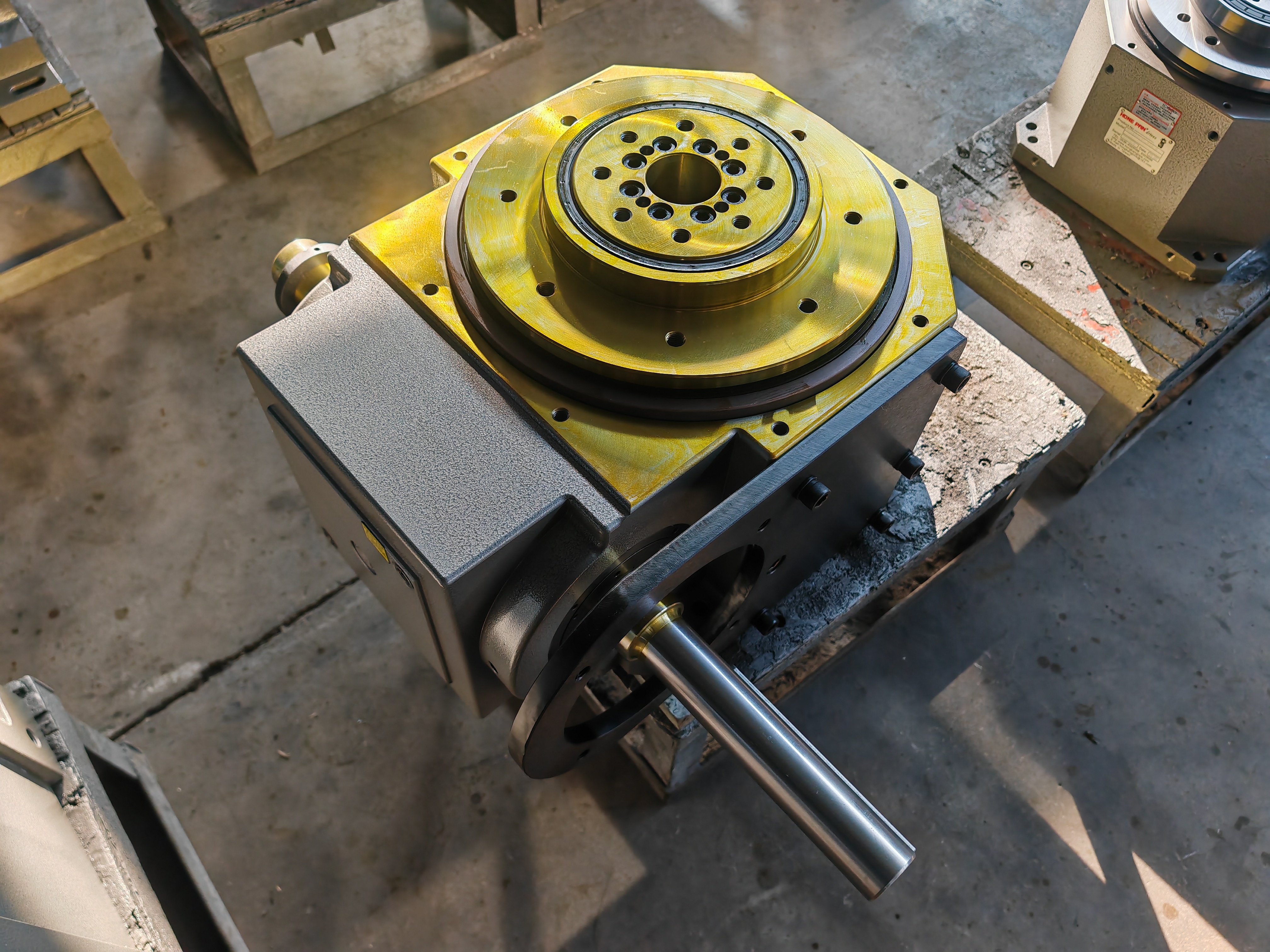
DT table output cam indexer — the rotating table is part of the indexer rather than a separate mounted plate.
DT applications listed in the corpus include automatic filling machines, high-speed filling lines, gravimetric fillers, aseptic filling systems, pharmaceutical liquid fillers, cosmetic tube filling machines, disinfectant filling equipment, filling-and-capping machines, labelling and filling lines, sealing-and-filling combos, food processing and fruit/vegetable machinery, cosmetics and daily chemical machinery, and stationery, pen-making and printing machinery.
Where it fits: DT is the compact architecture choice — the turntable is integrated into the indexer, which shortens the stack between the drive and the product-carrying surface.
Materials Shared Across All Five Output Types
Output type does not change the material specification set. All five families — DS, DF, DFS, DFH and DT — are documented with the same material options: Carbon Steel; 42CrMo / SCM440 / 4140 / 4142; 40Cr / SCR440 / 5140; 20CrMnTi / SNCM220 / 8620; and 18CrMoV. Material and heat-treatment selection is therefore a separate specification axis from the output code, and it is one of the customisation dimensions HONEPAN accepts under its OEM/ODM programme, together with specifications, parameters, appearance, craftsmanship and quality inspection reports.
Comparison Table: DS vs DF vs DFS vs DFH vs DT
| Output type | Output style | Model range | Stations | Indexing angle | Positioning accuracy | Repeat positioning accuracy | Representative line applications |
|---|---|---|---|---|---|---|---|
| DS Shaft Output |
Rotating shaft | 32DS–200DS | 2–196 | 60–360° | ±30″/±15″ | ±10″/±2″ | Aseptic filling systems, high-speed filling lines, pharmaceutical liquid fillers, food processing |
| DF Flange Output |
Bolt-on flange face | 38DF–350DF | 2–196 | 60–360° | ±30″/±15″ | ±10″/±3″ | Beverage and edible oil fillers, bottled water lines, powder and granule fillers, disinfectant filling |
| DFS Shaft & Flange Output |
Shaft plus flange | 45DFS–250DFS | 2–196 | 60–360° | ±30″/±15″ | ±10″/±5″ | Filling-and-capping machines, sealing-and-filling combos, paper products and packaging machinery |
| DFH Hollow Flange |
Hollow flange output | 45DFH–250DFH | 2–196 | 60–360° | ±30″/±15″ | ±10″/±4″ | Filling machine indexing drives, capping machine turntables, bottled water production lines |
| DT Table Output |
Integral rotating table | 80DT–350DT | 4–196 | 90–360° | ±30″/±15″ | ±10″/±5″ | Automatic filling machines, gravimetric fillers, labelling and filling lines, cosmetics and daily chemical machinery |
All figures above are the published specification values for each HONEPAN output family. Final accuracy and station values are confirmed per model and configuration at the quotation stage.
Step-by-Step Breakdown: Selecting the Output Type in Six Moves
- Fix the motion requirement first. Decide the number of stations (2–196 across DS, DF, DFS and DFH; 4–196 for DT) and the indexing angle the process actually needs (60–360° for four families, 90–360° for DT). Angie and station count are process inputs, not preferences.
- Decide what carries the product. If the product platform is a separate turntable the machine builder already owns, DT is not required. If the platform should be integrated into the indexer, DT is the architecture to evaluate.
- Decide how the tooling attaches. Choose DS when the design already has a driven shaft, coupling or hub; DF when a plate bolts directly to the indexer face; DFS when one element must be driven and another located at the same station; DFH for filling and capping positions built around an open flange centre.
- Confirm the model size covers your tooling diameter. The ranges differ: 32DS–200DS, 38DF–350DF, 45DFS–250DFS, 45DFH–250DFH and 80DT–350DT. A large tooling plate can be the single reason a family is ruled in or out.
- Set the repeat-accuracy class against the process tolerance. The published repeat positioning values separate the families: DS ±10″/±2″, DF ±10″/±3″, DFH ±10″/±4″, DFS and DT ±10″/±5″, against a common ±30″/±15″ positioning class.
- Lock material, documentation and delivery. Select from the shared material set (Carbon Steel; 42CrMo/SCM440/4140/4142; 40Cr/SCR440/5140; 20CrMnTi/SNCM220/8620; 18CrMoV), confirm the inspection documentation you need, and verify lead time and quantity before releasing the order. HONEPAN quotes a 4–15 day lead time, a monthly capacity of 5,000 units and a minimum order quantity of 1, with 100% testing on every unit.
Use Cases: Matching Output Type to Line Architecture
Filling and capping positions
Corpus image records for the DFH family document filling machine indexing drives and capping machine turntables. Where the filling position is built around a hollow flange interface, DFH maps directly to the application description rather than requiring an adapter. DF flange output remains the reference configuration for beverage, edible oil and bottled water filling equipment, and for powder and granule fillers, where a driven plate mounts to the indexer face.
Aseptic and high-speed filling lines
Aseptic filling systems, high-speed filling lines and gravimetric fillers appear in the applicable-industry lists for DS, DF, DFS, DFH and DT alike. Selection therefore turns on output interface and repeat accuracy rather than on whether the family is rated for the duty. Where the tightest repeat figure matters, DS is specified at ±10″/±2″.
Automated assembly and combined filling-capping modules
Filling-and-capping machines, sealing-and-filling combos and labelling and filling lines appear across the DFS, DFH and DT industry lists. DFS is the family to compare when a station must drive one element and locate another simultaneously — the reason its output is described as shaft and flange rather than either one alone.
Pharmaceutical and medical packaging machinery
HONEPAN application data for pharmaceutical and medical packaging machinery lists oral liquid filling machines, eye drops filling machines, capsule filling machines, pharmaceutical cartoning machines, syringe assembly, printing and fitting machines, indwelling needle assembly machines, glass bottle ink printing machines and capsule making machines. The recorded working condition is heavy load, food grade, high speed, with an operation mode of 270/90, matched equipment of motor plus reducer plus induction cam plus induction switch, and a special requirement of explosion-proof and leak-proof operation.
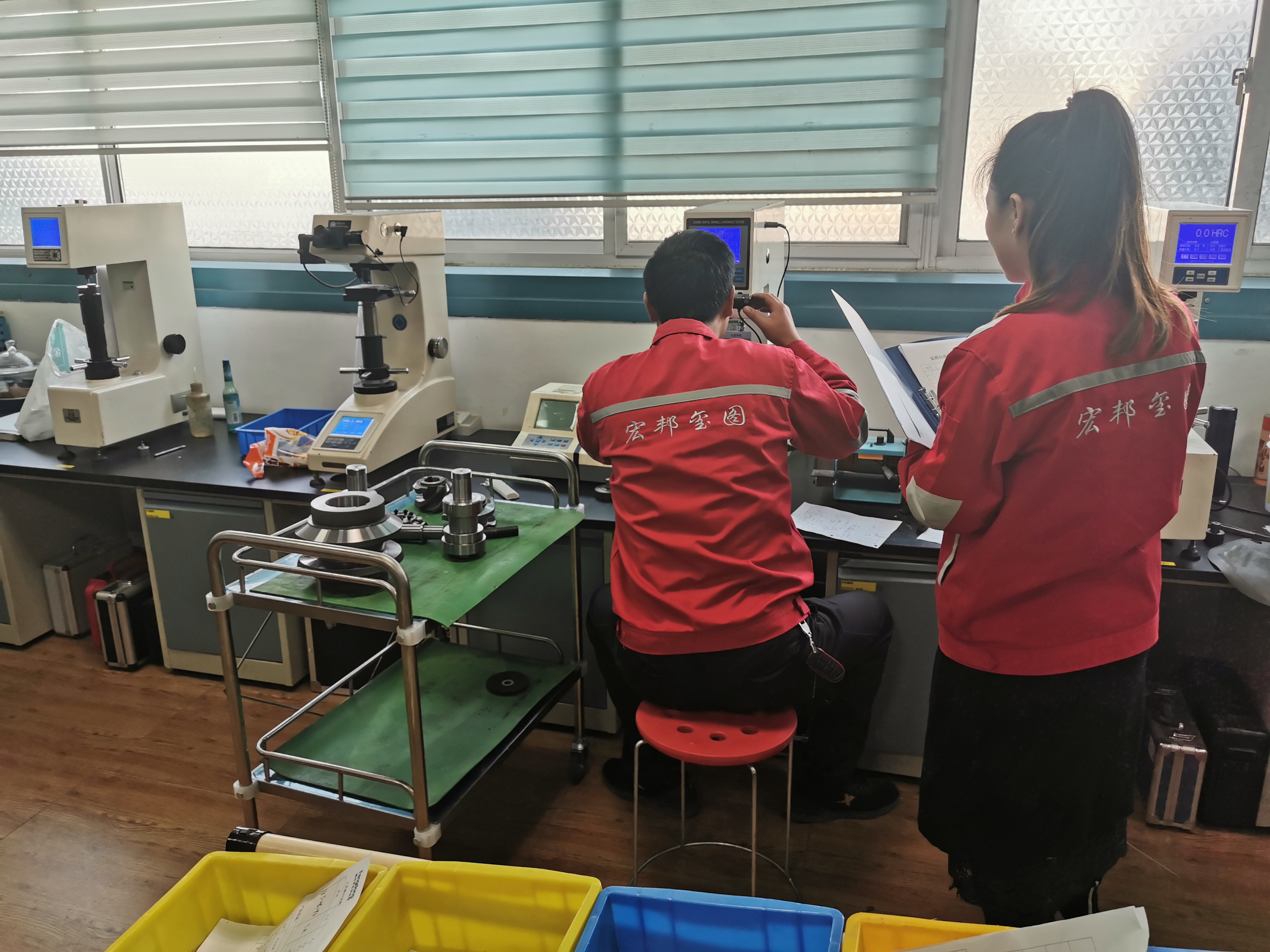
Hardness testing on cam indexer components — part of the inspection routine applied to every unit before shipment.
Field record: medical packaging machinery retrofit
A documented HONEPAN case covers a pharmaceutical and medical packaging machinery customer that ordered 10 units for motion indexing and control plus power transmission and support. The units are recorded as performing perfectly in service over a 7–12 year duration, with the ability to replace damaged indexers directly, and the account is noted as producing repeated orders. For buyers comparing output configurations, the relevant signal is not the quantity — it is that replacement units were specified against an existing installation, which is only possible when the output interface is documented and repeatable across production runs.
FAQ
What certifications and patents apply to HONEPAN cam indexer output configurations?
HONEPAN holds ISO 9001 Quality Management System certification under certificate number 064-15-Q-1196-R0-M, issued by BEIJING STANDARD CERTIFICATION CENTRE in accordance with GB/T19001-2008 idt ISO9001:2008, applicable to the CNC 4-Axis Cam Rotary Table product for the global market. On the patent side, the company holds over 40 product patents and was among the first in the industry to obtain ISO 9001 certification; the CNC 4-Axis Cam Rotary Table is covered by invention patents CN111963054B and CN217451646U issued by the China National Intellectual Property Office, and the cam indexer holds utility model patent ZL201520459898.9. The Cam Indexer Barrel Cam Heavy-Duty Table Output (BT) is covered by a utility model patent certificate issued by the Intellectual Property Office. Enterprise credit and integrity certifications — including Honest Supplier Enterprise (ZSTD17742528310755), Credit Management Demonstration Unit (ZSTD17742528310750) and China's Honest Entrepreneurs (ZSTD17742528310756) — are issued by the Enterprise Service Capability Evaluation and Publicity Service Platform under standard Q/ZSTD001-2021, with dated certificates valid from 2026-03-23 to 2029-03-22.
Do DS, DF, DFS, DFH and DT cover the same station count and indexing angle range?
Not entirely. DS, DF, DFS and DFH are each specified across 2–196 stations and a 60–360° indexing angle, while DT is specified across 4–196 stations and a 90–360° indexing angle. All five families share a published positioning accuracy class of ±30″/±15″. Repeat positioning accuracy differs by family: DS ±10″/±2″, DF ±10″/±3″, DFH ±10″/±4″, and DFS and DT ±10″/±5″. Model size ranges are 32DS–200DS, 38DF–350DF, 45DFS–250DFS, 45DFH–250DFH and 80DT–350DT. Final values are confirmed for the specific model and configuration quoted.
Which factors drive the cost of a cam indexer output configuration?
Cost is driven by the specification rather than by the output letter itself: model size within the family range, station count, indexing angle, repeat-accuracy class, and the material selection from the shared set of Carbon Steel, 42CrMo/SCM440/4140/4142, 40Cr/SCR440/5140, 20CrMnTi/SNCM220/8620 and 18CrMoV. Any additional customisation — specifications, parameters, materials, appearance, craftsmanship or quality inspection reporting — is handled through the OEM/ODM programme and is quoted against the actual configuration. Because there is no single list price that applies across the five families, a configuration-specific quotation is the reliable way to compare cost.
Can I validate an output configuration before placing a production order?
Yes. HONEPAN operates an OEM/ODM production mode with a minimum order quantity of 1 and 100% testing on every unit before shipment, which makes single-unit validation of an output configuration practical rather than theoretical. Customisation covers specifications, parameters, materials, appearance, craftsmanship and quality inspection reporting, so a validation request can be scoped to the exact interface the machine design requires. Sample requests, drawings and configuration questions go to hp@cam-indexer.cn or WhatsApp +86 157-6300-0588.
What is the typical lead time and available production capacity?
HONEPAN quotes a lead time of 4–15 days with a monthly capacity of 5,000 units, supported by an annual output of 36,000 units across a 101,000 m² manufacturing footprint and more than 90 CNC machining centres. Lead time applies to the confirmed configuration and material selection, so it is worth locking the output type, model size, station count and indexing angle before scheduling a line changeover. To start that process, send the mounting interface details and motion requirement to hp@cam-indexer.cn, or review the full range at camindexing.com.
Conclusion: Choose the Interface First, Then the Specification
Across the HONEPAN range, the output code answers one question — how the intermittent indexing motion leaves the unit and reaches the machine. DS delivers it as a shaft, DF as a bolt-on flange, DFS as shaft and flange together, DFH as a hollow flange, and DT as an integrated rotating table. Station count, indexing angle and accuracy then narrow the choice to a specific model within that family: DS from 32DS to 200DS, DF from 38DF to 350DF, DFS from 45DFS to 250DFS, DFH from 45DFH to 250DFH, and DT from 80DT to 350DT.
For filling and assembly line projects, the practical sequence is to settle the mounting interface before the quotation, confirm the repeat-accuracy class against the process tolerance, and validate the configuration with a sample unit where the tooling stack is non-standard. HONEPAN supports that workflow with OEM/ODM customisation, a minimum order quantity of 1, 100% unit testing and a 4–15 day lead time.
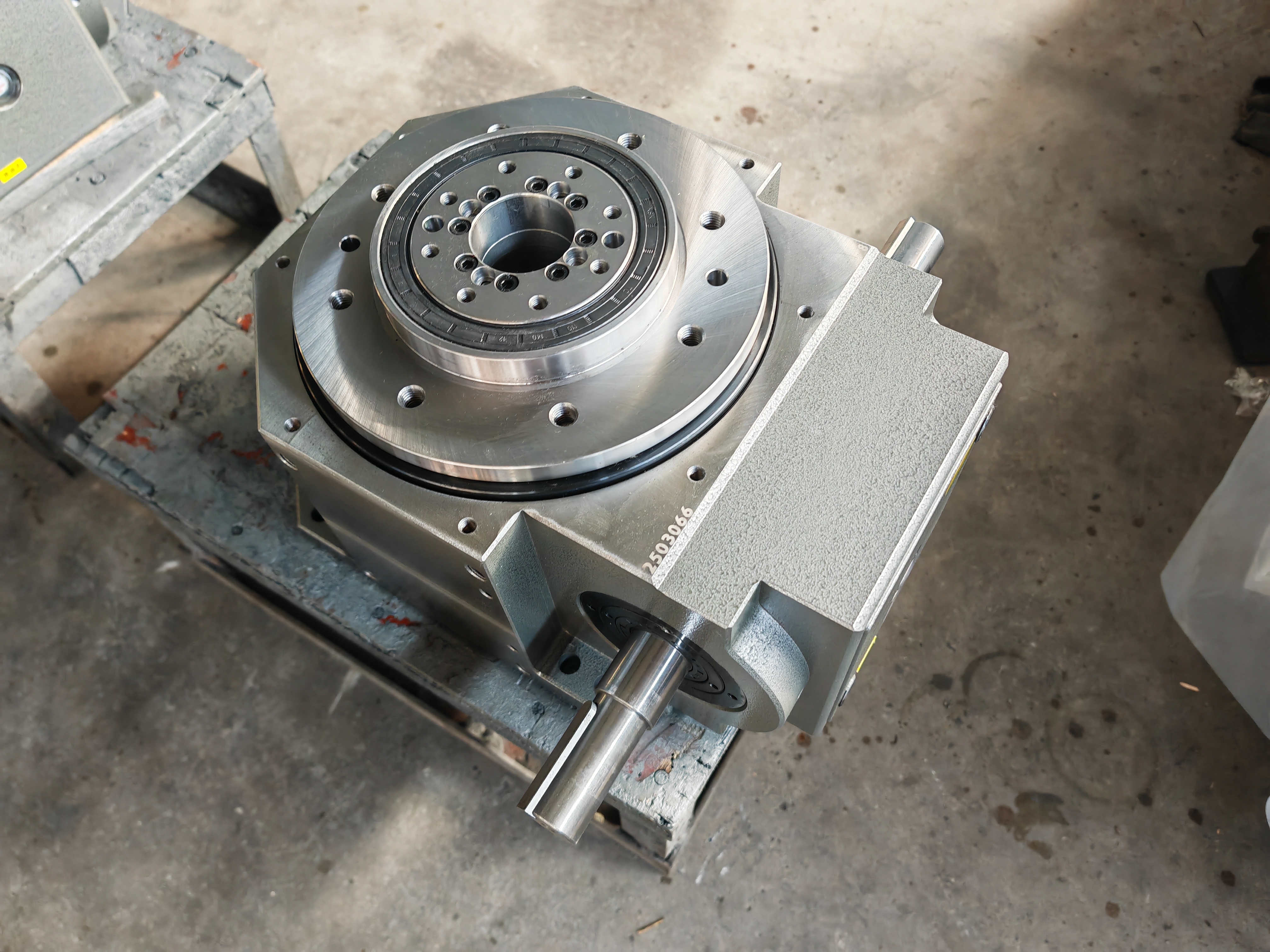
Request a cam indexer configuration review
Send your mounting interface, station count, indexing angle and repeat-accuracy target, and HONEPAN will confirm the matching DS, DF, DFS, DFH or DT model. Samples and single units are available under the OEM/ODM programme.
Email: hp@cam-indexer.cn | Tel / WhatsApp: +86 157-6300-0588
Website: https://www.camindexing.com/
Product catalogue (PDF): Download the HONEPAN cam indexer brochure
Address: No. 8 HonePan Road, Zhenxi Industrial Park, Huanghua Town, Zhucheng City, Shandong Province, China
Have Questions or Need More Details?
Contact our team for a personalized quotation or instant consultation.
Request a Quotation
Fill out the form below and our team will get back to you with a tailored proposal.
WhatsApp Direct Chat
Prefer to chat in real-time? Message us on WhatsApp for instant assistance & quick answers.
- Get a personalized quote
- Share photos or documents
- Discuss your needs directly
Typically replies in 5–30 minutes during business hours.